
Why Is My Paint Sticky After Drying? Causes and Easy Fixes
If your paint feels sticky after it seemed dry, it’s usually because solvents or binders haven’t fully evaporated or cured — often from high humidity, low temperature, overapplication, wrong primer/topcoat combos, contamination, or expired paint. Start by checking ventilation, humidity, and temperature, avoid adding more coats, and use fans or a dehumidifier to speed curing; light sanding and recoating may be needed if tackiness persists. Continue for simple tests, fixes, and when to call a pro.
Quick Answer: Why Paint Stays Tacky After Drying
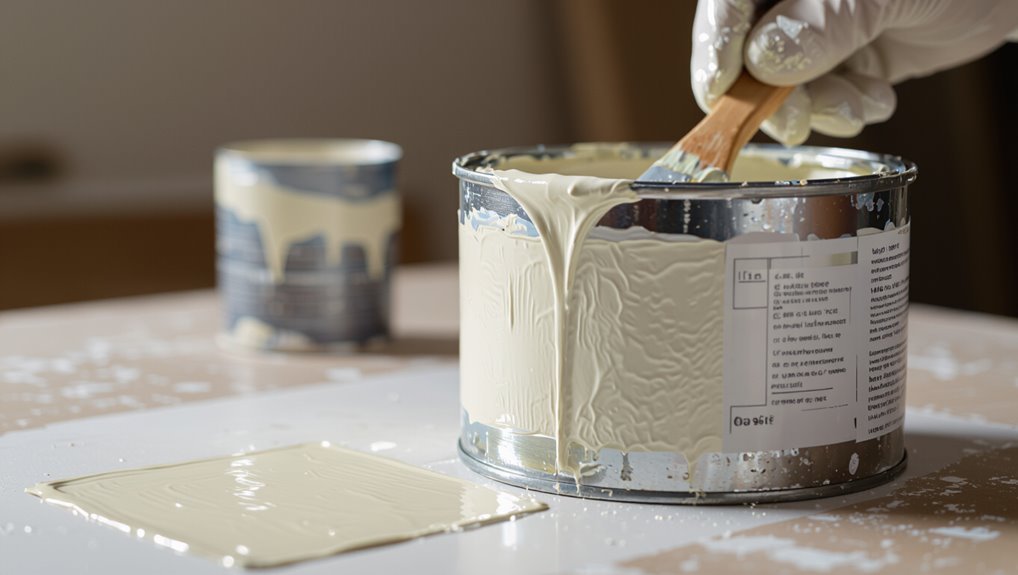
Why is your paint still tacky? You’re likely facing incomplete solvent evaporation or poor paint adhesion caused by unsuitable drying conditions.
If humidity’s high or temperatures are low, the finish can remain gummy because solvents can’t escape and binders don’t form a proper film.
Overapplication or using incompatible primers and topcoats also hampers adhesion, leaving a soft, sticky surface.
Applying too much paint—or pairing the wrong primer and topcoat—prevents proper adhesion, leaving the finish soft and tacky.
Dust or contaminants trapped under the layer can interfere with bonding too. You’ll recognize this when the surface dents, attracts debris, or feels tacky hours after touch-dry.
These diagnostic signs point to environmental or application-related issues needing correction.
What to Do First When Paint Is Tacky
If your paint feels tacky, start by evaluating the environment and how long it’s been drying—high humidity, low temperatures, or insufficient ventilation are the most common causes and often have simple fixes.
Next, check that you used the right paint and followed mix ratios; improper thinning or expired cans can leave tackiness.
Improve air flow and raise temperature slightly to speed curing, and avoid adding more coats until tackiness resolves.
Use sticky paint solutions like a dehumidifier or fan rather than solvents.
Keep a log of conditions and actions as troubleshooting tips so you can apply the right fix quickly.
How to Diagnose Sticky Paint Fast
How quickly can you pinpoint the cause of tacky paint? Start by scanning surface conditions and recent environmental factors: humidity, temperature, and ventilation.
Compare paint types and product quality—cheap or wrong formulations slow cure.
Review paint application and paint thickness; heavy coats and poor paint techniques trap solvents.
Check for drying agents added or present in the product.
Evaluate paint adhesion to the substrate; contamination or incompatible primers cause tackiness.
Consider user errors like inadequate stirring or recoat too soon.
Systematically note each variable, eliminating one at a time, and you’ll isolate the culprit and choose the right fix.
Simple Touch Tests to Assess Tackiness
Want a quick way to tell whether paint is truly tacky or just slightly soft? Use simple touch test steps for a fast tackiness assessment. Lightly press a clean fingertip for one second; if it leaves no mark or stick, it’s fine. If a faint impression remains or tack transfers, stop and ventilate the area. Try a cotton swab on an inconspicuous spot to confirm residue. Note temperature and humidity as they affect feel.
| Test | What to press | Result indicator |
|---|---|---|
| Finger | 1 second | No mark = likely dry |
| Swab | Small spot | Residue = tacky |
| Coin edge | Light rub | Smear = soft |
Drying vs. Curing: Realistic Wait Times
Those quick touch tests tell you whether paint feels tacky, but they don’t reveal the full timeline: drying and curing are different stages with very different wait times.
You’ll notice surface drying within hours for latex or oil blends, but manufacturers list drying times that vary by film thickness, temperature, and ventilation.
Curing process takes longer—days to weeks—to reach full hardness and chemical resistance.
If you need to handle or recoat, follow suggested drying times on the label, then allow additional curing time before heavy use.
Rushing the job risks stickiness, so plan projects around realistic cure schedules.
High Humidity: How It Causes Tacky Paint
Because moisture in the air slows solvent evaporation, high humidity keeps paint films soft and tacky long after you think they should be dry. You’ll notice slower drying, fingerprints, and dust adhesion because humidity impacts solvent escape and polymer crosslinking. You can monitor conditions and delay handling until tackiness resolves, and understand that moisture control during application matters for final film strength. Below is a simple comparison to show how varying humidity affects drying behavior:
| Humidity Level | Drying Time | Tacky Risk |
|---|---|---|
| Low (20–40%) | Fast | Low |
| Moderate (40–60%) | Normal | Moderate |
| High (60%+) | Slow | High |
Fixing Humidity-Related Tackiness
Check the room humidity with a hygrometer so you know if moisture is slowing the cure.
If levels are high, use dehumidifiers or fans to speed evaporation.
And when conditions stay damp, give the paint extra drying time before recoat or use.
Check Room Humidity Levels
Wondering why paint stays tacky? Check room humidity levels first: humidity effects and moisture levels directly slow solvent evaporation and curing.
Use a reliable hygrometer to read relative humidity before and during painting; ideal ranges vary by paint type but usually sit between 40–60% for latex and slightly lower for oil-based products.
If readings are high, postpone painting until conditions improve or adjust timing to drier hours.
Also monitor temperature, since cold plus high humidity worsens tackiness.
Record readings and the paint’s drying progress so you can correlate conditions with outcomes and avoid repeat problems on future projects.
Use Dehumidifiers Or Fans
If humidity is keeping your paint tacky, bring moisture under control with dehumidifiers or by increasing air movement. You’ll set dehumidifier settings to maintain ideal humidity, use humidity monitoring to track progress, and adjust fan placement to promote even air circulation.
Improve the drying environment with simple ventilation techniques: open windows when possible and position fans to move moist air out. Proper moisture control complements paint selection and application techniques, and prevents adhesion problems from poor surface preparation.
Use these steps together to speed curing without rushing the job, ensuring a nonsticky, durable finish.
Allow Extended Drying Time
When humidity slows curing, give paint extra time to dry rather than forcing it with heat or more coats; you’ll often see tackiness resolve over several days as solvents evaporate and cross-linking completes. You should monitor temperatures and humidity, aiming for ideal conditions listed below, and avoid touching sticky areas. Extended drying is often the simplest fix: keep airflow steady, limit room activity, and wait 48–72 hours before reassessing. If tackiness persists after a week, consider light sanding and recoating. Use the table to track conditions and actions.
| Condition | Action | Wait time |
|---|---|---|
| High humidity | Increase ventilation | 48–72 hrs |
| Cool temp | Raise to ideal range | 72 hrs |
| Still tacky | Light sand/recoat | 7+ days |
Low Temperatures and Paint Curing Problems
Although cold weather might seem harmless, low temperatures can seriously slow or halt paint curing, leaving it tacky for days or even weeks.
You’ll notice drying may occur on the surface while the underlying film hasn’t cured, because paint chemistry reactions slow as molecules lose mobility. Solvent evaporation stalls, polymer chains don’t crosslink efficiently, and humidity interplay can worsen tackiness.
You might misjudge dryness by touch, risking smudges or debris embedding. Exterior and unheated interior projects are especially vulnerable.
Understanding that low temperatures interfere with the chemical curing process helps you diagnose tacky paint without assuming product failure.
Fixes for Cold-Weather Tacky Paint
Because cold slows the chemical reactions that cure paint, you’ll need to speed up those processes or give the coating more controlled time to finish curing.
Work in warmer microclimates: move small items indoors or use space heaters and remove drafts to combat cold temperatures. Choose paint types rated for low temps and follow surface preparation to guarantee adhesion.
Adjust application techniques—thin coats dry faster. Consider drying agents or approved paint additives and follow product recommendations.
Monitor environmental factors like humidity. Allow extra curing time before handling. Test a small area first to confirm compatibility and avoid tacky results.
Painting Over Glossy or Nonporous Finishes
If you’ve been dealing with tacky paint from cold conditions, you’ll also need to rethink your approach for glossy or nonporous surfaces, since these finishes resist new coatings.
You’ll focus on paint adhesion by improving surface preparation and choosing primer selection that bonds to slick substrates.
Test finish compatibility and plan paint layering to avoid trapping moisture.
Use controlled drying techniques—moderate temperature and airflow—to let each coat cure fully.
Keep moisture control in mind; high humidity undermines adhesion and prolongs tackiness.
When you follow these steps, you’ll reduce sticky results and get a durable, smooth finish on glossy surfaces.
How to Degloss and Prep Glossy Surfaces
Start by cleaning the surface thoroughly to remove grease and dirt so new paint can adhere.
Lightly abrade the glossy finish with fine sandpaper or a scuff pad to dull the sheen.
Finish by wiping the area with a solvent like denatured alcohol to remove dust and oils before priming.
Clean Surface Thoroughly
Before you prime or repaint, thoroughly clean and degloss the surface so new paint will stick instead of peeling or blistering.
Start by removing surface grime and loose paint residue with a mild detergent and water, rinsing well. Use cleaning techniques like trisodium phosphate (TSP) substitute for greasy areas, following safety directions.
Test a small area to guarantee the cleaner won’t damage the substrate. Rinse and let dry completely.
For stubborn contaminants, employ a solvent wipe (denatured alcohol) sparingly.
These prep methods guarantee adhesion and reduce the risk of sticky or failing finish after repainting.
Lightly Abrade Gloss
When a surface still has shine after cleaning, lightly abrade the gloss so primer or new paint can bite into it; scuffing creates the tiny tooth that promotes adhesion without removing the underlying finish.
You’ll use fine-grit sanding techniques—220–320 grit for paint, 400+ for delicate clearcoats—to dull high gloss levels evenly. Sand in the direction of grain on wood or follow panel contours on metal; don’t overwork flat areas.
Use a sanding block or abrasive pad for consistent pressure and inspect often for uniform dullness.
After scuffing, remove dust with a tack cloth before priming or repainting.
Wipe With Solvent
Wipe the surface with a suitable solvent to remove oils, residues, and the microscopic polish film that sanding alone can miss. You’ll degloss properly when you pick the right solvent types and follow clear application methods.
Work in a ventilated area, use lint-free cloths, and test on an inconspicuous spot.
- Use mineral spirits for oil-based finishes; wipe in straight strokes and let evaporate.
- Choose denatured alcohol for shellac or lacquer; apply sparingly with a soft rag.
- Try a water-based degreaser for modern coatings; rinse and dry thoroughly.
This prep prevents sticky repainting and improves adhesion.
Incompatible Primers or Topcoats: Signs to Watch For
Ever wondered why a glossy primer suddenly turns your new topcoat tacky? You’ll see signs when primer compatibility is off: patchy adhesion, uneven sheen, or a gummy feel after paint application.
Check product labels and note primer types—oil vs. latex vs. shellac—because wrong pairings harm finish durability. Poor surface preparation can mimic incompatibility, so inspect for contamination or inadequate drying.
Also consider environmental impact: humidity and temperature can alter curing and worsen reactions between layers. When you spot bubbling, streaking, or persistent stickiness, suspect an incompatible primer/topcoat combo rather than blaming the topcoat alone.
Choosing Compatible Primer and Topcoat Combos
Although it might seem straightforward, choosing the right primer and topcoat combo makes the difference between a durable finish and a tacky mess. You’ll avoid sticky results by matching primer compatibility with topcoat selection, considering surface preparation and paint adhesion.
Choosing the right primer-topcoat combo prevents sticky finishes—match chemistry, prep thoroughly, and prioritize adhesion for durability
Check drying times and environmental factors before you start. Use product recommendations for your substrate and preferred finish types. Apply correct application techniques and prioritize paint quality.
- Match chemistry: oil vs. latex for adhesion and finish types.
- Prep: clean, sand, prime for best paint adhesion and drying times.
- Select products with vetted recommendations for your environmental factors.
Old, Expired, or Poorly Stored Paint: How to Test It
If your paint smells sour or unusually strong, it might be spoiled and won’t cure right.
Give it a stir and rub a little between your fingers to check for grit or a rubbery, stringy texture.
If the odor is off or the texture’s wrong, don’t risk using it—discard or strain and test a small patch first.
Check Paint Smell
Wondering whether your paint’s age or storage has ruined it? Sniffing can reveal problems: fresh paint has a solvent or latex scent; sour, sharp, or chemical paint odors suggest contamination, breakdown, or increased paint toxicity. If it smells off, don’t assume it’s fine.
- Open the can briefly and inhale cautiously—overly strong or rotten smells are a red flag.
- Compare with a known-good can; noticeable difference indicates spoilage or solvent separation.
- If you detect unusual chemical paint odors, ventilate, avoid skin contact, and consider discarding to prevent toxic exposure.
Perform Texture Test
1 simple texture check will tell you a lot about whether paint’s still usable: scoop a small amount onto a stir stick or disposable surface and look for clumps, rubbery strings, or watery separation.
You’ll perform a quick texture assessment by rubbing the sample between fingers (wear gloves) to feel grit or tackiness. Good paint consistency is smooth, uniform, and spreads without tugging; skippy or stringy results mean degradation.
If you find separated liquid, pour off and remix briefly—if texture won’t homogenize, discard. Document batch info and date to avoid future issues with old, expired, or poorly stored paint.
What to Do If Paint Is Expired or Separated
When paint has gone past its prime or the components have separated, you can usually tell by a sour smell, grainy texture, or excessive clumping—don’t toss it immediately.
If paint smells sour, looks grainy, or clumps, don’t discard it—check and try to revive first.
You can often salvage mildly expired paint or separated paint with quick checks and fixes. Try a small stir, inspect for mold, and test a patch on scrap wood.
- Stir and strain: mix thoroughly, pass through a paint strainer to remove clumps.
- Add conditioner: use a manufacturer-approved extender or water sparingly for latex.
- Test and decide: apply a test coat; if adhesion or finish fail, recycle the rest.
Improper Mixing vs. Shaken-Only Paint: Risks
If you just shake a can instead of properly stirring, you’ll leave pigments settled at the bottom and get uneven color and texture.
You may also fail to disperse the binder fully, which can cause tacky patches that never cure.
And because shaking doesn’t equal thorough mixing, solvents can evaporate unevenly and change the drying balance, increasing sticky spots.
Settling Of Pigments
Although pigments naturally settle over time, you can’t rely on a quick shake to restore a uniform paint mixture; proper mixing is crucial.
When pigment separation occurs, you’ll get uneven color, streaks, and altered paint consistency that can leave sticky or tacky patches after drying.
To avoid problems, do this:
- Use a stirring stick or drill mixer and mix thoroughly until color and thickness are uniform.
- Scrape the sides and bottom; settled pigments hide there and won’t reincorporate with shaking alone.
- Strain mixed paint before use to catch clumps and guarantee smooth, consistent application.
Incomplete Binder Dispersion
Because the binder keeps pigment and additives suspended, failing to fully disperse it leaves pockets of concentrated solids and thin, underbound areas that won’t form a proper film.
You’ll notice tacky spots when binder issues stem from poor mixing methods or shaken-only paint. Check paint formulation and product quality; cheaper batches or long paint storage can worsen separation.
Use recommended mixing methods and gentle shear to re-emulsify binders, and follow application techniques to spread evenly.
Consider drying agents sparingly and mind environmental factors and surface compatibility, since temperature or porous substrates can amplify incomplete dispersion problems.
Solvent Evaporation Variance
When you only shake a can instead of properly mixing, solvents and volatile components can separate. This can lead to some areas drying too fast while others stay solvent-rich and tacky.
You’ll notice uneven finish, slow solvent evaporation in puddles, and compromised paint adhesion where binder and pigment weren’t redistributed.
Fix it by stirring thoroughly with a paint stick or using a mechanical mixer, then test a small patch.
- Stir well to restore homogeny and consistent solvent evaporation.
- Thin only per manufacturer to protect paint adhesion.
- Recoat after proper drying to avoid trapped tackiness.
How to Mix or Thin Paint Properly for Recoat
If your recoating job is going to succeed, you need to mix and thin paint correctly so the new layer bonds and levels without sagging or drying too slowly.
Before recoating, stir thoroughly using proper mixing: scrape the can bottom and fold sides to reincorporate pigments and solvents.
Before recoating, stir thoroughly—scrape the can bottom and fold the sides to reincorporate pigments and solvents.
Follow manufacturer ratios when thinning; use recommended solvent or water and add small increments while testing viscosity.
Check flow with a brush or viscosity cup, and avoid over-thinning which weakens adhesion.
Work in consistent temperatures and humidity.
Clean tools and strain paint to remove skin or clumps that could prevent a smooth, non-sticky recoat.
Applying Paint Too Thickly: Causes and Limits
Although thicker coats can seem like a shortcut to full coverage, applying paint too thickly causes a host of problems you’ll want to avoid. You risk long drying times, surface tackiness, and sagging because excessive paint thickness traps solvents and prevents proper film formation.
Use correct application techniques and resist overloading your brush or roller. Thin, controlled passes build a uniform film without sticky patches. Watch edges and drips; thick areas hide beneath thin ones and cure unevenly.
- Avoid heavy loading — one thin pass is better than one thick.
- Smooth out sagging promptly.
- Monitor paint thickness visually.
Recoat Rules: How Long and How Thin to Apply
Having avoided thick, solvent-trapping coats, you now need to follow proper recoat times and apply thin, even layers to prevent tackiness and guarantee adhesion.
Check the manufacturer’s recoat timing on the can—temperature and humidity change cure rates—so wait the minimum before adding another layer.
Aim for consistent paint thickness: thin coats dry faster and let solvents escape, thick ones trap them and stay sticky.
Use light, overlapping passes with a brush, roller, or sprayer, and measure coverage rather than eyeballing.
If a coat feels gummy, wait longer; sanding between dry coats improves bonding and yields a smooth, permanent finish.
Contaminants and Poor Surface Prep That Cause Tackiness
Dust, grease, and old finishes wreck new paint by preventing proper adhesion and trapping solvents, so you need to clean and prep surfaces thoroughly before you paint.
Dust, grease, and old finishes ruin paint—clean, degrease, and prep thoroughly to ensure proper adhesion and cure
You’ll avoid tackiness by addressing common contaminant sources and following solid surface preparation steps. Inspect, degrease, and sand stubborn spots; don’t skip primer on difficult surfaces.
- Kitchen grime: degrease, rinse, and let dry to prevent future stickiness.
- Dust and debris: vacuum and tack-cloth after sanding to guarantee a clean film.
- Glossy/old finishes: scuff, clean, and prime to promote adhesion and cure.
Solvent Entrapment From Previous Coatings: Detection and Fix
If your new paint feels tacky, you should check whether trapped solvents from an earlier coating are to blame by looking for soft spots, wrinkling, or a solvent smell.
You can confirm entrapment with a simple adhesive-tape test or by gently warming a small area to see if tackiness increases or solvents pop out.
To fix it, strip or aggressively sand the affected layer, allow the substrate to fully outgas, and then recoat with compatible products.
Detecting Solvent Entrapment
When a previously applied coat hasn’t fully cured, trapped solvents can migrate into a fresh paint layer and leave it tacky — you’ll notice a greasy sheen, slow drying, or a persistent stickiness even days after application.
To detect solvent entrapment and assess paint adhesion, inspect, smell, and test without disturbing layers.
- Touch test: press with a clean finger in an inconspicuous spot; tackiness or transfer suggests solvent migration.
- Smell check: a lingering solvent odor after normal drying time points to entrapment.
- Adhesion test: use a small crosshatch and tape pull; poor adhesion often accompanies solvent issues.
Fixing Trapped Solvents
Because trapped solvents can soften new paint and ruin adhesion, you’ll want to act promptly but carefully to fix the problem without damaging underlying layers.
First, improve ventilation and raise temperature to speed solvent evaporation; use fans and a heater but avoid direct hot air that could blister paint.
If stickiness persists after 48–72 hours, gently wipe with a solvent-rated cleaner to test layer stability.
For widespread entrapment, strip to the previous coat using a chemical remover or sanding, then allow full solvent evaporation before recoating.
Always test a small area to protect paint adhesion and finish.
Under- or Overuse of Additives and Extenders: Effects
Although additives and extenders can fix specific formulation problems, using too little or too much will cause sticky paint and other performance issues. You need additive balance; wrong dosages change drying, film cohesion, and tack.
Additive balance is crucial — incorrect dosages alter drying, film cohesion, and tack, causing sticky, underperforming paint.
Extender impact varies with formulation variety and solvent systems, so follow label rates. Adjusting application techniques won’t fix chemistry errors.
- Too little: insufficient flow agents leave uneven films that feel sticky.
- Too much: over-thickened binders trap solvents and prevent cure.
- Mismatched choices: incompatible extenders or additives disrupt crosslinking and reduce durability.
Measure, test small batches, and consult technical data sheets before altering mixes.
Problems Specific to Oil-Based Paints
With oil-based paints you’ll often face issues like slow solvent evaporation that keeps the surface tacky.
Old or contaminated paint can fail to cure properly, and if you didn’t prep the surface well—removing grease, dust, and old finish—the film might never harden.
Let’s look at how each of these causes leads to stickiness and what to do about them.
Slow Solvent Evaporation
If your oil-based paint stays tacky long after application, slow solvent evaporation is often the cause. You’ll notice slow drying when solvents can’t escape—due to high humidity, low temperature, or heavy application—and that delays film formation and weakens paint adhesion.
To fix it, you’ll adjust conditions and technique.
- Thin the paint slightly per manufacturer instructions to improve solvent release and speed drying.
- Increase ventilation and temperature; use fans or heat to lower humidity and help solvents evaporate.
- Apply thinner, even coats; thick layers trap solvents and prolong tackiness, hurting adhesion and finish quality.
Old Or Contaminated Paint
When oil-based paint’s can are old or have been contaminated, the drying process can stall and leave a sticky film you can’t fix on the surface.
If you’ve kept cans past paint expiration or opened them in dusty, damp conditions, metal cans can rust and let contaminants into the mix.
You’ll notice separation, odd odors, or a tacky finish even after recommended drying time.
Test questionable cans before using: stir, strain, and apply a small patch.
Dispose of paint that smells foul, has skin formation, or fails to harden.
Improve future paint storage: seal lids, store upright, and note purchase dates.
Inadequate Surface Preparation
Because oil-based paints rely on proper adhesion and a clean substrate, skipping or skimping on surface prep often leaves you with tacky, slow-drying spots.
You need solid surface preparation: remove grease, sand glossy areas, and verify product compatibility before painting.
Poor proper cleaning or wrong application techniques reduce paint adhesion and trap solvents.
Surface texture matters—roughen slick surfaces and fill holes for even curing.
Check primer and topcoat compatibility to avoid chemical reactions that cause stickiness.
Follow recommended drying times and thin coats.
If you’ve skipped steps, re-clean, sand, and repaint with compatible products.
- Clean grease
- Sand glossy surfaces
- Confirm compatibility
Problems Specific to Water-Based (Latex) Paints
Although water-based (latex) paints dry faster and clean up with soap and water, they bring their own sticky issues you should know about; humidity, poor ventilation, and applying thick coats can all leave a latex finish tacky.
Even though latex paints dry quicker and wash up easily, humidity, poor airflow, or heavy coats can leave them tacky.
You’ll encounter common issues like inhibited cure from moisture, cold temperatures, or incompatible primers.
Follow application tips and drying techniques: thin coats, longer dry times, and airflow.
Consider environmental factors and finish selection—satin cures slower than flat.
Use proper paint storage and surface treatments to avoid contamination.
For stubborn tackiness, consult product recommendations and troubleshooting methods like gentle recoat, sanding, or contacting the manufacturer.
Alkyd vs. Latex Incompatibility Explained
If you’ve been dealing with tacky latex finishes, another common cause is painting latex over alkyd (oil-based) coatings—or vice versa—without proper preparation.
You’ll run into compatibility issues because alkyd paint and latex paint dry differently and form distinct films. That mismatch can trap solvents, extend drying times, and leave stickiness.
- Sand and degloss to promote adhesion.
- Use a bonding primer designed for alkyd-to-latex conversions.
- Allow extra curing time and test a small area before full application.
Following these steps prevents delamination and reduces tack from incompatible layers.
How Paint Sheen Affects Drying and Tackiness
When you pick a sheen, you’re also choosing how a paint film forms and how quickly it loses tack; higher-sheen finishes (like semi-gloss and gloss) cure by surface evaporation and film formation more visibly than flat or eggshell sheens.
So they can feel dry to the touch sooner but remain chemically curing underneath. You’ll notice sheen impact in both appearance and drying speed: glossier paints show imperfections and surface dryness faster, while lower sheens hide flaws and may feel tackier longer.
Choose sheen based on use—trim needs durability; walls benefit from lower sheen—and allow full cure time before heavy use.
Identifying Chemical Bonding vs. Surface-Dry Tackiness
How can you tell if tackiness comes from an unfinished chemical cure or just a still-wet surface? You’ll feel and test for depth: surface-dry tack is shallow, while chemical reactions create a persistent, gummy layer.
Check odor and time—strong solvent smell and persistent tack after full drying time hint at incomplete cure. Observe surface interactions with dust or tape; if particles embed, it’s likely still wet.
If a strong solvent smell lingers and tack remains past drying time, it’s likely still wet—dust or tape will embed.
- Light touch: surface tack lifts cleanly.
- Solvent test: a damp cloth removes wet film.
- Time/temperature: persistent stickiness after proper cure signals chemical bonding.
How to Speed Drying Safely With Ventilation and Heat
Because proper airflow and controlled warmth speed curing without damaging the finish, you should focus on balanced ventilation and moderate heat to dry paint safely.
Open windows and use fans to establish cross-ventilation techniques that replace humid air with fresh, dry air. Position fans to move air across surfaces, not directly blast wet paint.
Choose safe heat sources like low-wattage space heaters or warm lamps, keeping them several feet away and monitoring temperature to avoid overheating. Maintain temperatures recommended on the paint can, usually 50–80°F (10–27°C).
Check regularly for tackiness; stop heating once the finish hardens.
When to Use Dehumidifiers and How to Set Them
If your paint feels tacky in a humid room or after rainy weather, you should run a dehumidifier to speed curing.
Set it to keep relative humidity between 40–50% for water-based paints and 35–45% for oil-based finishes.
Monitor humidity and avoid overly low levels that can cause cracking or too-rapid skinning.
When To Use Dehumidifiers
Wondering when you should run a dehumidifier after painting? Use one whenever humidity control and air circulation are poor to help paint cure evenly and avoid tackiness.
- Right after painting if the room feels muggy or condensation appears — start dehumidifying to speed drying.
- During overnight cool-downs when humidity spikes; keep the unit running to maintain steady moisture removal and support air circulation.
- In basements or poorly ventilated rooms where moisture lingers; run the dehumidifier until surfaces feel dry and paint no longer tacky, then taper usage as conditions improve.
Optimal Humidity Settings
When paint feels tacky, set your dehumidifier to maintain indoor relative humidity between 40% and 50% to speed curing without over-drying the air; aim higher (around 50–55%) for oil-based paints during long cures and lower (40–45%) for water-based paints in humid environments.
You’ll monitor a hygrometer and adjust fan speed or dehumidification mode until readings stay in the target band. For large jobs, run units continuously during the first 24–48 hours, then reduce.
Proper humidity control prevents tackiness, flash drying, and uneven gloss. That ideal humidity window balances solvent evaporation and film formation for reliable results.
Solvent Wipe and Surface-Clean Methods Before Repainting
Before you grab fresh paint, wipe and clean the surface with a suitable solvent so new coats will bond properly; oily residues, wax, and lingering contaminants can make even dry paint feel sticky and cause peeling later.
For solvent selection and surface preparation, pick a cleaner compatible with the existing finish—mild detergent, mineral spirits, or alcohol—test in a hidden spot, and work in ventilation.
Remove grease, smoke film, and dust thoroughly. Follow with a tack cloth if needed.
Recoat only when completely dry.
- Test solvent compatibility.
- Cleanse methodically.
- Let surface fully dry.
Deglossing and Sanding Before Repainting Glossy Surfaces
Before you repaint, check how glossy the surface is so you know whether deglossing or sanding is needed.
Use a liquid deglosser for light sheen and sanding with the right grit when the gloss is high or the surface is smooth.
Choose a medium-to-fine grit (usually 120–220) to scuff without cutting through the substrate.
Assess Surface Gloss Level
If your painted surface feels slick or reflects light sharply, you’ll need to check its gloss level before repainting—glossy finishes resist new coatings unless you degloss or sand them first.
Do a quick surface assessment: clean the area, view from different angles, and note reflections. That tells you whether primer or deglossing will be necessary.
- Tap test: run your hand to feel slickness and shine.
- Light angle: move a flashlight to reveal high-gloss spots.
- Clean check: remove dirt to confirm true gloss level, not grime.
Use these steps to plan proper prep.
Proper Deglossing Techniques
Start by removing the glossy film that’s preventing new paint from adhering—deglossing makes sanding and priming effective.
You’ll choose deglossing methods based on sheen and material: chemical deglossers dissolve gloss without heavy abrasion, while liquid abrasives scuff the surface.
Work in small sections, follow product directions, and wear gloves and eye protection.
After deglossing, clean residue with a damp cloth and a mild detergent to guarantee proper surface preparation.
Inspect for remaining shine and repeat if needed.
Once uniformly dulled and clean, apply a bonding primer before repainting to prevent sticky finish and guarantee long-lasting adhesion.
Sanding Grit Selection
Once you’ve dulled the surface and removed residue, pick the right sanding grit to match the sheen and substrate so you don’t over-scratch or leave too-smooth patches that cause adhesion issues.
You’ll use sanding techniques that balance tooth and smoothness: start coarser to remove gloss, then refine for paint laydown.
Consider grit grades and material—metal, wood, or laminate need different progressions. Pick abrasives and pressure to avoid burnishing.
- Start 120–150 grit for glossy latex or enamel.
- Follow with 220–320 grit for a uniform profile.
- Lightly hand-sand before priming to guarantee adhesion.
When to Strip and Start Over: Clear Signs
Wondering whether it’s time to strip the paint and start over? You should act when clear indicators appear: persistent tackiness after full cure, bubbling, severe adhesion failure, or visible contamination like mold or oil.
If multiple issues coexist—uneven texture, patchy gloss, or solvent-softened spots—don’t waste time.
Choose appropriate strip methods for substrate and paint type: chemical strippers for detailed trim, heat or mechanical abrasion for sturdy surfaces.
Test a small area to confirm effectiveness.
Once stripping removes compromised layers, clean thoroughly, allow full drying, and prep correctly before repainting to prevent recurrence.
Immediate Fixes for Slightly Tacky Paint
If your paint feels only slightly tacky, you can often rescue it without stripping the entire surface: act quickly and follow simple troubleshooting tips to avoid bigger problems.
Try these immediate fixes for tacky paint:
- Gently increase ventilation and temperature; use fans or a heater to speed curing, but avoid direct blazing heat.
- Lightly dust the surface with a soft brush or microfiber, then apply a thin coat of compatible topcoat or clear sealer to seal remaining tackiness.
- If moisture caused tackiness, run a dehumidifier and wait 24–48 hours before retesting; repeat steps if needed.
Cost-Effective Fixes vs. Professional Remediation
While small tackiness issues you can handle yourself often save time and money, knowing when to call a pro prevents wasted effort and bigger expenses later; weigh the scope of damage, the paint type, and your comfort with surface prep before deciding.
You can try cost effective solutions like gentle sanding, low-VOC recoat, or cleaning residues yourself for budget friendly options.
If multiple coats fail, odors persist, or textured surfaces are involved, get professional assistance.
Expect expert intervention for complex adhesion or solvent contamination; it may cost more upfront but avoids repeated DIY fixes and restores finish durability.
How Professionals Diagnose Persistent Tacky Paint
When a painted surface stays tacky, you’ll want a pro to check for residual moisture with a moisture meter to rule out trapped dampness.
They’ll also run simple chemical compatibility tests to see if incompatible coatings or contaminants are preventing proper curing.
Those targeted checks help pinpoint whether you need drying, stripping, or a specific corrective coating.
Surface Moisture Check
How damp is the surface under your paint? You’ll perform a surface inspection to check moisture and confirm proper surface preparation.
Professionals test for a moisture barrier failure, consider weather conditions and environmental factors, and note paint quality and paint formulation before blaming application.
Follow these quick checks:
- Use a moisture meter at several depths to confirm humidity control and detect trapped damp under coatings.
- Press a plastic sheet for 24 hours to reveal vapor transmission and incorrect drying techniques or missing moisture barrier.
- Review recent paint application records, temperature history, and substrate prep to pinpoint the issue.
Chemical Compatibility Test
Because incompatible products or residues can stop a coating from curing, you’ll run a chemical compatibility test to confirm the paint’s formulation will react properly with the substrate and any previous coatings.
You mix small test patches, vary paint formulations and application techniques, and note curing times. Check for adverse chemical reactions between paint additives, drying agents, and old finishes.
Evaluate surface compatibility and assess environmental factors like humidity and temperature. Record results to guide product selection or removal of problematic layers.
If tack persists, consult manufacturer data sheets or a pro to avoid wasted work and guarantee a reliable finish.
Real-World Troubleshooting Scenarios and Solutions
Ever wondered why freshly painted surfaces stay tacky days after you thought they should be dry? You’ll debunk tackiness myths and check paint temperature first.
Real scenarios help: a humid bathroom, a cool garage, or layering incompatible products require different fixes. Try these steps:
- Bathroom: increase ventilation, use a dehumidifier, and wait—moisture delays cure.
- Garage: warm the space to manufacturers’ recommended paint temperature and allow extra dry time.
- Incompatible layers: test a hidden spot; strip or sand and recoat with compatible primer/finish.
Follow each scenario’s specific fix to resolve stickiness efficiently.
Quick Reference: Cause → Test → Fix Cheat Sheet
You’ve seen common sticky-paint scenarios and fixes; now use this quick Cause → Test → Fix cheat sheet to pinpoint problems fast and apply the right remedy.
Cause: poor surface preparation or low product quality.
Test: scrape small area for surface adhesion.
Fix: clean, sand, prime, retest.
Cause: wrong paint types or bad paint consistency.
Test: rub with solvent-safe cloth.
Fix: thin or replace per label.
Cause: bad application techniques or uneven paint texture.
Test: inspect for brush marks, thickness.
Fix: recoat correctly.
Cause: adverse drying conditions, temperature effects, environmental factors.
Test: monitor humidity/temp.
Fix: control climate, allow longer cure.
When to Call a Pro or File a Product Complaint
When should you call a pro or file a product complaint? If sticky paint persists after troubleshooting, consider escalation. Check the product warranty first—keep receipts and photos.
- Obvious defect: large areas remain tacky despite proper cure time; document and contact the manufacturer for a claim under the product warranty.
- Health or safety concern: strong fumes, mold-like growth, or allergic reactions; stop use and seek a professional assessment immediately.
- Contractor dispute: if a hired painter’s work caused issues, get an independent professional assessment, then pursue remediation or a formal complaint.
Frequently Asked Questions
Can Sticky Paint Cause Mold or Health Hazards Indoors?
Yes — sticky paint can encourage mold growth and increase health risks indoors, because trapped moisture and organic residues feed spores; you should dry, ventilate, remove contaminated paint, and use mold-resistant products to protect occupants.
Will Sticky Paint Damage Furniture or Fabrics on Contact?
Yes — sticky paint can transfer and stain fabrics or tack to furniture finishes, so you’ll want sticky paint solutions and furniture protection; cover items, move them away, or gently remove tacky paint with appropriate cleaners before damage sets in.
How Long Before I Can Safely Wash a Freshly Painted Wall?
Think of a young sailboat curing in sun; you’ll wait until its varnish firms. You should usually allow paint’s drying time of 2–4 weeks before gentle wall cleaning, longer for high humidity or oil-based paints.
Can Adding Baking Soda or Household Fixes Cure Tacky Paint?
No—baking soda and most household remedies won’t fix tacky paint; they’ll alter paint texture or cause damage. You should avoid DIY paint additives and instead address humidity, curing time, or recoat with proper products.
Is It Safe to Repaint Sticky Exterior Surfaces in Winter?
About 70% of paint failures happen from bad prep, so no—you shouldn’t repaint sticky exterior surfaces in winter unless temps and humidity meet the paint’s specs. Focus on winter painting best practices and thorough surface preparation first.
Conclusion
So your paint’s still tacky—now what? Start by checking humidity, temperature, and whether you applied too-thick a coat or didn’t wait between layers. Do a thumb-smear test and a solvent spot test to pinpoint the issue. Thin coats, better ventilation, and patience often fix it; stubborn cases may need sanding and recoating or professional help. Want to risk a repaint or call the manufacturer for a defective batch? Choose the option that saves time and money.
