
Is Flat White Paint Good for Walls
Flat white paint is a great choice if you want a calm, low-glare backdrop that hides minor wall flaws and creates a modern, neutral look; you’ll get a soft, matte finish that minimizes reflections and pairs easily with accent colors. It’s best in low-traffic rooms like bedrooms or ceilings, but it’s less washable and shows scuffs more than satin or eggshell, so expect occasional touch-ups — keep going to see how to decide room by room.
Is Flat White Paint Right for Your Walls? Quick Answer & Criteria
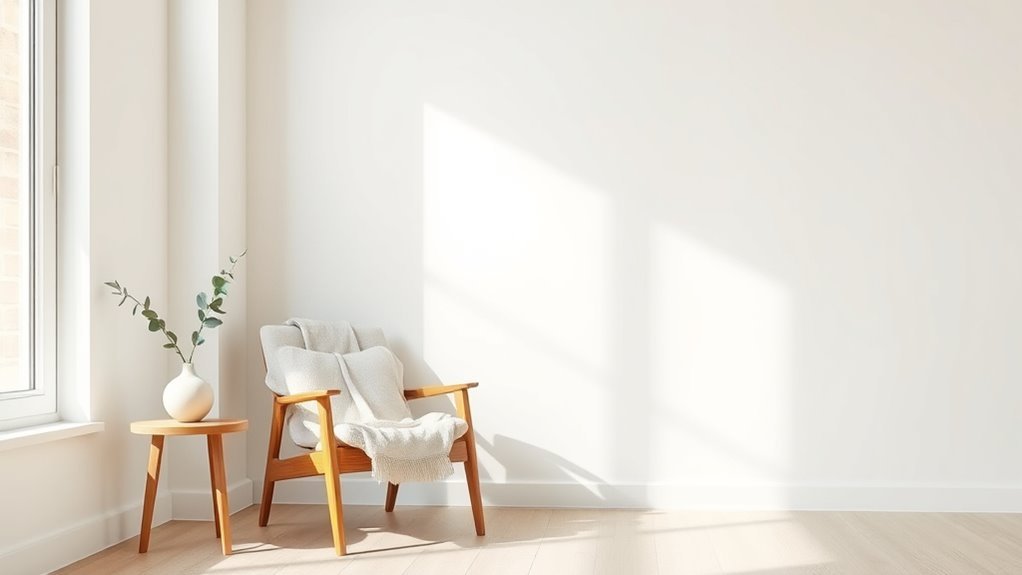
Although flat white paint won’t suit every room, it’s a great choice when you want a soft, non-reflective finish that hides minor wall flaws and creates a calm, modern look.
You should pick flat white if you value subtlety, low glare, and want walls that recede so furnishings stand out. Consider room traffic—flat finishes scuff more easily—so reserve them for low-touch spaces.
Think about color psychology: white feels clean, spacious, and neutral, aiding focus or relaxation.
Check for eco friendly options with low VOCs to keep indoor air quality healthy while achieving that understated aesthetic.
Flat White vs Other White Finishes: A Brief Comparison
Now that you know when flat white works best, compare it to other white finishes to pick the right sheen for each room. You’ll weigh appearance, durability, and upkeep while considering color psychology and environmental impact. Flat hides imperfections and soothes spaces, eggshell adds subtle warmth, and satin resists scuffs in high-traffic areas. Use the table below to guide choices.
| Finish | Best Use | Pros/Cons |
|---|---|---|
| Flat | Low-traffic, ceilings | Matte look; harder to clean |
| Eggshell | Living rooms, bedrooms | Soft sheen; moderate durability |
| Satin | Kitchens, trim | Durable, wipeable; slightly reflective |
Why Homeowners Choose Flat White
Why do so many homeowners pick flat white? You choose it for clean simplicity: flat white reflects minimal glare, creating a calm backdrop that supports color psychology principles—neutrality soothes and lets furnishings stand out.
You’ll appreciate how imperfections get disguised; walls appear uniform without busy shine. Maintenance-wise, you expect decent paint longevity when you use quality formulations and proper prep, even if touch-ups are occasional.
It’s versatile across styles, from modern to traditional, and pairs easily with trim or accent hues. Overall, you opt for flat white because it balances aesthetic restraint with practical, long-lasting results.
Key Drawbacks of Flat White You Should Know
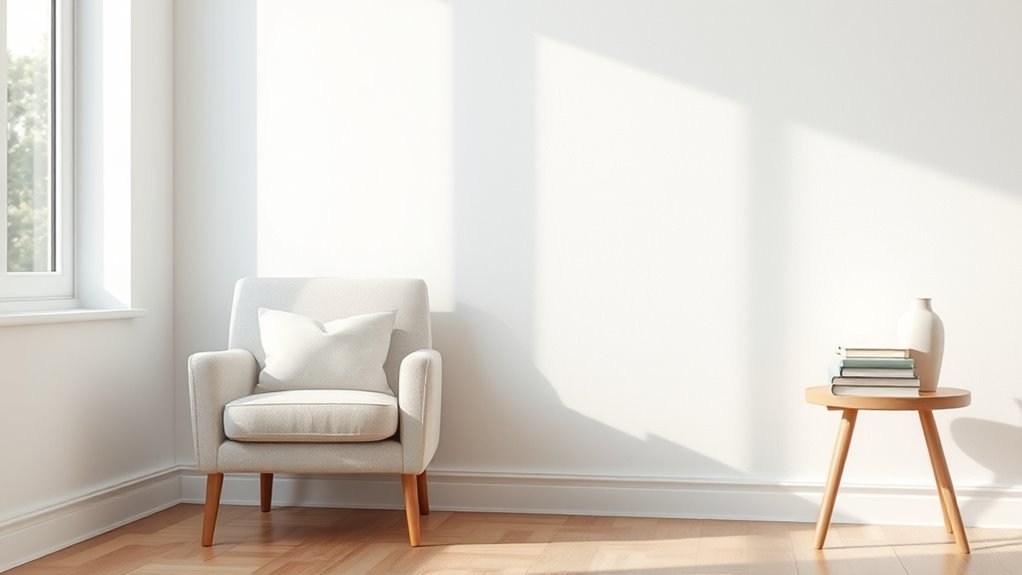
Before you commit to flat white, know it shows marks easily and can make scuffs and fingerprints stand out. You’ll also find it’s harder to clean than glossier finishes, so stains can linger.
That lack of durability makes it a poor choice for high-traffic areas.
Shows Marks Easily
Although flat white gives walls a soft, modern look, it also makes scuffs, fingerprints, and smudges stand out more than glossier finishes. You’ll notice that subtle variations in paint texture catch light differently, highlighting imperfections that a satin or semi-gloss would hide.
Because flat white often has low color saturation, marks create sharper contrasts against the muted backdrop, so everyday contact becomes more visible. If you want a pristine appearance in high-traffic areas, plan for touch-ups or protective measures.
Consider placement, furniture arrangement, and expectations—flat white looks elegant but reveals wear more readily than other sheens.
Hard To Clean
Because flat white lacks the durable, wipeable finish of higher sheens, you’ll find stains and smudges harder to remove without damaging the paint. You’ll need a stricter cleaning schedule to catch marks early, since aggressive scrubbing leaves visible wear.
Flat white’s lower stain resistance means common spills and fingerprints soak in more readily, so spot-cleaning often isn’t enough. Use gentle cleaners, soft cloths, and blot instead of rub to minimize abrasion.
If you want low-maintenance walls, consider higher-sheen alternatives in busy rooms; otherwise accept more frequent, careful upkeep to preserve the look.
Lacks Durability
When you choose flat white for your walls, know it won’t stand up to wear the way eggshell or satin will. You’ll notice durability concerns sooner in high-traffic rooms because flat finishes lack the resilience of glossier sheens.
Scuffs, scratches, and marks mar the look and you’ll often need to repaint rather than spot-treat. Surface adhesion can be weaker on some substrates, so chips and peeling show up where prep was minimal.
If you want a long-lasting, low-maintenance wall, pick a finish engineered for resilience. Reserve flat white for low-traffic areas or decorative ceilings.
Best Rooms for Flat White
Where should you use flat white? You’ll often choose it for low-traffic bedrooms, home offices, and ceilings where its soft, non-reflective finish helps create calm.
Consider color psychology: flat white reads warm or cool depending on lighting and nearby hues, so test swatches. In guest rooms and meditation spaces it fosters relaxation without glare.
Use it on textured walls to hide imperfections and in low-use hallways to unify small areas.
Remember paint scent can linger, so ventilate during and after painting.
When to Avoid Flat White in High-Traffic Areas
If you expect heavy wear, skip flat white on walls that get constant contact—like entryways, kids’ playrooms, and busy kitchens—because its matte finish stains and scuffs easily and won’t stand up to frequent cleaning. You’ll regret it when fingerprints, crayon marks, and grease build up; repairs require repainting rather than spot cleaning.
Choose more durable sheens or washable coatings for those zones. Consider color psychology: high-traffic areas benefit from forgiving tones that hide marks and promote calm.
Also weigh environmental impact from more frequent repainting versus using tougher, longer-lasting finishes to reduce waste and VOC emissions.
How Flat White Affects Perceived Room Size

Because flat white reflects light evenly without glare, it can make small rooms feel more open and airy by minimizing visual distractions and extending perceived surfaces. You’ll notice edges blur, ceilings appear higher, and furniture recedes slightly, which supports Color psychology principles that link light tones to spaciousness and calm.
You’ll also consider environmental impact when choosing low-VOC flat whites to keep airy effects without harming indoor air quality. Use contrast, texture, and scale to avoid blandness while retaining openness.
- Paint expansive walls flat white
- Keep trim subtle but defined
- Use minimal, scaled furniture
- Add matte textures
- Select low-VOC formulas
How Lighting Changes Flat White’s Appearance
When you change the light in a room, flat white can shift from crisp and clean to soft and warm, or even cool and clinical, depending on the light’s direction, color temperature, and intensity.
Change the light and flat white can read crisp, warm, or cool—its mood follows direction, temperature, and intensity.
You’ll notice northerly or shaded light makes flat white look cooler and more clinical, while warm bulbs add coziness.
Directional lighting emphasizes paint texture, revealing subtle imperfections or matte depth.
Bright, even light keeps the tone neutral and expands space visually.
Use color psychology to match mood: cooler light for focus, warmer for comfort.
Test samples at different times to see real effects before committing.
Which Natural Light Suits Flat White?
Although flat white stays versatile, north-facing rooms usually suit it best because the cooler, even daylight prevents the paint from looking too warm or yellow. You’ll notice subtle neutral tones hold true under steady natural light and stable color temperature.
South-facing spaces bring brighter, warmer shifts at midday, while east and west exposures vary with morning or evening warmth. Consider these effects when choosing trim, furnishings, and window treatments:
- North: consistent, cool color temperature, predictable appearance
- South: brighter, warmer midday cast
- East: warm mornings, softer afternoons
- West: warm evenings, deeper shadows
- Overcast: muted, true-to-tone light
How Artificial Lighting Alters Flat White Tones
When you switch on warm bulbs, flat white can take on a cozy, creamy cast.
Meanwhile, cool bulbs push it toward a crisper, bluer tone.
Pay attention to how different temperatures change perceived warmth or coolness across the room.
Also note that flat finishes show softer, less defined shadows, so lighting placement will strongly affect how texture and depth read on your walls.
Warm vs Cool Bulbs
Because the color temperature of your bulbs changes how flat white reads, picking warm or cool lighting has a big impact on a room’s feel and perceived paint tone. You’ll notice how lighting contrast shifts highlights and midtones, and color temperature steers white toward creamy or crisp.
Choose bulbs to match the mood and furnishings, and test paint samples under desired fixtures.
- Warm bulbs (2700–3000K) soften flat white, adding warmth.
- Cool bulbs (3500–5000K) make flat white appear cleaner and brighter.
- Neutral bulbs preserve balance.
- High CRI reveals true undertones.
- Dimmer control alters perceived warmth.
Shadow Definition Effects
Lighting temperature affects flat white’s warmth, but the way artificial fixtures shape shadows also alters how you perceive its tone. You’ll notice sharper fixtures increase shadow depth, making flat white look cooler and more contrasty. Softer fixtures with good light diffusion reduce contrast, yielding a warmer, more even appearance. Position lights to control edges and avoid glare that exaggerates texture. Test several fixtures and angles before committing. Use dimmers to adjust mood and observe shadow transitions at different levels. Compare results in the same room at night to guarantee consistent perception.
| Fixture Type | Effect |
|---|---|
| Directional spotlight | High shadow depth |
| Diffused pendant | Low shadow depth |
| Track lighting | Variable |
| Recessed can | Moderate |
How Undertones in Flat White Affect Color Matching
Although flat white looks neutral at first glance, its subtle undertones—cool blue, warm yellow, or greenish-gray—can shift how other colors read against it. You’ll notice how Color psychology and paint texture interact: a cool undertone makes hues crisper, a warm one softens contrast, and texture changes light reflection.
Test swatches at different times of day and beside furniture before committing. Consider these practical checks:
- Compare swatches under morning, noon, and evening light
- View samples next to dominant fabrics and woods
- Check adjacent room colors for flow
- Use small painted patches on all walls
- Assess both natural and artificial lighting
White Undertones That Pair With Common Palettes
Think about whether you want a warm or cool undertone in your flat white, because that choice will shift how other colors read in the room.
If you lean warm, it’ll cozy up beige, tan, and wood tones.
A cool white will crisp up grays and blue-based palettes.
Use undertones intentionally when pairing whites with neutrals so everything reads cohesive, not accidental.
Warm vs Cool Undertones
When you’re choosing a flat white for your walls, the undertone — warm or cool — will determine how it harmonizes with your furnishings and finishes. You’ll use warm whites to cozy a room, pairing with wood, brass, and eco-friendly options to emphasize comfort.
Cool whites brighten, supporting steel, glass, and modern lines. Think about color psychology: warm feels inviting, cool feels crisp. Test swatches in real light and beside key pieces.
Consider maintenance and finish to keep undertones true.
- Warm whites: amber, cream
- Cool whites: blue, gray
Test in daylight.
Match metals.
Try eco paints.
Pairing With Neutrals
Because white undertones set the stage for every other color in the room, you’ll want to choose a flat white that complements your existing neutral palette rather than clashes with it. Consider warm creams with beige palettes, cool blues with gray schemes, and pure whites for minimalist looks. Use color psychology to influence mood: warm whites feel cozy, cool whites feel crisp. Note historical trends favoring warmer whites in traditional homes and cooler whites in modern spaces. Match undertone intensity to furnishings to avoid visual friction.
| Palette | Suggested Undertone | Effect |
|---|---|---|
| Beige | Warm cream | Cozy |
| Gray | Cool white | Crisp |
| Minimal | Pure white | Fresh |
How Flat White Works on Textured vs Smooth Walls
Although flat white absorbs light and minimizes sheen, its appearance changes a lot depending on your wall’s surface. On smooth walls it offers a soft, even finish, while on textured surfaces it can mute highlights and deepen shadowed crevices, making texture more noticeable.
You’ll choose based on style and maintenance: smooth walls read cleaner and reflect subtle color shifts, while textured finishes show depth and can hide minor wear, affecting paint longevity.
Consider application and touch-ups, since flat hides brush marks less on smooth surfaces.
- Smooth walls: consistent, modern look
- Textured finishes: added depth
- Touch-up visibility varies
- Maintenance implications
- Longevity depends on substrate
When Does Flat White Best Hide Wall Imperfections?
Flat white’s low-sheen surface helps mask small flaws by scattering light instead of reflecting it directly.
In dimmer rooms those forgiving properties get boosted, so imperfections are less noticeable.
Just remember that flat white works best on already smooth, well-prepped walls—deep gouges and heavy texture will still show through.
Low-Sheen Surface Masking
When you want to downplay minor surface flaws—like small cracks, nail holes, or uneven texture—a low-sheen flat white does the job best because it scatters light instead of reflecting it, which makes imperfections less noticeable. You’ll find it ideal for older walls or imperfect drywall, and it supports neutral color psychology by keeping spaces calm and unobtrusive.
Choose water-based low-sheen formulas to reduce VOCs and minimize environmental impact while maintaining touch-up ease. Apply evenly with a brush and roller; avoid heavy buildup. Consider priming patched areas first for consistent absorption.
- inspect surface
- use primer
- thin coats
- proper drying
- touch-up ready
Dim Lighting Benefits
Because dimmer light reduces surface reflections, you’ll find low-sheen white especially forgiving in rooms with soft, indirect illumination—shadows soften texture and small flaws practically disappear, making walls look smoother without extensive prep.
You’ll notice the lighting ambiance matters: pendant, lamp, or shaded fixtures create gentle contrast that conceals minor bumps and nail holes. Cooler or warmer color temperature shifts perception of depth, so test swatches under evening and daytime bulbs.
Avoid bright, direct lamps that highlight imperfections. In short, dim, well-considered illumination lets flat white perform best at hiding flaws while preserving a calm, cohesive finish.
Smooth Wall Prerequisite
If your walls are already smooth and well-prepped, flat white will do the best job of masking minor blemishes; it relies on an even surface to minimize shadows and keep the finish looking uniform.
You’ll notice flat white hides small dents and hairline cracks only when sanding, priming, and skimming create a consistent substrate. Avoid applying it over strong texture patterns or rough patches, since the low-sheen paint finish won’t disguise pronounced relief.
Prepare properly, and flat white yields a calm, cohesive backdrop. Consider these prep steps before painting:
- Sand irregular spots smooth
- Apply a quality primer
- Skim-coat deeper flaws
- Match surface porosity
- Inspect under varied light
How to Test Flat White Samples at Home
Although flat white can look crisp on a paint strip, you’ll want to try samples on your actual walls to see how they behave in your space.
Paint three small panels—north, south, and a shaded corner—to observe light shifts. Check at different times: morning, midday, evening.
Note how the flat finish hides imperfections and how color psychology influences mood; cooler whites feel clinical, warmer tones feel cozy.
Smell wet samples briefly to gauge environmental impact from VOCs.
Live with each swatch for a few days, view with your furnishings, and photograph them under the room’s typical lighting before deciding.
What Primer to Use Before Flat White
When you’re prepping walls for flat white paint, choose a primer that blocks stains, evens out porosity, and promotes adhesion so the flat finish looks smooth and true.
Pick a high-hide, low-VOC acrylic primer for general walls; it respects paint eco-friendliness while ensuring a uniform undertone and letting the color psychology of white read as clean and calm.
For problematic surfaces, use stain-blocking or shellac primers.
On new drywall, use a drywall-specific primer-sealer.
For glossy surfaces, sand and use a bonding primer.
- High-hide acrylic, low-VOC
- Shellac for severe stains
- Drywall primer-sealer
- Bonding primer for gloss
- Odor-reducing options
How Many Coats of Flat White You’ll Need
Because flat white has low sheen and modest hiding power, you’ll usually need two coats for even coverage on properly primed walls. Darker or repaired areas may require a third coat.
Apply the first coat thinly to seal and the second for uniformity. If you want to avoid streaks, inspect under varied light and touch up sparingly.
Remember that additional coats deepen color perception—affecting color psychology by making spaces feel calmer or more opaque.
Also consider environmental impact: using higher-quality, higher-opacity paints can reduce coats, saving paint and lowering VOC emissions.
Aim for efficiency without sacrificing finish.
How to Prep Walls for a Flawless Flat-White Finish
Before you open a can, clear the room and repair any flaws so the flat-white finish can sit on a smooth, clean surface. You’ll inspect wall texture for dents, cracks, or peeling; sand high spots and feather edges to blend repairs.
Before painting, clear the room and fix dents, cracks, or peeling so the flat-white finish lies smooth.
Clean walls with a mild detergent to remove dust and grease so primer adheres. Use a stain-blocking primer where needed to unify absorbency and control paint sheen.
Tape trim and cover floors. Follow drying times before painting so your flat-white results are even and durable.
- Remove switch plates
- Patch holes
- Sand rough areas
- Clean surfaces
- Apply primer
Best Tools for Applying Flat White
If you want a smooth, even flat-white finish, pick tools that match the paint’s low sheen and your wall texture.
Use a high-quality synthetic roller with 3/8″ nap for smooth walls, and 1/2″–3/4″ for light texture.
Choose a dense angled brush for cut-ins to minimize brush marks.
A foam roller can clog with flat paint—avoid using it on large surfaces.
Keep a microfiber roller sleeve for touchups.
Use a sturdy extension pole and a quality tray.
Remember color psychology: flat white absorbs light differently, so consistent application matters.
Match tools to paint texture for uniform coverage and true color.
How to Touch Up Flat White Without Visible Seams
When you touch up flat white, start by matching the original paint exactly to avoid obvious color shifts.
Then feather and blend the new paint into the old with a light brush or roller to soften the edges.
If the wall has texture, reproduce it with small stippling or a texture tool before the paint dries so the repair disappears.
Match Paint Exactly
Because flat white can shift with age, lighting and finish, you’ll need to match the original paint exactly to avoid visible seams when you touch up a wall. You’ll first confirm sheen, batch, and brand; color psychology matters for mood, so preserve the original undertone. Test small swatches on the wall and view them at different times.
Consider eco friendly options if you need new paint. Prep the spot by cleaning and sanding lightly so repairs sit flush.
- note brand and batch number
- compare sheen with a card
- apply discreet test patches
- document undertones
- choose low-VOC or zero-VOC
Feather And Blend
Wondering how to make a touch-up disappear? You’ll feather and blend small areas by thinning paint slightly, using a soft brush or mini roller, and working outward in light, overlapping strokes.
Match sheen and temperature, then feather edges so new paint tapers into old without a hard line. Study nearby texture patterns and mimic the surrounding stipple or smoothness; don’t create a new pattern.
Let each coat dry fully before evaluating. Keep lighting consistent to judge success—color psychology means subtle differences show more under bright, cool light.
Finish sparingly; multiple thin layers beat one heavy swipe.
Texture Touch Techniques
Feathering helped the paint edge disappear, but matching texture is what hides a touch-up completely. You’ll inspect the surrounding finish, choose tools that mimic it, and test on a scrap before committing.
Consider how texture affects light and Color psychology; smoother patches read brighter, stipple holds shadow.
- Match roller nap or brush type to the existing texture.
- Thin paint slightly for better blending without losing opacity.
- Use a stipple brush or sponge for subtle popcorn or orange-peel effects.
- Lightly sand blending points once dry, then recoat if needed.
- Prefer eco friendly options like low-VOC formulas for safer touch-ups.
Durability: How Long Flat White Holds Up
While flat white creates a smooth, elegant look, it doesn’t stand up to wear the way satin or semi-gloss do, so you should expect touch-ups sooner in high-traffic areas. You’ll notice scuffs show more, so plan maintenance cycles accordingly. Consider color psychology—flat white reads calm and clean, but frequent repairs can undermine that effect. Also weigh environmental impact: more repainting raises VOC exposure and material use. Use durable primers and avoid heavy-contact zones. Below is a quick durability snapshot:
| Area | Expected Lifespan |
|---|---|
| Low-traffic | 5–7 years |
| Moderate | 3–5 years |
| High-traffic | 1–3 years |
How Cleanable Is Flat White Paint?
Durability affects how often you’ll need to clean or repaint, and that reality shapes what you can expect from flat white when it comes to maintenance. You’ll notice cleaning challenges because flat finishes show scuffs and smudges more, and they don’t hide marks the way eggshell or satin can.
That said, flat white offers aesthetic versatility; it creates a crisp, modern backdrop that you can refresh visually. Be gentle when cleaning to avoid removing pigment. Consider spot-treating and repainting small areas instead of aggressive scrubbing.
Practical tips include:
- Test a small area first
- Use soft, damp cloths
- Mild soap only
- Blot, don’t rub
- Repaint touch-ups
Flat-White Formulations That Resist Stains
If you want flat white that stands up to everyday stains, look for formulations labeled “washable” or “stain-resistant”—manufacturers add polymers and specialized binders to improve surface toughness without increasing sheen.
You’ll notice these blends resist scuffs, fingerprints, and mild spills better than traditional flat paints, so you can maintain a clean, calm backdrop that supports color psychology choices in living spaces.
Check technical sheets for scrub ratings and VOC content to balance performance with environmental impact. Apply and cure per instructions to maximize durability.
When to Choose Washable Flat White Options
When you need the soft, muted look of flat white but expect occasional marks or light traffic, choose a washable flat-white formulation; you’ll keep that calm tone without constant touch-ups.
Think about color psychology—flat white still soothes, but durability lets you use it where family life happens. Pick eco-friendly options if you want low VOCs and easy maintenance.
Use washable flat white in transitional spaces, nurseries, rental units, and entryways.
Consider finish subtly: select products designed for cleaning without adding sheen.
- Hallways with frequent contact
- Kid and pet areas
- Rental or high-turnover rooms
- Entry and mudroom walls
- Lightly used kitchens
How Sheen Level Affects Maintenance and Cleaning
Choosing a washable flat-white was smart for busy areas, but the paint’s sheen still shapes how you’ll clean and maintain walls.
You’ll notice higher sheen levels resist scuffs and wipe clean with a damp cloth more easily, while lower sheens hide imperfections but absorb stains and show marks longer.
For kitchens and hallways, consider a subtle gloss finish or satin to balance durability and appearance; in low-traffic rooms, a flatter finish reduces glare yet demands gentler spot cleaning.
Match cleaning methods to sheen levels: use mild detergent and soft cloths on low sheen, firmer scrubbing only on tougher, glossier surfaces.
Choosing Between Flat and Matte White Finishes
Although both flat and matte whites look similar at first glance, they behave differently on your walls and in daily life. You’ll notice flat hides imperfections best, while matte offers slight durability for light cleaning. Consider how Color psychology affects mood: flat feels softer and more subdued; matte reads a touch richer.
Flat and matte whites look alike but differ: flat hides flaws and feels softer; matte cleans lightly and reads richer.
Also weigh environmental impact: some low-VOC matte formulas perform better long-term. Choose flat for cozy, low-traffic rooms; pick matte where subtle sheen helps resist scuffs.
- Flat conceals texture
- Matte resists mild cleaning
- Flat feels more intimate
- Matte reflects minimal light
- Both suit neutral schemes
When to Pick Eggshell or Satin Instead of Flat
If your walls get a lot of traffic or you need surfaces that wipe clean easily, you’ll want to contemplate eggshell or satin instead of flat. These finishes resist scuffs and tolerate repeated cleaning better than flat paint.
Pick satin for the most durability and eggshell for a subtle, easier-to-maintain option.
High-Traffic Durability Needs
When you need walls that stand up to daily scuffs, fingerprints, and frequent cleaning, skip flat and go with eggshell or satin instead. You’ll get tougher finishes that resist wear while preserving Color psychology choices—sheens can subtly change perceived brightness—and reduce Environmental impact by extending paint life and lowering recoat frequency.
Choose eggshell for moderate traffic and a soft look; pick satin for hallways, kids’ rooms, and entryways that see constant use. Consider surface prep and quality latex for longevity.
- durability for touch-prone areas
- hides minor imperfections better than gloss
- longer repaint intervals
- works with washable formulas
- maintains aesthetic balance
Easy-Cleaning Surfaces
Because you’ll be wiping smudges, spills, and grubby handprints regularly in high-use spaces, choose eggshell or satin over flat for their cleanability and durability. You’ll appreciate a finish that resists scuffs and lets you wipe without ghosting.
In kitchens, kids’ rooms, and hallways, practical sheen beats the soft matte of flat. Consider color psychology: a slightly reflective finish reads cleaner and livelier, helping spaces feel brighter even with forgiving white tones.
Guarantee proper paint ventilation when scrubbing and recoating to avoid fumes. Pick washable formulas labeled for high-traffic areas, and test a small patch before committing.
Which Trim and Ceiling Finishes Pair With Flat White
Though flat white walls read as soft and understated, the trim and ceiling finishes you choose define the room’s personality and polish. You’ll use color psychology to decide contrast or harmony: bright white trim sharpens edges, while off-white or warm creams soften them.
Consider eco-friendly options like low-VOC semi-gloss for trim and matte low-VOC for ceilings. Choose sheen for durability in high-traffic rooms and matte for subtle ceilings.
Match trim style—simple, colonial, or modern—to architectural details so finishes feel intentional.
- Bright white semi-gloss for crisp contrast
- Off-white satin for warmth
- Matte low-VOC ceiling paint
- Eggshell for subtle sheen
- Clear-coated wood trim
How Flat White Influences Furniture and Decor Choices
After picking trim and ceiling finishes, think about how flat white walls set the stage for your furniture and decor. Flat white reads as a neutral backdrop that absorbs light and mutes reflectivity, so your choices will stand out by color, texture, or silhouette rather than sheen.
You’ll lean on color psychology to guide mood: warm woods and ochres feel cozy, cool metals and blues feel calm. Textiles, sculptural pieces, and plants provide contrast without glare.
Choose finishes and furnishings that suit lifestyle and maintenance needs, and consider eco-friendly options—low-VOC materials and sustainably sourced furniture complement flat white’s understated canvas.
How to Layer Accent Colors Over Flat-White Walls
When you layer accent colors over flat-white walls, start with a clear plan for scale and balance so the room feels intentional rather than staged. You’ll pick one dominant accent, a supporting tint, and small pops that echo color psychology to set mood.
Test swatches at different times of day and consider textures to prevent flatness. Choose paints and finishes with eco friendly options to reduce VOCs without sacrificing pigment.
Apply accents via art, trim, textiles, or a single feature wall to control impact.
- Dominant accent
- Supporting tint
- Small pops
- Texture choices
- Low-VOC paints
When Flat White Helps Modern and Minimalist Styles
If you want a backdrop that makes clean lines and uncluttered forms sing, flat white delivers by minimizing reflections and visual noise so furniture and architecture take center stage.
You’ll appreciate how its neutral canvas supports sparse layouts, letting texture, shape, and negative space define each room.
Color psychology favors white for clarity and calm, helping you feel focused and uncluttered.
Flat white also simplifies lighting choices and pairs easily with muted or bold accents.
Consider low-VOC flat formulas to reduce environmental impact while keeping that matte, serene aesthetic—practical, modern, and deliberately minimal.
Why Flat White Works for Galleries and Art Displays
When you’re curating artwork, flat white gives you a neutral backdrop that keeps attention on the pieces rather than the walls. It also helps control light reflection, reducing glare and preserving color fidelity.
That combination makes flat white a dependable choice for galleries and displays.
Neutral Backdrop Benefits
Because flat white minimizes glare and visual noise, it lets your artwork take center stage without competing for attention. You’ll find it supports color psychology by offering a neutral field that clarifies hue relationships and emotional impact.
In interior architecture, that neutrality helps sightlines feel cohesive, guiding viewers from piece to piece. You’ll notice compositions read truer, textures remain legible, and spatial balance improves. Use flat white when you want unobtrusive walls that prioritize exhibits.
- Enhances perceived color accuracy
- Maintains focus on artworks
- Simplifies curatorial decisions
- Reinforces minimalist displays
- Encourages consistent gallery flow
Light Reflection Control
Although flat white seems plain, it gives you precise control over light by absorbing stray glare and reflecting soft, even illumination back into the room.
You’ll find galleries use it to prevent hotspots that steal attention from art, letting colors read accurately and supporting color psychology that emphasizes calm focus.
Flat finish minimizes specular highlights, so viewers see texture and detail without distraction.
You’ll also appreciate its modest environmental impact when you choose low-VOC formulations and durable finishes that reduce repainting.
In short, flat white helps you manage visual clarity and atmosphere, keeping artworks true and viewers engaged.
When Flat White Can Make a Space Feel Cold
If you rely solely on flat white in a room with limited natural light or cool-toned furnishings, the space can start to feel stark and chilly. You notice how color psychology ties white to sterility, and low-reflective paint sheen can mute warmth, emphasizing shadows and hard edges. That can make rooms feel less inviting, especially in north-facing spaces or modern minimalist schemes.
Watch for these cues that flat white is cooling a room:
- Pronounced shadows at corners and trim
- Surfaces that lack depth or contrast
- Cool undertones in textiles or fixtures
- Sparse ambient lighting
- A feeling of clinical austerity
How to Warm Up Flat White With Textiles and Lighting
If your flat white walls feel chilly, you can warm the room instantly by layering warm textiles like wool throws, linen cushions, and a sisal rug.
Add ambient lighting—soft overhead or wall sconces—for an overall glow, then use task lights like table or floor lamps to create cozy pockets.
Together, these elements bring texture and warmth without changing the paint.
Layered Warm Textiles
When you pair flat white walls with layered, warm textiles and soft lighting, the room instantly feels more inviting—think plush rugs, linen throws, and velvet pillows in muted earth tones that introduce depth without competing with the paint.
You’ll use layered textiles and textile layering to create tactile contrast, anchoring seating areas and softening echoes. Choose natural fibers and mix scales: chunky knits, smooth linens, low-pile rugs, and woven baskets.
Keep patterns subtle and colors cohesive so the white reads warm, not clinical.
- Chunky knit throw
- Linen cushion covers
- Low-pile wool rug
- Velvet accent pillows
- Woven storage baskets
Ambient And Task Lighting
Because flat white can read crisp or cold, layering ambient and task lighting lets you shape its warmth and mood while keeping the walls bright, not sterile. You’ll use soft overhead fixtures for even ambient glow and adjustable task lamps for reading or work, avoiding harsh shadows that make white feel clinical.
Pair warm bulbs with textured textiles—wool throws, linen curtains—to introduce tactile warmth and reinforce color psychology cues that signal comfort.
Keep fixtures away from poorly ventilated areas where paint ventilation matters during application.
Aim for dimmable controls so you can tune light levels and shift flat white from fresh to cozy.
Which Paint Brands Offer the Best Flat-White Options
While many brands make flat-white paints, a few stand out for consistent coverage, low sheen, and true neutral tones that suit most walls. You’ll want brands that respect color psychology, offering clean whites without blue or yellow bias, and that minimize environmental impact with low-VOC formulas.
Choose flat-white paints known for true neutrals, low sheen, reliable coverage, and low‑VOC, unbiased tones.
Consider these trusted options when choosing flat white:
- Benjamin Moore (Regal, Aura) — balanced neutrals, reliable tinting
- Sherwin-Williams (Pure White options) — broad palette, good consistency
- Farrow & Ball (dead flat finishes) — designer neutrals, depth control
- Behr (Marquee, Ultra) — accessible, decent low-VOC choices
- PPG Porter — professional-grade with neutral bases
How Flat-White Formulas Differ for Durability and Coverage
You’ll notice flat-white paints vary because manufacturers balance pigment and binder differently to affect opacity and film strength.
The paint’s low sheen usually sacrifices some durability, but higher-quality binders and additives can improve resistance to scuffs and moisture.
Coverage often comes down to pigment load and coat thickness, so you may need more coats of a thinner formula to get full uniformity.
Pigment And Binder Balance
When you look at a can of flat white paint, the real trade-off happens between pigment and binder: more pigment boosts hiding power and color consistency, while more binder improves adhesion and durability. You decide based on surface needs, traffic, and even color psychology—higher pigment keeps true white tones; higher binder resists scuffs.
Consider environmental impact too: formulations vary in VOCs and recyclable content. Balance affects touch-up ease and longevity. Evaluate labels and sample first.
- Pigment concentration for coverage
- Binder type for flexibility and film strength
- VOCs and eco-certifications
- Touch-up matching difficulty
- Expected lifespan under wear
Sheen Impact On Durability
Although flat white sits at the low end of the sheen scale, its formulation still directly affects how durable and opaque the finish will be, so you should compare pigments, binders, and film thickness rather than assume all flat whites perform the same.
You’ll notice sheen variations even within flat categories: higher pigment concentration and stronger binders boost hardness and resistance to scuffs, while cheaper formulas chalk and wear faster.
Inspect labels for alkyd or high-quality acrylic binders to predict finish longevity.
Choose a reputable brand and consider the room’s traffic to match flat white durability to your practical needs.
Coverage And Coat Thickness
Because flat-white formulas vary so much in pigment load and binder content, coverage and the number of coats you’ll need can differ widely. You’ll notice heavier pigments hide stains and require fewer coats, while low-VOC blends may need extra layers to achieve uniformity.
Consider how finish affects perceived brightness and color psychology: more even coverage feels cleaner and calmer. Also weigh environmental impact when choosing higher-opacity, lower-toxicity options.
Plan for two to three coats on new drywall, spot-prime problem areas, and test a small patch first.
- Pigment concentration
- Binder quality
- Primer necessity
- Coat thickness
- Drying time
Eco-Friendly Flat White Paints to Consider
If you’re trying to minimize indoor toxins and environmental impact, eco-friendly flat white paints give you a clean, matte finish without the harmful off-gassing of traditional options. You’ll look for labels highlighting low or zero VOCs, eco friendly ingredients like plant-based binders and mineral pigments, and certifications from trusted programs.
Compare coverage so you don’t need extra coats, and choose brands that offer paint recycling programs or take-back initiatives to limit waste. Test small samples to confirm color and durability on your wall.
With informed choices, you’ll get a safe, attractive flat white that’s kinder to people and the planet.
How to Evaluate Sheen Labels and Technical Specs
When you’re choosing flat white paint, don’t rely on marketing alone—read the sheen labels and technical specs to know what performance you’re actually getting. You’ll check sheen percentage, durability ratings, and VOC counts to match room use.
Pay attention to instructions on application tools, recommended coats, and drying times because they affect paint texture and final look. Also note any color mixing guidance to avoid unintended tints.
Use specs to compare products rather than names.
- Sheen percentage (flat, matte, eggshell)
- Scrub/durability rating
- VOC level
- Recommended coats/application
- Color mixing notes and undertones
Budget Tips When Choosing Flat White
When shopping for flat white, compare coverage rates so you know how many coats you’ll need and how much paint to buy.
Consider affordable brands with good reviews, since a lower price doesn’t always mean lower quality.
Also watch for sales and try samples first to avoid wasting money on the wrong shade.
Compare Paint Coverage
How many coats will you actually need to cover your walls with flat white? You’ll gauge coverage by surface texture, existing color, and primer use—remember color psychology influences how bright that white reads, and paint scent can hint at formulation quality.
Compare advertised spread rates and real-world results before buying.
- Measure wall area precisely
- Note previous wall color and stains
- Factor in primer vs. direct application
- Test a small patch to count coats
- Compare cost per usable square foot
That way you’ll avoid overbuying, limit odor exposure, and get the true coverage you need.
Choose Affordable Brands
1 practical rule: focus on the paint’s usable cost per square foot, not just the sticker price. When you’re choosing affordable brands, compare coverage claims and real-world performance to find the best value.
Consider how color psychology affects perception—flat white can make spaces feel calm or clinical depending on lighting—so pick a formulation that complements your intent.
Don’t ignore paint texture; cheaper options vary in finish consistency, which influences touch-ups and hiding imperfections.
Read reviews, check data sheets for VOCs and hide, and prioritize brands that balance coverage, durability, and the look you want without overspending.
Shop Sales And Samples
You’ve picked a brand that balances coverage and finish, now stretch your budget further by timing purchases around sales and testing with samples. You’ll save money and avoid costly repaints by sampling flat white tones in your actual room light, noting how color psychology shifts mood from crisp to cozy.
Compare sample swatches for undertones and evaluate paint texture on walls to confirm the finish you want. Watch retailer promotions, clearance cans, and contractor discounts. Buy only what you need after testing.
- Track seasonal sales and coupons
- Test peel-and-stick swatches
- Buy small sample pots
- Inspect texture on different walls
- Use return-friendly retailers
Common Mistakes That Ruin Flat-White Paint Jobs
Even when flat white seems forgiving, a handful of avoidable mistakes will leave your walls streaky, chalky, or uneven—so prep, application, and product choice really matter. You’ll regret skipping cleaning; dirt and grease stop adhesion and highlight flaws. Don’t ignore primer—flat finishes need it for uniform color and to respect color psychology if you’re aiming for warmth or coolness.
Avoid over-thinning or using the wrong roller nap; both cause patchiness. Beware cheap or expired cans, even so-called eco-friendly paints that sacrifice pigment load. Lastly, paint in inconsistent light or humid conditions, and you’ll see uneven drying and visible flaws.
How to Repair Scuffs and Marks on Flat-White Walls
When scuffs and marks show up on flat-white walls, you can often make them disappear with a few simple steps that avoid disturbing the paint’s matte look. You’ll start by gently cleaning with a soft sponge and mild detergent, testing an inconspicuous area.
Use a magic eraser lightly for stubborn spots, then rinse and dry.
For tiny chips, touch up with matching flat white from proper paint storage, stirred and labeled.
Remember how Color psychology affects perception—clean walls read brighter and calmer.
Follow this concise routine to preserve finish and room mood.
- Test area first
- Gentle cleaning
- Light abrasion only
- Properly mixed touch-up
- Label and store paint
When Repainting Flat White Beats Spot Touch-Ups
If touch-ups keep standing out or the wall shows widespread fading, it’s time to repaint the flat white rather than keep patching, because full coats restore uniform color, sheen, and coverage that spot fixes can’t match.
You should repaint when multiple scuffs, uneven paint texture, or sun-bleached areas distract from the room’s mood. A fresh flat white renews color psychology benefits—calm, brightness, perceived space—and eliminates inconsistent patches that draw the eye.
Repainting also fixes surface absorbency differences that cause blotchy spots. Choose proper prep and a quality flat white to guarantee consistent texture and long-lasting results.
Using Flat White in Rentals and Staging
After you decide a full repaint is the right move, consider how flat white performs in rentals and staging: it hides minor surface flaws, creates a neutral backdrop that appeals to most renters and buyers, and masks previous tenant choices better than bold colors. You’ll use it to brighten spaces, standardize units, and simplify marketing photos.
Consider color psychology to convey cleanliness and calm, and pick low-VOC options to reduce paint odor for quick turnovers. Balance durability and touch-up ease so you don’t repaint constantly.
- Neutral appeal
- Cost-effective refresh
- Faster tenant turnover
- Photo-friendly lighting
- Low-maintenance finish
Professional Services That Improve Flat-White Results
If you want flawless flat-white walls, hire pros who focus on surface preparation techniques like patching, sanding, and priming to guarantee even absorption.
They’ll also use expert application methods—proper rollers, consistent strokes, and controlled layering—to avoid lap marks and streaks.
Trusting skilled contractors saves time and delivers the crisp, uniform finish flat white is supposed to give.
Surface Preparation Techniques
Because flat white shows every imperfection, prepping the walls is the single most important step for a professional-looking finish. You’ll want to assess damage, sand glossy spots, and clean surfaces so paint texture reads uniformly and color psychology isn’t undermined by shadows or stains.
Prime repaired areas to equalize porosity and choose a primer that complements the flat white’s undertone.
- Fill cracks and nail holes with spackle, sand smooth
- Degloss shiny enamel with sanding or deglosser
- Clean grease and dust with TSP substitute
- Apply stain-blocking primer where needed
- Feather edges for seamless blends
Expert Application Methods
When you hire a pro or follow pro-level techniques, the difference in a flat-white finish is immediately obvious. You’ll notice smooth coverage, consistent sheen, and thoughtful layering that uses color psychology to set mood. Pros test lighting, seal imperfections, and choose eco friendly finishes so rooms feel calm and healthy. You get precision edging, correct nap rollers, and right drying times. Expect advice on maintenance and touch-ups that preserves depth without gloss.
| Skill | Benefit | Feeling |
|---|---|---|
| Preparation | Flawless base | Relief |
| Priming | Even tone | Calm |
| Application | Uniform texture | Confidence |
| Finish | Low VOC | Trust |
Seasonal Effects on Flat-White Maintenance
As seasons change, you’ll notice flat-white walls show different kinds of wear and cleaning needs—winter’s dry air can make dust and pet hair stick, spring brings pollen and mud splatters, and humid summer months can highlight stains and promote mildew in poorly ventilated rooms.
As seasons shift, flat-white walls reveal different wear—dusty winters, pollen-streaked springs, and summer stains or mildew.
You should monitor for Seasonal paint peeling where temperature fluctuations cause expansion and contraction, keep vents clear, and clean spots promptly.
Follow these targeted tips to maintain finish and color consistency:
- Vacuum and dust high-traffic areas weekly
- Wash marks with mild detergent promptly
- Use dehumidifiers in damp seasons
- Touch up chips before they spread
- Repaint high-wear zones as needed
Does Flat White Improve Resale Appeal?
Seasonal upkeep affects how buyers perceive your home’s condition, so it’s worth considering whether flat white helps — or hurts — resale appeal. You want neutral, fresh walls that highlight space; color psychology favors whites for perceived cleanliness and light. But scuffs and staining show more on flat finishes, so upkeep matters. Also mention environmental impact: low-VOC flat paints can appeal to eco-conscious buyers. Use the table to weigh pros and cons.
| Benefit | Concern | Buyer Type |
|---|---|---|
| Brightens rooms | Shows marks | Minimalists |
| Neutral backdrop | Requires touch-ups | Eco-conscious |
Picking Complementary Whites for Doors and Trim
If you want your flat white walls to feel intentional rather than washed-out, pick trim and door whites that offer subtle contrast so architectural details pop. You’ll consider color psychology to set mood: warmer off-whites feel cozy, cooler creams feel crisp.
Match sheen and paint formulation for durability; semi-gloss on trim reads sharp against flat walls. Test swatches by doors and windows at different times of day. Aim for harmony, not match.
- Use a warmer white for traditional homes
- Choose a cooler white for modern spaces
- Pair undertones deliberately
- Prioritize high-quality paint formulation
- View samples in natural light
Quick Checklist for Choosing Flat White for a Room
When choosing a flat white for a room, focus on light, undertone, finish, and function so your walls look intentional rather than flat. Check natural vs. artificial light, note warm or cool undertones, and test swatches at different times. Consider color psychology—how white affects mood—and pick paint texture that hides imperfections without feeling heavy. Evaluate room use: calm bedroom, high-traffic hallway, or creative studio. Use this quick visual checklist:
| Light | Undertone | Function |
|---|---|---|
| Morning/evening samples | Warm vs cool hints | Bedroom, living, kitchen |
| Test swatch placement | Compare next to trim | Durability needs |
Final Decision Guide: Is Flat White Right for Your Walls?
Think about how the room gets used and what finishes you’ll need: choose flat for low-traffic ceilings and adult bedrooms. Avoid it where scuffs, moisture, or frequent cleaning are likely.
If you want a soft, non-reflective look and can live with lower durability, flat will serve you well.
For high-traffic areas, bathrooms, or kitchens, pick a more washable sheen instead.
When To Choose Flat
Because flat white hides imperfections better than glossier finishes, you’ll pick it when you want a smooth, understated backdrop that minimizes shine and visual clutter. Use flat white when you want calm color psychology, letting textiles and art set mood without competing glare.
It also helps when walls need forgiving coverage after repairs and when you prefer low-reflective surfaces for photography or screen work. Consider furniture compatibility: flat white pairs with bold or delicate pieces without creating harsh contrasts.
- Bedrooms and quiet living spaces
- Ceilings and trim in open-plan homes
- Galleries or art walls
- Rental properties needing easy touch-ups
- Rooms with textured plaster
When To Avoid Flat
Flat white can be perfect in many rooms, but there are clear situations where you should skip it.
If you need a durable, washable surface—high-traffic halls, kids’ rooms, or kitchens—flat finishes stain and scuff more easily, so choose satin or semi-gloss.
When you want to influence mood deliberately, consider color psychology: flat white can feel sterile or flat in spaces needing warmth or intimacy.
Also avoid flat on textured walls because it hides depth poorly and highlights imperfections.
Finally, consider environmental impact: some flat formulations trap VOCs or require more frequent repainting, increasing emissions over time.
Frequently Asked Questions
Can Flat White Paint Be Used on Kitchen Cabinets?
Yes — you can use flat white paint on kitchen cabinets, but you’ll sacrifice finish durability; consider Color options like eggshell or satin for tougher surfaces, and prep thoroughly so the paint adheres and cleans more easily.
Is Flat White Safe for Children’s Bedrooms and Nurseries?
Yes — you can use flat white, but compare contrast: its matte charm feels cozy while it can trap marks more than satin. You’ll want low-VOC or zero-VOC formulas to prioritize child safety and indoor air quality.
How Long Should Flat White Paint Cure Before Hanging Art?
You should wait about 2 weeks before hanging art so paint drying time and full cure occur; with proper wall preparation and stable temperature/humidity, light items can go up after 48 hours, heavier pieces need the full cure.
Will Flat White Yellow Over Time in Humid Climates?
Yes — flat white paint can yellow over time in humid climates, but you can minimize it: choose high-quality, moisture-resistant formulations and primers, guarantee good ventilation, and use paints with proven color longevity to keep whites looking true.
Can I Apply Wallpaper Over Freshly Painted Flat White Walls?
I wouldn’t—think of a cake that sank when frosted too soon; wallpaper adhesion suffers if paint hasn’t cured. Wait full paint drying time (usually 2–4 weeks for flat paint), then apply wallpaper confidently.
Conclusion
Flat white can be right for your walls if you prioritize a soft, modern look and don’t mind trading easy cleanup for low sheen charm. It hides imperfections, mutes glare, and anchors calm spaces, but it stains more easily and can feel flat in high-traffic areas. Weigh style against upkeep: if you want a serene canvas that reads elegant rather than practical, go for it—but don’t throw the baby out with the bathwater; test a patch first.
