
Do You Need to Use Primer Before Painting
You usually need primer when surfaces are porous, stained, damaged, bare wood, metal, or glossy, or when you’re switching from dark to light colors. Primer seals tannins and stains, evens porosity, and boosts adhesion so your topcoat lasts and covers better. You can skip it with high-quality self-priming paint on clean, similar-colored surfaces. Prep matters—clean, sand, and spot-prime as needed—keep going to see specific surface and primer choices.
What This Guide Helps You Decide
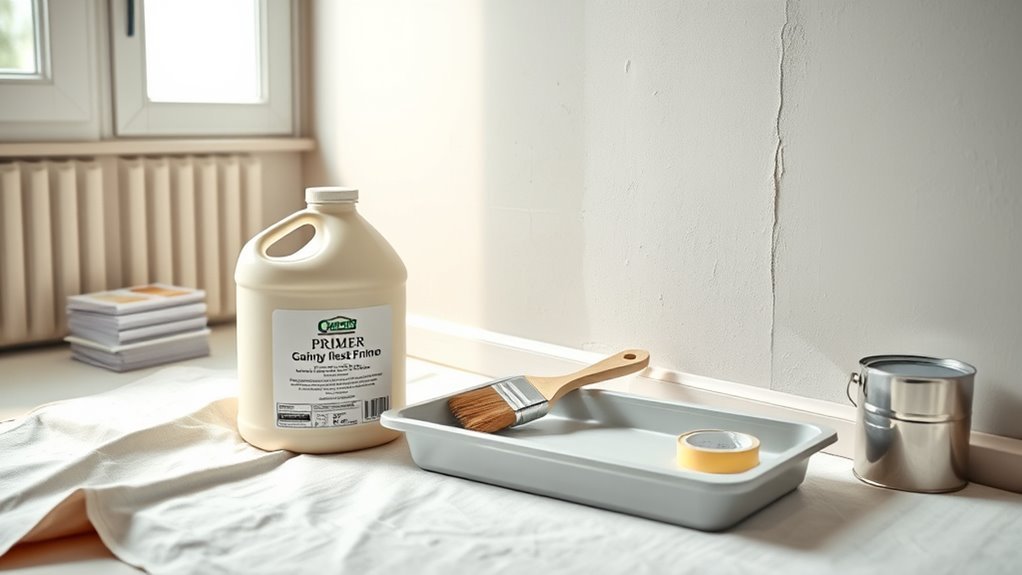
Wondering whether you really need primer or can skip straight to paint? You’ll get clear criteria to decide: surface condition, previous color, material porosity, and desired durability.
This guide helps you weigh cost versus long-term performance, how primer affects adhesion and stain blocking, and when a tinted primer saves coats.
You’ll also consider color psychology—how undertones and saturation influence primer choices—and how primer interacts with your chosen paint finish to alter sheen and coverage.
Quick Answer: When To Prime
If you’re working with new or bare surfaces, you should prime to seal and promote adhesion.
You’ll also want primer when you’re making a big color change so the new paint covers evenly.
And prime any areas with stains or damage to block bleed-through and create a sound base for repairs.
New Or Bare Surfaces
Got a brand-new wall or raw wood showing? You should prime new or bare surfaces to seal porous materials and promote adhesion.
Assess surface texture—smooth drywall soaks less than coarse plaster or raw pine—then pick a primer formulated for that substrate.
Use primer colors to influence final coverage: gray or tinted primers improve hide for mid-to-dark paints, while white boosts brightness.
Apply one even coat, sanding any raised fibers on wood afterward.
Primer prevents blotching, reduces the number of finish coats, and creates a uniform base so your paint looks consistent and lasts longer.
Color Change Needs
You’ve prepped new or bare surfaces, now consider how color changes affect priming needs. If you’re going lighter, primer prevents old pigment from showing through and reduces the number of topcoats.
Going darker? Primer still helps with uniformity but you can sometimes skip it if the existing coat is sound. For dramatic shifts or when using bold hues, prime to guarantee true color and avoid bleeding.
Use tinted primer for color blending to cut coats and boost coverage. Also choose primers that support texture enhancement when you want surface features to read consistently under the new color.
Stain Or Damage Repair
Having repaired holes, sanded scorches, or treated water stains, prime those areas before painting to seal repairs and block bleed-through. You’ll get better color blending and avoid patchy finish; primer aids texture smoothing so repairs don’t show. Choose stain-blocking or shellac primer for tannin or smoke, and use a bonding primer on glossy spots. Spot-prime repaired sections, feather edges, then paint. Quick checklist:
| Repair type | Primer choice | Tip |
|---|---|---|
| Water stain | Shellac/blocking | Seal fully |
| Holes/cracks | PVA/latex | Feather edges |
| Burn marks | Oil-based | Sand then prime |
| Glossy surface | Bonding | Scuff first |
60-Second Primer Checklist
Once the first coat’s cured, run through a quick second-primer checklist to make sure the surface’s ready for paint. You’ll confirm adhesion, evenness, and compatibility with your chosen color palettes while debunking primer myths that can tempt you to skip this step. Follow these three checks before painting:
After the first coat cures, run a quick three-step second-primer check to ensure adhesion, evenness, and color compatibility.
- Inspect for missed stains, tacky spots, or texture variations that need spot-priming.
- Lightly sand glossy areas and wipe dust to ensure the second primer bonds uniformly.
- Test a small patch with your topcoat to verify color coverage and adhesion after the second primer.
Surface Prep Before Priming
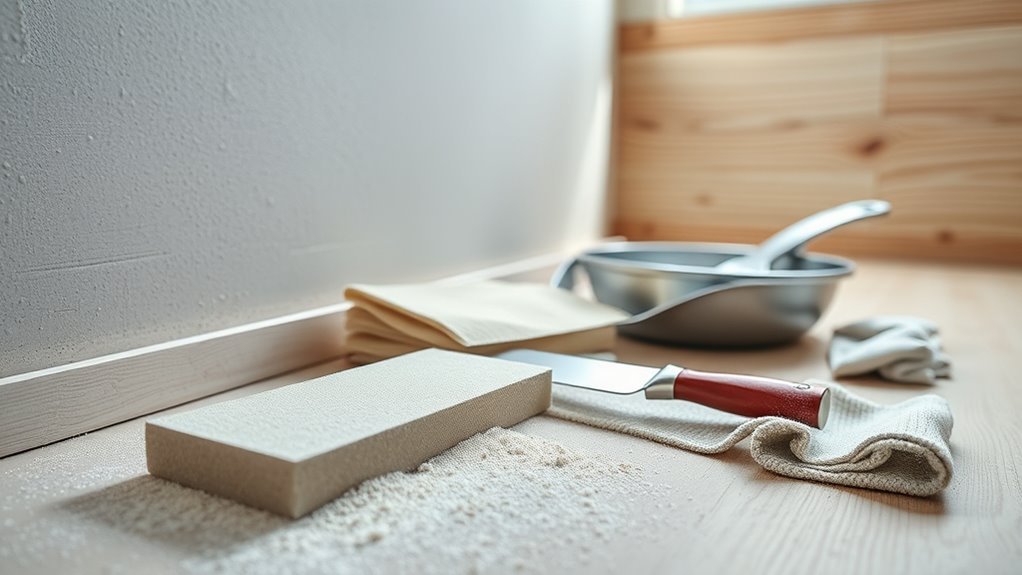
Before you grab the primer, make sure you clean and degrease the surface so paint will adhere properly.
Fix holes, cracks, and rough spots, then sand or fill until the surface is smooth.
These steps cut down on peeling and show-through once you prime and paint.
Clean And Degrease
- Use a degreaser or trisodium phosphate substitute, wipe with clean rags.
- Rinse with water, dry completely, and inspect texture under good light.
- For glossy surfaces, scuff lightly before priming to help adhesion; avoid over-sanding.
Repair And Smooth
After cleaning, tackle repairs and smoothing so your primer and paint adhere evenly and look professional. Inspect for holes, cracks, and loose texture; fill gaps with appropriate filler, let it cure, then sand flush with the surface.
Match sanding grit to the substrate to avoid visible shift. Use texture techniques to recreate any existing finish so patches blend seamlessly.
Wipe away dust, then spot-prime patched areas to test absorption and color matching before full priming. If bare wood or metal shows, treat with a suitable sealer.
Proper repairs prevent telegraphing and guarantee an even final coat.
How Primer Improves Adhesion
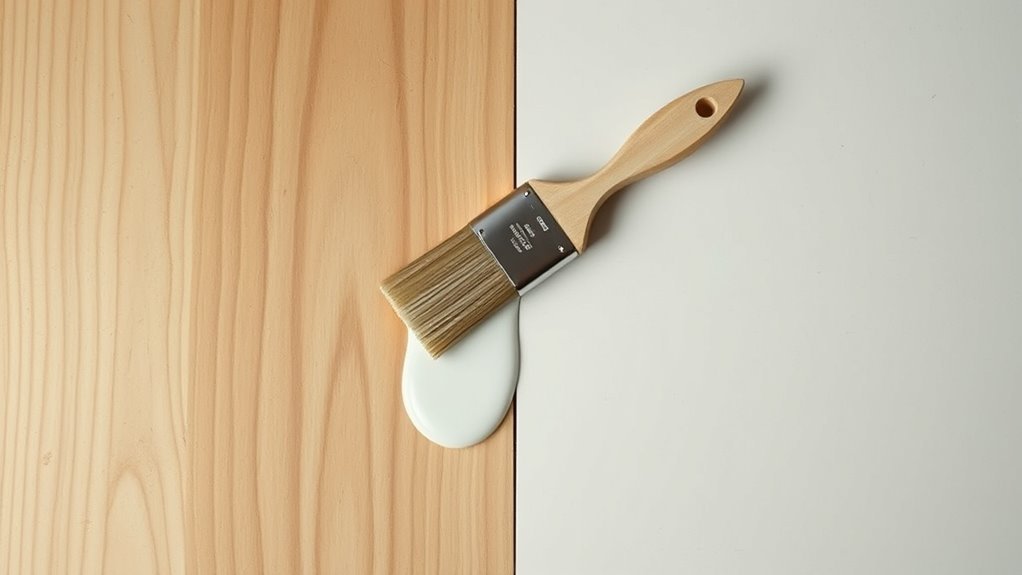
Want your paint to stick and last? You’ll see primer defeats common priming myths by creating a consistent surface that bonds paint to varied substrates. It evens porosity, seals problematic areas, and prevents peeling so your finish stays put.
Primer creates a consistent surface—equalizing porosity, sealing trouble spots, and ensuring paint bonds strongly without peeling.
- Surface bonding: primer fills micro-voids and provides a uniform profile for the topcoat to grip.
- Substrate isolation: it blocks stains, tannins, and moisture that weaken adhesion.
- Paint compatibility: primers match coatings chemically, ensuring the topcoat adheres rather than repel or separate.
Use the right primer for the material and paint type to secure a durable bond.
How Primer Boosts Coverage
While primer helps paint stick, it also makes your topcoat cover better so you need fewer coats. You’ll see how primer evens out surface texture, filling tiny pores and minimizing blotchy absorption that forces extra layers.
With a uniform base, true color matching becomes simpler: the topcoat reflects *desired* hues instead of underlying tones. That means you spend less time repainting and less money on paint.
Choose a primer suited to your substrate—wood, drywall, or previously painted surfaces—to maximize hiding power. Apply evenly and sand lightly if needed so the topcoat lays down smoothly and covers in one or two coats.
How Primer Blocks Stains and Tannins
When you’re covering water stains or wood tannins, a stain-blocking primer creates a barrier that prevents discoloration from bleeding through your new paint.
You’ll want primers with specific stain-blocking chemistries that lock pigments and seal tannin-rich woods.
Apply them correctly and you’ll avoid blotchy finishes and costly rework.
Stain-Blocking Mechanism
Although stains and tannins can bleed through paint and ruin a finish, a proper primer creates a chemical and physical barrier that stops those pigments from migrating to the topcoat. You rely on primers to lock stains in place, neutralize tannin acids, and provide a surface that accepts paint evenly.
Color blending benefits because the primer evens substrate hues, preventing shadowing under translucent topcoats. Texture enhancement comes from primers filling pores for smoother application or building tooth for better adhesion.
- Chemical sequestration: binds stain molecules.
- Physical blocking: forms an impermeable layer.
- Adhesion promotion: ensures durable topcoat bond.
Tannin Sealing Techniques
Because tannins are oil-soluble and can migrate through paint, you need targeted sealing techniques that stop them at the source and protect the finish.
Start by cleaning wood and letting it fully dry; contaminants can undermine tannin sealing.
Use a shellac- or oil-based stain-blocking primer for raw or stained woods, applying thin, even coats and sanding between layers if needed.
For severe bleeding, reinforce with shellac wash coats before priming.
Test a small area to confirm stain prevention.
Finish with your chosen topcoat once the primer cures.
Proper prep and the right primer keep tannins from ruining your paint job.
How Primer Improves Durability
If you want your paint job to last, start with a quality primer: it bonds to the surface and creates a stable base that helps topcoat adhere, resists peeling and chipping, and evens out porosity so the finish wears uniformly.
You’ll avoid common priming myths that suggest skipping this step saves time; in reality primer enhances impact and abrasion resistance.
Compare primer alternatives only when specific substrates or quick turnovers demand it, but know proper primer extends service life.
Consider these durability contributions:
- Seals porous surfaces, preventing uneven wear.
- Promotes chemical and mechanical adhesion.
- Blocks stains that weaken finishes.
When You Can Skip Primer
If you’re using a high-quality paint formulated for direct-to-surface application or doing subtle color matching where the base and topcoat align, primer removal isn’t necessary.
Also, skip primer on previously sealed, nonporous surfaces after light cleaning.
Don’t skip if you’re covering stains, raw drywall, drastic color shifts, or damaged surfaces — those situations require priming for proper adhesion and lasting results.
When You Must Prime
You must prime any surface that’s porous, stained, damaged, or drastically different in color from your new paint to guarantee adhesion and even coverage. When you face tannin bleed, water stains, or patched drywall, primer application locks in flaws and prevents show-through.
If you’re switching from dark to light, use a high-hide primer for color matching so you won’t need excessive coats. Metal, bare wood, and glossy finishes demand bonding primers to ensure durability.
Choose oil- or shellac-based primers for tough stains; latex for general use. Proper primer application saves time and delivers a uniform, long-lasting finish.
- Assess surface type
- Select primer
- Apply evenly
New Drywall vs Previously Painted Walls
Because new drywall soaks up paint differently than previously painted walls, you’ll want to treat them differently before rolling or brushing. For new drywall, prime to seal joint compound and control Drywall texture so paint lays evenly. Previously painted walls often only need spot priming for stains or repairs; test adhesion if sheen changed. Choose primer based on desired Paint sheen and surface porosity.
| Surface | When to Prime | Quick Tip |
|---|---|---|
| New drywall | Always prime | Use drywall primer-sealer |
| Previously painted | Spot-prime | Sand glossy sheen first |
| Stained areas | Full prime | Use stain-blocking primer |
Raw Wood and Knot Sealing
Wondering how to keep knot bleed and tannins from ruining your finish? You’ll prep raw wood by cleaning, sanding, and addressing knots before painting. Use a knot sealing primer or shellac-based sealer to block resin and tannin migration. Apply thin, even coats and let each dry fully to avoid bleed-through.
Prep raw wood—clean, sand, spot-seal knots with shellac or knot primer, then prime and apply thin, even coats.
- Clean and sand raw wood surface; remove dust.
- Spot-seal knots with shellac-based or specialized knot sealing primer.
- Prime the entire panel with a compatible primer to guarantee uniform adhesion.
Doing this prevents discoloration, improves topcoat performance, and extends the life of your paint.
Plaster and Repaired Walls
How should you prep plaster or patched walls before painting? You’ll clean dust, sand rough edges, and remove loose compound so repairs sit smooth.
For hairline cracks or skim-coated areas, use a high-quality bonding primer to seal porous surfaces; this prevents flashiness and uneven sheen.
If you have textured finishes, feather edges carefully and consider thin-sand application to blend texture before priming.
Some primer alternatives—stain-blocking paints or acrylic sealer—work for minor repairs, but they’re not universal.
When in doubt, prime: it evens porosity, improves adhesion, and makes topcoats look consistent and durable.
Concrete, Masonry, and Brick
- Clean and test
- Select masonry primer
- Seal and inspect
Metal and Rust-Prone Surfaces
Because metal reacts differently than porous surfaces, you’ll want to prep and prime it carefully to stop rust and guarantee paint bonds.
You should remove loose rust, scale, and old flaking paint with wire brushing or sanding, then clean grease and debris.
For rust prevention, apply a rust-inhibiting primer designed for metal—zinc-rich or epoxy primers work well.
Confirm the metal is dry and temperature-appropriate before priming.
For bare steel, consider a two-coat system: primer then topcoat.
For lightly corroded or galvanized surfaces, use a primer formulated for those substrates.
Proper metal preparation extends coating life and avoids failure.
Glossy Finishes, Cabinets, and Trim
If your surface is glossy, you’ll usually need to sand and prime to guarantee the new paint sticks and doesn’t peel.
For cabinets and trim, primer helps block stains, promote adhesion, and create a smooth, durable finish.
Choose a bonding or stain-blocking primer for slick or problem surfaces to get the best results.
When To Prime Glossy
When your surface has a glossy finish—on cabinets, trim, or millwork—you’ll usually need to prime before repainting to guarantee adhesion and hide the old sheen. You should assess gloss level, surface cleanliness, and whether you’re switching to a different paint type.
Glossy surfaces resist new coatings, so proper primer application helps bonding and prevents peeling.
- Sand lightly to scuff and clean to remove grease.
- Choose a primer suited to the substrate and topcoat (stain-blocking or adhesion-promoting).
- Apply thin, even coats; allow full cure before topcoating to ensure lasting adhesion.
Priming Cabinets And Trim
Although glossy cabinets and trim look polished, you’ll need to prime them properly so new paint will stick and look smooth. You’ll sand lightly, clean grease, and choose a bonding primer that matches your topcoat’s paint sheen. Consider color theory when switching hues—priming evens undertones so the new color reads true. For trim, use a thin, even coat; for cabinets, two coats may be wiser. Consult the table below for quick guidance.
| Surface | Primer Type | Notes |
|---|---|---|
| High-gloss trim | Bonding primer | Light sand first |
| Cabinets | Shellac/adhesion | Two coats for coverage |
| Painted doors | Stain-blocking | Test small area |
Changing Colors: Dark ↔ Light
Thinking about switching from a dark color to a light one—or vice versa—means you’ll almost always need primer to get true, even coverage. Dark paints tend to show through light topcoats, and light bases can make dark colors look flat or streaky. You’ll use primer to manage color transformation and reduce surface contrast so your new shade reads correctly.
Apply a stain-blocking primer for heavy colors, or a tinted primer when shifting dramatically. Prep by cleaning and sanding. Choose a high-hide primer for fewer coats.
- Block stains
- Tint primer
- Sand and clean
High-Humidity Rooms and Bathrooms
If you’ve been adjusting colors between dark and light, the next big consideration is how moisture will influence your paint choices—high-humidity rooms like bathrooms and laundry areas demand primers and paints that resist mold, mildew, and peeling.
You should choose a mildew-resistant primer that seals porous surfaces and blocks stains, improving mold prevention. Use a semi-gloss or satin finish for easy cleaning and better moisture shedding.
Proper ventilation and exhaust fans also protect surfaces and air quality.
Apply primer to bare drywall, patched areas, or stains before topcoat to ensure adhesion and long-lasting performance in humid conditions.
Exterior Priming and Weatherproofing
When you’re painting exterior surfaces, priming helps seal against moisture and reduces the chance of rot or warping.
It also blocks stains from tannins or rust that would otherwise bleed through your topcoat.
Finally, a good exterior primer gives paint something to grip, so your finish lasts longer in changing weather.
Protecting Against Moisture
Why would you skip priming the outside of your home when moisture is the biggest enemy of paint and siding? You protect surfaces by sealing gaps, choosing a breathable exterior primer, and addressing moisture intrusion before paint.
A proper primer blocks water pathways, improves adhesion, and aids fungus prevention on wood and porous materials. Follow these focused steps:
- Seal joints and cracks with exterior caulk and flashing to stop water entry.
- Apply a high-quality, mold-resistant primer that allows vapor to escape.
- Repair or replace damaged siding and ensure proper drainage and ventilation to keep surfaces dry.
Preventing Surface Stains
How do you stop stains from ruining a fresh exterior paint job? Start by identifying sources like tannins, rust, or mildew that cause surface discoloration. Clean thoroughly—pressure wash where safe, scrub mildew with a bleach solution, and use rust converters or dedicated stain removal products for stubborn spots.
Once dry, spot-prime with a stain-blocking primer formulated for exteriors; it seals contaminants and prevents bleed-through. Reinspect seams, knots, and patched areas before topcoating.
Regularly trim vegetation and maintain gutters to minimize future staining. These steps let your paint look uniform longer and reduce costly repainting caused by recurring stains.
Enhancing Paint Adhesion
Because exterior surfaces face sun, moisture, and temperature swings, you’ll get the best, longest-lasting finish by using a primer designed for adhesion and weatherproofing. You’ll improve topcoat bonding, reduce peeling, and create a uniform base so color mixing behaves predictably. Choose primers rated for your substrate and climate, and follow proper drying times.
- Clean and repair: remove dirt, loose paint, and seal gaps.
- Select primer: pick stain-blocking, flexible formulas for expansion cycles.
- Protect and store: follow paint storage guidelines and keep leftover primer sealed and temperature-stable for touch-ups.
Primer saves work and extends exterior paint life.
Water-Based vs Oil-Based Primers
When you’re choosing a primer, the main decision is whether to go water-based (latex) or oil-based, since each performs differently on adhesion, stain blocking, and drying time.
You’ll pick water-based for faster drying, easier cleanup, and good adhesion on drywall and previously painted surfaces; it’s flexible and pairs well with latex paints.
Choose oil-based when sealing stubborn stains or bonding to glossy surfaces, though it takes longer to dry and needs mineral spirits.
Use proper primer techniques—thin coats, sanding between layers—and consider color matching to your topcoat to reduce the number of finish coats needed.
Shellac and Specialty Blocking Primers
If you’ve reached for oil- or latex-based primers for most jobs, know that shellac and other specialty blocking primers handle problems those primers can’t. You’ll use them for severe stains, heavy tannin bleed, smoke damage, or odors—situations where fast sealing and adhesion matter.
Apply thin coats, sand lightly, and follow ventilation guidelines; these primer techniques differ from water- or oil-based steps. They also speed color matching by creating a neutral, sealed base so topcoats show true hue.
Consider shellac for quick dry time and solvent resistance, and specialty primers when conventional options fail.
- Seal stains
- Control odor
- Guarantee true color matching
When Self-Priming Paint Is Enough
If the surface is clean, smooth, and in good repair, you can often skip a separate primer and use a self-priming paint.
Check for stains, chalking, or uneven patches first, because self-primers have limits and won’t hide heavy discoloration or severe damage.
Also be realistic about coverage—some self-priming formulas need multiple coats to achieve full opacity on deep or contrasting colors.
Surface Condition Checks
Before you grab self-priming paint, inspect the surface for stains, peeling, gloss level, and repairs to make sure the paint can bond and hide imperfections. You’ll evaluate surface texture and confirm paint compatibility so the finish adheres and looks even. Check for moisture, contaminants, and flaking; small fixes can make self-priming work.
If texture’s rough, sand; if glossy, degloss. Use compatible primers only when necessary.
- Remove loose material and clean thoroughly.
- Sand or fill uneven texture; feather repairs.
- Test a small area for adhesion and coverage before committing.
Paint Coverage Limits
Now that you’ve checked surface condition and handled stains, peeling, and gloss, you can judge when self-priming paint will actually cover and adhere. If the existing color is similar and you’re not making a drastic shift, self-priming coats often achieve adequate color matching in one or two passes.
Smooth, intact drywall or primed wood with minor imperfections responds well, though heavy texture smoothing needs more work.
Use a stain-blocking primer for tannin or water marks, and a bonding primer on slick surfaces. When coverage or adhesion is doubtful, primer remains the safer, more efficient choice.
Matching Primer to Specialty Paints
When you’re using specialty paints—like high-gloss, metallic, or stain-blocking formulas—choose a primer formulated to bond with that specific chemistry so your finish performs and lasts. You’ll match primer type to paint chemistry, consider surface textures, and factor in color matching to avoid bleed-through or uneven sheen.
Pick primers that seal tannins for wood, adhesion promoters for slick substrates, or stain-blockers for repairs. Test small areas to confirm compatibility and final appearance.
Use these steps:
- Confirm chemistry compatibility (oil, latex, shellac).
- Address texture with smoothing or bonding primers.
- Do a color-matching scuff and test coat.
Primer Sheen and Finish Choices
Although primers don’t come in the same glossy levels as finish paints, choosing the right sheen and finish for your primer still matters because it affects hide, sanding, and how the topcoat lays down.
Choosing the right primer sheen matters—affecting hide, sanding ease, and how your topcoat lays down.
You’ll select primer sheen based on surface and paint type: flatter primers hide imperfections and sand easily, while smoother, low-luster primers level uneven textures and help semi-gloss or gloss topcoats flow.
For stain-blocking or high-adhesion needs, specialized primer finishes give extra sealing or bonding without adding sheen.
Match primer finish choices to your topcoat and prep needs so the final paint looks uniform and performs well.
Estimating Primer Quantity
You’ll start by measuring the total surface area you’re priming so you know what you’re covering. Use the primer’s coat coverage rate (usually on the can) to figure how many square feet a gallon will cover per coat.
Then apply the simple formula—(surface area ÷ coverage per gallon) × number of coats—to get the gallons of primer you’ll need.
Surface Area Calculation
How big are the surfaces you plan to prime? Measure length and height, subtract windows and doors, and note irregular areas. Surface texture affects the amount: rough surfaces absorb more primer; smooth ones need less. Also consider final paint sheen—higher sheens may reveal imperfections needing extra priming.
- Calculate total square footage: sum wall and ceiling areas, subtract openings.
- Adjust for texture: add 10–25% for rough or porous surfaces.
- Round up for waste and touch-ups: always buy a little extra.
Record measurements and conditions so you can estimate primer quantity accurately.
Coat Coverage Rates
Wondering how much primer you’ll actually need per coat? You estimate coat coverage rates by checking the primer’s labeled spread rate, then adjusting for surface texture and porosity.
Smooth, sealed walls use closer to the theoretical rate; rough or bare surfaces absorb more. Remember primer chemistry affects penetration and film build, so oil- or shellac-based primers may cover differently than acrylics.
For consistent results, test a small area and measure how much was used. Also consider color consistency: one coat mightn’t hide underlying hues, forcing extra primer.
Plan for waste, overlaps, and touch-ups when ordering.
Primer Quantity Formula
Now that you’ve checked spread rates and tested a sample area, calculate primer needs with a simple formula: (Surface Area ÷ Adjusted Coverage Rate) × Number of Coats, then add 10–15% for overlap and touch-ups.
Use the adjusted coverage to account for primer texture and porosity; rough surfaces soak more product. Factor in primer application method—roller, brush, or sprayer—since each changes coverage.
Estimate coats (usually one or two), then round up.
- Measure walls, subtract windows/doors.
- Divide by adjusted coverage per gallon.
- Multiply by coats, add 10–15% and purchase accordingly.
Tools: Brush, Roller, and Sprayer Tips
Before you start rolling or spraying, pick the right tool for the job—each delivers different coverage, texture, and speed. Choose a brush for trim and cutting in; use angled synthetic bristles for smooth control. Match roller nap to surface: short for smooth walls, medium for light texture.
A sprayer speeds large areas but needs masking and thinning per instructions.
Consider how color psychology influences finish choices—gloss reflects light, making hues pop; matte downplays imperfections and creates muted tones.
Test tools on a scrap area to assess paint texture and coverage before committing to a full coat.
Drying Times and Recoat Windows
Once you’ve chosen the right brush, roller, or sprayer and tested how the paint lays down, you’ll need to take into account how long each coat will take to dry and when it’s safe to apply the next one. You shouldn’t rush recoats; temperature, humidity, and product type change recoat windows.
After testing your application, respect drying times—temperature, humidity, and product type determine safe recoat windows.
Don’t rely on primer myths, primer myths that claim all primers speed cure times. Follow manufacturer recoat times, feel tackiness, and use thin coats for predictable drying.
Consider these guidelines:
- Water-based: 2–4 hours typical recoat.
- Oil-based: 24 hours common.
- High humidity: extend times considerably.
Surface Prep Checklist (Step-by-Step)
Before you grab paint, make sure you clean and degrease the surface so the primer and paint will stick.
Patch holes, sand smooth, and remove loose material to create a sound base.
Finally, mask off trim and protect floors and furniture to keep your work area tidy.
Clean And Degrease
How will paint stick if the surface’s covered in grease, dust, or old residues? You need to tackle surface contamination first. Wipe with a degreaser or trisodium phosphate solution, rinsing thoroughly and letting it dry.
If you’ve done any primer removal, clean the area to eliminate particles and solvent traces before painting. Follow this concise checklist:
- Remove loose debris and dust with a dry brush or vacuum.
- Apply degreaser, scrub stubborn spots, then rinse well.
- Inspect for remaining contaminants; repeat cleaning until surface is fully clean and dry.
Clean surfaces help paint and primer adhere properly.
Repair And Sand
After cleaning, tackle repairs and sanding so your primer and paint will bond smoothly and last. Fill holes and cracks with suitable filler, let it cure, then sand flush with increasing grit until surfaces feel even. Sand edges of glossy spots to dull them for better adhesion. Remove dust with a tack cloth.
Consider color psychology when choosing fillers or underlying tones—warmer primers can enhance vibrancy, cooler bases mute intensity.
Practice brush techniques on scrap wood after priming to ensure smooth strokes and correct load. Proper repair and sanding guarantee reduced peeling, show-through, and uneven finish.
Masking And Protection
Once the repairs are done, you’ll want to protect every surface you don’t intend to paint: cover floors and furniture with drop cloths, tape baseboards and trim with painter’s tape, and mask windows, hardware, and vents so paint doesn’t seep into crevices.
You’ll also isolate areas to control overspray and keep edges crisp for color blending and texture smoothing. Work systematically from top to bottom, replacing torn tape and securing cloths as you go.
Mark zones for primer versus direct paint.
- Seal trim and hardware
- Cover floors and fixtures
- Mask vents and windows
Common Primer Problems and Fixes
When your paint job shows peeling, blotching, or poor adhesion, primer issues are usually the culprit and you can fix most of them with a few targeted steps. Check primer application and surface sealing first: sand glossy areas, clean grease, and use a bonding primer for slick surfaces. Thin coats dry evenly; don’t rush recoat times. For stains, use a stain-blocking primer. Patch and sand where primer failed, then feather edges before re-priming. If texture mismatch occurs, apply a skim coat of joint compound or high-build primer.
| Problem | Likely Cause | Fix |
|---|---|---|
| Peeling | Poor adhesion | Re-prime after prep |
| Blotching | Uneven coat | Sand, recoat thinly |
| Stains | Bleed-through | Use stain-blocker |
| Texture | Low build | Skim or high-build primer |
Why Paint Peels Without Primer
If you skip proper surface prep, paint won’t stick and will start to peel off sooner than you’d expect.
Using an incompatible topcoat over the existing paint also breaks adhesion and speeds failure.
We’ll look at how cleaning, sanding, and matching paint types prevent peeling.
Poor Surface Preparation
Because paint can’t grab onto dust, grease, or loose flakes, skipping proper surface prep practically guarantees peeling, especially without primer to bridge uneven substrates. You need to remove surface contamination and account for environmental factors before you paint; otherwise adhesion fails and coatings lift.
Clean, degrease, sand, and dry surfaces to create a uniform profile that primer bonds to. Follow these focused steps:
- Remove dust, dirt, and oils with appropriate cleaners and allow full drying.
- Sand glossy or flaky areas to feather edges and increase mechanical grip.
- Repair and seal porous spots or rust, then apply primer before topcoat.
Incompatible Paint Layers
Although different paints can look fine side-by-side, incompatible layers often resist bonding and lead to peeling once they’re stressed by humidity, temperature shifts, or expansion. You’ll see issues when oil over latex, glossy over flat, or mismatched specialty coatings are layered without primer.
Primer creates a universal bridge for color mixing and adhesion, and it evens out surface tension so new coats bite properly. Pay attention to texture matching too: a smooth primer lets glossy paint adhere, while a high-build primer fills and matches roughness.
If you skip primer, you’re gambling with long-term durability and likely the annoyance of peeling.
Cost vs Benefit: Primer Economics
1 clear way to decide on primer is to compare the upfront cost against the savings and quality gains it delivers over the life of the paint job. You’ll weigh initial expense versus fewer touch-ups, longer-lasting color, and avoided substrate repairs. Don’t buy into primer myths that suggest it’s always optional—proper paint preparation often cuts long-term costs.
- Reduced repaint frequency: primer improves adhesion, so you repaint less often.
- Fewer materials wasted: sealing porous surfaces lowers paint consumption.
- Improved resale value: consistent finish and durability justify the investment.
Think long-term and calculate replacement intervals.
How Priming Can Save Project Time
If you prime first, paint will grab and spread more easily so you can work faster.
That stronger adhesion often means fewer coats are needed and less waiting between layers.
Faster Paint Adhesion
When you prime first, paint sticks faster and more reliably, so you spend less time waiting between coats and redoing touch-ups. You’ll notice better color mixing because base tones are evened out, and texture smoothing from primer creates a uniform surface that grabs finish coats immediately.
That improved adhesion reduces runs, peeling, and sanding work later, so projects finish on schedule.
- Apply primer to porous or patched areas to prevent uneven absorption.
- Use a bonding primer on slick surfaces for immediate grip.
- Choose tinted primer when color mixing toward a deep final shade.
Reduced Recoat Time
Prime’s faster adhesion also means you’ll spend less time repainting: a properly primed surface soaks up finish coats evenly, letting you cover more area per coat and often cut the number of coats needed.
You’ll move between coats sooner because the primer promotes uniform drying and reduces tackiness, trimming wait times.
Don’t fall for primer myths that claim it’s always optional; skipping it can force extra coats when surfaces absorb unevenly or when paint compatibility is poor.
Low-VOC and Eco Primer Options
Looking for a greener way to prep walls? You can choose low-VOC primers that use eco friendly formulations to cut VOC reduction without sacrificing adhesion or hide. They dry quickly, reduce odor, and suit bedrooms or kitchens where air quality matters.
- Water-based acrylic primers — versatile, low odor, fast-drying.
- Plant-based binders — natural resins offer good sealing and low emissions.
- Zinc oxide or shellac alternatives — stain-blocking with minimal VOCs.
Read labels for certified low-VOC claims, test a small area, and ventilate while applying to keep indoor air safe.
Primer Picks for Budget DIYers
If you’re on a tight budget but still want reliable results, there are several primers that give good coverage and stain blocking without breaking the bank. You’ll want a versatile latex bonding primer for painted surfaces and a shellac-based spot primer for stubborn stains.
Consider a tinted primer if you’re shifting dramatic hues—basic color theory helps you pick a tint to reduce coats. Ignore priming myths that claim you can skip primer for every paint type; sometimes primer saves time and paint.
Compare coverage (sq ft/gal), dry time, and VOCs, then choose the best-rated affordable brand for your job.
Hacks That Actually Work (And Why)
When you’re trying to save time and get pro-level results, a few smart primer hacks actually work. You don’t need gimmicks; you need practical approaches that debunk primer myths and painting myths so your finish lasts.
- Thin-full coverage: Thin oil-based primer slightly for better flow on trim, but keep full coverage to seal stains.
- Tinted primer: Match primer to topcoat hue to cut coats; it’s a real shortcut if you prep surfaces well.
- Roll-and-brush combo: Roll large areas, back-brush edges for even adhesion and to avoid missed spots.
Use these to save time without sacrificing durability.
When To Hire a Pro for Priming
Because primer determines how well paint bonds and how long your finish lasts, hire a pro for priming if the job involves extensive repairs, heavy staining, lead paint, or complex surfaces like exterior siding, high ceilings, or ornate trim. You’ll save time and avoid costly mistakes when dealing with structural prep, hidden moisture, or safety hazards. Pros also dispel priming misconceptions and can suggest primer alternatives when appropriate. Evaluate scope, safety, and your skill level. If you’re unsure, get an estimate.
| Situation | Reason to Hire |
|---|---|
| Lead/old paint | Safety, certification |
| Complex surfaces | Technique, equipment |
| Major stains/repairs | Proper prep and sealant |
Seasonal Tips: Priming in Hot or Cold
Wondering how temperature affects priming? You’ll face seasonal challenges that change drying time, adhesion, and tack. In hot weather, thin primer slightly, work fast, and avoid direct sun. In cold, pick primers rated for low temperatures and give surfaces extra time to cure. Consider Primer color options because tints can improve coverage in thin coats.
- Hot: quick drying, avoid heat stress, keep tools cool.
- Cold: use low-temp formulas, warm the substrate, extend cure time.
- Humidity: moderate ventilation, prevent blushing or blistering.
Layering Primers and Blocking Coats
If you’re building up paint in high‑traffic or heavily repaired areas, layering primers and applying a blocking coat gives you a durable, uniform base that hides stains and seals porous patches.
You’ll start with a bonding primer to level repairs, follow with a stain‑blocking layer where needed, then add a thin universal primer to blend differences.
Each layer should be thin, dry between coats, and sanded lightly for texture enhancement and better adhesion.
Use neutral or tinted primers for subtle color blending so topcoats need fewer passes.
This routine reduces bleed‑through and creates a consistent surface ready for finishing.
Spotting Surfaces Already Primed
After layering primers and blocking coats, you’ll want to confirm which areas already have adequate primer so you don’t overwork the surface. You’ll inspect sheen, adhesion, and coverage: a uniform matte look often means primed, while bare spots or stains need attention.
Don’t fall for priming myths that claim any white coat equals readiness. Test adhesion with a fingernail or tape pull; sand any glossy patches.
Consider records if you used eco-friendly primers—they can look different but perform well. Mark primed zones to avoid redundancy and keep your workflow efficient.
- Visual check
- Adhesion test
- Marking system
Real Projects: When Primer Made the Difference
Remember when a single coat of paint wouldn’t hide knots, stains, or uneven patches? You’ve seen rooms transformed when primer stopped bleed-through, sealed water stains, and gave new drywall an even base.
On a kitchen refresh, primer prevented tannin bleed from wood, so your color mixing stayed true. In a rental, primer covered patched walls fast, cutting repaint time.
You’ll also find primers labeled for Eco friendly solutions that reduce VOCs without sacrificing adhesion. When surfaces vary—bare wood next to glossy trim—using primer made the difference between a durable, professional finish and repainting again.
Resources and Product Comparison Tools
Where can you find reliable tools to compare primers and paints? You’ll use curated sites, manufacturer spec sheets, and community reviews to match color theory with paint texture and performance. Look for objective comparisons, test photos, and technical data so you can judge adhesion, sheen, and coverage.
Use tools that let you filter by surface and problem (stain-blocking, bonding). Complement online research with sample cans and small test patches.
- Manufacturer technical datasheets and sheen charts
- Independent review sites with side-by-side photos
- Local paint stores offering swatches and sample pots
Frequently Asked Questions
Should I Prime Before Wallpapering?
Yes — you should prime before wallpapering. You’ll improve wall preparation, seal porous surfaces, and guarantee paint adhesion if you later paint. Primer prevents uneven soaking, helps wallpaper paste bond, and makes removal easier.
Can I Tint Primer to Speed Coverage?
Yes — you can tint primer to speed coverage; think of it as humming the room’s future. Tinting primer toward your topcoat’s primer color boosts hide, reduces coats, and helps paint lay down truer, saving time and effort.
Does Primer Affect VOC Levels in My Home?
Yes — primer can lower VOC levels by sealing old coatings and stains, so you’ll see VOC reduction and improved Indoor air quality; choose low-VOC primers, ventilate while painting, and let surfaces cure fully before occupying.
Can I Use Leftover Primer for Touch-Ups Years Later?
Yes — you can use leftover primer for touch-ups years later if it’s been stored properly. Check primer storage, stir and strain, test for color matching and adhesion, and discard if it’s separated, foul-smelling, or clumpy.
Will Primer Hide Odors From Pets or Smoke?
Yes — primer sealing won’t fully remove smells, but it helps. You’ll block many odor absorption problems by using a stain-blocking primer; it seals trapped pet or smoke smells so subsequent paint covers and reduces lingering odors.
Conclusion
Want the short answer? You usually do — but not always. Test the theory that “paint alone will always stick” by sanding, cleaning, and spot-priming one small area before you paint the whole surface. If the paint peels, stains, or soaks in on the unprimed patch, you’ve proven primer’s worth. Primer saves time and money on many surfaces, so when in doubt, prime the trouble spots first — you’ll see the difference.
