
How to Remove Dried Paint From Concrete Floor
You can remove dried paint from concrete by first identifying the paint type, ventilating the area, and wearing PPE. For latex, soften with warm soapy water or denatured alcohol, then scrape with a stiff putty knife and scrub with a wire brush. For oil or epoxy, use a commercial stripper or stronger solvent, then power-wash and repeat stubborn spots or use a poultice. Rinse thoroughly, repair and seal the concrete when dry, and keep reading for detailed steps and product tips.
Quick Guide: Best First Steps to Remove Dried Paint From Concrete
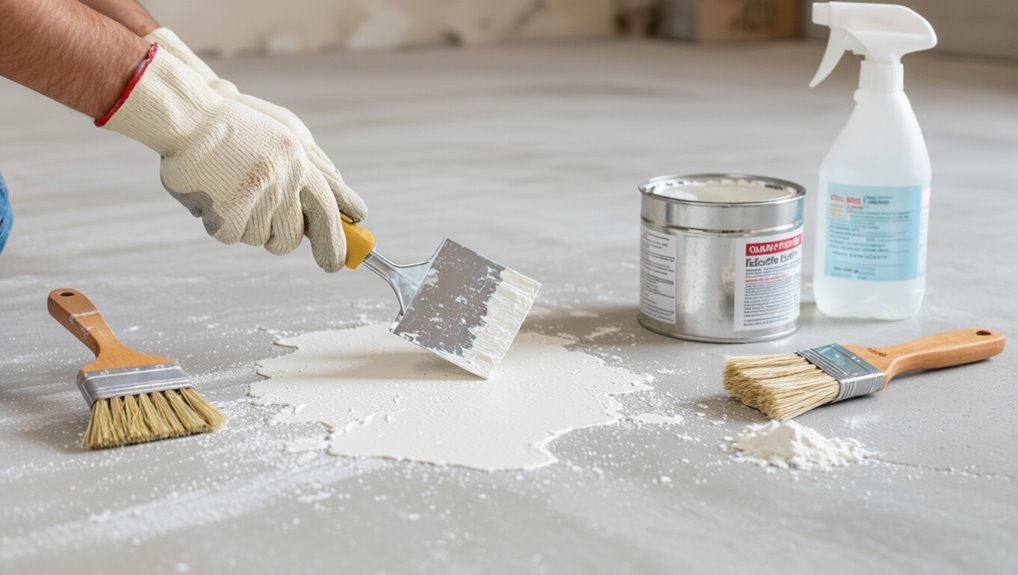
Before you start scraping or applying chemicals, assess the paint type and how long it’s been dry—latex lifts differently than oil-based—and clear the area of dust and obstacles so you can work safely and efficiently.
Test a small spot with a plastic scraper, try gentle solvents, and document results.
Prioritize proper concrete surface preparation, choose suitable paint removal techniques, and proceed methodically.
DIY vs. Pro: When to Call a Contractor
If the spill’s small, the paint’s latex, and you’ve had success with your test patch, you can probably tackle the job yourself; however, call a contractor when the paint’s oil-based, the area’s large or textured, or the surface shows deep stains or damage that could need grinding or chemical stripping.
Weigh DIY Methods against professional expertise—consider time, safety, tool needs, and a clear Cost Comparison before deciding.
Prep the Area: Protect Yourself and Nearby Surfaces
Before you start, put on gloves, safety goggles, and a respirator or mask to protect your skin, eyes, and lungs.
Lay down drop cloths or plastic sheeting over nearby surfaces and furniture to catch chips and solvent splatter.
Move vehicles, tools, and clutter out of the work area so you have clear access and a safe place to work.
Personal Protective Equipment
Put on proper PPE so you can work safely and keep nearby surfaces protected. Choose equipment that fits and resists solvents:
- Wear goggles, gloves, and masks to guard eyes, skin, and lungs.
- Put on sturdy boots to protect feet from spills and sharp debris.
- Use disposable or easily cleaned gear so you can remove contaminants before leaving the work area.
Covering Nearby Surfaces
Now that you’re properly protected, cover floors, walls, and any nearby objects to stop paint chips, dust, and solvents from causing damage.
Use heavy drop cloths over floors and furniture, securing edges with tape barriers so debris won’t slip underneath.
Hang plastic sheeting on walls and tape seams tightly.
Keep a small tarp for solvent spills and replace soiled coverings promptly.
Clear The Work Area
Clear the work area by moving tools, furniture, and loose items at least a few feet from the spot you’ll be working so nothing gets stained or damaged.
You’ll improve work area organization and workspace efficiency by clearing clutter, sweeping debris, and setting drop cloths.
- Remove furniture
- Gather tools
- Lay protection
How to Tell What Paint You’re Dealing With
Wondering which kind of paint you’re dealing with? Inspect dried spots: oil-based feel slick, shiny, and solvent-reactive; latex waterborne dries matte and soft; epoxy is hard, glossy, and chemical-resistant.
Note paint types and paint characteristics—color, sheen, thickness, and how it chips.
Test a small hidden area with denatured alcohol or acetone to observe reaction before choosing removal steps.
Which Removal Method Fits Your Paint & Concrete
Once you’ve identified the paint type and checked the concrete’s condition, match your removal method to both: gentle solvents and scrubbing work for thin latex, stronger solvents or heat suit oil-based paints, and mechanical abrasion or a commercial stripper is usually best for epoxy or very thick coatings.
Identify paint and concrete condition, then match removal: gentle solvents for latex, heat/strong solvents for oil, abrasion for epoxy.
- Latex: gentle solvent + brush for smoother concrete textures.
- Oil: stronger solvent or heat; test first.
- Epoxy/thick: mechanical abrasion or dedicated stripper.
Soften and Scrape: Tools and Step-by-Step Technique
Start by softening dried paint with a suitable solvent or heat so it loosens from the concrete.
Then use a stiff putty knife, razor scraper, or wire brush to gently lift the softened spots without gouging the surface.
Work in small sections, reapplying solvent as needed and wiping residue away as you go.
Soften Paint Spots
If the paint’s dried hard, you’ll need to soften it before scraping to avoid gouging the concrete; the right solvent and a proper tool make the job much cleaner and faster.
Use these steps tied to paint removal techniques and concrete surface preparation:
- Test solvent on a small area.
- Apply solvent, wait per instructions.
- Gently blot softened paint, repeat as needed.
Scrape With Tools
With the paint softened, it’s time to scrape—use the right tools and a steady technique to avoid gouging the concrete.
Choose blade types carefully: metal scrapers for thick spots, plastic for delicate areas.
Focus on scraper techniques—angle blades shallow, push gently, lift flakes away.
Prioritize tool selection, keep edges sharp, replace dull blades, and work in small sections until the surface is clean.
Use Household Solvents and Eco-Friendly Removers Safely
One of the simplest ways to tackle dried paint on concrete is to use common household solvents or eco-friendly removers, but you’ll want to handle them carefully to protect yourself and the surface.
Follow these steps:
- Test solvent selection on a hidden spot and wear gloves.
- Try eco-friendly alternatives like citrus or soy-based cleaners.
- Rinse and ventilate thoroughly.
Apply Chemical Paint Strippers: Choosing Products and Safety
When household solvents won’t cut it, you’ll need to pick a chemical stripper based on its active ingredients and strength so it matches the paint type and concrete porosity.
Wear chemical-resistant gloves, eye protection, and a respirator, and make sure you have good ventilation to prevent fumes from building up.
Test a small patch first so you can confirm effectiveness and adjust protective measures before treating the whole area.
Product Types And Strengths
Although chemical strippers come in several formulations, you’ll want to match the product’s strength and chemistry to the paint type, concrete condition, and ventilation you have available.
Consider paint remover types and paint strength comparisons:
- Solvent-based: fast, strong for oil-based paints.
- Caustic: digs into thick layers, needs careful rinsing.
- Biobased: milder, slower but safer for light jobs.
Safety Gear And Ventilation
Picking the right stripper is only part of the job; you also need proper safety gear and ventilation before you start working.
Wear chemical-resistant gloves, eye protection, a respirator rated for organic vapors, and long sleeves.
Follow safety precautions: read labels, keep a fire extinguisher nearby, and isolate the area.
Use ventilation methods like open windows, fans, and exhaust to direct fumes outdoors.
Power Washing and Mechanical Removal Options for Concrete
If you’ve got stubborn paint on concrete, power washing and mechanical methods give fast, physical ways to strip it off without relying solely on chemicals.
You’ll want to choose the right pressure and tool to avoid surface damage.
- Use power washing at 2000–3000 psi for heavy spots.
- Try mechanical removal with scrapers or grinders.
- Finish with a rotary brush.
Remove Stubborn Stains & Ghost Marks (Poultices and Re-Treatments)
Treat stubborn stains and ghost marks by applying targeted poultices and repeating treatments where necessary; these methods draw paint residues and deep pigments out of concrete without aggressive grinding.
You’ll mix absorbent media with a solvent, apply, cover, then lift dried paste to pull out color. Alternate solvents and repeat poultices as needed, testing small areas.
Use paint removal techniques alongside stain prevention methods moving forward.
Restore and Protect Concrete + Cost, Time & Cleanup Checklist
Now that you’ve pulled out stubborn paint residues with poultices and repeat treatments, it’s time to restore the concrete surface and lock in protection to keep new stains from setting.
Now that paint residues are gone, restore and seal the concrete to protect against future stains.
Plan concrete maintenance with a brief cost analysis and checklist:
- Seal: choose breathable sealer, note material and labor.
- Time: curing and recoat windows.
- Cleanup: disposal, tools, PPE, tally final costs.
Frequently Asked Questions
Can Dried Paint Damage Concrete’s Structural Integrity Over Time?
No, dried paint rarely damages concrete’s structural integrity; you’re more likely to see surface issues like trapped moisture or worsened paint adhesion if surface preparation was poor, but the concrete itself usually stays sound.
Will Removing Paint Affect Concrete’s Slip Resistance?
Yes—you might change slip resistance when removing paint, depending on paint types and removal methods; aggressive grinding can increase texture and grip, while chemical strippers or smooth sanding can reduce roughness, so choose methods to preserve traction.
Can Paint Removal Methods Harm Nearby Landscaping or Plants?
Yes — paint stripper effects can harm plants and soil, so you’ll protect landscaping by covering beds, rinsing runoff into containers, using biodegradable strippers, and working upwind; that’ll minimize chemical exposure and root damage.
Are There Environmental Disposal Rules for Paint Chips and Stripper Residues?
Yes — you’ll need to follow paint disposal regulations; stripper residues can be classified as hazardous materials, so you should contain waste, use labeled hazardous waste services or local collection events, and never dump residues into drains or soil.
How Long Must Concrete Cure Before Repainting After Removal?
You should wait 28 days curing time for new concrete so paint adhesion’s ideal; if surface was patched or screened, allow at least 7–14 days, check moisture, and only repaint when concrete’s fully dry.
Conclusion
You’re ready to tackle dried paint on concrete—most DIY jobs take 1–2 days, but note 70% of homeowners hire pros when paint covers over 100 sq ft. Start with testing, protect surfaces, then match your method to paint type: scrape, strip, or pressure-wash. For stubborn stains use a poultice or repeat treatments, then reseal the concrete. Clean thoroughly and dispose of chemicals properly to finish safe, durable results.
