
What to Do With Old Latex Paint (Safe Disposal Tips)
You can safely handle old latex paint by reusing, donating, recycling, or fully drying and tossing it per local rules to protect waterways and avoid fines. Wear gloves and ventilate when opening cans, check for sour smells or separation to spot spoilage, and keep usable paint for touch-ups or give it to community groups. Small amounts can be solidified with cat litter or a hardener before disposal. Keep going to learn practical tips and local options.
Quick Answer: Reuse, Donate, Recycle, or Dispose

If you’ve got old latex paint, don’t toss it automatically—you can often reuse it, donate it, recycle it, or, as a last resort, dispose of it safely.
You can use leftover cans for paint art, color mixing, or creative projects, practice paint storage, or promote artistic reuse in community workshops.
Embrace eco friendly crafts and recycling benefits instead of landfill disposal.
How This Guide Helps You Handle Old Latex Paint
This guide helps you understand why proper disposal matters for your health, the environment, and local regulations.
It also gives quick safety steps so you can handle, store, or prepare paint for donation or recycling without risk.
Follow these practical tips and you’ll avoid fines, contamination, and common hazards.
Why Proper Disposal Matters
Because old latex paint can harm the environment and clog municipal disposal systems, you should handle it carefully rather than tossing it in the trash or down the drain.
This guide prevents paint pollution and gives clear disposal education so you can protect waterways, waste facilities, and community health.
- Prevent contaminated runoff
- Respect local rules
- Reduce landfill burden
- Protect wildlife
- Save resources through reuse
Quick Safety Steps
You’ve learned why proper disposal matters; now let’s cover quick safety steps that help you handle old latex paint without risking your health or the environment.
Wear proper safety gear, follow ventilation tips, and recognize paint hazards.
Use cleanup methods for spills, follow disposal precautions for cured versus liquid paint, and adopt storage solutions that prevent leaks.
Label cans and keep lids tight.
How to Tell If Latex Paint Is Still Usable
Check the color and consistency first: you want an even hue and smooth, lump-free texture.
Sniff the can and look for strong chemical or sour odors and for separation of watery liquid on top, which can signal spoilage.
If the paint smells off or shows curdling and persistent separation after stirring, it’s best not to use it.
Color And Consistency
When you open a can of old latex paint, the easiest clues to whether it’s still usable are its color and consistency—look for even color, smooth texture, and no separation you can’t mix back together.
You’ll assess color blending and paint texture to judge usability.
- Uniform hue across the can
- No lumps or stringiness
- Smooth, creamy flow
- No gritty particles
- Maintains sheen when stirred
Smell And Separation
If the paint smells sour or like rotten eggs after you open it, that’s a strong sign bacteria or fungi have grown and the can’s contents are compromised; a faint, fresh paint odor is normal, but any sharp, chemical or musty stench means you should dispose of it. Check for clear paint separation and use odor management; foul smell + sludge = toss.
| Sign | What it means | Action |
|---|---|---|
| Sour odor | Contamination | Dispose |
| Chemical stench | Solvent break | Dispose |
| Layered water | Separation | Stir/test |
| Smooth after stir | Usable | Keep |
Test Paint Quality at Home
Before you toss or donate a can, test your latex paint at home to confirm its quality and usability.
Use simple paint testing and quality assessment home methods and DIY techniques to judge condition: visual inspection, smell test, consistency check, and usability evaluation.
Try these quick checks:
- Stir and observe color/texture
- Smell for sour odor
- Brush a patch
- Strain for debris
- Dry-time test
When to Keep Paint for Touch-Ups
Since you want future touch-ups to match and save money on repurchasing, keep cans that are full enough, well-sealed, and still smell fresh; they’ll be useful for small repairs or trim work.
| Condition | Action |
|---|---|
| Full/sealed | Keep for touch up techniques |
| Smells fresh | Store cool, dark place |
| Separated/old | Test before using |
| Dented/compromised | Consider disposal per paint storage rules |
Why You Might Need to Get Rid of Paint
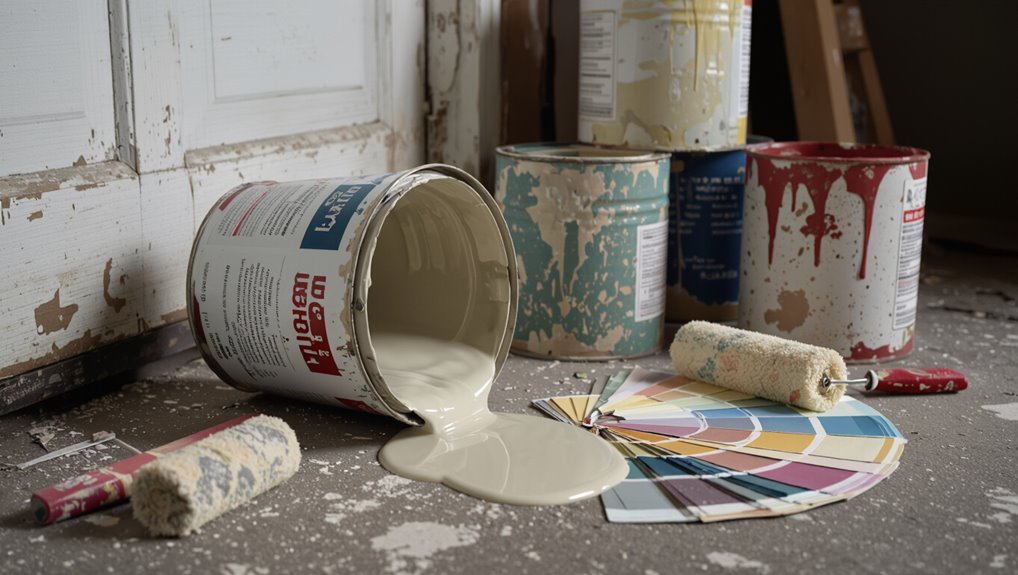
Keeping a few well-preserved cans for touch-ups makes sense, but there are clear reasons you might need to get rid of other paint.
You’ll act when paint lifespan ends, quality degrades, or colors no longer match. You’ll also consider safety and environmental impact.
Consider these triggers:
- Cans leaking or rusted
- Paint smells foul
- Clumped or separated
- Large excess after project
- Hazardous additives present
Quick Decision Flow: Reuse → Donate → Recycle → Dispose
When you’re faced with old latex paint, follow a simple hierarchy: reuse what’s still good, donate usable leftovers, recycle what can’t be reused, and only dispose as a last resort.
Check for usable color and texture to reuse or mix into paint alternatives like primer blends.
Offer usable cans to charities, seek municipal eco solutions for recycling, and only trash truly unusable waste.
What Counts as a Small vs. Large Paint Amount
Think of a “small” amount as what you could pour into a few coffee cans—typically under one gallon—while anything larger than that counts as a large quantity.
Think of a “small” amount as what fits in a few coffee cans—about one gallon or less.
You should treat small amounts differently from large amounts for disposal choices and transport limits. Consider:
- Local drop-off rules
- Event or household hazardous waste limits
- Donation acceptance
- Transport vehicle size
- Container safety
Dry Small Latex Paint Cans for Curbside Trash
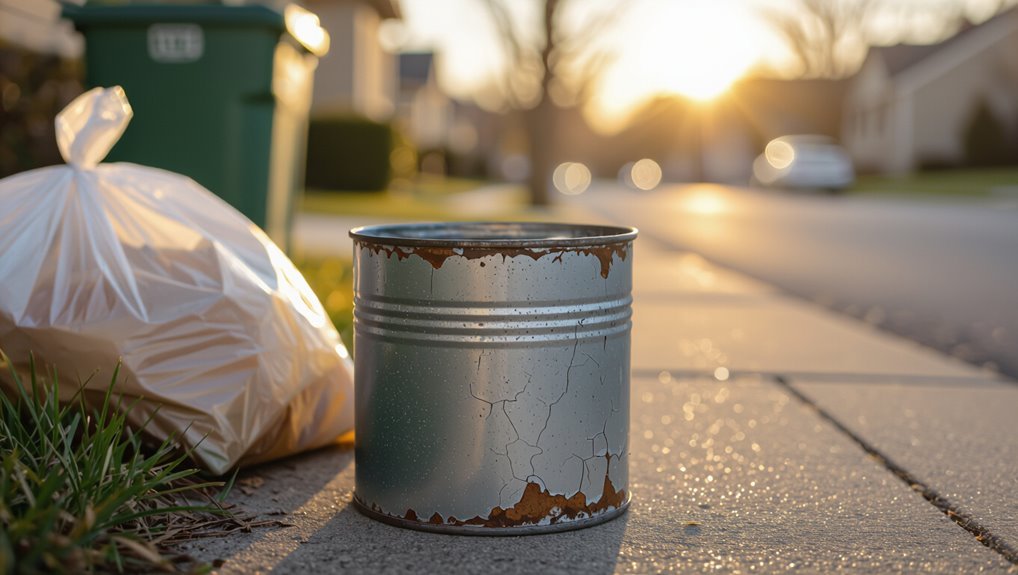
If you’ve got small cans of latex paint, let them harden completely and then toss the empty, dry cans in your curbside trash where local rules allow.
Check your municipality’s curbside guidelines before disposal. Remove lids, make sure the paint container is solidified, and label it “dry paint” if required.
Don’t leave wet paint; follow pickup schedules and weight limits.
Speed-Dry Paint Safely Indoors or Outdoors
Before you try to speed-dry paint, prep the surface by spreading thin layers or pouring small amounts onto cardboard or a paint tray so it dries evenly.
Pick a safe drying method—use a well-ventilated indoor area away from heat sources or dry outside on a calm, shaded day to avoid runoff.
Once it’s fully hard, scrape and dispose of the dried residue with your regular trash following local guidelines.
Prepare The Paint Surface
To get a smooth, durable finish you’ll need to prep the surface and speed-dry any leftover latex paint safely—either indoors with good ventilation or outside where dust and insects are minimal.
You’ll focus on paint surface preparation and basic cleaning tips before drying.
- Remove loose paint and sanding dust
- Degrease with mild detergent
- Rinse and dry thoroughly
- Mask surrounding areas
- Level drips and edges
Choose Safe Drying Method
Choose whether you’ll dry the paint inside or outside based on weather, ventilation, and how quickly you need the paint gone.
Outdoors dries faster with sun, breeze, and low humidity; cover cans from rain.
Indoors, use a well-ventilated area and fans. Use approved drying techniques like kitty litter or commercial absorbers.
Follow safety precautions: keep away from children, pets, flames, and seal containers when dry.
Dispose Of Dried Residue
Once the paint has fully solidified, you can safely remove the dried residue and toss it with your regular trash in most areas—just double-check local rules first.
You’ll follow dried residue management steps and choose responsible paint disposal methods.
- Wear gloves to prevent mess
- Break residue into small pieces
- Use a rigid container for sharp scraps
- Label if required
- Recycle lids and tins separately
Solidify Paint With Cat Litter, Sawdust, or Hardener
If you’ve got a small can of leftover latex paint, you can quickly turn it into a non-liquid, disposable mass by adding an absorbent like cat litter, sawdust, or a commercial paint hardener—each will solidify the paint so you can toss the can in the trash (where allowed) instead of storing a sticky hazard.
Use measured amounts, stir until firm, label the can, and follow paint solidification methods and safe disposal techniques to prevent spills and environmental harm.
How to Dispose of Dried Paint in Curbside Trash
When the paint in your can is fully dried and no longer liquid, you can usually put it out with your regular curbside trash—just make sure the lid’s off so collectors can see it’s solid, label the can “dried paint,” and check your local rules first since some municipalities still require special handling.
Once fully dry and solid, leave the lid off, label “dried paint,” and follow local pickup rules.
Follow curbside guidelines and trash regulations:
- Confirm local pickup policies.
- Remove the lid.
- Label clearly “dried paint.”
- Keep cans intact, not crushed.
- Place with regular trash on pickup day.
Pack and Label Partly Full Paint Cans
When you have partly full cans, press the lids on firmly and tap around the rim to seal them tightly.
Mark each can with the color, date, and whether the paint is latex so you can identify it later.
Store the cans upright in a cool, dry spot away from heat or freezing temperatures.
Seal Lids Tightly
Tighten the lid and press a layer of plastic wrap over the paint before sealing the can to keep air out and slow drying.
You should inspect seal types and consider lid replacement for proper can maintenance.
Use airtight containers and smart storage solutions to improve paint preservation and extend paint lifespan while minimizing environmental impact.
- Check rim for dents
- Clean sealing surface
- Use rubber mallet gently
- Note manufacture date
- Store upright
Label Contents Clearly
After sealing the lid, take a moment to label the can so you’ll know what’s inside months from now. Note color, date, room, and “partial” status. Clear labeling importance helps future decisions and proper paint classification for recycling or disposal. Use a sturdy marker and tape; write legibly.
| Color | Date | Notes |
|---|---|---|
| Blue | 03/24 | Partial |
| White | 06/23 | Trim |
| Gray | 01/25 | Sample |
Store Upright Safely
Place cans upright on a stable shelf or in a shallow bin so you can stack and move them without tipping; this prevents leaks and lets labels stay readable.
You’ll follow safety tips and practical storage solutions to reduce spills, odors, and deterioration.
- Keep lids sealed tightly
- Store in a cool, dry area
- Keep away from heat sources
- Use secondary containment
- Rotate by date
Prepare Large Latex Paint Amounts for HHW Drop-Off
If you’ve accumulated more than a few cans of latex paint, get them ready for your household hazardous waste (HHW) drop-off by consolidating and documenting what you have. Sort by color and type, label containers, note volumes. Choose proper paint container options and use safe drying techniques for partial cans before transport.
| Item | Action |
|---|---|
| Sorted cans | Label |
| Partials | Dry |
What Household Hazardous Waste (HHW) Programs Accept
Check your local HHW collection site to see if they take latex paint and what preparation they require.
You can also look for mobile HHW events in your area that accept small to moderate amounts of paint.
If you’re unsure, call ahead so you don’t bring containers they won’t accept.
Local HHW Collection Sites
Local HHW collection sites are where you can safely take unwanted latex paint and other household hazardous materials for proper disposal or recycling.
Use community resources to find sites and follow local regulations so you won’t be turned away.
Expect staff guidance, sorting rules, and possible fees.
- Accepted paint types
- Container requirements
- Proof of residency
- Appointment rules
- Recycling options
Mobile HHW Events
When your neighborhood hosts a mobile HHW event, you can bring leftover latex paint along with other household hazardous materials—often including oil-based paints, solvents, pesticides, batteries, and fluorescent bulbs—for safe collection and proper processing.
Check event scheduling and mobile collection details online, follow preparation guidelines, and engage in community outreach to learn accepted items.
Your event participation keeps hazardous waste out of landfills.
Find Municipal Paint Collection Events Near You
Want an easy way to get rid of old latex paint responsibly? Use municipal paint collection events—check your city site or local resources to find dates, rules, and drop-off locations. They handle disposal safely and often accept small homeowner quantities.
- Check city or county websites
- Call sanitation departments
- Search “paint collection” + your ZIP
- Confirm accepted containers
- Note event dates and hours
Where to Take Paint for Recycling or Reuse
You can drop leftover latex at your local household hazardous waste center, which handles proper disposal and recycling.
Some paint retailers also offer take-back programs, so check with stores where you bought the paint.
Don’t forget community reuse programs and nonprofit paint exchanges that accept usable cans for resale or donation.
Household Hazardous Waste Centers
Many communities run household hazardous waste (HHW) centers that accept leftover latex paint for recycling, consolidation, or safe disposal, and they’re usually the easiest responsible option.
You can drop off small cans, get guidance, and use community resources to avoid illegal dumping. Check hours and limits before you go.
- ID requirements
- Accepted container types
- Weight/volume limits
- Appointment policies
- Fees or exemptions
Paint Retailer Take-Backs
If you’re looking for a convenient alternative to HHW centers, check whether local paint retailers offer take-back or recycling programs—big chains and some independent stores often accept leftover latex paint for reuse, redistribution, or proper recycling.
Call ahead for eligibility, container condition, and any fees. Use retailer programs for safe paint recycling and to avoid improper disposal; they’ll guide you through drop-off requirements.
Community Reuse Programs
When local community reuse programs accept leftover latex paint, they give it new life by redistributing, blending, or properly recycling it so you don’t have to throw usable paint away.
You can drop off sealed cans at local hubs, join paint exchanges, or find community partnerships that coordinate collection and redistribution.
- Local reuse centers
- Habitat for Humanity ReStores
- Municipal collection events
- Volunteer-led paint exchanges
- Nonprofit refurbishment programs
How Paint Take-Back and Stewardship Programs Work
Because paint manufacturers and local governments have teamed up, you can return unused latex paint through organized take-back and stewardship programs rather than tossing it in the trash.
You locate drop-off events or permanent sites, follow labeling and container rules, and pay any small stewardship fee.
These community programs streamline safe collection, recycling, and proper disposal so you comply with local regulations and reduce environmental harm.
Donate Usable Latex Paint: Who Accepts It
Though you might assume old paint is worthless, many organizations gladly take usable latex paint: local community groups, Habitat for Humanity ReStores, schools and theaters, municipal paint-exchange programs, and some nonprofits that run home-repair or art projects.
Don’t toss usable latex paint — donate it to ReStores, schools, theaters, or local paint-exchange and community programs.
You can contact donation centers, local charities, and community programs or list items on paint exchanges.
- ReStores
- School theater departments
- Community art centers
- Neighborhood swap events
- Nonprofit repair groups
Prep Paint for Donation and What Information to Include
Before you donate, make sure the paint is clearly labeled, sealed, and in good condition so recipients know what they’re getting and volunteers don’t waste time. Include brand, color name, sheen, volume, purchase date, and storage notes. Check paint donation guidelines and provide donation organization contacts.
| Item | Example |
|---|---|
| Brand | Behr |
| Color | Eggshell |
| Volume | 1 gal |
| Date | 2024-03 |
| Notes | Stored cool |
Creative Ways to Reuse Leftover Paint at Home
Put that leftover latex to work around your home instead of tossing it: small amounts can refresh furniture, brighten trim, or create accent walls without buying a new can.
Put leftover latex to work—refresh furniture, brighten trim, or create small accent walls without buying a new can
You can reuse paint for quick furniture makeover, DIY paint art, and eco friendly projects that boost home decor.
Try these ideas:
- Stencil accent patterns
- Refresh cabinet faces
- Paint plant pots
- Create gallery canvases
- Color-coordinate shelves
What Safety Gear and Ventilation to Use
Those creative projects are great, but you’ll want to protect yourself and your home while working with leftover latex paint. Use basic safety equipment: gloves, goggles, and a mask. Guarantee proper ventilation by opening windows and using fans to direct fumes outside.
| Item | Purpose |
|---|---|
| Gloves | Skin protection |
| Goggles | Eye safety |
| Mask | Respiratory filter |
| Fan | Airflow and removal |
Environmental Risks of Improper Paint Disposal
If you dump or rinse latex paint into drains or on the ground, it can contaminate waterways and harm aquatic life.
Left in soil, pigments and additives may alter pH and reduce soil fertility. That pollution can cascade through ecosystems, threatening wildlife and the plants they depend on.
Waterway Contamination
When you pour leftover latex paint down a storm drain or toss it into regular trash, chemicals and pigments can leach into streams, rivers, and coastal waters, harming aquatic life and disrupting ecosystems.
You’ll degrade water quality and upset ecosystem balance, so don’t dump paint.
- Toxic runoff harms fish
- Algae blooms alter oxygen
- Contaminants travel far
- Food chains accumulate pollutants
- Recreation and drinking sources impacted
Soil Toxicity Risks
One cup of leftover latex paint tossed on the ground can contaminate soil, and those contaminants can persist, altering nutrient cycles and harming plants, microbes, and soil invertebrates.
You shouldn’t dump paint; it degrades soil health, reduces fertility, and risks toxic exposure to gardeners and pets.
Contain, recycle, or bring paint to a hazardous-waste program to prevent long-term contamination.
Wildlife And Ecosystem Harm
Although latex paint seems harmless once it dries, improper disposal can seriously harm wildlife and entire ecosystems. You should avoid dumping paint where animals forage or water collects, because habitat disruption and chemical runoff can poison food chains, stunt growth, and reduce biodiversity.
- Toxic exposure to birds and small mammals
- Contaminated aquatic habitats
- Bioaccumulation in predators
- Disrupted nesting and breeding
- Reduced plant recovery and soil health
Common Local Regulations for Latex Paint Disposal
Because paint disposal rules vary by location, you’ll want to check local ordinances before tossing or donating latex paint.
Check local rules before disposing or donating latex paint—requirements and limits vary by municipality.
Many municipalities set limits on quantities, require drying or solidifying, and specify accepted disposal methods at special collection events.
Some areas ban curbside liquid paint; others allow hardened cans in regular trash.
Follow local guidelines to avoid fines and protect waste systems.
How to Check State and Municipal Rules
Start by checking your city or county website for local rules on latex paint disposal and any curbside pickup guidelines.
If you can’t find clear information, call your municipal waste or public works department to confirm requirements.
Also look up your state’s household hazardous waste program to locate drop-off events and approved facilities.
Check Local Regulations
Wondering what rules apply to disposing of old latex paint in your area?
You should check local guidelines and permitted disposal methods before acting. Use official sources and confirm limits, fees, and required prep.
- Visit your city or county website
- Search state environmental agency pages
- Call municipal waste services
- Review local ordinances
- Ask building or sanitation departments
Find Hazardous Waste Programs
After you check local trash rules, look up hazardous waste programs that handle leftover latex paint so you know where and how to drop it off.
Search your state environmental agency and municipal websites for hazardous regulations, accepted materials, hours, and appointment needs. Call or email to confirm.
Use community resources like household hazardous waste events and certified drop-off centers to dispose safely and legally.
Dispose of Paint-Stained Rags, Brushes, and Rollers
If you’ve finished your painting project, don’t toss paint-stained rags, brushes, or rollers into regular trash without treating them first—improperly stored latex-soaked materials can unexpectedly combust or leak, creating hazards.
Finished painting? Treat paint-soaked rags, brushes, and rollers before trashing—improperly stored latex materials can combust or leak.
You should follow paint disposal methods and safety precautions:
- Wring out excess paint into container
- Let rags air-dry flat outdoors
- Use metal container with lid for disposal
- Check local hazardous-waste rules
- Consider recycling or professional pickup
Managing Rusted or Bulging Paint Cans
Once you’ve dealt with used brushes and rags, check the cans themselves for signs of rust or bulging—these indicate compromised seals or trapped gases and require careful handling.
If rust appears, wear gloves, work outdoors, and transfer paint to a clean, labeled container if intact.
For bulging cans, contact your local hazardous waste or can recycling program; don’t puncture or pour out contents.
What to Do With Paint Samples and Test Pots
Paint samples and test pots are convenient for trying colors, but they’re small and need proper disposal or reuse when you’re done.
Keep unused amounts for touch-ups, seal lids, and use clear paint sample storage bins. Label jars with date and color for quick identification using good test pot labeling.
Save leftovers for touch-ups, seal lids, store in clear bins, and label jars with date and color.
If empty, air-dry and dispose with household trash per local rules.
- Use for touch-ups
- Seal lids tightly
- Store upright
- Label color and date
- Air-dry before disposal
Expected Costs for Paint Pickup or Disposal
After you’ve handled small test pots, you’ll likely face choices about getting rid of larger cans—some options cost money.
Expect cost estimates to vary by volume, local disposal fees, and whether pickup services are curbside or scheduled.
Municipal drop-off is often cheaper; private haul-away or hazardous waste events may charge per can or per vehicle.
Compare fees before committing.
Picking a Certified Paint/HHW Hauler
Choosing a certified paint or household hazardous waste (HHW) hauler matters because it guarantees safe handling, proper disposal, and compliance with local regulations.
Choosing a certified HHW or paint hauler ensures safe handling, proper disposal, and regulatory compliance.
You should vet credentials, ask about transport methods, request documentation, confirm insurance, and verify paint safety training. Choose a certified hauler who communicates schedules and fees clearly.
- Check license and certifications
- Ask about safety protocols
- Request references
- Verify insurance
- Confirm disposal paperwork
How Paint Recycling Turns Leftovers Into New Products
When you bring leftover latex to a recycling program, it gets sorted by color, quality, and whether it’s still usable.
Usable cans are blended and filtered to become reprocessed paint, while unusable material is separated for safe disposal or alternative uses.
This process turns what you’d throw away into fresh, saleable paint and other useful products.
Collection And Sorting
Collection and sorting are the first steps that turn leftover latex paint into usable products. You’ll use collection methods that gather cans safely and sorting techniques that separate usable from unusable paint.
You inspect, label, filter, test, and quarantine batches so recyclers can process them efficiently.
- Inspect for contamination
- Label by color/type
- Filter solids
- Test viscosity
- Quarantine unknowns
Repurposing Into New Paint
After you’ve inspected, labeled, and filtered leftover cans, recyclers can actually turn those sorted batches back into usable paint. You can buy reclaimed paint or use it for creative paint projects and upcycled home decor. Quality checks and tinting restore color and consistency, cutting waste and cost. Look for community programs that accept donations or offer recycled paint.
| Benefit | Result |
|---|---|
| Waste reduction | Less landfill |
| Cost savings | Affordable paint |
| Community use | Local programs |
| Creative reuse | Upcycled home decor |
Eco-Friendly Alternatives to Throwing Paint Away
If you don’t want to toss out usable latex paint, you’ve got several eco-friendly options that keep it out of landfills and reduce waste.
You can donate, swap, or upcycle leftover paint and choose eco friendly paints and sustainable practices when repurposing.
Consider these ideas:
- Donate to schools or community centers
- Host a paint swap
- Offer free pickup online
- Use for priming or crafts
- Seal and store for touch-ups
How to Buy Less and Minimize Future Paint Waste
When you plan projects with care and buy only what you need, you’ll cut down on leftover cans and save money; start by measuring spaces, checking coverage rates on labels, and testing samples on walls so you don’t overbuy.
Prioritize accurate paint purchasing: calculate square footage, choose appropriate sheen, buy sample sizes first, and coordinate colors with roommates to guarantee waste reduction and fewer unopened cans.
Smart Storage Tips to Prolong Latex Paint Life
Good planning reduces leftovers, but storing the paint you do keep matters just as much for avoiding waste and saving money.
Good planning limits leftovers, and smart storage keeps saved paint usable—preventing waste and saving money.
You’ll extend paint longevity with proper paint storage: seal lids, label cans, keep them cool and dry, avoid freezing, and store upside down to seal the lid.
- Wipe rim before sealing
- Use airtight lids
- Label with date/color
- Store off concrete
- Avoid temperature swings
Quick Checklist: Safe Steps Before Tossing Old Latex Paint
Before you toss old latex paint, take a few quick steps to confirm it’s truly unusable and safe to discard: check label for paint lifespan, stir and sniff for foul odor, perform a drying test, and review local disposal methods.
| Step | Action | Result |
|---|---|---|
| 1 | Inspect label | Determine age |
| 2 | Stir & smell | Spot spoilage |
| 3 | Dry test | Confirm solidification |
| 4 | Check rules | Pick disposal method |
Frequently Asked Questions
Can Old Latex Paint Be Used in Compost or on Garden Soil?
No — you shouldn’t add old latex paint to compost or garden soil; it can harm plants and soil life. Instead, use paint recycling programs or eco friendly alternatives like recycled-color paints, milk paint, or natural pigments for projects.
Can Dried Exterior Paint Be Accepted With Regular Construction Debris?
Yes — if the exterior paint’s fully dried and solidified, you can usually toss it with regular construction waste; check local paint disposal rules, though, because some facilities treat paint disposal differently than typical construction waste collection.
Is It Legal to Sell Leftover Paint Online or in Garage Sales?
Yes — you can sell leftover paint online or at garage sales, but you’ll need to follow local paint resale regulations; disclose condition, labels, safety info, and consider leftover paint options like donation or sealed transfer if restrictions apply.
How Long After Opening Does Canned Latex Paint Become Unsafe to Donate?
You can usually donate opened latex paint within two years if it follows donation guidelines; beyond that the paint shelf life degrades, it may thicken or separate, and you shouldn’t donate unusable, contaminated, or foul-smelling cans.
Can Cats or Dogs Tolerate Accidental Ingestion of Dried Latex Paint?
About 20% of pet poisonings involve household chemicals, so you should know: dried latex paint is low paint toxicity but can cause GI upset; you’ll want to keep pets away and call vet if they eat any.
Conclusion
You’ve got options: reuse, donate, recycle, or responsibly dispose of old latex paint. Before tossing it, test usability—stir, smell, and try a patch—and follow local hazardous-waste rules if it’s gone bad. Interesting fact: about 10% of household paint goes unused, so keeping only what you need can cut waste considerably. Store cans properly, label them, and pass along extras to avoid landfill and save resources for your next project.
