
How Do You Get Spray Paint Off Clothes: Proven Stain Removal Techniques
You can usually remove spray paint if you act fast and match treatment to paint and fabric. Blot fresh overspray, rinse from the reverse, then pre-treat with liquid detergent for water-based paint or test a solvent on a hidden seam for solvent-based paint. Gently lift softened paint with a dull edge, rinse, and launder only when the stain’s faded. For delicate fibers or stubborn spots, consider professional cleaning. Keep going to learn step-by-step methods and tips.
Quick Answer: Can Spray Paint Be Removed From Clothes?
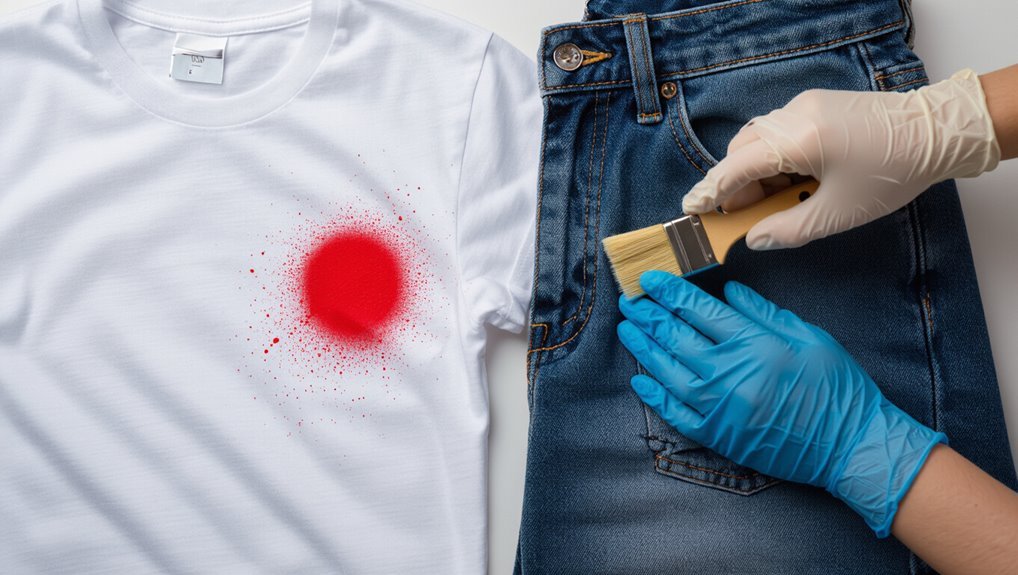
Wondering if you can get spray paint out of clothes? Yes — but success depends on paint type, fabric, and how fast you act.
You’ll treat fresh stains differently than cured ones, and solvent-based paints need stronger solvents.
For effective clothing care, test cleaners on a hidden seam, work from edges inward, and follow fabric-care labels to avoid damage.
What This Guide Covers and How to Use It
Now that you know removal chances depend on paint type, fabric, and timing, here’s what this guide covers and how to use it.
Now that paint removal varies by type, fabric, and timing, use this guide’s tests, steps, and solvent tips.
You’ll find clear steps for identifying paint and fabric, targeted removal methods, and solvent recommendations.
Use it to prioritize stain prevention, choose appropriate fabric care, and follow the quick-reference flowchart for fresh versus set stains.
Read warnings and test treatments first.
Immediate Steps After Fresh Spray-Paint Contact
Act quickly: the sooner you act, the better your chances of removing fresh spray paint. You’ll limit damage with paint transfer prevention and solid immediate reaction tips.
Do this now:
- Blot excess gently with a clean cloth.
- Rinse underside to flush paint away.
- Apply mild soap and water, blotting.
- Avoid rubbing; repeat until stain lightens.
Identify Water-Based vs. Solvent-Based Spray Paint
After you’ve blotted and rinsed as much wet paint as possible, determine whether the spray paint is water-based or solvent-based so you pick the right cleaner.
Check the can label for water or acrylic clues; water-based smells mild, dries flexible. Solvent-based smells strong, feels tacky longer.
Use these spray paint characteristics for accurate paint type identification before applying removers.
How Fabric Affects Spray-Paint Removal Chances
What your shirt is made of matters: natural fibers like cotton absorb paint more but often let you clean it out more easily, while synthetics can repel water-based paint yet bond with solvent-based formulas.
Tight weaves give you a fighting chance because less paint soaks in, whereas loose knits trap pigment in the gaps.
Also check for treatments like water repellents or fabric softeners, since they change how paint adheres and which removers will work.
Fabric Fiber Type
Fabric fiber type makes a big difference in how easily spray paint comes out: natural fibers like cotton and linen absorb paint more deeply, while synthetics like polyester tend to repel water-based paints but can melt or set solvent-based paints.
- Check fabric types for vulnerability.
- Identify stain types early.
- Act fast on natural fibers.
- Test solvents on synthetics.
Weave Density Effect
Tight weaves trap less spray paint on the surface, so you’ll often have an easier time flushing or scraping fresh overspray from dense fabrics like denim or canvas.
Your success depends on weave structure: tighter threads reduce stain absorption and keep paint near the exterior.
Looser knits let paint penetrate fibers, increasing cleanup difficulty.
Work quickly to minimize deeper penetration.
Preexisting Treatments
Many garments already carry treatments—waterproofing, stain repellents, fire retardants, or fabric softeners—that change how spray paint behaves, so you’ll want to check care tags and any product labels before you start cleaning.
You’ll also weigh preexisting solutions versus fresh stain treatment options:
- Hydrophobic coatings repel solvents.
- Fabric finishes lock pigments.
- Fire retardants complicate heat-based removal.
- Softeners trap paint.
Quick Seam Test Before Using Solvents
Before using any solvent, test a small dab on a hidden seam to check for colorfastness and fabric damage.
Use the tiniest amount possible and blot—don’t rub—and wait a few minutes to watch for fading, bleeding, or dissolving.
If the fabric reacts badly, stop and try a gentler method.
Test On Hidden Seam
Since some solvents can discolor or weaken fabric, test them on a hidden seam first to make sure the paint remover won’t cause damage.
You should do quick hidden seam tests to confirm fabric compatibility before treating visible areas.
- Pick an inconspicuous seam.
- Apply a tiny amount.
- Wait five minutes.
- Inspect for color loss or fiber weakening.
Use Small Dab First
Try a tiny dab first: put a small amount of your chosen solvent on the same hidden seam you tested earlier and wait five minutes to see if the fabric discolors, puckers, or weakens.
Use the dab technique precisely, blotting gently without rubbing.
This quick stain testing step confirms solvent safety so you can proceed confidently, minimizing damage and preserving garment integrity.
Wait For Reaction
After you’ve dabbed the solvent on a hidden seam, step back and wait a few minutes to watch for any reaction—discoloration, fabric puckering, or weakening—so you can confirm the treatment is safe before touching the visible stain.
- Check color change on different fabric types.
- Look for fiber weakening.
- Note solvent smell intensity.
- Proceed only if safe for spray paint removal.
Soap and Water: Removing Fresh Water-Based Paint
If the spray paint is still wet and water-based, you can usually lift it out with plain soap and water before it sets; act quickly and blot rather than rub to avoid spreading the paint.
Use gentle cleaning solutions, match methods to fabric types, and employ simple removal tools like soft brushes.
Rinse, pat dry, follow drying techniques, preserve color, and plan long term care to prevent stains.
Use Rubbing Alcohol on Fresh Spray-Paint Stains
If the spray paint is still wet, act quickly to prevent it from setting into the fabric.
Blot gently with a clean cloth to lift as much pigment as you can without spreading it.
Then apply a small amount of isopropyl alcohol and rub gently to break up the paint.
Act Quickly, Blot
Because fresh spray paint hasn’t set, you should act fast: blot the spot gently with a clean cloth to lift as much wet paint as you can.
Then dab a cotton ball soaked in rubbing alcohol onto the stain to break it down.
- Use blot technique immediately.
- Don’t rub; blot.
- Replace cloth as needed.
- Launder promptly after treatment.
Apply Isopropyl Gently
1. You’ll use isopropyl application on fresh spray-paint stains, testing an inconspicuous seam first.
Dampen a clean cloth, don’t soak, and blot the mark; avoid rubbing. Work from the edges inward with a gentle technique to lift pigment. Change cloth sections often.
Once the stain fades, rinse the area, then launder per garment care instructions to finish cleaning.
When and How to Use Paint Thinner or Mineral Spirits
When spray paint soaks into fabric and soap or rubbing alcohol won’t budge it, reach for paint thinner or mineral spirits—solvents that dissolve oil-based paints and clear stubborn stains.
When spray paint soaks into fabric and soap won’t remove it, try paint thinner or mineral spirits—use caution.
Consider paint compatibility and safety precautions.
Follow steps:
- Test on an inconspicuous area.
- Work in a ventilated space.
- Blot, don’t rub, with a cloth.
- Launder after treatment.
Using Acetone and Nail-Polish Remover Safely
If the stain’s from enamel or stubborn spray paint and other cleaners haven’t worked, try acetone or an acetone-based nail-polish remover—but use them cautiously.
You should test an inconspicuous area first, wear gloves and ventilate the room as key safety precautions.
Blot gently, avoid spreading, use cotton swabs for targeted application techniques, then launder promptly and air-dry only after the stain’s gone.
Remove Dried Spray Paint With Detergent and Agitation
Start by applying a generous squirt of liquid laundry detergent directly to the dried paint stain and let it sit for a few minutes to loosen the film.
Then work the fabric gently with your fingers or a soft brush, agitating the area to lift paint without damaging the fibers.
Rinse and repeat the process until the stain lightens before laundering as usual.
Pre-Treat With Liquid Detergent
Soak the stained area with liquid detergent, working it gently into the fibers to break up dried spray paint.
Use liquid detergent techniques and proven stain treatment methods to loosen pigment before washing.
- Apply a few drops directly.
- Let it sit 5–10 minutes.
- Blot excess; don’t rub harshly.
- Rinse and launder as directed, checking stain before drying.
Agitate Gently By Hand
Gently agitate the stained area by hand to help the detergent loosen dried spray paint without damaging the fabric.
Use circular motions and light pressure, avoiding harsh scrubbing that can spread pigment.
Rinse frequently to check progress, reapply detergent if needed, and continue gentle agitation until lift occurs.
This careful approach supports stain prevention and preserves fabric integrity.
Commercial Fabric Paint Removers: Pick and Use
1 effective way to tackle stubborn spray paint is to reach for a commercial fabric paint remover designed for clothing; these products break down pigments and binders faster than household solvents, and you’ll get the best results if you choose one formulated for your paint type (water-based vs. enamel) and your fabric’s fiber content.
- Test on hidden seam for colorfastness.
- Follow label directions exactly.
- Rinse promptly to protect fabric care.
- Launder and repeat for stain prevention.
Use a Poultice for Stubborn or Set-In Spray Paint
If spray paint won’t budge, you can make a poultice from absorbent powders (like baking soda or talc) mixed with a solvent-safe liquid to lift the pigment.
Apply a thick paste to the stained area, cover it so it doesn’t dry out, and let it sit long enough to draw the paint out.
Once the poultice has done its work, gently scrape it away, then launder or spot-clean the fabric to remove any residue.
Poultice Ingredients And Choices
When spray paint has soaked in and regular cleaning hasn’t worked, a poultice can draw the pigment out; you’ll pick ingredients based on fabric type, paint type, and how long it’s been set.
Focus on poultice ingredients and poultice effectiveness when choosing mild to strong agents:
- Cornstarch + solvent
- Baking soda + water
- Clay + detergent
- Activated charcoal + solvent
Applying The Poultice
Start by testing the poultice on an inconspicuous seam or hem to verify it won’t damage or discolor the fabric; then lay the garment flat and cover the paint stain with a thick, even layer of your chosen poultice (about 1/8–1/4 inch), pressing gently to guarantee contact. Keep covered, wait per product instructions, then peel. Focus on poultice application and effective ingredients.
| Step | Time | Note |
|---|---|---|
| Test | 5–10 min | Patch check |
| Apply | — | Even layer |
| Cover | As directed | Prevent drying |
| Wait | Variable | Follow label |
| Peel | — | Inspect fabric |
Removing And Cleaning Residue
After you peel away the poultice, you’ll likely see a lighter halo of paint or tacky residue that needs cleaning before any final laundering.
Follow these residue analysis and cleanup techniques to finish:
- Blot loosened bits with a damp cloth.
- Apply mild solvent sparingly and test.
- Gently scrape softened paint with a plastic tool.
- Rinse, pretreat, then launder per fabric care.
Treating Delicate Fabrics: Silk, Wool, and Cashmere
Because silk, wool, and cashmere can shrink, discolor, or distort easily, you’ll need to treat spray-paint stains gently and deliberately—never scrub or use harsh solvents straight on the fabric.
For delicate fabric care, blot excess paint, test a mild detergent or solvent on an inconspicuous spot, then use gentle cleaning techniques with cotton swabs.
When unsure, seek professional dry cleaning immediately.
Treating Synthetic Fabrics: Polyester, Nylon, Acrylic
First check the garment tag so you know if it’s polyester, nylon, or acrylic, since synthetics react differently to solvents.
Always pretest any cleaner on a hidden seam or hem to make sure it won’t discolor or weaken the fibers.
If the fabric tolerates it, apply solvent sparingly with a cotton swab and blot—don’t rub—to lift paint without spreading or damaging the material.
Identify Fabric Type
Synthetic fabrics like polyester, nylon, and acrylic react differently to spray paint than natural fibers, so you’ll want to identify them before you start treatment.
Check labels and test stretch or sheen to note fabric characteristics and stain resistance.
Then follow steps:
- Read care tag.
- Feel the weave.
- Note sheen/shrinkage.
- Record stain history for tailored removal.
Pretest Inconspicuous Area
Now that you know how to identify polyester, nylon, and acrylic, you’ll want to pretest an inconspicuous spot before applying any cleaner or solvent.
Gently dab your chosen product, blot, and wait to check colorfastness and texture. This simple stain testing reveals fabric sensitivity, preventing damage.
If no change occurs after drying, proceed cautiously; if fibers distort or discolor, stop and choose a gentler method.
Use Solvent Carefully
Reach for a solvent only after your pretest shows the fabric can handle it; on polyester, nylon, and acrylic a small amount of acetone or nail-polish remover can break down spray paint but can also melt or dull fibers if overused.
Follow solvent types and application techniques carefully:
- Dab, don’t rub.
- Blot with clean cloth.
- Rinse promptly.
- Air dry and reassess.
Preserve Colors and Prevent Fading During Treatment
While you remove the spray paint, take steps that protect the fabric’s dyes so colors stay vibrant; test solvents on an inconspicuous spot first, work gently from edges inward, and blot rather than rub.
Use color preservation techniques like cold water and pH-neutral detergent, and apply fading prevention methods such as minimal exposure to sunlight and avoiding bleach to keep hues intact during treatment.
Machine Wash and Dry Rules After Paint Removal
After you’ve removed the paint, run the garment on a gentle or normal wash cycle with cold water to protect fibers and leftover dyes.
Use a mild detergent and skip fabric softener, which can trap residues.
Don’t put the item in a hot dryer until you’re sure the stain is gone—air-dry or use low heat to avoid setting any remaining paint.
Wash Cycle Recommendations
If you’ve removed the paint and treated the stain, you can machine-wash most garments—but pick the gentlest effective cycle and the warmest water the fabric label allows to avoid setting any residual pigment.
Follow these wash cycle tips:
- Test temperature settings on a hidden seam.
- Use a mild detergent.
- Wash similar fabrics together.
- Repeat treatment before rewashing if paint remains.
Dryer Use Guidelines
Because dryers can set leftover paint, you should only use heat once you’re sure the stain’s gone.
Even then, choose the lowest heat setting the fabric can tolerate.
Inspect under bright light, repeat pretreatment and wash if any speck remains.
Use gentle dryer settings per fabric care labels, or air-dry to be safe.
Clean lint traps after treating painted items.
Removing Paint From Linings, Cuffs, and Seams
Stubborn spray paint often hides in linings, cuffs, and seams where fabric folds trap pigment and solvent can’t reach easily, so you’ll need targeted tools and steady patience to get it out.
- Use a blunt pick and gentle rubbing for lining techniques.
- Apply solvent sparingly under seams.
- Blot cuffs from reverse side.
- Rinse and air-dry; repeat if needed.
When to Use Professional Drycleaning Services
When a spill has soaked into lining, seams, or delicate fabrics, take your garment to a professional dry cleaner rather than trying harsher solvents at home; they’ve got the solvents, equipment, and expertise to remove paint without ruining structure or finish.
You should request a detailed stain assessment and discuss fabric compatibility so the cleaner chooses safe solvents and methods, preserving color, texture, and construction.
Eco-Friendly, Non-Toxic Paint-Removal Alternatives
If a professional cleaner isn’t practical or you prefer greener options, you can remove many types of spray paint with non-toxic, household ingredients that won’t harm you or the environment.
- Use rubbing alcohol or vinegar as natural solvents for fresh spots.
- Try biodegradable cleaners for older stains.
- Employ homemade solutions like baking soda paste.
- Choose sustainable alternatives and other green options for eco friendly methods.
If Paint Spreads or Darkens: Step-by-Step Fixes
Although paint can sometimes spread or darken as you work, you can correct it quickly by stopping further absorption and reversing the change with targeted steps.
Act fast: blot excess, apply rubbing alcohol or adhesive remover spot-test first. Gently lift softened paint with a dull edge, rinse, then pretreat with detergent.
Adjust methods per spray paint techniques and fabric considerations to avoid damage.
When to Accept Irreparable Items and Upcycle Ideas
You can’t always restore every garment after heavy spray-paint damage, and knowing when to stop pouring time into repairs will save you frustration.
Decide by odor, fabric holes, and sentimental value.
Consider upcycle projects and creative repurposing:
- Cut into rags
- Make patchwork bags
- Create art canvases
- Sew into appliqués
Choose quickly and move on.
Tools and Supplies Checklist for Future Accidents
Keep a small, well-organized kit on hand so you can act fast after a spray-paint mishap: essentials include disposable gloves, paper towels, a soft brush, a spray bottle of cold water, a stain remover or solvent recommended for the paint type (acetone for oil-based, rubbing alcohol for some water-based), a gentle liquid detergent, a bucket, plastic bags for contaminated items, and a clear label listing which solvent works on which paints.
Store items for stain prevention and fabric protection; replace used supplies promptly.
Preventive Tips to Avoid Spray Paint on Clothing
When you’re prepping for a spray-paint job, plan clothing and workspace choices deliberately so you cut the risk of stains before they happen.
Use preventive clothing tips and spray paint precautions to stay clean.
- Wear old, coverall-type clothes.
- Use disposable gloves and shoe covers.
- Mask off surrounding areas.
- Work downwind and use drop cloths.
DIY vs. Pro: Cost and Time Comparison for Removal
Mistakes still happen, so you’ll want to weigh whether to tackle paint removal yourself or hire a pro. Compare DIY methods vs. Professional services using Cost analysis, Time efficiency, Effectiveness comparison, Pros cons, Budget considerations, and Labor intensity to decide what’s best.
| Option | Cost | Time |
|---|---|---|
| DIY methods | Low | High |
| Professional services | High | Low |
Quick Summary: A Practical Removal Workflow
Although it’s tempting to panic, you can follow a practical, step-by-step workflow that quickly maximizes your chances of removing spray paint from clothes without making the stain worse.
When spray paint hits fabric, stay calm and follow a simple, stepwise routine to remove it safely.
Follow this concise plan, considering fabric compatibility and spray paint types:
- Blot excess immediately.
- Test solvent on hidden seam.
- Treat with appropriate remover.
- Launder and air-dry, repeat if needed.
Frequently Asked Questions
Can Spray Paint Fumes Harm Me While Removing Stains at Home?
Yes — spray paint fumes can harm you, so you should use ventilation tips like open windows and fans, wear a respirator, gloves, and goggles, and follow safety precautions to minimize inhalation and skin exposure indoors.
Can Repeated Removal Attempts Weaken Fabric Fibers?
Yes — repeated removal attempts can weaken fabric fibers. Like Sisyphus laboring against stain persistence, you’ll stress fabric integrity with aggressive scrubbing, harsh solvents, or repeated washing, so stop when progress stalls to prevent damage.
Will Stain Removers Ruin Waterproof or Water-Resistant Coatings?
They can—some solvent-based stain remover types strip waterproof or water-resistant coatings, so you should test a hidden area first. You’ll do fabric testing before full treatment to avoid ruining the garment’s finish.
How Long After Removal Should I Store or Wear the Garment?
You should wait at least 24–48 hours after cleaning before storing or wearing the garment; let it dry and air out fully to protect garment care and fabric maintenance, ensuring no residual solvent or odor remains.
Can Mold or Mildew Grow Under Paint Residue if Not Fully Removed?
Yes — about 25% of damp fabrics with residue can foster mold; you’ll prevent it by thorough mold prevention: remove paint residue, dry completely, and practice paint care to avoid trapping moisture that encourages mildew growth.
Conclusion
You can usually salvage your clothes if you act fast, but success depends on paint type and fabric. Start by dabbing off excess, test cleaners, and move from gentle (soap and water) to stronger solvents only if needed. Wash, repeat, or try a professional cleaner for stubborn stains. Keep supplies handy and protect clothing to avoid repeat messes. Think of it like dodging a dragon’s breath—swift, careful moves win the day.
