
How to Paint a Ceiling With a Roller: Smooth Finish Step-By-Step
You’ll get a smooth, professional ceiling by prepping, priming, and using the right roller nap for your texture. Clear and protect the room, repair cracks, and tape edges. Cut in with an angled brush, then roll in 2×2-foot sections with a loaded roller, keeping a wet edge and light, even pressure. Let coats dry fully and sand any drips before recoat. Follow these steps and you’ll see why a consistent technique matters—keep going to learn the finer tips.
Why Paint a Ceiling: Benefits of a Smooth Finish
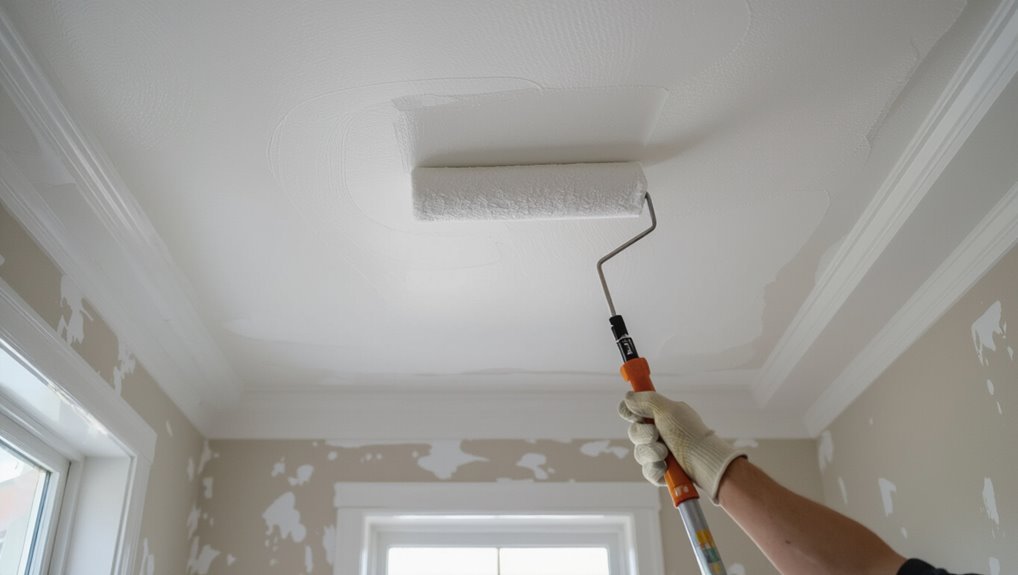
Even if the ceiling seems fine, painting it gives you a cleaner, more uniform look that brightens the whole room.
You’ll improve ceiling aesthetics, hiding stains, uneven texture, and patchwork while creating a consistent backdrop for lighting.
A fresh coat also boosts paint durability against moisture and scuffs, so you spend less time touching up and enjoy a longer-lasting, professional-looking finish.
Quick Overview: The Ceiling-Painting Workflow
Start by prepping the room and protecting furniture and floors so paint cleanup is easy.
Cut in clean edges with a brush along walls and fixtures before you roll.
Then work in manageable sections with a loaded roller to keep an even, wet edge.
Prep And Protect
Before you roll, get the room ready and protect everything you don’t want paint on: move furniture out or to the center and cover it with drop cloths, tape off trim and light fixtures, and lay plastic over floors and vents.
For ceiling preparation, inspect for cracks, clean dust and cobwebs, and apply primer where needed.
Use sturdy protective measures: secure coverings and goggles.
Cutting In Edges
1. You’ll begin by using a steady hand and tested cutting techniques to paint a narrow band along walls and fixtures.
Hold your angled brush at about 30°, work in short, controlled strokes, and keep a wet edge to avoid lap marks.
Focus on edge precision near trim, corners, and light fittings so rolling later blends seamlessly without reworking.
Roll In Sections
With your edges set, you’ll move on to rolling in manageable sections so the paint stays wet and blends smoothly.
Work in 3×3 to 4×4 foot zones, using consistent roller techniques—light pressure, overlapping passes, and a “W” motion.
Keep a wet edge, reload the roller often, and vary strokes for even coverage.
These coverage strategies prevent lap marks and guarantee a uniform finish.
Gather Tools and Supplies for Painting a Ceiling
Before you start, gather the right tools—roller frame, extension pole, angled brush, tray, and drop cloths—so you’re not scrambling mid-job.
Put on safety gear like goggles, a dust mask, and a sturdy ladder or platform to protect yourself.
Estimate paint and supply quantities by measuring the ceiling area and adding a small allowance for touch-ups.
Essential Painting Tools
Tools make the job faster and neater, so gather them before you start painting a ceiling. You’ll need essential tools: choose paint types, match roller sizes, focus on surface preparation, practice brush techniques, and plan equipment maintenance.
| Tool | Purpose |
|---|---|
| Roller | Coverage |
| Brushes | Edges |
| Tray | Hold paint |
| Ladder | Access |
| Sandpaper | Prep surface |
Necessary Safety Gear
Those tools will speed the job, but you also need safety gear to protect yourself while painting a ceiling.
Wear safety gloves and protective clothing, slip resistant shoes, and eye protection. Use a respirator mask and follow ventilation tips to reduce fumes.
Check ladder stability, secure footing, and use fall prevention measures like a spotter or harness so you stay safe throughout the project.
Paint And Supply Quantities
Estimate paint and supplies by measuring your ceiling area—multiply length by width and add 10–15% for waste and touch-ups.
Choose paint types (flat or eggshell ceiling paint) and confirm supply sources for rollers, extension poles, and drop cloths. Buy based on calculated coverage so you won’t run out mid-job.
- Roller frame and covers
- Extension pole
- Paint tray and liners
- Drop cloths/tape
- Ceiling primer
Choose the Right Roller Nap for Your Ceiling Texture
Pick a roller nap that matches your ceiling’s texture so you’ll get even coverage without splatter or missed spots.
For smooth ceilings use a 1/4″–3/8″ nap; for lightly textured choose 3/8″–1/2″; for popcorn or heavy texture go 3/4″–1″.
Your roller nap selection depends on ceiling texture considerations and paint absorption—test a small area to confirm consistent coverage.
Best Ceiling Paint Sheen and Why It Matters
Because ceilings sit above your line of sight and get more drips and handprints than you might expect, choosing the right sheen matters: flat or matte hides imperfections and reduces glare, while eggshell or low‑sheen gives slightly more washability for kitchens and bathrooms.
Pick recommended sheens based on room use and sheen effects:
- Flat for living rooms
- Matte for bedrooms
- Eggshell for halls
- Low‑sheen for baths
- Satin for trim
Calculate Paint Needed: Coverage and Cans
Coverage determines how much paint you’ll need, so measure your ceiling area first and account for texture and number of coats.
Use paint coverage on the can (sq ft per gallon) to do quick paint calculations: divide area by coverage, round up for waste and touch-ups, and factor extra for heavy texture or porosity.
Buy whole cans, keeping receipts for returns.
Prep the Room: Furniture, Lighting, and Safety
Before you start painting, clear the room and create a safe, well-lit workspace: move furniture to the center, cover it and the floor with drop cloths, remove or protect light fixtures and switch plates, and tape around moldings and vents.
Before painting, clear the room, protect surfaces and fixtures, and ensure good lighting for a safe workspace.
Arrange furniture arrangement for access, plan lighting placement, and check safety gear.
- Wear goggles and a mask
- Use stable ladders
- Protect outlets
- Keep ventilation
- Have a flashlight
Protect Floors, Trim & Fixtures Without Glue Residue
Start by securing drop cloth edges so they won’t shift while you roll.
Use painter’s tape to protect trim without leaving sticky residue.
For fixtures, cover or wrap them with plastic and tape only to the cover edges so you avoid adhesive on surfaces.
Secure Drop Cloth Edges
Lay a drop cloth that extends at least 12–18 inches beyond where you’ll be working, then anchor its edges so dust and paint don’t creep underneath—use painter’s tape on baseboards, heavy-duty clips for rugs, and weighted objects on loose sections; avoid household glues or duct tape that can leave residue or damage finishes.
Emphasize drop cloths importance and securing edges:
- Use tear-resistant cloths
- Tape to stable surfaces
- Clip overlapping seams
- Weight corners outdoors
- Check edges periodically
Protect Trim With Tape
Now that your drop cloth edges are secured, protect baseboards, window trim, and any fixtures with painter’s tape so paint won’t seep under or leave sticky residue.
Use clean, straight tape techniques: press edges firmly, overlap corners, and remove tape while paint is tacky for clean lines.
For trim protection, choose low-tack tape and smooth bubbles to prevent bleed and damage.
Shield Fixtures Without Adhesive
Many rooms benefit from adhesive-free protection when you want to avoid sticky residue on floors, trim, or delicate fixtures.
You’ll use fixture shields and paint alternatives to guard surfaces without tape. Drape cloths, use weighted paper, wrap with silicone covers, employ magnetic shields, or set up foam barriers to keep drips off trim and fixtures while you roll the ceiling.
Repair Cracks, Nail Holes, and Water Stains First
Before you roll, fix any cracks, nail holes, and water stains so your finish goes on smooth and lasts; small repairs keep paint from flaking and make touch-ups nearly invisible. Do a ceiling inspection and damage assessment, perform crack repair and stain treatment, and fill each nail hole during surface preparation.
| Task | Priority |
|---|---|
| Crack repair | High |
| Stain treatment | High |
| Nail hole | Medium |
When to Remove Popcorn Texture vs. Paint Over
If your ceiling has popcorn texture, decide whether to remove it or paint over it based on condition, age, and your tolerance for future maintenance; removal gives a modern smooth look but costs time and risk, while painting is quicker and less invasive if the texture is sound and asbestos-free.
- Assess damage and adhesion
- Check for asbestos risk
- Consider resale value
- Weigh time and cost
- Plan popcorn removal vs. paint over
Clean and Prime the Ceiling for Good Adhesion
Before you paint, wipe the ceiling to remove dust and debris so the roller and paint can grab the surface.
If there are stains or bare spots, spot-prime them first to block bleed-through.
Then roll on a full coat of ceiling primer for uniform adhesion and coverage.
Remove Dust And Debris
1. You’ll prep the ceiling using dust removal techniques and simple ceiling cleaning methods so paint adheres.
Work systematically, starting in a corner and moving outward. Use gentle motions to avoid spreading dust.
- Vacuum with brush attachment
- Microfiber cloth wipe-down
- Soft-bristle broom sweep
- Tack cloth for fine particles
- Compressed air for crevices
Apply Ceiling Primer
Start by choosing a quality ceiling primer suited to your surface—stain-blocking for water marks, bonding primer for glossy finishes, or a mildew-resistant formula for bathrooms—and roll on a thin, even coat so paint will adhere uniformly. Match primer application to ceiling texture; use a nap roller for popcorn or knockdown.
| Tool | Purpose |
|---|---|
| Roller | Even coverage |
| Brush | Cut edges |
| Pole | Reach center |
| Pad | Smooth finish |
Decide on Ladder vs. Extension Pole for Height
Whether your ceiling’s low or you’re working with high vaulted areas, choose the tool that keeps you steady and lets you reach without overreaching: a stable ladder for short reaches and light fixtures, or an extension pole for broad, continuous strokes on higher ceilings.
Use Ladder selection and Extension pole wisely.
- Assess height and stability
- Consider maneuverability
- Check load rating
- Plan safety steps
- Test reach and control
How to Load the Roller to Paint a Ceiling
Load the roller evenly so you get smooth, consistent coverage without drips.
Dip the roller into the tray’s shallow well, roll up the slope to saturate the nap, then roll back and forth on the grid until paint application is uniform.
Use a controlled roller technique—no splashing, no globbing—and keep a light, steady pressure to avoid streaks or runs.
Cut In the Perimeter for Crisp Ceiling Edges
Before you roll the main ceiling, cut in a clean perimeter so the edges look sharp and you don’t have to worry about missed spots.
Use steady strokes and decide between ceiling edge techniques; know brush vs roller limits. Tape where needed, keep a wet edge, and feather the paint toward the center to blend.
- steady strokes
- tape edges
- use angled brush
- maintain wet edge
- feather inward
First Rolling Pass: Where to Begin and Why
Start your first rolling pass in the center of the ceiling so paint spreads outward evenly and you avoid visible lap marks.
Work toward the edges while keeping a wet edge to guarantee each stroke blends smoothly. If the roller starts to dry, reload and overlap slightly to maintain an even finish.
Start In The Center
When you begin, aim the roller at the ceiling’s geometric center and work outward in a straight, continuous stroke; this gives you a consistent wet edge, helps keep lap marks from forming, and makes it easier to feather into the adjacent sections as you move toward the walls.
You’ll control Ceiling texture and master Roller technique by starting here.
- Balance pressure
- Keep steady pace
- Watch coverage
- Blend overlaps
- Use proper nap
Maintain A Wet Edge
Although you’ve centered your roller, keep a wet edge by always overlapping into the last damp strip so paint blends smoothly and lap marks don’t form; work steadily in sections and don’t let any edge dry before you feather the next pass.
Focus on maintaining moisture across your strokes, rolling with consistent pressure and speed to avoid streaks, and reload before the roller runs thin.
Keep a Wet Edge to Avoid Lap Marks
If you keep a wet edge as you roll, you’ll prevent visible lap marks where fresh paint overlaps partially dried paint.
Use wet edge techniques consistently and focus on avoiding lap marks by working quickly and blending edges.
Keep a wet edge and work quickly—blend each pass to avoid lap marks and ensure even coverage.
Keep a moderate paint load, overlap each pass slightly, match drying times, and maintain steady speed.
- moderate paint load
- slight overlap
- consistent speed
- match drying time
- quick blending
Rolling Techniques for a Streak-Free Coat
Start by loading your roller evenly so paint spreads smoothly without drips or heavy spots.
Work in sections and keep a wet edge to blend each pass into the next.
With consistent pressure and quick overlap you’ll get a streak-free coat.
Load Roller Evenly
Load the roller evenly so you get a smooth, streak-free coat: dip it into the tray’s paint well, roll it up the ramp to saturate the nap, then roll back and forth on the grid until the roller’s surface is uniformly covered without drips.
Use proper roller loading techniques and match roller nap to ceiling paint types.
- Don’t overload
- Even pressure
- Remove drips
- Replenish often
- Check coverage
Maintain Wet Edge
When you keep a wet edge, you’ll blend each new stroke into the last so paint dries uniformly and leaves no lap marks.
Work in consistent, overlapping passes and finish each section before the paint begins to set.
Use wet edge techniques: roll fast enough to stay ahead of drying, reload the roller often, and feather edges to guarantee smooth shifts, avoiding lap marks altogether.
Cover Lights, Vents, and Ceiling Fans Safely
Before you roll near fixtures, turn off power and protect everything that shouldn’t get paint: pop out bulbs, tape plastic bags or painter’s sheeting over recessed cans, vents, and fan blades, and secure coverings with painter’s tape so they won’t slip as you work.
Follow these quick tips for light fixture safety and vent covers:
- Remove bulbs and shades
- Cover fan blades fully
- Seal vent covers
- Use low-tack tape
- Check stability before painting
Working Around Recessed Lights and Trim
When you paint near recessed lights and trim, you’ll want to protect fixtures with painter’s tape and lightweight covers to avoid splatters.
Cut in carefully along trim with a steady brush before rolling, keeping a small gap to prevent paint buildup.
Use a stable ladder or platform and follow safety steps so you can reach edges without risking a fall.
Protecting Lights And Fixtures
A few careful steps will keep your recessed lights and trim clean and damage-free while you roll the ceiling: shut power at the breaker, remove or cover bulbs and trim rings, and tape a plastic or paper shield over fixtures you can’t remove.
Emphasize light fixture protection and electrical safety as you prep.
- Shut power
- Remove bulbs
- Cover trim rings
- Tape shields
- Inspect seals
Cutting In Around Trim
Start by steadying your hand and outlining the ceiling where it meets trim and recessed lights, using a 2–2.5 inch angled brush to cut a clean line without getting paint on molding or fixtures.
Work in short strokes, feathering paint toward the center. Use careful cutting techniques and focus on edge precision, keeping a damp rag handy to remove stray marks immediately.
Working Safely On Ladders
1. You’ll prioritize ladder stability and make cautious height adjustments when painting near recessed lights and trim.
Secure ladder feet, test each step, and keep tools in a belt. Work with a partner for repositioning and use a headed roller or angled brush for edges.
Follow lighting safety: power off fixtures and avoid contact with housings.
- Secure feet
- Test each step
- Use tool belt
- Partner repositioning
- Power off fixtures
Sequence for Multi-Panel and Large Ceilings
Planning is key when you’re facing multiple panels or a large ceiling, so map your working sections and decide a logical order—usually left to right and back to front—to keep wet edges consistent and avoid reworking dried paint.
Match your sequence to ceiling patterns and lighting considerations, work one panel at a time, overlap slightly between sections, and finish high-traffic zones last to minimize interruptions.
Avoid and Fix Drips, Sags, and Runs
Watch for drips and sags as you work and smooth them out immediately with your roller or a brush to keep the finish even.
Use proper roller technique—don’t overload the nap, roll in consistent strokes, and maintain a wet edge—to prevent runs from forming.
If a drip dries, sand it lightly and spot-touch the area rather than repainting the whole section.
Spot And Smooth Immediately
Keep an eye on the freshly rolled area and smooth any drips, sags, or runs the moment they appear—once the paint starts to set, fixing them gets much harder.
For quick spot repair and smooth application, act fast: dab, feather, and blend before tackiness.
- Lightly press drips toward surrounding paint
- Use a small roller or brush
- Feather edges outward
- Remove excess with a putty knife
- Re-roll gently to blend
Use Proper Roller Technique
Start with a smooth, even pressure and a well-loaded roller to prevent drips, sags, and runs before they form.
Keep consistent roller pressure techniques: don’t press hard near edges, maintain fluid motion, and overlap passes.
Use roller angle tips to control paint flow—tilt slightly toward the wet edge.
If you spot a sag, smooth it immediately with light, even strokes.
Correct Dried Drips Carefully
Even with steady roller work, you’ll sometimes get drips, sags, or runs that dry before you spot them; addressing them promptly will keep the finish smooth and uniform.
- Sand dried drips flat with fine-grit paper.
- Wipe dust before repainting.
- Feather edges with a light roll.
- Use minimal paint for touch up techniques.
- Reinspect after curing and repeat if needed.
Troubleshoot Lap Marks and Roller Lines
If you notice darker streaks or visible roller lines after the paint dries, it’s usually from uneven overlap, too much pressure, or letting sections dry before you blend them—so work while the paint’s still wet and maintain a consistent, light pressure as you roll. Identify lap mark causes and apply roller line solutions:
| Light touch | Wet edge | Even strokes |
|---|---|---|
| Blend quickly | Re-roll excess | Match direction |
Feather and Blend When Reloading the Roller
When you reload the roller, lightly feather the fresh paint into the wet edge so the new pass blends seamlessly with the previous one; keep your wrist relaxed and use gentle, overlapping strokes to avoid ridges or color shifts.
Use feathering techniques and blending methods to maintain uniform texture.
- Light pressure
- Short overlaps
- Roll slow
- Match direction
- Inspect edges
How Many Coats You Need and Timing
You’ll usually need one to two coats on a ceiling, but factors like color change and surface porosity can mean a third coat is necessary.
Wait the paint maker’s recommended drying time between coats and check that each layer is fully dry to the touch before continuing.
After a coat dries, inspect for thin spots or streaks and spot‑prime or add another coat until coverage is even.
Number Of Necessary Coats
Most ceilings need two coats of paint: a primer (if the surface is new or stained) followed by one or two finish coats depending on coverage and color change.
You’ll assess paint absorption and adjust coat thickness; darker colors or textured surfaces may need extra coverage.
Consider these factors:
- Surface porosity
- Existing color
- Paint quality
- Light exposure
- Roller nap type
Drying Time Between
Allow the paint to dry to the manufacturer’s recommended tack-free time before rolling on the next coat, and plan for longer waits in high humidity or low temperatures. Check drying conditions and aim for ideal humidity. Use the table for quick guidance:
| Condition | Wait |
|---|---|
| Warm, dry | 2–4 hrs |
| Cool, humid | 6–12 hrs |
| Flaky surface | 24+ hrs |
| Oil-based | 8–24 hrs |
Assessing Coverage Needs
When deciding how many coats you need, consider the existing ceiling color and paint type: light over dark typically requires two coats, while similar or darker colors may need only one.
You’ll perform a coverage assessment after the first coat and decide timing based on drying time and paint types.
- Inspect for streaks
- Note sheen differences
- Check under different lights
- Time between coats
- Estimate touch-up needs
Drying Times: Humidity, Cure, and Recoating
Although paint may feel dry to the touch within an hour, actual drying and curing depend on humidity, temperature, and paint type, so you’ll need to plan recoating and full-use times accordingly.
You should monitor humidity effects and temperature variations because they alter paint absorption and the curing process.
Follow manufacturer recoat timing, adjust for environmental considerations, and wait longer in damp or cold conditions.
Touch-Up Methods for Missed Spots
Once your final coat’s cured enough to handle, you’ll spot any missed patches and want a simple plan to fix them without redoing the whole ceiling.
Use targeted touch up techniques: lightly roll or dab with a small brush, match paint and sheen, feather edges, keep roller naps clean, and blend wet edges for invisible repairs.
- Small brush for precision
- Short nap mini roller
- Feather edges gently
- Match sheen and color
- Blend into surrounding paint
When and How to Sand Between Coats Safely
If you’re aiming for a smooth, professional finish, sand lightly between coats once the paint feels dry to the touch but hasn’t fully cured.
Use fine-grit sandpaper or a sanding sponge and gentle sanding techniques to knock down bumps and drips.
Wear a dust mask and goggles, cover furniture, ventilate the room, and vacuum dust—follow safe practices to protect surfaces and your health.
Clean and Store Rollers, Brushes, and Poles
Rinse your rollers, brushes, and extension poles right after you finish to prevent paint from drying on the fibers or mechanisms.
Use proper roller maintenance and cleaning techniques: remove excess paint, wash with warm soapy water (or solvent for oil-based), spin or shake to dry, and store covered.
Use proper roller care: remove excess paint, wash with warm soapy water (or solvent for oil-based), spin dry, and store covered.
Keep parts organized and off the floor.
- Remove excess paint
- Warm soapy wash
- Solvent for oils
- Spin to dry
- Store covered
Reduce Fatigue: Posture, Breaks, and Tool Setup
Because painting a ceiling is physically demanding, you should set up your tools and body to minimize strain from the start.
Use ergonomic tools and an adjustable extension pole to reduce reach. Stand with feet shoulder-width, keep your neck neutral, and rotate tasks.
Take regular short breaks and perform simple stretching exercises for shoulders, neck, and forearms to prevent fatigue and maintain steady strokes.
Painting Safety: Ventilation, Masks, and Ladder Tips
Before you start rolling, make sure the room has steady airflow by opening windows and using a fan to push fumes out.
Wear a proper mask rated for paint vapors when ventilation is limited, and keep doors open to create cross-ventilation.
When using a ladder, set it on firm ground, keep your hips inside the rails, and move the ladder instead of overreaching.
Proper Ventilation Setup
Good ventilation keeps fumes from building up and makes painting safer and more comfortable, so open windows and doors and create cross‑ventilation before you start.
Use these ventilation tips to improve air circulation and reduce odor while you work:
- Position fans to draw air out
- Open opposing windows
- Keep doors ajar to hallways
- Use window exhaust fans
- Take regular air breaks
Ladder Safety Tips
When you’re working overhead, secure your ladder on a flat, stable surface and make sure its feet won’t slip; check locks and spreaders, and avoid standing on the top two rungs. Use appropriate ladder types for the job, inspect for damage, and practice ladder maintenance regularly. Wear non-slip shoes and keep tools in a belt.
| Tip | Action |
|---|---|
| Inspect | Check joints |
| Position | Level base |
Paint Textured Ceilings Without Flattening Texture
If you want to refresh a textured ceiling without flattening the pattern, choose tools and techniques that preserve the peaks and valleys of the finish.
Use textured ceiling techniques and paint application tips to keep depth while covering stains. Work lightly, use a nap roller, and avoid heavy pressure.
- Light pressure
- High-nap roller
- Thin coats
- Cross-roll lightly
- Spot touch-ups
Use Extension Poles and Attachments for High Ceilings
Keeping a light touch on a textured ceiling is easier when you use the right extension pole and attachments for high areas. You’ll gain extension pole advantages: reach without a ladder, steadier strokes, and less fatigue.
Choose a pole length matched to ceiling height tips, secure a threaded roller frame, and practice smooth, overlapping passes to maintain texture and avoid pressure that flattens pattern.
Quick Fixes for Paint Splatter on Walls and Floors
A few quick moves can save your walls and floors from the most common paint splatters: act fast, blot excess, and use appropriate cleaners for paint splatter removal and wall cleanup tips.
Try these quick fixes:
- Blot fresh drips with a damp cloth.
- Scrape dried spots gently.
- Use warm soapy water.
- Apply rubbing alcohol for latex.
- Rinse and dry promptly.
When to Hire a Pro: Time, Complexity, and Safety
When time is tight, the layout is complicated, or safety’s on the line, call a pro—doing so can save you hours, reduce costly mistakes, and keep everyone safe.
You should hire professional painters when ceilings are high, textured, or require scaffolding.
Use clear hiring criteria, confirm realistic project timelines, and prioritize safety considerations like fall protection and proper ventilation before signing a contract.
Cost-Saving Tips and When to Splurge
Although you can save a lot by doing ceiling painting yourself, you should know where to cut costs and where to splurge to avoid expensive fixes later.
Use budget friendly techniques for prep and tape; invest in splurge worthy materials for primer and roller quality. Choose wisely to save time and money.
- Buy economy drop cloths
- Rent sanding tools
- DIY minor patching
- Invest in quality primer
- Choose a durable roller
Make a Freshly Painted Ceiling Look Brighter Fast
Saving on tools and tape is smart, but a few quick finishing moves will make your freshly painted ceiling look noticeably brighter fast.
Add reflective trim, swap heavy fixtures for sleeker ones, and clean any glazing or dust.
Use brightening techniques like subtle satin sheens and light enhancing colors near edges.
Position lamps to wash the ceiling for instant uplift.
Seasonal Tips: Painting in Heat or Cold
1 clear rule: temperature and humidity change how paint behaves, so you’ll adjust timing, product choice, and technique for hot or cold conditions.
Plan around seasonal temperature and humidity effects; choose fast- or slow-dry formulas and ventilate appropriately.
Consider weather considerations for curing; wait for ideal conditions when possible.
- Pick temperature-rated paint
- Use dehumidifier or fan
- Avoid painting in direct heat
- Warm rooms dry slower
- Follow manufacturer times
Long-Term Care: Cleaning and Maintaining Ceiling Paint
When you want your freshly painted ceiling to look good for years, a simple routine of gentle cleaning and timely touch-ups will protect the finish and prevent stains from setting in. You’ll use mild cleaning techniques, soft cloths, and spot priming to boost ceiling durability and paint longevity. Follow maintenance tips: routine dusting, prompt stain care, and occasional repainting.
| Calm | Care |
|---|---|
| Soft | Clean |
| Keep | Care |
Top Mistakes to Avoid for a Pro-Level Ceiling Finish
A few common mistakes—improper surface prep, using the wrong roller nap, and rushing coats—will undo even careful painting, so learn to spot and avoid them early to get a pro-level ceiling finish.
You’ll benefit from expert tips that address common pitfalls; follow concise steps, inspect between coats, and keep tools clean.
Follow expert tips: stick to concise steps, inspect between coats, and keep tools clean for pro results.
- Skipping primer
- Wrong nap choice
- Overloading roller
- Uneven pressure
- Ignoring lighting
Frequently Asked Questions
Can I Paint a Ceiling With Regular Wall Paint I Already Have?
Yes — you can use regular wall paint, but choose appropriate ceiling paint types and adjust paint application techniques: stir thoroughly, use a nap roller, apply thinner coats, and watch for drips to get a flatter, even finish.
How Do I Prevent Paint Odor From Lingering Long-Term?
You’ll minimize paint odor long-term by using low-VOC paints, keeping windows open, running fans and a box fan for cross-ventilation, using activated charcoal or baking soda, and allowing full cure time—ventilation tips make the biggest difference.
Will Painting the Ceiling Improve Room Acoustics?
A small studio owner found painting alone didn’t help acoustics much. You won’t improve sound absorption greatly by painting; acoustic panels add real sound absorption, so you’ll need panels for meaningful acoustic improvement.
Can I Use a Sprayer Instead of a Roller for DIY Ceilings?
Yes — you can use a sprayer for DIY ceilings; sprayer benefits include speed and even coverage, but you’ll need masking, ventilation, and proper ceiling techniques to avoid overspray, drips, and uneven texture, so prep carefully.
How Soon Can I Rehang Artwork and Fixtures After Painting?
You can usually rehang artwork and fixtures after the paint’s drying time reaches 24–48 hours for touch-safe handling; heavier items may wait 7 days to guarantee full cure, and you’ll avoid nicks or smudges.
Conclusion
You’re standing beneath a clean, bright ceiling that feels as smooth as a painted sky—proof your careful prep and steady rolling paid off. Keep a soft broom and gentle cleaner on hand to preserve that fresh look, and remember the right nap, sheen, and temperature choices next time. With these habits, your ceiling will stay luminous and inviting, turning overhead space into a subtle, room-brightening backdrop you’ll be proud to show off.
