
How Much Does It Cost to Paint a Ceiling? Full Pricing Breakdown
You’ll typically pay $1.50–$4.00 per square foot to paint a ceiling, or about $150–$600 for a standard room; costs rise for high or vaulted ceilings, textured surfaces, heavy prep, or premium paint. Square footage, ceiling height, surface condition, and paint quality drive price, and primer, repairs, and fixture removal add labor and materials. You can DIY smaller rooms to save money, but pros help with tricky heights and large projects — keep going to see cost examples and tips.
Who This Guide Is For and What You’ll Learn
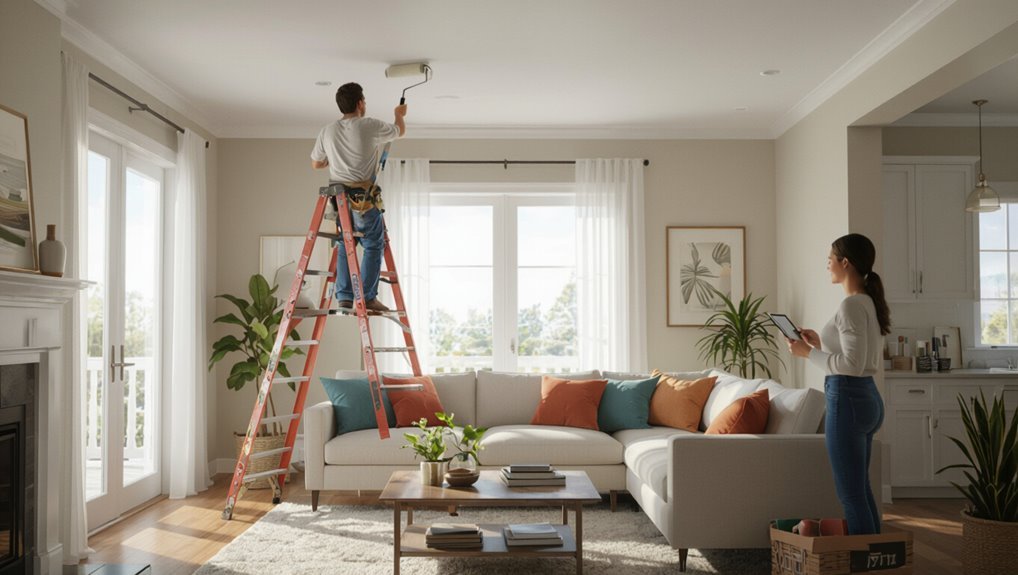
Wondering who should read this guide? You’ll get practical ceiling painting tips and clear budgeting strategies so you can decide whether to DIY or hire pros.
This guide suits homeowners, renters planning upgrades, and small landlords balancing costs and quality.
You’ll learn scope assessment, materials selection, timing, and cost factors to estimate expenses and avoid surprises without jargon or wasted steps.
Quick Answer: Average Ceiling Painting Cost
On average, you’ll pay roughly $1.50 to $4.00 per square foot to paint a ceiling, which typically translates to a total range of about $150 to $600 for a standard room.
Your actual price will depend on factors like ceiling height, condition, paint quality, and whether you need repairs or priming.
Below we’ll break down how those variables affect the per-square and total costs so you can estimate your project.
Typical Cost Range
Most homeowners pay between $150 and $450 to paint a standard 10-by-12-foot ceiling, though factors like ceiling height, surface condition, and whether you hire pros versus doing it yourself can push that range higher or lower. For a clear cost comparison, consider ceiling materials and prep needs; DIY saves labor but pros handle complexity.
| Scenario | Typical Range |
|---|---|
| DIY, basic | $150–$250 |
| Pro, textured/repair | $300–$450 |
Cost Per Square
A good rule of thumb is $1 to $3 per square foot for basic ceiling painting, which gives you a quick way to estimate cost by multiplying your ceiling area by that range.
For more accurate cost estimates, measure your room’s square footage, include closets or beams, and add a small buffer for supplies and minor prep so your budget reflects realistic totals.
Factors Affecting Price
Because several variables change the job, expect ceiling painting costs to vary — but a typical range is $1.50 to $4 per square foot for most homes, with averages landing around $2 to $3/sq ft once labor, materials, and basic prep are included.
You should compare price comparison quotes, assess quality factors like surface condition, height, repairs, paint grade, and contractor experience before deciding.
How Ceiling Size Affects Ceiling Painting Cost
How big your ceiling is directly affects labor and paint needed, so larger square footage usually raises the cost. Irregular room shapes or features like tray ceilings add time and masking, which increases labor charges. You’ll pay more per project when both area and complexity go up.
Square Footage Impact
Square footage is the single biggest factor that determines what you’ll pay to paint a ceiling, since painters and suppliers price labor and materials per square foot.
The larger the ceiling, the more paint, time, and scaffolding or ladders you’ll need, and those costs scale predictably.
You’ll use square footage calculations and estimating paint量 to set labor hours, material orders, and a reliable per‑room cost estimate.
Room Shape Complexity
When a room has an irregular outline or multiple alcoves, your ceiling’s effective size grows beyond simple length-by-width math.
That added complexity raises both labor and material costs. You’ll pay more for varied ceiling shapes because painters need extra time for cutting in, masking, and coverage calculations.
Increased design complexity often means higher hourly charges and more primer or specialty coatings.
How Ceiling Height Changes Labor and Price
Because taller ceilings force you to use ladders, scaffolding, or extension poles, they raise both the time and cost of a paint job. You’ll spend more time prepping, moving equipment, and working overhead, and painters usually charge higher labor rates or a height premium to cover that added effort and risk.
- ceiling height increases setup time
- safety measures add cost
- reach needs special tools
- painting speed slows
- labor impact raises hourly rates
Ceiling Types: Flat, Textured, and Vaulted Costs
Now that you’ve considered how height affects time and cost, the type of ceiling you have will further change the estimate.
Flat ceiling costs are usually lowest—easy rollers and standard ceiling paint types suffice.
Textured ceiling costs rise because of careful coverage and specialty paints.
Vaulted ceiling costs climb highest due to scaffolding, extra labor, and more paint.
Choose paint types for durability and sheen.
Surface Condition: Stains, Cracks, and Prep Impact
If your ceiling has stains, cracks, or peeling, expect prep to add time and cost—these issues dictate how much cleaning, patching, and priming you’ll need before any paint goes on.
You’ll assess damage, then plan for stain removal and crack repair.
Consider:
- Clean surfaces and mildew treatment
- Patch holes and hairline cracks
- Sand and smooth repairs
- Prime stained areas
- Reinspect before painting
Paint and Primer Cost Breakdown
You’ll want to compare paint types—flat, eggshell, satin, and specialty ceiling formulas—because price and coverage vary widely.
Don’t forget primer: some ceilings need it to block stains and improve adhesion, which adds to the total cost.
I’ll break down typical per-gallon prices and when primer is truly necessary so you can budget accurately.
Paint Type Differences
Choosing the right paint for your ceiling affects both appearance and cost, so it’s worth comparing options before you buy.
You’ll weigh paint durability and finish options to match room use and budget. Consider pros and cons:
- Flat: hides flaws, lower sheen
- Eggshell: slight sheen, easy cleaning
- Satin: more durable, washable
- Semi-gloss: highlights texture, durable
- Matte: modern look, less washable
Primer Necessity Costs
Because a primer can make or break your final ceiling finish, you should factor its cost into any paint estimate—especially when covering stains, raw drywall, or drastic color changes. You’ll compare primer types, coverage, and needed coats. Proper application techniques cut recoat needs. Estimate $15–$40 per gallon; labor adds more.
| Primer | Cost/gal | Notes |
|---|---|---|
| Stain-block | $20–$45 | Seals stains |
| Bonding | $18–$40 | For slick surfaces |
| Drywall | $15–$30 | Standard prep |
How Paint Quality and Sheen Affect Cost
Paint quality and sheen directly change what you’ll pay to paint a ceiling, since higher-grade paints cover better and often need fewer coats while glossier sheens can hide flaws but cost more per gallon.
You should weigh:
- paint durability versus initial price
- sheen effects on light and flaws
- quality comparison of brands
- finish types and aesthetic impact
- maintenance requirements and application techniques
When You Need Primer and Starter Cost Estimates
You’ll want primer if your ceiling has stains, bare drywall, or a big color change, and that choice affects both coverage and finish.
Expect primer prices to range by type—stain-blocking, shellac, or oil-based—so I’ll break down costs per quart and per gallon.
We’ll also cover starter supplies you’ll need (rollers, trays, tape) and estimate their combined cost so you can budget accurately.
When Primer Is Needed
Sometimes a primer is essential, and knowing when to use one saves time and prevents problems later.
You’ll choose based on substrate, stains, and finish goals; understand primer types and surface preparation before starting.
Consider these triggers:
- New drywall
- Stains or water damage
- Bare wood or patchwork
- High-contrast color changes
- Glossy surfaces needing bonding
Primer Cost Breakdown
If you need primer, expect to pay for both the product and the extra time it adds to the job; a basic gallon of ceiling primer runs about $15–$30, while specialty or stain-blocking primers cost $20–$50 per gallon, and you’ll want to factor in that most rooms require 1–2 gallons plus brushes or rollers and possible drywall-seam treatments.
| Primer types | Price/gallon | Notes |
|---|---|---|
| Basic latex | $15–$30 | General use |
| Stain-blocking | $20–$50 | Covers stains |
| Shellac | $25–$45 | Tough sealant |
| Popular primer brands | Varies | Check coverage and VOCs |
Starter Supply Estimates
When you need primer, plan your starter supply around the room size and the primer’s coverage rate so you don’t run out mid-job.
Estimate quantities, buy quality, and keep extras for touch-ups. Consider:
- Gallons of primer needed
- Roller and brush types
- Tape and drop cloths
- Ventilation masks
- Backup paint for matching
Prioritize material quality to avoid rework.
Number of Coats and Cost Impact
Because the number of coats directly affects coverage and drying time, you’ll usually need at least two coats on a ceiling to get even color and hide imperfections.
Depending on ceiling texture and paint finish, extra coats raise material and labor intensity.
Your color choice matters too—bold or dark hues often need more coats.
More coats mean higher total cost and longer project time.
Materials and Supplies: Rollers, Tape, Drop Cloths
You’ll want the right roller nap for your ceiling texture—short naps for smooth surfaces and thicker naps for popcorn or rough finishes.
Choose masking tape based on how long it needs to stick and whether it must remove cleanly, and pick drop cloths (canvas, plastic, or paper) for protection and reusability.
These choices affect finish quality, time spent, and overall cost.
Roller Types And Uses
Pick the right roller and your ceiling job gets a lot easier. You’ll choose based on roller materials, roller sizes, roller textures and roller techniques to match surface and paint.
Consider:
- Short nap for smooth ceilings
- Medium nap for slight texture
- Long nap for popcorn or rough surfaces
- Foam for trim and edges
- Extension pole-compatible for reach and consistency
Masking Tape Choices
A few well-chosen tapes make clean lines and fast cleanup; choose based on surface, paint type, and how long you’ll leave the tape in place.
You’ll pick masking tape types like painter’s, delicate-surface, or high-adhesion for trim, textured ceilings, or latex/alkyd paints.
Proper tape application—pressing edges, removing at 45° while paint’s tacky or dry per manufacturer—prevents bleed and damage.
Drop Cloth Options
Several drop cloth types will protect floors and furniture, so choose based on durability, cleanup, and budget.
You’ll weigh canvas options versus lighter fabric choices; canvas lasts, fabric is disposable. Consider size and grip. Pick what suits your space and time.
- canvas options for heavy-duty work
- plastic for easy cleanup
- paper for short jobs
- fabric choices for gentle surfaces
- recycled blends for eco-friendly use
Tools DIYers Need and Estimated Prices
Before you start, gather the essential tools so you don’t interrupt work to hunt for supplies—you’ll need items like a roller and extension pole, angled brush, drop cloths, painter’s tape, a sturdy ladder, a paint tray, and basic safety gear (mask and goggles).
For tool essentials, expect basic kits $30–$80; mid-range rollers and poles $20–$60; ladder $70–$200.
Include budget considerations for replacement rollers and tape.
DIY Ceiling Painting: Realistic Time and Material Costs
How long will it take you to paint a ceiling, and what’ll it cost in materials?
You’ll spend hours per room and $30–$120 on supplies if you follow smart ceiling painting techniques and DIY preparation tips.
Expect to spend several hours per room and roughly $30–$120 on supplies when DIYing ceiling paint.
- Measure area
- Buy primer and ceiling paint
- Get roller extension
- Prep surfaces and cover floors
- Allow drying time
Labor Pricing: Hourly vs. Per-Room for Ceiling Painting
When you’re hiring someone to paint a ceiling, you’ll usually see two common pricing methods: hourly rates and per-room (or per-project) flat fees.
You’ll weigh labor comparison: hourly gives flexibility for unpredictable tasks, while per-room simplifies budgeting and often lowers cost for standard jobs.
Choose pricing strategies based on project complexity, your tolerance for time-based billing, and desire for cost certainty.
How Painters Estimate Time, Crew Size, and Rates
When you hire a painter they’ll size up the room and decide how many crew members are needed based on ceiling height, access, and how much prep work is required.
They’ll factor in surface condition, number of coats, drying time, and any repairs when estimating total hours. Those inputs drive whether they charge by the hour, per room, or with a flat project rate.
Crew Size Decisions
Decide on crew size by matching the job’s scope and your schedule: for small rooms a single experienced painter is usually fastest and cheapest, while larger or high-ceilinged spaces often need two or more hands to keep prep, cutting-in, and rolling synchronized and on schedule.
- Evaluate ceiling size
- Consider access and height
- Balance crew size with labor efficiency
- Assign clear roles
- Plan for contingency
Time Estimation Factors
Matching crew size to the room sets the stage for accurate time estimates, but you also need to factor in prep complexity, ceiling height, paint type, and access limitations to predict labor hours and costs.
You’ll assess surface repair, drying times, and specialty finishes to set time allocation. Communicate constraints, align crew shifts, and use realistic project scheduling so you get reliable rate quotes and timelines.
Typical Pro Price Ranges by Room Size
Pro painters typically price ceiling jobs by room size, so you can expect a clear range depending on square footage and complexity.
Pro painters charge for ceilings by room size, with costs rising for larger, more complex or high/textured ceilings
You’ll pay more for intricate ceiling styles or odd room dimensions.
Typical pro price ranges:
- Small (bath/closet): low end, quick job
- Medium (bedroom): moderate rate
- Large (living room): higher rate
- High ceilings: added cost
- Textured ceilings: prep fees
Cost to Paint Open-Plan Ceilings and Large Areas
Painting open-plan ceilings and large areas usually costs more per job but less per square foot than painting several smaller rooms, because you’ll pay for extended labor time, scaffolding or lifts, and more paint but save on setup and cleanup repeated across rooms.
You should plan for open plan challenges like access and masking, and use large area techniques—sprayers, rolling frames, and staged crews—to stay efficient and safe.
Popcorn/Acoustic Ceiling: Removal vs. Paint-Over Costs
If your ceiling has a popcorn or acoustic texture, you’ll want to weigh the cost of removing it versus simply painting over it.
Removal can be costly and messy but gives a smooth, modern finish; painting over is cheaper and quicker but may hide damage and limit resale appeal.
Consider your budget, timeline, and whether you plan to sell when choosing between the two.
Remove Popcorn Ceiling
When you’re weighing whether to remove a popcorn ceiling, consider both the condition of the texture and the potential costs.
You’ll face Popcorn removal and Ceiling repair choices; here’s what matters:
- Asbestos testing if home predates regulations
- Prep and containment labor
- Surface skim or drywall replacement
- Disposal fees for removed material
- Final sanding and priming before painting
Paint Over Popcorn
Because removing a popcorn ceiling can be messy and costly, many homeowners choose to paint over it instead. That option can save time and money—provided the texture is intact and not peeling.
You’ll prep by cleaning and priming, then use specific painting techniques—thick-nap rollers or sprayers—to cover popcorn texture evenly. Costs stay lower than full removal if adhesion is good.
Repair Costs: Cracks, Water Stains, and Damage Fixes
Although minor, ceiling damage can quickly raise your painting bill, so it’s smart to assess and fix cracks, water stains, and other defects before you roll on paint.
- Do a damage assessment to spot hairline cracks and stains.
- DIY crack repair saves money if small.
- Stain removal may need priming.
- Get quotes for larger repairs.
- Use cost comparison to decide hire vs. DIY.
Electrical and Fixture Work: Lights, Fans, and Wiring Costs
Fixing cracks or stains often uncovers outdated or poorly installed fixtures that affect how you’ll paint and use the ceiling.
You’ll likely need fixture installation or removal, plus wiring considerations for lights or fans. Expect electrician rates for safe reconnection, new boxes, or switch upgrades.
Factor permits and testing for fire risks; addressing electrical issues prevents repaint callbacks and safety hazards.
Scaffolding and Ladder Rental: When It’s Required and Costs
If your ceiling’s height or layout makes a ladder unsafe, you’ll want to weigh renting scaffolding versus buying one.
Rental costs vary by size and duration, while purchase prices depend on quality and how often you’ll use it.
Consider transport, setup, and safety accessories when comparing total costs.
Rental vs Purchase
Deciding whether to rent or buy scaffolding and ladders comes down to how often you’ll need them, the height and complexity of the job, and your budget. Rentals make sense for one-off or occasional ceiling projects, while purchases can be cheaper long-term for frequent use.
- Compare rental equipment rates per day/week
- Check storage and maintenance needs
- Weigh upfront cost versus recurring fees
- Consider resale value
- Assess safety and comfort
Cost Factors
Having weighed rental versus purchase, you’ll next look at the specific cost factors that determine when scaffolding or a ladder is required and what it will cost.
Consider ceiling height, room size, obstruction access, and job duration.
A cost comparison shows scaffolding suits high, long jobs; ladders work for quick, low ceilings.
Factor delivery, setup, safety gear, and include them in budget planning.
Prep and Cleanup Costs: Tarps, Masking, and Disposal
One to two hours of prep can save you time and money later: tarps, drop cloths, and plastic sheeting protect floors and furniture from splatter, while proper masking tape and paper keep edges crisp and reduce touch-ups.
You’ll choose materials wisely and plan disposal.
- tarps selection: heavyweight vs disposable
- masking techniques for clean lines
- tape removal timing
- debris bagging
- rental bin fees
Extra Charges and Common Hidden Costs to Watch For
Prepping well reduces surprises, but don’t assume the quoted price covers everything—contractors often add line items that can push your final bill higher.
You should expect extra fees for surface preparation, repairs, and cleanup costs. Ask about contractor fees, hidden charges, and potential unexpected expenses for complex ceilings.
Compare bids closely and clarify any regional pricing references before work starts.
Regional Price Differences and Seasonal Pricing Effects
Because labor, material costs, and demand vary by location, the price to paint a ceiling can differ greatly from town to town.
Because labor, materials, and demand change locally, ceiling painting costs can vary widely between towns.
You should watch regional pricing and seasonal trends to pick the best time and place.
Consider these factors:
- Local labor rates
- Material availability
- Peak-season demand
- Off-season discounts
- Weather-related delays
Typical Project Timeline: Estimate to Final Walkthrough
Regional pricing and seasonality help you pick when and where to schedule work, but you also need a clear timeline from estimate to final walkthrough so the job doesn’t drag or surprise you.
Expect initial estimate, scheduling, prep (moving furniture, masking), painting days, drying time, touch-ups, and a final walkthrough.
Set realistic project duration and communicate timeline expectations to avoid delays.
How to Get Accurate Contractor Estimates
How do you get estimates you can trust? You verify contractor qualifications, compare written bids, and focus on estimate accuracy.
Ask for itemized pricing, timelines, and materials. Look for licenses and insurance, and confirm references.
- Verify licenses and insurance
- Request itemized written bids
- Compare materials and labor breakdowns
- Check timelines and guarantees
- Confirm references and past work
Questions to Ask Painters Before Hiring
Now that you know how to vet bids and verify credentials, you should prepare the right questions to ask potential painters so you can compare them beyond price.
Ask about painters’ experience with ceilings, sample projects, necessary prep, materials, warranties, and insurance.
Confirm estimated project timelines, daily hours, cleanup, change-order policies, and payment terms so expectations match before work starts.
Red Flags in Bids and Contractor Contracts
Before you sign anything, watch for concrete red flags in bids and contracts that can cost you time and money: vague scopes of work, missing start or completion dates, unclear payment schedules, and no mention of cleanup or change-order procedures.
Before signing, watch for vague scopes, missing dates, unclear payments, and absent cleanup or change-order terms.
You should verify contract terms and insist on clarity.
- missing licensing or insurance proof
- ambiguous materials list
- open-ended pricing
- no warranty details
- vague timeline
When Hiring a Pro Is Worth It vs. DIY
Spotting red flags in bids helps you avoid bad hires, but you’ll still need to decide whether to tackle the ceiling yourself or call a pro.
Weigh Pro Benefits like speed, warranty, and safe handling of height or texture against DIY Risks such as poor finish, equipment costs, and injury.
Choose pro help for complex jobs; DIY suits small, simple rooms when you’re confident.
Ways to Save on Ceiling Painting Without Cutting Quality
If you want to cut costs without sacrificing results, focus on smart choices: pick high-quality paint that covers in one coat, rent a good roller extension and ladder instead of buying, and prep thoroughly so you won’t need touch-ups.
- Use cost effective techniques like rolling vs. spraying
- Buy budget friendly materials in bulk
- Patch and prime properly
- Time work for sales
- Reuse drop cloths and trays
Sample Cost Scenarios and Detailed Breakdowns
Let’s walk through a few real-world scenarios so you can see exactly where your money goes: a small 10×10 room, an average 12×15 living room, and a larger open-plan space.
You’ll get cost comparisons: DIY vs pro, materials, and labor. Each scenario lists preparation techniques, surface repair, primer needs, time estimates, and a clear per-square-foot breakdown so you can budget.
Choosing Paint Color, Finish, and Hiring Plan for Your Budget
Choosing the right ceiling paint and hiring plan can save you time and money while getting the look you want. Start by balancing aesthetic goals with practical needs: pick a finish that hides imperfections (flat or matte for most ceilings), choose a color that complements walls and light, and decide whether you’ll DIY smaller rooms or hire pros for large or high ceilings based on your budget, safety, and time constraints.
- Use color psychology to set mood
- Favor flat/matte finish types for flaws
- Test swatches in different light
- Do budget planning before hiring
- Get a cost comparison from local pros
Frequently Asked Questions
Can Painting a Ceiling Improve Indoor Air Quality or VOC Levels?
Yes — you can improve indoor air quality: choosing low‑VOC ceiling paint benefits your home by reducing emissions, trapping fewer pollutants, and cutting odors, so you’ll breathe easier after painting with proper ventilation and high‑quality products.
Will Ceiling Paint Affect Acoustic Properties or Soundproofing?
Yes — painting a ceiling can slightly alter acoustic treatment effectiveness, but it won’t provide real soundproofing; you’ll get minor sound absorption changes from thicker, textured, or specialized acoustic paint, not significant noise reduction.
Can Painting a Ceiling Void Home Insurance or Warranty Coverage?
It usually won’t, but you should check insurance implications and warranty considerations first; if you use improper materials or damage structures, your insurer or manufacturer might deny claims, so document work and follow product instructions precisely.
How Long Before I Can Reinstall Light Fixtures After Ceiling Paint?
You can usually reinstall light fixtures after 24–48 hours; drying time depends on paint type and humidity, so wait until the ceiling’s fully dry and cool to guarantee fixture safety and avoid trapping moisture or coatings.
Are There Eco-Friendly or Low-Voc Ceiling Paint Rebates or Incentives?
Yes — you can find eco friendly options with rebates or tax incentives; check local utility programs and state green building grants. You’ll enjoy low VOC benefits like improved indoor air quality and fewer chemical odors.
Conclusion
You’ve seen the real factors that drive ceiling-painting costs, and now you can test the theory that “you can save money without sacrificing quality.” Try it: price labor and materials for one room, then compare a pro’s quote. You’ll usually find DIY saves cash on small, low ceilings, while pros beat you on time, tricky heights, or textured surfaces. Use those insights to pick the smartest, budget-friendly route for your project.
