
How to Stick Stuff to Walls Without Ruining Paint
You can hang things without wrecking paint by matching the method to your wall, finish, and weight: clean the area, test a small spot, then use removable adhesive strips or putty for under 1 lb, low‑tack rails or picture hooks for light frames, and distributed anchors or cleats for heavier items. Warm adhesive edges before removing and peel slowly to avoid chips; spackle tiny holes and touch up paint when needed. Keep reading for specific product picks and step‑by‑step tips.
Why Choose Damage‑Free Wall Attachments
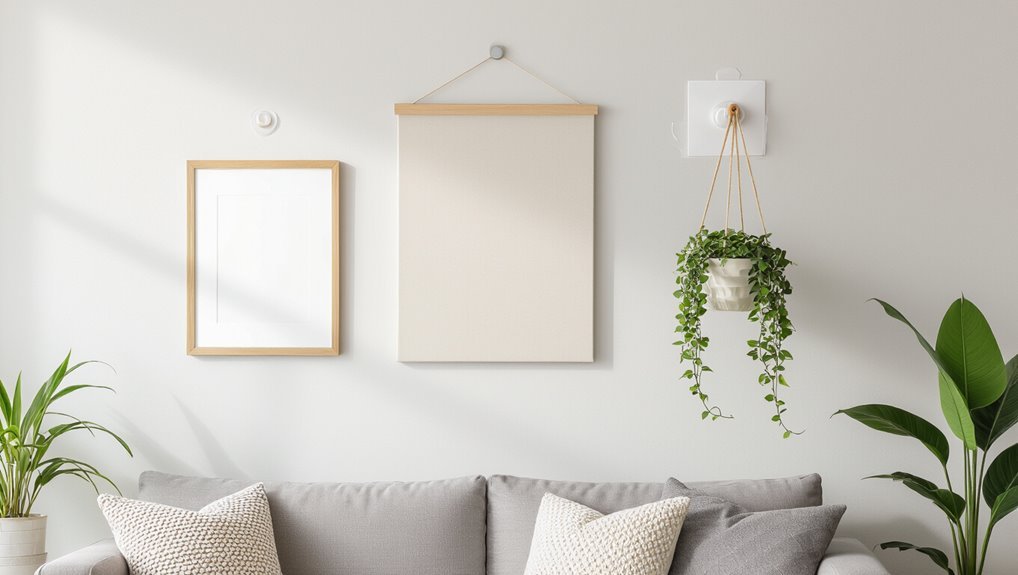
If you want to hang pictures, shelves, or holiday decorations without committing to permanent holes or scuffed paint, damage‑free wall attachments give you a clean, flexible solution you can remove or reposition easily.
You’ll appreciate damage free benefits like preserved paint, simple installation, and renter-friendly removal. Assess wall attachment options for weight capacity and surface compatibility so you pick the right, noninvasive fix.
Quick Decision Guide: Wall Type + Paint + Item Weight
First, identify whether your wall is drywall, plaster, brick, or tile so you know what surface you’re working with.
Next, match the adhesive strength to that surface and the paint finish to avoid damage.
Finally, check the item’s weight limits and pick a method rated for that load so your stuff stays put.
Identify Your Wall Type
Walls vary more than you might think, and identifying yours quickly will save time and prevent ruined paint or fallen frames.
Check wall materials—drywall, plaster, brick, concrete—or look for studs with a magnet.
Note wall textures: smooth, orange peel, or heavy stucco.
Also confirm paint type (glossy, eggshell, matte) and approximate item weight to choose appropriate mounting methods.
Match Adhesive Strength
When you combine wall type, paint finish, and the item’s weight, you can pick an adhesive that will actually hold—no guesswork required.
Evaluate adhesive properties like tack, shear strength, and removable versus permanent bond. Match those to surface compatibility: porous versus smooth, glossy versus matte.
Test a small patch if unsure. Choose an adhesive rated for your wall and finish to prevent paint damage.
Consider Item Weight Limits
Now that you’ve matched adhesive strength to surface and finish, it’s time to pair that choice with the item’s weight so you don’t overload the bond.
Check manufacturer weight limits and consider weight distribution—spread heavy items across multiple anchors or a rail.
Match adhesive types to both wall material and load: removable strips for light decor, anchors or screws for heavier pieces to protect paint and safety.
How to Use This Guide (Weights, Surfaces, Tests)
Use the quick chart to pick an adhesive rated for your item’s weight and your wall surface.
Always try the chosen product on a hidden spot first to check for damage or poor adhesion.
If it holds and leaves no mark, proceed with confidence.
Choose Adhesive By Weight
Start by matching the adhesive’s rated weight to what you’re hanging, because picking the wrong strength is the fastest way to damage walls or drop your items.
Consider adhesive types and weight considerations: use light-duty strips for papers, medium hooks for frames, and heavy anchors for shelves.
Factor dynamic loads, surface texture, and safety margins. When in doubt, choose higher rated adhesive.
Test On Hidden Spot
Wondering whether that adhesive will mar your paint or actually hold your frame? You should try small, inconspicuous test varieties and hidden methods first.
Pick a scrap or behind furniture, apply per instructions, wait the recommended cure time, then inspect.
- Adhesive patch test
- Weight-hang trial
- Peel-off check
Understanding Painted Finishes: Why It Matters
Why does the type of paint on your wall matter when you’re hanging things? You’ll protect paint durability and choose appropriate finish types to avoid peeling or stains. Match adhesives to surface sheen, consider oily or chalky layers, and respect curing time.
| Smooth | Rough | Fragile |
|---|---|---|
| Calm | Alarm | Sorrow |
| Trust | Worry | Relief |
How Paint Finish Affects Adhesive Choice
Now that you know how different painted finishes and surface conditions affect durability and curing, consider how those same qualities determine which adhesives will actually stick.
You’ll match adhesive compatibility to paint texture and finish. Choose based on porosity, sheen, and flexibility:
- Matte/eggshell: use high-grip, low-solvent adhesives.
- Satin/semi-gloss: choose flexible tapes or milder adhesives.
- Gloss: prefer non-reactive, removable options.
Testing a Small Spot First
Before you commit to an adhesive, test a small, inconspicuous spot first so you can see how the product reacts to your paint and surface.
You should try different testing methods—apply briefly, wait, then peel gently—to assess residue, discoloration, or finish lift.
Record a spot evaluation and wait 24–48 hours before full application to guarantee the adhesive won’t damage the paint.
Which Wall Surfaces Matter: Drywall, Plaster, Brick, Tile, Wood
Surfaces matter because each one—drywall, plaster, brick, tile, and wood—grips adhesives differently.
So you’ll choose products and prep steps based on texture, porosity, and finish.
Know drywall characteristics for light hooks, respect plaster durability with gentle anchors, account for brick texture when using masonry anchors, assess tile adhesion limits, and match adhesives to wood finish.
- Clean first
- Use correct anchors
- Test small spots
Scanning Tip: Find Studs Fast
Before you start drilling, you’ll want to find studs fast using a stud finder for the quickest, most reliable read.
If you don’t have one, run a magnet along the wall to catch screw heads or measure 16 inches from an outlet to predict stud locations.
These quick scans save time and prevent wasted holes.
Use A Stud Finder
A stud finder saves you time and keeps your wall hangings secure, so grab one before you start drilling.
You’ll use it for precise wall scanning to locate studs, avoid wiring, and mark solid anchor points.
Follow device prompts, sweep slowly, and recheck measurements.
- Sweep slowly
- Mark edges
- Reconfirm center
Magnetic Fastener Trick
Grab a small magnet and glide it along the wall until it sticks—when it does, you’ve likely found a screw or nail driven into a stud.
You’ll use magnetic benefits to pinpoint fasteners quickly, avoiding guesswork and extra holes. This trick boosts wall versatility for hanging frames or shelves with minimal damage.
Keep the magnet flat and scan slowly for reliable results.
Measure From Outlets
If the magnet helped you locate a fastener, you can use nearby outlets as a quick reference to find studs. Measure horizontally from outlet placement—studs are typically 16″ or 24″ apart.
Keep electrical safety in mind: avoid drilling near wiring.
- Measure 16″ increments.
- Scan for outlet alignment.
- Mark and double-check before drilling.
Weight Categories: What to Use Under 1 Lb
Under 1 lb, you’ve got a lot of reliable, low-effort options: command strips, removable mounting putty, small picture hooks, and double-sided adhesive tabs will hold frames, lightweight shelves, posters, and most decorative items without damaging paint.
You can hang lightweight decor and create temporary displays confidently; pick products rated a bit above your item’s weight, prep the wall, and press firmly for a secure hold.
Lightweight Options Under 1 Lb: Strips & Tapes
For items under a pound, you’ll usually reach for removable adhesive strips that hold picture frames and small decor without damaging paint.
Painter-friendly mounting tape is another good choice when you need a lower-profile bond that peels off cleanly.
In the next bit, we’ll compare holding strength, surface compatibility, and removal tips so you can pick the right strip or tape.
Removable Adhesive Strips
When you need to hang lightweight items—think small frames, cables, or holiday decorations—removable adhesive strips give you a clean, damage-free solution that’s easy to apply and remove.
You’ll find removable options in several adhesive varieties; pick strength by weight and surface. Use them like this:
- Clean surface, press firmly.
- Match strip size to item weight.
- Remove slowly, parallel to wall.
Painter-Friendly Mounting Tape
Painter-friendly mounting tape lets you hang very light items—think postcards, cable clips, or small hooks—without ruining fresh paint or textured walls.
You’ll choose low-tack tapes labeled as painter friendly alternatives, peel gently, and press for seconds.
Check an adhesive comparison for hold versus residue.
Test a small scrap first on an inconspicuous spot, and remove slowly at a low angle to avoid paint lift.
Poster Putty and Low‑Tack Tapes Without Peeling Paint
Although poster putty and low-tack tapes seem harmless, they can still pull paint if you use the wrong product or apply too much pressure—so choose adhesives rated safe for delicate finishes and follow the manufacturer’s instructions.
Even mild poster putty or low‑tack tape can lift paint—use products rated for delicate finishes and follow instructions.
- Test a small area for putty applications and try poster alternatives if paint peels.
- Clean surfaces, press gently, avoid oily hands.
- Remove slowly, parallel to wall to minimize damage.
Magnetic Strips & Plates for Temporary Displays
If you want a clean, reusable way to hang lightweight signs or photos, magnetic strips and metal plates are an excellent option for temporary displays.
You stick adhesive-backed metal plates to items and mount magnetic strips to walls or use removable magnetic tape. They create tidy magnetic displays, let you swap items fast, and serve as low-impact temporary solutions without nails or heavy hardware.
1–10 Lb: Picture Hooks, Low‑Tack Anchors, Rails
When you need to hang lightweight art without adhesives, picture hooks give you simple, reliable options for nails or small screws.
You can also choose low‑tack rails that let you slide frames side to side and swap pieces without re‑mounting.
Both approaches keep weight off your walls while making rearranging quick and damage minimal.
Picture Hooks Options
Picture hooks, low‑tack anchors, and picture rails give you multiple ways to hang lightweight items without drilling or heavy fasteners.
You’ll choose among picture hook types by balancing aesthetic considerations, weight distribution, and simple installation techniques so paint stays intact.
- Small metal hooks for frames
- Adhesive strip anchors for posters
- Slim rails for flexible hanging
Low‑Tack Rails
Though they look subtle, low‑tack rails give you a flexible, damage‑minimizing way to display multiple pieces along a single line; stick a rail to your wall and slide hooks or cords to rearrange art without repainting. You’ll appreciate low tack benefits and simple rail installation for renters.
| Tool | Weight | Tip |
|---|---|---|
| Rail | Light | Measure |
| Hook | Small | Adjust |
| Anchor | Low‑tack | Test |
| Cord | Flexible | Level |
| Pad | Removable | Clean |
How to Distribute Weight for Frames and Mirrors
If you’re hanging a heavy frame or mirror, spread the load across multiple anchors so no single point bears all the weight.
You’ll improve frame stability and mirror placement while preserving paint. Focus on weight distribution and aesthetic balance by using paired hooks, a hanging wire, or a cleat system.
- Paired hooks
- Hanging wire
- Picture cleat
Heavy Loads Over 10 Lb: Rails, Anchors, Permanent Mounts
When you’re hanging items over about 10 pounds, single hooks and basic anchors won’t cut it—spread the load across hardware designed for heavier duty.
Install picture rails, French cleats, or plywood backers into studs, and choose heavy duty options like structural anchors or lag screws.
Reserve adhesive types for temporary, lighter supports; permanent mounts need mechanical fastening and proper stud engagement for safety.
Toggle Bolts vs. Molly Bolts for Painted Walls
Choose toggle bolts when you need high blind-side strength and molly bolts when you want a flush, reusable anchor that spreads load along the wall—both work on painted drywall but perform differently under stress.
- You’ll use toggle bolt advantages for heavy, hollow-wall loads.
- You’ll pick molly bolt applications for medium loads and neat finishes.
- You’ll avoid over-tightening to protect paint and drywall.
When to Use Wall Anchors and Studs
Before you grab anchors, find a stud with a stud finder or by tapping the wall so you know where the solid support is.
If your load lines up with a stud, screw straight into it for the strongest hold.
When it doesn’t, pick the right anchor type and size for the weight and wall material.
Find Studs First
Although studs don’t hide, they can feel impossible to find until you know what to look for; locating them first tells you whether to screw directly into wood or use anchors for a secure hold.
- Use a stud finder for accurate stud location before drilling.
- Tap walls to hear solid versus hollow spots.
- Measure 16″ or 24″ from corners; confirm with pilot screws to verify wood.
Use Anchors Appropriately
When you can’t hit a stud, use the right anchor for the job so your item stays secure and the wall doesn’t get damaged; choose anchors types based on weight and wall material.
Match anchor placement to studs when possible, spacing hardware evenly. For heavy loads, mount into studs.
For drywall, use toggle or molly anchors, and follow manufacturer weight limits and installation steps precisely.
Picture Rails, Moldings, and Hanging Systems
If you want a flexible, damage-minimizing way to hang artwork, picture rails, moldings, and dedicated hanging systems give you options that keep nails and sticky hooks off your painted walls.
You’ll enjoy picture rail benefits, varied molding options, and modular hanging systems that boost aesthetic appeal.
- Use rails to shift art easily.
- Pick molding that complements trim.
- Choose hardware rated for weight.
Wire‑And‑Rail Systems for Rotating Displays
When you plan a wire‑and‑rail system for rotating displays, place the cable track where it evenly supports the weight and allows the displays to turn without rubbing the wall.
Check the weight capacity limits of both the rail and the attachment points so you don’t overload the system.
Finally, test rotation and stability with the actual pieces to confirm smooth movement and secure mounting.
Cable Track Placement
Because rotating displays rely on smooth, consistent motion, you’ll want to plan cable track placement so the wire and rail never bind or stretch; position the track parallel to the axis of rotation, keep bends gentle, and leave enough slack for thermal expansion and maintenance access.
- Prioritize cable track aesthetics with hidden mounts.
- Use cable management tips: clips, channels, labels.
- Mount access panels for inspection and quick service.
Weight Capacity Limits
Though wire‑and‑rail systems look simple, you’ll need to respect their published weight limits to keep rotating displays safe and reliable.
Check rail and wire ratings, account for dynamic loads, and plan weight distribution so no single point is overloaded.
Use appropriate fasteners; adhesive longevity matters but don’t rely on glue alone.
Reassess periodically and follow manufacturer specs.
Rotation And Stability
If you want a rotating display to look effortless, you’ve got to balance rotation mechanics with solid stability so the whole system won’t wobble or twist under load.
You’ll use wire‑and‑rail guides, secure anchors, and gentle bearings to protect adhesive longevity and wall aesthetics.
- Anchor selection: match load, avoid paint damage.
- Tensioning: prevent drift, enable smooth spin.
- Inspection: tighten fittings, monitor wear.
Mounting Small Shelves Without Drilling
When you want a quick, renter-friendly way to add storage or display space, mounting small shelves without drilling is entirely doable using adhesive systems and clever hardware alternatives.
Choose shelf styles that spread weight—floating, bracketed, or corner—and match adhesive types to wall material and load.
Use level, tape-measure, and removable wall anchors or tension poles for extra support without harming paint.
Adhesive‑Backed Velcro: Pros and Limits
Adhesive‑backed Velcro can hold light to moderate loads, but you’ll want to check the product’s stated weight limit and test it before relying on it.
Prepare the surface by cleaning and drying thoroughly, and avoid textured or freshly painted walls for the best bond.
When you remove it, pull slowly and use adhesive remover or heat to minimize residue and paint damage.
Stick Strength Limits
Velcro sticks by combining tiny hooks and loops with a pressure‑sensitive adhesive, and that combo gives you quick, reusable fastening but also clear limits on load and longevity.
You should evaluate adhesive longevity and surface compatibility before trusting heavy items.
- Light objects: picture frames, cables.
- Medium loads: small shelves, organizers—test first.
- Heavy items: avoid; use anchors or hardware.
Surface Preparation Tips
If you want a reliable bond, prep the surface so the adhesive can grab properly. Wipe paint with a mild degreaser, dry thoroughly, and use recommended surface cleaning techniques.
Test a small patch for porous or glossy finishes.
Consider wall texture considerations—very rough or heavily textured surfaces reduce contact area, so press firmly or choose alternate fasteners.
Follow manufacturer’s weight limits.
Removal And Residue
When you peel adhesive-backed Velcro off a wall, expect some resistance and possible residue—how much depends on the adhesive type, surface finish, and how long it’s been stuck.
You can minimize damage by warming adhesive, peeling slowly, and using gentle residue removal solvents.
- Warm and peel slowly
- Test solvent compatibility
- Clean, then dry fully
Keywords: adhesive types, residue removal
Choosing Removable Adhesive Hooks Safely
Because removable adhesive hooks come in different sizes, weight ratings, and backing chemistries, you should match the hook to both the item and the wall surface before sticking anything up.
Choose removable options rated above your item’s weight, check compatibility with paint or tile, test a small area, follow curing times, and remove slowly along the wall to minimize damage and residue.
Command‑Style Hooks: Do’s and Don’ts
1 simple rule to remember: follow the product instructions and you’ll avoid most problems.
You should pick the right command hook types for weight and surface, press firmly, and wait before loading.
Clean the wall first and remove slowly to protect paint. Monitor adhesive longevity and replace strips when they age.
- Match weight limits
- Prep and cure time
- Remove by stretching gently
Choosing the Right Adhesive Tape for Painted Walls
When choosing adhesive tape for painted walls, match the tape type to your paint finish and wall material so it grips without lifting the paint.
Try a small test strip in an inconspicuous spot to check adhesive strength and removeability.
If the tape peels paint or won’t hold your item, switch to a gentler option or a different mounting method.
Match Tape To Surface
Painted walls demand tape that balances stick and gentleness, so pick a product matched to your paint type and how long it needs to stay up.
You’ll consider tape types and surface compatibility, choosing low-tack for delicate finishes or stronger options for semi-gloss. Check edges and seams for adhesion and remove within recommended time.
- Low-tack painter’s tape
- Removable mounting strips
- Medium-adhesion double-sided tape
Test Adhesive Strength
Adhesion matters: before committing to a tape, test how well it sticks by applying a short strip to an inconspicuous painted area, leaving it for the manufacturer’s suggested time, then peeling it off slowly to check for residue or paint lift.
You’ll perform adhesive testing and a quick strength evaluation, noting hold, stick duration, and any paint damage before using the tape on visible surfaces.
Cable Management Solutions Without Residue
Keeping cables tidy without leaving sticky residue is easier than you might think: use non-adhesive clips, magnetic solutions, or removable-hanging systems that grip or cradle wires without glue.
Keep cables tidy without sticky residue: use non-adhesive clips, magnets, or removable clamp-style holders.
- Use cable clips and wire organizers that clamp onto baseboards or desks.
- Try magnetic cable holders for metal surfaces.
- Avoid adhesive hooks and wall stickers if you want zero residue; choose tension or clamp mounts instead.
Temporary Seasonal Decor That Won’t Harm Paint
When you want seasonal decor that won’t damage paint, start with removable adhesive hooks for wreaths and lightweight garlands.
You can also use painter’s tape holders for temporary signs or string lights without leaving residue.
For heavier pieces, opt for Command strips to keep things secure and paint-safe.
Use Removable Adhesive Hooks
If you want seasonal decor that won’t damage your paint, removable adhesive hooks are a simple, reliable option you can put up and take down in minutes.
You’ll protect wall safety, avoid nails, and choose weight-rated removable hooks for ornaments or lights.
- Clean surface first.
- Press firmly per instructions.
- Remove slowly to prevent residue.
Try Painter’s Tape Holders
Removable hooks work great, but painter’s tape offers an even lighter option for temporary seasonal displays that won’t harm paint.
You can use painter’s tape benefits to secure paper garlands, lightweight wreaths, or stringed lights for short periods.
Try creative uses like folded tape tabs as mini holders or reinforced corners for posters.
Test a small spot first and replace often to avoid residue.
Opt For Command Strips
Because they hold securely without damaging paint, Command strips are a go-to for temporary seasonal decor you want to leave up without committing to nails or glue.
You’ll appreciate Command strip effectiveness when you check weight limits and peel prompts. Confirm surface compatibility (clean, dry, smooth).
Follow instructions, press firmly, and remove slowly to protect paint.
- Test weight
- Clean surface
- Remove slowly
Outdoor Painted Walls and Exterior Considerations
When you’re dealing with outdoor painted walls, consider how weather, surface texture, and paint type will affect adhesion and longevity. You’ll prioritize outdoor durability, weather resistance, paint compatibility, seasonal impacts, surface textures, hanging techniques, adhesive longevity, and environmental factors to protect finish and attachment.
| Factor | Recommendation |
|---|---|
| Paint compatibility | Test small area |
| Surface textures | Clean/prime |
| Seasonal impacts | Install in mild weather |
| Hanging techniques | Use corrosion-resistant hardware |
Bathrooms & Tile: Avoiding Moisture Damage
If you’re sticking things in bathrooms or onto tile, prioritize moisture resistance and secure attachment to prevent damage to both the wall and the object.
Use water resistant adhesives and consider moisture barriers behind fixtures.
Opt for water-resistant adhesives and add moisture barriers behind fixtures to protect tiles and prevent damage
Follow these steps:
- Clean and dry tile thoroughly before applying adhesive.
- Test adhesive on hidden spot for hold.
- Seal edges and joints to limit seepage and mold.
Temperature, Humidity, and Adhesive Performance
Though adhesives can seem straightforward, temperature and humidity dramatically change how they cure and hold, so you’ll want to match products to your environment.
You’ll notice temperature effects: cold slows curing and weakens bonds, heat can soften adhesive.
Monitor humidity levels—excess moisture can prevent proper setting or cause tackiness.
Pick adhesives rated for your room’s typical conditions to avoid failure.
Cleaning and Prepping Painted Walls for Adhesion
A clean surface gives adhesives the best chance to bond, so start by removing dust, grease, and any loose paint with a soft cloth and mild detergent; rinse and let the wall dry completely before you proceed.
- Use gentle cleaning techniques—nonabrasive cloths and diluted detergent.
- Inspect for flaky paint; sand lightly if needed for surface preparation.
- Wipe with isopropyl alcohol, then wait until fully dry before applying adhesive.
How to Safely Remove Strips, Tape, and Putty
Start by evaluating what you’re removing—strips, tape, or putty—so you can pick the gentlest method that won’t damage the paint.
For strips, peel slowly at a low angle; warm stubborn edges with a hair dryer.
For tape, pull back gently and slowly.
For putty, roll or lift edges with a plastic scraper.
Match removal techniques to adhesive types to minimize damage.
Removing Adhesive Residue Without Harming Paint
Once you’ve removed strips, tape, or putty, some sticky residue will often cling to the paint — and you can get it off without damaging the finish.
Use gentle methods tailored to adhesive types and safe residue removal. Try:
- Warm soapy water with a soft cloth.
- Rubbing alcohol or adhesive remover sparingly.
- A plastic scraper and patience to avoid scuffs.
Repairing Small Paint Damage After Removal
If you notice small chips or scuffs after removing hooks or tape, you can usually fix them quickly with just a few tools and a steady hand. Use gentle sanding, matching paint, and precise brushwork. These paint repair techniques and touch up methods restore finish without repainting.
| Problem | Fix |
|---|---|
| Chip | Fill, sand |
| Scuff | Clean, blend |
| Tiny hole | Spackle, paint |
| Gloss mismatch | Feather edges |
When Repainting Is the Better Option
While small touch-ups can hide minor chips and scuffs, you’ll want to repaint when damage is widespread, the repaired areas keep showing, or the wall color and sheen no longer match.
Repainting gives a uniform finish, saves time on repeated fixes, and prevents visible patchwork that draws the eye.
- Assess repainting benefits and scope.
- Factor color considerations and sheen.
- Prep surfaces for lasting results.
Products and Practices to Avoid on Painted Walls
Because painted walls can hide damage until it’s too late, you should steer clear of products and practices that strip paint, cause staining, or create uneven wear.
Don’t use harsh solvents, permanent adhesive types, heavy tapes, or metal hooks that gouge.
Avoid quick fixes that trap moisture.
Opt for tested removable options and renter solutions focused on wall safety, especially with seasonal decor.
Budget‑Friendly Renter Solutions That Minimize Damage
When you’re renting, small changes can make a big difference, so choose affordable, low‑damage options that come off cleanly when your lease ends.
- Command‑style hooks and wall friendly materials: renter friendly methods that respect surface compatibility.
- Magnetic strips, tension rods and adhesive alternatives for seasonal solutions and aesthetic considerations.
- DIY tips: washi tape frames, removable options, and lightweight displays to minimize damage.
Professional Mounting Options When Damage Is Unacceptable
If you need a flawless, long‑term result and can’t risk even minor surface damage, hire a professional installer who’ll assess your wall type, recommend anchors or hidden mounting systems, and install hardware with precision so fixtures sit secure and level without unnecessary patching later.
You’ll get tailored professional mounting solutions, code‑compliant fasteners, and careful damage prevention; trust experts for heavy, valuable, or permanent installations.
Final Checklist: Pick the Right Method (Wall, Finish, Weight)
Now that you’ve considered professional installation for no‑damage results, it’s time to choose the right mounting method yourself.
- Match adhesive types to weight and finish—use removable strips for light items, heavy‑duty anchors for dense finishes.
- Check wall preparation: clean, dry, and repair paint before sticking anything.
- Test placement and load briefly, then monitor for shifting to avoid damage and guarantee secure mounting.
Frequently Asked Questions
Can I Use Adhesive Methods on Newly Painted Walls (How Long to Wait)?
Wait at least two weeks before using adhesive types on newly painted walls; you’ll get better adhesion and avoid lifting. For temporary solutions, use low-tack options like removable strips or poster putty to minimize paint damage.
Will Adhesives Discolor or Yellow Light‑Colored Paint Over Time?
Yes — some adhesives can yellow light paint over time; you’ll picture sticky gremlins feasting on brightness. Check adhesive types and paint compatibility, test small areas, and prefer low‑residue, reversible options to avoid discoloration.
Are Adhesives Safe on Lead‑Based or Very Old Paint?
No, you shouldn’t assume adhesive safety on lead paint; adhesives can pull flakes and spread dust. If you have lead paint or very old paint, you should avoid adhesives, test small areas, or consult a professional for safe options.
Can Pets or Children Accidentally Pull Adhesive Mounts off the Wall?
Yes — curious pets or kids can yank mounts down; you’ll judge adhesive strength, watch pet behavior, and choose heavy‑duty or secured options. Think Achilles’ heel: reinforce edges, use anchors, or relocate items out of reach.
Do Adhesive Removers Harm Wallpaper or Textured Paint?
They can, so you should test first: solvent-based adhesive removers may damage delicate wallpaper and textured paint, while water-based removers are gentler; consider adhesive types and follow wallpaper care instructions to avoid staining or surface disruption.
Conclusion
You can hang things without wrecking your paint—just match method to wall, finish, and weight. Stick with removable adhesive hooks, poster strips, or low‑residue painters’ tape for light items; use anchors or professional mounting for heavier pieces. If you’re worried removable options won’t hold, test one small piece first and follow weight limits—most fail because they were overloaded, not because the product lied. Take the checklist, measure twice, and hang once.
