
How to Oil Paint a Flower: Beginner Step-By-Step Guide
Start with a clean, lightly toned canvas and a simple sketch of your bloom. Block in big values and shapes with a limited palette, then refine petal edges, contours, and midtones. Vary brushstrokes to suggest texture, add leaves and cast shadows for depth, and finish with highlights and a glaze for luminosity. Use safe solvents, good ventilation, and test blends on scrap. Follow the step-by-step process ahead to build confidence and expand your floral skills.
Quick Start: Paint a Simple Bloom in 6 Steps
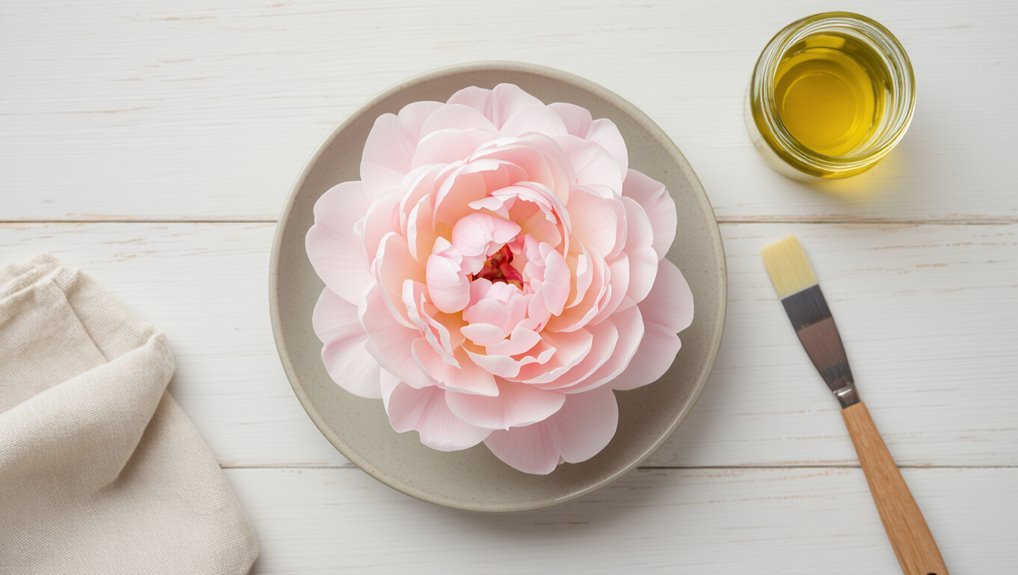
Start with a clean, toned canvas and set out one or two brushes, a limited palette, and a medium like linseed or walnut oil so you can work confidently and stay focused on each step.
Sketch a simple bloom, block in values, refine petals, apply midtones and highlights, and glaze for depth.
Use color harmony and varied brush techniques to unify the piece.
Why Oil Painting a Flower Is a Perfect Beginner Project
Though florals may look delicate, painting a single flower gives you a manageable, forgiving subject that teaches core oil techniques—mixing color, building form with layers, controlling value, and practicing brushwork—without overwhelming composition or scale.
A single bloom offers a forgiving subject to master oil essentials—color, form, value, and brushwork with confidence
- Explore flower symbolism to add meaning.
- Practice color theory in small studies.
- Refine composition techniques simply.
- Experiment with texture and brushwork.
- Develop confidence and artistic expression.
What You’ll Learn by the End of This Guide
By the end of this guide you’ll confidently mix accurate petal colors, build believable form with layered glazing, control values to create depth, and use purposeful brushwork and texture to convey the flower’s character.
You’ll learn composition basics, simple sketching, palette setup, glazing and scumbling techniques, and finishing touches.
You’ll also explore flower symbolism and color psychology so your paintings communicate mood and meaning.
Pick the Best Flower Subject for Beginners
Pick a flower with simple shapes—like a daisy or tulip—so you can focus on form without getting overwhelmed.
Use varieties with bold color contrasts to practice mixing and laying down vibrant paint. These choices help you build confidence and visible progress fast.
Simple Shapes First
Start with the simplest flower you can find—one with a clear, bold silhouette and a few large petals—so you can block in basic shapes without getting lost in tiny details.
You’ll focus on floral forms, composition, and confident strokes.
Try these simple choices:
- Single daisy head
- Open poppy
- Tulip profile
- Sunflower center
- Hibiscus outline
Bold Color Contrast
When you choose a flower with strong, contrasting colors—like a crimson poppy against a mint-green background—you make it easier to see and paint distinct shapes, edges, and light values.
Pick subjects with vibrant hues and clear contrasting tones so you can practice color mixing, simplify shadows, and define petals.
You’ll learn contrast control faster and gain confidence in compositional choices.
Choose a Canvas Size and Surface for Florals
Canvas size and surface shape how your floral painting reads and how easy it’s to work—so choose them with your subject and technique in mind.
Canvas size and surface shape how your floral painting reads—pick them with your subject and technique in mind.
Consider canvas selection, surface preparation, and size considerations to suit your floral composition. Think texture exploration and background choices for mood, plus framing options and layering techniques for depth.
- Linen vs cotton
- Panel vs stretched
- Tooth level
- Priming method
- Edge finish
Choose Beginner Oil Paints and a Basic Palette
A limited, reliable set of beginner oil paints will get you painting faster and help you learn color relationships without overwhelm.
Choose a few quality oil paint brands with student or beginner lines. Start with primary colors (red, blue, yellow), white, and a warm and cool earth (burnt sienna, raw umber) to practice color mixing and build a versatile, minimal palette.
Essential Brushes for Petals, Leaves, and Details
For petals, leaves, and fine details you’ll want a small, varied brush set that lets you control edges, texture, and paint load precisely.
Use specific brush types for petal techniques and leaf textures, apply layering techniques, and practice blending methods and stroke styles for clean color application.
- Round detail brushes
- Filbert for soft petals
- Flat for edges
- Fan for texture
- Liner for veins
Solvents, Mediums, and Palette Tools to Actually Buy
Start by choosing a few reliable solvents and mediums so you can control drying time, gloss, and paint flow without guessing.
Pick solvent types like odorless mineral spirits, and oil mediums such as linseed or walnut.
Buy palette knives for mixing, maintain brush care supplies, and select color palettes.
Invest in quality oil mediums to support glazing techniques and safe layering methods.
Set Up a Safe, Tidy Oil‑Painting Workspace
Set up your workspace with good ventilation and a fan or open window to keep solvent fumes moving away from you.
Keep an organized work surface so brushes, paints, and rags are easy to find and don’t get contaminated.
Store solvents and flammable mediums in labeled, sealed containers away from heat and out of reach when you’re not using them.
Ventilation And Airflow
Although oil paints and solvents give you rich color, they also emit fumes you shouldn’t inhale, so make ventilation a priority before you begin.
Use ventilation techniques and remember airflow importance to stay safe. Set windows, fans, and filters; position your easel for cross‑breeze.
- Open windows opposite each other
- Use a window or box fan
- Run an air purifier
- Work near exhaust
- Avoid confined spaces
Organized Work Surface
When you arrange your workspace thoughtfully, you’ll work faster and reduce accidents by keeping hazardous materials separated and tools within reach.
For surface preparation, clear a flat area, protect it, and group art supplies by use.
Good workspace organization and studio setup use clutter management and smart tool arrangement so your painting environment supports an efficient workflow and focused, safe oil painting.
Safe Solvent Storage
1 simple rule will keep your solvents from becoming a hazard: store them in clearly labeled, tightly sealed containers away from heat and open flame.
You’ll follow solvent safety, choose container options wisely, and pick a secure storage location with proper ventilation needs.
Practice spill prevention, labeling solvents, safe disposal methods, and know emergency procedures.
- locked cabinet
- sealed jars
- ventilated area
- absorbent kit
- clear labels
Prepare Your Canvas: Priming and Ground Color
Start by tightening your workspace and stretching or securing a primed canvas so it won’t sag as you paint; a well-prepared support makes every brushstroke more reliable.
For canvas preparation, choose canvas types and priming techniques that suit oils. Test ground colors for color consistency and surface texture.
Note drying times, use thin layers first, and plan layering methods to avoid cracks and guarantee even adhesion.
Photograph or Arrange a Live Reference Effectively
Pick a strong angle that shows the flower’s character and keeps your focal point clear.
Control lighting so shadows define form without hiding important details.
Simplify background elements and props so they support, not compete with, the bloom.
Choose A Strong Angle
Looking for the most compelling view of your flower? You’ll frame a strong composition by testing viewpoints; angle importance guides focal points.
Move around, get low, try overhead, tilt slightly, or zoom for detail. Choose the view that highlights form and gesture.
- Try eye-level
- Shoot from below
- Use a three-quarter turn
- Isolate a petal
- Capture silhouette
Control Lighting And Shadows
When you control lighting and shadows, you shape the flower’s form and mood—so photograph or arrange a live reference to emphasize the planes, textures, and depth you want to paint. Position single or multiple light sources, note cast and reflected shadows, and practice shadow techniques to read values clearly.
| Light setup | Effect |
|---|---|
| Single side | Strong modeling |
| Backlight | Rim glow |
| Softbox | Gentle gradation |
| Multiple | Complex contrast |
Simplify Composition Elements
After you’ve set up lighting to define form, simplify the scene so your eye reads the flower instantly; remove distracting elements, limit color clutter, and arrange only what supports the main shape and mood.
You’ll emphasize flower shapes, petal textures, light dynamics, color harmony and composition balance.
- Remove busy props
- Limit palette per color theory
- Isolate focal points
- Guarantee background integration
- Reinforce visual rhythm and shape simplification
Analyze Your Flower: Shapes, Planes, and Edges
Why does a petal look curved rather than flat? You perform shape analysis and plane observation to read petal geometry and flower structure.
Note subtle edge definition and where planes turn away from light. Use color breakdown to map values and temperature shifts.
Keep a composition study and maintain a clear bloom perspective so your brush captures form, depth, and edge quality.
Simplify Petals Into Basic Shapes for Painting
Because petals can overwhelm you with detail, simplify them into basic shapes so you can paint confidently and accurately.
- Block in large petal shapes first.
- Identify overlapping forms.
- Reduce edges to curves or triangles.
- Map core hues for color harmony.
- Refine individual contours last.
This approach keeps composition clear, helps with proportion, and lets you focus on building believable flower forms without getting lost in tiny details.
Read Values: Find Lights, Midtones, and Darks
Start by spotting the lightest areas on the flower and mark them so they guide your painting.
Then map how tones shift into midtones across each petal, noting where changes are soft or abrupt.
Use those mapped lights and midtones to plan where the darkest values will anchor the form.
Identify Lightest Areas
Once you squint at your composition and strip away color, you’ll spot the true lights—those brightest planes that catch the most direct illumination; identify them now so you can map lights, midtones, and darks across the petals and leaves.
- Locate highlights facing the light source.
- Note specular spots on wet petals.
- Compare brightest petal tips.
- Mark leaf veins catching light.
Begin simple value mapping before painting.
Map Midtone Transitions
Think of midtones as the bridges between your lights and darks; you’ll read them by squinting and comparing values across each petal and leaf.
Map changes with a limited palette, noting where midtones shift toward highlight or shadow.
Use midtone blending techniques and effective layering methods to build gradual value shifts, working wet-on-wet for soft blends or thin glazes for controlled modulation.
Plan a Color Scheme for Believable Petals
Because petals catch light and shadow differently across their surface, plan a color scheme that maps out base tones, midtones, highlights, and shadow colors before you mix paint.
You’ll guarantee believable petal gradients and color harmony.
Consider:
- Choose a dominant base
- Define soft midtones
- Pinpoint bright highlights
- Select cool/warm shadows
- Test small blends on scrap canvas
Make Thumbnail Sketches to Test Compositions
Rough out several tiny compositions to quickly evaluate balance, focal point, and petal arrangement before you commit paint to canvas.
Use varied sketching techniques—line weight, value blocks, and simplified shapes—to test scale and rhythm.
Vary sketch marks—line weight, value blocks, simplified shapes—to quickly test scale, rhythm, and bold structure.
Try crop options and negative space to strengthen composition tips.
Keep each thumbnail under a minute so you can compare ideas, discard weak ones, and refine your strongest layout.
Transfer Your Sketch to Canvas Accurately
Now that you’ve settled on a composition with your thumbnails, it’s time to get that layout onto the canvas with accuracy so your paintwork stays faithful to the plan.
Use precise sketch techniques and measure for canvas accuracy. Try these steps:
- Light grid transfer
- Tracing with carbon paper
- Projector alignment
- T-square and rulers
- Quick proportional sighting
Block In Large Shapes With a Thin Underpainting
Start by sketching with diluted paint to map out the biggest masses—backgrounds, major petals, leaves, and stem—so you can see how shapes interact before committing to color and detail.
Use simple underpainting techniques to establish temperature and edges, keeping layers thin. Focus on accurate shape proportions and negative space, blocking masses quickly so later layers refine form and color without reworking composition.
Set Clear Value Relationships When You Block In
When you block in, establish clear value relationships so every petal and leaf reads against its neighbors; think in terms of lights, midtones, and darks rather than color alone.
You’ll use blocking techniques to map contrasts quickly and prevent confusion. Focus on relative lightness, not hue.
Use these checks:
- Squint to read values
- Compare adjacent shapes
- Paint dominant darks first
- Note reflected light
- Simplify midtones
Mix Clean Midtones Without Muddy Colors
Start with clean pigments on your palette so each mixture stays bright.
Keep tight control of value and temperature as you adjust midtones, and test mixes before applying.
Use a limited palette to mix predictable, unmuddy colors.
Start With Clean Pigments
Mixing clean midtones matters more than you might think—you’ll avoid lifeless, muddy petals by limiting strong complements and keeping pigments pure.
Start with clean pigments and learn pigment types so you mix confidently. Follow simple habits:
- Use single-pigment paints
- Test mixes on scrap canvas
- Clean palette between mixes
- Add white sparingly
- Keep small, controlled batches
Control Value And Temperature
If you want petals to hold their form and glow, control both value and temperature as you build midtones.
You’ll mix clean midvalues by matching color temperature and maintaining strong value contrast between highlights and shadows.
Use restrained painting techniques: glaze thin oil medium layers, lift or scumble selectively, and constantly compare tones so midtones stay clear, not muddy.
Use Limited Palette Mixing
When you limit your palette, you force yourself to see and translate color relationships instead of covering mistakes with extra pigments; this makes it much easier to mix clean midtones without creating mud.
Use a limited palette for color harmony and clearer mixing techniques.
- Start with thoughtful pigment selection
- Organize your palette organization
- Practice tonal variations
- Mix test swatches
- Keep notes on ratios
Paint the First Layer of Petals With Confidence
Start by loading a medium-sized filbert or round brush and laying in the basic petal shapes with bold, decisive strokes; you’re establishing the flower’s rhythm, not finishing every edge. Use confident petal techniques and direct color application to block values and temperature. Keep marks simple, vary stroke length, and let paint read.
| Brush | Stroke | Purpose |
|---|---|---|
| Filbert | Broad | Base |
| Round | Tip | Detail |
| Flat | Edge | Accent |
| Mop | Soft | Blend |
| Liner | Fine | Vein |
Model Petal Form With Edges and Soft Blends
Now that your first layer is down, block in the main petal shapes to establish mass and direction.
Use a steady brush to define crisp edges where petals catch light, then soften shifts with thin glazes to suggest curvature and depth.
You’ll control form by alternating sharp accents and gentle blends until the petals feel three-dimensional.
Block In Petal Shapes
Begin by sketching each petal as a simple, flat shape to establish its placement and overall rhythm across the bloom.
Then block in masses, keeping color harmony and basic petal texture in mind. Use brushes to suggest form, not detail.
- Map light and shadow
- Lay base hues
- Vary stroke direction
- Soften overlapping areas
- Preserve overall silhouette
Define Crisp Edges
Edges give your petals structure and help the eye read their form.
So refine the block-in by deciding where edges should be crisp and where they should dissolve into soft blends.
You’ll use firm, deliberate strokes for crisp edges to indicate overlap and shadow, then soften adjacent areas to suggest curvature.
Controlled brush pressure gives clear paint definition without hardening every contour.
Soften Transitions With Glazes
When you want petals to read as delicate, translucent forms, use thin glazes to gently blur shifts between your crisp edges and soft blends; glazing lets you tweak color and value without disturbing underlying brushwork.
You’ll employ glaze techniques and careful color layering to model form.
- Thin transparent layers
- Feathered brushwork
- Controlled edges
- Gradual value shifts
- Preserve underpainting
Build Depth With Fat‑Over‑Lean Layering
Because oil paint dries by oxidation, you’ll get stronger, more stable results by layering fattier (more oil) glazes over leaner underlayers.
Start with a lean application—thinner paint, less oil—to block in shapes and values. Let it dry sufficiently, then build depth with fat layering: richer, oilier glazes and impasto for highlights.
This prevents cracking and enhances luminosity.
Add Subtle Color Temperature Shifts in Petals
You’ll want to suggest warm and cool changes across the petals to guide the eye and indicate form.
Use the flower’s local hue as your base, then cool the shadows and warm the highlights to reinforce volume.
Keep the shifts subtle so they read as natural variations rather than separate colors.
Warm And Cool Transitions
Although petals may read as a single hue from a distance, subtle shifts between warm and cool tones bring them to life; you’ll tweak color temperature for depth and visual harmony.
Try these quick steps:
- Observe warm highlights versus cool recesses
- Thin glazes to slip temperatures
- Blend edges softly
- Use complements sparingly
- Step back and adjust contrasts
Local Hue With Shadow
Think of each petal as a small stage where its local hue meets the shadowed planes; when you push the value down, nudge the temperature slightly—cooler in deep recesses, warmer where form curves back toward light—to keep the color believable without losing its identity.
Use shadow play to adjust shadow intensity and hue saturation, refining tonal variations through subtle light interaction for better depth perception.
Use Glazing to Increase Petal Translucency
When you want petals to glow from within, glazing is the key: thin, translucent layers of oil paint let light pass through and reflect off lower layers, creating depth and delicate luminosity that straight opacity can’t achieve.
Use translucent layers and glazing techniques; you’ll build subtle color shifts.
- Thin glaze mixes
- Drying between layers
- Soft brushwork
- Edge control
- Test on scrap
Paint the Flower Center: Texture and Stamens
Now you’ll focus on the flower’s center, where texture and tiny forms make the piece come alive.
Mix a slightly thicker paint or add medium to create grain for the disk, then block in the stamen shapes with a small brush.
Finish by lifting subtle highlights on tips and ridges to sell the dimensionality.
Mixing Textured Paint
Although you’ll work with thinner, smoother strokes for the petals, the flower’s center calls for a different approach: mix a thicker, granular paint so it holds raised texture and mimics pollen and stamens.
Use texture techniques and adjust paint consistency:
- Add medium for body
- Scatter pigment for granules
- Load brush heavily
- Test on scrap canvas
- Vary pressure for peaks and dips
Building Stamen Forms
With your textured center mixed and tested, you’ll start shaping the stamen forms to read convincingly against the petals.
Work from the core outward, mapping stamen structure with short, varied strokes. Use a fine brush and slightly thicker paint for tips, adjusting length and angle to respect petal anatomy.
Step back often to check rhythm and balance.
Adding Surface Highlights
Lift your brush and lay in crisp surface highlights to bring the center alive, using a lighter value and a touch of warm or cool depending on the light source.
Use highlight techniques to suggest texture variations and stamen tips. Focus small strokes, blend edges, and vary thickness.
- tiny dabs for pollen
- thin lines for stamens
- soft glazes
- scumbled spots
- edge lifts
Paint Supportive Leaves and Stems That Read Correctly
When you paint the leaves and stems, make sure they support the flower without stealing the focus; simplify shapes, indicate how they connect to the bloom, and use value and edge to read their planes clearly.
Observe leaf textures and stem anatomy, block in midtones, and suggest veins with confident strokes.
Vary edges and values so foliage reads behind or beside petals, reinforcing composition.
Paint Cast Shadows and Reflected Light Accurately
Although you’ve already nailed the petals and foliage, now you’ll anchor the bloom by painting cast shadows and reflected light so the flower reads convincingly in space.
Use shadow techniques and subtle light reflections to ground forms.
- Identify light source direction
- Block core shadows first
- Add soft reflected light under petals
- Soften shadow edges toward light
- Adjust color temperature for realism
Refine Edges and Transitions for Punch and Softness
Refine the edges between petals, leaves, and background to guide the viewer’s eye—sharper edges for focal planes, softer ones where forms recede or overlap.
You’ll use edge control and shift techniques: employ layering methods and brush techniques for seamless blending strategies.
Prioritize color harmony while applying softness strategies, and focus on detail refinement so shifts read clearly without muddying tones or losing form.
Add Highlights and Final Accents for Sparkle
As you finish the forms, add targeted highlights and tiny accents to make the flower pop—apply them sparingly on petal ridges, dew points, and the tip edges of leaves to catch the light without flattening the color.
- Use small brushes for precise highlight techniques
- Pick a lighter hue, low-opacity glaze
- Add tiny white specks for sparkle effects
- Vary intensity
- Step back and adjust
Keep Color Mixes Clean to Avoid Muddy Results
Keep your palette sections separate so warm and cool mixes don’t cross-contaminate.
Stick to a limited number of reliable pigments to make color relationships easier to manage.
Clean your brushes often so leftover paint won’t muddy new mixes.
Keep Palettes Separate
Palette separation matters: set up two distinct areas on your palette—one for clean, unmixed pigments and one for your ongoing color mixes—so you can grab pure color without contaminating your blends and avoid muddying subsequent layers.
- Maintain palette organization
- Practice color separation and mixing techniques
- Keep a clean workspace
- Focus on hue clarity and tonal balance
- Use strict brush management for paint layering
Use Limited Pigments
1 simple rule will save you from muddy mixes: limit the number of pigments you use.
You’ll apply color theory and pigment selection to a limited palette, keeping palette organization tight.
Use mixing techniques that respect hue relationships and tonal balance, employ layering techniques to build depth, and focus on color harmony to support your artistic style while avoiding overmixing and confusing results.
Clean Brushes Often
Rinse and wipe your brushes between colors so each stroke stays true—dirty bristles are the quickest way to muddy mixes, especially when working wet-on-wet.
You’ll keep hues clean with simple brush maintenance and quick oil cleanup steps.
- Wipe on rag after each mix
- Rinse in solvent, then oil
- Use separate jars
- Comb bristles gently
- Store upright to dry
Fix Common Problems: Lost Contrast and Overwork
If your painting looks muddy or lifeless, you can regain clarity by restoring contrast and resisting the urge to keep repainting. Use contrast enhancement: glaze darks, lift paint with solvent, and add crisp highlights. Stop overworking techniques like excessive blending.
| Action | Result |
|---|---|
| Glaze darks | Depth restored |
| Lift paint | Clean edges |
When and How to Remove or Scrape Paint Safely
When paint’s thick, cracked, or just not working, you’ll save time and canvas by removing the offending layers carefully; knowing when to scrape, lift, or solvent-wash keeps underlying passages intact and prevents solvent overexposure.
Follow paint removal steps and safety precautions:
- Test solvent in a corner
- Use a palette knife gently
- Blot, don’t rub
- Wear gloves and ventilation
- Let layers dry between attempts
Use Blending Tools and Deliberate Brush Strokes
After you’ve safely removed problem layers, you’ll want to refine edges and unify color using blending tools and deliberate brush strokes.
Use soft fans, filberts, or a clean dry brush to meld shifts; practice blending techniques to keep highlights crisp.
Focus on brush control—angle, pressure, and stroke length—to shape petals and suggest texture without overworking the paint.
Drying Times and Pacing Multiple Painting Sessions
Because oil paint dries by oxidation rather than evaporation, you’ll need to plan sessions around variable drying rates. Thin glazes can feel tacky within a day, while thick impasto may take weeks to firm up.
Oil paint oxidizes, so plan sessions for variable drying: glazes can feel tacky in days, impasto may take weeks.
Use drying techniques and oil mediums to control pace. Consider:
- Wait between layers
- Work thin-to-thick
- Adjust medium ratios
- Test tackiness
- Schedule focused sessions
Varnishing: When to Wait and Which Varnish to Choose
You should wait to varnish until your oil painting is fully dry—typically several months for an all-over cure—so you don’t trap tacky layers.
Pick a varnish based on finish and removability: removable synthetic varnishes (gloss, satin, or matte) are safe choices for protection and future conservation.
Apply varnish only in a clean, dust-free space with thin, even coats when the painting’s surface feels hard.
When To Varnish
When the paint feels fully dry to the touch and the layers beneath have cured, it’s time to think about varnishing; waiting guarantees you won’t trap solvents or tacky layers under a protective finish.
You should consider Varnish types and Drying times, assess Surface preparation, and pick Application methods for Finish protection and Longevity benefits.
- Color enhancement
- Gloss levels
- Matte options
- Texture effects
- Drying times
Choosing Varnish Types
After you’ve confirmed the painting is fully dry and all underlying layers have cured, it’s time to choose the right varnish to protect and refine your work. You’ll pick between removable gloss, satin, or matte finishes; consider drying time, UV protection, and final appearance. Practice varnishing techniques on tests first.
| Type | Finish | Use |
|---|---|---|
| Gloss | High | Vibrancy |
| Satin | Soft | Balanced |
Clean Brushes and Dispose of Oil‑Painting Waste Safely
1 simple routine will keep your brushes in top condition and prevent toxic waste from contaminating drains or the environment.
You’ll follow brush maintenance steps and safe waste disposal habits:
- Wipe excess paint on newspaper
- Use minimal solvent in a jar
- Strain and store used solvent
- Let rags dry in a metal can
- Take residues to hazardous waste collection
Simple Exercises to Build Floral Painting Skills
Because practice builds both confidence and control, start with short, focused exercises that isolate the basic elements of floral painting: simple petal shapes, value shifts, and color edges.
Paint tonal studies, single-petal studies, and quick color mixes to explore floral color theory. Time yourself for 10–20 minute sketches, repeat controlled brushwork, and refine specific painting techniques to build steady hand and visual judgment.
Study Famous Floral Painters for Copyable Techniques
Now that you’ve practiced focused exercises, study the masters to steal techniques you can apply to your own work.
Analyze famous artists for floral styles and historical influences; do technique analysis on brushwork methods, color palettes, petal textures, light effects, and composition study.
Study masters’ floral styles—analyze brushwork, palettes, petal textures, light, and composition to adapt and innovate.
Try copying to learn, then adapt modern interpretations.
- Study signature brushwork methods
- Note color palettes
- Compare composition study
- Observe petal textures
- Track light effects
Variations: Single Bloom, Spray, or Small Bouquet
When you choose between a single bloom, a spray, or a small bouquet, you’re deciding the painting’s focus, mood, and compositional rules—each format asks for different handling of scale, negative space, and detail. You’ll apply single bloom techniques for intimacy, spray painting for movement, and small bouquet arrangements for balance; use flower color palettes, seasonal flower choices, flower symbolism, and texture techniques.
| Format | Mood | Tip |
|---|---|---|
| Single | Intimate | Focus detail |
| Spray | Dynamic | Suggest motion |
| Bouquet | Balanced | Vary color |
Adapting Process for Different Flower Types and Sizes
Different flower types and sizes call for adjusted brushwork, paint handling, and compositional choices, so assess each subject before you mix colors or lay down a single stroke.
Use flower variety techniques and size adaptation strategies to guide choices:
- Pick brushes by petal detail needs
- Adjust paint viscosity for scale
- Simplify forms for tiny blooms
- Emphasize structure for large heads
- Alter composition for sprays versus singles
Troubleshooting Color Matching Tricky Hues
When a petal color keeps looking off, start by identifying which hue is wrong—too warm, too cool, or lacking saturation.
Mix small test patches on your palette to pinpoint how much of a nearby pigment shifts the tone. Once you know the issue, tweak the mixture incrementally and compare tests to the live flower until it reads true.
Identifying Problem Hues
Why does that lilac look more gray than purple on your canvas? You check color temperature and hue saturation, then isolate the issue.
Look for these signs:
- Too much neutral base
- Wrong warm/cool balance
- Low saturation from overmixing
- Value contrast is weak
- Underlying glaze missing
Identify which applies, then correct before repainting.
Adjusting Paint Mixtures
Now that you’ve identified what’s muting that lilac, it’s time to adjust your mixtures so the color reads correctly on the canvas. Use color theory to tweak temperature and saturation, and check paint consistency—thicker mixes deepen tones, thinner glazes cool them. Test small swatches, note ratios, and iterate until the hue matches.
| Mix | Effect | Tip |
|---|---|---|
| Thicker | Deeper | Add medium |
| Thinner | Cooler | Use glaze |
| Warmer | Brighter | Add yellow-red |
Photograph and Share Your Finished Oil Painting
Once your oil painting has fully dried and you’ve removed any dust or varnish haze, photograph it in even, natural light to capture true colors and details.
Use proper photographing techniques and clean backgrounds, then upload to sharing platforms.
- Use a tripod
- Shoot RAW or high-res JPEG
- Tight, straight framing
- Edit minimally for accuracy
- Add title and materials
Turn Studies Into Larger Floral Works and Series
As you expand from small studies to larger floral works and series, think regarding scale, rhythm, and repetition so your initial observations guide bigger compositional choices.
You’ll plan a floral series to show art progression, using composition exploration and color experimentation to vary mood.
Focus on technique refinement while pursuing subject diversity, sequencing canvases so each piece informs the next and builds cohesive momentum.
Repeatable Supplies Checklist for Future Studies
When you move from exploratory studies to a planned series, having a repeatable supplies checklist will keep your process efficient and consistent.
Use Supplies organization and Budget friendly materials to streamline purchases. Note Essential tools, Oil paint types, Color selection, and Mixing techniques.
Prioritize Surface preparation, Storage solutions, Maintenance tips, and Resource recommendations for longevity.
- Brushes and palette knives
- Primed panels/canvas
- Limited palette tubes
- Solvents & mediums
- Clean-up kit
Next Projects to Advance Your Floral Painting Practice
Next, you’ll tackle projects that push your color mixing skills and force you to solve new compositional problems.
Try limited-palette studies and graded value challenges to refine hue relationships and harmony.
Then experiment with varied arrangements—close-crops, asymmetry, and negative space—to build stronger compositions.
Color Mixing Challenges
Tackle color mixing challenges by setting up exercises that push your understanding of hue, value, and temperature—start with limited palettes and force yourself to match complex petal tones using only three tubes.
- Study the color wheel and color theory.
- Test hue saturation and mixing ratios.
- Explore pigment properties and color harmony.
- Practice complementary colors and warm cool shifts.
- Check color temperature and value contrast.
Compositional Variations
As you move beyond individual petals and perfect color mixes, vary your compositions to challenge how you place shapes, lead the eye, and balance negative space.
Try close-ups, groupings, single-stem studies, and dramatic diagonals to discover which arrangements strengthen your floral narratives.
You’ll explore color harmonies, texture variations, and different floral arrangements while refining brushwork and developing your personal style through focused practice.
Frequently Asked Questions
Can I Use Student-Grade Oil Paints for a Finished Gallery Piece?
Yes — you can, but expect limits: student grade quality often reduces oil paint durability and color permanence, so you’ll need meticulous technique, varnishing, and proper supports to maximize longevity if showing the work in a gallery.
How Do I Prevent Yellowing in the Varnish Over Decades?
You’ll prevent yellowing by choosing non-yellowing varnish types (synthetic/resin or synthetic damar alternatives), applying thin, fully cured layers, using archival materials, avoiding oil-based overcoats early, and storing art away from heat, light, humidity.
Is It Safe to Fly With Wet Oil Paintings in My Luggage?
Like carrying a newborn, you shouldn’t: it’s risky to fly with wet paintings in luggage. You’ll follow air travel precautions, pack wet painting care supplies, use rigid, ventilated cases, and declare fragile artworks to handlers.
Can I Combine Oil Paints With Acrylics on the Same Painting?
Yes—you can combine them if you apply acrylics first, let them fully cure, then use oil paint techniques over them; you shouldn’t put oil underneath acrylics, and be mindful of differing drying times and acrylic blending.
How Do I Document Provenance and Authenticity for a Painting?
You document provenance and authenticity by keeping detailed art documentation: date, materials, buyer history, receipts, and photos; you’ll get authenticity verification via expert certificates, lab tests, and artist signatures, then register records with galleries or archives.
Conclusion
You did it — a whole blooming masterpiece in just a few steps, like a tiny miracle that could make even roses jealous. Keep practicing: each study will sharpen your eye, steady your hand, and turn “meh” petals into showstopping blooms. Soon you’ll be mixing color like a wizard and filling canvases that stop people mid-scroll. Don’t wait: paint another flower tomorrow, and watch your confidence explode into a garden of work.
