
Should I Paint or Stain My Fence? Pros and Cons Compared
You should pick paint when you want bold, uniform color and a strong barrier that lasts longer between full recoats, and choose stain when you want to wood grain to show, easier spot repairs, and faster reapplications. Consider your wood type—cedar favors clear stains, pine needs more protection—and whether the fence is fresh or weathered. Also weigh upfront cost, upkeep frequency, and VOCs; keep going to see tailored tips for materials, styles, and maintenance.
Quick Answer: When to Paint vs Stain Your Fence
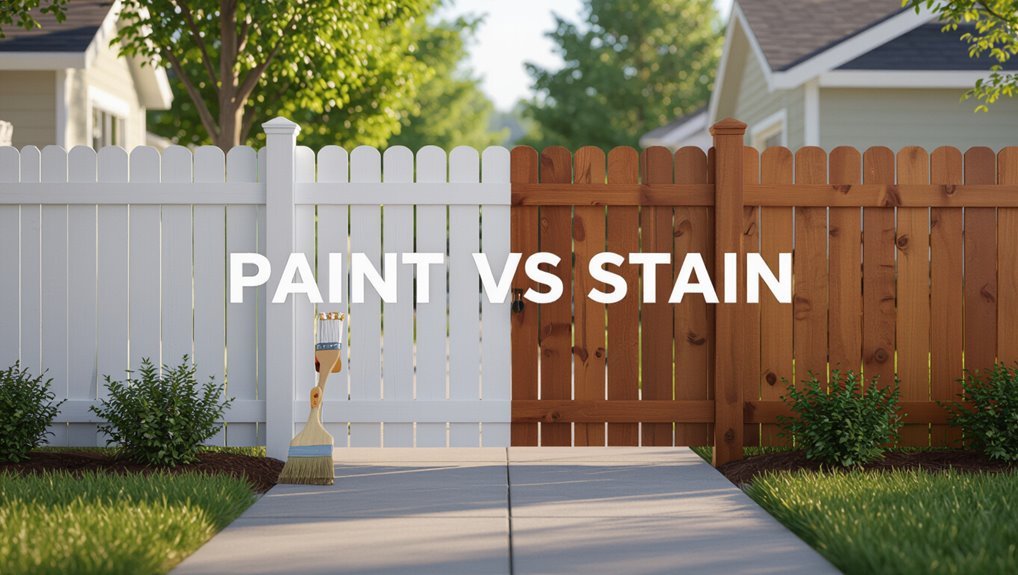
If you want a crisp, uniform look and can commit to more maintenance, paint’s your best bet; if you prefer a low-maintenance, natural appearance that highlights wood grain, go with stain.
You’ll choose based on fence aesthetics, desired longevity, and weather considerations.
Paint hides imperfections and offers bold color; stain preserves texture, penetrates wood, and usually needs less frequent reapplication.
Quick Decision Framework: Paint vs Stain at a Glance
Now that you know the broad trade-offs between paint and stain, use this quick framework to pick the right option fast:
If you want bold, uniform fence aesthetics and don’t mind repainting every 5–7 years, choose paint.
If you prefer natural grain, easier touch-ups, and lower maintenance frequency (every 2–4 years), pick stain.
Prioritize look, upkeep effort, and local climate when deciding.
Fence Materials: Cedar, Pine, Redwood, Pressure‑Treated
Your choice of wood alters whether painting or staining makes sense.
Cedar shows off natural beauty and usually fares best with a clear or semi-transparent stain, while pine will need more protection and benefits from pigmented stain or paint.
Pressure‑treated lumber and redwood give you durability, so you can choose finish based on look rather than only on protection.
Cedar: Natural Beauty Preserved
Because cedar naturally resists rot and insects, it keeps its warm grain and color longer than many other woods.
So you’ll preserve that classic, high-end look with minimal chemical treatments.
- Cedar benefits: natural oils boost weather resistance and wood preservation.
- Aesthetic appeal: attractive color variations need gentle sealing options.
- Maintenance tips: light cleaning and reapply sealant every few years.
- Installation considerations and environmental impact favor sustainable cedar.
Pine: Needs More Protection
Cedar holds up well on its own, but pine will ask for more help to stay looking good and lasting long. You’ll notice pine susceptibility to rot, insects, and UV damage, so you’ll want better sealers or paint and higher maintenance frequency. Consider this quick comparison:
| Treatment | Benefit |
|---|---|
| Paint | Strong barrier |
| Stain | Easier refresh |
Pressure‑Treated & Redwood Durability
While redwood and pressure‑treated lumber both resist decay better than untreated pine, they do so in different ways and demand different care. You’ll weigh appearance vs. longevity and maintenance:
- Pressure treated advantages: chemical protection, long life.
- Redwood aesthetics: natural color, grain.
- Staining preserves redwood tone.
- Painting can seal pressure‑treated but may need prep for best adhesion.
Fresh vs Weathered Wood: Which Finish to Pick
Not sure whether to embrace your fence’s fresh, golden look or its silvery, weathered charm? You’ll weigh fresh wood aesthetics vs weathered wood charm, balancing finish longevity considerations and sealing options.
Consider color retention strategies, environmental impact, maintenance frequency, and application techniques.
Pick fresh if you want vivid color and predictable upkeep; pick weathered for low-maintenance, natural aging and reduced chemical sealing needs.
Fence Styles (Picket, Privacy, Lattice): Which Finish Fits
Which fence style you choose shapes the finish that will work best—picket fences benefit from painted or semi-solid stained colors to highlight trim and curb appeal.
Choose a finish that complements your fence style—pickets shine with paint or semi-solid stains for curb appeal.
Privacy fences usually suit semi-transparent stains or natural finishes that show wood grain while hiding seams.
Lattice tops look great with solid paint for contrast or clear sealers to let delicate patterns pop.
- Picket styles: painted or semi-solid
- Privacy aesthetics: semi-transparent stain
- Lattice designs: solid paint or clear sealer
- Finish options: match maintenance and home style
Style Goals: Opaque Color vs Natural Wood Grain
Decide whether you want a bold, opaque color that hides imperfections and offers strong UV protection or a stain that shows and preserves the wood grain.
Remember opaque finishes often need repainting over time, while stains can require more frequent touch-ups but keep the natural look.
Weigh the maintenance schedules and longevity you’re willing to commit to before choosing.
Opaque Color Benefits
When you want a bold, uniform look that hides imperfections and gives maximum color payoff, opaque paint is the clear choice. It masks knots and grain while letting you pick any shade to match your home’s style and landscaping.
- Opaque color advantages: aesthetic enhancement, color variety.
- Maintenance ease and long lasting finish.
- UV protection and weather resistance.
- Strong fence style compatibility.
Preserving Wood Grain
Texture matters: if you want your fence to showcase the natural grain and warmth of the wood, stain preserves that character while opaque paint hides it completely.
Maintenance And Longevity
Because you’re thinking long-term, maintenance and longevity should steer your choice between opaque paint and natural-looking stain: paint gives thicker, more durable surface protection and hides defects but will eventually peel and need full repainting, while stain soaks in, lets the wood breathe, and requires more frequent reapplication but avoids flaking and preserves the grain.
- Consider fence aesthetics and surface texture.
- Check weather resistance and seasonal considerations.
- Evaluate color retention and maintenance frequency.
- Review application techniques and environmental impact.
Best Fence Paints: Types and When to Use Them
Curious which paint will give your fence the best protection and look?
Choose acrylic latex for durability and easy cleanup, oil-based for tougher wear, or specialty masonry or exterior enamels for specific needs.
Consider eco-friendly options to reduce VOCs, and prioritize UV-resistant formulas.
Your color selection affects heat absorption and appearance, so pick a finish—flat to glossy—based on maintenance and style.
Best Fence Stains: Types and When to Use Them
If paint isn’t what you want, stains offer a different balance of protection and natural grain—so let’s look at the main types and when each makes sense.
- Oil-based: deep penetration, durable for high weather exposure—choose over water in rainy areas.
- Water-based: quicker dry, easier cleanup, less odor.
- Transparent vs semi transparent: pick transparent to show grain, semi for mild UV tint.
- Solid: max coverage, paint-like finish.
Surface Prep: Cleaning, Sanding, and Repairs
Before you apply paint or stain, get the surface right: clean off dirt, mildew, and loose finish, sand rough spots, and mend rotten or damaged boards so the finish adheres evenly and lasts.
You’ll use fence cleaning with gentle cleaning solutions, proper sanding techniques and prep tools, perform surface repair, follow maintenance tips for wood preservation, and guarantee weather protection before finishing.
Primer: When You Need It and When You Can Skip It
Before you paint or stain, decide if your fence actually needs primer: fresh, bare wood and drastic color changes usually require it for adhesion and coverage.
You can skip primer with good-quality stain or when repainting the same color on sound, previously primed wood.
Reserve a dedicated primer for problem wood—tannic-stained, knotty, or patched areas—to block stains and guarantee an even finish.
When To Prime
Primer matters more often than many homeowners realize, but you don’t always need it—knowing when to prime comes down to the material, existing finish, and the coating you plan to apply.
You should prime when surfaces are raw, patched, or incompatible. Consider:
- primer types and primer compatibility
- primer benefits and primer longevity
- primer application and primer timing
- primer alternatives and primer finishes
When Primer Is Optional
When might you be able to skip primer? If the fence is new, smooth, and made of kiln-dried, pressure-treated wood with a compatible paint or stain, you mightn’t need primer.
Match primer types to surface conditions; some paints include primer. Skip primer only when manufacturer guidance and prior primer application history confirm adhesion and protection—otherwise, primer application is safer.
Primer For Problem Wood
If your fence shows signs of old paint failure, rot, tannin bleed, or has uneven, weathered boards, you’ll need to address those problems before applying finish.
You should use primer selectively to lock stains, seal tannins, and restore surface adhesion after wood treatment.
Consider these steps:
- Strip loose paint
- Repair rot
- Apply tannin-blocking primer
- Finish with paint or stain
Application Methods: Brush, Roll, Spray Pros and Cons
Curious which application method will give you the best finish and save you time?
You’ll weigh brush techniques for precision, roll applications for even coverage, and spray efficiency for speed.
Choose based on finish durability you want, how detailed the fence is, and weather conditions like wind or humidity.
Pick the method that suits desired durability, fence detail, and current weather like wind or humidity.
Match method to surface and your skill for best results.
Longevity: Paint vs Stain Expected Lifespan
You’ll notice paint typically offers a longer color barrier, often lasting 5–10 years before needing a full repaint depending on quality and exposure.
Stain performance varies more with product type and wood condition, with solid stains lasting several years and penetrating stains needing touch-ups sooner.
Plan maintenance intervals accordingly: expect repainting less often but more prep, while staining may require more frequent reapplication but simpler upkeep.
Paint Lifespan Comparison
Lifespan matters more than looks when you’re choosing between paint and stain for your fence; paint typically lasts 5–10 years before a full repaint is needed, while quality stains can last 2–7 years depending on type and exposure.
- Consider paint types and stain varieties.
- Evaluate color retention and UV resistance.
- Balance finish durability, wood compatibility, and environmental impact.
- Plan application techniques around aesthetic preferences and maintenance challenges.
Stain Durability Factors
Although stains generally soak into wood rather than sitting on top like paint, their longevity depends heavily on formulation and exposure conditions.
You’ll weigh stain types, wood absorption, and surface compatibility when choosing. Environmental factors and application timing affect drying time and weather resistance, influencing color fading and product longevity.
Proper finish maintenance preserves appearance, but expect varied lifespans based on conditions and quality.
Maintenance Interval Expectations
How long should you expect a finish to last before it needs attention?
You’ll see varied lifespans depending on product and exposure; consider maintenance frequency and upkeep costs when choosing.
- Solid paint: 5–10 years
- Semi-transparent stain: 2–4 years
- Solid stain: 4–7 years
- Clear sealant: 1–3 years
Plan inspections and recoat accordingly.
Maintenance Schedule: Painting vs Staining Cadence
When you decide between paint and stain, the maintenance cadence becomes one of the clearest practical differences: you’ll weigh maintenance frequency against protective qualities and aesthetic longevity.
Paint offers stronger weather resistance and color sealing but higher color fading risk over time; stain gives easier application ease, better surface compatibility, lower environmental impact, and simpler touch-ups.
Balance finish choice with cost analysis and upkeep needs.
Upfront Costs: Materials, Tools, and Time
Before you decide, look at the upfront costs: paint often runs higher per can but you may need fewer coats, while stain is usually cheaper but can require more product for deep color.
Factor in tools—brushes, rollers, sprayers, and any sanding or power-washing gear—and whether you’ll rent or buy.
Also estimate the time you’ll spend prepping and applying, since labor can make a cheap material choice more expensive overall.
Material Cost Comparison
Start by listing what you’ll actually pay for: paint or stain, primers or sealers, brushes/rollers or sprayers, drop cloths, and any wood prep products like cleaners or fillers—each item affects your upfront cost differently.
- Stain often costs less per coat.
- Paint may need primer—higher material quality.
- Consider long term investment and aesthetic appeal.
- Check environmental impact premiums.
Tools, Time Investment
You’ll need to factor tools and time into your upfront costs—the right gear speeds work and improves finish quality, while time adds labor value whether you do it yourself or hire help.
Consider tool types: brushes, rollers, sprayers, pressure washer, sander.
Get realistic time estimates for prep, application, and drying.
Painting usually needs more prep and coats than staining, affecting hours and budget.
Long-Term Costs: Repairs, Recoats, and Labor
When weighing paint versus stain, factor in not just the upfront price but the ongoing costs of repairs, recoats, and labor over the fence’s lifetime.
You’ll track long term durability, maintenance frequency, repair frequency, labor expenses, weather impact, product lifespan, protection levels, and run a clear cost analysis.
- Recoat intervals
- Repair needs
- DIY vs pro labor
- Material replacement
Moisture, Mildew, and UV: Protection by Finish
Costs and maintenance matter, but so does how well a finish shields your fence from moisture, mildew, and UV — factors that directly affect longevity and appearance.
You’ll choose paint or stain based on moisture resistance and mildew prevention needs; prioritize UV protection for color retention and wood preservation.
Consider finish longevity, environmental impact, aesthetic appeal, and proper application techniques to maximize protection and lifespan.
Breathability and Trapped Moisture Risks
Although a finish keeps rain and sun off the wood, it can also trap moisture if it isn’t breathable.
So you need to pick a product that lets the fence dry out between wet spells. You’ll balance moisture retention and air circulation to avoid wood expansion and decay.
Consider:
- Breathable stains
- Semi-porous paints
- Regular inspections
- Address maintenance challenges promptly
Color, Opacity, and UV Protection Explained
1 key choice you’ll make is how much color and opacity you want, because that determines both the look and how well the finish shields wood from UV damage.
You’ll weigh color options and opacity levels for aesthetic choices and UV protection.
Consider longevity factors, maintenance requirements, environmental impact, and proper application techniques to balance appearance, durability, upkeep, and eco concerns.
Climate Guide: Humid, Dry, Hot, and Cold Regions
Where you live changes what finish will actually protect your fence: humid climates demand moisture resistance and mold inhibitors, dry regions need finishes that won’t crack or peel, hot sunny areas require strong UV blockers, and cold zones benefit from flexible coatings that withstand freeze–thaw cycles.
Your climate dictates the finish: moisture and mold resistance for humid areas, UV blockers for sun, flexible coatings for cold.
- Assess humidity impact and moisture levels.
- Account for temperature effects and UV exposure.
- Factor seasonal considerations and regional climate.
- Plan maintenance strategies for weather resistance and wood preservation, considering environmental factors.
Matching Finish to Your Home’s Exterior
Think about how your fence finish will coordinate with your home’s exterior colors so it feels like part of the same palette.
Match the fence style to your architecture—modern homes suit clean, simple tones while traditional houses can handle richer, classic hues.
Also consider your trim and accents so the fence ties into shutters, doors, and other details.
Coordinate With Exterior Colors
When you pick a paint or stain, aim to harmonize the fence with your home’s existing palette so the yard feels intentional and cohesive.
Use color harmony and color psychology to boost exterior aesthetics and design cohesion. Consider seasonal considerations, regional trends, neighborhood styles, and maintenance aesthetics.
- Match undertones
- Pick durable finishes
- Test swatches
- Balance contrast
Match Architectural Style
If your home’s architecture has a clear historical or stylistic identity, match the fence finish to that character so the exterior reads as a cohesive whole. You’ll maintain design harmony and style consistency by choosing colors and textures that echo rooflines, siding, and period details. Pick paint for bold, unified looks or stain for natural, subtle complements.
| Feature | Recommendation |
|---|---|
| Colonial | White paint |
| Craftsman | Warm stain |
| Modern | Dark paint |
| Cottage | Soft stain |
| Victorian | Trimmed paint |
Consider Trim And Accents
Start by matching your fence finish to the trim and accent colors on your home so the whole exterior reads as a deliberate composition.
You’ll use trim styles and accent colors to guide choices, balancing decorative elements and visual contrast for aesthetic balance.
Consider:
- Match prominent trim
- Echo accent colors
- Highlight decorative elements
- Maintain color coordination
DIY vs Pro: Time, Skill, and Cost Tradeoffs
Because you’re weighing time, skill, and cost, decide whether you want to tackle the job yourself or hire a pro before picking paint or stain.
Assess DIY techniques against Professional services: consider Time investment, Skill requirements, Cost comparison, Project duration, Budget considerations, and your Experience level.
If you lack time or expertise, a pro can shorten duration and reduce rework; DIY saves money if skilled.
Step-by-Step Painting Checklist for Lasting Results
Once you’ve chosen paint over stain, follow a focused checklist to get durable, even coverage:
- Inspect and do surface preparation: repair, clean, and sand for longevity factors.
- Pick paint types and color choices; consider eco friendly options and compare stain options briefly.
- Use proper application techniques; account for weather effects and cost analysis.
- Finish with maintenance tips and a curing schedule.
Step-by-Step Staining Checklist for Best Results
Before you stain, make sure you prep the surface by cleaning, sanding, and repairing any damage so the stain bonds properly.
Then apply the stain with the right technique—consistent strokes, the correct applicator, and thin, even coats—to avoid lap marks.
Finally, let the fence dry fully and set a maintenance schedule to keep the finish looking its best.
Surface Preparation Steps
Prep determines how long your stain will protect and look good, so follow a clear, step-by-step routine.
You’ll do a surface assessment, choose product selection, and note weather considerations.
Use cleaning techniques, sanding tips, and repair methods before staining.
- Inspect and assess
- Clean thoroughly
- Sand and repair
- Confirm dry conditions
Stain Application Technique
You’ve finished inspecting, cleaning, sanding, and confirming dry conditions, so now you’ll move on to applying the stain with a methodical, repeatable routine.
Follow stain application best practices: choose finish types and technique variations for your wood, pick proper application tools, test stain absorption, consider weather considerations, work with consistent strokes, and monitor drying time.
Guarantee surface preparation integrity and barrier properties for durable results.
Drying And Maintenance
Once the stain’s on, let it cure fully and then plan a simple maintenance routine so your fence keeps protecting and looking good for years.
Follow this checklist, noting drying times and maintenance frequency:
- Check cure after manufacturer’s drying times.
- Inspect yearly for wear or mildew.
- Touch up faded areas promptly.
- Recoat every 2–4 years based on exposure and condition.
Common Mistakes That Ruin a Paint Job
When you rush into painting without proper surface cleaning, we’ll often see peeling, blistering, and uneven coverage later—so take time to remove dirt, mildew, and loose paint first.
You should avoid preparation errors, choose product quality and finish selection wisely, and time paint application to reduce weather impact.
Follow maintenance tips to prevent color fading; don’t confuse paint with stain techniques.
Common Mistakes That Ruin a Stain Job
If you skip proper preparation—cleaning, sanding, and letting the wood dry—you’ll almost certainly get blotchy color, poor adhesion, and a finish that wears unevenly.
- Inadequate preparation or surface compatibility issues cause failure.
- Wrong tools and improper technique create streaks and pooling.
- Poor product selection and timing issues worsen longevity.
- Application errors and adverse weather conditions ruin results.
Spot Repairs for Painted Fences
Although small chips and peeled areas might seem minor, addressing them promptly prevents bigger damage and keeps your fence looking uniform.
You’ll clean, sand, prime, and use spot repair techniques to blend new paint seamlessly. Test color matching on a scrap, feather edges, and apply thin coats.
Finish with weatherproofing to protect repairs and preserve an even finish.
Spot Repairs for Stained Fences
Start by inspecting the stained area closely so you can match color and finish before you touch anything.
Begin by closely inspecting the stained area to match color and finish before you touch anything.
Then follow precise steps to minimize visual impact and guarantee wood preservation.
- Assess damage and choose product selection.
- Test color matching on scrap.
- Use proper application tools for neat repair techniques.
- Note seasonal considerations and follow maintenance tips for longevity.
Integrating Fence Upkeep With Landscaping and Security
When you plan fence upkeep, think about how plantings, pathways, and security features will affect access, moisture, and visibility so maintenance stays simple and your fence lasts longer. You’ll balance fence aesthetics and landscape harmony, combine security features with protective layers, and create maintenance synergy. Design integration boosts visual appeal and functional beauty, making upkeep feel natural and purposeful.
| Calm | Secure | Beautiful |
|---|---|---|
| Green | Lock | Texture |
| Path | Light | Color |
Eco‑Friendly and Low‑VOC Paints and Stains
As you plan plantings and pathways around your fence, pick finishes that protect wood without harming nearby gardens or indoor air.
You’ll weigh eco friendly options and low VOC benefits, plus sustainable materials to reduce environmental impact and address health considerations.
Consider application differences for durability and cleanup:
- Water‑based stains
- Natural oil finishes
- Low‑VOC paints
- Recycled‑content products
Cost-Saving Tips and Tools That Cut Time and Money
You can save time and money by choosing a few high-quality brushes that hold paint well and last for multiple projects.
Rent power tools like a sprayer or power washer for big jobs instead of buying them outright. That combo cuts labor and replacement costs without sacrificing finish.
Buy Quality Brushes
1 smart brush can save hours of work and a bundle of paint—so buy quality.
You’ll notice better coverage, fewer drips, and faster cutting in.
Consider brush quality and brush types for your finish. Choose one that matches paint or stain and grip comfort.
- Natural-bristle for oil-based
- Synthetic for water-based
- Angled sash for trim
- Wide for panels
Rent Power Tools
If you want to cut time and avoid buying expensive gear you’ll only use once, rent power tools instead—local tool libraries and rental shops stock everything from pressure washers and paint sprayers to circular saws and orbital sanders.
You’ll save money via short-term tool rental, finish faster, and try pro equipment.
Follow safety tips: inspect gear, wear PPE, read manuals, and ask staff for brief demos.
Decision Checklist: Pick Paint or Stain for Your Fence
Wondering which finish will suit your fence best? Use this checklist to decide between paint and stain, focusing on fence aesthetics and finish longevity.
- Budget: stain usually costs less upfront.
- Maintenance: paint hides flaws but needs repainting sooner.
- Style: pick paint for bold color, stain for natural grain.
- Environment: choose UV and moisture resistance for longer finish longevity.
Frequently Asked Questions
Can I Paint or Stain Over Existing Lead‑Based Paint on an Old Fence?
You can, but you shouldn’t without precautions: lead based paint risks require safety precautions like testing, encapsulation products, or professional abatement; if you paint or stain, contain dust, wear PPE, and follow local lead‑removal regulations.
How Do Pets or Livestock Affect Finish Choice and Safety?
If animals’ll chew or rub, choose non‑toxic, durable finishes to protect fence material and guarantee animal safety. For example, a goat farm switched to water‑based stain after cows licked painted rails, preventing toxicity and wear.
Will Termites or Wood‑Boring Insects Be Influenced by Paint or Stain?
Paint or stain won’t repel termites alone; you’ll need treated wood or preservatives for effective wood protection. You’ll get some insect resistance from stains that seal grain, but chemical treatments offer the real defense against borers.
Can I Change Finish Type Later (Stain Over Paint or Paint Over Stain) Easily?
About 70% of homeowners switch finishes within a decade, so yes — you can change finishes, but paint over stain needs sanding or primer; stain over paint’s harder. Expect finish durability and maintenance frequency to determine prep effort.
How Do Local Building Codes or HOA Rules Restrict Fence Finishes?
You’ll need to check local codes and your HOA; they’ll dictate allowable colors, fence aesthetics, and maintenance requirements, and you’ll face fines or removal orders if you ignore rules, so get approvals before finishing.
Conclusion
So you want a fence that says “I care” without becoming a full‑time hobby. Paint gives drama and hiding power; stain keeps the wood breathing and honest. Pick paint if you crave boldness and don’t mind touch‑ups. Go stain if you want natural charm, less maintenance, and fewer backyard arguments. Either way, choose eco‑friendly products, prep properly, and remember: a well‑dressed fence still won’t water your plants.
