
How Do You Get Fabric Paint Out of Clothes: Easy Stain Removal Tips
Act fast: blot excess paint with a towel, don’t rub, and rinse the back of the stain with cold water to push pigment out. Test a hidden seam before using cleaners. For water-based paint, soak and apply liquid detergent; for solvent-based, try rubbing alcohol or an acetone-free remover sparingly. Gently scrape dried paint and launder per the care label, air-drying only after the stain’s gone. Keep a small stain kit handy and you’ll find more tips if you keep going.
Quick: 5 Steps to Stop a Fresh Paint Stain
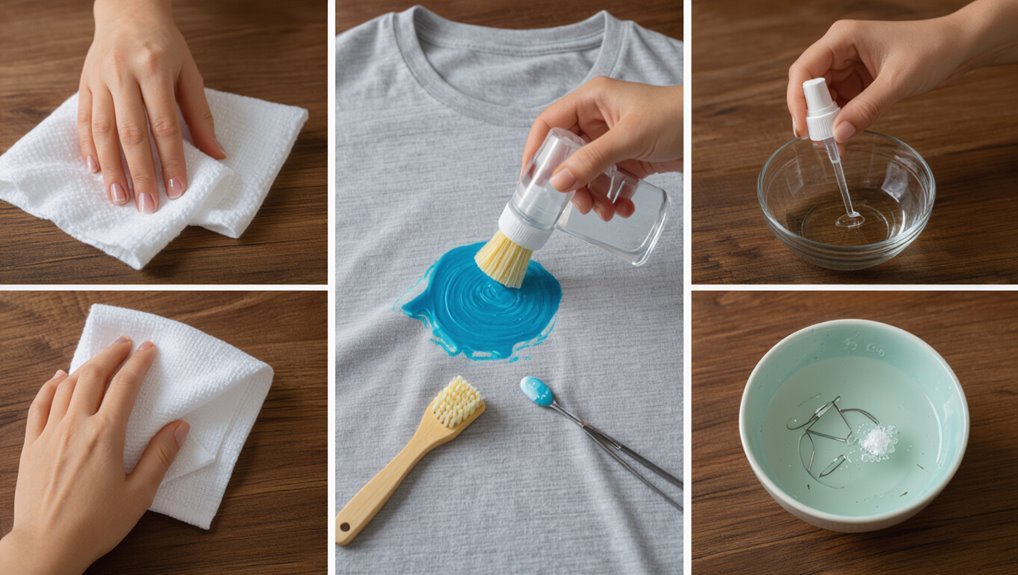
1. You act fast: blot excess paint, don’t rub. Scrape gently if needed. Test a hidden seam for colorfastness based on fabric types, then apply a suitable stain prevention step like cold water rinse.
Use liquid detergent to work from back of stain, blotting outward. Repeat until paint thins, then launder per care label.
Dry only when stain’s gone.
Identify Water-Based vs. Solvent-Based Paint
Because the removal method depends on the type of paint, you’ll want to determine whether it’s water-based (latex, acrylic) or solvent-based (oil, enamel) before you treat the stain.
Check texture and soak: water based characteristics include softness, easy water reactivation, and milky wet look; solvent based properties show tackiness, strong odor, and resistance to water.
Test a hidden edge.
Why Acting Fast Makes Removal Easier
If you move quickly after a paint spill, you’ll stop the pigment and binder from setting into the fibers, which makes the stain far easier to lift; once paint dries it bonds more tightly and often resists standard detergents and solvents. You’ll reduce paint absorption and limit stain persistence by blotting and rinsing promptly.
| Step | Action | Result |
|---|---|---|
| 1 | Blot | Lift wet paint |
| 2 | Rinse | Flush fibers |
| 3 | Repeat | Reduce persistence |
Essential Tools and Supplies to Keep on Hand
Keep a small kit ready so you can tackle paint spills immediately with basic cleaning supplies like mild detergent, stain remover, and soft brushes.
Add targeted spot treatments—rubbing alcohol, acetone-free nail polish remover, or a commercial paint remover—for different paint types.
Include protective gear such as gloves, old towels, and a plastic drop cloth to protect yourself and surfaces.
Basic Cleaning Supplies
A small kit of reliable supplies will make removing fabric paint from clothes faster and less stressful.
Stock gentle detergent, liquid dish soap, rubbing alcohol, white vinegar, a soft-bristled brush, clean white cloths, and paper towels.
Keep a washable container, gloves, and a stain prevention guide noting fabric types and care labels.
Store items in a labeled caddy for quick access.
Spot Treatment Options
When you spot a fresh paint mishap, reach for targeted treatments that actually work on the specific type of paint and fabric. Keep items for quick spot treatment and note fabric types before treating.
| Item | Use |
|---|---|
| Dish soap | Water-based paint lift |
| Rubbing alcohol | Solvent-based spots |
| Nail polish remover | Stubborn acrylic traces |
| Soft brush | Agitate without damage |
Protective Gear Essentials
After you’ve tried spot treatments, you’ll want the right protective gear on hand so accidental splatters don’t create more work.
Keep protective clothing like aprons and disposable sleeves, rubber gloves, and old towels nearby.
Use dedicated paint trays, sealed containers for leftover paint, and a small kit with stain remover, scrub brush, and plastic bags for contaminated items to act fast and limit damage.
Protect the Rest of the Garment Before Treating Paint
Before you touch the stain, lay the garment flat and place a protective barrier—like a piece of cardboard or several folded towels—behind the stained area so paint won’t soak through to other layers.
Use fabric protection methods such as masking tape edges and plastic film to isolate the spot.
These garment preservation techniques prevent spread, protect seams and trims, and let you treat the stain precisely without harming the rest.
Removing Fresh Water-Based Paint (Step-by-Step)
Start by acting quickly: water-based paint is easiest to remove while it’s still wet, so grab a clean cloth and lukewarm water and blot the stain from the outside in to prevent spreading.
Rinse under running water, apply mild detergent, gently rub, then rinse.
Repeat until fresh paint fades. Pat dry and launder promptly to finish stain prevention and avoid setting.
Removing Dried Water-Based Paint (What Works)
If the paint’s already dried, don’t panic—you can still remove much of it with the right steps.
Scrape gently, then soften with warm water and dish soap or a diluted enzyme detergent. Use a soft brush and repeat cycles, blotting, not rubbing.
Test solvents on a hidden seam first. Follow dried paint removal techniques while noting fabric type considerations to avoid damage.
Removing Fresh Solvent-Based or Acrylic Paint Safely
If you get solvent-based or acrylic paint on your clothes, act quickly to prevent it from setting.
Blot gently with a clean cloth to lift fresh paint without spreading it.
Use solvents like rubbing alcohol or a commercial remover sparingly and in a well-ventilated area, testing on an inconspicuous spot first.
Act Quickly, Blot Gently
When paint is still wet, act fast and blot gently to prevent it from spreading or soaking deeper into the fibers.
You should dab with a clean cloth or paper towel, work from edges inward, and avoid rubbing. These paint removal techniques protect the weave and help with fabric care.
If paint lifts, rinse with cold water and repeat blotting until transfer slows.
Use Solvent Carefully
Reach for the right solvent and test it first: dab a small amount of rubbing alcohol, paint thinner, or acetone on an inconspicuous seam to check for colorfastness and fabric damage before treating the stain.
Choose solvent types appropriate for the paint, work from outer edges inward, blot—don’t rub—and use minimal solution.
Rinse thoroughly and launder as directed.
Removing Dried Solvent-Based or Acrylic Paint Safely
Although dried solvent-based and acrylic paints can seem permanent, you can often remove them without wrecking the fabric if you act carefully and use the right solvents and techniques.
Assess fabric types and paint properties first. Test solvent on an inconspicuous area. Work slowly with a clean cloth, scraping gently and blotting. Follow with a gentle wash.
- Identify fabric type
- Test solvent
- Scrape gently
- Blot and wash
Common At-Home Treatments: Dish Soap and Warm Water
If solvent-based or acrylic paint and careful scraping don’t do the job, you can try a simple at-home mix: dish soap and warm water.
Dampen the stain, apply a few drops of dish soap, and gently work from edges inward with a soft brush or cloth.
Rinse, repeat if needed, then launder per fabric care.
Air-dry to confirm removal before heat.
When Rubbing Alcohol Works and How to Use It
When the paint is water-based or still tacky, rubbing alcohol can dissolve pigments and loosen binders so you can lift stains without damaging most fabrics; test a hidden seam first to be safe.
You’ll appreciate rubbing alcohol effectiveness when blotting, not rubbing, and checking fabric compatibility.
- Blot excess.
- Apply alcohol.
- Blot outward.
- Launder promptly.
Using Acetone or Nail Polish Remover Safely on Fabrics
If rubbing alcohol doesn’t remove the paint, acetone or nail polish remover can be more effective on stubborn or oil-based stains—but you must use them carefully because they can damage or discolor some fabrics. Test an inconspicuous area first for fabric compatibility. Dab, don’t rub, then launder. Avoid acetone on acetate, rayon, or printed fabrics.
| Fabric | Safe? | Notes |
|---|---|---|
| Cotton | Yes | Test first |
| Polyester | Caution | May discolor |
| Acetate | No | Avoid acetone |
Vinegar and Baking Soda: Mild Options for Light Stains
Before you try vinegar and baking soda, test a hidden seam or hem to make sure the fabric won’t discolor.
If the swatch looks okay, mix white vinegar with baking soda into a paste and gently apply it to the paint spot.
Let it sit for a few minutes, then blot and rinse to check progress before laundering.
Test Fabric First
Because vinegar and baking soda can react differently depending on fibers and dyes, always test them on an inconspicuous spot first; dab a little solution, wait 10–15 minutes, then check for colorfastness or fabric damage before treating the visible stain.
You’ll assess fabric compatibility and estimate stain longevity. Follow these quick checks:
- Fiber type
- Dye stability
- Spot appearance
- Texture change
Apply Vinegar Paste
Grab equal parts white vinegar and baking soda to make a thick paste you can spread over the paint stain; this mild, non-toxic mix lifts fresh or light fabric paint without harsh chemicals.
Apply the paste application directly, let it sit 15–30 minutes, then gently scrub and rinse. You’ll see vinegar benefits as it breaks pigment bonds—repeat if needed before laundering.
Using Fabric-Safe Commercial Paint Removers
If a DIY treatment hasn’t worked, consider a fabric-safe commercial paint remover designed for clothes; these products dissolve paint without seriously damaging fibers when used as directed.
You’ll follow label instructions, test a hidden seam, and rinse thoroughly. Know fabric paint techniques and commercial remover options before buying.
- Read labels
- Patch test
- Use sparingly
- Rinse well
Safe Solvents by Common Fabric Type
When choosing a solvent, match it to the fabric—what’s safe on cotton can ruin silk or acetate—so always check fiber content first. You’ll assess fabric composition, stain impact, paint types, drying times, and color bleeding. Pick cleaning agents that preserve fabric integrity; test removal techniques for treatment effectiveness. Use protective measures.
| Fabric | Recommended solvent |
|---|---|
| Cotton | Alcohol |
| Silk | Mild soap |
Don’t Do This: Or You’ll Set the Paint Stain
Don’t scrub a fresh paint spot like it’s dirt—you’ll just push pigment deeper into the fibers.
Don’t use heat right away, since dryers or irons will set the stain permanently.
And don’t let paint dry completely before treating it; act promptly but gently.
Scrubbing Paint While Wet
Scrubbing at wet paint feels instinctive, but you’ll actually push pigment deeper into the fabric and spread the stain, making it much harder to remove later.
You should avoid aggressive scrubbing techniques to limit paint absorption. Instead, blot gently and lift excess with a dull edge.
Do this:
- Blot outward
- Scoop excess
- Avoid rubbing
- Use minimal pressure
Using Heat Immediately
Resist the urge to hit the dryer or iron right away — applying heat will actually set the paint into the fibers and make removal far tougher.
Don’t rely on heat activation to lift stains; it works opposite for most fabric types. Instead, keep the garment cool, blot excess paint, and use appropriate solvent or soap treatments before any drying or pressing to avoid permanent setting.
Letting Paint Fully Dry
Even if it seems logical to walk away and let the paint dry, you shouldn’t — once paint fully dries it bonds to fibers and becomes much harder to remove.
Act fast, consider the fabric paint types involved, and avoid heat-based drying techniques that set stains.
Steps to follow:
- Blot excess.
- Pre-treat promptly.
- Use appropriate solvent.
- Launder ASAP.
How to Patch-Test Treatments on Delicate or Colored Fabric
Before you treat a delicate or colored garment, always patch-test a hidden spot to avoid surprises—pick an inside seam, hem, or fabric fold.
Use gentle patch testing techniques: dab a tiny amount of cleaner, blot, and wait 10–15 minutes.
Note any color transfer, fading, or texture change as part of your fabric sensitivity analysis before proceeding with full treatment.
Treating Paint on Cotton and Linen
Start by identifying the paint type and whether it’s wet or dry, because that determines the fastest, safest removal method for cotton and linen.
For these fabric types, act quickly: blot wet paint, scrape dried, pretreat with detergent or rubbing alcohol, then launder.
- Blot wet paint
- Scrape dried residue
- Apply appropriate treatment methods
- Rinse and launder promptly
Treating Paint on Polyester and Synthetic Blends
Check the care label first so you know what the fabric can handle.
If the paint’s fresh, act quickly and blot gently to lift as much as possible without spreading it.
For stubborn or dried stains on polyester and blends, try a solvent-based remover tested on an inconspicuous spot.
Check Fabric Care Label
When you’re dealing with polyester or synthetic blends, look at the fabric care label to confirm fiber content and recommended wash temperature so you know what cleaning methods and solvents are safe to use.
Check labels to match fabric types with paint properties and choose solvents accordingly.
- Note fiber content
- Note wash temperature
- Check solvent warnings
- Follow drying instructions
Act Quickly And Carefully
Move fast but stay careful: as soon as you notice paint on polyester or a synthetic blend, blot away excess with a clean cloth (don’t rub), then test any solvent on an inconspicuous seam to make sure it won’t damage the fiber or finish. Use gentle home remedies, know paint characteristics, follow safety precautions, and apply targeted cleaning techniques for stain prevention and effective treatments.
| Action | Result |
|---|---|
| Blot | Removes excess |
| Test seam | Prevents damage |
| Pre-treat | Loosens paint |
| Rinse | Removes residue |
| Repeat | Improves outcome |
Use Solvent-Based Removers
If blotting and testing haven’t removed the paint, reach for a solvent-based remover designed for polyester and synthetic blends.
You’ll check solvent types for paint compatibility, test on a hidden seam, and work from edges inward.
Apply sparingly, blot with a clean cloth, then wash per care label. Follow with a rinse and air dry.
- Choose correct solvent
- Test first
- Blot gently
- Launder afterward
Treating Paint on Wool, Silk, and Other Delicates
Because delicate fibers like wool and silk can shrink, pill, or lose their finish, you’ll need to treat paint stains more gently than you would cotton or denim. Test fibers first, assess paint types and paint absorption, then apply mild cleaning techniques. Prioritize fabric testing, fabric care, and stain prevention in future paint application.
| Fabric | Solvent? | Method |
|---|---|---|
| Wool | No strong | Blot, mild detergent |
| Silk | Avoid | Cold water, enzyme-free |
Handling Paint on Denim and Heavy Fabrics
With denim and other heavy fabrics, you should act quickly to prevent paint from bonding into the fibers.
Start by scraping off any excess paint with a blunt knife or spoon before it dries.
For set stains you can try stronger solvents like acetone or commercial paint removers, testing first on an inconspicuous spot.
Act Quickly On Denim
Denim soaks up paint fast, so act immediately: scrape off excess gently with a blunt edge, then blot—don’t rub—to lift as much as you can before any treatment.
Consider denim care and paint types to choose solvent or soap. Follow steps quickly to prevent setting:
- Test solvent on seam.
- Blot with cloth.
- Use mild detergent.
- Air dry only.
Scrape Excess Paint
Scrape off as much wet or tacky paint as you can using a blunt edge—like a spoon, butter knife, or paint scraper—so you avoid pushing pigment deeper into the fibers. Use gentle scraping techniques matched to paint types and denim weight; lift flakes, then launder per label.
| Tool | Action |
|---|---|
| Spoon | Scoop |
| Knife | Lift |
| Scraper | Shave |
| Brush | Loosen |
| Cloth | Blot |
Use Stronger Solvents
When water and mild cleaners won’t budge paint on heavy fabrics like denim, reach for stronger solvents designed to break down acrylics and oil-based pigments without shredding fibers.
Test a hidden seam, work gently, and follow solvent safety. Match cleaner to paint types and launder after treatment.
- Acetone (small test)
- Isopropyl alcohol
- Commercial acrylic remover
- Professional dry-cleaning solvents
Removing Paint From Stretch and Activewear Materials
Stretch and activewear fabrics are engineered to cling and move, so paint can sink in fast — but you can still get good results if you act quickly and use gentle methods designed for synthetics. For stretch fabric care and activewear maintenance, blot, pre-treat with mild detergent, avoid heat, and launder gently.
| Step | Action |
|---|---|
| 1 | Blot excess |
| 2 | Pre-treat |
| 3 | Rinse cold |
| 4 | Air dry |
| 5 | Repeat if needed |
Dealing With Multi-Colored or Mixed-Paint Stains
Because mixed paint often combines different bases and drying times, you’ll need to treat each color area like its own stain while avoiding cross-contamination.
You’ll face multi colored stains and mixed paint challenges; isolate colors, test solvents, work from edges inward, and launder per care label.
Follow a clear sequence:
- Separate colors
- Spot-test solvent
- Blot toward center
- Rinse and repeat
Lifting Paint From Embroidered or Textured Surfaces
Textured and embroidered fabrics trap paint in nooks and under stitches, so you’ll need a gentler, more precise approach than you use on smooth garments.
Use a soft-bristled brush and mild solvent, working from edges toward center. Blot gently, lift loosened paint with tweezers, and test solvents on hidden areas first.
Preserve embroidery techniques by avoiding aggressive scrubbing on textured fabrics.
Hand-Wash vs. Machine-Wash After Paint Removal
After you’ve loosened and lifted the paint, decide whether to hand-wash or machine-wash based on the fabric, dyefastness, and how much residue remains; delicate, embroidered, or partially cleaned areas usually do better with a gentle hand-wash, while sturdy, colorfast garments can often go safely into a machine cycle.
Balance hand wash benefits against machine wash considerations:
- Inspect fabric closely.
- Test a hidden spot.
- Use gentle detergent.
- Air-dry flat.
How to Launder Clothes After Treating Paint Stains
Now that you’ve chosen hand-washing or machine-washing based on fabric and remaining residue, it’s time to launder the garment properly to remove any leftover paint and cleaning agents.
Rinse thoroughly, check care labels, use a mild detergent, and select the appropriate temperature for proper fabric care.
Air-dry unless label allows tumble-dry.
Inspect the stain before storing to guarantee effective post treatment laundering.
When to Repeat Treatments and When to Stop
If the stain lightens but doesn’t disappear, repeat treatments up to two more times, checking after each attempt so you don’t overwork the fabric; stop sooner if the garment shows signs of weakening, color loss, or persistent residue that won’t budge.
You’ll balance stain persistence against treatment frequency and fabric safety. Consider:
- One extra gentle attempt
- Maximum two repeats
- Stop if fibers thin
- Stop if color fades
Scraping and Blotting Without Spreading Paint
Start by gently scraping off any excess paint with a dull knife or spoon so you don’t grind it deeper into the fibers.
Then blot the stain with a clean cloth or paper towel—don’t rub—to lift as much paint as possible.
Work outward from the edges to prevent the paint from spreading to untouched areas.
Gentle Scraping Technique
Carefully lift excess paint with a dull knife or spatula, working from the fabric’s outer edges toward the center so you don’t push the stain wider.
Use gentle scraping to remove thick paint residue; stop if fibers snag.
Follow with controlled cleaning steps:
- Scrape lightly from edges inward.
- Hold fabric taut.
- Remove loosened bits.
- Rinse treated area promptly.
Blot Don’t Rub
Pat a clean, absorbent cloth or paper towel onto the paint—don’t rub—so you lift pigment without spreading it further. Use gentle blotting techniques, working from edges inward, and replace saturated cloths to maximize paint absorption.
| Tip | Action | Result |
|---|---|---|
| Cloth | Pat | Lifted pigment |
| Replace | Fresh cloth | Less spread |
| Edge→Center | Blot | Concentrated removal |
Prevent Paint Spread
If you work quickly, you can keep a spill from spreading by gently scraping off excess paint with a dull knife or credit card.
Then blotting outward from the stain’s edges to the center so you don’t push pigment into clean fabric.
Use careful fabric care and paint prevention cleaning techniques tailored to different stain types:
- Scrape excess gently
- Blot toward center
- Use absorbent cloths
- Treat promptly
Spot-Treat vs. Full-Garment Cleaning: Decide How to Proceed
You’ll first decide whether to target just the stain or treat the whole garment—this choice hinges on the paint’s size, age, color, and the fabric type.
For small, fresh spots you’ll try spot treatment with solvent or detergent, blotting gently.
For large, set, or brightly colored stains, opt for full garment cleaning to guarantee even color and avoid rings; follow care labels.
Reviving Fabric After Aggressive Stain Removal
After aggressive stain removal, your fabric may feel stiff, look faded, or show weakened fibers—and you’ll want to restore its texture and strength before regular wear.
- Use gentle fabric restoration techniques like protein or enzyme wash.
- Apply color fading solutions: diluted dye or color restorer.
- Condition fibers with fabric softener soak.
- Air-dry flat to prevent distortion and recheck for damage.
When Professional Dry Cleaning Is the Best Option
If the paint stain is deeply set or you’ve already tried multiple treatments without success, you should consider professional dry cleaning.
You’ll also want a pro when the item is delicate or has structured elements like beading, boning, or a special finish that could be ruined by home methods.
A cleaner can assess the fabric and use solvents and techniques that are safer for fragile or complex garments.
Severe Or Set-In Stains
When paint has soaked deep into fibers or you’ve tried home remedies without success, it’s time to evaluate professional dry cleaning. They’ll assess the fabric, identify the paint type, and use solvents and techniques you can’t safely replicate at home.
You should opt for pros when facing set in stains that resist DIY cleaning techniques. Consider these steps:
- Describe the stain and attempts.
- Point out fabric type.
- Ask about solvents used.
- Request a test patch.
Delicate Or Structured Fabrics
Because delicate fibers and tailored pieces can be ruined by rubbing, water, or harsh solvents, you should take structured garments—silk, wool, cashmere, beading, lining, or anything with interfacing—to a professional dry cleaner rather than attempting aggressive home treatments. You’ll preserve fabric resilience, color retention, and prevent deeper paint absorption; pros use safe cleaning techniques for varied fabric types and stain prevention.
| Fabric types | Risk | Pro tip |
|---|---|---|
| Silk | High paint absorption | Dry clean only |
| Wool | Warping, felting | Spot test solvents |
| Beading | Damage | Hand-expert handling |
Removing Paint From Sleeves, Collars, and Seams
Although sleeves, collars, and seams trap paint in tight folds and stitch channels, you can tackle them effectively by working small and using the right tools.
Focus on sleeve stains, collar treatment, and seam cleaning: test for colorfastness testing and fabric compatibility first to limit paint absorption and preserve fabric care.
Tips:
- Blot gently
- Use soft brush
- Apply solvent sparingly
- Rinse promptly
Removing Paint From Hats, Scarves, and Bags
Shifting from collars and seams to accessories, hats, scarves, and bags present their own challenges because they’re often made from mixed materials and have structured shapes that trap paint.
For hat care, spot-treat gently with solvent-safe wipes; for scarf maintenance, test detergent on a hidden edge and soak briefly.
For bag cleaning, remove hardware, dab stains, and consider fabric types before machine washing or professional cleaning.
Treating Paint Stains on Kids’ Clothes Safely
When kids get paint on their clothes, act fast and stay calm: fresh stains come out far more easily than set ones.
You’ll use child friendly methods and non toxic solutions, check fabric types, and favor gentle techniques. Quick fixes and stain prevention matter; consider paint alternatives for play.
- Blot, don’t rub
- Cool water rinse
- Mild detergent soak
- Repeat if needed
Protecting Upholstery and Carpets From Fabric Paint
Before you start any painting project, pre-treat high-risk areas by removing loose cushions and applying a protective spray or barrier to fabric surfaces.
Use drop cloths, plastic covers, or washable slipcovers to shield upholstery and carpets from accidental splatters.
If paint does get on fabric, blot and clean the spill immediately to prevent it from setting.
Pre-Treat High-Risk Areas
Although you’re focused on the garment, take a moment to pre-treat the high-risk zones around your workspace so paint doesn’t end up on upholstery or carpets.
Use simple pre-treatment methods on high-risk fabrics nearby, testing a hidden spot first. Consider:
- Damp blotting with mild detergent
- Rubbing alcohol for fresh spots
- Cornstarch to absorb drips
- Immediate vacuuming of dry flakes
Use Protective Covers
Since paint splatters can travel farther than you expect, cover nearby upholstery and carpets with drop cloths, old sheets, or plastic sheeting to catch drips and overspray.
Secure edges with tape and weigh corners to prevent shifting. That simple step supports fabric care and stain prevention, protects rugs and furniture, and reduces cleanup time, letting you focus on your project without risking lasting damage.
Clean Spills Immediately
Act fast: blot wet fabric paint with a clean, absorbent cloth or paper towel to lift as much pigment as possible without rubbing it deeper into the fibers.
You should also:
- Check fabric types and perform fabric testing.
- Use stain treatment appropriate to color fastness.
- Apply protective layering to prevent stains; adjust cleaning frequency.
- Consider paint alternatives and proper paint storage and drying techniques for spills prevention.
Quick Paint-Stain Fixes When You’re Out of Supplies
If you don’t have specialty removers on hand, don’t panic—you can still tackle fresh paint stains with common household items and a little speed.
Blot excess, then apply dish soap, rubbing alcohol, or hand sanitizer; scrape gently with a spoon.
Rinse, repeat, and launder when possible.
These quick fixes act as emergency solutions until you can use proper stain removers.
Preventive Tips to Avoid Future Paint Stains
To cut down on future accidents, wear dedicated protective clothing like old shirts or a smock whenever you paint.
Use paint trays, drop cloths, and covers to keep splatters contained, and keep lids on cans and jars when you’re not using them.
Storing paints sealed and upright prevents spills and makes cleanup much easier if a mishap does happen.
Choose Protective Clothing
1 simple rule: wear clothes you don’t mind ruining.
Choose layers and old garments when working with varied fabric paint types, and keep dedicated protective gear handy. You’ll limit damage and save favorite pieces.
- Old shirt
- Apron
- Disposable gloves
- Shoe covers
Use Paint Trays And Covers
You’ve already picked rugged clothes and gloves—now protect the workspace itself.
Use disposable liners in paint tray advantages to limit spills and make cleanup fast.
Lay plastic or cloth covers over floors and tables for cover benefits, taping edges to prevent slipping.
Position trays on stable, elevated surfaces so drips stay contained, and swap liners when colors change to avoid cross-contamination.
Store Paints Sealed
Seal paint containers tightly after every use to keep spills, evaporation, and accidental stains from happening.
You’ll protect clothes and prolong shelf life by practicing good fabric paint storage and paint safety. Store cans upright, label lids, wipe rims, and keep paints out of kids’ reach.
- Upright cans
- Labeled lids
- Clean rims
- Locked shelf
Which Fabric Paints Are Easiest to Remove and Why
Because different fabric paints have different formulas, some come out much more easily than others—water-based acrylics and washable fabric paints are generally the easiest to remove, while permanent, oil-based, and heat-set paints bond more stubbornly to fibers.
You’ll choose easy removal techniques based on fabric paint types: act fast, blot excess, use soap and warm water for water-based stains, and stronger solvents for stubborn, cured paints.
Read Paint Labels: What to Look for About Cleanability
Labels tell you a lot about how easy a paint will be to remove, so always check them before you buy or use a product.
You’ll learn which fabric paint types and cleanability factors matter for quick treatment. Look for washability, water-based formula, recommended curing, and solvent warnings so you can act fast if you spill.
- Washability
- Water-based
- Curing time
- Solvent warnings
How to Restore Color or Camouflage Residual Paint Marks
Even if a paint’s label promised easy cleanup, some stains can leave faint marks or discoloration you’ll want to disguise. You can try targeted color restoration with fabric dyes or washable markers, or use paint camouflage techniques like stencils or appliqués to hide spots. Test hidden areas first, then fix edges, blend tones, and set with heat according to product directions.
| Method | Material | Result |
|---|---|---|
| Dye | Fabric dye | Blend |
| Marker | Washable marker | Touch-up |
| Cover | Appliqué/stencil | Conceal |
Step-by-Step Checklist for Common Paint-Stain Scenarios
When you’re tackling paint on clothes, follow a clear, situation-specific checklist so you don’t make the stain worse; each scenario below lists what to do immediately, what supplies you’ll need, and how to finish the job safely.
- Fresh water-based spots: blot, rinse, detergent; fabric paint types matter.
- Dried acrylic: scrape, alcohol, scrub.
- Oil-based: solvent, ventilate, wash.
- Prevention: act fast, use barrier, stain prevention habits.
Frequently Asked Questions
Can Fabric Paint Permanently Weaken Fibers or Cause Holes?
Yes—you can damage fibers if paint adhesion is rigid or contains harsh solvents; overloading fabric or heat-curing can weaken fiber integrity and eventually cause holes, so test, use flexible fabric paints, and avoid excess buildup.
Will Stain Removers Affect Flame-Retardant or Uv-Protective Clothing?
Yes—you should be cautious: stain removers can compromise flame-retardant or UV-protective clothing. Test first, avoid harsh solvents, and choose products compatible with the fabric safety label and specific paint types to prevent damage or loss of protection.
Can You Remove Paint From Waterproof or Coated Fabrics Safely?
Yes — you can, but gently: unlike porous denim, waterproof or coated fabrics repel water, so test solvents on an unseen seam; match fabric types with paint types, use mild detergent or solvent, and avoid scrubbing.
Are There Eco-Friendly or Non-Toxic Paint Removal Alternatives?
Yes — you can use eco-friendly, non-toxic natural solvents and DIY solutions. Try white vinegar, rubbing alcohol from plant-based sources, baking soda paste, or citrus-based cleaners; you’ll treat fresh stains gently and avoid harsh chemicals.
How to Handle Paint Mixed With Blood, Grease, or Other Contaminants?
Like a firefighter dousing sparks, you’ll blot contaminants fast: scrape dried bits, pretreat blood with cold water and enzyme soap, tackle grease with dish detergent, then use paint contamination prevention and emergency cleaning techniques to launder promptly.
Conclusion
Act fast — you can usually remove fabric paint if you act quickly, use the right supplies, and follow label instructions. Even if you think the stain’s set, don’t give up: solvent-based paints are harder but can often be reduced with targeted solvents and careful laundering or professional help. Keep protective gear and cleaners on hand, test treatments on a hidden seam, and patch or color-match any faint residue to restore the garment’s look.
