
What Is the Best White Paint Color for Ceilings? Expert Picks
You’ll get the most reliable, light‑bouncing ceiling color by choosing a soft, neutral white with minimal undertone that reads calm and bright in your room. Test samples on both walls and ceiling at different times so you can see how natural and artificial light shift the hue. Pick a low‑sheen finish to reduce glare and match trim sheen for cohesion. Try classics like Benjamin Moore’s or Sherwin‑Williams’ soft whites and you’ll refine your pick as you learn more.
How to Use This Guide
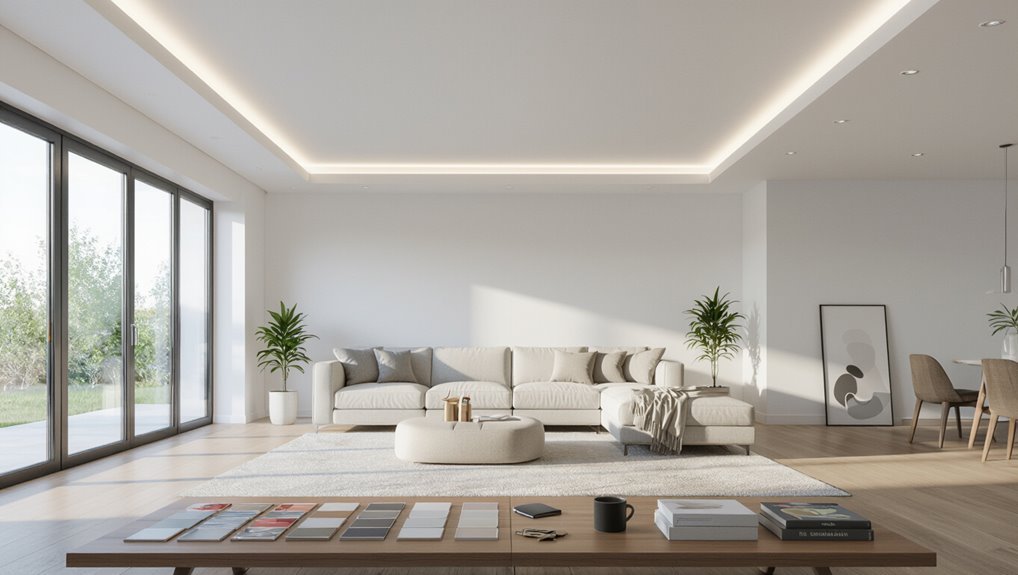
Wondering where to start? You’ll follow clear steps: test using samples on different walls and ceilings, observe them at various times, and note how light shifts tones.
Compare options against trim and wall colors, imagining contrasting colors or subtle matches. Use a shortlist, weigh durability and sheen, then pick the white that reads calm, bright, and cohesive in your space.
Quick Answer: The Most Versatile Ceiling White
If you want one white that works in almost any room, go with a soft, neutral white that leans neither too warm nor too cool—think a clean, slightly muted tone that reflects light without looking stark.
- You’ll balance ceiling color psychology for calm, airy spaces.
- It reads true under varied light.
- It pairs with trim and wall whites.
- Check popular ceiling brands for consistent formulas.
Quick Comparison: 6 Ceiling Whites (Light, Undertone, Best Room)
You’ll see how each white stacks up for lightness and brightness so you can pick a ceiling that opens the room.
I’ll note the undertone and hue for every option so you won’t get unwanted warmth or coolness.
Then I’ll match each white to the rooms where it performs best.
Lightness And Brightness
Because ceiling whites range from near-bright to softly muted, their lightness determines how high and airy your room will feel and which undertones will show up under different lighting.
You’ll use light reflection to boost volume and guide color perception.
Consider these practical picks:
- Bright white — maximizes bounce.
- Soft white — gentle lift.
- Off-white — subtle warmth.
- Near-neutral — balanced glow.
Undertone And Hue
Undertones act like a color’s secret instruction manual, telling you whether a white will read cool, warm, or neutral once it’s on your ceiling — and they can change how the whole room feels.
You should consider hue shifts under different lights, since subtle blues or creams affect color psychology and mood.
Pick a tint that supports your ceiling aesthetics without competing with walls.
Best Room Matches
Here are six go-to ceiling whites, laid out for quick comparison so you can match each one to the room that benefits most; I’ll note the lightness, core undertone, and the spaces where it performs best.
- Bright, cool — blue undertone: airy living rooms, modern room styles, energizing per color psychology.
- Soft, warm — creamy undertone: cozy bedrooms, traditional styles, calming.
- Crisp neutral — balanced: kitchens, changing.
- Muted, pale — green undertone: bathrooms, spa-like.
How to Choose a Ceiling White: Simple Decision Checklist
Start by checking how much natural and artificial light the room gets, since lighting can make a white look warm, cool, or washed out.
Then consider the ceiling’s undertone and how much contrast you want with the walls—subtle warmth softens a bright room, while a crisp cool white can sharpen contrast.
Use those two quick checks to narrow your choices before testing samples.
Room Lighting Effects
How will the light in your room change the way a ceiling white looks? You’ll notice hues shift with natural light by day and artificial light by night.
Consider these quick checks:
- Morning sun warms whites.
- North light cools tones.
- Warm bulbs make whites creamier.
- Cool LEDs brighten blues.
Check samples at different times before deciding.
Undertone And Contrast
Now that you’ve checked how light shifts your whites, think about undertone and contrast to refine your choice.
You’ll assess undertone significance — warm, cool, or neutral — so your ceiling complements walls and trim.
Consider contrast effects: high contrast defines architectural details, low contrast softens changes.
Pick a ceiling white that balances undertone and contrast for cohesive, intentional rooms.
How Ceiling Whites Differ From Wall Whites
Because ceilings sit above and catch light differently than walls, the right white for them behaves differently: it should read brighter, minimize shadows, and often have a cooler or more neutral undertone to prevent the room from feeling too warm or yellow.
- You’ll pick ceiling whites to reflect light.
- You’ll choose wall whites for depth.
- You’ll avoid high-gloss on ceilings.
- You’ll test samples overhead.
Why Undertones Matter for Ceiling Whites
When you pick a ceiling white, its warm or cool undertone will change how the whole room feels.
Warm undertones make a space feel cozier and more inviting, while cool undertones read brighter and airier.
Think about the mood you want before choosing the undertone.
Warm Vs Cool Undertones
1 key thing to know about ceiling whites is that their undertones—warm (yellow, beige, or pink) versus cool (blue or gray)—change how your room reads: warm undertones make ceilings feel cozier and lower, while cool undertones open up a space and can make ceilings appear higher.
- Note warm undertone benefits for intimacy.
- Note cool undertone effects for airiness.
- Match undertone to trim and walls.
- Test samples in different light.
Impact On Room Ambience
If you pick a ceiling white with warm undertones, your room will feel cozier and more grounded; choose a cool undertone and the space will read brighter and more expansive.
You’ll use ambience enhancement deliberately: warm whites soften shadows and invite comfort, while cool whites boost perceived height and daylight.
Rely on color psychology to match ceiling tone with mood and function.
How Room Light Affects Ceiling White
Light in your room changes how a white ceiling reads more than you might expect: warm bulbs make whites look creamier, cool daylight pushes them bluish, and dim or uneven lighting can reveal shadows and texture.
- Notice ceiling light temperature and how it shifts undertones.
- Use ambient reflection from walls to soften harsh hues.
- Test swatches at different times.
- Adjust fixtures or bulb color for balance.
Ceiling Height & Room Size: Pick the Right White
When you’re deciding on a ceiling white, think about height and room size together because they change how a color reads: low ceilings and small rooms benefit from brighter, cooler whites that open the space, while tall or cavernous rooms can handle warmer or slightly deeper whites to add coziness and scale.
Choose a ceiling color that enhances visual height—cooler tones recede, warmer tones feel closer.
Choosing a Finish for Ceilings: Flat, Eggshell, or Satin
Choosing the right finish is the next step after picking a white—your sheen affects how the color reads, how much texture shows, and how easy the ceiling will be to clean.
For finish selection, consider sheen impact and practical needs. Choose based on room use and maintenance:
- Flat — hides flaws, matte look.
- Eggshell — slight glow, washable.
- Satin — durable, subtle sheen.
- Semi-gloss — easy to clean.
Cool vs Warm Ceiling Whites: When to Pick Each
If you want a room to feel taller and more airy, pick a cool white for the ceiling to create that sense of height.
If you’re aiming for warmth and a snug vibe, go with a warm white to make the space feel cozier.
Consider the room’s natural light and your wall colors to decide which will balance your overall look.
Cool Whites For Height
Although cool white ceilings can feel stark in small, cozy rooms, they’re a smart pick when you want to visually lift a space and emphasize modern, airy architecture.
You’ll get a subtle height illusion and an airy ambiance—use cool whites to clarify lines and reflect daylight.
- Choose blue-leaning whites
- Pair with crisp trim
- Use matte or eggshell
- Test in natural light
Warm Whites For Coziness
When you want a ceiling to make a room feel snug and inviting, pick a warm white—its subtle yellow or beige undertones soften harsh lines and tame bright light so the space reads cozier.
You’ll enhance cozy aesthetics and create a warm ambiance that complements wood tones, textiles, and soft lighting.
Choose warmer whites in low or diffused light for intimate, grounded rooms.
Low‑VOC and Eco Ceiling White Options
Because you’ll be spending time under that paint, choosing low‑VOC and eco‑friendly ceiling whites helps keep indoor air cleaner and reduces environmental impact.
You’ll want eco friendly options and paints made from sustainable materials.
Consider these choices:
- Zero/low‑VOC latex for minimal fumes.
- Plant‑based formulas for biodegradability.
- Recycled‑content pigments to cut waste.
- Certifications like Green Seal for assurance.
Best Ceiling Whites for North‑Facing Rooms
In north-facing rooms you’ll want ceiling whites with cool undertones to counteract the blueish light and keep the space feeling natural.
Balance brightness and warmth by choosing a slightly brighter white if the room feels dim, or a truer cool white if you want crispness without yellowing.
Match the ceiling to your wall colors by testing swatches together—cool grays and soft blues pair especially well.
Cool Undertones Work Best
Since north-facing rooms get cooler, indirect light, cool-leaning whites keep ceilings from looking dull or yellowed and help the space feel brighter and more cohesive.
- You’ll notice cool undertone benefits immediately in reflected light.
- Choosing cools prevents yellowing and balances blue-tinted daylight.
- Pick subtle blue or soft gray-leaning whites for calm cohesion.
- Test samples on the ceiling to confirm the cool effect at different times.
Brightness Versus Warmth
When you choose a ceiling white for a north‑facing room, balance matters: brighter whites lift the space and reflect limited daylight, while warmer whites add coziness but can look muddy under blue‑leaning light.
Test samples at different brightness levels to see real effect, and judge warmth perception in the evening and midday.
Pick a white that maintains airiness without feeling cold or dull.
Pairing With Wall Colors
Now that you’ve weighed brightness and warmth, think about how ceiling white will interact with your wall color: the right pairing keeps a north‑facing room feeling open without introducing unwanted coolness or muddiness.
- Choose a warm-tinted white to counteract cool light and guide color psychology toward comfort.
- Match undertones—avoid clashing blues.
- Use satin ceilings if texture influence softens glare.
- Test samples at different times of day.
Best Ceiling Whites for South‑Facing Rooms
Because south-facing rooms get warm, golden light most of the day, you’ll want ceiling whites that balance warmth without looking yellow or washed out.
Choose soft, cool whites with slight gray or blue undertones to offset south facing light. These keep ceiling reflection neutral, prevent glare, and maintain true wall color.
Test samples at different times to confirm harmony.
Best Ceiling Whites for East‑Facing Rooms
If your room faces east and greets you with crisp morning light, pick ceiling whites that feel fresh but won’t read cold as the sun moves across the sky.
- Soft warm white—boosts natural light without glare.
- Creamy off‑white—uses color psychology to feel cozy.
- Pale beige—adds subtle warmth during mornings.
- Warm gray—grounds the room while keeping ceilings bright.
Best Ceiling Whites for West‑Facing Rooms
East-facing rooms benefit from fresher, warmer whites that complement morning light; west-facing rooms call for ceiling whites that handle stronger, warmer afternoon and evening sun without looking yellow or heavy.
You’ll want cooler white ceilings with neutral undertones to control color temperature and reduce amber casts.
Prioritize high light reflection to keep rooms bright without boosting warmth; test samples at sunset.
Top Neutral Ceiling Whites for a Classic Look
Choose neutral ceiling whites that read clean and timeless without introducing blue or yellow casts.
You’ll want shades that follow ceiling white trends and respect color psychology to keep rooms feeling airy and balanced.
Pick muted, true whites that won’t compete with walls or lighting.
Choose muted, true whites that quietly support walls and lighting without competing for attention.
- Pure white
- Natural white
- Soft white
- Antique white
Top Warm Ceiling Whites for Cozy Rooms
If you want a cozier feel, choose whites with soft creamy undertones that read warmer than pure white.
Opt for warm low-sheen options to keep glare down and add a gentle, enveloping finish.
Pair those ceilings with warm wall colors to create a unified, inviting room.
Soft Creamy Undertones
Warmth can make a room feel immediately inviting, and soft creamy ceiling whites are your easiest way to add that gentle glow without overpowering the space.
You’ll notice the undertone impact on mood and light reflection. Choose tones that lift without yellowing.
- Slight ivory for warmth
- Pale beige for depth
- Creamy white for softness
- Warm white for balance
Warm Low-Sheen Options
Low-sheen warm whites give cozy rooms a soft, embracing glow without reflecting glare, so you’ll get comfort and subtlety in equal measure.
Choose a soft white with low sheen to hide imperfections and tame light. These finishes offer subtle warmth without yellowing, creating an intimate ceiling plane that reads gentle and finished.
Apply satin-leaning options sparingly for durable, understated charm.
Pairing With Warm Walls
Now that you’ve chosen a low-sheen warm white for a cozy ceiling, think about how it will play with warm-toned walls.
- Use undertones to align warmth and support color psychology.
- Keep ceiling slightly lighter to boost perceived height and comfort.
- Test swatches in different light to guarantee design harmony.
- Balance trim and furnishings so the room feels cohesive and inviting.
Top Cool Ceiling Whites for Modern Spaces
If you’re aiming for a crisp, contemporary look, cool white ceilings tighten up a room and make architectural lines pop without feeling stark.
Choose pale blues or blue‑whites to emphasize ceiling height and use color psychology to convey calm, clarity, and modernity.
These tones reflect light cleanly, complement minimalist decor, and prevent yellowing, keeping spaces feeling airy and intentionally restrained.
Designer‑Favorite Ceiling Whites (By Brand and Why)
When you want a reliable, designer-approved ceiling white, pick brands that balance true coolness with excellent coverage—Benjamin Moore, Farrow & Ball, Sherwin-Williams and Behr all show up on pros’ palettes because they pair consistent hues with formulas that resist yellowing and spray on evenly; I’ll explain each brand’s standout whites, why pros trust them, and how their sheens and undertones perform in different light.
- Benjamin Moore: designer tips for crisp, non-yellow ceilings.
- Farrow & Ball: rich pigments, subtle cool undertones.
- Sherwin-Williams: consistent coverage, easy touch-ups.
- Behr: budget-friendly favorite brands with durable finish.
How to Test Ceiling Whites Before You Paint
Curious how that perfect ceiling white will actually read in your room? Test paint samples on large poster boards, tack them to different walls, and observe at morning, noon, and evening light. Note reflections, undertones, and how ceiling trends affect perceived height. Record reactions before buying a full gallon.
| Sample | Time | Note |
|---|---|---|
| A | Morning | cool |
| B | Evening | warm |
Matching Ceiling White to Trim and Moldings
When choosing a ceiling white, pay attention to undertones so your ceiling and trim read as a cohesive pair rather than two different whites.
You’ll also want to match finish and sheen—flat ceilings and semi-gloss trim reflect light differently and can make colors look off.
Test samples together under your room’s light before committing.
Match Undertones, Not Just White
Because a ceiling white sits next to trim and moldings, you’ll want to match undertones rather than chasing a pure “bright white.”
Consider how undertones affect room mood, color psychology, and evolving ceiling trends.
- Compare swatches under real light.
- Coordinate warm or cool undertones with trim.
- Test small sections before committing.
- Keep contrast subtle for cohesion.
Consider Finish And Sheen
If you want a polished, cohesive look, match the ceiling’s sheen to the trim’s finish more closely than its color: flat or matte ceilings minimize glare and hide imperfections, while eggshell, satin, or semi-gloss on trim and moldings reflects light and reads cleaner at eye level—so pick a ceiling sheen that balances light control with trim contrast and keeps surfaces feeling intentional.
Choose finish types by room use; compare sheen levels to maintain harmony.
When to Use a Brighter White Than the Walls
Although ceilings often recede visually, you’ll want a brighter white than the walls when you need to open up low rooms, enhance natural light, or create a crisp contrast that defines architectural details.
- Use brighter whites to lift tight ceilings.
- Pair for clean wall contrast in modern spaces.
- Bright ceilings bounce daylight into corners.
- Highlight moldings and beams with a cooler, reflective white.
When to Tone Down Your Ceiling White for Coziness
When you want a room to feel warm and intimate, dial back the ceiling white to a softer, slightly tinted shade that reduces glare and draws the eye inward.
Choose warm off-whites or very pale greiges to create a cozy atmosphere and subtle mood enhancement.
Use this approach in bedrooms, reading nooks, or small living rooms to invite relaxation without darkening the space.
Painting Vaulted or Sloped Ceilings: Practical Tips
Because vaulted and sloped ceilings change how paint looks and how you work, plan differently than you’d for flat ceilings:
- Use lighter whites to keep vaulted ceilings airy and minimize shadows.
- Choose satin or low-sheen for easier cleaning on sloped ceilings.
- Invest in extension poles, scaffolding, and angled rollers for safety and reach.
- Test samples high on the wall to see real-life light effects.
Textured Ceilings: Best Ceiling White Strategies
Textured ceilings need a different approach than smooth ones: the uneven surface catches light and shadow, so pick a clean, true white with enough opacity to fill crevices without highlighting bumps.
Use a thicker, high-build ceiling paint plus a roller with a deep nap to get consistent coverage.
You’ll reduce visible textured finishes, control ceiling contrast, and create a uniform, bright overhead plane.
Common Mistakes Choosing a Ceiling White (And Fixes)
If you pick the wrong white, you’ll notice it instantly—patchy coverage, odd undertones, or a ceiling that looks dingy against fresh walls.
Choose white carefully—wrong shade shows instantly in patchy coverage, weird undertones, or a dingy ceiling.
- You skip samples: test swatches to avoid ceiling paint blunders.
- You ignore light: view paints at night and day.
- You match too closely: contrast can brighten a room.
- You neglect undertones when selecting undertones; pick warm or cool intentionally.
Cost, Primer, and a One‑Afternoon Plan to Decide
When you’re budgeting for a ceiling refresh, factor in paint quality, primer, and a couple of sample cans so you won’t have to redo work. Do a quick cost analysis, compare primer types, and plan an afternoon: test, view in different light, and decide.
| Step | Item | Time |
|---|---|---|
| 1 | Samples | 45m |
| 2 | Prime | 30m |
| 3 | Assess | 45m |
Frequently Asked Questions
Can I Use Ceiling White on Exterior Porch Ceilings?
Yes — you can use ceiling white on exterior porch ceilings, but you’ll want a durable, exterior-grade formula. You’ll protect finish with proper prep, improving porch design while easing ceiling maintenance and resisting moisture, dirt, and fading.
Will Ceiling White Hide Water Stains Without Primer?
No — you won’t hide water stains without primer; you’ll only cover, you’ll only risk bleed-through, you’ll only invite reappearing marks. For proper ceiling maintenance, prime stained areas first with a stain-blocking primer before repainting.
How Often Should Ceiling White Be Repainted in High-Humidity Rooms?
You should repaint ceiling white every 3–5 years in high-humidity rooms; use moisture resistance formulas and proper prep to extend paint longevity, and you’ll reduce peeling, staining, and frequent touch-ups in bathrooms or laundry areas.
Are Allergen-Reducing Paints Available in Ceiling Whites?
Breathe better: you can choose allergen-free options in ceiling whites; manufacturers make antimicrobial, low-VOC formulas and various paint finishes like flat or satin that resist mold and trap fewer irritants, so you’ll reduce airborne allergens.
Can I Tint Ceiling White for Subtle Color Effects?
Yes — you can tint ceiling white for subtle color effects; use delicate tinting techniques to add warmth or coolness, test samples, and consider color psychology to influence perceived height, mood, and room brightness without overwhelming the space.
Conclusion
You’ve got a shortlist, a checklist, and a handful of smart tips — and by sheer coincidence, the perfect ceiling white often turns out to be the one you already own in your paint stash. Trust your lighting, trust a swatch on the ceiling, and trust that a simple primer coat can save you a redo. Try your top pick in the room at different times of day; if it sings in morning and evening, it’s the one.
