
How to Get Nail Polish Off Painted Walls Without Ruining the Finish
You can usually lift nail polish from painted walls without ruining the finish by acting gently and testing first. Blot fresh spills, start with warm soapy water, then try rubbing alcohol on a cotton swab, moving inward from the stain. If that fails, use non‑acetone remover or a paint‑safe solvent sparingly and always spot‑test. Avoid abrasives and stop if paint softens. Follow safe steps and tips below to handle tougher stains and touchups.
Quick Answer Remove Nail Polish Without Ruining Painted Walls
You can usually lift fresh nail polish with a soft cloth, warm soapy water, or a little rubbing alcohol on a cotton swab without damaging paint.
If the stain’s old, large, or the paint starts to soften or discolor, stop and consult a professional to avoid making it worse.
Quick action and gentle testing on an inconspicuous spot will save time and your wall’s finish.
One-sentence summary of safest methods
While acting quickly, test a hidden patch first and use gentle, non-abrasive options—like warm soapy water, rubbing alcohol on a cotton swab, or a small amount of non-acetone polish remover—working from the outside of the stain inward to lift the nail polish without stripping paint.
For clear guidance on how to get nail polish off of painted walls, start mild, blot don’t rub, and rinse promptly.
When to stop and call a professional
If the stain spreads, the paint softens, or cleaning starts to remove the finish, stop and call a professional immediately; continuing can make the damage worse and raise repair costs.
You should call when DIY methods don’t lift polish after several gentle attempts, when solvents affect surrounding paint, or when the wall has textured or historic finishes.
A pro can assess, use proper solvents, and restore surfaces safely.
How Nail Polish Interacts with Painted Surfaces
Nail polish contains solvents, pigments, and resins that can soak into or sit on top of paint depending on what it hits.
You’ll find glossy finishes tend to resist staining and clean up more easily, while matte and eggshell paints soak in color and show damage more readily.
How long the stain’s been there, the exact paint type, and the wall finish all affect how well removal methods will work.
What nail polish is made of (solvents, pigments, resins)
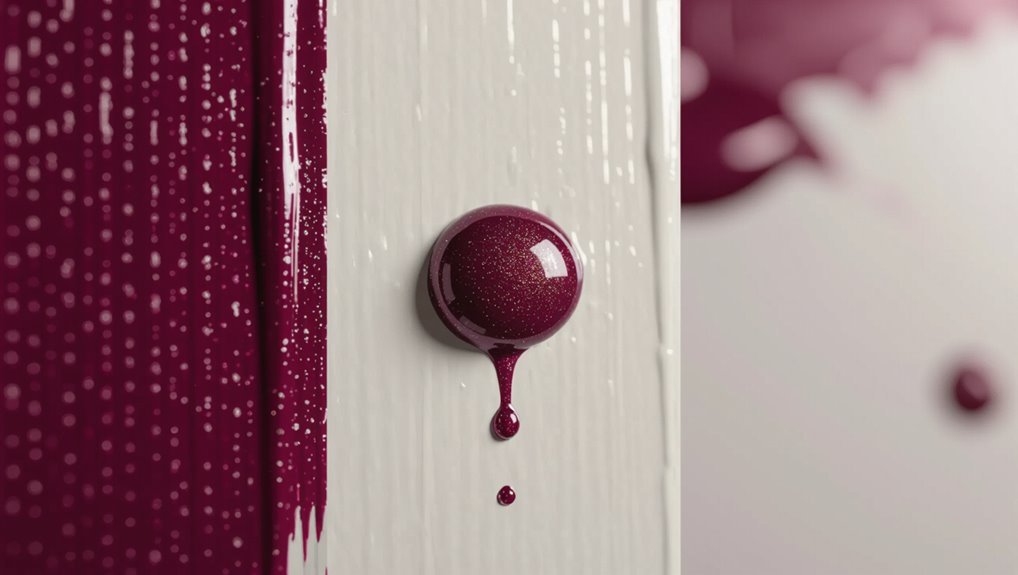
Think of nail polish as a quick-drying film: it’s a blend of volatile solvents, color pigments or dyes, and binding resins that form a hard coating as the solvents evaporate.
When you encounter a spot, solvents soften and can loosen paint, pigments provide visible stain, and resins tack to surfaces.
Knowing these components helps you pick removers that dissolve polish without stripping your wall’s finish.
How different wall paints react (matte, eggshell, satin, semi-gloss, gloss)
Knowing what polish is made of helps you predict how it’ll behave on different wall finishes.
Matte soaks in and stains easily; avoid scrubbing.
Eggshell resists slightly but can dull if treated harshly.
Satin offers moderate durability and tolerates gentle cleaning.
Semi-gloss and gloss repel polish best and allow safer removal, though aggressive solvents can soften their sheen, so proceed cautiously.
Factors that affect removal success (age of stain, paint type, wall finish)
Because time, paint chemistry, and finish all change how polish behaves on a wall, your removal approach needs to match the situation.
Fresh stains lift easier; cured polish bonds and may need gentler solvents or paint touch-ups.
Porous matte absorbs more, risking dye; glossy or sealed surfaces resist penetration but scratch.
Test discreetly, choose solvent strength by paint type, and proceed slowly.
Safety and Preparation Before You Start
Before you start, gather your materials—cleaning cloths, cotton swabs, rubbing alcohol or acetone-based remover, mild detergent, and a small bowl—and put on gloves.
Make sure the room’s well ventilated and always spot-test your chosen remover in an inconspicuous area to check for paint damage.
The spot test is quick and simple but essential: it shows whether the product will lift color or finish so you can proceed safely.
Materials and tools checklist
Gather the right materials and tools so you can remove nail polish from walls safely and efficiently. Have them ready before you begin to work methodically and avoid mistakes.
- Soft microfiber cloths, cotton swabs, and a gentle sponge.
- Isopropyl alcohol or non-acetone nail polish remover and a small bowl.
- Mild dish soap, warm water, and a towel for drying.
Safety precautions (ventilation, gloves, spot testing)
Now that you’ve got your tools and cleaners ready, take a moment to protect yourself and the room.
Open windows and run a fan to disperse fumes. Wear nitrile gloves and avoid skin contact with acetone or removers.
Lay down drop cloths to catch drips. Keep children and pets out of the area until fumes dissipate and surfaces fully dry.
How to do a spot test and why it matters
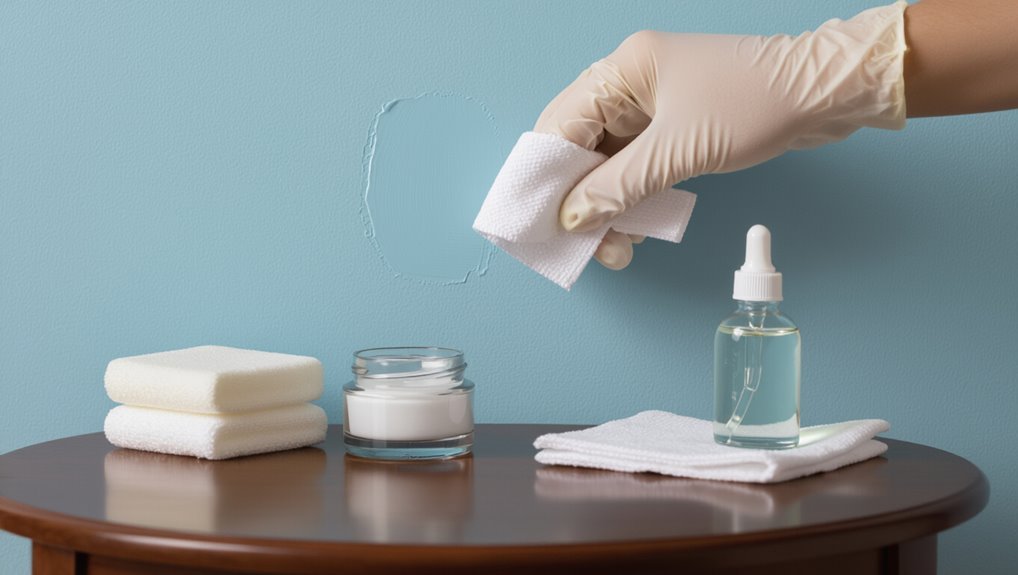
Why test a hidden spot first? You’ll verify the cleaner won’t soften, discolor, or dull the paint.
Dab a cotton swab with your chosen remover, apply to an inconspicuous area, wait a minute, then blot gently.
Inspect for finish change or residue. If it looks unchanged, proceed; if not, try a milder method or stop.
Step-by-Step Removal Methods (Safe-to-Strong, Try in Order)
Start with the gentlest options and work up only if the stain won’t budge.
You’ll try blotting fresh spills, then a soap-and-water microfiber wipe, followed by isopropyl alcohol applied carefully, non-acetone remover used sparingly, and finally acetone products only when safe for your paint.
Test each step in an inconspicuous spot and move on only if the previous method didn’t remove the polish.
Step 1 Blotting and gentle removal for fresh spills
Blot the spill immediately with a clean, white cloth or paper towel to lift as much wet polish as you can—don’t rub, which spreads the stain.
Work from the outer edge inward, using fresh sections of cloth as the polish transfers.
If residue remains, gently press with a dampened cloth—minimal moisture only—then blot dry.
Stop if paint softens or color lifts.
Step 2 Soap, water, and microfiber cloth technique
Grab a bowl of warm water, a mild liquid dish soap, and a clean microfiber cloth—this gentle combo often removes fresh or light nail-polish residue without harming painted walls.
Dip the cloth, wring well, and gently blot the spot in small circular motions. Rinse and repeat, using clean cloth sections, until stain fades.
Pat dry with a soft towel to avoid streaks.
Step 3 Rubbing alcohol (isopropyl alcohol) method with stepwise application
Next, try rubbing alcohol—it’s stronger than soap and water but usually safe on most painted walls when used carefully.
Dampen a cotton ball, blot a hidden test spot, then gently dab the polish, working outward. Replace the cotton as it picks up color.
When the stain lifts, wipe with a damp cloth and dry. Stop if paint softens.
Step 4 Non-acetone nail polish remover application (how to use safely)
Move up to a non-acetone nail polish remover when rubbing alcohol didn’t fully lift the stain; it’s stronger but less likely to strip paint than acetone.
Test a hidden spot first. Dampen a cotton ball, blot gently, don’t rub hard. Work outward from the edge, replace stained cotton frequently.
Rinse with a damp cloth and pat dry. Repeat only if safe.
Step 5 Acetone-based removers and when to avoid them
Because acetone is a much stronger solvent than non‑acetone removers, you should treat it as a last resort and use it carefully: test a hidden area first, work with good ventilation, wear gloves, and avoid painted or varnished surfaces that can soften or discolor.
Use a cotton swab for precise application, blot—don’t rub—and stop immediately if paint softens or sheen changes.
Step 6 Household alternatives (baking soda paste, vinegar, hydrogen peroxide)
If acetone feels too harsh or your wall’s finish reacted poorly, try gentler household options before doing more damage.
Mix baking soda with water to a paste, gently rub with a soft cloth, then rinse.
Use white vinegar on a microfiber cloth for light spots.
For stubborn marks, dab hydrogen peroxide briefly, blot dry, and test an inconspicuous area first.
Step 7 Commercial paint-safe stain removers and degreasers
Step 7 steps up to commercial, paint-safe stain removers and degreasers you can buy when household solutions won’t cut it.
Test a hidden spot, follow label directions, and work gently with a soft cloth to protect finish.
- Citrus-based solvent — effective on lacquer-based polish.
- Isopropyl-based cleaner — quick, evaporates fast.
- Commercial degreaser — for stubborn, aged stains.
Step 8 When to use a magic eraser (proper technique and risks)
When gentler cleaners haven’t removed the polish, reach for a Magic Eraser—but only as a last resort and with care.
Dampen it slightly, test an inconspicuous spot, and rub lightly using short strokes.
Stop immediately if paint dulls or fibers appear.
Work small areas, avoid glossy or delicate finishes, and rinse the wall with water afterward to remove residue.
Step 9 Repainting small areas: prep, primer, and touch-up tips
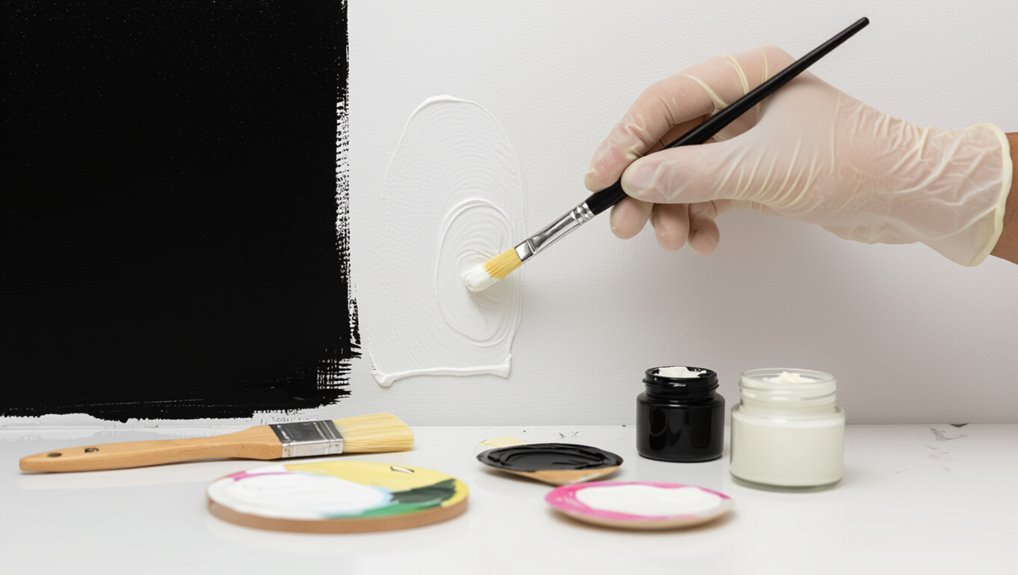
Though you’ve tried every removal method up to a Magic Eraser, sometimes a small repaint is the cleanest fix; you’ll want to prep the area, seal any stained or damaged spots with primer, and blend a careful touch-up so the repair disappears.
Lightly sand edges, clean dust, use stain-blocking primer, feather new paint with a fine brush or mini roller, and match sheen for an invisible repair.
Comparison of Removal Methods
Now you’ll compare the removal methods side-by-side to help pick the right one for your wall.
The table will show effectiveness, risk to the finish, materials needed, and which paint types each method suits.
Use it to match a method to your situation and avoid unnecessary damage.
Table comparing effectiveness, risk to finish, materials needed, and recommended paint types
Below is a concise table that lets you quickly compare common nail-polish removal methods by effectiveness, risk to the paint finish, materials required, and which paint types each method works best on; use it to pick the safest, most effective option for your wall.
| Method | Notes |
|---|---|
| Rubbing alcohol | Effective, low risk on semi-gloss, needs cotton |
| Nail polish remover (acetone-free) | Medium, moderate risk on flat, needs swab |
| Baking soda paste | Mild, very low risk, needs paste |
| Magic eraser | Strong, high risk on flat, needs damp eraser |
Common Mistakes That Damage Painted Walls
Don’t scrub at the stain with steel wool or a scouring pad, because over-scrubbing and abrasive tools can strip paint.
Don’t pour strong solvents straight on the wall without testing a hidden spot first, since they can discolor or dissolve finishes.
And don’t assume every paint is the same—ignoring the finish and using one-size-fits-all methods often makes the problem worse.
Over-scrubbing and abrasive tools
While it’s tempting to scrub stubborn polish until the spot vanishes, over-scrubbing or using abrasive tools can strip paint, leave scratches, or create shiny patches that stand out.
You should work gently with soft cloths, light pressure, and small circular motions.
Test on an inconspicuous area, pause often to assess, and stop at the first sign of finish damage to avoid worsening the problem.
Using strong solvents without testing
After taking care not to scrub or sand the finish, be careful about reaching for heavy-duty solvents—what removes nail polish can also strip paint or dull the sheen.
Always test a hidden spot first, wait for full drying, and use the mildest solvent that works.
Don’t soak the area; blot gently and stop if the paint softens or color changes.
Ignoring finish type and using one-size-fits-all approaches
Because paint finishes react differently, treating every wall the same can ruin your work: glossy, satin, eggshell, and flat paints vary in durability and solvent resistance.
Prevention and Best Practices
You can avoid many nail polish mishaps by wiping spills promptly and keeping nail tasks over a protected surface.
Use drop cloths, painter’s tape edge guards, or temporary covers when painting or doing nails near walls.
For busy areas, pick washable or semi-gloss finishes that stand up to cleaning.
Quick-clean habits to prevent staining
When spills happen, act fast: keep a small kit with cotton balls, nail polish remover (acetone-free if your paint is delicate), paper towels, and a mild cleaner nearby so you can blot and lift polish before it sets.
Wipe promptly, blot don’t rub, test remover on hidden spot, work from edges inward, and follow with a damp cloth.
Check for residue after drying.
Protective measures (drop cloths, edge guards when painting or doing nails)
Spills happen even with quick cleanup, so take steps to stop polish from ever touching walls: lay down a well-fitted drop cloth or plastic sheeting before you paint or do nails, secure edges with painter’s tape or edge guards, and cover nearby furniture and floors.
Work over a tray or table, keep cotton swabs and remover handy, and replace or launder cloths after spills to avoid transfer.
Choosing wall finishes for high-traffic or nail-prone areas
Because high-traffic and nail-prone areas get bumped and marked often, pick wall finishes that resist chips, stains, and easy scrubbing.
Choose semi-gloss or satin for durability and washable surfaces; consider washable scrubbable flat paints with stain-blocking technology for muted looks.
Use mildew-resistant finishes in humid spots.
Test small areas first, and opt for durable trim and corner guards where contact is frequent.
Tools and Products Recommended for Different Scenarios
When removing nail polish from walls, you’ll start with gentle options like mild soap, baking soda paste, or non-acetone polish remover to protect painted surfaces.
For durable finishes—trim, semi-gloss, or oil-based paint—you can use stronger solvents such as acetone or rubbing alcohol with careful spot testing.
If stains are extensive, paint has bubbled, or the finish’s integrity is at risk, call a professional restorer.
Best gentle options for painted walls
For painted walls, start with the gentlest tools and products to avoid stripping or discoloring the finish: a soft microfiber cloth, a sponge, mild dish soap mixed with warm water, and a melamine foam (magic eraser) used sparingly.
Test an inconspicuous spot first, then work gently in small circles until polish lifts.
- Microfiber cloth + soapy water
- Soft sponge
- Melamine foam (light pressure)
Stronger options for durable finishes
If your walls have a durable finish—like semi-gloss or high-gloss paint, tile, or sealed trim—you can step up to stronger solvents and abrasion tools, but always spot-test first and work carefully to avoid dulling the sheen.
- Acetone on a cotton swab for small spots; blot, don’t rub.
- Rubbing alcohol with light scrubbing pad for larger smudges.
- Fine-grade magic eraser or sanding sponge used gently and briefly.
When to call a professional restorer
You can try stronger solvents and gentle abrasion on durable finishes, but there are times you should call a professional restorer instead.
Call a pro if polish covers textured or stained surfaces, large areas, or if previous DIY attempts damaged paint.
Professionals use color-matched touch-up, low-abrasion solvents, poultices, and controlled sanding to preserve finish and avoid costly repainting.
Step-by-Step Troubleshooting Guide (If First Method Fails)
If the first method doesn’t work, reassess the paint finish and how long the stain’s been there to choose the right next step.
Follow an escalation ladder, moving from mild cleaners and gentle scraping to stronger solvents only as needed.
When removal is partial, you’ll learn how to blend and touch up the patch so it matches the surrounding wall.
Reassess paint finish and stain age
When the first removal attempt doesn’t lift the spot, step back and check two things: the paint finish—flat, eggshell, satin, semi-gloss, or gloss—and how old the polish stain is.
New drips sit on the surface and respond to gentler methods; older stains may have soaked in.
Note finish sensitivity—flat and eggshell are delicate; glossier sheens tolerate firmer action.
Escalation ladder: from mild to aggressive treatments
Having checked the paint finish and stain age, move through a clear escalation ladder that starts with the gentlest options and only advances if each step fails.
Begin with warm soapy water and a soft cloth.
Then try rubbing alcohol on a cotton swab.
Next, use a non-acetone remover, then a diluted baking soda paste.
Reserve acetone and sanding only as last resorts, testing hidden spots first.
How to blend and touch up after partial removal
Once you’ve removed most of the polish but still see a faint stain or slight paint damage, you’ll want to blend and touch up carefully to make the repair invisible.
Lightly sand rough edges, clean residue, and apply primer if bare drywall shows.
Use matching paint, feather the edges with a small brush or sponge, let dry, then assess and repeat only where needed.
FAQ
Got questions about using acetone, regular nail polish remover, or a magic eraser on painted walls?
You’ll learn when to act after a spill, how to stop dark polish from bleeding, and whether certain removers will strip eggshell or matte finishes.
Read on for quick, practical answers.
Can I use regular nail polish remover on painted walls?
Can you use regular nail polish remover on painted walls? You can, but cautiously.
Test a hidden spot first because removers often contain solvents that can dull or soften finishes. Use a cotton swab, blot gently, and stop at any finish change.
For latex or water-based paints, prefer non-acetone removers and minimal contact.
Rinse the area with mild soapy water afterward to remove residue.
Will acetone always strip wall paint?
Will acetone always strip wall paint? Not always, but it often will on glossy, latex, or oil-based finishes—especially with prolonged contact.
You’ll risk softening, dulling, or removing the topcoat. Test in an inconspicuous spot first, use minimal acetone on a cotton swab, and blot gently.
If paint shows damage, stop and try a gentler remover or mild soap and water instead.
How long should I wait to try removal after a spill?
If the polish is fresh, act quickly—remove excess with a dry cloth or paper towel right away to keep it from soaking into the paint.
You should attempt removal as soon as possible after blotting. For tacky but not set polish, try a gentle solvent test within an hour.
If fully cured, wait until you can test in an inconspicuous spot and proceed carefully.
Can I prevent color bleed from dark polish?
After you’ve blotted or tested the spot, take steps to prevent dark polish from bleeding into the paint—because once dye migrates, removal gets tougher.
Work quickly: dab with a clean, dry cloth to lift excess.
Apply a tiny amount of gentle solvent on a cotton swab outward from the stain, then rinse with water.
Repeat sparingly and blot; don’t rub.
Is it safe to use a magic eraser on eggshell or matte paint?
Curious whether a magic eraser’s safe on eggshell or matte paint? You should be cautious: these finishes are low-sheen and more delicate, so the eraser’s abrasive foam can dull or remove paint.
Test in an inconspicuous spot first and use gentle pressure. If it scuffs, switch to milder methods—dish soap, baking soda paste, or a cotton swab with rubbing alcohol.
