
What Gloss Level Should Ceiling Paint Be? A Simple Breakdown
You’ll usually want flat or matte on ceilings to hide flaws and keep glare low, especially in living rooms and bedrooms. Use eggshell or satin for kitchens, bathrooms, or basements where moisture and wipeability matter. Reserve semi‑gloss only for trim or occasional accent ceilings on very smooth, well‑prepped surfaces. Higher sheens brighten and clean easier but show imperfections, so test samples and prep surfaces first — keep going and you’ll get practical tips and a quick cheatsheet.
Quick Answer What Gloss Level Should Ceiling Paint Be?
For most rooms you’ll want a flat or matte ceiling paint because it hides imperfections and won’t reflect light.
Choose an eggshell or low-sheen finish only for kitchens, bathrooms, or areas that need extra washability.
If you have a textured ceiling or want to emphasize architectural details, a slight sheen can be an appropriate exception.
Short, direct recommendation for common rooms
Most ceilings look best with a flat or matte finish, so choose flat for living rooms, bedrooms, and hallways to hide imperfections and reduce glare.
For kitchens and bathrooms, pick an eggshell or satin for easier cleaning and mild moisture resistance.
Use semi-gloss only for trim or accent ceilings.
If you’re wondering what gloss for ceiling paint, prioritize flat for general rooms.
When to choose alternatives (exceptions)
If you generally pick flat for ceilings, there are a few situations where you’d choose something else.
Use satin or eggshell in kitchens or bathrooms with heavy moisture and frequent cleaning.
Choose semi-gloss near high-traffic areas or where you want to reflect light.
Pick gloss sparingly for decorative beams or trim.
Always match finish to function and cleaning needs.
Basic Understanding What Is Paint Gloss and Why It Matters for Ceilings
You’ll run into six common gloss levels—flat, matte, eggshell, satin, semi-gloss, and gloss—each with different sheen and cleanability.
The higher the gloss, the more it reflects light and hides fewer surface flaws, but it’s also easier to wipe clean and more durable.
Match the gloss to your ceiling’s texture and condition, since smooth plaster shows sheen more than textured popcorn or plaster.
Gloss level definitions (flat, matte, eggshell, satin, semi-gloss, gloss)
Gloss level tells you how shiny paint looks and how it handles light and wear. You’ll meet flat and matte (low sheen), eggshell (soft), satin (smooth), semi-gloss (resilient), and gloss (bright). Each offers different reflectivity and scrubbability for ceilings. Consider texture and maintenance when choosing.
| Finish | Quick image |
|---|---|
| Flat/Matte | Velvety |
| Eggshell | Soft sheen |
| Satin | Silky |
| Semi-gloss/Gloss | Bright |
How gloss affects appearance, durability, and light reflection

Having picked a sheen for your ceiling, it helps to know how that sheen actually changes a room’s look and performance.
Higher gloss boosts reflection, making colors pop and rooms feel brighter, but it highlights imperfections. Glossier finishes resist scuffs and clean easier, improving durability in busy areas.
Lower gloss hides flaws and softens light, creating a matte, subtle appearance while sacrificing some washability.
How ceiling surface type interacts with gloss
Because ceiling materials vary in texture and porosity, the same sheen can look and perform very differently from one surface to another.
Smooth plaster reflects more with higher gloss, revealing flaws; porous popcorn or textured drywall soaks up paint and mutes sheen.
You’ll choose flatter finishes to hide imperfections on rough surfaces and satin or eggshell for washable, smoother ceilings.
Primary Guidance Recommended Gloss Levels by Room and Condition
For most bedrooms and living rooms you’ll want a flat or matte ceiling to hide imperfections and keep the look soft, while kitchens and bathrooms benefit from a satin or semi-gloss that resists moisture and is easier to clean.
In high-traffic or utility areas like hallways and laundry rooms choose a tougher, higher-sheen finish for durability.
If your ceiling has flaws you’ll usually pick a lower sheen to hide them, but use a bit more gloss to highlight crown molding or other architectural detail.
Bedrooms and living rooms (typical recommendation and why)
When you choose paint for bedrooms and living rooms, go with a flat or matte ceiling finish—these low-gloss options hide imperfections, reduce glare, and create a calm, cozy atmosphere that complements softer wall sheens.
You’ll get a more restful room with minimal reflection, easier touch-ups, and a neutral backdrop that keeps focus on furnishings and decor without competing with softer wall sheens.
Kitchens and bathrooms (moisture-prone areas)
Bedrooms and living rooms benefit from matte ceilings, but kitchens and bathrooms demand a different approach because moisture and frequent cleaning change what works best.
You’ll want an eggshell or satin ceiling in these rooms: they resist mildew better than flat, wipe clean without streaking, and reflect enough light to fight damp spots.
Use semi-gloss only where splashes or steam are constant.
High-traffic or utility areas (hallways, laundry rooms)
In hallways and laundry rooms where walls take constant bumps, scuffs, and splashes, you’ll want a tougher finish than matte—eggshell or satin gives easier cleaning without glaring shine, and semi‑gloss works well on trim or around washers and utility sinks.
Use eggshell for living walls, satin where more scrubbing’s needed, and reserve semi‑gloss for trim, doors, and splash-prone zones.
Ceilings with imperfections (when to use higher or lower gloss)
Because ceilings catch every bump and shadow, choosing the right gloss can either hide flaws or make them stand out.
So pick lower sheens like flat or matte to minimize texture and higher sheens only where you can prep surfaces well.
Use flat/matte in imperfect rooms to conceal cracks and stains; reserve eggshell or satin only after thorough sanding, patching, and priming.
Ceilings with crown molding or architectural detail
When your ceiling meets crown molding or other architectural details, choose a slightly higher sheen on the trim to highlight profiles while keeping the ceiling itself flatter to reduce glare and hide texture.
Use eggshell or satin on molding for subtle reflection and easy cleaning, and a matte or flat finish on the ceiling for a seamless look.
Balance contrast for depth without competition.
How to Choose the Right Gloss Step-by-Step Decision Guide
Start by checking your ceiling’s condition—smooth, textured, or damaged—so you know what level of gloss will hide or highlight imperfections.
Think about the room’s use and moisture, pick a sheen that balances light reflectivity with practicality, and coordinate it with your trim and walls.
Finally, try samples in different lighting to confirm the look before committing.
Step 1: Assess the ceiling surface condition
A quick walkaround will tell you a lot about your ceiling’s condition, so inspect it for stains, cracks, peeling, texture, and previous coatings.
Note areas needing repair, how smooth or rough the surface is, and whether paint is flaking.
Take photos, mark trouble spots, and decide if sanding, patching, or priming is required before choosing a gloss level for best adhesion and appearance.
Step 2: Consider room function and moisture levels
Because different rooms face different wear and moisture, think about how you’ll use the space and how damp it gets before picking a gloss level.
For high-moisture areas like bathrooms or laundry rooms, choose a scrubbable, moisture-resistant sheen (semi-gloss or satin).
For low-traffic, dry rooms such as bedrooms or dining rooms, flatter sheens hide imperfections better and reduce maintenance needs.
Step 3: Decide on desired sheen and light reflectivity
Now you’ll weigh sheen and light reflectivity to match both style and function: higher sheens (satin, semi-gloss) bounce more light and make ceilings look brighter and easier to clean, while flatter sheens absorb light to hide imperfections and create a softer, more matte appearance.
Choose satin or semi-gloss for brighter, high-traffic rooms; pick flat or matte to minimize flaws and mellow glare.
Step 4: Match finish to trim and wall finishes
When you match ceiling gloss to your trim and walls, think of the ceiling as the room’s backdrop that should either blend in or subtly highlight architectural details; choose a sheen that complements—not competes with—adjacent surfaces.
Use a flatter finish if walls are matte to avoid glare, or mirror slight trim gloss with a low-sheen ceiling for cohesion without stealing focus.
Step 5: Test samples in different lighting
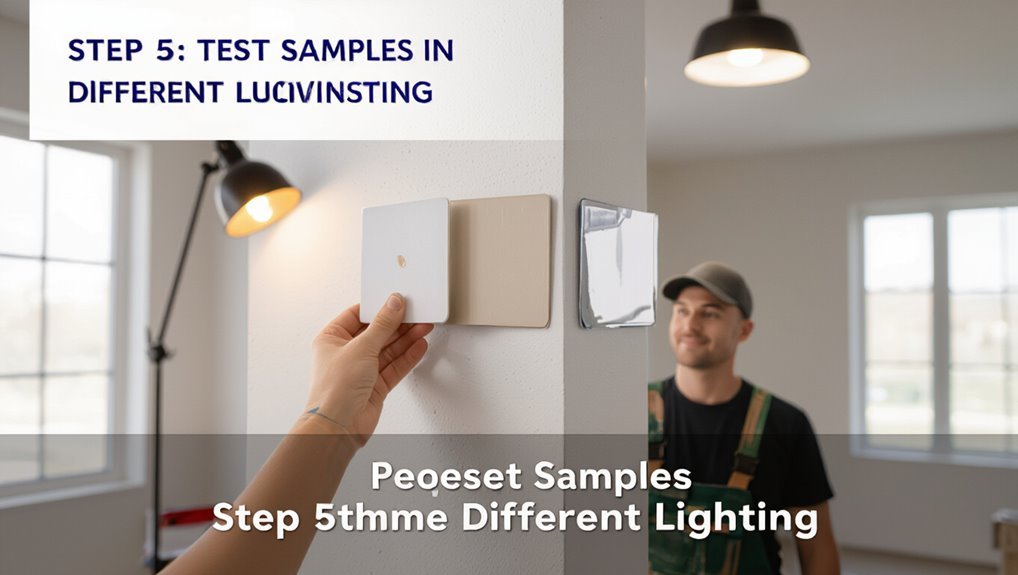
How will the finish really look once light hits it?
Place small painted samples on the ceiling and view them at different times and angles — daylight, artificial light, and low light.
Check for glare, texture emphasis, and color shifts.
Note how shadows change perceived sheen.
Choose the gloss that balances reflectivity and blemish hiding under your typical lighting conditions.
Comparison Pros and Cons of Each Gloss Level for Ceilings
You’ll want to weigh the trade-offs of flat/matte, eggshell/satin, and semi-gloss/gloss for your ceiling to match appearance, durability, and maintenance needs. Below is a quick comparison to help you decide which gloss level fits your room best:
| Finish Type | Main Advantage | Main Drawback |
|---|---|---|
| Flat/Matte | Hides imperfections | Harder to clean |
| Eggshell/Satin | Balanced sheen and cleanability | Shows some flaws |
| Semi-gloss/Gloss | Durable and easy to wipe | Highlights every blemish |
Flat/Matte: pros and cons
If you want a ceiling that hides imperfections and reads subtle and calm, flat (matte) paint is your go-to choice; it absorbs light rather than reflecting it, so blemishes and texture flaws stay out of sight.
You’ll get a non-reflective, cozy finish that masks repairs, but it’s less durable, harder to clean, and may need touch-ups more often in high-traffic areas.
Eggshell/Satin: pros and cons
Think of eggshell or satin as the middle ground between flat and semi-gloss: they reflect a little light so ceilings feel brighter without spotlighting every imperfection, and they’re easier to wipe clean than matte.
You’ll get modest durability for kitchens and hallways, reduced glare, and simpler maintenance, but they still show more texture than flat and won’t be as scrubbable as higher glosses.
Semi-gloss/Gloss: pros and cons
Because semi-gloss and gloss reflect a lot more light, they make ceilings look brighter and are much easier to clean than flatter finishes.
However, they also highlight every bump, seam, and roller mark, so imperfections become more visible.
You’ll enjoy durability and stain resistance in high-traffic or moisture-prone rooms, but you’ll need flawless prep and careful application to avoid emphasizing flaws.
Common Mistakes When Selecting Ceiling Paint Gloss and How to Avoid Them
Don’t pick a high-gloss finish if you don’t want every bump and patch to stand out—too much shine highlights flaws.
Avoid ultra-flat paint in bathrooms or kitchens where moisture needs a wipeable surface, and remember lighting and color change how gloss reads.
Always test samples on your ceiling before committing so you can see finish, color, and glare in the real room.
Choosing too shiny and highlighting flaws
When a ceiling finish is too glossy, it draws attention to every imperfection—cracks, uneven texture, and poorly patched areas become more obvious under light.
You’ll notice glare that emphasizes bumps and roller marks, making surfaces look worse.
Choose a lower sheen to mask flaws, prep thoroughly if you must use higher gloss, and test a small area before committing to the whole room.
Picking too flat for high-moisture rooms
If a near-perfect flat finish can hide bumps in a living room, it won’t hold up the same in bathrooms or kitchens where steam and splashes are common.
You’ll risk mold, peeling, and stains because ultra-flat paints resist cleaning and moisture less.
Choose a satin or eggshell ceiling paint for high-moisture rooms so you can wipe surfaces and maintain durability without obvious shine.
Ignoring lighting and paint color interaction
Because light changes how paint looks, you can pick a gloss that reads wrong once the fixtures are on and the sun moves across the room.
You should consider how artificial and natural light alter sheen and color temperature. High gloss can highlight glare; satin may amplify warmth.
Match gloss to room lighting and finish goals so the ceiling complements, not fights, the overall ambiance.
Not testing samples first
Although a paint can’s label looks convincing, you shouldn’t trust it alone—skip testing samples and you’ll risk ending up with a sheen that reveals texture, shows flaws, or clashes with your lighting.
Test small areas with full-size swatches at different times of day. You’ll see how gloss affects appearance, hide imperfections, and confirm compatibility with room light before committing to a finish.
Best Practices and Tips for Painting Ceilings
Before you paint, fix imperfections, prime appropriately, and smooth the surface so your chosen gloss performs well.
Match your brush or roller and technique to the sheen—flat hides flaws, eggshell and satin handle cleaning better—then follow finish-specific maintenance tips.
Finally, coordinate ceiling, wall, and trim sheens to balance light and hide flaws without creating awkward contrast.
Preparation: repairs, priming, and surface smoothing
Start by inspecting the ceiling for cracks, water stains, loose texture, and nail pops so you know what repairs and priming you’ll need.
Patch holes with joint compound, sand smooth, and remove flaky paint.
Apply stain-blocking primer over water marks and bare drywall. Feather edges for seamless shifts.
Let primers dry fully before painting to guarantee even sheen and adhesion.
Application tips by gloss level (brush/roller choice, technique)
Now that your ceiling’s repaired and primed, pick tools and techniques that match the paint’s gloss—flat and matte hide imperfections but need careful rolling to avoid lap marks.
Eggshell and satin show a bit more sheen, so use a high-quality 3/8″–1/2″ nap roller for even coverage and a good angled brush for cutting in.
Semi-gloss and gloss demand the smoothest application—use a fine 1/4″–3/8″ nap or foam roller and steady, overlapping strokes to prevent streaks, keeping a wet edge and working in consistent sections to maintain uniform sheen.
Maintenance and cleaning recommendations by finish
1 simple routine will keep your ceiling looking its best: match the cleaning method to the finish—flat and matte need gentler, infrequent dusting; eggshell and satin tolerate mild soap and soft sponges; semi-gloss and gloss can handle more regular washing and light scrubbing—so always test a small area first, use nonabrasive tools, and avoid excess water that can stain or loosen paint.
Spot-treat stains, work top-down, and dry thoroughly.
Coordinating sheen between ceiling, walls, and trim
When you’re deciding sheens, think of the ceiling as a backdrop: a flatter finish minimizes glare and hides imperfections, while higher sheens on walls and trim add durability and contrast.
Choose ceiling matte or flat, eggshell or satin for walls, and semi-gloss for trim.
Match undertones and sheen relationships to room use, light levels, and cleaning needs to keep a cohesive, practical look.
Cost and Performance Considerations
You’ll notice price jumps between flat, eggshell, satin, and gloss finishes, and those costs can affect your budget for larger rooms.
Consider how long each finish will hold up—higher-gloss paints often resist stains and clean more easily, which can save you money over time.
Pick gloss when durability and ease of maintenance justify the initial premium.
Price differences by finish and expected longevity
Although higher-gloss ceiling paints tend to cost more upfront, they can save you money over time by resisting stains and needing fewer touch-ups.
Flat and matte finishes are cheaper per gallon but usually demand more frequent repaints in high-traffic or moisture-prone areas.
Choose based on expected wear: gloss lasts longer and cleans easier, while flat hides imperfections but may force earlier repainting and higher lifetime cost.
When higher-gloss is a cost-effective choice
If your ceiling sees splashes, humidity, or frequent cleaning, choosing a higher-gloss paint can cut long-term costs by reducing touch-ups and simplifying maintenance.
You’ll pay more upfront, but the durable, washable surface resists stains and scrubbing damage, lowering repaint frequency.
For bathrooms, kitchens, laundry rooms, or commercial spaces, the trade-off favors gloss—especially where longevity and easy sanitation outweigh initial expense.
Quick Decision Cheatsheet
When you need a fast pick for ceiling paint, use this one-line cheatsheet to match finish to room and condition.
- Use flat for low-traffic, smooth ceilings.
- Pick eggshell for rooms with occasional cleaning.
- Choose satin for moisture-prone areas like bathrooms.
One-line recommendations for common scenarios
To make quick choices about ceiling paint gloss, use these one-line rules tailored to common rooms and needs so you can pick fast and confidently.
For living rooms and bedrooms, choose flat for a soft look and hidden flaws.
In kitchens and bathrooms, use satin for moisture resistance and wipeability.
For basements or high-traffic areas, opt for eggshell or satin for durability.
Frequently Asked Questions (5)
You’ll get clear answers to common concerns like whether you can use the same gloss on walls and ceilings and whether a higher sheen makes a room feel smaller.
You’ll learn which finishes hide stains best and how sheen affects cleaning and maintenance.
You’ll also find out if you can change gloss level without major prep.
Can I use the same paint gloss on walls and ceilings?
Can you use the same paint gloss on walls and ceilings? Yes — you can, but choose wisely.
Flat or eggshell on ceilings hides imperfections and reduces glare, while walls may benefit from eggshell, satin, or semi-gloss for durability and washability.
If you match gloss, expect easier touch-ups but potentially more reflected light and visible flaws on the ceiling.
Will a higher gloss make my ceiling look smaller?
Wondering if a higher-gloss ceiling will make your room feel smaller? A glossy ceiling reflects light and highlights imperfections, drawing the eye upward.
In low ceilings, it can emphasize height inconsistencies, potentially feeling more intimate or slightly compressed.
In well-lit, tall rooms, gloss can add brightness and depth.
Choose based on light, ceiling condition, and the mood you want to create.
Is flat paint better at hiding stains on ceilings?
Although flat paint absorbs light and softens surface flaws, it doesn’t magically erase stains—it’s better at hiding faint, diffuse discoloration but struggles with dark or oily marks.
You can rely on flat sheen for minor, aged-yellowing or water-halo fading, but you’ll need stain-blocking primer and targeted treatments for pronounced spots.
Flat simply masks subtle issues, not serious staining.
How does paint sheen affect cleaning and maintenance?
Since flat finishes hide minor flaws but don’t handle heavy soiling, your choice of sheen directly affects how easy a ceiling or wall will be to clean and maintain.
Higher sheens (eggshell, satin, semi-gloss) resist stains, wipe clean and tolerate scrubbing.
Flat and matte show fewer imperfections but need gentle cleaning.
Pick a sheen based on traffic, moisture and how often you’ll clean.
Can I change gloss level without major prep?
Yes—you can change a surface’s gloss without a full overhaul, but how much prep you’ll need depends on the current finish and the new sheen you want.
Light sanding and cleaning remove shine and improve adhesion for flatter finishes.
For higher gloss, repair flaws, sand smooth, and use a primer or bonding primer.
Test a small area first to confirm results.
