
Best Paint Finish for Doors: What Holds Up and Looks Great Long-Term
You’ll usually want satin or semi-gloss for interior doors because they clean easily, resist scuffs, and hide minor flaws; choose exterior-grade semi-gloss or high-gloss for outside doors to withstand weather and UV. Satin gives a softer look with good durability, while semi-gloss offers maximum washability and toughness in high-traffic spots. Prep, primer, and quality paint matter as much as sheen, and below you’ll find practical tips and product picks to guide your choice.
Best Paint Finish for Doors Quick Answer and What to Expect
For interior doors, go with satin or semi-gloss for easy cleaning and light scuff resistance.
For exterior doors, choose semi-gloss or gloss for superior weather protection and durability.
These finishes balance appearance and practical wear so you’ll get the best long-term results.
Short, Direct Recommendation (Best finishes for interior and exterior doors)
One clear rule: choose satin or semi-gloss for interior doors and high-gloss or exterior-specific semi-gloss for exterior doors—these finishes resist scuffs, clean easily, and highlight trim details.
For most rooms, pick satin for subtlety or semi-gloss for durability; use high-gloss or exterior semi-gloss on outside doors.
If you’re wondering what finish to paint doors, follow that simple split.
One-line rationale for each recommended finish
You picked satin or semi-gloss for interior doors and high-gloss or exterior semi-gloss for outside — now here’s a quick one-line reason for each so you know what to expect.
Satin: hides minor flaws, cleans easily, and offers subtle sheen.
Semi-gloss: more durable, resists scuffs, ideal for trim.
High-gloss: maximum durability and easy cleaning.
Exterior semi-gloss: weather-resistant, sheds moisture.
Why Paint Finish Matters for Doors Basic Understanding
Your choice of finish determines how tough the door will be, how it looks in different lights, and how often you’ll need to touch it up.
It also affects how easy the paint is to apply and repair—smoother, glossier finishes hide fewer flaws but wipe clean more easily.
Think of finishes along a gloss scale from flat to high gloss so you can balance durability, appearance, and maintenance.
How finish affects durability, appearance, and maintenance
Although it might seem like a small choice, the paint finish you pick for a door has a big impact on how long it lasts, how it looks, and how much work it takes to keep up.
Sheen changes scratch resistance, stain hiding, and ease of cleaning; eggshell hides imperfections but needs gentle care, satin balances durability and beauty, while semi-gloss offers the toughest, easiest-to-wipe surface.
How finish affects application and repairability
Beyond durability and cleaning, the finish you choose also changes how a door gets painted and later repaired.
You’ll notice some finishes hide brush strokes and sand less, while others need smoother prep and more coats.
Tougher, glossier finishes tolerate spot-touchups better, blending more easily.
Softer, lower-sheen paints show repairs, requiring careful feathering or full-panel repainting for seamless results.
Gloss scale explained (flat → high gloss)
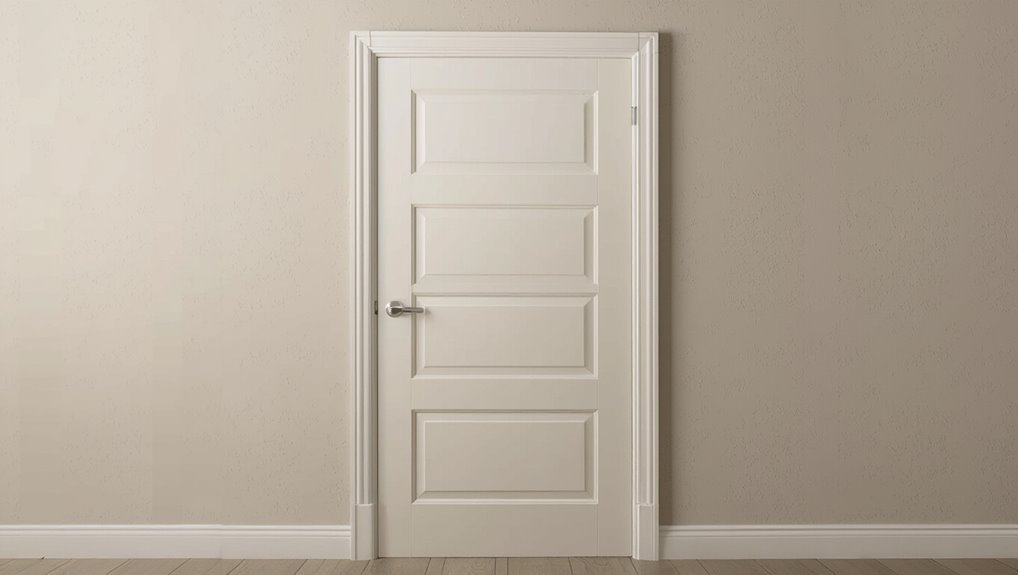
Think of sheen as a sliding scale from flat to high gloss that affects appearance, durability, and how a door handles light and wear.
You’ll choose flat for matte, forgiving walls; eggshell or satin for moderate sheen and easier cleaning; semi-gloss for trims and doors needing durability; and high gloss for maximum toughness and reflection, though it highlights imperfections and shows scuffs more.
Comparison of Paint Finishes for Doors
You’ll find a quick side-by-side table below that compares key metrics for common door finishes so you can judge what fits your needs. Use the compact comparison to weigh durability, sheen, washability, touch-up ease, ideal door type, and cost before you pick a finish. Bottom line: choose satin or semi-gloss for high-traffic doors and eggshell or matte for low-traffic or decorative doors.
| Metric | Notes |
|---|---|
| Durability | Semi-gloss > Satin > Eggshell > Matte |
| Sheen | Semi-gloss (high) vs Matte (low) |
| Washability | Semi-gloss and satin clean best |
| Touch-up | Matte hides brush marks; semi-gloss shows repairs more |
| Ideal door type | High-traffic: semi-gloss/satin; interior decorative: eggshell/matte |
Key metrics in the table (durability, sheen, washability, touch-up, ideal door type, cost)
When choosing a finish, focus on six clear metrics—durability, sheen, washability, touch-up ease, ideal door type, and cost—to compare how each paint performs in real-world use.
You’ll judge durability for high-traffic doors, pick sheen for desired gloss, assess washability for maintenance, note touch-up simplicity, match finish to door material and style, and weigh upfront and long-term cost implications.
Summary takeaway from the comparison
Now that you’ve compared finishes across durability, sheen, washability, touch-up, ideal door type, and cost, you can pick the best balance for your doors:
Choose semi-gloss or satin for high-traffic interior doors—both resist scuffs and clean well; use gloss for trim and exterior doors needing extra protection; opt for eggshell or matte on infrequent-use interiors for a softer look.
Match finish to use and maintenance.
Recommended Finishes by Door Type
For interior doors, you’ll usually pick semi-gloss or satin for durability and easy cleaning, switching to eggshell for lower-traffic rooms.
For exterior doors, choose high-gloss or exterior-grade semi-gloss to resist weather and highlight details, and match finishes to material — metal, fiberglass, or wood — for proper adhesion and protection.
Note that panel, flush, and French doors have different sanding, priming, and sheen considerations, so pick finishes that suit both the door style and substrate.
Interior doors best options and when to choose each
Choosing the right finish for an interior door affects durability, maintenance, and the room’s look, so match the finish to the door material and its use.
For painted hollow-core doors, use satin or semi-gloss for easy cleaning.
Solid wood benefits from satin or oil-based finishes to show grain.
Use gloss sparingly on high-touch doors and matte for low-traffic, decorative panels.
Exterior doors best options and when to choose each
Because exterior doors face weather, wear, and frequent use, pick finishes that protect and suit the door material.
For wood, use exterior-grade oil-based or marine varnish for grain protection, or high-quality exterior acrylic latex with UV inhibitors.
For metal, choose rust-inhibiting primer and gloss or satin enamel.
For fiberglass, use 100% acrylic latex or oil-modified paint designed for flexible substrates.
Panel vs. flush vs. French doors finish-specific notes
Different door styles demand different finishes, so match the coating to the construction:
For panel doors, use semi-gloss or satin to highlight profiles and resist scuffs.
Flush doors benefit from smooth satin for even appearance.
French doors with multiple panes need durable semi-gloss for trim and touch-ups; use slow-drying enamel for smoother brush marks and easier blending around glass.
Metal, fiberglass, and wood doors substrate-specific recommendations
When you pick a finish, match it to the door’s substrate and how the door will be used: metal needs coatings that resist corrosion and abrasion, fiberglass benefits from flexible, UV-stable paints that cling without cracking, and wood rewards breathable, grain-enhancing finishes that shed moisture while highlighting texture.
For metal, use oil-based primers and enamel or alkyd topcoats.
For fiberglass, use 100% acrylics.
For wood, use spar varnish or waterborne urethane.
How to Choose the Right Finish Step-by-Step Decision Guide
Start by evaluating where the door is and how much traffic it gets, since that affects durability needs.
Then pick the sheen and look you want, confirm the finish works with the door material and primer, and consider how easy it will be to clean.
Finally, weigh initial cost against long-term maintenance so you get the best value for your situation.
Step 1: Assess door location and traffic level
Because where your door sits and how often it’s used determine the stress it faces, the first step is to assess location and traffic level.
Note whether it’s exterior or interior, exposed to weather, sunlight, or moisture, and how many hands touch it daily.
High-traffic or exterior doors need tougher, more durable finishes; low-use interior doors can accept softer, easier-to-apply options.
Step 2: Consider desired sheen and look
Now that you know where the door sits and how hard it’ll be used, pick a sheen that matches both function and style.
Choose high-gloss or semi-gloss for trim-like durability and easy cleaning, satin for a balance of resilience and soft reflection, and eggshell or matte for low-sheen, forgiving surfaces in low-traffic rooms.
Consider how light and fingerprints will show.
Step 3: Match finish to substrate and primer
Once you’ve picked a sheen that fits the look and traffic, match that finish to the door’s material and the primer you’ll use so the paint adheres properly and wears well.
Wood, metal, and factory-finished surfaces each need specific primers and compatible sheens to prevent peeling, blotching, or uneven gloss.
Choose oil- or solvent-based primers for metal, stain-blocking primers for tannin-rich woods, and adhesion primers for slick factory finishes.
Step 4: Factor in maintainability and cleaning needs
While you’re choosing a sheen, think about how often the door will need cleaning and how easy that process should be; high-traffic entries, kids’ rooms, and kitchens usually demand harder, scrubbable finishes, while low-use interior doors can get by with softer sheens that show fewer imperfections.
Pick semi-gloss or satin for wipeability, use quality paint to resist stains, and test cleaning methods on a hidden spot.
Step 5: Budget and long-term cost considerations
Anyone choosing a door finish should weigh upfront costs against long-term value: cheaper paints and primers save money today but may need repainting sooner, while higher-quality products and a more durable sheen (like semi-gloss) cost more now but cut maintenance, touch-ups, and replacement frequency over time.
You’ll estimate lifespan, factor labor, and choose durability that fits your schedule and budget.
- Compare product lifespan and warranty
- Include labor and prep costs
- Prioritize finishes that reduce future work
How to Paint Doors for Best Long-Term Results Practical Steps
To get long-lasting results, start by prepping the door—clean, sand, and repair any imperfections—then prime with the appropriate product for your surface.
Pick a brush, roller, or sprayer that suits your chosen finish and apply thin, even coats, allowing proper drying and light sanding between layers.
Finish by following full curing times before rehanging and reinstalling hardware to avoid scuffs or sticking.
Prep: cleaning, sanding, and repairing imperfections (Step 1)
Start by giving the door a thorough clean, because paint only bonds to a surface that’s free of dirt, grease, and other residues.
Wipe with degreaser, rinse, and dry.
Sand smooth with fine-grit paper, focusing on old drips and edges.
Fill dents or gouges with wood filler, sand flush, and remove dust.
Solid prep guarantees a durable, even finish.
Priming: when and what type to use (Step 2)
Once the door’s clean, sanded, and repaired, apply a primer to confirm paint adheres evenly and lasts.
Use a bonding primer for bare wood, patched areas, or glossy surfaces. Choose stain-blocking primer for tannin bleed or knots.
For metal doors, use a rust-inhibiting primer.
Let primer dry fully and sand lightly before topcoat application to guarantee a smooth, durable finish.
Choosing brush/roller/spray for the selected finish (Step 3)
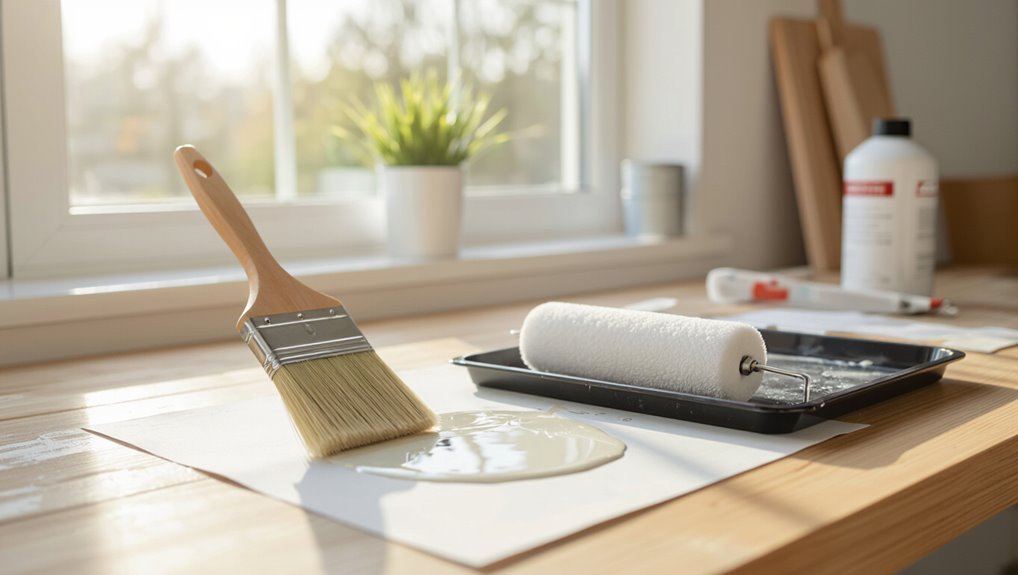
Pick the right application method—brush, roller, or spray—based on the finish you’ve chosen, the door’s profile, and how smooth you want the result to be.
Use a high-quality angled brush for panels and trim, a short-nap foam roller for flat surfaces to minimize texture, and spray for ultra-smooth, factory-like results on smooth or profiled doors.
Consider control, cleanup, and overspray.
Application technique: coats, drying time, and sanding between coats (Step 4)
Apply paint methodically in thin, even coats and allow proper drying and light sanding between layers to build a durable, smooth finish.
Wait manufacturer-recommended dry times—touch dry isn’t full cure—then sand with fine-grit (220–320) to remove dust nibs and raise tooth for the next coat.
Typically two to three coats suffice; keep edges feathered, remove dust with a tack cloth before recoating.
Curing and reinstallation tips (Step 5)
After you’ve sanded and added your final coat, let the paint fully cure before handling or rehanging the door—this can take anywhere from 24 hours to several days depending on paint type and room conditions, so follow the manufacturer’s cure-time guidelines rather than relying on touch-dry.
When reinstalling, tighten hinges gradually, use new screws if needed, protect hardware with painter’s tape, and avoid slamming for a week.
Common Mistakes and Problems with Door Finishes
You’ll avoid most finish failures by prepping properly, since poor surface prep and adhesion issues are the root of many problems.
Pick the right sheen for the room—too flat hides wear and too glossy highlights flaws—and watch for drips, brush marks, or orange peel that usually come from technique or wrong tools.
On exterior doors, keep an eye out for yellowing, cracking, or peeling from UV, moisture, or incompatible coatings so you can address causes and fixes early.
Poor surface prep and adhesion failures
When you skip proper cleaning, sanding, or priming, paint won’t stick and finishes peel, flake, or show brush marks. You’ll see uneven coverage, visible repairs, and premature wear.
Always remove grease, sand glossed surfaces, and use the right primer for material and stain-blocking. Light scuffing and tack-cloth wiping before topcoat improve adhesion and give doors a durable, professional look.
Choosing too-flat or too-glossy for the space
Ever wonder why a door’s finish can feel off even if the paint job itself looks clean?
You might pick a flat finish that hides detail but reads dull in high-traffic areas, or a high-gloss that screams institutional and highlights every imperfection.
Match sheen to function and style: moderate satin for durability and warmth, high gloss for trim accents only.
Drips, brush marks, and orange peel causes and fixes
If you see drips, brush marks, or an orange-peel texture on a door, don’t assume the paint job is hopeless—these flaws usually come from technique, product choice, or environmental conditions and are fixable.
Sand smooth, remove dust, and thin paint per label. Use proper brushes or a HVLP sprayer, apply thin even coats, control temperature and humidity, and allow full dry time between coats.
Yellowing, cracking, or peeling on exterior doors
Because exterior doors take the brunt of sun, rain, and temperature swings, you’ll often see yellowing, cracking, or peeling that signals either product failure or surface-prep mistakes.
Check for inadequate primer, oil-based coats over improper bases, or UV-sensitive varnishes.
Strip and sand to sound substrate, use a high-quality exterior primer and flexible, UV-resistant finish, and follow manufacturer recoat and cure times to prevent recurrence.
Prevention, Maintenance, and Best Practices
Keep your door looking sharp by using simple routines: wipe with a mild cleaner for everyday dirt and use a gentle stain remover for stubborn spots.
When chips or scratches appear, touch them up promptly with matching paint or a fine brush, and consider repainting only when wear is widespread or the finish is failing.
For high-traffic doors, install kick plates or bumpers and use tougher finishes to minimize damage.
Routine cleaning and stain removal techniques
1 simple routine will keep your painted doors looking fresh: wipe them weekly with a soft microfiber cloth and a mild, pH-neutral cleaner to remove dust and surface oils before they build up.
For stains, blot spills immediately, then gently rub with the cleaner.
For grease or sticky residue, use a diluted dish soap solution, rinse, and dry to prevent water spots.
Touch-up tips for chips and scratches
When a chip or scratch appears, act quickly to prevent moisture and dirt from worsening the damage: clean the area, sand any rough edges, and apply a matching touch-up product.
Use fine-grit sandpaper, feather edges, and wipe with solvent. For small nicks use a color-matched pen or brush; for larger areas, fill, prime, and topcoat.
Blend edges and let cures fully before handling.
When to repaint vs. refinish
Although a fresh coat can hide wear, you should refinish rather than repaint when the door’s finish is failing structurally—peeling, deep gouges, or clearcoat breakdown—because refinishing restores adhesion and durability while repainting only masks surface issues.
Repaint for minor scuffs, faded color, or small chips after proper cleaning and light sanding.
Refinish when damage penetrates layers or adhesion is compromised.
Protective measures for high-traffic areas (kick plates, bumpers)
If repainting solved surface wear but the bottom of your door keeps taking hits, add hardware that takes the abuse so your finish won’t.
Install a kick plate sized to cover scuffs; choose stainless or brass for durability and easy cleaning.
Use door bumpers and threshold guards to prevent impact and abrasion.
Fasten securely, inspect periodically, and touch up paint around attachments to avoid corrosion.
Product Selection and Buying Guide
Now that you know how to prep and maintain doors, let’s look at what to buy so your finish lasts.
You’ll get recommendations for paint types and trusted brands for interior and exterior doors, plus primer and topcoat pairings that work best.
I’ll also list the essential tools and supplies so you don’t miss anything when you start.
Recommended paint types and brands for each finish (interior/exterior)
Choosing the right paint for your door comes down to matching finish, durability, and application method to the door’s location and material; interior doors typically benefit from low-VOC acrylic latex in satin or semi-gloss for easy cleaning, while exterior doors need high-quality exterior enamel or 100% acrylic latex with added UV and mildew resistance.
For interiors, try Benjamin Moore Regal Select or Sherwin-Williams ProClassic.
For exteriors, use Benjamin Moore Aura Exterior or Sherwin-Williams Emerald Exterior.
Primer and topcoat pairing suggestions
When you pick a primer and topcoat that work together, you’ll get better adhesion, fewer coats, and a finish that lasts—especially on doors that see frequent use.
Match primer type to substrate: oil-based or bonding primers for dense woods and glossy surfaces, latex primers for drywall or previously painted doors.
Pair oil primers with oil or alkyd topcoats; pair latex primers with waterborne enamel or acrylic latex.
Tools and supplies checklist
1 essential checklist will keep your door-painting project smooth and efficient: gather primers and topcoats matched to your substrate, the right brushes and rollers for the finish, sanding supplies, masking materials, cleaning agents, and safety gear before you begin.
You’ll also want a tack cloth, quality wood filler, and a reliable stirrer.
- 2″ angled brush
- Fine/medium sandpaper pack
- Low-lint microfiber cloths
Cost and Longevity Expectations
You’ll find finishes and materials range widely in price — from budget latex for interior hollow-core doors to premium urethane or oil-based options for solid wood or exterior doors.
Expect high-quality finishes to last several years longer, but factors like weather, traffic, and prep work can shorten that lifespan.
Weigh the upfront cost against durability to get the best return: sometimes paying more now saves on refinishing or replacement later.
Typical price ranges by finish and material
Costs for door finishes vary widely, but you can expect a clear relationship between price, material, and durability:
Latex paints range $20–$60 per gallon and suit interior doors; semi-gloss or satin options cost slightly more.
Oil-based enamels run $30–$80.
Solid hardwood doors add $100–$600 installed; primed MDF doors cost $30–$150.
Specialty finishes and professional labor raise totals accordingly.
Expected lifespan and factors that shorten or extend it
Many painted or stained doors last 10–30 years before a full refinish is needed, but actual lifespan depends on finish type, door material, and how you use and maintain it.
High-gloss enamel and quality exterior-grade stains resist wear; softwoods, high-traffic doors, moisture, and UV shorten life.
Regular cleaning, prompt touch-ups, proper sealing, and weatherstripping will extend longevity and delay refinishing.
ROI: balancing upfront cost vs. durability
While higher-end finishes and durable coatings cost more upfront, they often save you money over the door’s life by reducing repainting and repair frequency.
You should weigh initial expense against expected lifespan: premium enamel or polyurethane can double time between touch-ups.
Calculate payback by comparing material and labor now versus recurring maintenance.
Choose based on traffic, exposure, and your planned ownership horizon.
Case Examples and Scenarios
Think about specific doors and how their use changes your choice: for a high-traffic entry you’ll want a tough, weatherproof semi-gloss with proper prep and primer, while a decorative interior door benefits from a smooth, high-sheen finish for better color depth.
For rental property doors, pick an affordable satin or semi-gloss that balances cost with easy cleanability and quick touch-ups.
I’ll outline the best finishes and step-by-step processes for each scenario next.
High-traffic entry door: best finish and process
If you want an entry door to stand up to heavy use, choose a finish that balances durability, weather resistance, and ease of repair.
Use exterior-grade semi-gloss or satin acrylic latex paint over a properly primed, sanded surface. Apply two coats, allow full cure, and add a clear polyurethane topcoat for extra abrasion resistance.
Repaint touch-ups as needed.
Decorative interior door: best finish for appearance
Want your interior door to be a focal point or just quietly stylish? Choose a satin or semi-gloss for crisp detail and easy cleaning, or go gloss for dramatic trim and reflections.
Use high-quality latex or alkyd enamel for smooth coverage, thin multiple coats, and sand lightly between.
Match sheen to room lighting and hardware for cohesive, intentional design.
Rental property doors: budget + durability strategy
Shifting from decorative choices to rental needs, you’ll prioritize cost, durability, and ease of upkeep over showy sheen.
Choose semi-gloss or satin for high-traffic units—they resist scuffs and clean with a damp cloth.
Use water-based enamel for quick drying, low VOCs, and easy touch-ups.
Stick to neutral colors, batch-paint doors to save labor, and keep a spare can for speedy repairs.
Frequently Asked Questions (FAQ)
You’ll find quick answers here to common concerns like which sheen works best for bedroom doors, whether you can use the same finish inside and out, and how many coats doors usually need.
You’ll also learn which is easier to maintain long-term—satin or semi-gloss—and what prep is required to paint latex over oil-based paint.
Use these FAQs to make faster, more confident finish choices for your doors.
What paint sheen is best for interior bedroom doors?
While both satin and semi-gloss are popular choices, satin is usually the best pick for interior bedroom doors because it balances durability, ease of cleaning, and a soft sheen that hides minor imperfections.
You’ll get enough resilience for frequent contact without a high-gloss look, and touch-ups blend well.
Choose semi-gloss only if you want a glossier, more durable finish for heavy-use rooms.
Can I use the same finish for interior and exterior doors?
Can you use the same finish on both interior and exterior doors? You can, but choose formulas rated for exterior exposure if the door faces weather.
Exterior paints resist UV, moisture, and temperature swings; interior-only finishes may chalk, peel, or yellow outdoors.
For consistent look, match sheen and color, but prioritize durability: use an exterior-grade enamel or acrylic for outside, interior-grade for protected doors.
How many coats of paint do doors typically need?
How many coats does a door usually need? You’ll typically apply two coats of paint after one coat of primer for smooth, durable coverage.
Solid-color doors or darker shades may need an extra coat to hide previous finishes.
Allow proper drying time and lightly sand between coats for adhesion.
For best results, follow manufacturer instructions for your specific paint and primer.
Is satin or semi-gloss easier to maintain long-term?
After you’ve applied the right number of coats and sanded between them, you’ll want a finish that stands up to handling and cleaning.
Satin hides minor flaws and fingerprints better, so it needs gentler cleaning. Semi-gloss is tougher, resists scuffs, and tolerates more aggressive scrubbing without dulling.
For high-traffic doors, semi-gloss is generally easier to maintain long-term.
Can I repaint over oil-based paint with latex and what prep is needed?
Want to repaint oil-based doors with latex? Yes—you can, but prep matters.
Clean the surface with degreaser, sand lightly to dull the shine, and remove dust.
Apply a high-quality bonding primer formulated for oil-to-latex conversion, then topcoat with latex.
Allow proper drying between steps, and test a small area first to verify adhesion and finish match before tackling the whole door.
