
Can You Stain a Deck Over Paint? What Actually Works
You can stain a deck over paint, but only if the paint is firmly bonded and prepped; you’ll need to clean, degrease, scuff-sand glossy areas, and remove any loose or flaking paint. Test adhesion with a tape or cross-hatch peel test; if paint lifts, strip and spot-prime bare wood. Choose a compatible stain or primer, work in small sections, and allow full drying. Keep going to learn the decision steps, product picks, and safety tips.
Quick Answer: Can You Stain a Deck Over Paint?
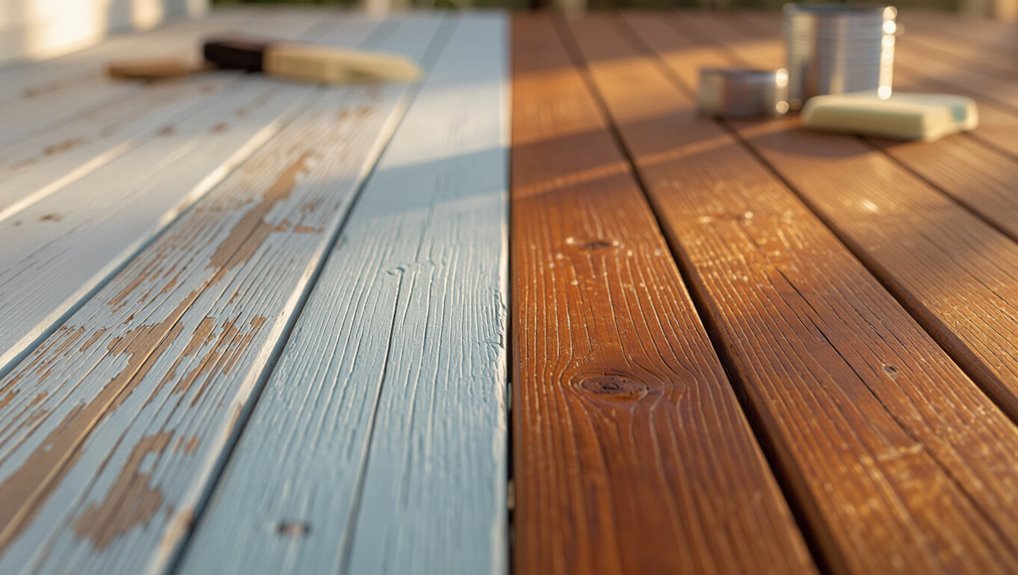
Yes—you can stain a deck over paint, but only with proper prep and the right product.
You’ll assess stain compatibility with the existing coating, roughen slick surfaces, and remove loose paint.
Expect variable results depending on paint durability; previously well-adhered, oil-based paints may hold better than flaky latex.
Results vary with paint condition—well-adhered oil-based coatings fare better than flaky latex when staining over paint
Choose a stain formulated for painted substrates and test a small area first.
Decision Flowchart: Strip, Prime, or Stain Over Paint
Start by checking how well the existing paint is sticking to the boards—if it flakes or peels, you’ll need to remove it.
If the paint is sound but glossy, scuff-sanding and a bonding primer can prepare the surface for stain.
When adhesion is good and the wood is bare or well-prepped, you can apply a compatible deck stain.
Assess Paint Adhesion
Wondering whether you can stain over your painted deck? You’ll first assess paint adhesion and paint compatibility before deciding.
Do quick adhesion tests and inspect for peeling, blistering, or chalking. If failing, strip or prime.
Quick checklist:
- Peel test (edge lift)
- Tape adhesion test
- Look for chalk and flaking
- Note paint type and age
Choose Appropriate Treatment
Now that you’ve checked adhesion and paint type, decide whether to strip, prime, or stain over the paint by following a simple decision flow:
if paint flakes, strip and sand;
if sound but glossy, scuff and prime;
if well-adhered and porous, clean and apply stain.
Compare treatment options, match product selection to surface and climate, and test a small area before committing.
Who This Guide Helps (DIYers, Homeowners, and Pros)
Whether you’re tackling your first weekend project or you manage decks professionally, this guide helps you make the right call about staining over paint.
You’ll get actionable DIY Tips, clear Homeowner Insights, concise Professional Advice, and practical Deck Maintenance steps so you can decide confidently.
- Quick prep steps
- When to repaint instead
- Tools pros use
- Simple upkeep routines
Understand the Key Variables Before You Decide
Before you decide to stain over paint, assess a few critical variables that determine success: the paint type and adhesion, the deck’s wood condition, the previous paint’s age and finish, and how much prep you’re willing to do.
You’ll weigh deck maintenance tips, paint alternatives, staining materials, environmental impact, seasonal considerations, wood protection methods, color matching techniques, and practical deck preparation strategies before starting.
How Deck Paint Differs From Stain Chemically
You’ll want to understand the chemistry behind paint and stain before deciding what to do with a painted deck.
Paints use different binders and solvents and carry opaque pigments that form a surface film, while stains use softer binders, lighter solvents, and translucent pigments that penetrate the wood.
Those differences in pigment/opacity and film formation versus penetration determine adhesion, durability, and whether a stain can bond over existing paint.
Binder And Solvent Types
Think of paint and stain as two different glue-and-liquid systems: paint locks pigment and binder into an opaque film on the surface, while stain carries pigments or dyes suspended in a much thinner binder that soaks into the wood.
You’ll compare binder types and solvent options to decide adhesion and recoatability:
- Acrylic binders vs alkyd binders
- Water vs mineral spirits
- Film-forming vs penetrating
- Drying times and solvent flash
Pigment And Opacity Levels
Because paint’s job is to hide and stain’s is to reveal, they use very different pigment loads and opacity strategies.
You’ll notice paint has heavy pigments that create uniform coverage, while stains use minimal pigments to let grain show.
That pigment interaction alters adhesion and color depth, and the resulting opacity effects determine whether a stain can visually integrate over painted surfaces or clash.
Film Formation Versus Penetration
Pigments and opacity set the stage, but the bigger chemical divide between paint and stain shows up in how they behave on the wood: paint cures into a cohesive film that sits on the surface, while stain is formulated to penetrate fibers and bind within the grain.
You’ll need proper surface preparation because:
- Film formation blocks film penetration.
- Stain bonds to raw wood.
- Paint peels if adhesion fails.
- Stripping restores penetration.
How Wood Type Affects Staining Over Paint
While you can stain over painted decking, the wood species underneath changes how well the stain penetrates, adheres, and ultimately looks.
You’ll assess wood grain, surface texture, and moisture absorption to judge stain compatibility and adhesion quality.
Adjust application technique for better finish durability and color retention.
Environmental factors affect maintenance frequency, so choose products and methods matched to the specific timber.
How Paint Condition Determines Your Options
If the existing paint’s adhesion, thickness, and surface texture are in good shape, you’ll have many more staining options and a better chance of a lasting result.
You should assess paint durability, color retention, and weather exposure before choosing stain.
Consider wood porosity and stain compatibility to predict finish longevity and maintenance frequency.
Assess wood porosity and stain compatibility to forecast how long the finish will last and how often it needs upkeep.
- adhesion
- texture
- exposure
- porosity
How Thick Paint Layers Change the Approach
Once you’ve evaluated adhesion, texture, exposure, and porosity, you’ll need to treat thick paint layers differently than thin or worn coats.
If thick paint peels or blisters, you’ll strip or sand to solid substrate before staining.
For stable, well-bonded thick paint, abrade and use primers compatible with staining techniques that promote penetration and adhesion.
Test a small area first.
How Previous Coatings (Sealants, Varnish) Affect Adhesion
Because sealants and varnishes form distinct surface films, they change how a new stain will grab onto the wood; you’ll need to identify the type and condition of those coatings before proceeding.
Sealants and varnishes create surface films that alter stain adhesion—identify coating type and condition before refinishing.
You’ll face adhesion challenges and must assess coating compatibility.
Consider:
- Film integrity (peeling, cracking)
- Gloss level (smoother = worse bite)
- Oil vs. water base
- Previous maintenance history
Tools You’ll Need to Test Adhesion and Compatibility
Now that you’ve assessed the previous coating’s type and condition, you’ll want a small kit of tools to test whether a new stain will stick and what prep it needs.
Include a scraper, fine sandpaper, utility knife, denatured alcohol, clean rags, painter’s tape, and a small sample of your chosen stain for adhesion testing and compatibility assessment.
How to Perform a Simple Adhesion (Thumb) Test
Want a quick way to see if a stain will bite into the surface? You can use simple adhesion methods with a thumb test to check stain compatibility across paint types and surface conditions.
Want to quickly check stain adhesion? Try a thumb test—clean, press, rub, lift, and observe residue across surfaces.
Try these test variations on small areas before committing:
- Clean spot first
- Press, rub, lift
- Note residue or lift
- Repeat on different paint types
How to Do a Cross‑Hatch Peel Test Properly
When you’re ready to confirm whether stain will adhere, perform a cross‑hatch peel test: cut a 1–2 inch grid through the paint with a sharp blade using the cross hatch technique.
Press strong tape over the grid, then peel sharply. Observe how much paint lifts for adhesion testing.
Repeat in several spots; document results. Use caution and sharp tools.
Interpreting Test Results: When to Proceed or Strip
After you’ve completed the cross‑hatch peel tests in several areas, inspect the results and decide whether you can stain over the existing paint or must strip it first.
Use adhesion testing and evaluate paint compatibility: if tape lifts flakes, strip; if edges hold, you can proceed with prep.
If tape lifts flakes, strip the paint; if edges remain secure, you can proceed with preparation.
Check these:
- % area lifted
- edge adhesion
- paint type
- substrate condition
Preparing Minor Peeling Paint for Staining
Start by removing loose paint and preparing the surface so the new stain can bond properly.
Scrape and sand feathered edges, focus on areas with minor peeling paint, and clean debris and dust thoroughly.
Apply a brightener or mildew cleaner if needed, rinse well, and let dry.
Spot-prime bare wood only if required to guarantee even absorption and adhesion before staining.
Deciding Between Full Strip, Partial Strip, or Spot Prep (Criteria & Examples)
How do you decide whether to fully strip, partially strip, or just spot-prep painted deck boards?
Assess paint condition assessment and adhesion testing strategies, then weigh staining compatibility factors and weather considerations.
Assess paint condition, test adhesion, then consider stain compatibility and local weather before choosing removal or prep methods
Use paint removal criteria to choose:
- full strip options for widespread failure and aging
- partial strip techniques for localized peeling
- spot prep methods for small flakes
- deck surface preparation tied to maintenance routines
How to Strip Paint When Staining Is Required
If you need to remove paint before staining, you’ll choose a method like sanding, chemical strippers, or pressure washing based on how thick and stubborn the paint is.
You’ll also follow a clear surface-prep sequence—clean, strip, neutralize (if you used chemicals), sand, and rinse—so the stain can penetrate evenly.
I’ll walk you through the pros and cons of each removal method and the exact prep steps to get reliable results.
Paint Removal Methods
Strip away old paint thoroughly before you stain a deck, because stains need raw wood to penetrate and adhere properly.
Choose removal techniques based on paint types and surface conditions; consider chemical safety, deck materials, and environmental impact.
Perform adhesion tests.
Balance color matching, maintenance tips, and application methods when planning.
Markdown checklist:
- Chemical strippers
- Heat guns
- Power sanding
- Hand scraping
Surface Prep Steps
Before you start staining, remove all paint down to bare wood so the stain can penetrate evenly and last—this means planning your approach, gathering the right tools, and working systematically across the deck.
You’ll do surface cleaning, inspect deck conditions, perform adhesion testing, consider weather considerations, choose stain selection and color matching, pick tool choices, follow application techniques, and set maintenance strategies before finishing.
How to Chemically Strip Paint Safely
When paint’s stubbornly clinging to deck boards, a chemical stripper can remove multiple layers quickly and with less elbow grease than sanding alone.
You should follow chemical safety and health precautions, choose eco friendly strippers when possible, and confirm surface compatibility before product application. Use effective techniques and test a small area.
- wear gloves
- ventilate well
- neutralize residue
- dispose properly
How to Use Heat and Scrapers Without Damaging Wood
Use gentle heat and a sharp scraper to lift paint without scorching the wood or gouging the fibers.
You should keep heat application low, move the heat source steadily, and test on a small area.
Employ scraper techniques that keep the blade shallow and angled, peeling softened paint rather than digging.
Clean residue with a stiff brush and inspect for thin spots before staining.
How to Power‑Sand Painted Deck Boards Effectively
Power-sand painted deck boards with steady, even strokes, keeping the sander moving to avoid gouges and heat buildup that can burn the wood or raise grain.
Use appropriate grit progression and vacuum frequently. Follow these power sanding techniques and deck preparation tips to guarantee adhesion and smoothness:
- Start with 80–100 grit
- Finish with 120–150 grit
- Sand along the grain
- Inspect for thin paint spots
How to Handle Painted Stair Treads and Railings Differently
Because stair treads and railings get more wear and are seen up close, you’ll need to approach painted stairs differently than flat deck boards: focus on safety, grip, and detail work rather than only large-area sanding.
For stair tread preparation, sand edges, remove loose paint, and add non-slip texture.
For railing considerations, strip glossy paint, sand by hand, and guarantee smooth, splinter-free grip before staining.
Which Primers Bond Best to Painted Wood Before Stain
Before you stain painted wood, you’ll want a primer that actually bonds to the existing finish.
Oil-based primers usually offer the strongest adhesion and stain-blocking, while modern high-adhesion latex primers can work well on less glossy paints and are easier to clean up.
I’ll compare their pros and cons so you can pick the right one for your deck.
Best Bonding Primers
If your deck’s paint is glossy or previously sealed, you’ll need a high-quality bonding primer to give new stain something real to grip.
These primers chemically adhere to existing coatings and create a compatible surface for the stain.
Choose best bonding primers that guarantee effective adhesion. Consider:
- Zinsser Bulls Eye 1-2-3
- Kilz Adhesion
- Rust-Oleum Universal Bonding
- Benjamin Moore Stix
Oil-Based Versus Latex
Which primer bonds best to painted wood before you stain it depends largely on the existing surface and the stain type you’ll use.
You’ll weigh oil based benefits—better adhesion, leveling, and color matching—against latex drawbacks like poor bond to slick paint.
Focus surface preparation, test paint compatibility, pick application methods for staining techniques, and address adhesion challenges with sanding or demo before you proceed.
When to Use a Bonding Primer Versus No Primer
Wondering whether you need a bonding primer or can skip straight to stain? You’ll choose based on surface condition and longevity goals.
Bonding primer benefits include adhesion on slick paint; use proper primer application techniques for best results.
- Peeling or glossy paint
- Heavy wear areas
- Bare spots after sanding
- Smooth, well-adhered paint (skip primer)
Choosing a Stain Type to Use Over Paint
You’ll need to pick between oil-based and water-based stains based on durability, drying time, and how well they bond to painted surfaces.
Consider whether you want a transparent stain that shows wood grain or a solid stain that hides imperfections and acts more like paint.
Your choice will affect adhesion, maintenance, and the final look, so weigh performance against appearance.
Oil-Based Vs Water-Based
When deciding whether to stain over painted wood, the main choice is between oil-based and water-based stains, because each bonds and behaves differently on paint.
Oil-based stains penetrate and adhere well to alkyd paints but can yellow over time, while water-based stains dry faster, resist UV fading, and pair better with latex paints.
- oil based benefits
- water based drawbacks
- drying times, application techniques
- color retention, maintenance considerations, environmental impact, cost comparisons
Transparent Vs Solid Stain
After weighing oil- versus water-based options, you’ll next decide whether to use a transparent or a solid stain over painted wood—each behaves differently on paint and gives a distinct look and level of protection. You’ll weigh transparent advantages like color depth and grain visibility against solid durability for hiding flaws. Choose based on desired appearance, maintenance, and adhesion.
| Type | Look | Maintenance |
|---|---|---|
| Transparent | Shows grain | Lower |
| Semi-solid | Tints grain | Medium |
Why Oil‑Based Stain Behaves Differently on Painted Surfaces
Because oil‑based stains rely on penetrating fibers rather than sitting atop a surface, they act very differently when applied over paint.
You’ll notice oil based characteristics conflict with painted surfaces’ nonporous film, so adhesion and absorption change.
Consider these impacts:
- Poor penetration into paint
- Increased peel risk
- Longer cure time
- Visible sheen mismatches
You’ll need careful prep and testing.
Why Water‑Based Stain Can Be Better for Painted Decks
Although painted surfaces resist absorption, water‑based stains often bond more predictably to them than oil formulas will.
So you’ll get better adhesion, faster drying, and fewer compatibility headaches. You’ll also benefit from improved water resistance and easier cleanup with soap and water.
Expect reliable color retention without solvent odors, quicker recoats, and less risk of lifting the underlying paint when you apply thin, even coats.
How Semi‑Transparent Versus Solid Stain Performs on Paint
When you’re deciding between semi‑transparent and solid stain over painted decking, think about how much of the existing color and grain you want to show through and how much protection you need.
- Semi transparent stain benefits: lets grain peek, softens paint beneath
- Lighter wear visibility, easier touchups
- Solid stain durability: hides flaws, offers stronger UV protection
- Requires more careful prep and periodic recoat
How to Test Stain Color and Absorption on Painted Wood
Pick an inconspicuous test patch on your deck—near a corner or under a bench—so you can see real-world results without risking a visible area.
Apply the stain to a small painted section and let it dry to judge both color shift and how well the paint accepts the stain.
If the stain beads, peels, or soaks unevenly, you’ll know the paint needs more prep or a different product.
Test Patch Location
Where should you put your test patch? Use test patch techniques to pick ideal locations that mirror exposure and finish.
Try these spots:
- Hidden corner under railing
- Near stairs where traffic’s typical
- Sun-exposed plank for UV effects
- Shaded area under furniture
Apply stain samples, let them dry, and compare color and adhesion before committing to the whole deck.
Assess Paint Absorption
How will the stain actually look and hold on your painted deck?
Test small areas using different paint types and note absorption rates.
Use simple testing methods: clean, sand, apply stain, wait.
Record surface conditions and results to guide deck preparation.
Based on outcomes, choose sealing options or strip paint if absorption is low to guarantee even color and durability.
How to Prep the Deck Surface for Stain Application
Start by removing loose debris, dirt, and peeling paint so the stain can bond to a stable surface; use a stiff broom, scraper, or a pressure washer on a low setting to avoid damaging the wood.
Remove loose debris, dirt, and peeling paint so stain bonds to a stable surface; use a broom, scraper, or low-pressure washer
Follow deck maintenance tips and proven surface cleaning techniques.
Then:
- Sweep and vacuum gaps
- Scrape flaking paint
- Clean with a deck cleaner
- Rinse thoroughly and dry
How to Troubleshoot Tannin Bleed and Discoloration
Although tannin bleed and other discolorations can look like permanent damage, you can usually identify and address the cause quickly by isolating the problem areas, testing cleaning methods on a small patch, and choosing the right stain or blocker.
If you spot tannin bleed, scrub with oxygen bleach, rinse, and dry.
Use a stain-blocking primer or solvent-based stain for discoloration prevention before re-staining.
How Weather and Humidity Affect Staining Over Paint
Weather and humidity play a big role in whether a new stain will adhere and cure over paint, so you’ll want to pick a dry, mild window for the job.
You should consider weather impacts, humidity effects, moisture levels, climate considerations, seasonal changes, environmental factors, temperature influence, and drying times.
- Check moisture levels first
- Avoid high humidity days
- Note temperature influence
- Track seasonal changes
How to Choose the Right Day and Temperature Window
Pick a stretch of dry days so the paint and stain can cure without unexpected moisture.
Aim for moderate temperatures—typically between 50–85°F—so the stain spreads and bonds evenly.
Avoid rapid temperature swings or forecasted storms that could trap moisture or prevent proper drying.
Pick A Dry Window
Wondering when to start staining? Pick a dry window to protect your work and prolong deck maintenance. Check local weather considerations and plan ahead.
- Wait for several consecutive dry days
- Avoid high humidity mornings
- Start after dew clears
- Keep forecasted rain out for 24–48 hours
Choose a clear stretch so stain cures evenly and adhesion stays strong.
Aim For Moderate Temps
Because stain cures best in a steady, mild environment, choose a day when daytime temps stay roughly between 50°F and 80°F and nights don’t dip below freezing.
You’ll want temperature control to guarantee even penetration and drying.
Pick a day with low humidity and clear skies to create ideal conditions, and start early so the deck has a full warm, dry period before evening.
Avoid Rapid Fluctuations
Even with moderate temperatures, you’ll want to avoid rapid swings between hot days and cool nights because those shifts can trap moisture or cause the stain to skin over before it penetrates.
Pick a 48–72 hour window with temperature stability for moisture control.
Consider:
- Start mid-morning
- No rain forecast
- Stable humidity
- Consistent daytime temps
How to Apply Stain Over Sanded or Primed Painted Areas
Start by evaluating the sanded or primed areas to confirm they’re clean, dry, and free of loose paint or sanding dust; this guarantees the stain will penetrate evenly and adhere properly.
Use appropriate sanding techniques to smooth edges and feather changes.
Test stain compatibility on a small spot, apply thin coats with a brush or pad, wipe excess, and let each coat dry fully before deciding on additional coats.
How to Use Gel Stains on Painted Surfaces
Before you apply gel stain, you’ll need to clean the painted surface, sand any glossy areas, and remove dust so the stain can grab hold.
Work in small sections and apply the gel with a brush or rag, wiping off excess to control color and avoid streaks.
Finish by letting each coat cure fully before deciding if a second coat or a protective topcoat is needed.
Surface Preparation Steps
Although gel stains can adhere to painted surfaces, you’ll need to prepare the area carefully to get an even, long-lasting finish.
Check deck surface condition and remove loose paint. Test paint compatibility with gel stain on a small patch. Clean, degrease, and dry thoroughly. Sand glossy areas for adhesion.
- Remove loose paint
- Clean and degrease
- Sand glossy spots
- Test compatibility
Applying Gel Stain
Apply the gel stain in manageable sections, working with the grain and keeping a wet edge so the color blends seamlessly across the painted surface.
You’ll test surface compatibility first, then use foam brushes or a rag for even gel stain application.
Work methodically, wipe excess, and let adequate dry time between coats.
Avoid heavy buildup to prevent peeling and guarantee adhesion.
How to Thin or Modify Stain for Better Adhesion
Wondering whether you can tweak a stain to grip painted wood better? You can improve adhesion by responsibly modifying stain viscosity and using stain adhesion techniques — but test first.
Try these steps:
- Thin oil-based stains with the manufacturer’s solvent
- Use water-reducible additives for water-based stains
- Add bonding primer in thin coats
- Always test on a hidden patch for adhesion and appearance
How Many Coats You’ll Realistically Need
How many coats will you actually need depends on the condition of the painted surface, the type of stain you choose, and how much color or protection you want; typically you’ll apply one to three coats, with water-based stains often needing fewer layers and oil-based penetrating stains sometimes benefitting from a second coat for richer color and better wear.
Set realistic expectations: assess adhesion, porosity, and desired finish to plan coat application and time.
How to Blend New Stain With Remaining Painted Sections
When you’re blending new stain into spots with remaining paint, start by matching color and tone so the patched areas don’t stand out.
Feather your brush or rag at the edges to create smooth blends between the old paint and new stain.
Always test on a small hidden area first to confirm match and adhesion before treating larger sections.
Match Color And Tone
Want the new stain to sit seamlessly next to painted boards? You’ll use color matching, tone adjustment, and stain selection to achieve visual cohesion and aesthetic harmony.
Check paint compatibility, test small areas, and tweak layers for finish uniformity.
- Test swatches
- Adjust pigment
- Layer gradually
- Compare in daylight
Feather Edge Transitions
Although you’re keeping some painted boards, you can make the change to new stain look seamless by feathering the edges so the change reads as a gradual shift rather than a hard line.
Use feather edge techniques: thin coats, a dry brush, and light sanding at the junctions.
Work outward from paint into stain, blending tones for achieving seamless shifts without obvious borders.
Test Small Hidden Area
After feathering the edges, you’ll want to try the stain on a small, hidden board to see how it reads against the painted sections.
Use a test area in a hidden location to perform paint assessment and compatibility checks, focusing on adhesion factors and surface evaluation.
Try these test methods and staining techniques:
- Check paint compatibility
- Inspect adhesion factors
- Note surface evaluation
- Confirm deck preparation
How to Deal With Flaking Paint After Staining
If paint is flaking after you’ve stained the deck, don’t panic—you can still salvage the surface by removing loose paint, preparing the wood, and choosing the right stain or sealer.
Scrape and sand to sound wood, clean debris, and spot-prime bare patches. Use a penetrating stain or clear sealer compatible with remaining paint.
Address flaking paint promptly to protect and simplify deck maintenance.
How to Maintain a Stained‑Over‑Paint Deck Long Term
You should set a regular inspection routine to catch peeling, mold, or water damage early.
Clean the surface annually and spot-refinish worn areas so the stain and paint layers stay protective.
Also keep water off the deck with proper drainage, sealed gaps, and covered furniture to prevent moisture problems.
Regular Inspection Routine
A simple, consistent inspection routine will catch problems before they spread, so check your stained-over-paint deck at least twice a year and after any severe weather.
Use these deck maintenance tips and set a clear inspection frequency:
- Look for peeling, bubbles, or cracking paint
- Probe for soft spots or rot
- Check fasteners and fittings
- Note water pooling or drainage issues
Clean And Refinish
Start by stripping loose paint and debris so the stain can bond to sound wood; you’ll need to clean thoroughly, sand any glossy spots, and address damaged boards before applying a new finish.
Afterward, rinse, let dry, and test a small area.
Follow deck maintenance tips: recoat as needed, choose compatible paint alternatives if patching, and keep a simple inspection schedule to catch wear early.
Protect Against Moisture
When you’ve stained over paint, keeping moisture out becomes the top priority to prevent peeling and rot; you’ll focus on sealing options and moisture barriers to boost weather resistance and water repellency.
Use protective coatings and wood treatment, monitor environmental factors, and schedule seasonal maintenance.
- Inspect seams and caulking
- Reapply clear sealers yearly
- Fix drainage promptly
- Improve ventilation for surface durability and stain longevity
How to Spot‑Repair Without Redoing the Whole Deck
If only a few boards or small patches show peeling paint or worn stain, you don’t have to redo the whole deck—spot repairs can restore appearance and protection quickly and with less cost.
Inspect affected areas, sand to sound wood, clean, and use compatible primer or stain to address paint compatibility issues.
Blend edges, replace badly rotted boards, and follow simple deck maintenance tips for longevity.
How Lifespan Compares: Staining Over Paint vs Stripping Then Staining
Although staining directly over paint can save time, it usually shortens the lifespan of the finish compared with stripping down to bare wood first.
You’ll see a clear lifespan comparison: stain over paint often peels sooner, while stripped wood accepts stain better for longer stain durability.
Consider these factors:
- Adhesion risk
- Moisture trapping
- Maintenance frequency
- UV resistance
How Costs Compare for Each Option
When you weigh staining over paint versus stripping and restaining, material and labor costs can be quite different.
You’ll also need to account for prep and repair expenses if the painted surface needs sanding, patching, or primer.
Finally, consider long-term maintenance costs—one route may save you now but cost more over time.
Material And Labor
Comparing material and labor costs for staining a deck over paint versus stripping and refinishing it starts with the surface prep: you’ll pay less in materials for stain alone, but labor can spike if you need to sand or chemically strip painted boards first.
Consider:
- material costs and tool requirements
- labor estimates and project timelines
- safety considerations and maintenance schedules
- finish durability and long‑term value
Prep And Repair Costs
Now let’s look at prep and repair costs, since surface condition drives much of the price difference between staining over paint and stripping first. You’ll pay less if you stain over sound paint; stripping, sanding, and replacing rotten boards raises costs. Use deck maintenance tips and cost saving strategies like targeted repairs and DIY prep to minimize expenses.
| Option | Typical extra cost |
|---|---|
| Stain over paint | Low–moderate |
| Strip & refinish | High |
Long-Term Maintenance
Because painted decks usually hide wood problems, you’ll spend less up front if you stain over sound paint but likely pay more over time for touch-ups and more frequent recoating.
A freshly stripped and refinished deck costs more now but often needs less maintenance and patching down the road. You should weigh deck longevity strategies and maintenance frequency:
- Short-term savings, higher long-term touch-ups
- Higher initial cost, lower ongoing care
- Time and labor vs. material costs
- Predictable maintenance schedule reduces surprises
How DIY Timelines Stack Up Versus Hiring Pros
If you’re juggling weekend time and a tight schedule, expect a DIY deck-staining project over paint to take considerably longer than hiring pros: you’ll spend hours on prep—scraping, sanding, and cleaning—then wait for multiple coats and dry times.
Whereas a crew can streamline each step and finish in a fraction of the days.
You’ll weigh DIY timelines, professional costs, project complexity, skill assessment, long term benefits, material choices.
When to Call a Pro for Paint Removal or Staining
When should you call a pro for paint removal or staining? You should hire professional services if the job involves extensive old paint, structural rot, tricky access, or time constraints.
If peeling, rot, tricky access, or tight timelines threaten the job, call a pro for safe, fast, lasting results.
Pros offer advanced paint removal techniques and guarantees. Consider calling them when you need speed, safety, or a long-lasting finish.
- Extensive peeling
- Rot or structural issues
- Tight timelines
- Hard-to-reach areas
Common Mistakes That Ruin Stain Adhesion
Although you can save time by skipping prep, that’s the fastest way to make stain fail—poor surface cleaning, remaining paint, and excessive moisture all prevent proper adhesion.
You’ll also ruin results by ignoring stain compatibility with existing finishes, applying over slick glossy paint, or staining without thorough surface preparation.
Skipping sanding, testing, or adequate drying leads to peeling, blotches, and shortened lifespan.
Environmental and Safety Considerations for Paint Removal
Before you strip old paint, consider lead paint hazards and test if your deck was painted before 1978.
Don’t overlook chemical stripper risks—use proper PPE and choose less toxic options when possible.
Follow local waste disposal protocols for paint chips and used solvents to protect people and the environment.
Lead Paint Hazards
Because older paint can contain lead, you need to treat any surface-removal project as a potential health risk and plan accordingly.
You should prioritize renovation safety, schedule home inspections, and recognize lead paint health risks before scraping.
Follow precautions:
- Test surfaces for lead
- Contain dust and debris
- Wear PPE and respirators
- Notify occupants and vacate during work
Chemical Stripper Risks
When you use chemical strippers to remove paint, you’re trading physical effort for exposure to hazardous solvents and caustic agents that can harm you and the environment; proper ventilation, spill control, and disposal are essential. You must follow safety precautions to limit chemical exposure. Visualize risks:
| Substance | Effect |
|---|---|
| Solvent | Respiratory irritation |
| Caustic | Skin burns |
Waste Disposal Protocols
Using chemical strippers means you’ll generate hazardous waste that can’t just be rinsed into gutters or put in regular trash; you need to handle leftover solvent, spent stripper, and paint chips in ways that protect people and waterways.
You must follow local waste management rules and approved disposal methods:
- Seal and label containers
- Use licensed hazardous waste pick-up
- Avoid storm drains and soil contact
- Keep materials ventilated and away from ignition
How Local Codes and Lead‑Paint Rules May Apply
Local building codes and federal lead‑paint regulations can affect whether and how you can apply a stain over an existing painted deck, so you should check them before starting work.
Confirm local regulations about disturbing lead paint, follow safety guidelines for containment and PPE, and consider the environmental impact of strip‑outs or runoff.
Obtain permits if required and document compliance.
Product Recommendations for Staining Over Paint
Before you pick products, make sure you’ve complied with any codes or lead‑paint rules that affect prep and safety.
Choose primers and stains based on paint types and stain compatibility, assess surface conditions, and plan deck preparation.
Consider product durability, application techniques, maintenance tips, and color matching.
Consider durability, proper application, upkeep schedules, and color coordination to ensure lasting, attractive results.
- Hybrid stain/primer
- Oil-based bonding primer
- Semi-transparent stain
- UV-resistant topcoat
Real Homeowner Case Studies and Before/After Scenarios
When you walk through these real homeowner case studies, you’ll see practical decisions, common mistakes, and effective fixes that help you decide whether staining over painted deck boards will work for your situation.
You’ll read homeowner experiences showing prep choices, adhesion outcomes, and maintenance.
Before/after photos reveal how deck aesthetics improved or worsened, helping you weigh risks, costs, and realistic expectations for your own deck.
Checklist to Prepare Your Deck Today
Those homeowner stories highlight real-world pitfalls and fixes, so now you can take concrete steps to get your deck ready for staining today.
You’ll follow deck maintenance tips and proven surface preparation techniques to guarantee adhesion and longevity.
- Inspect boards for rot or loose nails
- Clean with a deck cleaner or mild detergent
- Sand peeling paint or rough spots
- Apply appropriate primer or deck stain
Frequently Asked Questions
Can Staining Over Paint Affect Nearby Landscaping or Concrete?
Yes — staining over paint can runoff and stain concrete or harm plants, so you’ll need paint adhesion checks and landscaping protection like tarps, drop cloths, and gentle cleaners to prevent damage and guarantee proper adhesion on the deck.
Will Staining Over Paint Change Slip Resistance of Deck Surfaces?
Yes — staining over paint can alter slip resistance: you’ll often change surface texture and gloss, which can make it slicker or grippier. Test small areas and choose non-slip additives or textured coatings to maintain traction.
Can I Apply Clear Coat Over Stain on Previously Painted Boards?
Yes — you can apply a clear coat over stain on previously painted boards if stain compatibility is confirmed. You’ll prep the deck by cleaning, sanding, testing adhesion, and ensuring proper cure times before sealing for best results.
How Do Warranties on Painted Decks Affect Staining Decisions?
Warranties often limit refinishing options, so you’ll check warranty limitations first; if paint adhesion was guaranteed, staining might void coverage, so you’ll get manufacturer approval or test adhesion before altering finishes to avoid denied claims.
Are There Indoor Air Quality Concerns When Sanding Painted Deck Boards?
Yes — you’ll face indoor air quality risks when sanding painted deck boards. Use dust-reducing sanding techniques and proper paint removal methods, run ventilation, wear a HEPA respirator, and contain dust to avoid inhaling lead or paint particles.
Conclusion
If your deck’s painted, you can’t just slap stain over it and expect lasting results—you’ll need to test, prep, or strip first. Like tuning an instrument before a performance, take the time to evaluate adhesion, surface condition, and local lead-paint rules so your finish sings instead of peeling. Choose the right primer or a stain designed for painted surfaces, follow the checklist, and you’ll get a durable, attractive deck that holds up season after season.
