
Does Heat Make Paint Dry Faster
Yes—heat usually makes paint dry faster because it speeds solvent and water evaporation and raises reaction rates in some coatings, but you’ve got to be careful. Use moderate, even warmth, good airflow and lower humidity to help thin coats dry without trapping solvents. Avoid blasting heat or close heaters that cause skinning, blistering, sagging or uneven cure, especially on thick or sensitive finishes. Keep this in mind if you want details on safe methods, paint types and risks.
Does Heat Actually Make Paint Dry Faster?
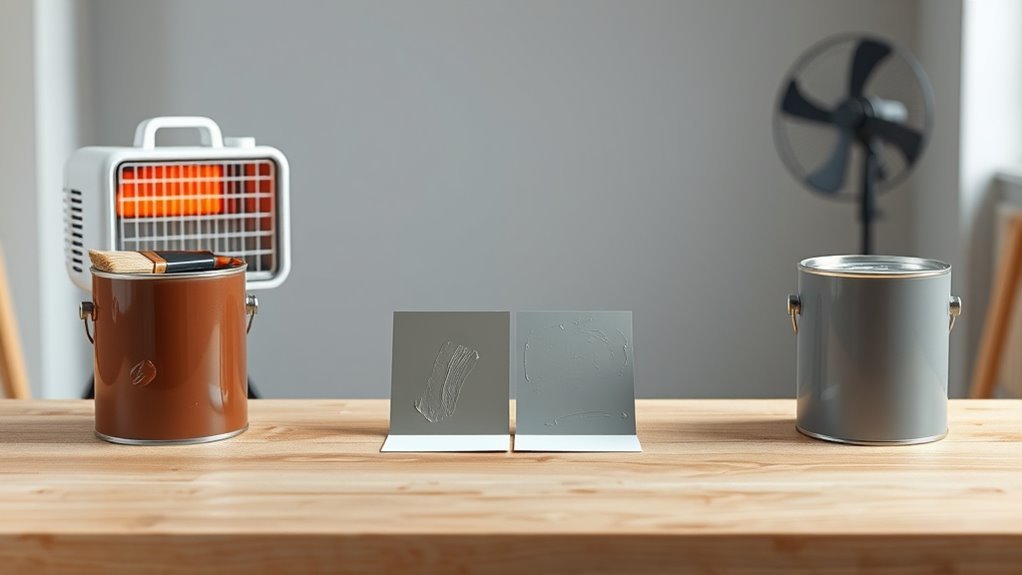
If you turn up the heat, paint will usually dry faster because higher temperatures speed up the evaporation of water and solvents and increase the chemical reaction rates in some coatings.
You’ll notice latex and waterborne primers dry quicker as molecules move faster, but heat’s effect varies with paint chemistry: solvent-based enamels rely more on solvent evaporation, while two-component systems cure via chemical crosslinking less tied to ambient warmth.
Drying catalysts and formulation additives can amplify temperature effects, yet too much heat can trap solvents or cause skinning.
You should consider ventilation and manufacturer specs, since outcomes depend on formulation, humidity, and substrate.
How to Speed Drying Safely (Quick, Practical Steps)
When you need paint to dry faster without risking finish quality, combine safe temperature control, increased airflow, and humidity reduction while following the manufacturer’s instructions.
Work in a clean, dust-free space and use thin, even coats—that painting techniques tip speeds solvent release and promotes uniform drying.
Work in a dust-free area and apply thin, even coats to speed solvent release and ensure uniform drying.
Raise room temperature moderately with a thermostat or space heater, keeping the heat source distant to avoid blistering.
Use fans to circulate air, not direct blasts onto wet paint.
Lower humidity with a dehumidifier or A/C.
Allow recommended flash times between coats, and remember speeding drying too aggressively can harm paint longevity.
How Temperature, Humidity, and Airflow Affect Drying vs Curing
Because drying and curing rely on different chemical processes, temperature, humidity, and airflow affect them in distinct ways you should understand: higher temperature and airflow speed solvent evaporation and surface set (drying).
While curing—which often requires chemical cross-linking or solvent outgassing—depends on sustained, moderate warmth and controlled humidity to complete beneath the surface.
You should avoid extremes: very high heat or low humidity dries the surface too fast, risking surface cracking and trapped solvents, while high humidity slows both processes and can cause tacky finishes.
Balanced airflow helps evaporation without promoting color fading or uneven cure, so monitor conditions.
How Latex, Oil, Lacquer, and Enamel Respond to Heat
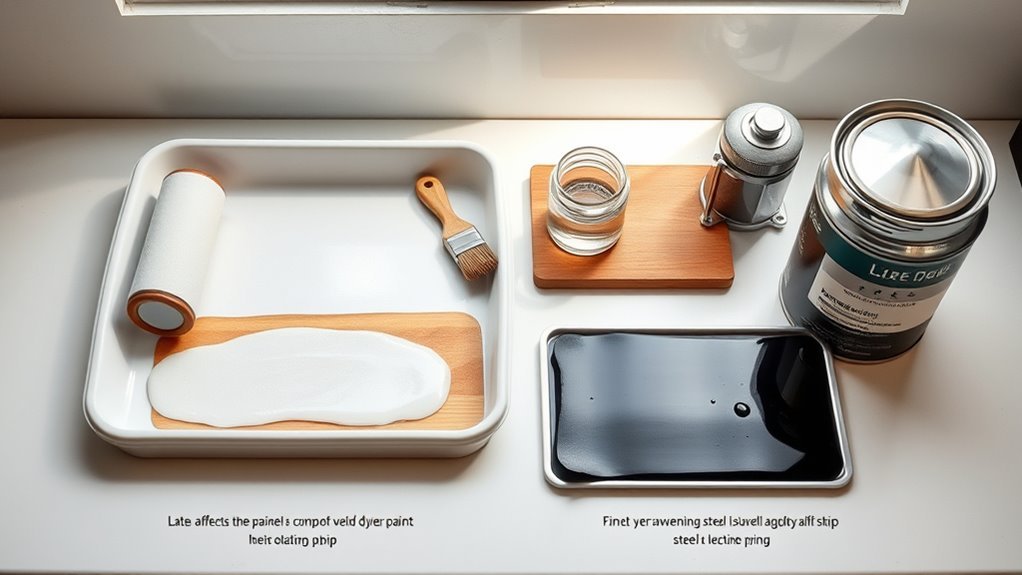
Although all paints respond to heat by changing how fast solvents evaporate and resins flow, each type—latex, oil, lacquer, and enamel—has its own thermal limits and failure modes you should watch for.
You’ll find latex (water-based) speeds up evaporation but can skin or blister if heat drives moisture out unevenly; paint formulation governs flexibility and drying time.
Oil paints cure via oxidation, so warmth shortens surface tack but won’t fully cure faster; thick layers risk wrinkling.
Lacquer dries very quickly with heat because solvents flash off, while enamel benefits modestly yet can sag if too hot for its formulation and film thickness.
Risks of Using Heat and When Not to Use It
If you blast heat at a freshly painted surface, you can speed drying—but you’ll also raise the risk of skinning, blistering, cracking, sagging, or discoloration depending on the paint type and layer thickness.
You should weigh Temperature effects against desired finish: high heat evaporates solvents fast, altering Paint consistency and trapping solvents under a skin. Avoid forced heat when coating is thick, when humidity’s low, or with solvent-sensitive finishes like oil and lacquer.
Use gentle warmth, ventilation, or controlled drying tents instead.
Consider these warnings:
- Thick layers trap solvents
- Fast surface cure causes skinning
- Solvent buildup creates blisters
- Heat worsens uneven sheen
Frequently Asked Questions
Can Added Heat Change Paint Color or Sheen?
Yes — you can see color stability issues and sheen alteration when you add heat; high temperatures can yellow pigments, alter binders, and change gloss, so you’ll want controlled curing to preserve original finish.
Is It Safe to Use Household Heaters Near Fresh Paint?
Like babysitting a slow cooker, it’s generally safe to use household heaters near fresh paint if you regulate temperature and avoid hotspots; you’ll speed paint curing but risk uneven sheen or bubbles if you overheat or dry too quickly.
How Long Before Painted Furniture Can Be Reupholstered?
Wait at least 24–48 hours before reupholstering, though fuller curing for color durability and certain painting techniques can take up to 7 days; you’ll avoid tackiness and guarantee adhesion by letting paint fully harden first.
Does Heat Affect Paint VOC Off-Gassing Duration?
By and large, yes — you’ll find VOC release speeds up with higher paint temperature; like a steampunk clockwork, warmer conditions accelerate off-gassing, but ventilation, paint chemistry and humidity still control total VOC-release duration.
Can Heat Speed up Primer-To-Paint Recoat Times?
Yes — you can use heat to speed primer-to-paint recoat times, but you’ll want proper surface preparation so paint adhesion isn’t compromised; controlled warmth accelerates curing, yet avoid excessive heat that causes blushing or improper bonding.
Conclusion
Yes, heat usually speeds paint drying — but don’t start a bonfire in your living room. You can gently warm the room, boost airflow, and lower humidity to get paint tack-free faster, yet remember drying ≠ curing. Some finishes hate heat and will misbehave if rushed, so pick your battles: use mild warmth for latex, skip the pyrotechnics for oils and enamels, and let patience finish the job while you pretend you didn’t rush it.
