
How Long Does It Take to Dry Paint
How long paint takes to dry depends on type, thickness, and conditions: latex (acrylic) is touch-dry in about 1–2 hours and can be recoated in 2–4 hours, while oil-based stays tacky 6–8 hours and usually needs ~24 hours before recoating; full curing can take 7–30+ days. Thin, well-ventilated coats dry fastest; heavy or humid conditions slow you down. Keep this in mind if you want tips on testing dryness, speeding cure, and avoiding common problems.
Quick Answer: When Paint Is Safe to Touch, Recoat, and Use
While drying times vary by paint type and conditions, you can generally touch latex paint after 1 hour, recoat after 2–4 hours, and use the painted surface for light handling within 24 hours.
You’ll check paint color carefully once tack is gone, since true hue shows as it dries. Temperature, humidity, and ventilation speed drying, so plan accordingly.
Gloss level and finish sheen affect perceived dryness and durability—higher sheen often feels dry sooner but needs proper cure time.
For heavy handling or placing items, wait the full recommended period on the can to avoid marks or adhesion issues.
Drying vs. Curing: What’s the Difference and Why It Matters
Because drying and curing are different stages of the same process, it’s important you know which one you’re dealing with: drying is the surface water or solvent evaporating so paint feels dry to the touch, while curing is the chemical hardening that gives the film its full durability and resistance.
You’ll judge workability by drying, but expect full strength only after curing completes via Paint chemical interactions like crosslinking or polymer rearrangement.
Temperature, humidity, and ventilation affect both, and improper conditions can compromise finish and increase Environmental impact through prolonged VOC emissions.
Plan projects around curing, not just surface dryness.
Typical Dry and Cure Times: Latex, Acrylic, Oil-Based
When you’re planning a painting job, knowing typical dry and cure times for latex, acrylic, and oil-based paints helps you schedule recoats, handling, and full use of the surface.
Latex and water-based acrylics usually feel dry within 1–2 hours, allow recoats in 4–6 hours, and reach full cure in about 7–30 days depending on humidity and ventilation.
Oil-based paints tack over in 6–8 hours, accept recoats in 24 hours, and fully cure in 7–30 days or longer.
Remember that paint color and finish sheen can subtly affect perception of dryness; glosses often show imperfections sooner than flat finishes.
How Coat Thickness and Number of Coats Change Drying and Curing
Thicker coats take longer to dry on the surface and much longer to cure through, so you’ll slow the overall process by applying heavy layers.
If you put on multiple thin coats instead of one thick one, each layer will dry faster and cure more evenly, but you still need to allow proper cure time between coats.
Keep in mind that “dry to the touch” isn’t the same as fully cured—handling and stress resistance come much later.
Coat Thickness Effects
If you apply paint in a heavier layer or add multiple coats, you’ll slow both surface drying and full curing because solvents take longer to escape and cross-linking reactions need more time to reach the substrate.
Thicker wet films trap solvents, raising tack time and increasing sensitivity to dust or runs. You should expect extended recoat intervals and longer wait before handling.
Thicker coats can alter paint texture, making it feel soft or uneven until fully cured, and they may promote color fading if UV protection is compromised while the film remains immature.
Plan thinner passes for faster, more durable results.
Number Of Coats
Although adding multiple coats can improve coverage and durability, each extra layer increases overall drying and curing time because you’re stacking more solvent-laden film that must release volatiles and cross-link before the system stabilizes.
You should apply thin, even coats and wait recommended intervals; rushing causes trapped solvents and tacky surfaces.
Darker paint color absorbs more heat, which can speed surface drying but not full cure, so follow manufacturer wait times.
High-gloss or satin finish sheen shows imperfections, so you may need additional light coats—each adds time.
Track total coats and ambient conditions to plan realistic completion timing.
Drying Versus Curing
Because drying and curing are separate chemical processes, you need to think about how coat thickness and the number of coats affect each one differently. Thicker coats dry slower because solvents or water evaporate more slowly.
While drying involves the evaporation of solvents or water, curing—the chemical crosslinking—can be delayed even after surface dryness. Adding coats compounds this: each layer increases thickness and can trap solvents below, extending both dry and cure times.
Paint formulation matters; oil, latex, and alkyd resins cure and dry by different mechanisms. Environmental factors like temperature, humidity, and ventilation interact with thickness and coats, so apply thinner coats and allow full cure before stress.
How Surface Type Affects Drying (Wood, Metal, Drywall, Masonry)
When you paint different materials, drying times can change a lot — wood soaks up oil and waterborne paints, metal often needs primers and can cool surfaces, drywall absorbs finish coats unevenly, and masonry’s porosity lets moisture linger.
You’ll need thorough surface preparation to remove dirt, oils, and loose particles so paint adhesion is reliable. Sanding and priming wood controls soak-in; etching or priming metal prevents peeling; sealing drywall evens absorption; and using masonry primer or breathable coatings helps trapped moisture escape.
Match primer and paint to substrate, test a small area, and plan longer drying for porous surfaces.
How Temperature and Humidity Speed Up or Slow Drying
If you raise the temperature and lower the humidity, paint will dry faster; cooler, more humid conditions slow the chemical and evaporative steps that cure most coatings.
You’ll notice solvents evaporate quicker and film formation completes sooner when warmth and low moisture accelerate reactions.
Conversely, high humidity traps moisture, extending tack time and risking clouding or poor adhesion.
You can use paint additives and specialized drying agents to tweak performance in marginal climates, but they don’t replace appropriate conditions.
Monitor manufacturer temperature and relative humidity ranges, and adjust timing between coats accordingly so you don’t compromise finish or adhesion.
How Ventilation and Airflow Improve Drying and Curing
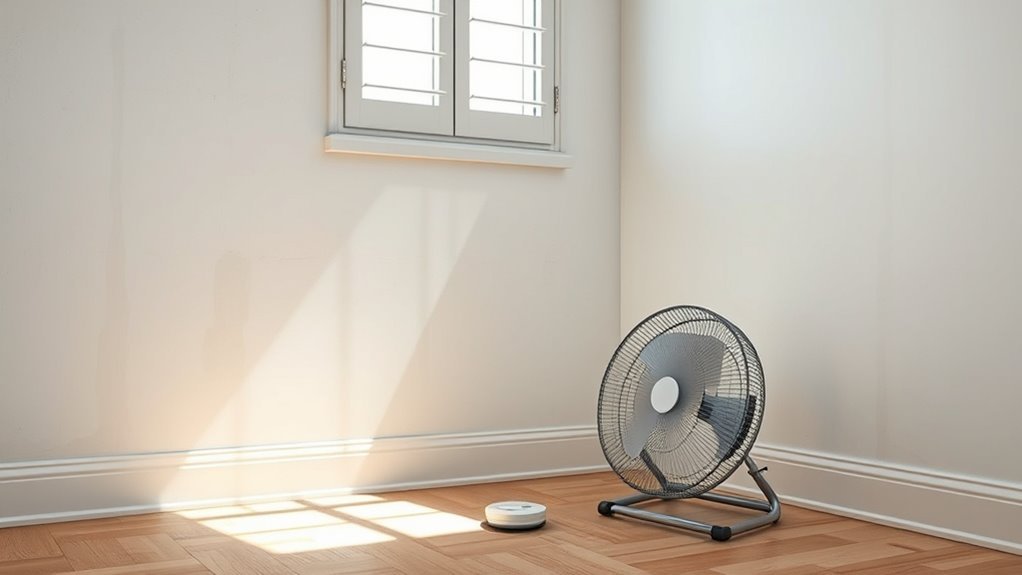
Although not as visible as temperature or humidity, ventilation and targeted airflow play a big role in drying and curing by carrying away solvent-laden air and supplying fresh oxygen where needed. You can boost ventilation efficiency by positioning fans to create consistent airflow patterns that sweep vapors away from the wet surface. Cross-ventilation shortens tack time; gentle, even airflow prevents skinning or dust attraction. Monitor for drafts that cause uneven curing. Use extractor fans or open windows strategically, and avoid blasting high-speed air directly onto paint. Visualize flow with a simple checklist:
| Source | Effect |
|---|---|
| Window | Fresh intake |
| Exhaust fan | Removes solvents |
| Box fan | Circulates air |
| Door gap | Passive flow |
When to Recoat, Tape, or Handle Painted Surfaces
Know the right wait times before recoating so your next layer bonds instead of peeling.
You’ll also want to wait until paint is tack-free before taping to avoid lifting fresh edges.
Only handle surfaces when they’re fully cured for durability, not just dry to the touch.
Recoat Timeframes
When you’re planning the next step—whether recoating, applying tape, or handling a freshly painted surface—timing matters because it affects adhesion, finish, and durability. You should wait based on paint type: latex typically accepts a recoat in 2–4 hours, oil-based in 24 hours.
Check tackiness; if paint lifts, wait longer. Light sanding between coats improves paint texture and helps with perfect color matching.
For high-humidity or low-temperature conditions, add extra drying time. When handling, wear gloves and avoid pressure until fully cured.
Always follow manufacturer guidelines and test a small area before proceeding with full recoats.
When To Tape
If you’re masking off edges or adding trim after painting, wait until the paint is dry to the touch but not fully cured—usually after the initial recoat window for your paint type—so the tape won’t pull up fresh paint or leave jagged edges.
Consider paint sheen and surface preparation before taping; shinier sheens may show lifts more.
Use gentle, low-tack painter’s tape and press edges firmly.
- Test a small corner first to confirm adhesion and no lifting.
- Apply tape at a 45° angle for crisp lines.
- Remove tape within the tacky-to-dry window, pulling back slowly.
- Recoat only after tape removal if needed.
Handling Dry Paint
Although paint may feel dry to the touch, you should still confirm its readiness before recoating, taping, or handling—different formulas and conditions change the tack window and curing time. Check manufacturer times, test a corner, and wait longer for darker paint color or high-gloss finish options. When you recoat, lightly sand between coats for adhesion. Use low-tack painter’s tape and remove it within the recommended window to avoid lifting. For handling, wear gloves until cured. Quick reference:
| Action | Wait Time | Tip |
|---|---|---|
| Recoat | 2–24 hrs | Sand if needed |
| Tape | 1–48 hrs | Low-tack tape |
| Handle | 24–72 hrs | Gloves recommended |
How to Test Paint Dryness and Full Cure at Home
Before you move furniture back or apply a topcoat, you’ll want to confirm the paint’s dry-to-touch, recoat-ready, and fully cured stages with a few simple tests you can do at home. Check paint texture and color matching visually; fresh paint should be even, without tack or streaks, and the hue consistent under normal light.
- Touch test: press a clean fingertip gently—no tack means dry-to-touch.
- Tape test: apply low-tack tape, pull sharply—no paint lift means recoat-safe.
- Scratch test: use a fingernail lightly to check surface hardness.
- Time/log: record temperature/humidity; cure varies by conditions.
Common Problems From Premature Handling : Causes and Fixes
Now that you can test for dry-to-touch, recoat-ready, and full cure, watch what happens when you handle paint too soon: you’ll see smudges, dents, and lifted edges that ruin the finish. You’ll notice altered paint color, tacky spots, and weaker finish durability. Fixes: wait longer, avoid contact, and keep humidity and temperature steady. For lifted edges, sand lightly and recoat when ready. For smudges, scrape and blend then finish-cure. For dents, fill and refinish after full cure.
| Problem | Quick Fix |
|---|---|
| Smudges | Scrape/blend |
| Dents | Fill/refinish |
Speed It Up: Products and Techniques to Dry Paint Faster
If you need paint to dry faster, you can speed things up with the right products and simple techniques that control temperature, airflow, and moisture; these changes cut drying time without sacrificing finish quality. You’ll pick products like fast-dry primers and low-VOC, quick-evaporation paints.
Adjust temperature and humidity, boost airflow with fans, and use a dehumidifier.
Choose painting techniques that apply thinner coats and proper brush or roller types.
Color selection matters—lighter colors often show drying uniformly.
Follow manufacturer’s recoat times and test a small area to confirm results.
- Fast-dry primers and paints
- Controlled heat and dehumidifiers
- Thin coats, right tools
- Smart color selection
Long-Term Care and Professional Timelines After Paint Dries and Cures
Once paint feels dry to the touch and the full cure time has passed, you’ll want to shift from short-term drying tactics to maintenance and professional timelines that protect the finish and guarantee longevity.
You should wait before heavy cleaning or rehanging fixtures—manufacturers often recommend 7–30 days depending on paint chemistry and environmental factors.
Schedule professional inspections or touch-ups within a year if you notice uneven gloss or early color fading. Use gentle cleaners and test a hidden spot before scrubbing.
For exterior jobs, plan annual checks for chalking, mildew, and UV damage; address problems promptly to extend the paint’s service life.
Frequently Asked Questions
Can Paint Drying Times Affect Indoor Air Quality and VOC Levels?
Yes — drying paint can raise VOC emissions and compromise indoor air safety; you’ll inhale solvents while paints off-gas, so ventilate, use low-VOC products, and limit occupancy until fumes lessen to protect health.
How Does Paint Color Influence Perceived Drying Time?
Darker hues can make you think paint dries slower, while lighter shades feel quicker; your color perception creates a drying illusion. You’ll notice sheen, contrast, and lighting amplifying that illusion, altering your perceived drying pace.
Do Additives or Thinners Change Final Paint Durability?
Yes — you’ll alter final durability: Paint additives can improve adhesion, flexibility, and UV resistance, while thinner effects can weaken film strength and reduce longevity if overused, so you’ll balance additives and thinning carefully.
Can Painted Surfaces Be Sanded Before Full Curing?
Like walking on thin ice, you can sand painted surfaces before full curing only gently; you’ll risk finish damage. Prioritize surface preparation to guarantee paint adhesion, use fine grit, light pressure, and wait longer if unsure.
How Does Paint Storage Temperature Affect Unopened Cans’ Usability?
Cold or hot extremes shorten unopened paint cans’ usability: you’ll want stable temperature storage to preserve binder and solvents. A paint container kept in temperature stability avoids separation, spoilage, and thickening, extending usable life.
Conclusion
You’ve got the basics: touch-dry isn’t cured, thin coats dry faster, and surfaces and humidity matter — so don’t rush it. Test small spots before moving furniture or applying another coat. If you’re in a hurry, use a fan, lower humidity, or quick-dry formulas, but remember they still need time to cure. Think of paint like a stubborn dial-up modem: it looks connected before it truly is, so give it the full time to finish.
