
30 Ways to Create Positive Air Pressure in an Apartment
You can create positive air pressure by sealing gaps with weatherstripping and caulk, adding door sweeps, and fixing window seals to stop leaks. Use timed or variable exhaust fans, run a window intake fan or small HEPA supply, or place a booster fan in the HVAC plenum. Consider ERV/HRV, portable supply units, or transfer grilles for balanced flow. Monitor pressure with a manometer, get approvals for permanent work, and weigh costs—keep going to see practical setups and troubleshooting tips.
Why Positive Air Pressure Matters in an Apartment
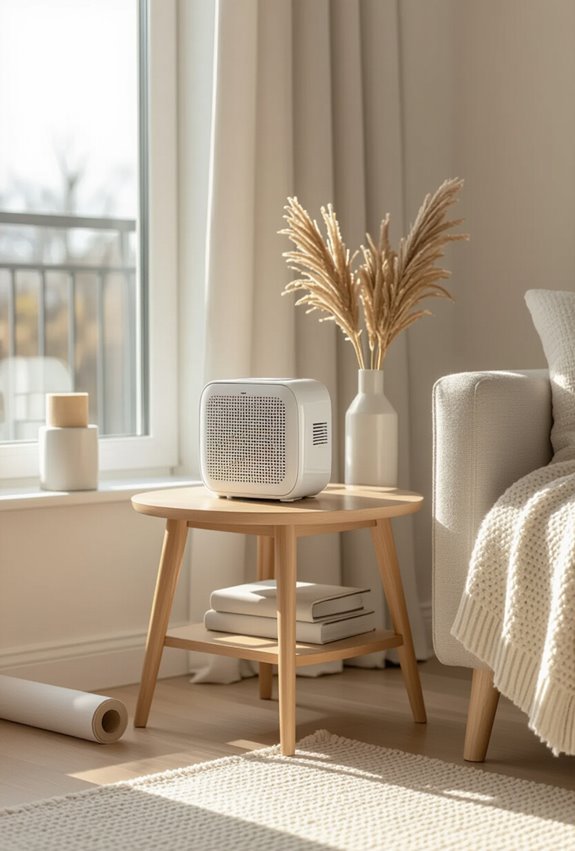
Often, you’ll notice drafts or lingering odors in an apartment because the air pressure inside is lower than outside; creating positive air pressure pushes fresh, filtered air in and keeps contaminants out.
You’ll reduce mold growth and indoor pollutants, improving health impacts and respiratory comfort. Positive pressure also helps allergen reduction by limiting pollen, dust, and outdoor irritants from seeping into living spaces.
Seal Gaps: Weatherstrip Doors and Windows to Hold Pressure

Start by sealing obvious leaks around doors and windows with weatherstripping so your apartment can hold the pressure you want.
Check frames for cracks, apply insulation tape to tight seams, and fit foam or rubber gap fillers where air creeps through.
Press strips firmly, trim excess, and test by feeling for drafts.
Proper sealing reduces infiltration and helps maintain positive indoor pressure.
Use Door Sweeps to Stop Air Leakage Under Doors
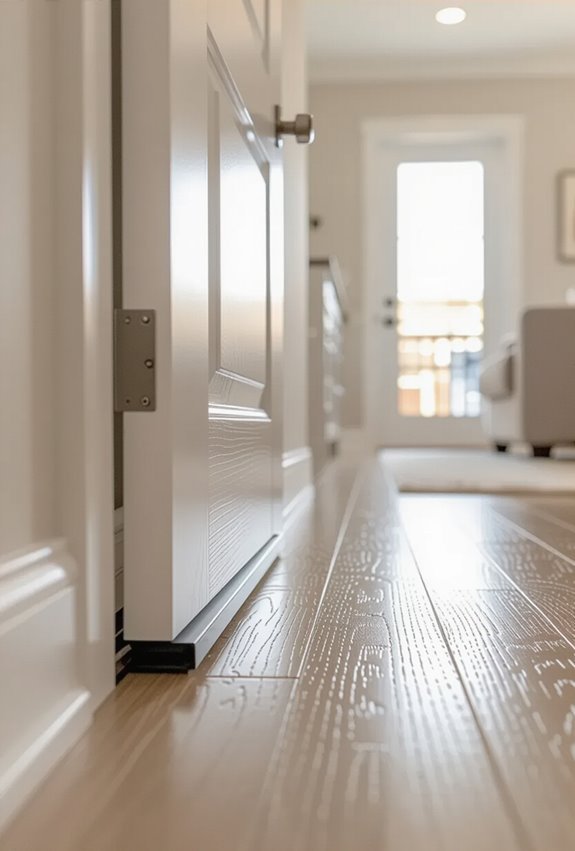
Install door sweeps to block the common gap at the bottom of doors and stop conditioned air from slipping out.
Fit a snug door sweep across exterior and interior apartment doors, ensuring it mates with a threshold seal for a tight closure.
You’ll reduce drafts, maintain positive pressure, and improve HVAC efficiency with a simple, low-cost upgrade you can install in minutes.
Caulk Permanent Cracks Around Frames and Vents
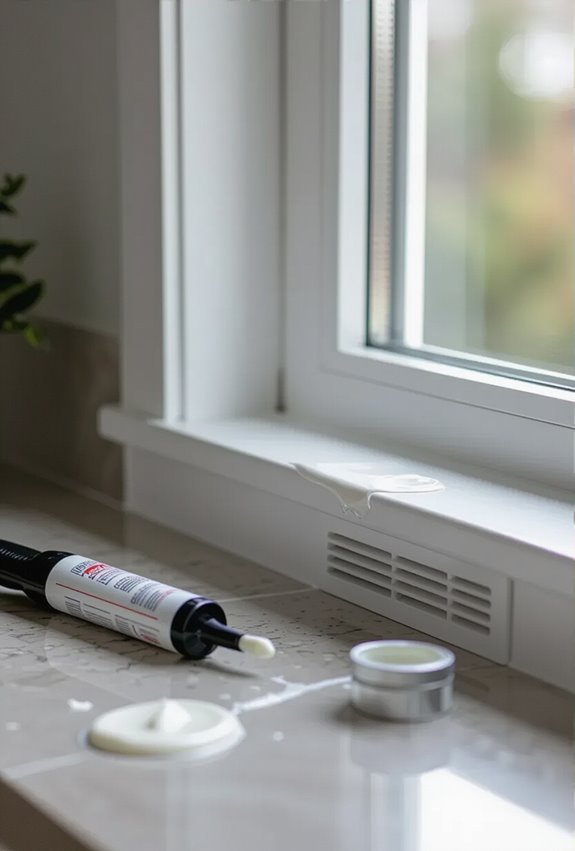
Seal visible, permanent gaps around window and door frames, electrical boxes, and vent openings with paintable exterior-grade caulk to stop uncontrolled air leaks.
You’ll run a skinny bead of flexible caulk into gaps, smoothing it for a tight seal.
Clean surfaces first, work in steady strokes, and allow full cure before painting or exposing to moisture to maintain positive pressure.
Replace Old Window Seals and Repair Sash Gaps
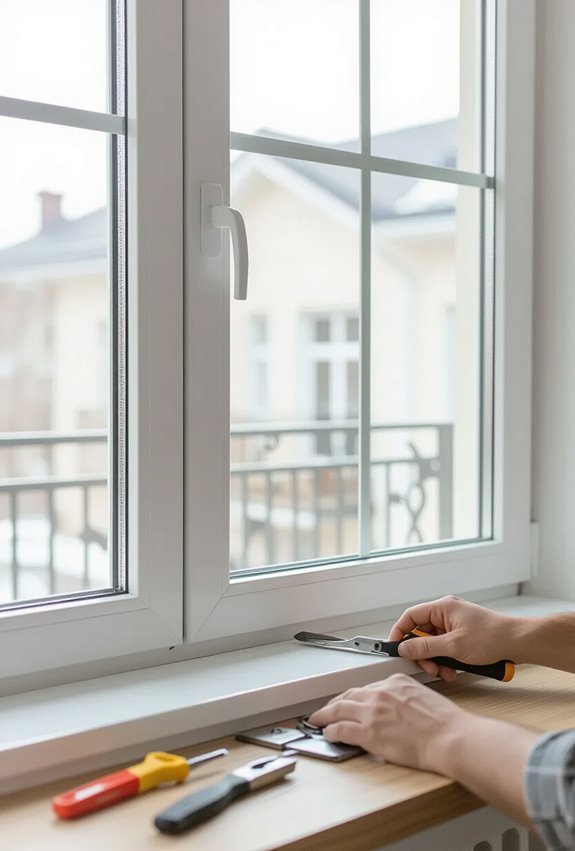
Check your windows for cracked or missing glazing and worn weatherstripping, because replacing seals and fixing sash gaps is one of the most effective ways to stop drafts and maintain positive air pressure.
You should inspect window glazing, adjust sash alignment, replace deteriorated seals, and tighten fasteners. Properly sealed sashes reduce infiltration, improve HVAC efficiency, and help the apartment hold a slight positive pressure.
Add Draft-Proofing Film for Seasonal Pressure Control
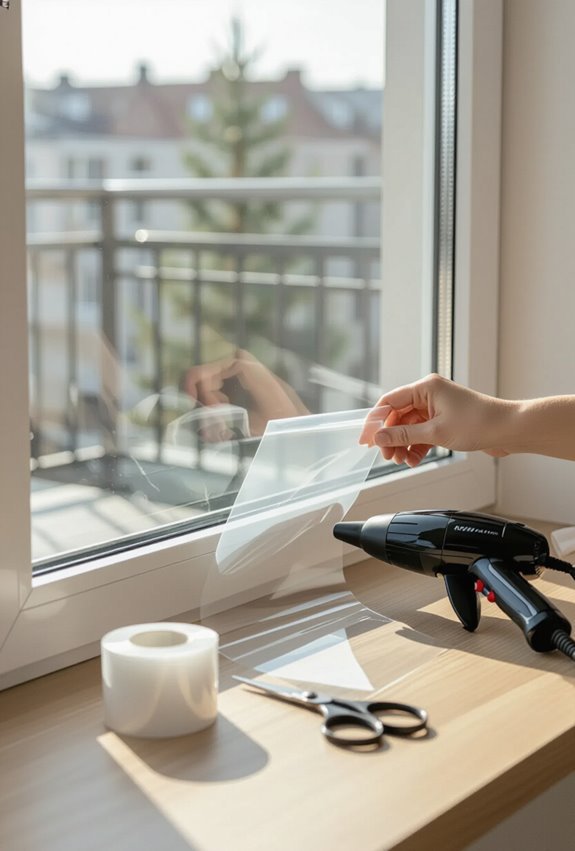
Often during colder months you’ll find draft-proofing film is an easy, affordable way to tighten up windows and help maintain slight positive pressure in your apartment.
Apply clear film over sash gaps as seasonal draftproofing; use removable insulation kits that shrink with a hair dryer.
They’re low-cost, renter-friendly, reduce cold infiltration, and let you restore original windows in spring without damage.
Upgrade Bathroom and Kitchen Fans With Speed Controls
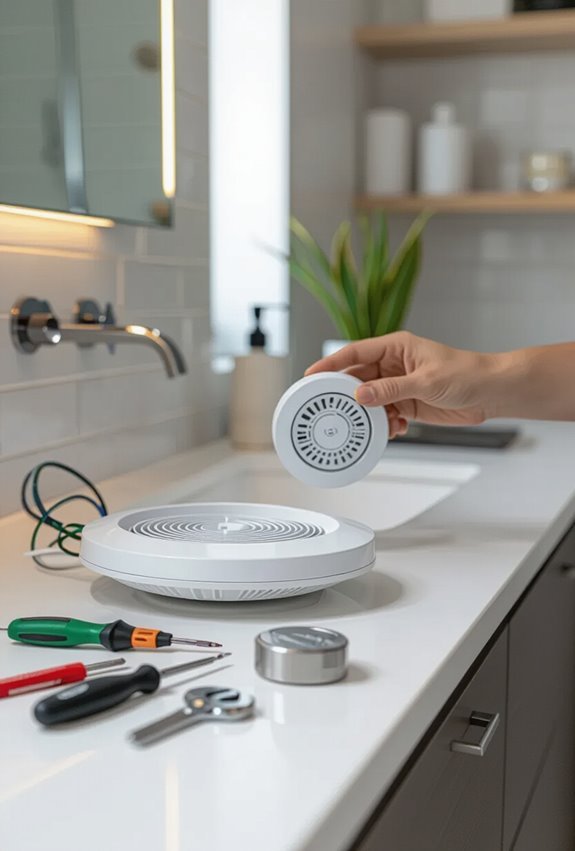
Upgrade your bathroom and kitchen fans by adding speed controls so you can match exhaust to need instead of running at full blast all the time. You’ll cut unnecessary air loss, lower noise with quiet upgrades, and fine-tune ventilation for comfort.
Use variable timers and multi-speed switches to run fans only as long as needed, reducing negative pressure without installing new supply vents.
Use an Inline Booster Fan to Push Supply Air Into the Unit
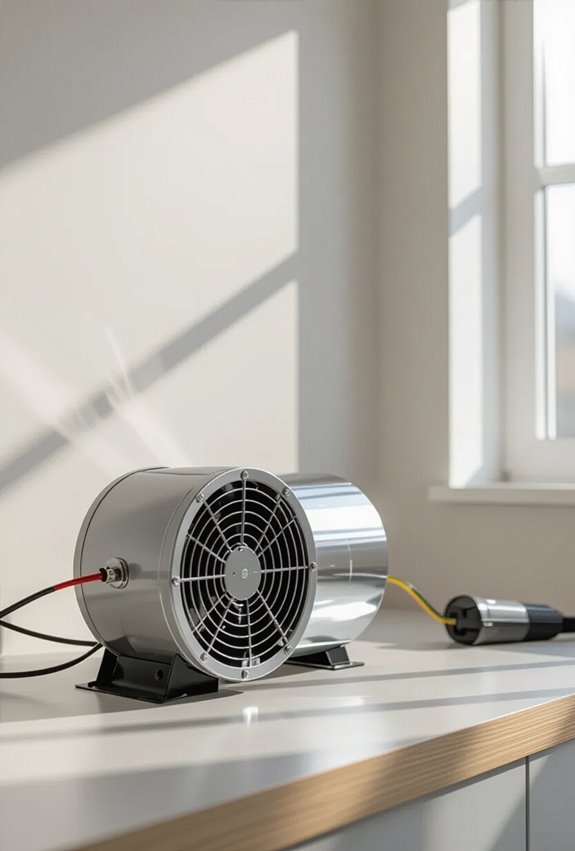
Consider adding an inline booster fan to force fresh supply air into your apartment when passive intake and dampers can’t keep pressure positive.
You’ll position the fan for ideal booster placement near the supply duct, seal connections, and choose an appropriately sized unit.
Prioritize noise mitigation with insulated ducting, rubber mounts, and low-sonic-speed models so you gain pressure without disruptive sound.
Run a Window Fan to Blow Air Into the Apartment (Inflow)
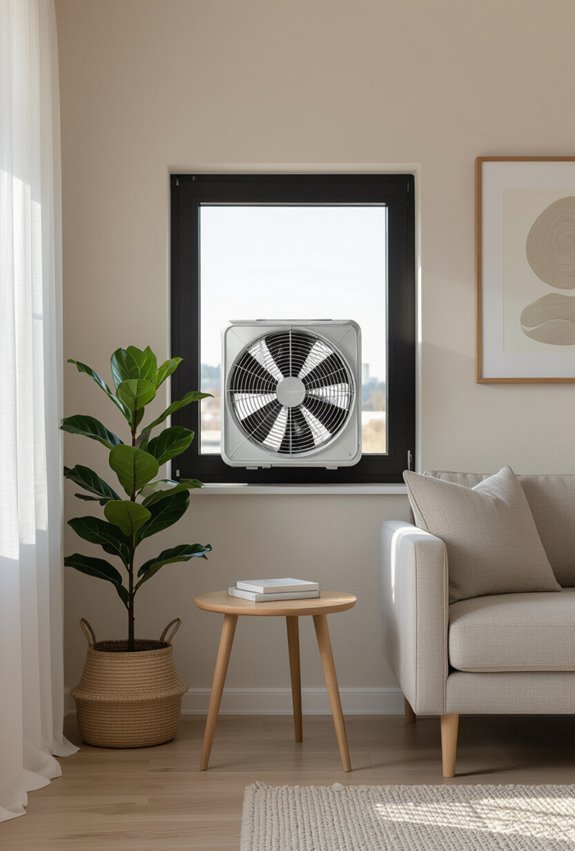
Running a window fan to blow air into your apartment gives you a quick, low-cost way to raise indoor pressure by forcing outdoor air through a single, controlled opening.
You’ll aim for window inflow that balances intake and exhaust paths.
Prioritize fan placement centered in the window, sealed around edges, and direct airflow away from neighboring units to avoid drafts and pressure imbalances.
Set Up a Small Supply-Only Fan With Ducting for Controlled Inflow
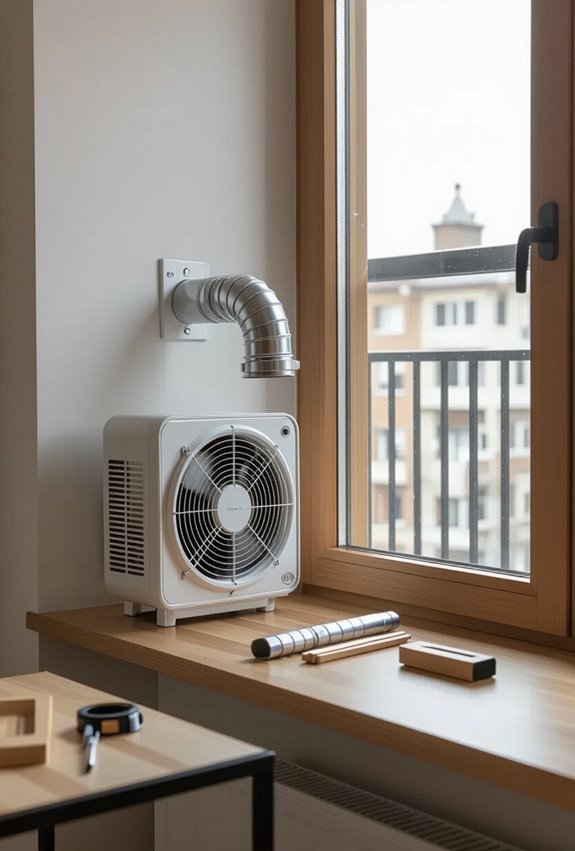
Install a small supply-only fan with ducting to bring filtered, controlled air into your apartment without creating exhaust paths that pull in unfiltered outdoor air.
Position a ducted intake through a wall or window, seal gaps, and use a HEPA filter.
Balance flow to maintain slight positive pressure, add noise mitigation like vibration mounts and insulated ducting, and monitor pressure with a simple gauge.
Install a Heat Recovery Ventilator (HRV) for Balanced Fresh Air
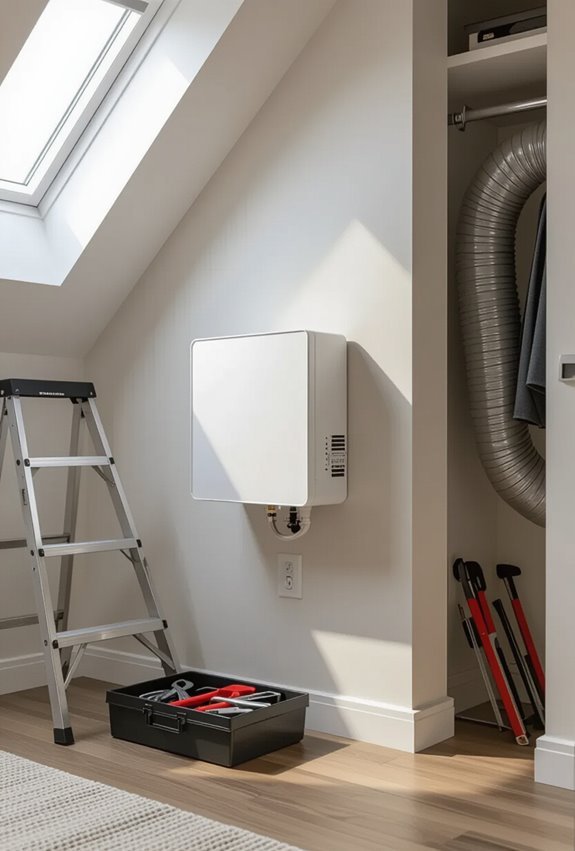
Balancing fresh intake and stale exhaust with a heat recovery ventilator (HRV) gives you steady ventilation without wasting energy, especially in colder climates where humidity transfer isn’t desired.
You install an HRV to achieve balanced ventilation, bringing controlled outdoor air while expelling stale air.
It integrates fresh air filtration, reduces drafts, and helps maintain slightly positive pressure when sized and configured correctly for your apartment.
Adjust Central HVAC Fan Settings to Run Continuously for Pressure
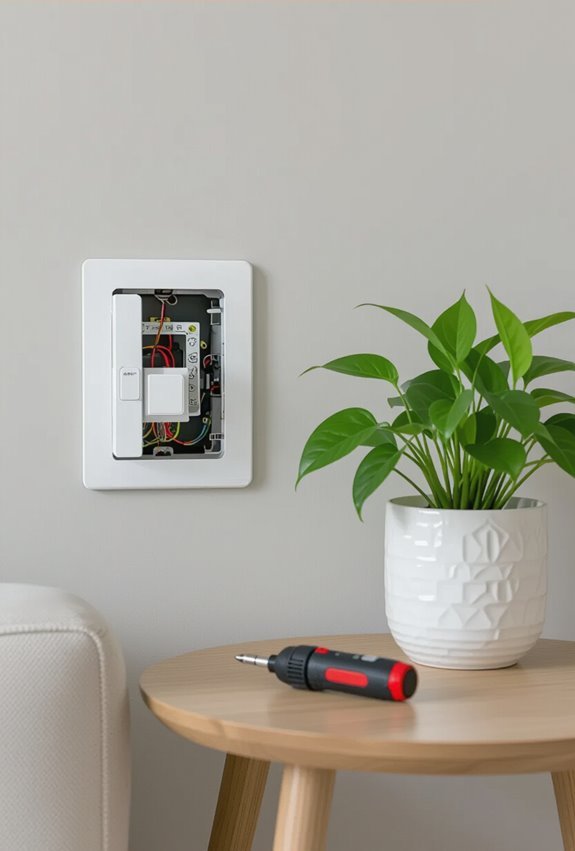
If you can’t or don’t want to rework ducts, the easiest next step is to set your central HVAC blower to run continuously so it pushes more filtered air into the apartment and helps maintain positive pressure.
Set the thermostat fan to fan continuous and enable blower modulation if available to reduce noise and energy use. Monitor indoor pressure and adjust runtime as needed.
Add a Booster Fan to the HVAC Supply Plenum for More Flow
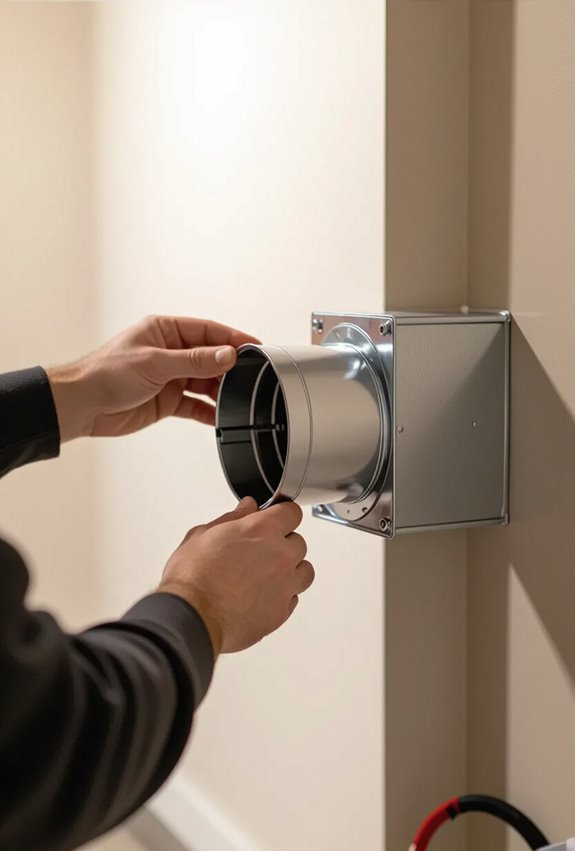
Add a compact booster fan directly to the HVAC supply plenum to increase airflow into the apartment without reworking ductwork.
You’ll plan booster placement near the main trunk for balanced distribution, seal joints to prevent leaks, and choose a fan with suitable static pressure.
Focus on noise mitigation—use vibration isolators, insulated duct wrap, and a low‑rpm model to keep operation discreet.
Use Window Air Conditioners to Bring in Outside Air When Possible
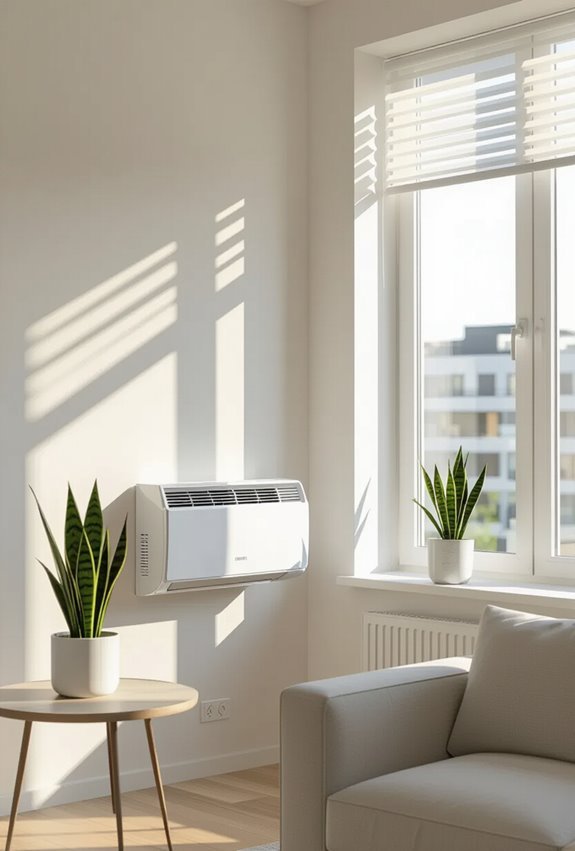
When outdoor air is available and humidity’s reasonable, use a window air conditioner with a fresh‑air intake or an exhaust‑recirculate kit to bring in outside air without overworking your HVAC; these units let you control how much outside air enters a room, provide local cooling, and can help establish slight positive pressure when balanced with exhaust.
You’ll set window intake settings, monitor indoor humidity, and adjust fan speed.
Manage Internal Doors to Direct Supply Air Where Needed
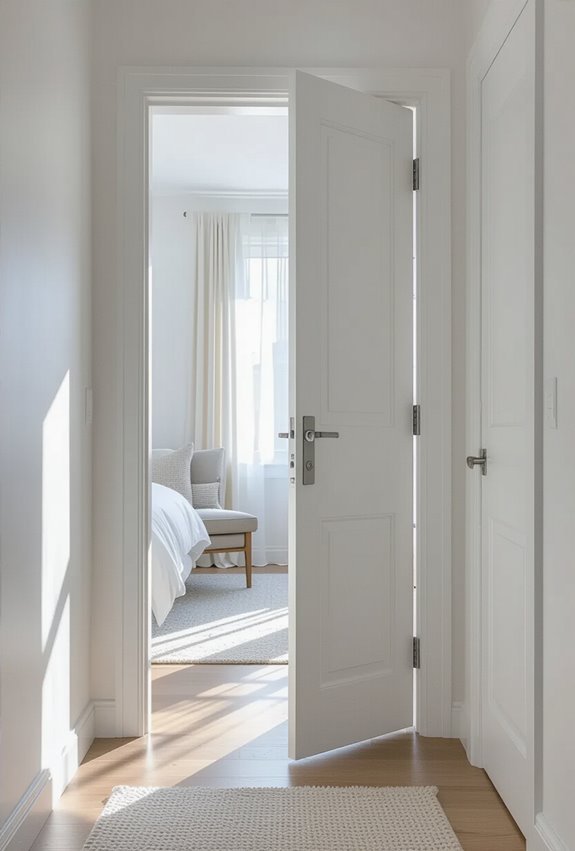
While you’re balancing supply and exhaust, manage interior doors to steer conditioned air where it’s needed most.
Close or partially open doors to contain supply to living areas, open stacking doors selectively to let cool air descend between levels, and set simple airflow zoning by keeping doors to unused rooms closed.
You’ll reduce leakage and focus pressurized air where occupants spend time.
Create Passive Transfer Pathways With Transfer Grilles
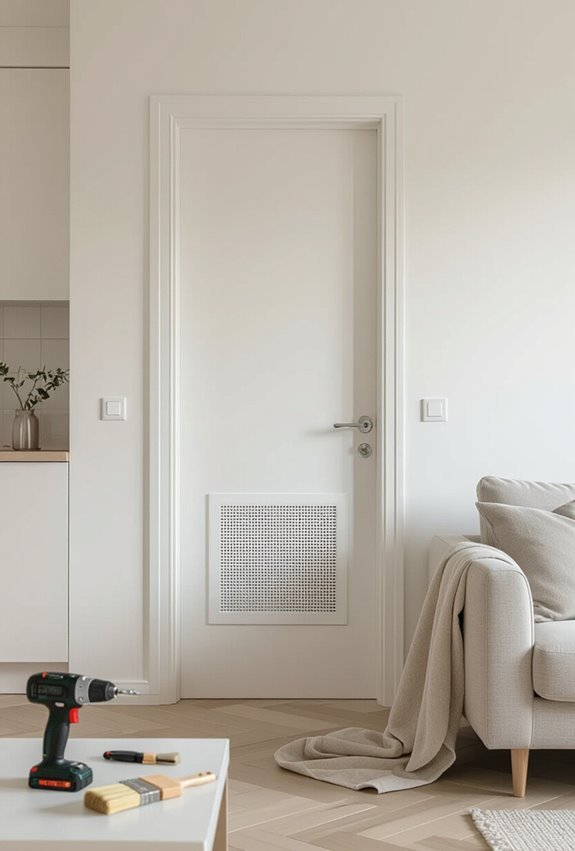
Steering air with doors helps, but you also want simple, controlled openings that let pressurized air move between rooms without forcing doors wide open.
Install transfer grilles low in walls or over doors to create discreet airflow pathways, equalize pressure, and reduce door slamming. Choose sizes to match fan capacity, seal edges properly, and position grilles to avoid noise and drafts while maintaining privacy.
Use Smart Timers and Sensors to Run Supply Devices Only When Needed
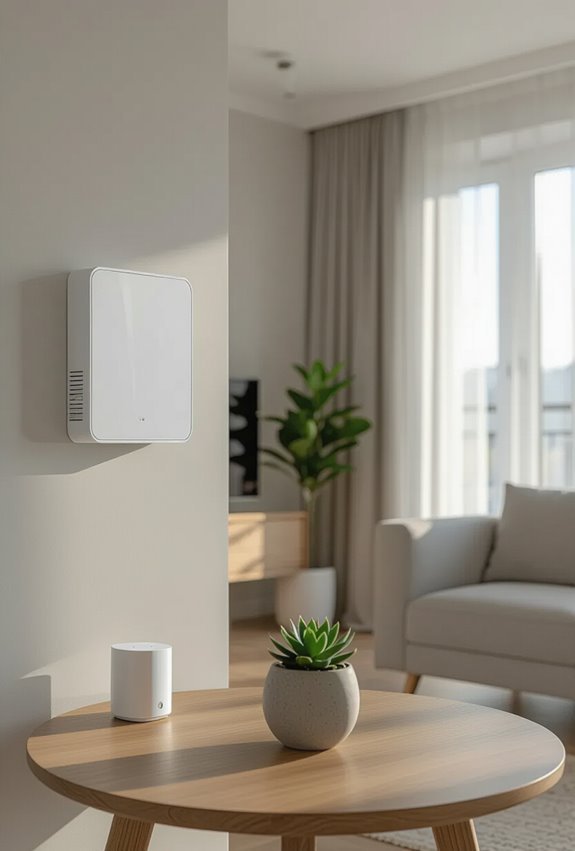
Often, you don’t need supply fans or in-line ventilators running all day — smart timers and sensors let them operate only when required, saving energy and keeping pressure steady.
You can set smart scheduling to match occupancy and outdoor conditions, and configure sensor thresholds for humidity or CO2 so devices run only when imbalance appears. That reduces noise, wear, and energy use.
Mitigate Odors and Moisture When Increasing Supply Air
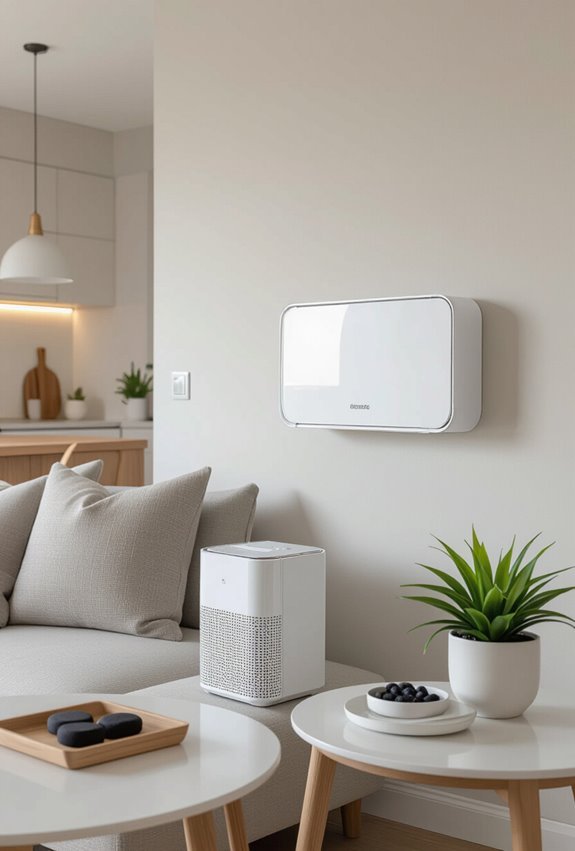
When you increase supply air to create positive pressure, you’ll also bring more odors and moisture into your apartment unless you control the sources and condition the incoming stream; prioritize source control, targeted ventilation, and moisture management so fresh air improves comfort rather than causing new problems.
Use activated charcoal for persistent smells, place moisture absorbers in damp spots, and run spot exhausts in kitchens and baths.
Temporary Fixes for Renters: Non-Invasive Fans and Seal Kits
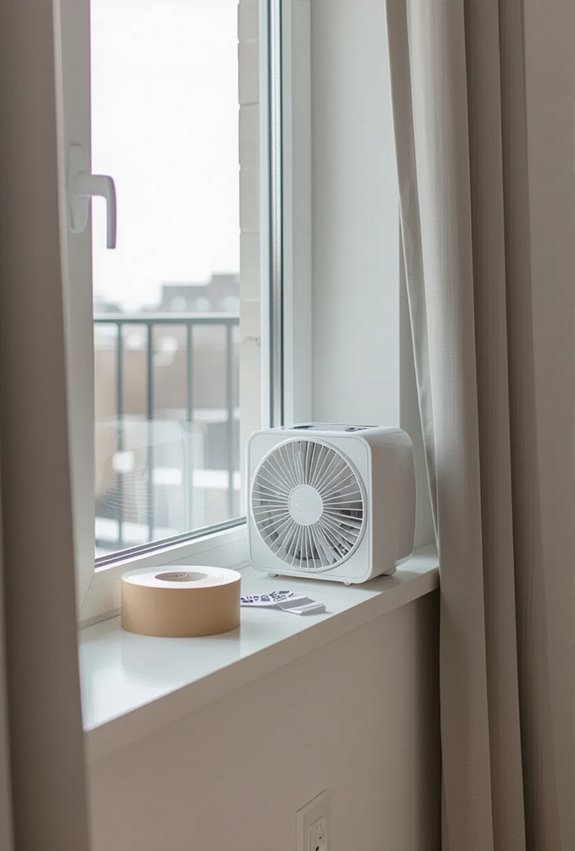
If you can’t make permanent changes, there are simple, reversible steps you can take to boost positive pressure without risking your lease.
Use window fans set to intake on cooler sides to draw fresh air in, and close interior doors to pressurize rooms.
Apply sealant kits around drafts—weatherstripping and removable caulk—to reduce leaks.
These non-invasive fixes are temporary, affordable, and tenant-friendly.
When to Get Landlord or Building Approval for Modifications
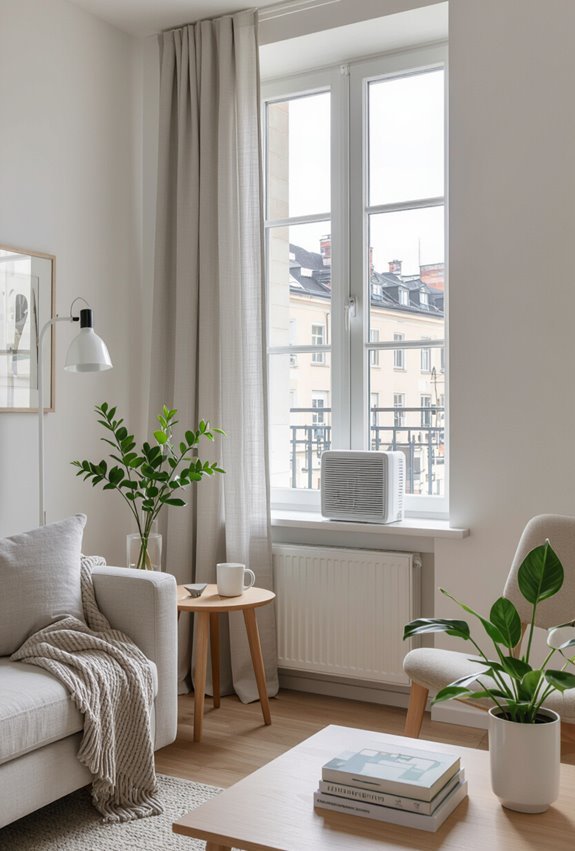
Before you make alterations that go beyond temporary fixes, check your lease and talk to your landlord or building manager about approval requirements.
You should get written tenant permissions for permanent fans, duct changes, or door modifications.
Ask whether the building needs structural approvals, permits, or licensed contractors.
Keep records of approvals, timelines, and any restoration obligations to avoid disputes or fines.
Cost and Energy Trade-Offs for Each Positive-Pressure Method
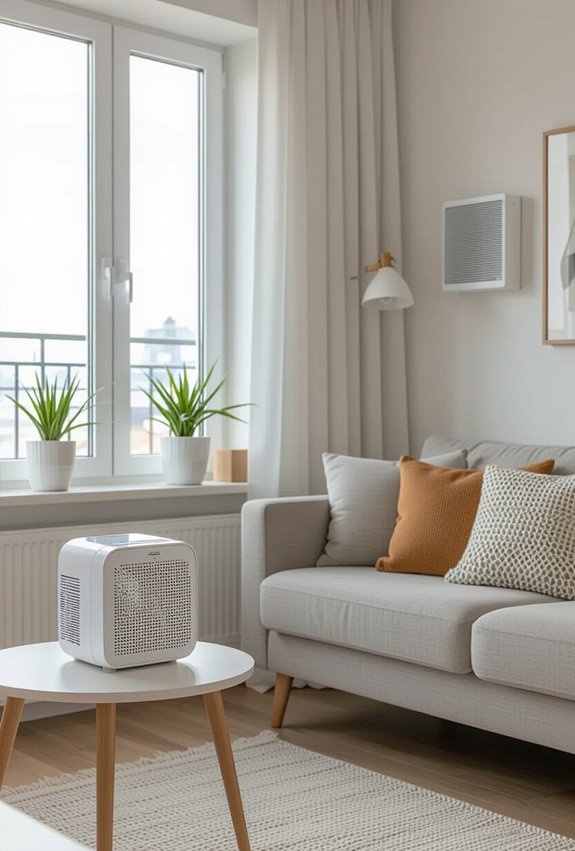
Now that you’ve checked lease rules and gotten any required approvals, weigh the cost and energy trade-offs of each positive-pressure option before committing. Portable fans cost less up front but raise operational costs.
Window fans and passive tweaks are low energy but limited. Mini-split or dedicated supply fans have higher installation and running costs yet better control and efficiency tradeoffs, so compare budgets and long-term savings.
Troubleshooting Common Issues After Creating Positive Pressure
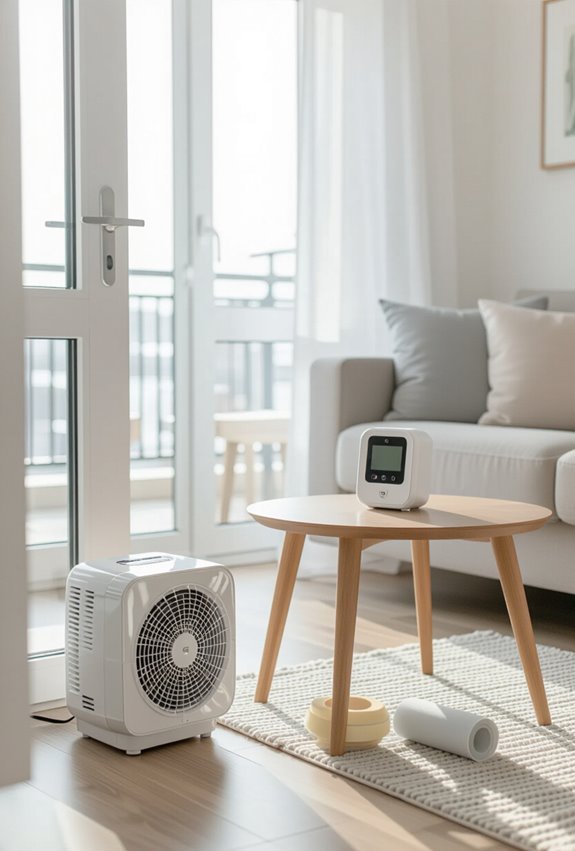
Monitoring performance after you set up positive pressure helps you spot and fix issues quickly.
Check for drafts, uneven temperatures, and HVAC strain to protect occupant comfort.
Monitor pressure differentials and filter status, adjust fan speeds, and seal leaks.
Address unexpected backdrafts or humidity.
If noise control worsens, add mufflers, vibration isolators, or lower fan RPM while maintaining target pressure.
Installing Positive Pressure Ventilation Systems
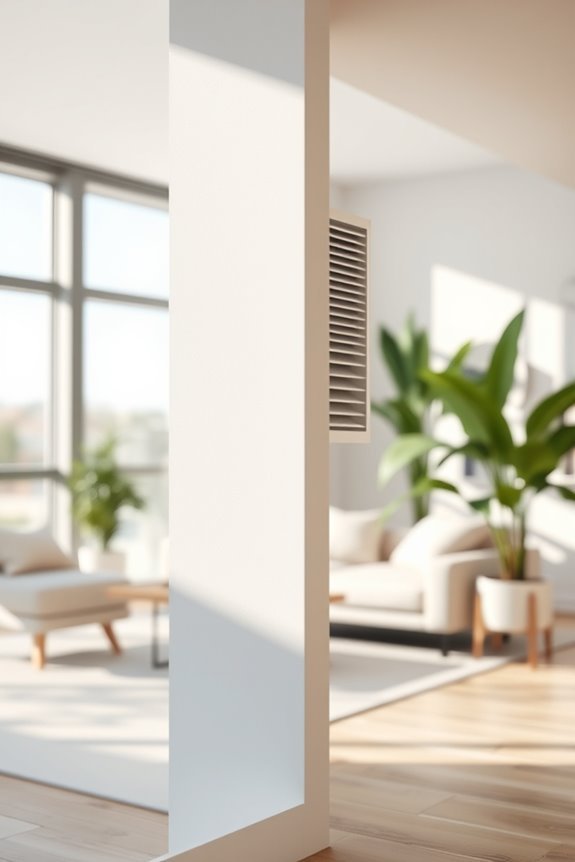
Installing a positive pressure ventilation system can greatly improve your apartment’s air quality, especially when you need a consistent supply of fresh air.
These systems work by pushing filtered air into your living space, creating positive pressure that helps prevent outdoor pollutants from entering.
Positive pressure ventilation systems push filtered air indoors, effectively blocking outdoor pollutants from entering your living space.
There are various ventilation types to evaluate, such as centralized systems, which distribute air throughout your apartment, and localized systems, which target specific areas.
Before installation, assess your apartment’s layout and choose a system that fits your needs.
Verify you have the right size and type of fans to maintain ideal airflow.
Once installed, regularly check filters to keep your air clean and enjoy a healthier indoor environment.
Strategic Window Placement
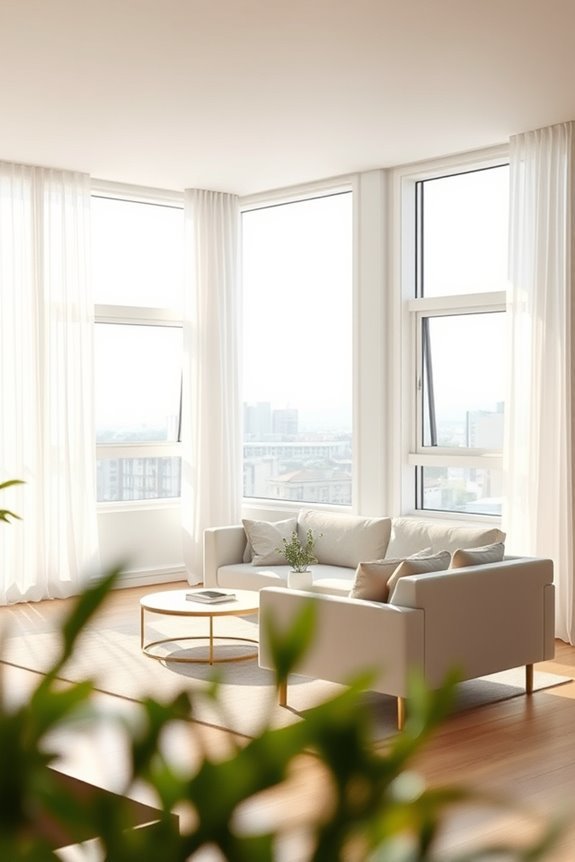
To create positive air pressure in your apartment, the placement and orientation of your windows are vital.
You’ll want to reflect on how to utilize cross ventilation effectively and seal any gaps that might disrupt airflow.
Let’s explore how these strategies can enhance your living space’s air quality.
Optimal Window Orientation
When you strategically place windows in your apartment, you can greatly enhance positive air pressure and improve ventilation.
Consider the following factors for ideal window orientation:
- Solar Orientation: Position windows to capture sunlight, especially in colder months.
- Window Types: Use casement or awning windows that can open wider for increased airflow.
- Height and Size: Install larger windows higher up to allow warm air to escape while drawing in cooler air.
- Shading: Incorporate overhangs or shades to reduce heat in summer while maximizing light in winter.
- Cross-Flow: Though not discussing it here, think about how window placement can facilitate future cross-ventilation efforts.
With these considerations, you’ll create a more comfortable living space with better air quality.
Utilize Cross Ventilation
While many overlook the importance of window placement, utilizing cross ventilation can greatly enhance air pressure and comfort in your apartment.
By strategically arranging your windows, you can create a flow of fresh air that promotes positive air pressure. Start by opening windows on opposite sides of your apartment to allow for a direct pathway of airflow.
If you have a balcony, take advantage of its airflow by opening the balcony door, which can help draw air through the living space.
Make sure your window arrangement maximizes this effect, as even slight adjustments can considerably improve ventilation.
With effective cross ventilation, you’ll enjoy a fresher environment and better indoor air quality without relying solely on fans or air conditioning.
Sealing Gaps Effectively
Sealing gaps around your windows is essential for maintaining positive air pressure in your apartment. Effective gap sealing techniques can help you avoid drafts and keep your indoor air comfortable.
Start by identifying any leaks using draft detection methods like:
- Candle Test: Light a candle and move it around window edges; flickering indicates drafts.
- Smoke Test: Use incense to spot air movement near gaps.
- Visual Inspection: Look for visible cracks or spaces around frames.
For sealing the gaps, consider using:
- Foam Sealant: Apply expanding foam in larger gaps for a tight seal.
- Weatherstripping: Add adhesive strips to window sashes to eliminate air leaks.
Conclusion
So, there you have it! With your newfound knowledge of creating positive air pressure, you can transform your apartment into a fortress of fresh air—like a botanical oasis, but without the snakes! Just seal those pesky gaps, manage humidity like a pro, and maybe even invest in a few plants to help you breathe easy. Who knew indoor air quality could be this entertaining? Now, go forth and conquer that stale air! Your lungs will thank you.
