
How Long Does One Coat of Paint Take to Dry
One coat of paint usually feels dry to the touch in about 30 minutes to 8 hours, but readiness for sanding, recoat, or heavy use often takes 24 hours or more depending on type, temperature, and humidity. Water-based paints dry fastest; oil- and alkyd-based coats take longer to cure. Apply thin, even layers, keep good ventilation, and follow label windows for best results—keep going and you’ll pick up practical tips to time each step right.
Quick Answer: Typical Drying Times for One Coat
Most interior latex paints feel dry to the touch within 30 minutes to an hour and are ready for a second coat after 2 to 4 hours. You’ll find that drying depends on temperature, humidity, and film thickness.
Oil-based paints take longer—often 6 to 8 hours to feel dry and up to 24 hours to harden.
When you’re paint mixing or doing color matching, test a small patch and wait the recommended interval before evaluating sheen or hue.
If conditions are cool or humid, add drying time. Use fans and moderate heat to speed evaporation, but avoid rush recoating.
When It’s Safe to Recoat: Simple Time Windows
Knowing when to recoat keeps your finish smooth and durable, so plan around simple time windows rather than guessing. You’ll base timing on paint type, temperature, and humidity to prevent runs or uneven paint sheen and minimize color fading.
Knowing when to recoat keeps finishes smooth and durable—time windows trump guessing; consider paint type, temperature, and humidity.
Follow these general windows:
- Water-based latex: wait 2–4 hours for light recoats, 24 hours for full layering.
- Acrylics: 2–6 hours between coats, depending on humidity.
- Oil-based: 8–24 hours for workable recoat, up to 48 for heavier layers.
- Specialty/low-VOC: check label; often 4–8 hours, longer in cool, damp conditions.
Touch-Dry vs Fully Cured: Tests and Timelines
Although a surface may feel dry to the touch within hours, full curing can take days to weeks depending on paint chemistry and conditions. You’ll test touch-dry by lightly pressing a fingertip; no tack means you can recoat, but not necessarily use the surface. Curing affects durability, paint fumes off-gassing, and color fading resistance. Use simple tests: smell for fumes, apply gentle pressure, and observe gloss consistency over days.
| Test | What to look for |
|---|---|
| Touch | No tack, no transfer |
| Smell | Reduced paint fumes |
| Pressure | No denting |
| Visual | Stable color, no fading |
Drying Times by Paint Type (Latex, Acrylic, Alkyd, Enamel)
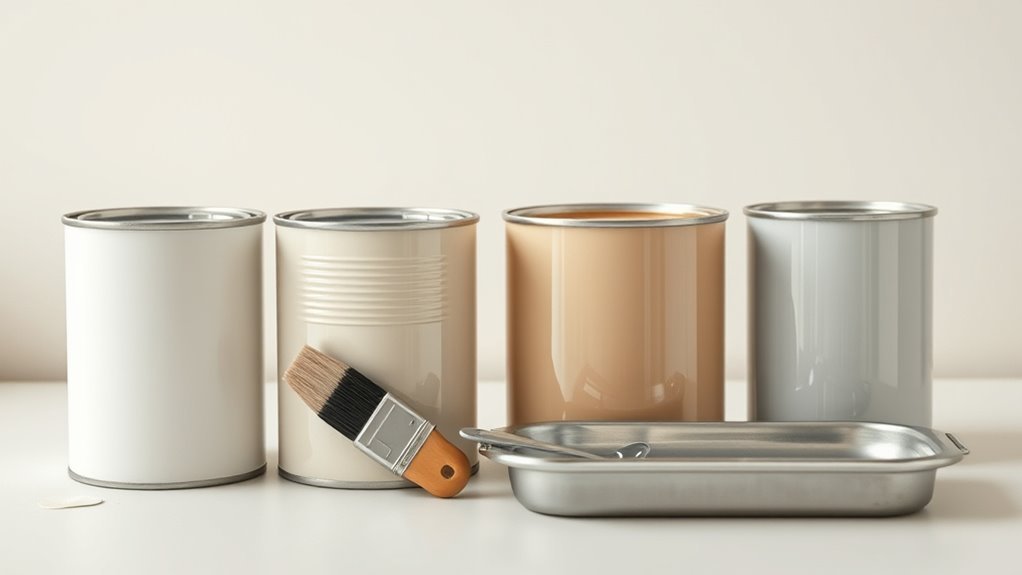
Because different chemistries dry by evaporation, coalescence, or chemical reaction, you’ll see wide variation in drying and curing times between latex, acrylic, alkyd, and enamel paints. You’ll pick based on speed, finish, and application conditions; humidity, temperature, and film thickness still matter.
Consider color mixing impacts sheen and hiding; proper paint storage preserves catalysts and coalescing agents.
- Latex: touch-dry in 30–60 minutes; recoat in 4 hours.
- Acrylic: similar to latex; flexible, resists yellowing; recoat in 4 hours.
- Alkyd: tack-free in 6–8 hours; recoat in 24 hours.
- Enamel: slower cure, often 24–48 hours before handling.
Oil-Based vs Water-Based Paint: Drying-Time Differences
When you compare oil-based and water-based paints, you’ll notice they dry by different mechanisms: oils cure chemically while water-based paints dry as water evaporates.
That means oil-based coats often take hours to days to become touch-dry and longer to fully cure.
Water-based options typically dry to the touch within an hour or two.
Temperature, humidity, and airflow will speed or slow both types, so plan your schedule around environmental conditions.
Drying Mechanism Differences
If you want predictable drying times, start by knowing how oil-based and water-based paints actually dry: oil-based paints cure through oxidation—solvents evaporate and the binders chemically cross-link with oxygen—while water-based (latex) paints mainly dry as water evaporates and the polymer particles coalesce into a film.
You’ll notice differences that affect handling and finish:
- Oil-based: chemical cure resists color fading but can yellow over time.
- Water-based: quicker surface set, less odor, lower yellowing risk.
- Oil-based: slower recoat, tends to smooth texture altering brush marks.
- Water-based: dries evenly, keeping original texture and sheen.
Typical Drying Timeframes
Although both oil- and water-based paints eventually form a hard film, they follow different timelines you should expect.
Oil-based paints feel dry to touch in 6–8 hours and cure over days to weeks. You’ll wait longer before recoat to avoid tackiness and reduce risks like paint peeling.
Water-based (latex) dries to touch in 1–2 hours and usually allows recoating within 4–6 hours, though full hardness takes longer.
Both types can show color fading over years depending on exposure, but quicker drying water-based formulas let you work faster while oils give a tougher, slower-maturing finish.
Environmental Impact On Drying
You’ve seen the typical drying schedules for oil- and water-based paints; now look at how environmental factors change those timelines. You’ll notice that humidity, temperature, ventilation, and surface porosity interact with paint formulation to speed or slow curing.
Oil-based coatings often tolerate cooler, drier air but need longer solvent evaporation; water-based (latex) dries faster in warm, low-humidity conditions but stalls in high humidity.
- Humidity — slows water-based more than oil-based.
- Temperature — low temps extend both, alter solvent chemistry.
- Ventilation — accelerates evaporation for both formulations.
- Surface porosity — absorbs solvents, affecting drying rate.
How Coat Thickness Affects Dry Time
When you apply a thicker coat of paint, it holds more solvent and takes longer to surface-dry and fully cure. So planning your work in thinner, even layers speeds drying and improves finish quality.
You’ll notice thick layers sag, stay tacky longer, and trap solvents that delay curing. That increases the risk of paint peeling later and can accelerate color fading due to uneven film formation.
Apply multiple thin coats, allow recommended flash times, and use proper drying conditions to build opacity without overloading the film. Thinner coats dry faster, cure more uniformly, and yield a more durable, color-stable finish.
Surface Effects: Wood, Drywall, Metal, Masonry
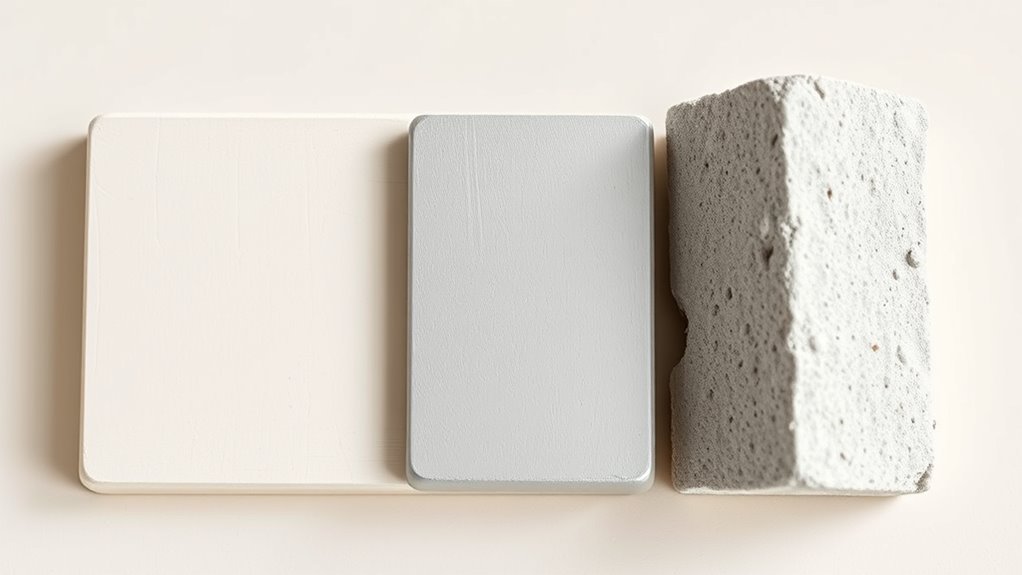
Different materials absorb and shed paint at different rates, so you’ll see faster dry times on porous drywall and slower ones on dense metals or sealed wood.
How you prep the surface—sanding, priming, and cleaning—can change those times considerably by improving adhesion and preventing extra absorption.
Keep material type and preparation in mind when planning your drying schedule.
Dry Time By Material
Curious how surface type changes drying times? You’ll notice color fading and texture variation differ by material, so you’ll adjust expectations and timing accordingly.
- Wood — Absorbs paint; porous grain speeds initial drying but can show color fading if thin coats aren’t used.
- Drywall — Fairly quick to dry; paper surface evens color but shows texture variation where joint compound exists.
- Metal — Smooth, nonporous surfaces dry slower on top; moisture trapped below can delay full cure.
- Masonry — Very porous; soaks paint, often needs longer drying and multiple coats to avoid uneven finish.
Surface Preparation Impact
You’ve seen how material affects drying behavior; now think about what you do to each surface before paint goes on. Prep changes drying time: sanding wood opens pores so stain and topcoat penetrate, while sealed wood repels and slows absorption.
On drywall, joint compound and primer equalize porosity to prevent patchy color blending.
Metal needs rust removal and primer for adhesion; bare metal can cause thin spots and faster tack-dry but longer cure.
Masonry’s uneven texture demands masonry primer to manage texture variation and porosity.
Proper cleaning, priming, and smoothing let a single coat dry evenly and perform as expected.
How Temperature Speeds or Slows Drying
When you raise the temperature in the room, paint solvents evaporate faster and the film cures more quickly, while colder conditions slow evaporation and prolong tackiness. You’ll notice paint texture firms sooner in warmth, letting you assess finish and touch-ups faster.
Higher temps can slightly alter color blending during application, so work steadily to avoid streaks. Extreme heat risks skinning or bubbles, and cold makes sanding and recoating take longer.
Adjust your workflow: plan drying windows, keep consistent temps, and avoid shortcuts that force drying. Monitor temperature to balance speed with finish quality.
- Warmth speeds cure
- Cold prolongs tackiness
- Too hot causes defects
- Plan timing accordingly
How Humidity and Ventilation Change Dry Time
Temperature sets the pace, but humidity and airflow often dictate how long paint actually stays tacky. If humidity’s high, drying slows because water in latex or oil can’t evaporate; you’ll wait longer between coats and risk texture changes as solvents escape unevenly.
Low humidity speeds evaporation but can cause skinning or surface curing before underlying layers dry. Good ventilation moves moist air away, cutting dry time and reducing odor, while stagnant air prolongs tackiness and can invite color fading from mildew or contamination.
Control humidity and provide steady airflow to get predictable, even drying without surprises.
Color and Pigment: Small but Real Drying Impacts
Although it might seem minor, paint color and the pigments it contains can subtly change how fast a coat dries. You’ll notice darker pigments often absorb heat and may speed surface drying, while heavy tint loads can slow solvent escape.
Maintain color consistency to predict drying behavior, and choose formulations with proven pigment stability to avoid uneven cure.
Consider these factors:
- Dark vs light hues: surface temperature effects.
- Tint load: high amounts can prolong tackiness.
- Pigment stability: prevents settling and irregular drying.
- Manufacturer notes: they’ll state any color-related dry-time adjustments.
Primers vs Topcoats: Drying-Time Expectations
When you compare primers and topcoats, you’ll notice primers often dry faster to touch but may need longer before sanding or recoating.
Topcoats usually form film slower because of pigments, binders, and gloss level, so their tack-free and full-cure times can be longer.
Temperature, humidity, ventilation, and coat thickness all change those expectations and determine how long you should wait.
Primer vs. Topcoat Drying
Curious how primer and topcoat drying actually differ? You’ll notice primers dry to a tack-free, porous surface faster so the topcoat bonds, preventing paint peeling and helping color fading resist over time.
Topcoats cure more slowly as solvents evaporate and resins crosslink, giving durable finish and true color.
- Primer: fast tack-free time, seals substrate, readies adhesion.
- Topcoat: longer cure, builds film strength and sheen.
- Touch vs. full cure: touch-dry doesn’t equal durability—wait before stress.
- Practical tip: follow label times; shorten repainting only when both layers are adequately dry.
Factors Affecting Drying
Because primers and topcoats serve different roles and use different chemistries, you’ll see distinct drying-time patterns. You should consider temperature, humidity, and ventilation—warmer, drier, and well-ventilated conditions speed curing.
Primer formulas often dry fast to allow sanding and adhesion. Topcoats may take longer to level, affecting paint texture. Film thickness matters: heavy coats tack longer and risk sagging.
Solvent-based paints dry differently than water-based ones, and additives or pigments influence evaporation and color fading over time.
Follow manufacturer recoat windows, thin coats for a uniform finish, and test a small area if you’re unsure about timing.
Low-VOC and Eco Paints: Drying Time Comparison
Though low-VOC and eco-friendly paints aim to be safer for you and the environment, they don’t all dry at the same rate, so you’ll want to compare brands and formulas before planning your next coat.
You’ll find water-based eco options dry faster, while some natural oil blends take longer but resist color fading and preserve paint texture better. Consider these points when timing recoats:
- Water-based low-VOC: quick tack and recoat windows.
- Natural oil/plant-based: longer cure, richer texture retention.
- Hybrid formulations: balanced dry time and durability.
- Manufacturer specs: follow recommended wait times precisely.
Additives and Retarders: How They Alter Drying
If you need more working time or want to slow a fast-drying coat to avoid brush marks, additives and retarders let you fine-tune paint drying without changing the base formula. You’ll add small amounts to extend open time, letting you blend, level, and correct brush strokes. Check manufacturer limits—too much can weaken film formation.
Additive effects vary by paint type: water-based paints respond differently than oils. Retarder influence alters solvent evaporation or coalescent action, slowing surface skinning so you get smoother results.
Always test on scrap, follow recommended dosages, and allow extra cure time after using these products.
Speed Drying Safely: Fans, Dehumidifiers, Heaters
When you need paint to dry faster without compromising the finish, controlled airflow, humidity reduction, and gentle heat can speed evaporation and cure—if you use them correctly. You want faster dry times without causing color fading or paint peeling, so balance intensity and distance.
- Use fans to circulate air; avoid direct blasting that skins and traps solvent.
- Run a dehumidifier to lower humidity; steady removal prevents long tacky periods.
- Employ low-wattage heaters or warm air; keep temps within paint manufacturer limits.
- Monitor drying and inspect finish; stop aggressive methods if uneven sheen or edge lifting appears.
Sanding and Recoating: Wait Times and Tips
Before you sand, make sure the paint is dry to the touch and has cured enough to avoid clogging sandpaper—follow the manufacturer’s drying time for that paint type.
Use fine-grit paper and gentle, even strokes or a sanding sponge to scuff the surface without cutting through the film.
Plan your recoat within the paint’s specified recoat window—too soon and you’ll lift paint, too late and you’ll need more sanding for adhesion.
Drying Time Before Sanding
Although paint may feel dry to the touch within a few hours, you’ll want to wait longer before sanding to avoid clogging sandpaper or lifting the film. Waiting guarantees the film cures enough to resist pressure that causes paint peeling and reduces risk of color fading from premature abrasion.
Typical wait: latex 24–48 hours, oil 48–72 hours, enamels longer in cool or humid conditions. Test a small area by lightly sanding with fine grit; if it powders instead of smoothing, give it more time.
- Latex: 24–48 hours
- Oil: 48–72 hours
- High humidity: add 24+ hours
- Cold: extend drying times
Recommended Sanding Techniques
Now that the paint has cured enough for sanding, pick the right abrasive and pressure to avoid gouging the finish. You’ll use fine grit to smooth imperfections and preserve paint sheen; heavier grit risks color fading or visible scratches. Sand with the grain, keep motion light, and check progress often. Clean dust between passes to prevent contamination. If you sense rough spots, switch to a finer paper rather than pressing harder. Trust patience: gentle, consistent work preserves the look you want.
| Tool | Feeling |
|---|---|
| 220 grit | Calm |
| 320 grit | Satisfied |
| Foam pad | Confident |
| Tack cloth | Relieved |
Recoat Window Guidelines
When the first coat feels dry to the touch and the manufacturer’s recoat window opens, you can proceed—but resist rushing: proper timing and light sanding are what guarantee strong adhesion and a smooth finish.
Wait the minimum recoat time to avoid tacky layers; don’t exceed the maximum or risk poor bonding and color fading.
Lightly sand with fine grit to remove dust nibs and soften brush strokes.
Clean surface before recoating.
- Check label for min/max recoat times.
- Sand lightly (220–320 grit).
- Wipe with tack cloth.
- Recoat within recommended window for best results.
Common Mistakes That Cause Tacky or Soft Paint
If your paint stays tacky or soft after the expected drying time, it’s usually because of a few avoidable mistakes—applying coats too thickly, painting in high humidity or low temperatures, or neglecting proper surface prep like cleaning and sanding.
You might also overmix pigments during color mixing, altering binder ratios and slowing cure. Using the wrong solvent or adding too much extender will do the same.
Poor brush selection leaves uneven film thickness and traps moisture. Skipping primer, painting over contaminated surfaces, or crowding air flow all hinder drying.
Follow label directions, thin properly, and work in suitable conditions to avoid tackiness.
Troubleshooting Long Dry Times and Failures
If your paint is taking forever to dry or never seems to harden, you’ll want to check a few common culprits.
Start by looking for surface contamination like grease or dust.
Then consider environmental factors—high humidity or poor ventilation will slow drying dramatically.
Addressing these issues usually gets you back on schedule and prevents future failures.
Slow Dry Causes
Although slow-drying paint can feel like a mystery, you can usually pinpoint the cause by checking a few key factors: humidity and temperature, paint thickness, surface contamination, product age or formulation, and incompatible coatings beneath.
You’ll spot risks: high humidity delays curing, extreme cold stalls reactions, and thick coats trap solvents. Old or poorly formulated paint can cause color fading later or even paint peeling if it never fully dries. Check compatibility with underlying coatings to avoid chemical interference.
- Measure humidity and temp.
- Apply thinner coats.
- Replace aged paint.
- Verify coating compatibility.
Surface Contamination
When foreign residues like dust, oil, wax, or grease sit on a surface, they block paint from adhering and can dramatically slow drying or cause tacky, uncured patches. You’ll notice uneven sheen, persistent paint odor, or spots that never fully harden. Remove contaminants before painting: clean with appropriate cleaners, degloss where needed, and wipe with solvent when instructed. Test a small area if unsure. If contamination caused the problem, strip and redo lightly sanded areas. Prevent recurrence by storing materials cleanly and handling surfaces with clean hands or gloves.
| Problem | Fix |
|---|---|
| Dust | Wipe, tack cloth |
| Oil/Grease | Solvent clean, rinse |
Humidity And Ventilation
Because moisture in the air and poor airflow directly affect how paint cures, you’ll see slow drying, tackiness, or uneven finishes in high-humidity or poorly ventilated spaces.
You can prevent long dry times and failures by controlling humidity and improving ventilation so paint bonds properly, avoids paint peeling, and resists color fading.
- Use dehumidifiers or HVAC to keep relative humidity 40–50%.
- Run fans or open windows to speed solvent evaporation.
- Avoid painting before rain or in basements without airflow.
- Allow extra dry time between coats and test tack before recoating.
Measuring Dryness: Simple Home Tests
If you want to know whether a coat of paint is ready for the next step, simple hands-on tests can give you a reliable answer without special tools.
First, do a fingertip touch: lightly tap an inconspicuous spot; it should feel dry and not tacky.
Lightly tap an out-of-the-way spot with your fingertip — it should feel dry and not tacky.
Next, press a clean cloth—no lint—against the surface to check for transfer.
Inspect color fading and paint sheen under good light; uneven sheen or darker wet spots mean more time.
Finally, try a gentle fingernail scrape at an edge; fully dried paint resists lifting.
If any test fails, wait and recheck.
Exterior vs Interior Paint: Drying Differences
Although both indoor and outdoor paints follow the same basic chemistry, exterior coatings dry differently because they’re exposed to sun, wind, humidity, and temperature swings that speed or slow solvent evaporation and curing.
You’ll notice interior paint dries more predictably; controlled climate limits dust, faster tack-free times, and stable Paint sheen.
Outside, UV and moisture affect drying and cause Color fading or altered texture, so touch and cure times vary.
- Surface temperature affects drying rate.
- Humidity slows solvent escape outdoors.
- Ventilation speeds indoor drying.
- UV exposure accelerates fading and affects gloss.
How to Plan a Painting Schedule Around Real Drying Windows
When you map out a painting day, treat the manufacturer’s stated “dry” and “recoat” times as flexible windows rather than fixed deadlines so you can work around real conditions like temperature, humidity, and airflow.
Start early when temperatures are steady, aim for low humidity, and prioritize airflow—fans or open windows speed curing.
Schedule thin coats and allow extra time after rain or during cold snaps.
Monitor sections rather than the clock; tackiness, not minutes, signals readiness.
Planning this way reduces risks like color fading from re-coating too soon or paint cracking from trapped moisture, giving you a durable, even finish.
Quick Checklist: Ensure Each Coat Dries Before Proceeding
Because proper drying is the backbone of a smooth, durable finish, use this quick checklist to confirm each coat is ready before you move on.
Check conditions: temperature, humidity, and airflow meet manufacturer guidance to prevent color fading or slow cure.
Light touch test: press a fingertip gently in an inconspicuous spot—no tackiness means surface dry.
Visual scan: inspect paint texture for evenness, drips, or shrinkage that signal incomplete drying.
Edge test: run a fingernail along a trim edge; no smearing or lifting means it’s safe to apply the next coat.
Frequently Asked Questions
Can Paint Emit Odors After It’s Fully Dry and Are They Harmful?
Yes — even when paint seems fully dry, you may still notice paint smell and continued odor emission from residual solvents or off-gassing; you should ventilate, avoid prolonged exposure, and use low-VOC products to reduce harm.
Can Humidity Meters Predict Paint Drying Completion Accurately?
Think of a gardener watching soil: you’ll use a humidity meter as one guide, but it won’t be flawless. Humidity impact and paint drying factors matter, so you’ll combine readings with touch and time for accuracy.
Do Paints Dry Differently Over Previously Stained Versus Untreated Wood?
Yes — painted surfaces cure differently over stained versus untreated wood; you’ll see varied paint adhesion because surface preparation alters porosity and contaminants, so you should clean, sand, and prime stained wood to guarantee consistent bonding.
Will Painting Over Mold-Affected Surfaces Prevent Reappearance?
A kitchen renovation case showed paint alone won’t stop mold reappearing; you need mold removal and thorough surface preparation first. If you skip that, paint just hides spores, and mold will likely return despite cosmetic coating.
Can Colorants or Tints Change Final Paint Durability?
Yes — colorants can affect durability; you’ll notice paint texture changes and altered color retention because pigments and tints modify film build and UV resistance, so choose high-quality colorants to maintain texture, finish, and long-term color retention.
Conclusion
Think of paint drying like sunrise: touch-dry is the first pale light, recoat is the sun clearing the horizon, and full cure is midday’s bright assurance. You’ll often wait hours for latex, longer for oil, and watch weather and humidity steer the pace. Test with a gentle touch, plan pauses between coats, and treat each layer like a stepping stone—let it firm before you step, and your finish will glow steady and true.
