
How to Remove Dried Acrylic Paint From Plastic Palette Fast
You can strip dried acrylic from a plastic palette fast by softening paint with warm, soapy water or isopropyl alcohol, letting it sit a few minutes, then lifting softened spots with a flat plastic scraper or old credit card to avoid scratches; use a toothbrush for textured areas and cotton swabs in crevices, spot-test solvents first, and rinse thoroughly after. Dispose of residues responsibly and adopt a quick wipe-after-use habit to prevent buildup—keep going to pick up tips for tougher stains and routines.
Fastest Way to Remove Dried Acrylic From a Plastic Palette
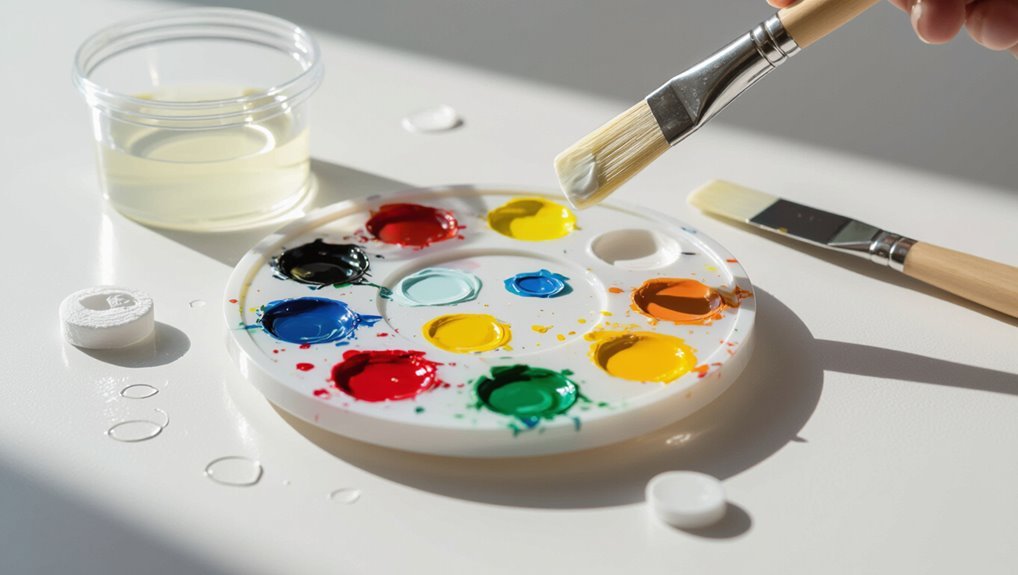
Scrape away loosened paint quickly by first softening it: soak a cloth with isopropyl alcohol or a commercial acrylic remover, press it over the dried spots for a few minutes, then use a plastic scraper or old credit card to lift the softened paint—repeat spot treatments until the palette’s clean.
You’ll speed palette maintenance by working small areas, rinsing residue, and using targeted cleaning techniques rather than soaking.
Who Needs This Guide: Which Painters Benefit Most
If you’re short on time and paint between projects, these quick methods keep your hobby palette usable without a marathon clean-up.
If you run a professional studio, you’ll appreciate techniques that save materials and maintain consistent working surfaces.
Art students and teachers will find the tips helpful for managing supplies during classes and critiques.
Hobbyists With Limited Time
1 thing that makes this guide valuable: it gets you back to painting fast when time’s tight.
You’ll learn time saving techniques and efficient art cleaning so you can clear palettes between sessions. Ideal if you juggle work, family, or quick hobby bursts.
Picture swift cleanup:
- cramped weekend desk
- coffee nearby
- thirty-minute session
- drying paint flakes
- saved evening for painting
Professional Studio Artists
You’ll also find this guide useful in a professional studio setting, where managing many palettes and tight schedules matters just as much as at-home quick sessions.
You’ll appreciate practical palette maintenance tips that save studio hours, prevent color contamination, and preserve expensive surfaces.
Adopt efficient paint removal techniques to keep workflow smooth, reduce downtime between commissions, and maintain consistent color mixing for client work.
Art Students And Educators
While juggling classes, critiques, and limited studio time, art students and educators need fast, reliable methods for removing dried acrylic from plastic palettes.
You’ll save time for art education, student techniques, and creative processes. Use these quick visuals to guide teaching methods and collaborative projects:
- shared palettes wiped between demos
- tidy trays for material conservation
- demo stations for classroom management
- swaps for resource sharing
- lists for project planning and artistic development
Why Acrylic Sticks to Plastic
Because acrylic paint is water-based when wet but forms a hard polymer film as it dries, it bonds to nonporous plastics by adhering to microscopic surface irregularities and forming chemical and physical links. You notice acrylic adhesion factors depend on plastic surface chemistry, temperature, and curing. Clean and gently flex the palette to break bonds.
| Factor | Effect | Tip |
|---|---|---|
| Surface energy | Higher adhesion | Wipe |
| Texture | Mechanical grip | Scrape |
| Contaminants | Weaken bonds | Clean |
| Temperature | Affects cure | Warm |
| Additives | Change tack | Test |
How Paint Age and Layer Thickness Affect Removal
If a paint layer’s fresh, it’ll come off with just soap and water or a gentle wipe; as it ages, the acrylic cross-links and hardens, making it far tougher to remove.
You’ll notice paint longevity and layer thickness dictate effort: thin recent films clean easily; thick, old crusts resist.
- thin smear
- tacky film
- crusted ridge
- layered plates
- glassy shell
Choose the Right Cleaning Tools First
Knowing how old and thick the paint is helps you pick tools that’ll actually work: soft cloths and mild soap for fresh smears, stiffer scrapers and solvent-soaked pads for crusted ridges.
You’ll want plastic or silicone scrapers, nylon brushes, microfiber cloths, and disposable pads. Choose tools that match your cleaning techniques and support ongoing palette maintenance to avoid scratches and speed future cleanup.
Household Solvents That Dissolve Acrylic Safely
You can often loosen dried acrylic with common household solvents like isopropyl rubbing alcohol or acetone-based nail polish remover.
Test a small, hidden area first to make sure the plastic won’t soften or cloud.
Use them sparingly, work in a ventilated spot, and rinse thoroughly after treatment.
Isopropyl Rubbing Alcohol
Reach for isopropyl rubbing alcohol when you need a safe, effective solvent for dissolving dried acrylic on plastic palettes.
You’ll notice isopropyl properties that soften dried film and weaken paint adhesion so you can wipe residue away. Apply, wait a few minutes, then scrub gently.
Visualize:
- cloudy solution lifting paint
- softened edges peeling
- damp cotton swab tracing
- streaks dissolving
- clean plastic beneath
Acetone Nail Polish Remover
One quick option is acetone-based nail polish remover, which dissolves dried acrylic fast and lets you wipe it away with minimal scrubbing.
You’ll apply a small amount to a cloth, test a discrete palette area, then gently rub. Acetone effectiveness varies by plastic; avoid prolonged soaking.
Use in a ventilated space, wear gloves, and rinse the palette thoroughly after removing nail polish residues.
Loosen Paint With Warm Soapy Water
Soak the palette in a basin of warm, soapy water for 15–30 minutes to soften the dried acrylic; the heat and detergent break the paint’s bond with the plastic, making it much easier to lift away with a scraper or sponge.
You’ll notice different paint types respond differently depending on palette materials.
- Bubbling edges
- Softened flakes
- Faded sheen
- Damp residue
- Liftable film
Lift Spots Using Isopropyl Alcohol
If warm, soapy water softened the paint but didn’t remove stubborn spots, grab a bottle of 70–99% isopropyl alcohol to lift what’s left.
Dampen a cotton swab or cloth, rub gently, and watch flakes release. Rinse area often to prevent smearing.
This method shows isopropyl effectiveness as a targeted paint removal technique among practical paint removal techniques for plastic palettes.
Soften Paint Gently With White Vinegar
Warm white vinegar gently loosens dried acrylic without harsh chemicals: heat a small amount until it’s just warm (not boiling), dab it onto the paint with a cloth or cotton swab, let it sit for 5–10 minutes, then rub lightly to lift softened flakes.
Use the vinegar method mindful of paint properties; you’ll ease removal without scraping.
- warm cloth
- softened edge
- flaky lifts
- gentle soak
- plastic-safe care
Break Paint Film Using Hand Sanitizer
Squirt hand sanitizer generously over the dried areas so the alcohol can start to break the paint film.
Let it sit for a minute, then use a soft cloth to gently scrub in circular motions.
You’ll see the paint lift as the sanitizer loosens the film.
Apply Hand Sanitizer Generously
Reach for a gel hand sanitizer and spread a generous layer over the dried acrylic spots on your plastic palette; its alcohol content softens and breaks the paint film so you can lift it more easily.
You’ll notice hand sanitizer effectiveness compared to alternative cleaning solutions.
Imagine:
- glossy streaks
- bubbling edges
- softened flakes
- wet sheen
- lifting corners
Gently Scrub With Cloth
Grab a soft cloth and press it over the softened acrylic, then gently rub in small circular motions to lift the paint film without scratching the plastic; the hand sanitizer will have loosened the edges so the flakes come away cleanly.
You’ll control pressure to avoid gouging; this cleaning technique respects material considerations.
Wipe residue away, reapply sanitizer if needed, and rinse the palette when finished.
Rubbing Alcohol vs Acetone: When to Use Each
When you’re deciding between rubbing alcohol and acetone, consider what you’re removing and how much risk you’ll accept: You’ll favor rubbing alcohol benefits for gentle lifting; use acetone sparingly due to acetone drawbacks on soft plastics.
Visualize results:
- softened paint edges
- stubborn flakes dissolving
- plastic warping risk
- fumes and ventilation
- test spot first
Using Commercial Acrylic Removers on Plastic
When you pick a commercial acrylic remover, choose one labeled safe for plastics to avoid warping or clouding.
Follow the manufacturer’s directions for application and use only the suggested amount to prevent damage.
Let the product sit for the recommended dwell time, then test a small area before treating the whole palette.
Choose Safe Solvents
1 clear rule: pick products labeled safe for plastics. You’ll prioritize solvent safety and consider eco friendly options.
Read labels, test a corner, and avoid harsh solvents that warp your palette. Visualize results:
- gentle gel remover
- dye-free formula
- low-odor bottle
- biodegradable label
- small test patch
Choose products designed for plastic to protect finish and your workspace.
Application And Dwell
Now that you’ve picked a plastic-safe remover and tested a small patch, it’s time to apply it carefully: work in a well-ventilated area, lay the palette flat, and follow the product’s instructions for amount and contact time.
Use targeted application techniques—apply sparingly, avoid pooling, and cover stubborn spots. Respect the recommended dwell time, then gently agitate and rinse.
How to Soak a Palette for Bulk Acrylic Removal
Soak the whole palette to loosen thick, dried acrylic before you try scraping or scrubbing.
Soak the entire palette first to loosen stubborn dried acrylic before attempting scraping or scrubbing.
Use gentle soaking techniques for effective bulk removal:
- Fill a shallow tray with warm, soapy water
- Submerge palette face-down briefly
- Let it sit 20–40 minutes
- Agitate water to lift flaking paint
- Rinse and repeat if needed
Scrape Without Scratching the Plastic
Before you start scraping, soften the paint with warm soapy water or a little rubbing alcohol so it lifts more easily.
Use a plastic scraper or an old credit card to gently push the softened paint off the palette.
Work slowly and keep the scraper flat to avoid scratching the plastic.
Use A Plastic Scraper
Grab a plastic scraper and work gently to lift dried acrylic without gouging the palette—apply light, even pressure and push at a shallow angle so paint peels away instead of digging into the surface.
Use plastic scraper techniques and effective scraping methods to protect the finish.
Visualize edges and motion:
- thin edge sliding
- flat blade gliding
- corner lifting paint
- steady shallow strokes
- repeat, not force
Soften Paint First
If scraping alone isn’t lifting the paint, soften it first so you can scrape without scratching the plastic. Apply warm soapy water or rubbing alcohol, let sit briefly, then scrape gently with a plastic tool. These paint removal techniques boost cleaning efficiency and cut risk. Monitor progress and repeat as needed.
| Method | Time | Tool |
|---|---|---|
| Warm water | 5–10 min | Plastic scraper |
| Alcohol | 2–5 min | Cotton pad |
| Soapy soak | 10–15 min | Soft brush |
Use Silicone and Plastic Scrapers Effectively
Work the scraper under softened paint in short, controlled strokes to lift flakes without gouging the palette.
You’ll alternate silicone scrapers and plastic scrapers for stubborn spots, angling edges and keeping pressure low so the surface stays smooth.
- thin curled paint edges
- shallow translucent residue
- tight corner deposits
- flexible blade glide
- clean, unmarked plastic
Clean Texture With a Toothbrush or Bristle Brush
Scrub gently with a soft toothbrush or a dedicated bristle brush to loosen textured paint without scratching the plastic surface.
Gently loosen textured paint with a soft toothbrush to avoid scratching the plastic surface.
Use a focused toothbrush technique in small circular motions, rinsing frequently to check progress.
Apply mild soap or a plastic-safe cleaner sparingly, and switch to a firmer bristle brush only if needed.
Pat dry with a lint-free cloth to prevent residue.
Soften Paint With Heat: Safe Methods
Apply controlled heat to soften dried acrylic so it lifts more easily from plastic without melting the palette.
You’ll use gentle heat sources and follow safety precautions based on paint types and palette materials to avoid damage.
Visualize the process:
- warm, pliable edge
- softened film lifting
- no warping of plastic
- steady hands and distance
- cooling before scraping
Hair Dryer vs Heat Gun: Which to Choose?
Which tool should you reach for—your hair dryer or a heat gun?
You want controlled heat effects without warping plastic. Use a hair dryer for gentle softening and lower risk to paint adhesion and palette shape.
Choose a heat gun only on low, kept moving, and at distance for stubborn patches, but expect greater risk of melting or altering paint adhesion if misused.
Freeze-and-Flake: Using Ice to Remove Paint
When paint’s gone hard and won’t budge, try chilling the palette so the acrylic becomes brittle and flakes off more easily.
You’ll use targeted ice application, wait, then gently coax paint flaking with a fingernail or plastic scraper.
Picture the process:
- Cube pressing against dried blob
- Frost rim cracking edges
- Tiny chips lifting free
- Scraper nudging loose flakes
- Clean wiped surface revealing plastic
Remove Paint From Wells and Tight Crevices
Once you’ve loosened the bulk of the paint with ice, focus on the wells and tight crevices where residue hides; you’ll need tools and solvents that reach into narrow spaces without scratching the plastic.
Use cotton swabs dipped in isopropyl alcohol or a mild acetone mix, a soft nylon brush, and toothpicks wrapped in cloth.
These dried paint techniques are essential palette maintenance tips.
Clean Curved and Irregular Plastic Palettes
Tackle curved and irregular plastic palettes by working methodically along their contours, using flexible tools and gentle solvents to avoid warping or scratching the surface.
You’ll use smart cleaning techniques for effective palette maintenance.
- rubber spatula tracing curves
- soft-bristled toothbrush scrubbing
- cotton swab in creases
- gentle solvent on rag
- warm soapy soak and rinse
Protect Non-Removable Decorations and Labels
If decorations or labels can’t be removed, shield them before you start cleaning to prevent damage from scrapers, solvents, or hot water.
Use painter’s tape or plastic wrap to cover artwork and firmly press edges to seal.
Cover artwork with painter’s tape or plastic wrap, pressing edges firmly to create a protective seal.
When applying solvents or heat, work away from covered areas.
These palette preservation techniques help protect decorations while you soften and lift dried acrylic without harming surface details.
Avoid Common Mistakes That Damage Plastic
Don’t reach for harsh chemicals when a gentle solvent will do, because strong cleaners can craze or discolor plastic.
Don’t scrub with steel wool or abrasive pads, since they scratch the surface and trap paint.
And don’t try heat methods like boiling or a heat gun unless the palette is rated for it, because heat can warp thin plastic.
Use Gentle Solvents
When dried acrylic won’t budge, reach for a gentle solvent rather than harsh chemicals that can craze or warp your plastic palette.
You’ll use gentle techniques and practice solvent safety: test a spot, dab with cotton, wait, wipe gently, rinse.
Visualize:
- small cotton swab
- tiny bottle cap
- soft microfiber cloth
- shallow dish of remover
- clear work surface
Skip Abrasive Scrubbing
Although it might seem faster to scrub hard, abrasive pads and brushes can leave fine scratches and dull the finish on your plastic palette. You should use gentle cleaning techniques, soft cloths, and mild solvents, balancing solvent safety with effectiveness. Avoid harsh scrubbing and test products first.
| Tool | Advantage | Caution |
|---|---|---|
| Soft cloth | Safe | Test solvent |
| Plastic scraper | Gentle | Don’t gouge |
| Cotton swab | Precise | Avoid soaking |
Avoid Heat Techniques
You can protect your plastic palette by steering clear of heat-based fixes—heat warps, softens, and can permanently deform many plastics used for palettes.
You should rely on mild solvents and scraping, respecting acrylic paint properties and palette maintenance tips.
Visualize damage and safer methods:
- Melted rim drooping
- Glossy clouding
- Warped wells
- Sticky softened paint
- Clean, flat surface preserved
How to Test a Spot Before Using Solvents
Start by selecting a small, inconspicuous area on the palette—like a corner or the underside—so you can safely check for adverse reactions; you’ll apply your chosen solvent there first to see if it softens the paint without damaging the plastic.
Use gentle test methods: dab a cotton swab, wait a minute, and observe. Spot testing lets you compare effects and avoid surprises.
Remove Residual Pigment Stains After Paint Removal
Once the bulk of the dried paint is gone, tackle lingering pigment stains with a targeted cleaning routine that won’t harm the plastic.
After removing dried paint, gently lift remaining pigments with mild, non‑abrasive cleaners to protect the plastic.
You’ll want to use mild abrasives and non‑staining cleaners to lift color without scratching. Use these pigment removal techniques as palette maintenance tips:
- Soft toothbrush scrubbing
- Baking soda paste
- Gentle melamine sponge
- Rubbing alcohol dab
- Repeated rinse and blot
Disinfect and Deodorize Cleaned Palettes
After you’ve removed paint and stains, disinfecting and deodorizing the palette will keep it sanitary and ready for future use; simple, non‑abrasive methods protect the plastic while killing germs and eliminating odors. You’ll use gentle soap, diluted vinegar, or eco friendly cleaners. Rinse, air dry, and store dry. Follow these palette maintenance tips for longevity.
| Method | Benefit |
|---|---|
| Soap + water | Removes residue |
| Vinegar rinse | Disinfects |
| Baking soda paste | Deodorizes |
| Eco cleaners | Non-toxic |
Quick-Dry Tricks to Get Back to Painting Fast
Need to get back to painting fast? Use quick cleaning techniques and simple palette maintenance tips so you can resume work immediately.
Need to resume painting fast? Use quick-clean tricks and simple palette care to get back to work immediately.
Try these fast, visual reminders:
- Wipe damp brush strokes across the surface
- Blot excess paint with paper towel
- Spray water, then scrape gently
- Air-dry in sunlight or near a fan
- Keep a dedicated quick-clean rag nearby
Restore Shine: Bring Back Glossy Plastic Finish
Once the paint’s gone, you’ll want to gently clean the surface to avoid scratching the plastic.
Use a soft cloth with mild soap or a plastic-safe cleaner to lift residue without abrading the finish.
Then apply a small amount of plastic polish or a microfiber buff to restore the glossy look.
Gentle Surface Cleaning
Start by wiping the palette with a soft, lint-free cloth dampened with warm water and a drop of mild dish soap to remove dust, oily residue, and any loose paint particles; work in gentle circular motions and rinse the cloth frequently to avoid re-depositing grime.
Then use gentle abrasives sparingly and soft sponges for stubborn marks.
Visualize:
- smooth rinses
- soft wiping
- faint streaks
- light buffing
- clean edges
Restoring Gloss Finish
A glossy finish makes your plastic palette look cared for and helps paint glide smoothly, so you’ll want to revive that sheen after cleaning.
Use light buffing with a microfiber cloth and a small amount of plastic polish or car trim restorer. Work in circular motions, rinse, then dry.
These gloss finish techniques focus on restoring plastic without abrasives, keeping surfaces smooth and reflective.
Maintain Palettes to Prevent Acrylic Buildup
Even if you only paint occasionally, keep a routine for wiping down your plastic palette after each session so dried acrylic never has the chance to build up and become a stubborn chore.
Wipe your plastic palette after every session—prevent dried acrylic buildup before it becomes a stubborn chore.
You’ll extend palette care and acrylic preservation with simple maintenance tips:
- wipe residue after paint layering
- set cleaning frequency reminders
- use soft drying techniques
- apply light protective coatings
- choose compact storage solutions
Cleaning Disposable Palettes: Quick Methods
When paint dries on disposable palettes, you can usually scrape off most of it immediately with a palette knife or a credit card.
Then wipe the rest away with a damp paper towel or baby wipe. For stubborn spots, loosen paint with warm soapy water or isopropyl alcohol, then peel away.
Use quick cleaning techniques for effective paint removal so you can recycle or discard trays promptly.
Adapt Methods for Mixing Trays and Paint Pans
1 simple shift in technique will make removing dried acrylic from mixing trays and paint pans much easier: treat them like small, contoured surfaces rather than flat palettes.
You’ll adapt mixing techniques and respect varied palette materials. Use gentle scraping, soak shallow wells, flex pans, brush crevices, and rinse with warm water to lift dried paint efficiently.
- shallow wells
- curved edges
- tight corners
- removable pans
- textured surfaces
When to Refurbish vs Replace Your Palette
Decide whether to refurbish or replace your palette by weighing how much damage, staining, or warping affects usability versus the time and cost of restoration.
If scratches or stubborn stains don’t hinder mixing, refurbish to extend palette longevity and improve cost efficiency.
Replace when warping, cracked surfaces, or persistent contamination compromise color accuracy or cleaning takes longer than buying a reliable new palette.
Repurpose Damaged Palettes After Cleaning
Once you’ve cleaned a damaged palette, you can upcycle the trays into storage for beads, screws, or leftover paint.
You might cut sections to make colorful coasters with resin or felt backing.
Or use whole palettes as bases for small mixed-media canvases, letting the dried paint become part of the artwork.
Upcycling Palette Trays
If a palette’s too scratched or stained for painting again, you can give it new life by upcycling it into something useful—think paint-mixing coaster, jewelry tray, or seed starter.
Embrace palette recycling and creative upcycling: repurpose wells and lids into practical pieces.
Ideas:
- Tiny succulent planter
- Bead sorting tray
- Desk organizer for clips
- Soap dish
- Mini paint-station for kids
Turning Palettes Into Coasters
When you’ve cleaned a plastic palette but it’s too scarred for painting, turn it into a set of useful coasters by trimming wells, sanding rough edges, and sealing the surface to protect tables from stains and moisture. You’ll craft palette coasters that suit your decor and support eco friendly projects.
| Step | Tool | Time |
|---|---|---|
| Trim | Utility knife | 10m |
| Sand | Sandpaper | 5m |
| Seal | Varnish | 15m |
Creating Mixed-Media Canvases
Although the palette’s wells and edges might be too damaged for painting, you can transform that cleaned plastic surface into a sturdy mixed-media panel by reinforcing it, priming for adhesion, and layering textures.
Use mixed media techniques and canvas layering to build depth. Try adding:
- burlap strips
- gessoed cardboard
- modeling paste stamps
- metal findings
- tissue paper collages
Clean Brushes and Tools During Palette Cleanup
Start by rinsing your brushes and tools under lukewarm running water to soften any remaining paint.
Then gently work bristles or edges with your fingers or a soft brush comb to dislodge softened pigment.
Use mild soap and a gentle circular motion for brush care, reshape bristles, and let tools dry flat.
Regular tool maintenance prevents damage and speeds future cleanups.
Dispose of Paint Residue and Solvent Waste Safely
After rinsing brushes and tools, you’ll need to handle the leftover paint and any solvent-soaked materials responsibly to protect drains and the environment.
Follow safe paint disposal and solvent safety steps:
- Collect residue in sealed containers
- Wipe rags into metal tins with lids
- Never pour solvents down sink
- Label waste for hazardous pickup
- Use local disposal programs
Build a Fast Daily Palette-Cleaning Routine
Keep your palette ready by wiping it down at the end of each session so dried paint never builds up.
You’ll rinse with water, scrape gently while paint’s damp, and use a soft cloth for daily maintenance.
Set a two-minute routine: remove excess, spray mild cleaner, wipe, and air dry.
This efficient cleaning habit saves time and prevents stubborn residue.
Troubleshooting Stubborn Spots and Paint Layers
Don’t panic if a few stubborn spots or layered paint patches won’t budge—treatment varies by age and thickness.
You’ll assess, soften, and remove carefully to avoid scratching plastic.
Try targeted approaches for stubborn stains and multiple paint layers:
- warm water soak
- gentle scraper edge
- rubbing alcohol dab
- commercial remover applied sparingly
- repeat short cycles until clean
Quick Reference: Method Matrix by Paint Age & Severity
Use this matrix to match the paint’s age and severity to the quickest safe method, so you can act confidently and avoid overworking the plastic. Match paint consistency and drying time to method; consider acrylic properties, paint adhesion, surface preparation, cleaning frequency, palette maintenance, and tool selection.
| Age/Severity | Quick Method |
|---|---|
| Fresh/light | Wipe with damp cloth |
| Dried/moderate | Soak + scrape |
| Old/heavy | Solvent + gentle chisel |
Frequently Asked Questions
Can Dried Acrylic Transfer Colors Between Palettes During Storage?
Yes — dried acrylic can transfer and cause color contamination between palettes during storage. You should separate palettes, seal or cover wells, and practice regular palette maintenance to prevent accidental mixing and preserve color purity for future use.
Will Solvents Harm Printed Measurement Marks on Plastic Palettes?
Yes — some solvents can fade or dissolve printed measurement marks, so you’ll need to match solvent types to palette materials; test alcohols, soap, or mild acetone gradually to avoid damaging ink or the plastic surface.
How to Remove Dried Mixed Media (Ink, Oil Pastel) From Plastic Palettes?
You can soften dried mixed media with isopropyl alcohol or mild solvent, scraping gently with a plastic scraper; you’ll follow paint removal techniques and palette maintenance tips like rinsing, drying, and avoiding harsh abrasives to protect markings.
Are There Safe Methods to Clean Pet Hair or Dust Stuck in Wet Paint?
Like plucking a stray star, you can gently lift pet hair from wet paint with tweezers; use soft brushes, tack cloths, or a light blow for dust removal—these cleaning techniques minimize disruption and preserve paint adhesion.
Can UV Exposure Make Acrylic Paint Easier to Remove?
Yes — UV effects can weaken acrylics over time, so you’ll find older UV‑exposed paint less durable; however, UV mainly degrades binders and reduces paint adhesion slowly, so it’s not a fast removal method.
Conclusion
You’ve got this—cleaning a plastic palette doesn’t have to be a chore. Quick action matters: acrylics can cure to a rock-hard film in 24–48 hours, and one study found properly thinned acrylics lose workability by about 60% within a day, so routine wiping cuts future effort dramatically. Use the right tools, ditch solvent responsibly, and adopt the fast daily habit outlined here to keep dried buildup—and cleanup time—to a minimum.
