
How to Tape Baseboards for Painting Walls Cleanly
You’ll get razor‑sharp wall lines by cleaning baseboards, sanding and removing loose caulk, then applying low‑ or medium‑tack painter’s tape snug to the trim. Press tape firmly with a putty knife, seal the edge with a thin bead of clear acrylic or matching wall paint, paint in small sections, and remove tape at a 45° angle while paint is tacky. Follow a few pro tips and you’ll avoid bleed and save touch‑ups—keep going for full technique and troubleshooting.
Why Taping Baseboards Gives a Clean Paint Line
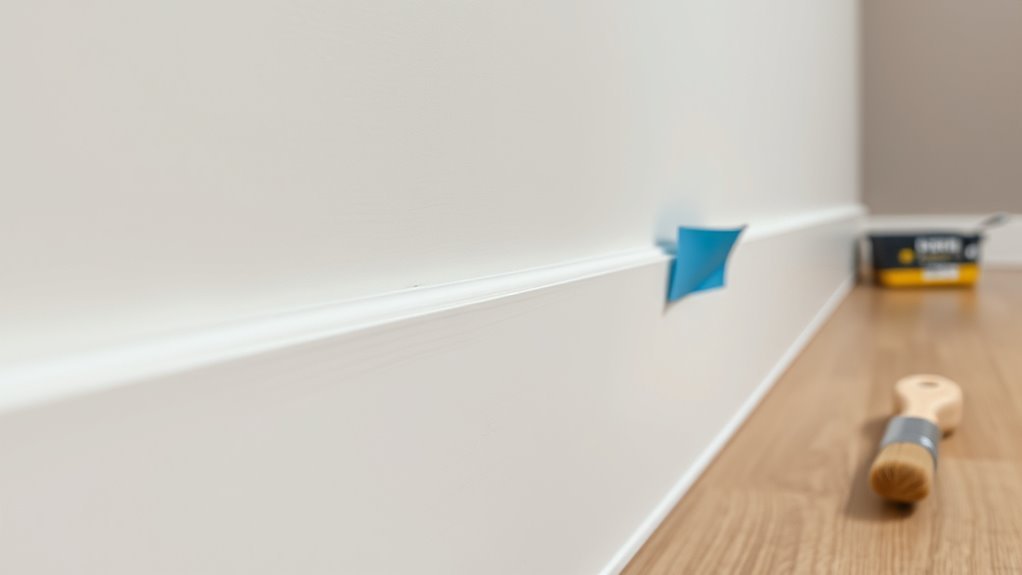
When you tape baseboards before painting, you create a sharp physical barrier that keeps paint off trim and gives your wall edges a crisp, professional look. You control bleed and get a straight edge without painstaking brushwork.
The tape lets you work quickly with rollers, switching between decorative accents and broad fields without worrying about stray marks. It preserves trim finish while you explore bold color schemes, so borders stay clean even with contrasting hues.
Proper adhesion and removal timing prevent peeling paint or residue, and careful alignment ensures the line follows molding contours for a flawless, intentional finish.
Who This Guide Is For and How to Use It
This guide helps DIYers, renters, and pros who want crisp paint lines without hiring a contractor.
You’ll find step-by-step instructions, tool lists, and quick troubleshooting tips.
Use the sections in order for a full job or skip to specific steps if you just need a quick refresher.
Who This Guide Helps
If you’re tackling a room repaint and want crisp, paint-free baseboards without hiring a pro, this guide walks you through the tape-and-paint process step by step. You’ll find value whether you’re a DIY beginner or someone with basic painting experience.
Use it if you care about furniture placement before taping, want neat edges when trying new paint color coordination, or simply prefer a polished finish. It’s geared to homeowners, renters (with landlord-friendly techniques), and weekend renovators.
You’ll get practical, actionable tips—no jargon—so you can work confidently, avoid common mistakes, and save time and money.
How To Use It
Although you might be new to painting, you’ll find the steps here straightforward and easy to follow. This guide suits DIYers, renters, and pros who want clean edges for simple updates or creative decorating projects referencing historical styles. Read once, then work room by room. Follow the sequence: prep, tape, paint, remove, touch up.
- Gather supplies and test tape on scrap.
- Clean and sand baseboards where needed.
- Apply tape with firm, even pressure.
- Paint in thin coats, avoiding heavy buildup.
- Remove tape at a 45° angle while paint is tacky.
Use photos to track progress and repeat.
Quick Step‑By‑Step: Tape Baseboards in 6 Steps
Before you start painting, follow these six clear steps to tape your baseboards so you get clean lines and minimal touch‑ups.
1) Clean the baseboards and floor; remove dust and old caulk so tape adheres.
2) Choose low‑tack painter’s tape that won’t lift finishes or snag creative decorating details.
3) Press tape along the top edge of the baseboard, keeping a straight line.
4) Seal the tape edge with a plastic putty knife or your finger.
5) Paint the wall, cutting in over the tape.
6) Remove tape while paint is tacky; collect scraps for eco-friendly materials disposal.
Tools You Need for Taping Baseboards
Before you start, gather the right tape, prep tools, and protection accessories so you don’t stop midway. You’ll want to choose the proper painter’s tape for your baseboards, have items like a putty knife and cleaner for prep, and grab drop cloths or plastic sheeting to protect floors.
With those on hand, taping goes faster and your paint lines will stay sharp.
Essential Tape Types
When you’re prepping baseboards for a clean paint line, choosing the right tape makes the difference between a crisp edge and a frustrating cleanup job. You’ll match tape type to surface, paint, and trim profile — even consider decorative accents or historical styles when preserving detail.
Common choices include:
- Painter’s blue tape: general use, clean removal
- Delicate-surface tape: for fresh plaster or wallpaper
- Ultra-sealing tape: resists bleed on glossy paints
- Frogtape (or similar): built-in edge seal for razor lines
- Heavy-duty masking tape: for rough exterior trim
Pick tape by adhesion level and removal window to avoid damage.
Preparation Tools Needed
As you get ready to tape baseboards, gather a compact kit of reliable tools so the job goes quickly and cleanly. You’ll need painter’s tape, a utility knife, and a small putty knife for smoothing edges. A measuring tape and pencil help with straight lines and marking decorative accents to avoid paint overlap. A damp cloth cleans surfaces before taping; good prep improves color matching later. Keep a sanding sponge handy for rough spots.
| Tool | Use | Tip |
|---|---|---|
| Painter’s tape | Protect trim | Choose low-tack |
| Utility knife | Trim tape | Sharp blade |
| Putty knife | Smooth edges | Angle lightly |
Protection Accessories
Now that you’ve gathered the basic tools, add a few protection accessories to keep paint off floors, furniture, and your hands. You’ll want simple gear that saves cleanup time and safeguards decorative accents and upholstery while you tape baseboards.
- Drop cloths (canvas or plastic) for floors
- Painter’s plastic or cloth covers for furniture protection
- Disposable gloves to keep hands clean
- Edge guards or trim shields to protect decorative accents from splatter
- Low-tack painter’s tape for delicate surfaces
Choose breathable covers for furniture, reuse canvas drop cloths, and replace tape if adhesive loses grip to ensure neat edges.
Optional Supplies That Speed the Job
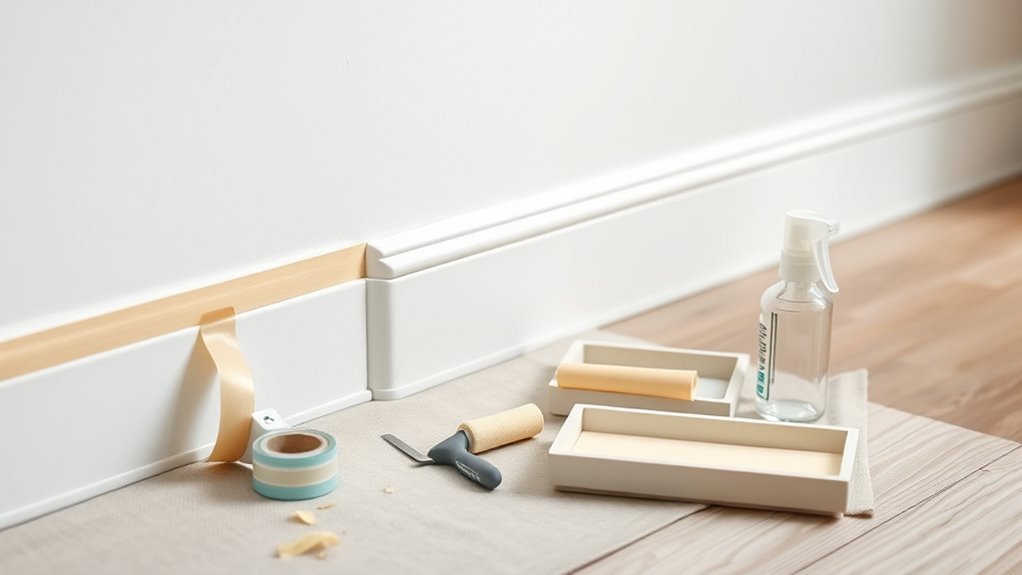
If you want to speed up the job and get sharper lines, a few optional tools make a big difference: a good-quality painter’s tape for quick adhesion, a trim edging tool to guard against bleed, a microfibre cloth for wiping stray paint, and a compact caulk gun for fast touch-ups.
Add a small angled sash brush for precise cutting-in, a corner roller to reach tight spots, and a low-lint pad for quick cleanup.
Explore creative painting techniques and eco-friendly tape options to match project goals. These extras save time, reduce mistakes, and make final touch-ups far easier.
Choose the Best Painter’s Tape for Baseboards
You’ll want tape with the right adhesion level so it sticks firmly to baseboards without pulling paint off when you remove it. Check surface compatibility—some tapes work better on painted, glossy, or porous trim than others.
Match the tape’s stickiness to your baseboard finish for clean edges and damage-free removal.
Tape Adhesion Level
When choosing painter’s tape for baseboards, pick one with the right adhesion level so it sticks firmly without pulling paint off when removed. You’ll balance hold and release by considering tape adhesion and simple surface prepping before application.
Use tape that matches job duration and paint type to avoid damage.
- Low-adhesion for delicate finishes
- Medium-adhesion for typical interior trim
- High-adhesion for textured or long-duration jobs
Test a small strip before full application. Remove within manufacturer’s recommended time.
You’ll press edges firmly and peel slowly at a 45° angle to protect fresh paint.
Surface Compatibility
Because different baseboard materials and finishes react differently to adhesives, match the tape to the surface before you start painting. You’ll check material—wood, MDF, metal, or painted drywall—and choose a tape designed for that finish.
Consider texture variations: smooth trim handles low-tack tape, while rough or heavily grained wood needs stronger adhesion.
Do surface preparation: clean dust, oil, and old finish residue so tape bonds evenly.
Test a short strip for 24 hours to *guarantee* easy removal without paint lift or residue.
Remove tape slowly at a 45-degree angle after paint skins, adjusting technique by surface type.
Low‑Tack, Medium‑Tack, High‑Tack: Which to Use
If you’re wondering which painter’s tape to pick, match the tack level to your surface and how long the tape will stay up. You’ll choose low, medium, or high tack based on fragility, texture, and paint time.
Consider durability and removal risk, and tie choices to creative painting techniques and eco friendly tape options when possible.
Weigh durability and removal risk, and match tape choice to painting techniques and eco-friendly options.
- Low-tack: delicate surfaces, short projects
- Medium-tack: most walls and trim, balanced hold
- High-tack: rough or exterior surfaces
- Removal: peel slowly at a 45° angle
- Test first: try a small hidden spot
Pick tape that protects finish without damage.
Tape Width: 1/2″, 3/4″, or 1 1/2″-When to Pick Each
Although tape width might seem like a small choice, it determines how clean your edges are and how much masking work you’ll do. Pick 1/2″ when trimming narrow moldings or when detail requires minimal overlap; it’s precise but offers less tape durability so you’ll replace pieces more often.
Choose 3/4″ for standard baseboards—balanced coverage and decent tape durability, limiting paint bleed when pressed firmly.
Use 1 1/2″ for wider boards or when you need extra protection against splatter; its broader surface resists lifting and reduces seeping. Match width to profile and work speed for best results.
Prepare Baseboards Before Applying Tape
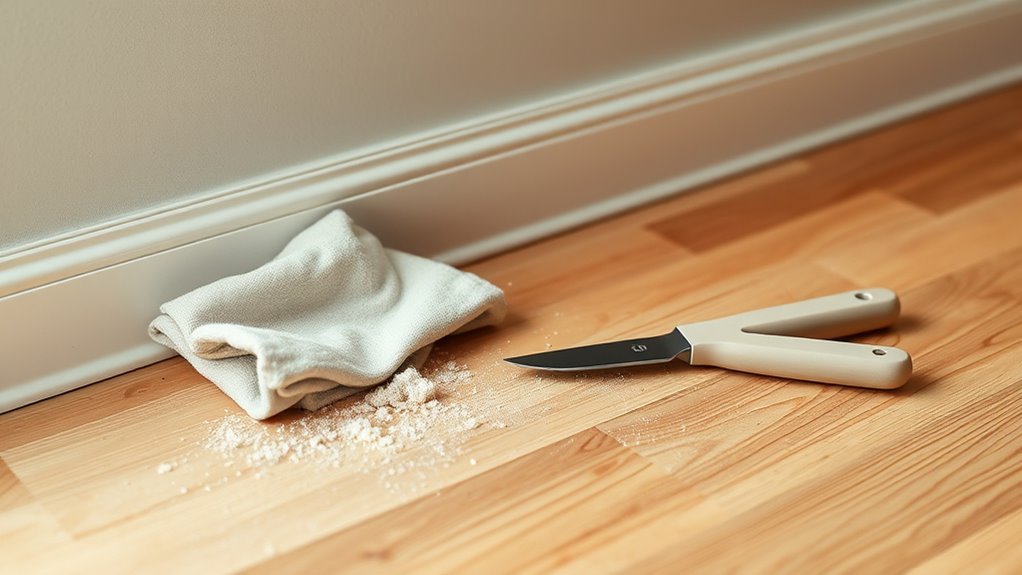
Before you apply tape, make sure the baseboards are spotless so the tape will stick properly.
Scrape away any loose caulk and sand rough spots, then wipe off all dust with a tack cloth or damp rag.
If the surface’s clean and smooth, your tape will seal better and give you crisper paint lines.
Clean Surface Thoroughly
Since paint won’t stick well to dust, dirt, or old gloss, take a few minutes to clean the baseboards thoroughly before you tape. Focus on surface cleaning and dust removal so the tape seals and paint adheres.
Work top to bottom, using gentle, effective steps.
- Wipe with a dry microfiber to lift loose dust.
- Clean with mild soap and water for grime.
- Rinse and wring cloth frequently to avoid streaks.
- Dry completely with a clean towel to prevent moisture beneath tape.
- Inspect for remaining residue and repeat targeted cleaning if needed.
Now your baseboards are ready for precise, lasting tape application.
Remove Loose Caulk
If caulk is cracked, peeling, or soft, remove it so your tape can sit flush against the joint and the paint will seal properly. Start caulk removal by running a utility knife or caulk removal tool along the bead, lifting loose sections gently.
Pull away softened material with a putty knife or firm plastic scraper, working parallel to the seam to avoid gouging the baseboard. Dispose of residue and inspect the joint for remaining bits.
This surface preparation step guarantees tape adheres evenly and prevents paint bleed. Don’t apply tape over tacky or loose caulk—replace or repair before taping.
Sand And Dust Off
Once you’ve removed old caulk and repaired any soft spots, sand the baseboards lightly to knock down rough edges and scuff glossy finishes so tape and paint will stick.
You’ll prep surfaces efficiently and protect decorative accents and material durability by removing dust and loose particles before taping. Follow these quick steps:
- Use 120–180 grit sandpaper for light scuffing.
- Sand along profiles, not across details, to preserve decorative accents.
- Vacuum the dust with a brush attachment.
- Wipe with a slightly damp microfiber cloth; let dry completely.
- Inspect for remaining debris and repeat spot-sanding as needed.
Remove Dust, Grease, and Adhesive Residue
Before you tape, clear the surface of dust, grease, and any sticky residue so the tape will stick and the paint lines stay sharp.
Start by using cleaning cloths or microfiber rags for dust removal, wiping along the baseboard and floor joint.
For greasy spots, dampen a cloth with mild detergent or a trisodium phosphate alternative, then rinse with a clean damp cloth.
Remove adhesive residue with a little rubbing alcohol or a commercial adhesive remover, testing an inconspicuous spot first.
Let everything dry fully before applying tape so adhesive bonds properly and paint edges remain crisp.
When and How to Remove Old Caulk or Loose Paint
When old caulk is cracked or paint is peeling along the baseboard, you’ll want to remove it so new caulk and tape can adhere properly and give you a clean line. Start by assessing affected areas: Caulk removal and Loose paint must be cleared back to a firm edge. Use a utility knife, putty knife, and caulk remover gel for stubborn sections. Sand feathered edges smooth.
- Score and lift old caulk
- Apply solvent or gel where needed
- Scrape loose paint to sound substrate
- Sand and vacuum dust
- Wipe with mineral spirits before taping
Now you’re ready to tape.
Protecting Uneven or Textured Baseboards
If your baseboards have gaps, grooves, or heavy texture, you’ll need to seal and bridge those irregularities so tape and paint don’t bleed. Start by cleaning dust and grease, then run a bead of paintable caulk into gaps and smooth with a wet finger or tool.
For deep grooves or decorative accents, use flexible painter’s putty or a thin strip of foam backer before taping. Press low-tack tape firmly over sealed areas, feathering edges for a tight seal.
If textured wallpapers meet the baseboard, protect their edge with a scrap of tape to avoid adhesive transfer.
Measure and Cut Tape Like a Pro
Now that the uneven edges are sealed, get precise with your tape so paint lines stay sharp. You’ll measure twice and cut once to protect both baseboard and floor. Use a straight edge and fine ruler, mark lengths, and cut tape on a slightly angled scissors tip.
Now that edges are sealed, tape precisely—measure twice, cut once, and press edges for razor‑sharp paint lines
Consider patterns if you’re blending creative decorating or matching historical styles—shorter strips help curves and corners.
- Measure from corner to corner
- Cut slightly longer than needed
- Use a fingertip to press edges
- Overlap seams by 1/8 inch
- Trim excess after painting dries
Stay steady; neat cutting makes a pro finish.
Align Tape Perfectly Along Straight Baseboards
Because a steady edge is everything, start by anchoring one end of the tape at the corner and slowly roll it along the baseboard, keeping the tape’s edge flush with the trim line.
Press firmly with your thumb or a plastic scraper to eliminate bubbles and confirm adhesion, especially near decorative accents where paint bleed shows easily.
Work in short sections, overlapping slightly to maintain a straight line.
For modern styles with clean, sharp progressions, check alignment from multiple angles and adjust before sealing.
Trim any excess with a sharp utility knife and re-press the edge to guarantee a crisp paint boundary.
Taping Around Outside Corners and Inside Angles
You’ll want a few extra tools—scissors, a utility knife, and a small putty knife—to handle corners cleanly.
For outside corners, press and fold the tape snugly over the edge, trimming any excess for a tight seal.
For inside angles, score or crease the tape and press it into the corner so paint can’t bleed under.
Tools For Corners
When you tackle corners—both outside edges and inside angles—having the right tools makes the job far neater and faster. You’ll want gear that protects decorative accents and avoids damaging wallpaper borders while creating crisp paint lines.
Essentials include:
- Quality painter’s tape (thin, flexible for angles)
- A corner tucker or plastic folding tool for tight creases
- A sharp utility knife with fresh blades for clean cuts
- A small angled brush to seal gaps and feather edges
- A flexible putty knife or caulk tool for smoothing tape and removing bubbles
Use each tool deliberately to speed work and improve results.
Taping Outside Corners
How do you tape outside corners so paint lines stay sharp without tearing wallpaper or trim? Start by pressing painter’s tape along one wall up to the corner, burnishing firmly.
Fold tape over the edge so it bridges the corner, then run a separate strip from the other wall, overlapping slightly.
Trim excess with a sharp blade at the corner to prevent lifting.
Use low-tack tape near delicate wallpaper or trim, and sample paint for color matching if touching trim.
Paint in thin coats, let dry briefly, and do tape removal at a 45° angle while paint is still slightly tacky to avoid peeling.
Taping Inside Angles
Because inside angles trap stray paint and show every imperfection, you’ll want a careful taping approach that seals joints without gumming up corners. Start by cleaning and drying the angle, press tape into the crevice, and fold sharply for a crisp line.
For textured surfaces or decorative accents, use painter’s tape that conforms, or cut narrower strips to avoid masking detail. Remove tape while paint is tacky, pulling back on itself at a 45° angle.
- Clean the angle first
- Use thin, flexible tape
- Press firmly into the joint
- Trim for decorative accents
- Work slowly on textured surfaces
Tape Around Door Casings and Trim Intersections
If your goal is crisp paint lines where walls meet door casings and other trim, start by cleaning the surfaces and pressing the tape firmly along the casing’s edge, keeping the roll tight so the tape follows any contours.
Work from the top down, overlapping short pieces at corners to maintain alignment where trim intersections meet.
For decorative accents or rooms with historical styles, match tape placement to moulding profiles so paint lines sit in shadow gaps, not on raised edges.
Remove tape while paint is tacky to avoid peeling.
Use a putty knife to seal edges over complex joins.
Taping Baseboard End Caps and Returns
When you tape baseboard end caps and returns, start by measuring and marking the exact edges so your tape lines up squarely.
Cut and press the tape into the corner joints, then seal corners carefully to prevent paint bleed.
Keep tape tight against both surfaces and smooth any gaps before you paint.
Measure And Mark
Before you apply tape, measure and mark each end cap and return so your cuts and overlaps line up perfectly. You’ll want precise marks to keep paint edges crisp and to simplify tape removal later. Note where trim meets wall, inside corners, and profile changes.
- Measure from corner to end cap and note on tape
- Mark return angles and transfer to tape backing
- Check overlap allowances for neat seams
- Compare exposed wood to paint for color matching before taping
- Re-measure after any sanding or filler work
Keep notes brief and consistent so your taped joints sit flush and clean.
Seal Corners Carefully
With your measurements and marks set, focus on sealing corners and end caps so paint can’t sneak behind the tape.
When you reach a corner, pause and cut tape slightly longer than the return; overlap at a 45° angle for clean corner sealing. Press tape into the joint with a putty knife or your fingernail, smoothing from the wall toward the baseboard to guarantee adhesion.
For inside corners, fold tape neatly and burnish the fold.
For end caps, wrap tape around the end and trim flush.
Maintain tape precision by checking edges under light before painting to prevent bleed.
Handling Baseboards With Shoe Molding
Ever wonder how to tape baseboards that have shoe molding without trapping paint or leaving jagged lines? You’ll work around the small gap and profile carefully so Decorative finishes and Historical styles stay crisp. Use thin painter’s tape and press it to the shoe’s curve, not the wall.
- Clean dust from the shoe molding first
- Use a razor to trim tape at miters
- Overlap tape slightly at joints
- Use a putty knife to burnish tape along the shoe
- Remove tape slowly at a 45° angle
These steps keep edges sharp and protect trim details.
Seal the Tape Edge to Prevent Bleed
Once you’ve laid the tape, press a thin bead of clear acrylic caulk or paintable latex along the tape’s inner edge and smooth it into the seam so paint can’t creep under. Work in short runs, tooling the sealant with your finger or a damp cloth to form a continuous, low-profile fillet. That edge sealing step blocks gaps where paint bleed starts, especially on uneven baseboards or textured walls.
Let the caulk skin over fully before painting; otherwise the tape can pull wet sealant. When dry, paint up to the tape for a crisp line, then remove the tape promptly.
Burnish Tape With a Putty Knife or Card
Once the tape’s in place, press it down with a putty knife or a stiff card using firm, even pressure to create a tight seal.
Keep the edge flat against the baseboard so the adhesive bonds fully and won’t lift during painting.
Run your fingers or the tool along the length to check for any gaps and re-seat any spots that didn’t stick.
Firm, Even Pressure
When the tape’s down, press it firmly and evenly along the edge so paint won’t bleed under it. You’ll boost adhesive strength and compensate for tape elasticity by burnishing with a putty knife or stiff card. Work methodically from one end to the other, keeping pressure constant.
- Hold the tool at a low angle
- Use steady, overlapping strokes
- Apply extra pressure on corners
- Check for gaps or bubbles
- Re-burnish after repositioning
Don’t tug or stretch the tape; that changes its elasticity. If you spot lifting, press again immediately.
Consistent, even pressure creates a crisp paint line every time.
Use Firm, Flat Edge
Because the tape’s edge is only as good as the seal you make, burnish it with a firm, flat tool like a putty knife or stiff card to lock the adhesive to the baseboard and wall. Press along the tape’s length, angling the tool to squeeze out air and guarantee full contact. Use short, overlapping strokes and reapply pressure at corners.
These adhesion techniques prevent paint bleed without harming surfaces. Keep tools and spare rolls in proper tape storage so tape stays clean and sticky between sessions. Replace any warped cards and discard contaminated tape to maintain reliable seals every time.
Check For Seal Gaps
Although you’ve already pressed the tape down, you still need to inspect it closely for tiny gaps where paint can sneak through. Run a putty knife or stiff card along the edge and look for any bubbles, lifted corners, or uneven spots. Burnishing forces adhesive into creases and improves seal gaps.
If you find issues, lift and reapply or press harder while smoothing outward. For stubborn gaps, add a thin bead of painter’s caulk before retaping.
Quick checklist:
- Check for bubbles along the length
- Feel for lifted corners
- Smooth edges with firm pressure
- Retape problem sections
- Apply caulk for gap sealing
Painting Technique for Taped Baseboards
If you want crisp, paint-free baseboards, start by sealing the tape edge with a thin swipe of the same wall paint or a clear caulk so the wall color can’t bleed under the tape. This creates a smooth barrier and gives you a clean line when you roll or cut in.
Work in small sections, pressing tape firmly against corners and varied baseboard profiles. Use Taping techniques that match Baseboard textures—fold tape into grooves or use thinner tape for delicate moldings.
Cut in with a steady brush, then roll lightly. Remove tape carefully while paint feels tacky to avoid lifting.
How Long to Wait Before Removing Tape
When you’ve finished rolling or cutting in, don’t wait for paint to feel completely dry—pull the tape while the paint is still slightly tacky, usually 30 to 60 minutes for latex paint in normal conditions; this prevents the paint film from peeling with the tape and gives you the cleanest edge.
You’ll judge surface readiness by tackiness, not appearance. Consider these quick checks:
- Inspect edges for set but slight give
- Tap a hidden spot to test tack
- Factor room temperature and humidity into drying time
- Remove tape at a 45° angle smoothly
- Keep a utility knife handy for stubborn spots
Best Way to Remove Tape for a Clean Edge
Now that you know to pull tape while the paint is slightly tacky, the way you remove it will determine whether you get a razor-sharp line or torn paint. Start at a 45-degree angle, pulling back slowly and steadily along the wall, not upward. Keep tension low to avoid lifting dried paint.
If paint resists, score the edge with a utility knife and continue. Use creative painting techniques like small touch-up glazing rather than aggressive scraping.
Choose eco-friendly tape options that release cleanly; they often peel smoother and reduce chemical residue. Finish by inspecting edges under good light and correcting minor flaws.
Fix Paint Bleed or Jagged Edges After Removal
Even after careful taping and patient removal, you can still get bleed or jagged edges—so act promptly to tidy them before they catch your eye. Start by assessing paint texture and how much lifted during Tape removal.
Lightly sand or scrape raised ridges, then clean dust. Feather edges so new paint blends smoothly.
- Use fine-grit sandpaper for subtle smoothing
- Scrape with a plastic putty knife for stubborn beads
- Wipe with a damp cloth to remove residue
- Apply a thin coat of primer where needed
- Repaint small sections with a steady brush
Finish only when texture matches surrounding wall.
Quick Touch‑Up Tricks for Baseboard Paint Lines
If you spot small gaps or stray marks after smoothing edges, you can fix baseboard paint lines quickly with a few simple tricks. Match touch-up paint closely for color coordination; test a tiny swatch first.
Use a fine artist’s brush or a short angled brush for controlled strokes, dragging paint away from the wall to keep a crisp line. After paint dries, gently perform tape removal checks to guarantee no new peeling occurs nearby.
For stubborn spots, lightly sand, dust, and reapply. Clean tools between colors to avoid contamination and maintain sharp, professional-looking baseboard lines.
Taping in High‑Humidity or Cold Conditions
When you’re working in high humidity or cold, painter’s tape behaves differently, so adjust your technique: press tape firmly along the baseboard, burnish the edge with a plastic scraper or credit card, and allow extra dwell time before painting so the adhesive sets.
You’ll face humidity challenges and cold weather effects that weaken adhesion or make tape brittle. Follow these steps to improve results:
- Wipe surfaces dry; moisture blocks adhesion.
- Store tape at room temperature before use.
- Apply tape slowly to avoid gaps.
- Wait 30–60 minutes after taping in humid conditions.
- Remove tape at a 45° angle while paint is tacky, not wet.
Taping When Using Oil‑Based Paint
Because oil‑based paints seal and soak into edges differently than latex, you’ll need tape that resists solvents and a slightly different removal approach. Use solvent‑resistant painter’s tape and press its edge firmly to prevent bleed; a plastic putty knife helps burnish without tearing.
When removing, wait until paint is tacky but not fully cured to avoid pulling film off the baseboard. Consider eco friendly solutions like low‑VOC oil formulations and reusable silicone edging for less waste.
Remember historical techniques such as scoring the paint line with a blade to separate layers if bleed occurs, then touch up carefully.
Speed Tips for Taping Multiple Rooms
Before you start, gather all your supplies so you won’t be running back and forth mid-job.
Use the same tape width throughout to keep edges consistent and speed up placement.
Work room-by-room in a set order so you finish one area completely before moving on to the next.
Gather Supplies In Advance
If you’re taping several rooms, assemble everything in one portable kit so you’ll grab it once and move fast. You’ll save trips and stay focused on speed. Include labels and a checklist to avoid forgotten items; this is basic decorating tips logic and helps with tool maintenance between rooms.
Pack durable containers so tape stays flat and blades stay sharp. Keep a small trash bag for scraps.
- Painter’s tape rolls (extra)
- Putty knife and fingertip tool
- Utility knife with spare blades
- Small roll of paper towels
- Marker, labels, checklist
Move room-to-room confidently and efficiently.
Use Consistent Tape Width
Now that your kit’s ready, pick one tape width and stick with it for every room you’re doing. Choosing a single width speeds work, avoids guessing, and keeps edges uniform.
You’ll notice tape aesthetics improve when corners, seams, and progressions match across rooms, giving a professional look. Consistent width also helps tape durability: the right size reduces stress and peeling during painting and removal.
Label the roll you’re using, keep extras nearby, and resist swapping widths mid-job. That small discipline saves time, prevents touch-ups, and makes final cleanup smoother, especially when you’re moving between similar spaces.
Tape Room-By-Room Systematically
When you tackle multiple rooms, work in a logical sequence so you can move quickly—finish taping one room completely before carrying supplies to the next. Plan a route, gather tape, scraper, and drop cloths, and check decorative accents so nothing gets missed.
Protect floors and furniture with covers, then tape baseboards, corners, and trim.
- Start at the farthest room and move toward exits.
- Keep a small kit per room for speed.
- Remove fragile decorative accents first.
- Use consistent tape edges for clean lines.
- Inspect seams before painting.
Move methodically and you’ll save time and avoid rework.
Common Mistakes That Ruin Tape Jobs
Although it’s easy to think taping is just sticking down a strip of paper, a few common mistakes will undo your clean lines fast. You skip surface prep, and tape won’t stick to dusty baseboards. You pull tape too soon — paint strings and jagged edges follow. You press unevenly; gaps let bleed-through ruin edges. You use the wrong tape: painter’s low-adhesion tape beats heavy packing tape for delicate trim. You stretch tape while applying and it lifts when relaxing.
Treat taping like hobby gardening or culinary arts: patience, steady hands, and the right tools make the difference between tidy results and a mess.
Recovering From a Botched Tape Job Without Full Repaint
First, take a close look and judge how much of the paint line is affected so you know whether spot fixes will suffice.
Peel the tape back slowly and at a sharp angle to avoid tearing paint or lifting fresh edges.
For small imperfections, feather the edge with a fine brush or use a putty knife and touch-up paint to straighten the line without repainting the whole wall.
Assess The Damage
Not sure how bad it is? You’ll want to inspect damage before fixing anything. Check edges, drips, and paint on baseboards, trim, or flooring.
Keep wallpaper removal concerns and furniture protection in mind when planning cleanup.
- Note paint type and thickness at the flaw.
- Identify whether bleed is on trim, wall, or wallpaper.
- Test a small spot with a damp cloth.
- Protect nearby furniture before working.
- Decide if spot sanding or touch-up paint will suffice.
Make a clear plan: small fixes, spot priming, or targeted repainting. Stop and reassess if damage spreads.
Remove Tape Carefully
When you’re ready to take the tape down, pull it back slowly and at a low angle, keeping the edge as close to the painted surface as possible to prevent peeling or ragged lines.
If paint bled under the tape, don’t yank; use a utility knife to score the paint film along the tape edge, then continue gentle Tape removal.
Work in short sections, inspecting for lifts as you go.
Good Taping techniques anticipate this step—press edges firmly when applying, and remove while paint is slightly tacky or fully dry depending on manufacturer instructions.
Clean adhesive residue with a damp cloth and mild solvent if needed.
Fix Imperfect Lines
Even with careful removal, you might still see small bleeds, ragged edges, or tiny chips along the baseboard line — and you don’t have to repaint the whole wall to fix them. Use small fixes: gently sand nibs, wipe dust, and use a fine brush for touch-ups.
Try Creative paint techniques like feathering or stippling to blend. Prefer Eco friendly taping products and low-VOC paints when redoing edges.
Quick steps:
- Sand tiny bumps with fine grit
- Clean with damp cloth
- Use angled artist brush for precision
- Feather paint outward from edge
- Seal with clear matte trim coat
When to Skip Tape and Alternatives to Use
Although you’ll often reach for painter’s tape, there are clear situations where you can skip it and still get sharp results—like when you’ve got steady hands, a quality angled brush, and clean, well-adhered baseboards. Skip tape when baseboards are protected by rugs, decorative accents, or when furniture placement limits drips. Alternatives include an angled sash brush, a paint edger, or a thin foam guard pressed along the seam. Practice steady strokes and keep a damp cloth nearby for quick corrections. Use the table below to compare options.
| Tool | Best For | Tip |
|---|---|---|
| Angled brush | Precision | Keep light paint load |
| Paint edger | Speed | Use slow, steady push |
| Foam guard | Edge protection | Replace often for clean edge |
Pro Tips: How Professionals Tape Baseboards Differently
Because pros focus on prep and technique, you’ll notice their taped edges look intentional rather than accidental. You’ll learn small moves that make a big difference: cleaning the baseboard, sealing tape edges, and scoring for crisp lines.
They adapt for creative techniques and historic styles, matching profiles and paint layering without fuss.
- Choose low-tack tape for delicate trim
- Press tape firmly with a plastic card
- Mask in short sections for better alignment
- Use a utility knife to trim at 45°
- Remove tape while paint is tacky, not wet
Follow these tips and your results will resemble pro work.
Cost vs Time: Tape Choices and When to Splurge
When you’re weighing tape options, think of price as payment for time saved and mistakes avoided. You’ll balance Budget considerations against performance: cheap masking tape can save cash but may lift paint or tear, costing you touch-ups.
Higher-quality painter’s tape sticks cleanly, resists bleed-through, and peels off easily, so you finish faster.
Use Time saving techniques: test a small strip, press edges firmly, and choose tape width to reduce overlaps. Splurge when surfaces are textured, freshly painted, or when a crisp line matters.
For quick jobs on forgiving surfaces, economical tape often suffices.
Maintain Taped Baseboards Between Coats
If you’ve just finished the first coat, keep the tape intact and inspect it before the next one—press down any edges that lifted and remove stray paint smudges with a damp cloth so you don’t trap imperfections under the next layer.
Between coats, follow these quick steps to protect crisp lines and plan finishes influenced by Creative accents or Historical styles:
Between coats, protect crisp lines and plan finishes inspired by creative accents or historical styles.
- Check tape adhesion and reseal any lifted spots.
- Wipe chips gently; avoid saturating the tape.
- Allow full drying time to prevent bleed-through.
- Replace damaged tape rather than layering over it.
- Lightly sand raised edges before the final coat for a smooth result.
Frequently Asked Questions
Can I Tape Baseboards Before Installing New Flooring?
Yes, you can tape baseboards before installing new flooring, but you’ll likely prefer baseboard removal first. Use proper taping techniques to protect edges, secure seams, and avoid adhesive transfer; remove tape carefully after flooring’s set.
Will Tape Remove Finish From Stained or Varnished Baseboards?
About 60% of finish damage incidents come from aggressive tape; you shouldn’t assume tape removal is harmless. Use low-tack, painter’s tape for finish protection, press gently, and peel slowly at 45° to avoid stripping varnish.
Can Pets or Kids Disturb Taped Edges While Paint Dries?
Yes — pets and kids can disturb taped edges while paint dries; pet interference and child disturbance often peel or smear tape. You should block access, use heavier tape, and supervise until paint fully cures to avoid damage.
How to Tape Baseboards Around Radiator Pipes or HVAC Vents?
About 70% of DIYers use small tricks: you’ll wrap radiator pipe masking around pipes, cut tape snugly into seams, and use HVAC vent taping with painter’s putty or flexible tape, smoothing edges so paint won’t seep under.
Is It Safe to Use Painter’s Tape Near Electrical Outlets or Switches?
Yes — it’s safe if you cut power first and use low-adhesion painter’s tape; you’ll protect switches, maintain electrical safety, and avoid damage. Remove tape gently after paint dries to guarantee clean tape removal and safe fixtures.
Conclusion
Taping baseboards gives you sharp, professional-looking paint lines and saves touch-ups. You’ve learned the easy steps, tools, and pro tricks to speed the job. Fun fact: painters report using tape cuts painting time by about 25% on average—so it’s not just neater, it’s more efficient. Use quality tape, press the edges firmly, and remove it at the right moment. Do this, and your walls will look crisp every time.
