
Is Interior Paint Latex? Complete Guide
Yes — most modern interior paint is latex, meaning it’s water‑based and uses acrylic or vinyl binders for a flexible, quick‑drying finish you can clean with soap and water. You’ll get lower odor, easier tint matching, and good durability for walls and ceilings, with low‑ or zero‑VOC options available. Prep and primer still matter for adhesion and longevity, and specialized formulations handle cabinets or bathrooms. Keep going to learn practical picks and application tips.
Quick Decision: When to Pick Latex vs Oil Paint

When you need a fast, low‑odor option that cleans up with soap and water, pick latex; choose oil when you need extra durability, smoother leveling, and better stain blocking.
You’ll weigh room use, drying time, and maintenance: bedrooms and living rooms suit latex, kitchens and trim often benefit from oil.
Consider Color psychology—cool latex sheens can calm, warm oils can enrich depth.
Consider color psychology—cool latex sheens soothe, while warm oil tones deepen and enrich a room’s mood.
If you’re eco conscious, look for low‑VOC latex and other Eco friendly options to reduce fumes.
Test samples on your wall, note sheen differences, and pick the formula that matches longevity, feel, and environmental priorities.
What Is Latex Paint?
Although the name suggests rubber, latex paint is actually a water‑based formulation that uses synthetic polymers—like acrylic or vinyl acrylic—as binders. So it dries quickly, emits fewer fumes, and cleans up with soap and water.
You’ll find it versatile for walls and ceilings, offering predictable paint texture and easier color matching. Consider these practical traits:
- Dries fast, enabling quick recoats
- Low odor, safer indoor use
- Cleans with soap and water, minimal solvents
- Flexible film resists cracking, copes with minor movement
You’ll appreciate its balance of durability, touchability, and straightforward maintenance for most interior projects.
Is Most Modern Interior Paint Latex?
Curious whether most modern interior paints are latex? Yes — today, latex (water-based) formulations dominate interior walls because they dry fast, clean up easily, and resist fading.
When you pick paint, manufacturers favor latex for its versatility across finishes and pigments, which ties into color psychology: latex holds tints reliably, so your chosen hues convey mood consistently.
Historical paint trends moved from oil to water-based as technology improved and environmental standards tightened, making latex the practical norm.
You should still check labels for specific properties, but odds are high that standard modern interior cans on shelves contain latex-based paint.
How Latex Differs From Oil-Based Paint
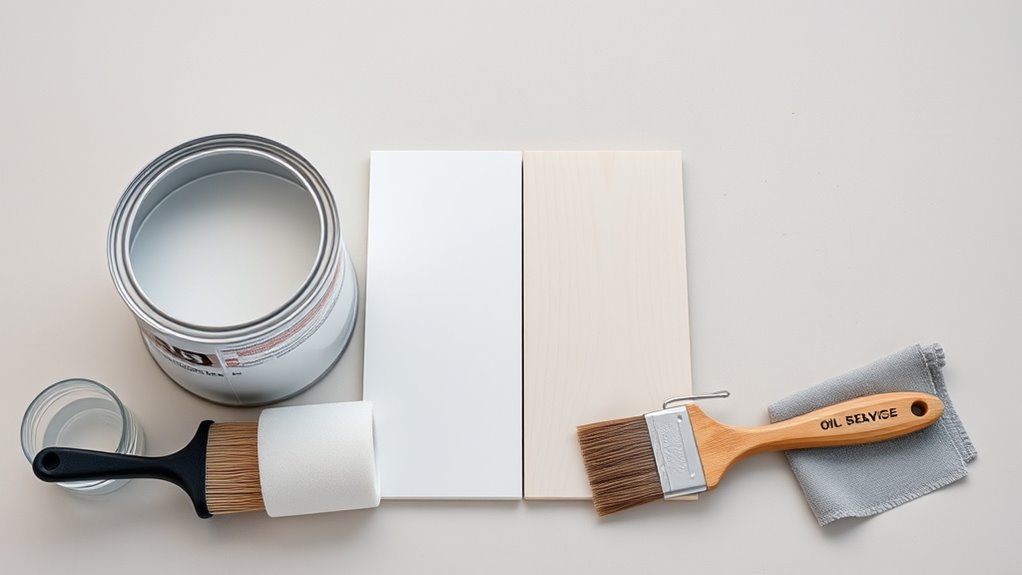
Because they use different binders and solvents, latex and oil-based paints behave very differently on application and over time. You’ll notice practical contrasts that affect choice and results. Consider these key differences:
- Drying time: latex dries fast, letting you recoat sooner; oil-based takes longer.
- Cleanup: latex cleans with water; oil needs solvents, changing your prep routine.
- Durability: oil-based offers a harder finish, while latex resists yellowing and flexes with walls.
- Color matching and paint texture: latex holds pigments evenly for consistent color matching; oil can level smoother but may alter sheen and texture over time.
Choose based on project needs.
What Binds Latex Paint (The Binder)
You’ve seen how binders and solvents set latex and oil-based paints apart; now let’s look closer at the binder that actually holds latex paint together. The binder is a polymer emulsion — tiny plastic particles suspended in water — that coalesces as the water evaporates, forming a continuous film.
It determines adhesion, durability, and how pigments distribute during color mixing. Binders also influence paint texture and flexibility; higher-quality binders yield smoother, tougher coatings that resist scuffing and moisture.
When you choose paint, focus on binder type and concentration for performance rather than just sheen or pigment load.
Latex Formulations: Acrylic, Vinyl, Hybrids
While all latex paints share a water-based binder, their performance hinges on the polymer chemistry—acrylics, vinyls, and hybrids each trade off durability, cost, and adhesion in different ways. You’ll pick a formulation based on wear, budget, and substrate.
Acrylics resist fading and bounce back from cleaning. Vinyls cut cost but can yellow and lack toughness. Hybrids aim to balance traits for versatile rooms.
Consider how color mixing affects final shade and how paint marketing frames benefits versus trade-offs.
- Acrylic: durable, better adhesion
- Vinyl: economical, less resilient
- Hybrid: compromise performance
Choose by use-case and expectations
Water Cleanup vs Solvent Cleanup for Latex

If you prefer quick, low-fume cleanup, water-based latex paints let you wash brushes, rollers, and spills with soap and water before the film cures. You’ll save time and avoid harsh solvents; cleanup’s straightforward and good for indoor projects.
Solvent cleanup is rarely needed for true latex, but some additives or heavy contamination may require mineral spirits—use them sparingly and ventilate.
When you clean, preserve tools for accurate color mixing and consistent paint texture by removing buildup promptly. Store partially used water-based cans sealed to slow skinning.
Dispose of rinse water per local rules to protect drains and the environment.
Common Interior Uses for Latex Paint
You’ll find latex paint works great on walls and ceilings, giving smooth, even coverage that handles touch-ups well.
You can also use it on trim and moldings, choosing semi-gloss or gloss for easier cleaning and sharper detail.
Consider finish and durability when picking latex for each surface so it meets your room’s needs.
Wall And Ceiling Coatings
When you’re revitalizing a room, latex paint is the go-to for walls and ceilings because it dries quickly, cleans up with water, and resists yellowing and mildew.
You’ll find it adapts to many styles, letting you experiment with Color gradients and Texture techniques without long waits. Use it for large surfaces, high-traffic rooms, and moisture-prone ceilings.
It hides imperfections with the right finish and reflects light differently by sheen.
- Smooth matte walls for hiding flaws
- Eggshell or satin in living spaces
- Semi-gloss for bathrooms and kitchens
- Low-VOC options for healthier indoor air
Trim And Molding Finishes
How do you give trim and molding a clean, durable look that complements your walls? You’ll choose latex for smooth application, easy cleanup, and resistance to chipping. Pick semi-gloss or gloss for durability in high-traffic areas and satin for subtler sheen.
Consider color psychology: crisp white feels classic and expands spaces, while contrasting hues draw attention to architectural details. Test samples under different lighting effects—natural and artificial—to confirm the finish reads as designed.
Prep by sanding and priming, apply thin even coats, and sand between layers for a professional result that’s both resilient and visually balanced.
When to Choose Oil-Based Instead of Latex
Although latex covers most interior jobs, oil-based paint still has a place when you need superior durability, stain-blocking, or a smoother finish on trim and high-use surfaces. You’ll pick oil when you want long-lasting wear in high-traffic zones, need to seal tannin stains, or require a hard, level surface that sands and buffs well.
Mind Color matching carefully—oil behaves differently than latex. Also plan for Paint ventilation because fumes are stronger and drying slower.
Consider oil-based for:
- Doors and window sills with heavy handling
- Kitchens with grease-prone areas
- Repair spots needing stain-block
- Rooms without moisture issues
Is Latex Right for Trim and Doors?
You can still use latex for many trim and door jobs, but you’ll want to weigh its pros and cons against oil-based alternatives.
Latex dries faster, resists yellowing, and cleans up with soap and water, so you’ll finish quicker and repaint sooner. It offers flexible paint texture options—from smooth semi-gloss to durable satin—so trim looks crisp.
Consider color psychology: bright whites read clean and modern; warmer creams feel traditional.
For high-traffic doors, choose a high-quality latex enamel or specialty formula to boost durability.
If you need extreme hardness or show flaws, oil might still be better.
Are Latex Paints Good for Cabinets?
Wondering if latex paints can handle cabinets? You can, but choices matter: use durable, high-quality latex or waterborne alkyds for resilience and easy cleanup.
Consider color psychology when selecting hues to influence mood and perceived space. Also weigh eco-friendly options for low-VOC finishes.
Advantages include faster drying and less odor than oil.
- Good adhesion on sealed surfaces
- Fast cure for quicker use
- Easy maintenance with mild cleaners
- Wide color availability to set tone
You’ll still want proper technique and protection for longevity, but latex is a practical, greener cabinet option when applied correctly.
Prepping Surfaces for Latex Paint
Before you start rolling on latex paint, you’ll want to thoroughly clean surfaces to remove grease, dust, and chalky residue so the paint adheres properly.
Patch any holes or cracks with spackling or a filler, sand smooth, and wipe away dust before priming.
Taking these steps will give you a durable, professional-looking finish.
Surface Cleaning Techniques
While dirt, grease, and mildew might seem minor, they’ll sabotage latex paint adhesion and finish if you skip cleaning. You’ll prep surfaces for smooth, true color matching later—use paint swatches only after surfaces are spotless. Follow these steps:
- Wipe dust with a microfiber cloth, then vacuum trims and corners.
- Degrease kitchens with trisodium phosphate or a mild detergent solution.
- Remove mildew using diluted bleach (1:3) or an EPA cleaner; rinse thoroughly.
- Rinse walls with clean water, let them dry completely before priming or painting.
Clean surfaces guarantee even coverage, better adhesion, and reliable final color.
Repairing Holes And Cracks
If you want a smooth, professional-looking finish, start by fixing holes and cracks so paint can adhere evenly and won’t show imperfections. Clear loose debris, sand edges, and apply patching compound or spackle; press firmly into gaps, then level with a putty knife. After drying, sand smooth and wipe dust.
Prime patched areas if needed to prevent sheen differences. When matching touch-ups, consider color mixing and test swatches under room light; avoid using paint past its paint expiration.
Store leftovers properly and label them. Proper prep saves time and keeps latex paint looking seamless and durable.
Priming: When to Use Latex Primer vs Oil Primer
When you’re deciding between latex and oil primer, focus on the surface, the topcoat, and the conditions you’ll be working in.
You’ll choose latex primer for porous drywall, fast drying, and compatibility with latex topcoats, especially if you want Eco friendly paints and mild odors.
Use oil primer for stained wood, tannin bleed, or when sealing heavy stains.
- Latex: breathability, quick recoat, low VOCs
- Oil: superior stain blocking, smoother on glossy surfaces
Consider Color psychology: primer tinting improves final hue.
Match primer to topcoat for best adhesion and durability.
Best Application Methods: Brush, Roller, Sprayer
When cutting in along trim and corners, you’ll want a high-quality angled brush for control and clean lines.
For large flat walls, a roller gets you even coverage fast, but a sprayer can beat a roller for speed and smoothness on cabinets or textured surfaces.
Consider the trade-offs—overspray, masking time, and finish—when choosing sprayer versus roller.
Best Tool For Edges
Wondering which tool gives you the cleanest edges with the least fuss? You’ll usually grab a brush for control, especially around trim and corners, while considering color matching and eco friendly options for safer indoor air.
Use a steady wrist and quality synthetic bristle for latex. Tape sparingly; practice beats over-taping. Consider a small angled sash brush for precision.
- Angled sash brush: sharp lines, minimal bleed
- Mini roller: speeds up straight runs near corners
- Foam brush: great for touch-ups, avoid heavy coats
- Edging tool: consistent gap control, less tape needed
Sprayer Versus Roller
If you want smooth, fast coverage for large walls, a spray system outpaces rollers, but rollers give more control and less prep for most DIY jobs. You’ll choose a sprayer when you need speed, thin even coats, and consistent color mixing across panels, though masking and ventilation increase prep.
Rollers let you work edges with less overspray, fix drips quickly, and use eco-friendly options like low-VOC latex with minimal equipment. You should test texture and finish on scrap, balance cleanup time, and match method to room size, surface texture, and your comfort with spraying.
Dry Time and Recoat Windows for Latex Paint
Although latex paint dries to the touch relatively quickly, you’ll need to understand the difference between surface dry, recoat time, and full cure so you don’t trap moisture or damage the finish. You should check label times—usually 1 hour to touch, 2–4 hours to recoat, and up to 30 days to fully cure.
Temperature, humidity, and film thickness matter. For specialty effects like color mixing and texture techniques, wait longer between layers.
- Surface dry: feel but still soft
- Recoat window: follow manufacturer minimums
- Extended wait: high humidity or thick coats
- Full cure: before heavy use or cleaning
Touch-Ups, Patching, and Repair With Latex
When small chips, nail holes, or scuffs show up, you’ll save time and money by addressing them right away with proper touch-ups and patching techniques for latex paint. You’ll clean the area, sand lightly, and use spackle for holes.
Once dry, sand smooth and prime before applying matching latex. Use leftover paint or a small sample to feather edges so repairs blend with existing color—remember color psychology when matching tones to maintain mood.
For larger damage, replace drywall and finish with latex. Choose products labeled eco-friendly finishes to reduce VOCs during repairs and keep indoor air healthier.
How Sheen Affects Look and Performance
After you’ve patched and touched up walls, the sheen you choose will shape how those repairs—and the whole room—look and hold up over time. You’ll pick sheen to balance sheen durability with aesthetic impact: higher sheens hide fewer flaws but clean better; lower sheens mask imperfections but resist scrubbing less.
- Flat: hides patched areas, low sheen durability
- Eggshell: subtle texture, moderate sheen durability
- Satin: easier cleaning, higher sheen durability
- Semi-gloss: highlights details, highest sheen durability and strong aesthetic impact
Choose based on traffic, lighting, and how visible repairs should be.
Durability: How Long Latex Lasts on Walls
If you take care of walls and pick the right sheen for the room, latex paint can stay looking good for 10–15 years on interior surfaces. You’ll extend life by cleaning gently, repairing chips, and choosing high-quality formulations. Use color matching when touching up to avoid patchy spots, and consider eco friendly options if indoor air quality matters. Below is a quick durability reference:
| Area | Typical Lifespan | Maintenance |
|---|---|---|
| Low-traffic | 10–15 yrs | Occasional dusting |
| Moderate | 7–10 yrs | Spot cleaning |
| High-traffic | 3–7 yrs | Frequent touch-ups |
| Bathrooms | 5–10 yrs | Ventilate, wipe dampness |
Color Retention and Fading With Latex Paint
Although latex paints resist fading better than many older formulas, they’ll still lose vibrancy over years of sunlight, heat, and cleaning, so plan accordingly. You’ll notice color fading primarily where UV and abrasion concentrate. Choose high-quality latex with proven pigment stability and follow simple maintenance to extend life. Protect from direct sun and use window treatments when possible. Consider sheens that hide wear.
- Pick paints labeled for high pigment stability.
- Test samples in the room to watch for fading.
- Clean gently; harsh scrubbing accelerates loss.
- Repaint accent areas sooner than entire rooms when needed.
Mildew Resistance and Bathroom Latex Paints
Sunlight and cleaning wear affect color, but moisture and humidity present a different challenge in bathrooms: mildew. You’ll want latex paints formulated to resist mildew growth; they contain antimicrobial agents and create a less hospitable surface for spores.
Choose bathroom finishes labeled for high-humidity rooms—satin, semi-gloss, or gloss—because their smoother surfaces shed water and resist staining better than flat sheens. Proper ventilation and regular cleaning still matter, but the right latex reduces recurrence and protects substrates.
When you pick products, confirm mildew-resistant claims and follow manufacturer prep and application instructions for best, long-lasting results.
How VOCs Vary Across Latex Products
When you compare latex paints, you’ll notice VOC levels shift with the formulation — high-solids or oil-modified blends usually carry more VOCs than water-based, low-VOC options.
Pay attention to additives like certain solvents, mildew inhibitors, and fragrance agents, since they can push VOC content higher even in otherwise low-VOC lines.
We’ll look at typical VOC ranges by formulation and which additives to watch for so you can choose safer products.
VOC Levels By Formulation
Because different latex formulations use distinct binders, solvents, and additives, you’ll see meaningful variation in VOC levels across product types. When you pick paint, consider how color mixing and paint texture choices interact with formulation to affect emissions.
Lower-VOC bases often limit solvent content; premium finishes may use more complex binders.
- Flat/matte finishes generally have lower VOCs than high-gloss because they use simpler resins.
- Acrylic blends strike a balance: moderate VOCs, good durability.
- Waterborne alkyds can have higher VOCs despite being latex-like.
- Zero-VOC labels apply to base paints before colorants are added.
Additives That Increase VOCs
What additives raise VOCs in latex paints, and why should you care? You’ll find solvents, coalescents, and certain fragrance boosters hike VOCs, affecting indoor air and health. Manufacturers may swap traditional solvents for eco friendly additives, but labels vary. You should check VOC emission standards and product data sheets before buying. Lower-VOC formulas can still contain problematic coalescents, so vet ingredients. Decide based on room use, ventilation, and sensitivity. Emotional stakes matter: your family’s comfort and safety.
| Additive type | Emotional impact |
|---|---|
| Solvents | Anxiety about air |
| Fragrances | False comfort |
Low‑VOC vs Zero‑VOC Latex: Pros & Limits
If you’re weighing Low‑VOC against Zero‑VOC latex, focus on what you want from performance, odor, and indoor air quality. Zero‑VOC reduces smell and off‑gassing, but low‑VOC can offer broader Color matching and more Finish options for tricky shades.
Consider tradeoffs: durability, cost, and drying time.
- Zero‑VOC: minimal odor, best for sensitive spaces.
- Low‑VOC: better adhesion and stain resistance in many formulas.
- Both: water‑based cleanup, easy application.
Limits: some pigments or additives raise VOCs, and true zero tinting options are limited.
Choose based on room use and how important scent control is.
Environmental and Health Considerations for Latex
When you pick a latex paint, you’re balancing indoor air quality, ecosystem impact, and long‑term health risks. You should choose low‑ or zero‑VOC formulations to reduce fumes, ventilate during and after painting, and store cans sealed to prevent off‑gassing.
For disposal, follow local hazardous‑waste rules to protect waterways and wildlife. Adopt eco friendly practices like using leftover paint for touch‑ups and buying only what you need.
If you’re sensitive to chemicals, consider natural alternatives such as milk paint or clay paints, but check durability and mildew resistance for your specific room before committing.
Cleaning Brushes, Rollers, and Spills After Latex
Because latex paint is water-based, you can clean brushes and rollers quickly with soap and warm water before the paint dries, and that simple step will extend the life of your tools and keep finishes smooth.
Because latex paint is water-based, wash brushes and rollers with warm, soapy water before it dries to preserve tools and finishes
You should rinse thoroughly, reshape bristles, and let tools dry upright.
For spill cleanup act fast: blot, rinse, and avoid spreading.
Follow this checklist for efficient cleanup:
- Rinse brushes/rollers under running warm water, using mild detergent for stubborn paint.
- Use a comb or brush tool for brush maintenance to remove trapped paint.
- Blot spills with paper towels, then wash the area with soap and water.
- Dispose of rinsate responsibly.
Common Latex Paint Problems and Fixes
You’ll run into a few common latex paint issues like peeling and flaking, mildew and mold, and brush marks or bubbles.
I’ll show you how to identify the cause of each problem and what fixes actually work.
Follow straightforward prep and repair steps to keep your finish looking professional.
Peeling And Flaking
Noticed flakes or large patches of paint pulling away from your walls? You’ll want to act fast to stop spreading damage and salvage color psychology choices and desired paint texture. Check adhesion, surface prep, and moisture sources before repainting.
- Scrape loose paint and sand edges for a smooth shift.
- Clean surface, prime with an adhesion primer, and use quality latex paint.
- Match finish to original paint texture to avoid visible patches.
- Repair any water intrusion or condensation issues first, then repaint.
Follow these steps and you’ll restore appearance and durability without repeating the same peeling mistake.
Mildew And Mold
When mildew or mold shows up on latex-painted walls, act quickly to stop stains and health risks from spreading. You should identify the moisture source—leaks, high humidity, or poor ventilation—and fix it.
Clean small patches with a bleach solution or commercial mildew remover, rinse, and dry thoroughly before repainting.
Use mildew-resistant primers and quality latex paint for prevention. Install moisture barriers where walls contact damp areas and follow ventilation tips: exhaust fans in baths, dehumidifiers in basements, and keep air moving.
For extensive growth or recurring problems, call a professional to remediate safely and address structural moisture.
Brush Marks And Bubbles
If paint dries too fast or your technique’s off, brush marks and bubbles can ruin an otherwise smooth latex finish. You’ll spot uneven brush strokes or paint bubbles when conditions or tools aren’t right. Fix them by addressing speed, surface prep, and application.
- Thin paint slightly and avoid overworking the surface.
- Use quality brushes and maintain a wet edge for even brush strokes.
- Control temperature and humidity; slow drying prevents paint bubbles.
- Sand light imperfections between coats, then clean and recoat smoothly.
Follow these steps and you’ll reduce marks and bubbles for a professional-looking latex result.
Cost Comparison: Latex vs Oil-Based Paints
While oil-based paints often cost more per gallon than latex, your total project expense will depend on coverage, labor, and cleanup needs. You’ll pay less for latex in cleanup—water rinses brushes—so labor time often drops.
Coverage varies: high-quality latex can cover like oil, reducing needed coats. Consider color matching costs; custom tints add fees regardless of base, but latex blends faster.
Texture options influence price too—specialty finishes or heavy textures need more product and time. Durability and touch-up frequency affect long-term cost: oil may resist wear, but latex saves on disposal and ventilation expenses.
Choosing the Right Latex Paint Line and Brand
Because the right paint line shapes your results, pick a brand and product that match your room’s demands and your skill level. You’ll want durable finish options, easy application, and reliable Color matching. Consider brands known for consistent pigments and available eco friendly additives if indoor air quality matters. Balance cost, warranty, and customer reviews. Test swatches before committing.
Think about gloss level based on wear and cleaning needs. Ask staff about touch-up compatibility.
- Choose a reputable manufacturer
- Compare coverage and tinting systems
- Verify availability of swatches and samples
- Prioritize low-VOC formulas with eco friendly additives
Reading Labels: Must‑See Specs on Latex Cans
When you read a latex can, start by checking the ingredient list to see the binder, pigment, and any additives that affect finish and VOCs.
Next, look for the stated coverage per gallon and recommended coats so you can budget paint and time accurately.
Finally, note durability claims—scrub resistance, stain blocking, and warranty—to match the paint to your room’s wear level.
Key Ingredient Breakdown
Start by scanning the can’s ingredient list so you know what’s actually inside the latex paint you’re buying. You’ll spot binders, pigments, solvents, and additives—each affects application and finish. Watch for notes on color mixing instructions and paint gloss level so you get predictable results. Check for low-VOC or antimicrobial labels if sensitivity matters.
- Binders (acrylic or vinyl) determine film formation and adhesion.
- Pigments define colorfastness and tinting limits.
- Solvents control viscosity and drying time.
- Additives modify flow, mildew resistance, and leveling.
Read labels to match product to your project.
Coverage And Durability
If you want predictable results, learn to read the coverage and durability specs on the can. You’ll find square footage per coat, recommended coats, and abrasion or scrub ratings—these tell you how long finish and color hold up in traffic.
Match sheen and durability to room use: high-traffic rooms need tougher finishes. Consider how color psychology affects perceived wear; darker hues may show scuffs differently.
Look for eco-friendly options with low VOCs; they often list performance tests too. Compare manufacturer data, plan for primer if needed, and follow recommended coats to get lasting, consistent results.
When to Hire a Pro vs DIY With Latex Paint
Deciding whether to tackle a latex paint job yourself or hire a pro comes down to the project’s scale, your skill level, and how much time you can commit. You’ll weigh aesthetics, prep, and finishes—consider color trends and eco-friendly options when planning.
Decide between DIY and a pro by matching project size, skill, time, and desired finish—consider color and eco options.
Choose DIY for small rooms, simple trim, limited budget, or quick updates.
Hire a pro for complex textures, high ceilings, extensive prep, or flawless results.
- Small rooms, straightforward prep
- Tight timelines or limited tools
- Complex surfaces, priming needs
- Desire for perfect finish and warranty
Be realistic about skills and expected outcome.
Storage and Shelf Life for Leftover Latex Paint
To keep leftover latex paint usable, store cans tightly sealed in a cool, dry place away from direct sunlight and freezing temperatures.
If you follow those conditions, most unopened latex paints last about 2–10 years. Opened cans are usually good for 2–5 years.
Check consistency and smell before reuse and label cans with date and color to track shelf life.
Proper Storage Conditions
When you store leftover latex paint correctly, you’ll extend its usable life and avoid costly waste. Keep cans sealed, label them with color, date, and project notes for easy color matching later. Store upright on a stable shelf, away from temperature extremes and direct sunlight. Don’t freeze paints; cold ruins binders. Consider eco-friendly options for disposal if a can’s compromised.
- Tighten lids and place plastic wrap under the lid before sealing.
- Keep cans off concrete to avoid temperature transfer.
- Store in a dry, climate-controlled area like a closet or utility room.
- Avoid stacking heavy items on cans.
Expected Shelf Life
After you’ve stored cans properly, you’ll want to know how long that leftover latex paint will remain usable. Unopened, latex paint typically lasts 2–10 years; check manufacturer dates.
Once opened, expect about 2–5 years if you reseal cans tightly and avoid contamination. Before reuse, inspect for separation, foul odor, or clumps; thin, stir, and test a small patch.
Color matching can drift over time, so plan touch-ups soon or keep small labeled samples.
If paint is unusable, dispose of it through local hazardous-waste programs or consider eco-friendly options like recycling or donation to community projects.
Quick Checklist: Pick the Right Interior Latex Paint
Because picking the right interior latex paint affects finish, durability, and cleanup, use this quick checklist to narrow your options fast.
Decide sheen (flat, eggshell, satin) based on room traffic and light.
Consider Color theory for mood and contrast; test swatches on different walls.
Look for Eco friendly options if indoor air quality matters—check VOC labels and certifications.
Match primer needs to surface type to guarantee adhesion and hide stains.
Estimate coverage and buy slightly more than calculated to avoid batch variation.
Finally, check warranty and dry times so your project stays on schedule.
Frequently Asked Questions
Can Latex Paint Be Used Outdoors on Trim and Siding?
Yes — you can use latex paint outdoors on trim and siding if you properly handle surface preparation and choose high-quality exterior latex; it’ll resist moisture and UV better, boosting paint durability when applied over primed, clean surfaces.
Are There Pigments in Latex Paint That Cause Allergies?
Yes — you can react to pigments: allergy triggers in latex paint often stem from pigment allergens, additives, or preservatives; you’ll notice skin or respiratory reactions, so you should choose low-VOC, hypoallergenic formulations and test small areas first.
How Does Latex Paint Perform Over Lead-Painted Surfaces?
You can apply latex paint over lead-painted surfaces, but you’ll need proper testing, encapsulation or removal first; otherwise paint adhesion may fail and disturb lead; follow safety, abatement, and EPA guidelines to avoid hazards.
Can You Tint Leftover Latex Paint Different Colors Safely?
Like a blank canvas, you can safely tint leftover latex paint to new colors; you’ll use color matching tools, but you’ll want to keep paint consistency intact, so add tints sparingly and mix thoroughly to avoid surprises.
Will Latex Paint Stick to Glossy Polyurethane Finishes?
Yes — latex can stick to glossy finishes if you sand, clean, and prime first; you’ll improve paint adhesion by scuffing the surface, removing grease, using a bonding primer, and applying thin, even latex coats for durable results.
Conclusion
So, is interior paint latex? Mostly, yes — and now you’ve got the skinny. Latex’s water-friendly makeup, quicker drying, and easier cleanup make it the gentle, sensible pick for most rooms, while oil still earns its keep for high-gloss durability. Read labels for binder and sheen, store leftovers smartly, and call in a pro for tricky surfaces. Trust your judgement: choose latex for ease, oil when you need a little extra grit.
