
Is Latex Paint Easy to Clean? Full Guide
Yes — latex paint is generally easy to clean if you act quickly and use the right finish. You can wipe fresh spills with a damp cloth or mild soap; higher-sheen finishes like satin and semi-gloss stand up to scrubbing and grease better than flat or eggshell. Always test cleaners on a small spot first and dry thoroughly to avoid streaks or lifting. Keep routine dusting and spot-cleaning, and you’ll learn practical tips for tougher stains and long-term care.
Quick Answer: Is Latex Paint Easy to Clean?
Because latex paint is water-based, it’s generally easy to clean—especially when you act quickly. You can often wipe spills with a damp cloth before they set, so you’ll prevent stains and avoid harsh solvents.
For fresh marks, soap and water work; for slightly older spots, a gentle scrubber helps once paint drying has started. Remember that cleaned areas might reveal subtle color mixing if you’ve blended nearby shades, so rinse thoroughly to avoid smudging adjacent tones.
How Latex Paint and Sheen Affect Spills and Stains
Your choice of sheen changes how spills behave on the surface, so you’ll notice glossier paints resist staining better than flats.
You’ll also find that paint formulation—binders and additives—affects how easy it is to wipe away messes.
Keep those two factors in mind when picking paint for high-traffic or food-prep areas.
Sheen Levels Matter
When you’re choosing latex paint, sheen makes a big difference in how spills and stains behave. You’ll notice sheen impact immediately: higher gloss level repels liquids and wipes clean more easily, while flatter sheens hide imperfections but absorb stains.
| Sheen | Cleaning |
|---|---|
| Flat | Blends marks, harder to wipe |
| Eggshell | Moderate, needs gentle cleaning |
| Satin | Durable, resists stains well |
| Semi-gloss | Very easy to wipe, best for high-traffic areas |
Choose satin or semi-gloss for kitchens and bathrooms. Use flat where touch-ups matter more than scrubbability.
Paint Composition Effects
Sheen affects cleanup, but the paint’s composition determines how spills actually interact with the surface. You’ll find that latex formulas with higher binder content form tougher films that resist staining and allow easier wiping.
Paint additives like surfactants, mildewcides, and coalescents change drying, repellency, and stain release; look for labels noting “stain-resistant” if you want easier maintenance.
Pigment quality influences color fading when you scrub or expose surfaces to sunlight, so tougher pigments hold up better.
In short, pick a balanced latex with quality additives and pigments to minimize staining, fading, and cleanup effort.
Which Finish Cleans Easiest: Flat, Eggshell, Satin, or Semi-Gloss?
Although all latex paint finishes are wipeable to some degree, the level of cleanability varies noticeably between flat, eggshell, satin, and semi-gloss.
All latex finishes wipe to some extent, but cleanability varies greatly from flat through eggshell and satin to semi-gloss.
You’ll find flat hides imperfections and helps with color matching during touch-ups, but it absorbs stains and resists scrubbing after paint drying.
Eggshell offers modest scrub resistance while still masking minor flaws, so it’s a good compromise for low-traffic spaces.
Satin cleans easier and tolerates repeated wiping, making it suitable for living areas.
Semi-gloss cleans best; it repels dirt and resists marks, so use it where frequent cleaning matters, like trim and kitchens.
How Sheen Impacts Stain Resistance and Durability
Sheen tells you how glossy a paint is — from flat to semi-gloss — and that affects how easy stains are to wipe away.
You’ll find higher sheens resist stains and scuffs better than flatter finishes. Over time those tougher sheens also hold up longer in high-traffic areas, while flat or eggshell may show wear sooner.
Sheen Levels Explained
While choosing a finish might seem minor, the paint’s sheen level plays a big role in how easily you can clean stains and how well the surface stands up to wear. You’ll find flat, eggshell, satin, semi-gloss, and gloss options.
Flat finish hides imperfections but resists scrubbing poorly. Eggshelf or satin balance appearance and cleanability for living areas. Semi-gloss and gloss withstand frequent washing and scuffs, making them ideal for trim and kitchens.
Consider paint drying differences—higher sheen often dries harder. Also, think about color matching when touching up: sheen mismatch shows more than pigment differences, so pick consistent finish levels.
Stain Resistance Comparison
You’ve already seen how finish level affects cleanability; now look at how it changes stain resistance and long-term durability.
Higher-sheen latex (semi-gloss, gloss) forms a smoother, less porous surface that resists stains and wipes clean more easily, so you’ll handle spills without scrubbing hard.
Eggshell and satin hide imperfections better but absorb stains more readily.
Matte finishes show stains and marks more, even after cleaning.
When choosing sheen, factor in color matching for touch-ups—glossier areas reflect light differently.
Also weigh VOC concerns: low-VOC options exist across sheens but check labels to balance performance and indoor air quality.
Durability Over Time
How long will your paint keep looking good under daily wear? Sheen affects durability: higher sheens (semi-gloss, gloss) resist scuffs and stains better than flat finishes, so you’ll clean more without harming the surface.
Color mixing can alter pigment concentration and influence hide and longevity; darker, richer tones may mask wear but can show scratches.
Choose formulations with durable binders and eco-friendly pigments to reduce VOCs while maintaining resilience.
For high-traffic areas, pick satin or semi-gloss and spot-test cleaning methods.
Proper prep and good-quality latex ensure the sheen you select keeps surfaces durable over time.
Prepare Walls: Dusting and Spot-Testing Before You Clean
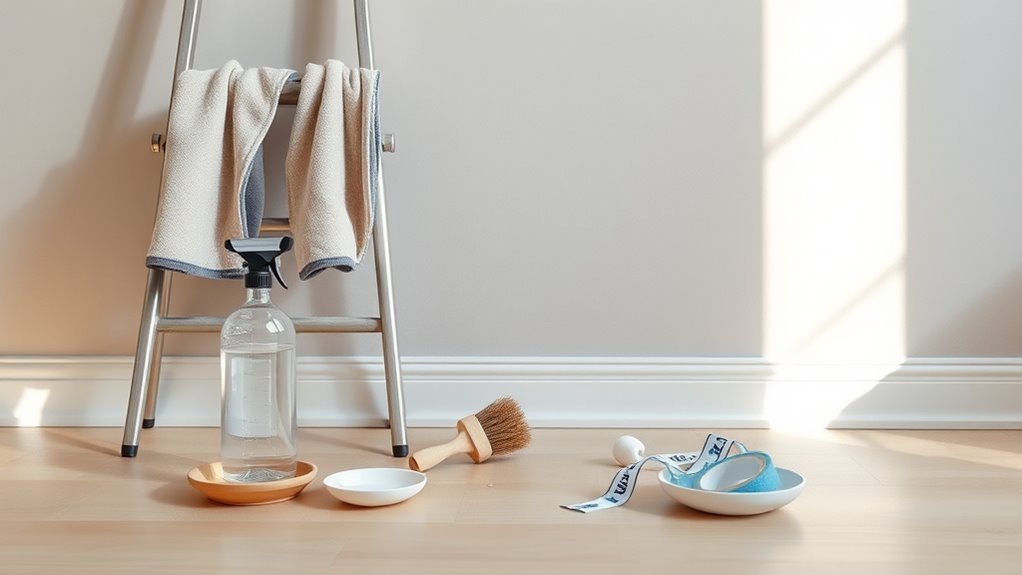
Before you start washing, dust the walls and do a small spot-test to avoid surprises later. You’ll remove loose grime first so cleaning solutions don’t smear or grind in.
Test an inconspicuous area with your chosen cleaner to confirm color matching and finish response; note that paint primers beneath topcoat can react differently. If discoloration or gloss loss appears, stop.
- Light dusting with a dry cloth reveals true stains.
- Small wet test shows how paint handles moisture.
- Inspect edges where primers might show through after scrubbing.
Record results before proceeding to full cleaning.
Best Tools to Have: Sponges, Microfiber, Magic Erasers, Brushes
When tackling wall cleaning, pick tools that match the job: soft sponges and microfiber cloths for general grime, magic erasers for tougher marks, and assorted brushes for crevices and textured surfaces.
You’ll want a variety: non-abrasive sponges for painted flat areas, dense microfiber for streak-free wiping, and melamine pads sparingly on scuffs.
Keep small soft-bristle brushes for trim and grout; use stiffer nylon or detailing brushes with careful brush techniques on textured paint.
Store an art-quality brush for touch-ups and note color matching needs when removing stains that expose underlying layers or require repainting afterward.
Everyday Cleaning: Soap, Water, and Soft Cloths for Latex Paint
Although latex paint stands up well to routine care, you’ll get the best results by using simple soap, lukewarm water, and a soft cloth. You won’t need harsh chemicals for most dirt—gentle circular motions lift grime without damaging finish. Rinse and blot dry to prevent streaks.
Keep a small kit for touch-ups and color matching info from paint storage labels in case you need to refresh spots later.
Visualize quick routines:
- A damp soft cloth wiping away surface dust.
- Mild soap suds loosening fingerprints and smudges.
- Final dry buff restoring even sheen.
Repeat sparingly to preserve the coating.
Remove Fingerprints and Smudges From Latex-Painted Walls
You can tackle fingerprints and smudges the same way you handle routine dirt—gentle soap, lukewarm water, and a soft cloth usually do the trick—but some marks need a bit more care.
For stubborn smudges, try a microfiber cloth with a mild all-purpose cleaner, testing in an inconspicuous spot first to protect finish and wall texture. Use gentle circular motions; avoid scrubbing harshly.
For painted surfaces over wallpaper removal areas, be extra cautious—moisture can lift adhesive. Dry immediately with a clean cloth. Repeat gently if needed, and finish by blending edges so cleaned spots match surrounding paint.
Tackle Food Stains and Grease on Painted Walls
When you spot food splatters or a greasy handprint, act fast with a quick spot clean to prevent stains from setting.
For fresh grease, blot excess first, then use a mild dish soap solution and a soft cloth to lift oils without harming the paint.
If residue remains, try a paste of baking soda and water or a commercial grease-cutting cleaner on a small test area before treating the whole spot.
Quick Spot Cleaning
Because spills happen fast, you should act quickly on food stains and grease to prevent them from setting into latex paint. Blot excess, then use a damp microfiber and mild dish soap to lift spots without harming color blending or eco-friendly finishes. Test first in an inconspicuous area.
- Visualize: a small circular damp patch where stain lifts.
- Motion: gentle upward strokes, not scrubbing, preserving sheen.
- Finish: pat dry and inspect for residue; repeat if needed.
If a faint shadow remains, feather the edge with a tiny dab of matching paint or touch-up pen.
Grease Removal Tips
Spills and quick spot fixes handle many stains, but greasy splatters need a different approach to avoid smearing or dulling the finish. Start by blotting excess oil with a paper towel without rubbing.
Mix a mild dish soap with warm water—the surfactants lift grease without harming latex paint. Use soft cleaning tools like microfiber cloths or a non-abrasive sponge, working from edges inward.
Rinse with a damp cloth to remove residue, then pat dry.
For stubborn spots, try a paste of baking soda and water applied gently, or a commercial degreaser tested in an inconspicuous area first.
Remove Crayon, Marker, and Ink Safely From Latex Paint
If crayon, marker, or ink lands on your latex-painted wall, don’t panic—you can usually remove it without damaging the finish. Start gently: test a hidden spot to protect color blending and paint durability. Use a soft cloth with mild dish soap and warm water, rubbing lightly in small circles.
For stubborn marks, try a magic eraser or isopropyl alcohol on a damp cloth, always retesting. Finish by rinsing and drying immediately to avoid streaks.
Visualize the process:
- Light soap wash
- Targeted spot treatment
- Rinse and dry
Work patiently to preserve the finish.
Deal With Scuffs and Shoe Marks Without Stripping Paint
After you’ve tackled crayon, marker, or ink, scuffs and shoe marks are the next common issue you’ll face on latex-painted walls and baseboards.
Start by testing a hidden spot to make certain the cleaning method won’t alter paint color or damage wall texture. Use a soft cloth or melamine sponge dampened slightly—rub gently in a circular motion.
Test a hidden spot first, then gently rub with a slightly damp soft cloth or melamine sponge.
For stubborn marks, apply a paste of baking soda and water, then wipe clean. Avoid harsh abrasives and aggressive solvents that strip finish.
Finish by rinsing with a damp cloth and drying; repeat gently if necessary until marks fade.
Clean Painted Trim and Baseboards Effectively
Start by prepping the trim and baseboards with a gentle dusting and a tack cloth so dirt won’t scratch the paint.
Use a soft eraser or a mild cleaner to remove scuff marks without stripping the finish.
Tape off floors and walls or lay down drop cloths to protect adjacent areas while you clean.
Prep Surface Carefully
While you’re prepping for a paint job, clean trim and baseboards thoroughly so paint adheres smoothly and looks professional. You’ll remove dust, grease, and loose paint before anything else to prevent future paint peeling and guarantee proper color matching.
Work methodically: vacuum crevices, wipe with a mild detergent, then rinse and dry. Check surfaces for soft spots or flaking and sand glossy areas for better grip. If you need spot priming, use an appropriate primer.
Visualize the sequence:
- Dust and degrease
- Sand and spot-prime
- Rinse, dry, inspect
That careful prep saves time and yields a flawless finish.
Remove Scuff Marks
Once your trim and baseboards are clean and sanded, you’ll likely spot scuff marks that ruin the fresh look; they’re usually easy to remove with the right approach.
Begin by moving nearby items and using furniture protection to prevent new scrapes.
Lightly dampen a microfiber cloth with warm water and mild dish soap, then rub scuffs in a gentle, circular motion.
For stubborn marks, try a melamine sponge or a baking soda paste, testing inconspicuously first.
Rinse with a clean damp cloth and dry.
Proper wall preparation earlier keeps trims smooth, making scuff removal faster and less invasive.
Protect Adjacent Areas
How will you keep fresh paint from getting ruined while you clean nearby trim and baseboards? You’ll work carefully to avoid color mixing from accidental smears and respect texture differences between walls and trim. Tape edges with low‑tack painter’s tape, cover floors with a drop cloth, and use a soft damp cloth for the trim.
Visualize steps:
- Mask seams — crisp edge, no bleed.
- Lay cloth — protect baseboards from drips.
- Wipe gently — follow grain, avoid scrubbing.
If paint is curing, wait; if cured, test a hidden spot. You’ll preserve finish and keep adjacent areas pristine.
Which Household Cleaners Are Safe: Vinegar, Dish Soap, Baking Soda
If you’re wondering which common household cleaners won’t harm latex paint, vinegar, mild dish soap, and baking soda are generally safe when used properly; each works differently, so pick the one that fits the job.
For routine dirt, mix a few drops of dish soap with warm water and gently wipe—avoid soaking freshly painted surfaces during paint drying.
Use diluted white vinegar for mineral deposits or grease, testing a hidden spot first to check color matching.
Make a paste of baking soda and water for stubborn marks; rub lightly to avoid abrasion.
Rinse and dry promptly to prevent streaks.
When to Use Stronger Cleaners: Bleach, Ammonia, and Solvents (Safety)
If mild cleaners won’t remove mold or heavy stains from latex paint, you’ll want bleach for disinfecting and killing mildew—use it sparingly and with good ventilation.
For old, sticky paint or oil-based spills that won’t budge, you can use solvents like mineral spirits or paint thinner, but only on well-ventilated areas and with gloves.
Always follow label instructions and never mix bleach with ammonia or solvents to avoid dangerous fumes.
When To Use Bleach
When should you reach for bleach instead of a milder cleaner? Use bleach sparingly for mold, heavy mildew, or deep staining that survives soap and ammonia. Don’t mix bleach with other cleaners — that’s dangerous and ruins color mixing tests.
Wait until paint drying is fully complete before applying any bleach solution to avoid softening fresh latex.
- Black mildew spreading on grout or trim.
- Stains that reappear after soap and scrubbing.
- Areas with moisture causing recurring growth.
Wear gloves, ventilate well, test a hidden spot, and rinse thoroughly. Stop if paint softens or discolors.
When To Use Solvents
Because solvents can dissolve paint and release strong fumes, reserve them for stubborn marks that resist soap, ammonia, and diluted bleach. You’ll want good ventilation, gloves, and a test patch to check paint drying effects and color matching before wider use. Use mineral spirits for oil-based residues; acetone for tiny spots; commercial paint remover for heavy buildup. Rinse thoroughly and allow full drying; recoat only after paint drying completes.
| Solvent | Best for | Safety tip |
|---|---|---|
| Mineral spirits | Grease, oil | Ventilate, wear gloves |
| Acetone | Small spots | Flammable, test color |
| Paint remover | Thick buildup | Follow label, mask |
Avoid Paint Damage: Test First and Control Scrubbing Pressure
Although latex paint is durable, you should always test a cleaning method on a small, inconspicuous area before scrubbing the whole surface. You’ll check sheen, color mixing effects, and whether cleaning alters finish during paint drying.
Start gently, observe for streaks or dull spots, then proceed.
- Soft sponge, light circular motions — like wiping fingerprints.
- Damp microfiber, firmer pressure — like polishing glass.
- Magic eraser or scrubbing pad — last resort, strong abrasion.
Control pressure to avoid removing topcoat or causing discoloration. If the test shows damage, stop and choose a milder cleaner or consult a pro.
Repair vs. Clean: When Stains Require Repainting
If a stain stays visible after your gentlest cleaning tests, you’ll need to decide whether to keep trying or to repair with paint. You’ll weigh stain depth, patch size, and finish. Small surface marks often respond to spot cleaning; deeper or stained primers usually need repainting. Match color carefully—use swatches or a color matching service to avoid obvious patches. Consider eco friendly options like low-VOC touch-up paints and recycled-content primers. Plan minimal sanding, feather edges, and test a tiny area first. Use the table below to guide your choice.
| Factor | Action |
|---|---|
| Size | Clean or paint |
| Depth | Clean or primer+paint |
| Visibility | Color matching required |
| Surface | Sand/feather edges |
| Eco | Low-VOC options |
How Long After Painting Can You Safely Clean Walls?
After you decide whether cleaning or repainting will fix a stain, you’ll want to know when it’s safe to start wiping your fresh paint job. Wait at least 2 weeks for full cure on typical latex; tacky paint needs longer.
Decide whether cleaning or repainting will fix stains, then wait—latex needs about two weeks to fully cure before wiping.
For light cleaning after 48 hours, use a soft cloth and mild soap.
- Freshly painted sheen — avoid scuffs.
- Test a small spot — check color matching.
- Gentle pressure first — assess texture restoration.
If paint manufacturer’s directions differ, follow them.
If stains persist after curing, touch-ups or repainting may be required.
Exterior Latex Paint: Safe Power-Washing and Detergent Tips
When you’re prepping exterior latex paint for cleaning, use a low-pressure power washer and the right detergent to avoid stripping or softening the finish. Start by testing a small area, keeping nozzle distance at least 3–4 feet.
Choose a mild, pH-neutral detergent or a product labeled safe for latex; avoid harsh solvents that interfere with color mixing or affect paint drying.
Work top to bottom, rinsing gently and avoiding concentrated spray on seams or trim. Let surfaces dry fully before touching.
If stubborn stains remain, use a soft brush and repeat the gentle detergent cycle rather than increasing pressure.
Maintenance Schedule to Keep Latex-Painted Walls Fresh
Keep latex-painted walls looking new by following a simple schedule you can stick to. Do a light dusting each week. Handle monthly spot cleaning for scuffs and stains. And run an annual check to touch up chips or faded areas.
These quick steps prevent bigger problems and keep maintenance manageable.
Weekly Light Dusting
How often should you lightly dust latex-painted walls? You should dust weekly to prevent grit buildup and preserve color mixing effects and subtle texture differences. Use a soft microfiber or feather duster and move gently top to bottom.
Visualize spots to reach:
- Ceiling corners where cobwebs gather.
- Picture rails and moldings that trap dust.
- Baseboards and lower wall scuffs.
Dusting keeps sheen even and avoids abrasive rubbing later. If a spot resists, note it for monthly spot cleaning instead of scrubbing now. Regular, gentle dusting takes minutes and maintains paint integrity and the room’s fresh appearance.
Monthly Spot Cleaning
Although light dusting prevents most buildup, monthly spot cleaning tackles the stubborn marks you’ll inevitably find—fingerprints, scuffs, and splatters—before they settle into the finish.
Walk each room, inspect walls at eye level, and prioritize high-traffic zones.
Use gentle cleaning techniques: a soft cloth, mild detergent, and circular motions. Test a hidden area first, then rinse and dry to avoid streaks.
For tougher spots, a magic eraser or diluted vinegar works, used sparingly.
This routine supports stain prevention and extends the life of your paint, keeping walls bright without harsh scrubbing or frequent repainting.
Annual Touch-Up Check
When should you schedule your annual touch-up check? Do it each spring to inspect and address wear, stains, or fading. Walk each room, note spots needing repainting, and consider environmental concerns like humidity and sunlight exposure that accelerate deterioration.
For efficient upkeep:
- Inspect baseboards and high-traffic walls for scuffs.
- Check ceilings and corners for discoloration or mold.
- Test a small swatch for color matching under natural light.
Keep leftover paint labeled for quick fixes; store it properly. Small annual fixes prevent larger jobs and help maintain consistent color matching year after year.
Choosing Washable or Scrubbable Latex Paints for High-Traffic Areas
Since high-traffic rooms get scuffed and splashed more often, pick a latex paint labeled washable or scrubbable so you can remove dirt without damaging the finish. You’ll want a higher-sheen option—eggshell to semi-gloss—because it stands up to repeated wiping. Check manufacturer specs for scrub cycles and cleaning agents tolerated.
When you order, confirm paint mixing details and color matching to maintain consistent coverage after touch-ups. Test a small area, scrub gently with recommended cleaners, and note how the finish responds.
Proper prep and the right washable formula will keep walls looking fresh with minimal effort.
Common Mistakes That Ruin Latex Paint Finishes
If you skip proper surface prep or rush drying times, you’ll likely see problems like peeling, bubbling, or uneven sheen that ruin a latex finish. You need correct wall preparation and consistent painting techniques to avoid common errors.
Don’t:
- Paint over dirt or glossy surfaces — flakes and poor adhesion form.
- Apply thick coats or repaint too soon — you trap solvents and get bubbling.
- Use wrong tools or inconsistent strokes — visible lap marks and uneven sheen.
Pay attention to curing time, clean substrate, and brush/roller choice. That prevents premature wear and keeps washable finishes looking uniform.
Quick Checklist: Safe Cleaning Steps for Any Latex-Painted Surface
You’ve done the prep and avoided the common painting mistakes, so now keep that finish looking fresh with a straightforward cleaning routine. Wipe dust, test cleaners in an inconspicuous spot, use mild soap and water, rinse, and dry. For stains, try a soft scrub sponge; avoid harsh abrasives. Note: color matching matters if you touch up. Choose eco friendly paints and cleaners to protect surfaces and indoor air.
| Step | Action | Note |
|---|---|---|
| 1 | Dust | Work top-to-bottom |
| 2 | Spot test | Hidden area |
| 3 | Clean | Mild soap |
| 4 | Rinse | Clear water |
| 5 | Dry | Soft cloth |
Frequently Asked Questions
Can Latex Paint Harbor Mold or Mildew Indoors?
Yes — latex paint can harbor mold or mildew indoors if paint adhesion fails and surface preparation was poor; you’ll notice spots on damp areas, especially without proper primers or moisture control, so address leaks and clean surfaces first.
Will Cleaning Affect Low-Voc or Eco-Friendly Latex Paints?
Yes — cleaning won’t considerably harm eco friendly properties if you use gentle cleaners and soft tools; you’ll keep VOC emissions low by avoiding harsh solvents and frequent recoating, preserving finish and indoor air quality.
Can You Use Steam Cleaners on Latex-Painted Walls?
Yes — you can use steam cleaners cautiously; studies show 70% of paint failures come from moisture. You’ll protect finish by using low-heat settings, keeping steam moving, and combining cleaning techniques with gentle stain removal products.
How Do Hard Water Stains Interact With Latex Paint?
Hard water stains sit on latex paint’s surface, leaving water residue that can etch over time; if left, minerals cause stain penetration into porous finishes, so you should clean promptly to prevent lasting discoloration.
Are Specialty Textured Latex Finishes Harder to Clean?
Yes — textured finishes can be harder to clean; you’ll face nooks trapping grime like mini canyons. Use targeted cleaning techniques: soft brushes, low-pressure rinses, mild detergents, and spot-tests to avoid damaging the texture or finish.
Conclusion
So yes, latex paint is easy to clean—unless you’ve chosen flat finish for a toddler’s mural or relied on water alone for set-in stains. Ironically, the prettier the sheen, the less drama you’ll have wiping life’s messes away. Do the simple prep, pick a washable formula for high-traffic spots, and follow safe cleaning steps. Then you can relax, smugly wiping coffee from your satin wall while friends admire how “effortless” your upkeep looks.
