
Should I Paint Walls or Woodwork First
You’ll usually paint walls first: it’s faster to roll large areas, test colors, and then cut in neatly around trim, but you’ll want to mask or remove tape carefully to avoid smudging. Paint trim first when you’ve got extensive glossy woodwork, tight corners, built‑ins, or when oil‑based trim needs longer cure time. Match tools and temps to materials, watch humidity, and plan coats for proper adhesion—keep going for practical tips and pro shortcuts.
Quick Answer: Walls or Trim – Which First?
Wondering whether to paint walls or trim first? You’ll usually paint trim after walls for cleaner lines and easier touch-ups, but practical factors change that rule.
If you’re following color theory and choosing contrasting accents, paint trim second to preserve crisp edges. If you’re doing a dramatic wall color that risks splatter, do walls first.
Historical trends swung between wall-first and trim-first methods, so don’t treat either as absolute. Consider your skill, tools, and drying times.
In most DIY situations, paint walls first, then trim — yet be ready to adapt based on your project’s specifics.
Why the Painting Order Matters
You’ve got the basic rule of thumb—usually walls first, trim second—but the order matters for more than just neat edges. You’ll control visual flow and protect paint durability by choosing sequence deliberately. Consider:
- Contrast and Color theory: painting walls first lets you adjust wall hues against finished trim, keeping lines crisp and tones balanced.
- Surface protection: doing trim second prevents rollers from scuffing edges, improving longevity and paint durability of high-contact woodwork.
- Workflow efficiency: cutting in trim last reduces touch-ups and lets you manage drying times for even curing.
Follow order thoughtfully and you’ll get cleaner results and longer-lasting finishes.
Quick Decision Checklist: Which Surface to Paint First
Because the right order depends on a few key factors, use this quick checklist to decide whether to paint walls or trim first.
Assess room function and color psychology: calm bedrooms suit neutral walls first; high-traffic areas might prioritize durable trim. Check existing finish and adhesion—sand or prime troublesome woodwork before choosing order.
Match paint texture needs: smooth, glossy trim often benefits from separate application; textured walls can hide overlap.
Consider time, skill, and touch-up tolerance: if you want cleaner lines with less cutting in, paint trim first.
Finally, budget and drying time may tip your decision.
Paint Walls First: The Standard Pro Recommendation
When pros recommend painting walls first, they’re thinking about efficiency and cleaner overall results. You’ll cut taping time, prevent lap marks on woodwork, and choose wall color with full context. Consider color psychology to pick hues that set mood before trim gets attention.
Paint texture on walls is easier to manage when you can roll freely without worrying about trim edges.
Rolling walls first lets you manage texture freely, without concern for crisp trim edges or smudges
- Save time: roll large areas fast, then touch trim.
- Visualize: see color psychology effects in full room light.
- Protect: mask trim after walls to avoid overcutting.
Paint Trim First: When Woodwork-First Makes Sense
If you want crisp, uninterrupted edges and faster touch-ups later, paint the trim first. You’ll protect woodwork with high-quality primer and finish coats, boosting paint durability where scuffs hit most.
This approach suits rooms where trim color anchors the scheme or you’re using contrasting hues to influence mood—color psychology matters when trim sets tone. You’ll work carefully around corners, then roll walls to meet dry edges, minimizing masking.
Choose durable trim paints for longevity and easy cleaning. Trim-first cuts cleanup and lets you focus on neat lines; it’s efficient when trim dictates the room’s final look.
Wall-First Workflow: Step-by-Step Plan
Before you start, prep the room by moving furniture, covering floors, and taping edges so paint stays where it belongs.
You’ll paint the main wall surfaces first with a roller for even coverage, then wait for proper drying.
Finish by cutting in along ceilings and trim, touching up edges so the trim gets a clean, crisp line.
Prep The Room
Ready to get the room ready for a wall-first paint job? You’ll clear furniture, remove switch plates, and protect floors and woodwork before you touch paint. Think about color psychology and historical trends when choosing samples so your prep reflects final mood and style. Follow these focused steps:
- Clear and clean: move furniture, vacuum, patch holes, and wash walls.
- Protect and tape: lay drop cloths, secure edges with low-tack painter’s tape around trim and hardware.
- Organize tools: set brushes, rollers, primer, and testers within reach to streamline painting.
Prep well to avoid mistakes once you start.
Paint Walls First
How do you tackle a wall-first paint job without creating extra work? Start by choosing color psychology that suits the room’s function and mood, then mix enough paint to avoid shade variations.
Protect baseboards and hardware with low-tack tape and drop cloths. Roll walls in full sections from top to bottom, maintaining a wet edge to prevent lap marks.
Let coats dry per manufacturer’s guidance to guarantee paint durability. Inspect for drips or missed spots between coats and lightly sand if needed.
Once walls are fully cured, remove protective coverings and prepare to address trim and accents.
Cut In And Trim
Now that the walls are cured and coverings are gone, focus on cutting in and finishing the trim to get a crisp, professional look. You’ll cut precise edges where walls meet trim, protect surfaces, and choose trim sheen for paint durability. Remember color psychology when selecting trim contrast; subtle trims can calm a room, bold trims can energize it. Work methodically, keep a steady hand, and clean up drips immediately.
- Tape and protect adjacent surfaces, sand glossy spots, and prime bare wood.
- Use a sharp angled brush, load it properly, and feather edges for smooth lines.
- Apply two thin coats, allowing full dry time for durability.
Trim-First Workflow: Step-by-Step Plan
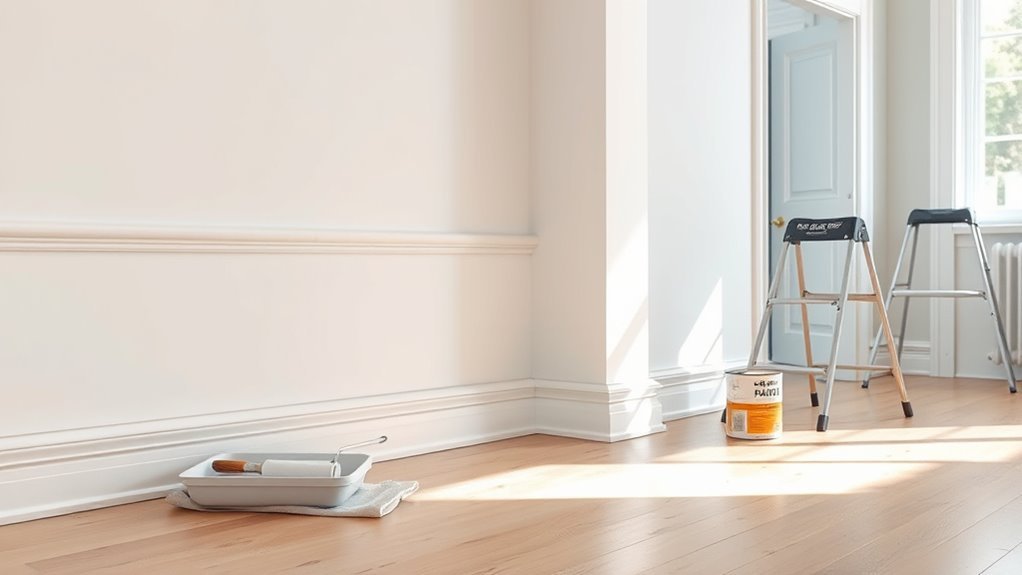
Before you touch the walls, set up a trim-first workflow that lets you paint baseboards, casings, and crown molding precisely and efficiently so the wall coats become quick touch-ups instead of full redos. Choose finish and color carefully—color psychology guides trim contrast; pick eco friendly paints when possible. Prep: clean, sand, and caulk. Prime trim, then apply two coats, letting each dry fully. Protect floors and remove hardware. After trim cures, tape edges and roll walls, touching up trim where needed.
| Step | Action | Time |
|---|---|---|
| 1 | Prep trim | 30–60 min |
| 2 | Prime | 1–2 hrs |
| 3 | Paint | 2–4 hrs |
| 4 | Tape & wall | 1–3 hrs |
How Paint Type Changes the Best Sequence
Because different paints behave differently, the sequence you choose—trim first or walls first—should depend on the type of paint you’re using. You’ll want to take into account drying time, sheen contrast, and how color lays down, especially if color psychology influences room mood or you prefer eco-friendly paints.
Because paints differ, choose trim-first or walls-first based on drying, sheen, and finish—consider mood and eco options.
- Fast-drying latex: paint walls first, cut in trim later to avoid tape marks and speed up the project.
- High-sheen trim: do trim after walls for crisp edges and minimal overlap.
- Specialty or textured paint: plan trim-first when texture risks splatter, then carefully roll walls.
Water-Based vs Oil-Based Trim: How That Affects Order
If your trim is water-based, you’ll notice it sticks differently and dries faster than oil-based, which affects sanding and recoating.
That means you might want to paint oil-based trim first to avoid smudging wet wall paint, while faster-drying water-based trim can be done after walls in many cases.
Consider adhesion and drying time together when planning the sequence so you’re not fighting tacky surfaces.
Paint Adhesion Differences
Wondering whether water- or oil-based trim paint should dictate your painting order? You’ll choose order partly on adhesion: water-based bonds well to properly primed, clean wood and lets you repaint walls soon without worrying about lingering paint odor.
Oil-based grips bare or glossy surfaces better and can stick to new drywall primer but can trap solvents under wall paint.
- Water-based: easier cleanup, lower paint odor, good for latex walls.
- Oil-based: stronger initial bite on tricky trim, needs solvent cleanup.
- Prep: sand, clean, and prime to maximize adhesion regardless of type.
Drying Time Impact
Adhesion is only part of the picture; drying time plays a big role in deciding whether to paint trim or walls first. If your trim uses oil-based paint, it dries slowly and you’ll want to paint trim first to avoid smudging when you cut in walls later.
Water-based trim dries fast, so you can paint walls first and finish edges without long waits. Consider paint durability for high-traffic trim—oil often lasts longer but requires longer turnaround.
Also think about color psychology: changing trim color later is easier with water-based finishes, letting you tweak contrast after walls are complete.
Matte or Flat Walls: Why Wall-First Usually Wins
Because matte and flat paints hide imperfections and lay down with a soft, even finish, you’ll usually want to paint walls before trim or woodwork. You’ll benefit from easy touch-ups, controlled roller marks, and consistent color psychology across surfaces. Painting walls first reduces accidental trim splatter and helps test hues before committing.
Matte and flat finishes mask flaws and roll on smoothly, so paint walls before trim for easier touch-ups and true color testing
- Save time: roll large areas quickly, then cut in around trim.
- Clean lines: tape or steady brushwork over dry wall paint beats the reverse.
- Longevity: proper wall prep improves paint durability, so trim gets protected after walls are settled.
High-Sheen Trim: Advantages of Painting Trim First
If you’re working with high-sheen trim, paint the trim first to avoid smudging glossy surfaces while cutting in the walls.
That approach also makes it easier to clean up edges because you can seal trim lines precisely before rolling the walls.
You’ll spend less time touching up drips and scuffs this way.
Trim First Prevents Smudging
When you paint high-gloss trim before the walls, you cut down on the smudges and accidental brush marks that happen when you’re maneuvering around finished woodwork. You’ll protect glossy edges and preserve crisp lines, so your color psychology choices read cleanly against flawless trim.
Painting trim first also lets you focus on paint texture for the walls without worrying about touching up shiny surfaces. Follow a simple sequence to avoid smudging:
- Paint trim with high-gloss, let cure fully.
- Lightly sand any dust nibs and wipe clean.
- Roll walls after masking, keeping brushes away from trim.
This minimizes rework and keeps finishes sharp.
Easier Edge Cleanup
While you’re working with high-sheen trim, painting the woodwork first makes cleanup at the wall edges far simpler: cured glossy paint creates a firm, clean boundary that you can easily tape against or cut in to, so any stray wall paint pulls away in neat lines instead of smearing the trim.
You’ll find edges crisp and touch-ups minimal, saving time and frustration. That precision helps if you’re experimenting with color psychology; sharp separations keep contrasts intentional.
For period homes, matching historical styles is easier when trim lines are precise, preserving architectural integrity while updating hues.
Room Layout Factors That Change the Paint Order
Because the shape and features of a room change how paint dries and how easily you can mask edges, you’ll want to adjust your paint order to match the layout. Narrow hallways, high ceilings, built-in shelving, and lots of trim each create different constraints that push you to paint walls or woodwork first.
You’ll also consider color psychology when choosing wall hues and select eco-friendly paints to reduce odor in tight spaces. Assess traffic flow, drying conditions, and masking difficulty before starting.
- High ceilings: work top-down, walls first.
- Built-ins: paint woodwork first.
- Lots of trim: trim-first for crisp lines.
Small Rooms and Tight Corners: When Trim-First Helps
If you’re working in a small room with tight corners, start with the trim to save time and get cleaner edges—painted baseboards, doorframes, and window casings let you tape and mask more precisely and prevent accidental wall smudges when you roll. You’ll avoid awkward ladder placement and reduce touch-ups in cramped areas.
Trim-first lets you control color contrast between walls and woodwork, so progression look crisp under varied lighting effects. Work from top trim down, cut in around casings, then fill and sand sparingly.
Finish trim before walls to streamline cleanup and keep corners sharp.
Large Open Spaces: Why Walls-First Is Easier
Small rooms call for starting with trim, but in large open spaces you’ll save time and effort by painting the walls first. You’ll block in sweeping colors, test color psychology effects across sightlines, and let walls dry while you prep trim. Choose eco friendly paints to minimize odor during long sessions.
- Paint walls to establish the dominant hue and visual flow.
- Use rollers and pole tools to cover acreage quickly, reducing overlap on trim.
- Once walls cure, tape and finish woodwork cleanly without worrying about wall drips.
This sequence keeps work efficient and outcomes consistent.
Doors and Window Prevalence: Sequencing Tips
When doors and windows dominate a room, sequence matters: you’ll want to plan painting so frames, sills, and adjoining wall sections don’t fight for edges or drying time. Start by deciding which surfaces read as trim versus field—if trim contrasts for Color psychology impact, paint trim first to protect crisp lines.
If you prefer softer gradations, paint walls first and cut in around openings. Work top-to-bottom: headers, casings, sills, then jambs. Use painter’s tape sparingly and remove while paint’s tacky.
Choose eco friendly paints to reduce fumes near openings and speed safe ventilation.
How Furniture and Fixtures Change Your Painting Sequence
Rooms crowded with furniture or fixed elements like built‑in shelving change how you plan the paint order, so after handling doors and windows you’ll want to map where big pieces sit and whether they’ll move.
You’ll decide whether to paint walls first to avoid cutting around trim near immovable fixtures or paint woodwork first when pieces protect baseboards.
Consider color psychology for focal areas and choose sustainable paints to reduce fumes if you can’t fully clear a room.
- Paint walls first when furniture covers trim.
- Paint woodwork first if fixtures guard walls.
- Use sustainable paints near fabrics and art.
Single-Coat vs Multi-Coat Projects: Choosing the Sequence
Because single-coat jobs save time but demand perfect surface prep and high‑hide paint, you’ll choose your sequence differently than for multi‑coat projects. With one coat you should prime and address stains, seams, and patchwork first so you can apply a continuous finish.
Whereas multi‑coat work lets you lay down a build coat to even out porosity and then follow with a color coat, allowing more flexibility in the order you tackle trim, ceilings, and walls.
For single-coat jobs you’ll pick high‑hide, consider color psychology carefully, and test coverage.
For multi‑coat work, you can use eco-friendly paints for each layer.
Cutting-In Technique for Clean Edges When Painting Walls First
If you’re painting walls first in a multi‑coat job, you’ll want to master cutting‑in so the color coat meets trim and ceilings with razor‑sharp edges. You’ll use a sharp angled brush, steady wrist, and light pressure to guide a crisp line. Practice short strokes and feather paint toward the wall to avoid blobs.
For protection, use low‑tack painter’s tape sparingly; proper edge cutting reduces reliance on tape removal later.
- Load brush moderately; wipe excess.
- Anchor elbow; paint in 3–4 inch sections.
- Blend into the wall coat before it skins.
Cutting-In Trim After Walls: Precise Steps for Pros
When you cut in trim after the walls, start by laying out the right tools and prepping surfaces so paint adheres cleanly.
Use a steady, angled sash brush and load it correctly, then work with controlled, feathered strokes for a crisp line.
Keep your wrist stable and your elbow moving so each pass stays precise and consistent.
Tools And Preparation
Although you’ve already painted the walls, setting up the right tools and prepping the trim will make cutting-in fast and flawless. Choose quality angled brushes, a steady edger, and a small roller for touchups. Consider how color psychology affects perceived trim contrast and pick eco-friendly paints to keep fumes low.
- Tape precisely: low-tack painter’s tape, pressed firmly along edges.
- Clean and sand: remove dust, scuff glossy trim lightly for adhesion.
- Prime where needed: spot-prime bare wood or stains with a compatible primer.
Work methodically, keep cloths handy, and test a small area first.
Technique And Stroke
How do you get razor-sharp trim lines without repainting the walls? You steady your wrist, load a good angled sash brush, and pull a single confident stroke along the edge. Start with a thin bead of eco friendly paints on the brush, place bristles against trim, then drag toward the corner, wiping excess on the can.
Work in short sections, feathering edges to avoid buildup. If you prefer, back-roll the trim gently after cutting in for uniform sheen.
Consider color psychology when choosing trim contrast: cooler trims recede, warmer highlights pop, guiding sightlines through the room.
Using Painter’s Tape Effectively With Either Order
If you decide to paint walls before woodwork or the other way around, using painter’s tape correctly keeps edges crisp and cleanup minimal. You’ll pair tape with proper sequencing, consider color psychology when choosing wall hues, and pick eco friendly paints to reduce fumes.
Apply tape firmly, press edges with a putty knife, and avoid stretching it.
- Masking order: tape trim when walls are wet-first, or tape walls when trim’s wet-first to protect fresh edges.
- Remove tape: pull back at 45° while paint is tacky, not fully dry.
- Touch-ups: use a fine brush for tiny gaps.
When to Use Liquid Mask Instead of Tape
When should you reach for liquid mask instead of tape? Use liquid mask when surfaces are uneven, intricate, or require crisp curves that tape can’t hug. It’s ideal if you’re protecting trim while experimenting with bold color psychology choices—no tape lines mean subtler gradations and truer edges.
Apply thin coats, let them fully cure, then paint; removal is clean and reduces the chance of lifting adjacent layers. For high-traffic areas consider how liquid mask affects paint durability—test a small section first.
Don’t use it as a shortcut on flat, straight edges where tape is faster and more precise.
How to Choose Brushes and Rollers Based on Sequence
Masking choices affect your tool needs, so pick brushes and rollers with the sequence in mind: start with high-quality angled sash brushes for trim and corners before rolling large flat areas.
Reserve a short-nap roller for smooth surfaces or a 3/8–1/2″ nap for lightly textured walls. You’ll want tools that suit your order: trim first or walls first.
Consider color psychology when selecting sheen and finish, and choose eco-friendly paints to minimize fumes while you work. Match brush size to molding detail and roller width to wall size for efficiency.
- Trim: angled sash brush, 2″–2.5″
- Walls: 9″ roller frame
- Touchups: small artist brush
Roller Nap and Trim-Brush Combos for Faster Work
Pick a roller nap that matches your wall texture so you’re laying down the right amount of paint without extra passes.
Match your trim brush width to the width of the trim for clean, efficient strokes that meet the roller’s edge.
Use a steady edging technique—load the brush correctly, cut in with controlled strokes, then finish with the roller to blend.
Choose Nap Length
How long a roller nap should you use depends on the surface texture and the trim brush you’re pairing it with. Matching nap length to wall or wood grain lets you cover evenly and cut in faster.
You’ll pick nap based on porosity: smooth drywall needs 1/4″–3/8″, lightly textured surfaces 3/8″–1/2″, and rough or year-old wood 3/4″+.
Consider color psychology when choosing finish sheen, and use eco-friendly paints to reduce fumes while testing combos.
Match nap to your trim brush action for consistent strokes, less overlap, and faster cleanup—saving time without sacrificing edge quality.
- Smooth surfaces: 1/4″–3/8″
- Light texture: 3/8″–1/2″
- Rough grain: 3/4″+
Match Brush Width
When you match roller nap to trim-brush width, you’ll cut in faster and get cleaner edges because each pass blends seamlessly with the next. You’ll pick combos that suit paint thickness and surface texture, applying color psychology to choose contrasts that read crisp. Historical techniques inspire matching tool sizes to rhythm and proportion; you’ll work methodically instead of guessing. Use consistent strokes so seams disappear. Compare options quickly:
| Roller Nap | Trim Brush |
|---|---|
| 1/4″ smooth | 1″ sash |
| 3/8″ eggshell | 1.5″ angled |
| 1/2″ textured | 2″ sash |
This speeds work and sharpens results.
Technique For Edging
Although precise edging might seem finicky, matching roller nap to your trim brush speeds the work and keeps seams invisible by letting each pass blend cleanly into the next. You’ll control bleed and texture, so color psychology reads true and shifts feel intentional. Use eco friendly paints with similar sheen for consistency.
- Choose a roller nap that matches surface texture and a trim brush width that lets you cut in with one steady stroke.
- Load brush and roller evenly; overlap wet edges to feather seams.
- Work in 3–4 foot sections, maintaining a wet edge for seamless blending.
Drying Times and Tack Windows: Schedule Your Coats
Because paint dries in stages, you need to plan each coat around both the manufacturer’s dry times and the tack window—the period when the surface is dry to the touch but still receptive to recoating.
Check labels for touch, recoat and full cure intervals, and mark when tack windows open and close. You’ll schedule primer, wall coats, and woodwork to exploit those windows so edges blend smoothly.
Consider how color psychology affects layering choices—darker undercoats change drying perception—and choose eco-friendly paints with specified recoat times.
Keep a simple timeline so you don’t sand or lock in tacky seams.
How Temperature and Humidity Affect Dry Times and Scheduling
You’ll want to watch temperature closely because warmer air generally speeds drying while cold slows it, which affects how long you wait between coats.
High humidity can tack up paint and extend cure times, so plan longer gaps on damp days and shorter ones when the air is dry.
Improving ventilation will usually speed both drying and curing, so factor airflow into your schedule.
Temperature’s Impact On Drying
When you’re planning paintwork, remember that temperature and humidity directly control how fast coatings dry and cure, so schedule jobs around conditions that suit the specific product. You’ll manage drying by controlling ambient temp, using heaters or fans, and practicing proper temperature regulation to keep times predictable.
Keep paint storage at recommended temperatures to preserve consistency and avoid extended tack or poor adhesion. Monitor forecasts and adjust sequencing to prevent rework.
- Aim for manufacturer-recommended temperature ranges to minimize dry-time variability.
- Use temporary climate control when conditions dip below ideal.
- Store cans off concrete in stable, moderate environments.
Humidity Levels And Timing
Temperature and humidity work together to set real-world dry times, so after you’ve handled temperature control, focus on moisture in the air. You’ll watch humidity control closely: high humidity slows drying times and can force you to paint in stages; low humidity speeds skinning but can cause brush marks. Time your workday for mid-range humidity, and check forecasts before starting.
| Condition | Effect |
|---|---|
| High humidity | Slower drying times |
| Moderate humidity | Predictable schedule |
| Low humidity | Faster surface dry |
Adjust sequencing: paint surfaces that tolerate delays first.
Ventilation And Curing Speed
Although humidity and heat set the baseline dry times, ventilation controls how quickly solvents and moisture leave the room, so you should treat airflow as your scheduling throttle. You’ll speed curing speed with cross-ventilation, fans, and open windows; poor Ventilation efficiency stalls solvent escape and prolongs tackiness.
Monitor temperature and relative humidity, then adjust vents or run dehumidifiers to hit manufacturer-recommended ranges.
Plan sequencing—walls or woodwork—around expected cure windows, not touch-dry times.
- Use fans and cross-breezes to maximize Ventilation efficiency.
- Lower humidity to accelerate curing speed with dehumidifiers.
- Delay next coat until full cure conditions are met.
Solvent Cleanup and Cross-Contamination Prevention
Because solvents can dissolve finishes and spread contaminants, you should clean brushes, rollers, and spills promptly and in designated areas to prevent cross-contamination between walls and woodwork.
Because solvents dissolve finishes and spread contaminants, clean tools and spills promptly in designated areas to avoid cross-contamination.
For solvent cleanup, keep separate containers and rags for trim and wall tools, label them, and rinse brushes in a ventilated spot away from finished surfaces.
Don’t dump solvent near painted areas or into drains; use sealed disposal cans.
Wear gloves and eye protection to avoid transferring oils or solvent residue.
Between tasks, store tools in covered bins to stop cross contamination, keeping your paint lines crisp and surfaces uncontaminated.
Sealing New Wood: Priming Trim Before Paint
When you install new trim, you should seal it with a primer to block tannins, guarantee adhesion, and create a uniform surface for topcoats.
Choose a primer formulated for bare wood—an oil-based or high-quality latex stain-blocker depending on your paint and substrate.
Check the label for drying and recoat times so you can sand and topcoat at the right intervals.
Why Prime New Trim
If you want your new trim to look great and last, prime it before you paint. You’ll seal porous wood, prevent tannin bleed, and create a uniform surface so color psychology effects show true. Priming reduces coats of finish, saving time and minimizing environmental impact from excess paint.
- Seal: blocks stains and evens absorption for consistent sheen.
- Protect: prevents moisture-driven warping and improves adhesion.
- Economize: cuts needed topcoats, lowering material use and VOC output.
Prime new trim to guarantee durable, predictable results and a cleaner, more sustainable finish that complements your walls.
Best Primer Types
Now that you’ve primed new trim to seal and protect it, pick the right primer for the wood and finish you want. Use oil-based primers for knotty or resinous woods to block stains; they bond well under glossy finishes.
Water-based acrylic primers dry quicker and sand smoothly, making them ideal under latex paints and when you want fewer fumes. Shellac primers tackle severe tannin bleed.
Consider stain-blocking and adhesion properties relative to your topcoat.
Factor aesthetics: the primer’s tint can influence final tones — color psychology matters when matching trim to wall hues.
Choose low-VOC or eco-friendly paints and primers when possible.
Drying And Recoat Times
Although primers vary, drying and recoat times determine how quickly you can finish trim without risking poor adhesion or visible flaws. You’ll check label times, humidity, and temperature before sanding or topcoating.
Faster dry times speed projects, but rushing creates tackiness or fiber lift on new wood. Eco-friendly paints and low-VOC primers may need longer cures; plan accordingly.
Consider how trim color affects perceived space—color psychology matters when you choose finish sheen after full cure.
- Wait recommended dry time, then test a hidden spot.
- Sand lightly between coats only when fully cured.
- Allow final cure before installing hardware.
Priming Walls First: When It Matters
When should you prime walls before tackling trim? You should prime walls first when surface preparation reveals stains, raw drywall, or drastic color changes.
Priming importance lies in sealing porous areas and ensuring uniform topcoat appearance; it prevents bleed-through that would otherwise force repainting trim.
Priming seals porous surfaces and ensures an even topcoat, preventing bleed‑through that could ruin freshly painted trim.
If walls need skim coats, smoke or water stain treatment, or you’ve swapped from dark to light, prime now so subsequent wall paint won’t contaminate fresh woodwork.
Prime with products compatible with your topcoat and let proper dry times elapse.
For already sealed, minor-touch walls, you can delay priming until after trim is done.
Spot-Priming vs Full Priming for Quick Touch-Ups
If your walls only need minor repairs or you’ve already sealed trouble spots, you can choose spot-priming to save time and materials. But if the area shows widespread staining, repairs, or drastic color shifts, a full prime keeps the finish uniform and avoids patchy sheen or tone.
Decide using Priming strategies and assess coverage needs. Spot-priming works for small stains and quick Touch up techniques; full priming suits larger changes.
Consider:
- Spot: fast, uses less primer, best for isolated blemishes.
- Blend: feather edges to avoid visible transitions.
- Full: guarantees uniform color and sheen across the whole wall.
Handling Previously Painted Surfaces and Gloss Differences
Before you start, assess the existing finish to see if it’s glossy, chalky, or already peeling. You’ll want to sand or scuff shiny areas so new paint adheres.
Spot-prime any bare spots. Finally, match the gloss and sheen between old and new coatings to keep touch-ups from standing out.
Assess Existing Finish
Although the paint on your walls and trim might look fine at a glance, you should still inspect the existing finish closely to determine adhesion, sheen, and any previous coatings that affect prep and topcoat choices. You’ll note gloss differences, old oil versus latex, and signs of peeling or blistering.
Consider how color psychology guides your topcoat sheen choice for room mood, and remember older oil finishes can emit stronger paint fumes during repainting. Check for lead in homes pre-1978 and test questionable surfaces. Then prioritize proper primers and compatible topcoats based on your findings.
- Identify substrate and sheen.
- Test adhesion and porosity.
- Note previous coatings and odors.
Sanding And Scuffing
When you’re working with previously painted surfaces, sanding and scuffing let you create a reliable mechanical bond between old coatings and new paint; you’ll remove gloss, feather edges, and prep for consistent adhesion. Lightly sand glossy areas, degloss trim, and wipe dust before priming. Consider how color psychology influences room mood when choosing finish and paint texture—smoother surfaces reflect differently than scuffed ones. Use appropriate grit and a tack cloth. Compare methods:
| Task | Purpose |
|---|---|
| Sand gloss | Break sheen for adhesion |
| Scuff cloth | Light abrasion without damage |
| Clean | Remove dust for bonding |
Match Gloss And Sheen
If you’re repainting over an existing finish, match gloss and sheen so the new coat blends and hides shifts instead of standing out. You’ll check the current sheen level and note any gloss differences between walls and woodwork, since sheen matching preserves color consistency and visual uniformity. Choose paints with comparable sheen or adjust with primers and topcoats.
Follow these steps:
- Test a small area to compare gloss, then evaluate color consistency under room light.
- Use primer/sealer to bridge differing surfaces before topcoat application.
- Apply the chosen gradation uniformly, touching up edges for seamless transition.
Fixing Paint Bleed and Seepage Without Redoing Both Surfaces
Because paint can sneak under tape or soak into porous trim, you don’t always need to repaint both the wall and the woodwork to fix bleed or seepage.
First, clean the edges with a damp cloth and mild detergent, then sand lightly to remove cured feathered edges.
Apply a stain-blocking primer to the affected area—use eco-friendly paints or primers when possible to reduce fumes.
After priming, touch up with the original wall or trim finish, feathering into surrounding paint. This preserves color psychology choices and avoids full resprays.
Seal seams with paintable caulk to prevent recurrence.
Best Approach for Two-Tone Rooms and Accent Walls
When you’re tackling two-tone rooms or an accent wall, paint the walls first to set clean, consistent color fields. Let the wall paint dry fully.
Then cut in and paint the trim and details to get crisp edges. This order minimizes touch-ups and keeps your lines sharp without extra masking.
Paint Walls First
Wondering which surface to tackle first? You’ll often start with walls when planning two-tone rooms and accent walls. Painting walls first lets you explore color psychology freely and test paint texture choices without worrying about trim contamination.
Follow these focused steps:
- Prep walls thoroughly: clean, fill holes, sand, and prime if needed to guarantee even coverage.
- Block in your main color, then add accent wall(s) using measured edges and crisp lines.
- Let wall paint cure adequately so you can mask precisely around edges before moving to woodwork.
This approach keeps color decisions flexible and reduces rework.
Trim And Detail Second
If you’ve already finished the walls, tackle trim and details next to lock in clean lines and protect your freshly painted surfaces.
You’ll define two-tone rooms and accent walls by cutting in trim after walls dry; that prevents accidental wall touch-ups and gives crisp edges. Pick trim sheen and color with color psychology in mind—contrast can energize a room, subtle tones calm it.
Follow historical trends for period-appropriate profiles and finishes if restoring older homes.
Work top-down, caulk and sand minimally, and use angled brushes for precision. Finish with protective topcoat where needed to preserve crisp, durable results.
Stenciling or Wallpaper Alongside Paint: Sequencing Advice
Because stencils and wallpaper extend the visual field, plan their placement relative to painted expanses before you start—doing so prevents awkward overlaps and saves touch-up time. You’ll balance color psychology and finish durability when choosing paints and adhesives; pick wall paint first if wallpaper sits within a painted field, or paint edges after hanging to touch seams.
Plan stencil and wallpaper placement before painting to avoid overlaps, ease touch-ups, and balance color and durability.
- Hang wallpaper edges, then paint trim to avoid bleed and preserve crisp lines.
- Stencil after wall base coat cures; protect woodwork with tape to maintain finish durability.
- Test motifs and colors to confirm color psychology effects in the room.
Trim Replacement or Repair: Paint Before Install or After?
When you’re replacing or repairing trim, you’ll weigh whether to paint pieces fully before installing them or wait until they’re in place. Painting beforehand gives crisp coverage and avoids masking challenges.
While painting after installation lets you touch up seams and guarantees perfect color matching to the walls, a common compromise is partial pre-painting. Coat the faces and edges that’ll be exposed, then install and finish the back edges and nail holes for a clean, efficient result.
Paint Before Installation
Considering whether to paint trim before you install it? Painting trim off-site gives cleaner edges, quicker coverage, and lets you test color psychology effects against sample walls. Use eco friendly paints to minimize fumes while you work.
- Prime and paint: seal ends to prevent swelling and guarantee uniform sheen.
- Cut and sand: fix imperfections now so installation is smoother and less visible.
- Match and touch-up: hold pieces against wall color, adjust hue for contrast or harmony.
You’ll save time masking and protect floors, but plan for careful handling to avoid scuffs during fitting.
Paint After Installation
Why paint trim after you install it? You’ll match final sightlines and adjust tones with color theory so trim complements wall hues in the actual room. Painting installed trim lets you confirm light, shadows, and edge contrast before committing.
You’ll also avoid caulking and touchups that would be needed after fitment changes. Work methodically: protect floors, mask gaps, and use steady brush techniques for clean lines. Maintain a clean, well-kept brush—brush maintenance matters for smooth application and minimizing visible strokes.
If repairs occur, you can spot-prime and repaint small areas without redoing entire pieces, saving time and material.
Partial Pre-Painting Methods
You’ve seen the benefits of painting installed trim, but sometimes full installation-first isn’t practical—especially for partial repairs or when replacing only a few pieces. You’ll want to pre-paint where access is tight, match Color psychology choices, and use Eco friendly paints to minimize fumes.
- Prime and back-coat: seal ends and backs before install to prevent moisture issues and guarantee color consistency.
- Partial scuff-sand after fitting: touch up joints and fastener holes, blending pre-painted edges with installed pieces.
- Mask strategically: protect adjacent walls during final touch-ups so your new trim integrates cleanly.
Doors and Cabinets: Paint Before or After the Room?
If you’re tackling doors and cabinets during a room refresh, decide early whether to paint them in place or off-site—each method affects timeline, finish quality, and cleanup.
Painting cabinets off-site gives smoother edges and better paint durability; it’s excellent when you need flawless cabinet faces.
In-place painting saves time moving heavy pieces and maintains existing hardware alignment.
For doors, removing them lets you control drips and get even coverage; leaving them hung reduces reassembly work.
Prioritize color coordination with walls and trim so tones complement regardless of method.
Whatever you choose, plan sequencing to avoid rework and smudges.
Using Drop Cloths and Masking to Protect Finished Surfaces
When you’re protecting finished floors, furniture, and fixtures during painting, good drop cloths and careful masking save time and prevent costly repairs later. You’ll choose breathable canvas for paint texture control and plastic where spills are likely; tape clean lines to protect trim and showcase color psychology choices without stray marks. Plan placement, cover HVAC vents, and secure cloth edges so nothing shifts.
- Lay canvas drop cloths to absorb drips and prevent texture transfer.
- Mask trim, hinges, and glass with low-tack tape for crisp edges.
- Use plastic for furniture and heavy-duty paper for door protection.
One-Day Room Refresh Timeline
If you’re doing a one-day refresh, start with all your prep work—taping, sanding, and priming—so you won’t stall later.
Plan the paint sequence next: pick the fastest drying products and decide whether walls or trim go first based on drying times and overlap.
Stick to that timeline and you’ll finish clean-up before evening.
Prep Work First
Before you touch a brush, clear the room and gather your supplies so nothing slows you down mid-job. You’ll prep surfaces, tape edges, and pick finishes mindful of color psychology and eco friendly paints to keep mood and air quality right. Focus on quick, effective steps:
- Clean and sand trim; fill holes so paint adheres smoothly.
- Mask floors, hardware, and adjacent surfaces; use low-tack tape for easy removal.
- Lay out brushes, rollers, drop cloths, and labeled paint trays for efficient workflow.
Prep saves time and prevents mistakes, letting you move to painting confidently later in the day.
Paint Sequence Plan
Although you’ve finished prep, plan your paint sequence so the room’s done in a day and you’re not waiting on touch-ups; start with ceilings, then move to walls, trim last, and allow proper drying between coats.
You’ll begin at morning light with ceiling coats—quick, unobtrusive—and let them dry while you cut in walls.
Choose colors with color psychology in mind: cool tones calm, warm tones energize.
After two wall coats and appropriate dry time, tackle trim with steady strokes.
Use eco-friendly paints to reduce odors and speed reoccupation.
Finish with final touch-ups and cleanup so the room feels refreshed tonight.
Weekend Schedule for Whole-House Repaint
When you’ve got a whole-house repaint to tackle over a weekend, a tight, realistic schedule keeps you on track and prevents last-minute scrambles. You’ll plan rooms by priority, pick colors with color psychology in mind, and choose eco friendly paints to reduce fumes.
Prep Friday evening: clear furniture, patch, sand, tape.
Saturday morning, paint ceilings and walls; afternoon, second coats and touchups.
Sunday, do woodwork and trim, letting paint cure between steps. Finish with clean-up and ventilation.
- Prep and tools ready Friday night.
- Walls first Saturday; second coats afternoon.
- Trim and touchups Sunday.
Common Mistakes That Force Repainting Both Surfaces
If you skip proper masking or rush drying times, you’ll often end up repainting both walls and trim instead of just touching one surface. You’ll drip wall paint on fresh trim, scuff cured trim while rolling walls, or pick the wrong sheen that clashes with color psychology choices.
Using low-quality brushes or cheap tape causes bleed-through; poor ventilation prolongs drying and invites smudges. Even eco-friendly paints need correct prep and cure times.
Plan sequences, test combos, and protect adjoining areas. That prevents overlap mistakes that escalate into repainting both surfaces, saving time, money, and frustration.
Touch-Up Strategies That Avoid Full Rework
Start by evaluating the damage precisely so you know whether a small touch-up will do or you’ll need a larger repair. Match sheen and base: use the same finish and consider color psychology when blending a tiny patch so it won’t read darker or lighter. Prefer eco friendly paints to limit odor and speed return to normal use.
Prep minimally but cleanly—light sand, degrease, feather edges.
- Use the original can or a small sample matched at a store.
- Apply thin coats, drying between passes.
- Blend with a soft brush or mini-roller for seamless transitions.
How Pros Handle Tricky Corners and Gap Reveals
After you’ve matched sheen and feathered edges for a touch-up, pros shift attention to corners and gap reveals where paint, trim, and drywall meet—those spots demand a different set of moves.
You’ll tape precisely, then paint trim first when you want crisp lines against wall color; paint walls first if you plan to sand and recoat trim. Use a thin brush and back-brushing to control bleed.
For color contrast, mask narrow reveals so contrast stays sharp. Employ texture techniques like stippling or light rolling to blend slight finish differences.
Caulk gaps before final coat to unify appearance and prevent shadow lines.
Cost and Material Trade-Offs Between Sequences
When you choose whether to paint trim or walls first, you’re balancing time, material waste, and long-term maintenance costs. Decide based on room use, the paint types you’ll buy, and how color psychology affects perceived size and mood.
Historical trends show shifting preferences for bold walls versus contrast trim; that influences how much paint and primer you’ll need.
- Painting trim first: may need more wall touch-ups, but uses less high-cost trim paint overall.
- Painting walls first: reduces edging time, but risks more tape and waste.
- Hybrid approach: minimizes rework, balances material costs.
When to Hire a Pro for Complex Sequencing
If your project involves intricate trim profiles, vaulted ceilings, multiple colors, or built-in cabinetry, hire a pro—these elements demand sequencing decisions that minimize callbacks and material waste. You’ll benefit when technicians coordinate transitions, respect color psychology for focal trim, and choose eco friendly paints to control odor and drying time. Pros manage masking, spray vs. brush priorities, and staging to avoid rework. Below is a quick comparison to help decide:
| Scenario | Pro advantage | Risk if DIY |
|---|---|---|
| Complex trim | Precise sequencing | Bleeds, drips |
| Multi-color schemes | Consistent edges | Mismatch, recoat |
| High ceilings | Safe access | Falls |
| Built-ins | Integrated finish | Poor fit |
| Eco paints | Proper prep | Wasted cans |
Final Quick-Reference Tips for a Clean, Professional Result
While you’re wrapping up, focus on a few high-impact steps that keep the finish crisp and durable: clean edges with a damp cloth before paint fully dries, remove tape at a 45° angle while paint is tacky, touch up small flaws with a fine brush, lightly sand between coats where necessary, and maintain proper ventilation to guarantee even curing.
Wrap up with crisp edges: wipe damp, pull tape at 45°, touch up, sand lightly, and ventilate for proper curing
You’ll benefit from quick checks that align color theory with lighting and choose compatible paint texture for walls versus trim.
Remember these final actions:
- Inspect seams and recoat thinly where sheen varies.
- Clean tools and store leftovers labeled by room and shade.
- Photograph results for future matching.
Frequently Asked Questions
Can I Paint Baseboards Without Removing Outlet Covers First?
You can, but you shouldn’t: removing outlet covers is smart paint preparation because it prevents drips and yields neater edges. If you don’t, tape thoroughly around outlet covers and work carefully to avoid paint under the edges.
How Do I Handle Radiators or HVAC Vents When Sequencing Paint?
You’ll mask radiators for radiator masking, paint walls first around vents, then remove masks, clean vents, and do HVAC vent painting last so you don’t smudge fresh walls; touch up trim afterward and reseal vent screws.
Should Caulking Be Done Before or After Painting Trim?
Imagine a renovator sealing a drafty baseboard before finish coats: you should caulk trim before painting, letting it dry; Painting preparation and Caulking techniques prevent gaps, guarantee smooth joints, and avoid cracked paint later.
How to Repaint Half-Painted Rooms Months Later to Match Earlier Work?
You’ll start by inspecting and doing paint preparation: clean, sand, and feather edges, then use color matching (sample swatches or a store match). Apply thin coats, let them cure, and blend until seams disappear.
Can I Use the Same Sheen on Walls and Trim for Whole-Room Cohesion?
Yes — you can use the same sheen on walls and trim for sheen consistency; think of a calm lake reflecting sky and shore, where trim and walls unify, but remember practicality: durability needs and visual emphasis may still guide choices.
Conclusion
You can paint walls or woodwork first and still get a pro-looking result, but choose based on the room’s needs: paint walls first for speed and easier coverage, or paint trim first when you want razor-sharp edges. If you’re worried about mistakes—don’t be; use painter’s tape, a steady brush, and a light touch on cutting in, and you’ll hide minor slips with a quick trim touch-up. Pick the method that fits your skill and timeline.
