
Should I Use Matte Paint on Walls
You should pick matte paint if you want a soft, low-glare finish that masks minor wall flaws and creates a cozy, sophisticated feel in low- to moderate-traffic rooms like bedrooms and formal living areas. It’s great for ceilings and plaster, and it pairs nicely with glossy trim for contrast, but it’s less durable in kitchens, bathrooms, and high-traffic zones where scrubbability matters. Keep samples handy and test under real lighting to confirm color and sheen—more tips follow.
Who Should Consider Matte Paint?
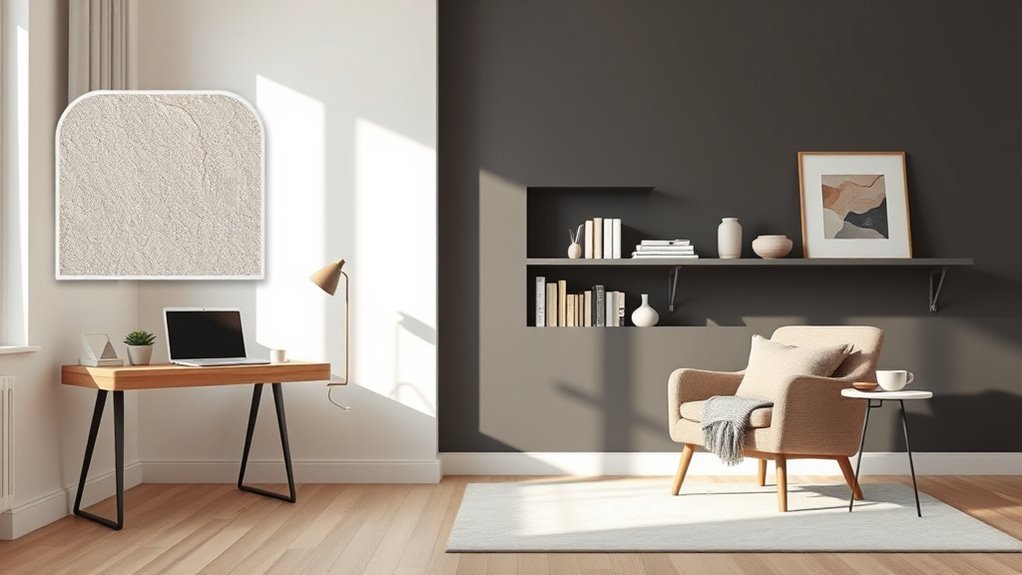
If you prefer a soft, non-reflective finish that hides surface imperfections, you should consider matte paint. It’s ideal for living rooms, bedrooms, and ceilings where a velvety look and subtle depth matter more than scrub-ability.
You’ll choose matte if you value warmth, intimacy, and muted tones—wall color psychology shows low-sheen surfaces soften light and calm spaces. Pick matte when walls aren’t high-traffic or when you’ll touch up instead of scrubbing.
Also look for eco-friendly paint options to reduce fumes and toxins during application. Ultimately, matte suits anyone prioritizing atmosphere and understated elegance over heavy maintenance.
Quick Answer: Is Matte Paint Right for Your Walls?
If you want a soft, non-reflective finish, matte paint works great in bedrooms, living rooms, and other low-traffic spaces. It hides wall imperfections and gives a cozy look.
However, matte paint is less durable and harder to clean than glossier options. Consider where stains and scuffs are likely before choosing matte for any room.
Best Rooms To Use
Wondering where matte paint works best? You’ll love it in low-traffic spaces where subtle texture and color mixing shine. Bedrooms, dining rooms, and formal living areas hide minor flaws while keeping mood calm. Use it on ceilings for a soft finish. For bathrooms, pick mold-resistant formulations to boost paint durability. In hallways, balance touch-up frequency with aesthetic payoff.
| Room | Why it works |
|---|---|
| Bedroom | Soft, cozy backdrop |
| Dining Room | Elegant, glare-free |
| Living Room | Hides small flaws |
| Ceiling | Smooth, muted look |
| Bathroom | Use moisture-rated matte |
Pros And Cons
Now that you know where matte paint shines, let’s weigh its strengths and weaknesses so you can decide whether it fits your space. You’ll appreciate matte’s soft, non-reflective finish that enhances color psychology by making hues feel deeper and calmer. It hides imperfections and often pairs well with eco-friendly options like low-VOC formulas.
Downsides: it’s less washable, can mark in high-traffic areas, and touch-ups may show. Consider room function, lighting, and maintenance before choosing matte.
- Hides flaws, cozy mood
- Enhances color psychology
- Less durable in busy spots
- Available in eco-friendly options
How Does Matte Differ From Flat, Eggshell, and Satin?
How do matte, flat, eggshell, and satin paints actually differ in finish and performance? You’ll notice matte texture hides imperfections best with very low sheen levels, giving a velvety, non-reflective look but lower washability.
Flat is similar—ultra-dull, great for hiding flaws but hardest to clean. Eggshell offers a slight luster, balancing subtle sheen with improved durability and easier maintenance, ideal for living spaces.
Satin raises sheen further, producing a soft gloss that resists scuffs and cleans well, making it suited to high-traffic areas.
Choose based on the trade-off between concealment and cleanability you need.
How Does Sheen Change a Room’s Mood?
Because sheen affects how light behaves on a surface, it can change a room’s perceived size, warmth, and energy—so choosing the right finish is as much about mood as maintenance. You’ll use sheen to guide attention: higher gloss reflects more, brightening spaces and making colors pop; low sheen soaks light, calming the room.
Consider color psychology alongside finish and interior lighting to reinforce intent—energize, soothe, or neutralize. Match sheen to function: glossy for active areas, matte for restful zones.
Think about contrast to create focal points and let natural versus artificial light alter feelings throughout the day.
- Brighten small rooms
- Soften bedrooms
- Highlight trim
- Control glare
Why Does Matte Hide Wall Imperfections?
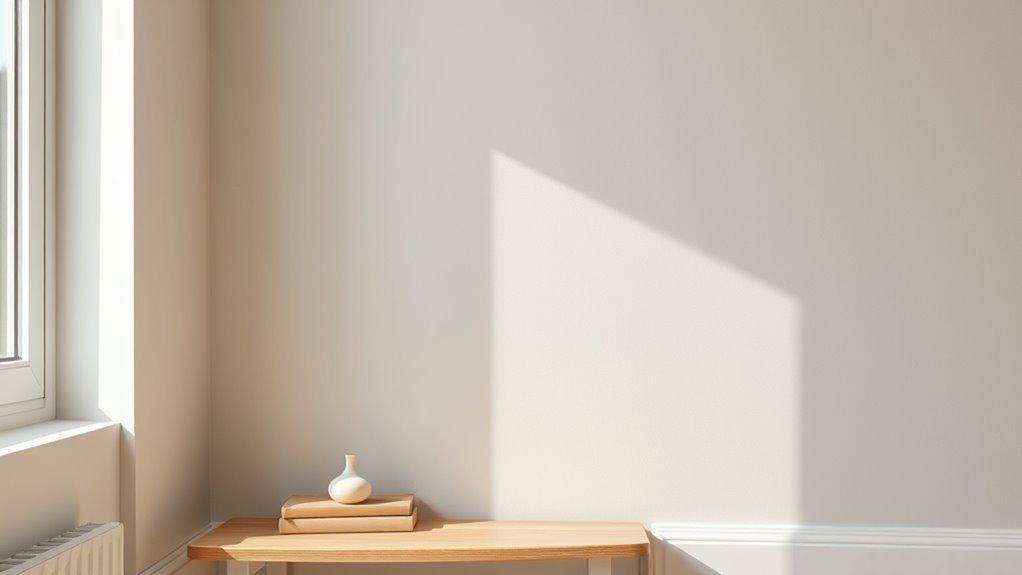
Matte paint scatters light instead of reflecting it, so you won’t notice bumps and brush strokes as easily.
That light diffusion softens harsh shadows and makes walls look more even from a distance.
The flat finish also masks minor texture variations, so small flaws blend into the surface.
Light Diffusion Benefits
Why does a flat finish make flaws disappear from view? You notice matte lighting softens glare, scattering light across the matte texture so bumps and tiny dents don’t cast sharp shadows. That subtle diffusion reduces contrast, making imperfections less obvious from typical viewing angles.
You’ll appreciate how even, muted reflections keep attention on color and form rather than flaws.
- Soft scattering: reduces specular highlights.
- Lower contrast: hides shallow shadows around defects.
- Uniform appearance: blends minor irregularities into the overall plane.
- Viewing forgiveness: everyday lighting won’t reveal small imperfections.
Surface Texture Masking
When you step back, a flat paint finish softens the micro-topography of a wall so bumps, brush marks, and slight ridges blend into a continuous surface. You’ll notice imperfections recede because matte pigments scatter light instead of reflecting it.
That scattering hides texture without masking color intent, so your chosen hues and color psychology remain true while flaws look less pronounced. Matte systems often use higher pigment load and subtle fillers to aid concealment, and many modern eco-friendly formulations achieve this without harsh VOCs.
If you want forgiving walls that still feel intentional, matte is a practical, attractive choice.
When Is Matte’s Low Reflectance a Problem?
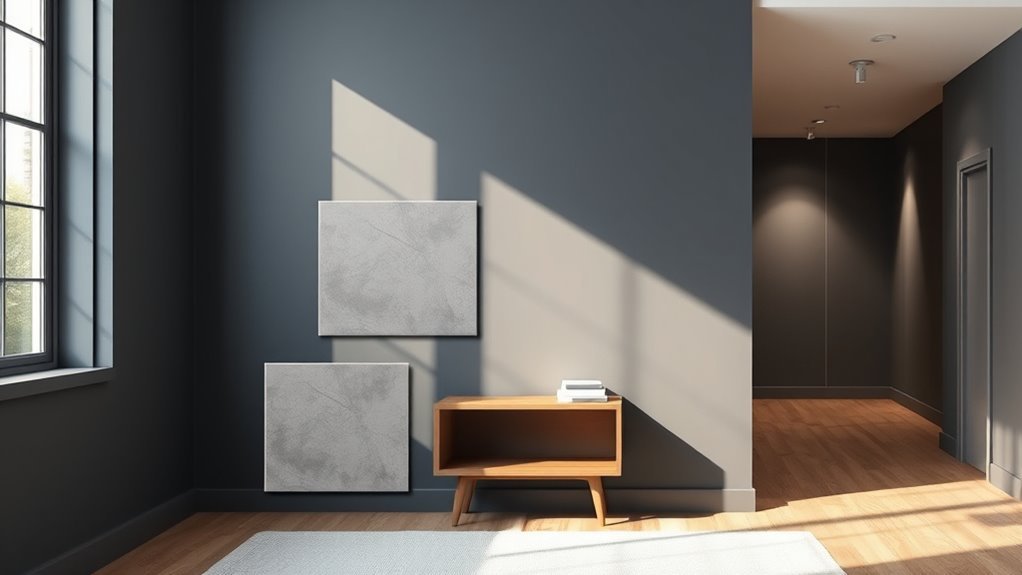
If you rely on clear, sharp details—like in small rooms, hallways, or spaces with dim lighting—matte’s low reflectance can actually make surfaces look flat and hide texture you want to see.
You’ll prefer a gloss finish where highlights reveal moldings and trim.
Matte also downplays contrast, so artwork and photos can lose pop.
Consider paint durability separately; choose finishes that balance look and wear.
Evaluate lighting before committing.
- Reduced depth in tight spaces
- Dimmed artwork and photos
- Hidden architectural details
- Less visual contrast under low light
How Durable Is Matte in High-Traffic Areas?
In high-traffic areas you’ll notice matte finishes show scuffs and abrasion sooner than glossier paints, so consider the wear-and-tear resistance before choosing it.
You’ll also need to be realistic about cleaning—matte paints can be more prone to staining and some formulas scrub off if you rub too hard.
The good news is touch-ups are usually easier because matte hides patchy repairs, but matching sheen and pigment still matters.
Wear And Tear Resistance
Although matte finishes hide imperfections better than glossier paints, they generally stand up less well to heavy scrubbing and frequent contact. You’ll appreciate matte texture for low-traffic rooms, but in busy halls or kids’ areas you’ll notice scuffs and abrasion sooner.
Wall durability depends on paint quality and underlying prep; good priming helps, but expect more touch-ups. Consider alternatives where contact is constant.
- Choose high-quality matte for improved resistance.
- Reinforce with durable primers to boost wall durability.
- Reserve true matte for bedrooms or formal spaces.
- Use tougher sheens in corridors and play areas.
Cleaning And Maintenance
When you need walls that handle frequent touching and cleaning, matte paint usually demands more care than eggshell or satin finishes. You’ll notice scuffs and fingerprints show more, so plan gentle cleaning routines and choose durable matte formulations. Consider color psychology when picking hues—darker mattes hide marks better. Also look for eco friendly options that balance low VOCs with improved scrub resistance. Use the table below to compare cleaning tips.
| Issue | Recommendation |
|---|---|
| Fingerprints | Microfiber wipe, low-pressure |
| Scuffs | Gentle eraser, avoid solvents |
| Stains | Mild detergent, spot test |
| High traffic | Consider washable matte formulations |
Touch-Up And Repairability
Since matte shows fingerprints and scuffs more readily, you’ll want to think about how easy it’s to touch up and repair in high-traffic areas. Matte paints hide small imperfections but can be tricky to match. Consider primer, sheen consistency, and Color blending to keep repairs invisible. Paint durability matters for how often you’ll need touch-ups.
- Keep leftover paint for spot repairs to match sheen and Color blending.
- Clean gently before touching up to guarantee adhesion and Paint durability.
- Feather edges with a small roller to avoid lap marks.
- Repaint entire panels if wear is extensive for uniform finish.
Can You Wash Matte Walls?
Wondering if you can wash matte-painted walls? You can, but gently. Matte paint has low paint sheen and hides imperfections, so aggressive scrubbing or strong cleaners can dull or remove pigment.
You can wash matte-painted walls—gently. Low-sheen finishes hide flaws but can dull if scrubbed or cleaned harshly.
First consider wall texture: smooth surfaces tolerate light washing better than heavily textured ones, which trap dirt and risk damage when scrubbed.
Use a soft sponge, mild detergent, and lukewalrm water; test a small hidden area first. Blot stains rather than rub, and rinse with clear water to remove soap residue.
For stubborn marks, try a magic eraser very lightly to avoid altering the finish.
How Easy Is Touch-Up on Matte?
How easy is it to touch up matte paint? You’ll find touch up ease depends on preparation and paint match. Matte durability can hide minor scuffs, but fresh touch-ups often stand out because matte finish absorbs differently.
To improve results, clean the area, feather edges, and use the same sheen and batch when possible.
- Match color and sheen precisely.
- Clean and sand lightly for adhesion.
- Apply thin coats, feathering outward.
- Blend with surrounding texture and let cure.
With care, you’ll get near-invisible repairs; without it, touch-ups reveal texture or color differences.
Best Rooms for Matte Paint
You’ll get the best results with matte paint in low-traffic living areas where scuffs are less likely. Consider bedrooms, where the soft finish enhances a cozy feel.
And dining rooms, which benefit from matte’s muted, elegant look. These spaces let matte’s rich, non-reflective surface shine without constant touch-ups.
Low-Traffic Living Areas
When you want a soft, sophisticated look without worrying about scuffs, matte paint is ideal for low-traffic living areas like formal sitting rooms, guest bedrooms, and home offices. You’ll enjoy subtle textures and richer color psychology effects without shiny reflections.
Choose eco-friendly options to minimize VOCs and maintain indoor air quality. Matte surfaces hide minor imperfections and create a calm backdrop for art or wood furniture.
Consider these specific uses:
- Formal sitting room: emphasize artwork and textiles.
- Home office: reduce glare for video calls.
- Guest bedroom: create a restful atmosphere.
- Reading nook: enhance cozy, muted tones.
Bedrooms And Dining Rooms
Why pick matte for bedrooms and dining rooms? You’ll appreciate matte’s soft, low-sheen finish in restful spaces where glare would distract. It conceals wall texture better than glossy alternatives, helping imperfections disappear without extra prep.
In dining rooms, matte creates a cozy, sophisticated backdrop that lets furnishings and food take center stage.
Matte can be harder to clean, so avoid high-traffic or messy areas, but in bedrooms and formal dining spaces it holds up fine.
Choose low-VOC formulas and ventilate properly to minimize paint fumes during application, then enjoy a calm, elegant atmosphere with minimal visual noise.
Rooms to Avoid Using Matte
Which rooms should you skip matte paint in? You’ll want to avoid matte where moisture, heavy traffic, or durability needs clash with its low-sheen finish. Consider these spaces carefully:
- Bathrooms — constant humidity and splashes demand finishes with better outdoor durability than typical matte.
- Kitchens — cooking splatters and frequent cleaning wear matte quickly; choose washable alternatives.
- Entryways and mudrooms — scuffs and dirt show on matte and need tougher coatings.
- Kids’ playrooms — crayons, markers, and rough play require surfaces that tolerate repeated cleaning and quick touch-ups.
Also avoid matte on ceiling application if you need stain resistance or easy cleaning.
How Natural vs. Artificial Light Affects Matte
When you place matte paint in a room with plenty of natural light, the finish looks softer and more forgiving.
Under artificial light, though, matte can make bumps and brush marks stand out more.
Consider how each light source hits your walls before you choose the finish.
Natural Light Softens Finish
Because matte paint soaks up light instead of bouncing it back, rooms with lots of natural sunlight will look softer and more even than those lit primarily by artificial sources. You’ll notice textures blur, colors feel calmer, and color psychology shifts toward relaxation.
Matte also complements eco-friendly finishes, making daylighted spaces feel organic and serene. Consider these practical tips:
- Face seating toward sunlit walls to emphasize softness.
- Use lighter matte hues to maximize diffuse brightness.
- Test samples at different times to judge hue under daylight.
- Pair matte walls with natural textiles to enhance the gentle, restful mood.
Artificial Light Highlights Imperfections
How does artificial light change the way matte walls look? You’ll notice artificial light can cast sharper shadows that reveal wall imperfections more than gentle daylight. Directional bulbs and cool LEDs emphasize texture and tiny bumps, so you’ll want smoother prep if you’re committed to matte. Use even ambient fixtures to minimize glare and contrast, or accept a lived-in look. Here’s a quick comparison to help you decide:
| Light Type | Effect on Matte | Tip |
|---|---|---|
| Warm incandescent | Softens slightly | Use dimmers |
| Cool LED | Highlights texture | Smooth surfaces |
| Directional spotlight | Reveals flaws | Diffuse light |
How Wall Texture Interacts With Matte Paint
Curious about how texture will change the look of a matte finish? You’ll see subtle shifts depending on surface irregularities—wall paint hides sheen but reveals peaks and valleys.
Texture interaction matters: smooth walls make matte feel soft and uniform; rough surfaces emphasize shadowing and depth. Consider these effects:
Texture changes matte paint’s effect: smooth walls read soft and even, while rough surfaces cast shadow and reveal depth.
- Smooth drywall — matte looks even and modern.
- Light orange peel — soft variations add warmth.
- Heavy knockdown — pronounced shadows increase visual drama.
- Stucco or popcorn — texture dominates, matte minimizes glare but can look blotchy.
Choose based on how much surface detail you want emphasized or concealed.
How Color Choice Shifts With a Matte Finish
When you choose a matte finish, colors will read a touch deeper and more subdued than with satin or gloss, so you’ll want to test swatches in the room’s light before committing.
You’ll notice warm hues feel cozier and cool tones seem calmer; color psychology shows how finish alters mood. Matte hides reflections, so saturated shades read richer and neutrals look softer.
In contrast, Matte vs. gloss comparisons reveal gloss can brighten and energize the same pigment. Plan around natural and artificial light, view samples at different times, and trust how a matte surface tames intensity without flattening character.
Should You Use Matte for an Accent Wall?
Thinking about a matte finish for an accent wall? You should, if you want subtle depth and wall texture enhancement without glare. Matte minimizes reflections, emphasizing color and imperfections you can either hide or highlight. Consider traffic, maintenance, and the matte finish durability compared to tougher sheens.
- Low-glare mood: creates cozy focal points.
- Texture boost: hides minor flaws, enhances brushwork.
- Care trade-off: touch-ups may show, cleaning is gentler.
- Placement matters: choose low-contact walls for longevity.
You’ll get sophisticated, soft drama with a matte accent if you plan for upkeep.
How to Pair Matte Walls With Glossy Trim
How do you balance the soft, light-absorbing look of matte walls with the snap of glossy trim? You’ll use contrast intentionally: matte fields recede while glossy trim reflects and defines edges.
Choose trim sheen to highlight architectural lines and consider color psychology—glossy white trim feels crisp and energetic against muted matte tones, while deep gloss can dramatize warmth.
Study historical uses—Victorian rooms often paired matte walls with high-gloss woodwork to signal formality.
Test samples under your lighting, keep trim color limited to one or two hues, and use clean brushwork so the gloss reads as deliberate, not accidental.
Should Ceilings Be Matte or Another Sheen?
If your ceiling has flaws or texture you want to hide, matte is your best bet because it minimizes shine and disguises imperfections.
But if you need a surface that’s easier to clean or more durable—like in kitchens or bathrooms—satin or semi-gloss can be a smarter choice.
Think about the room’s use and how visible the ceiling is when making your call.
Matte For Concealing Imperfections
Because ceilings are large, light-catching surfaces, choosing the right sheen matters: matte hides flaws better than glossy finishes, so if your ceiling has texture irregularities, minor cracks, or patchwork, a flat or matte paint will keep them from calling attention to themselves. You’ll get a smooth, unobtrusive look that mimics Matte art and Matte photography’s low-reflective appeal. Use matte when you want uniform color and to downplay unevenness. Consider touch-up ease and low sheen’s forgiving nature.
List practical steps:
- Inspect for major defects.
- Patch and sand minor issues.
- Prime porous areas.
- Apply two thin coats.
Satin Or Semi-Gloss Benefits
While matte hides flaws, satin or semi-gloss can give your ceiling a subtle sheen that boosts durability and makes cleaning easier, so choose them when you need moisture resistance or expect frequent wipes in kitchens, bathrooms, or high-traffic rooms. You’ll balance Matte sheen benefits against Wall texture visibility: satin softens texture, semi-gloss highlights it. Pick satin for warm rooms and moderate scrubbing; pick semi-gloss where stains and steam are common.
| Room | Durability | Look |
|---|---|---|
| Bathroom | High | Slightly shiny |
| Kitchen | Very high | Reflective |
| Hallway | Moderate | Smooth |
| Bedroom | Low | Soft matte |
Using Matte in Rental Units: Landlord and Tenant Tips
When you’re choosing matte paint for a rental, think about durability, maintenance, and move-out rules—matte hides flaws well but can be harder to clean and touch up than eggshell or satin.
As a tenant, pick eco friendly options and document color customization approvals in writing.
As a landlord, set clear repainting expectations and allow approved touch-up kits.
- Get written permission for nonstandard colors and keep receipts.
- Use washable matte or hybrid formulas to balance look and upkeep.
- Photograph walls before and after tenancy for disputes.
- Agree who supplies paint and handles repairs to avoid surprises.
Can You Use Matte in Children’s Rooms Safely?
If you want a soft, modern look in a child’s room, you can use matte paint safely—just choose the right formula and plan for cleaning and safety. Pick washable or scrubbable matte finishes labeled low-VOC and consider Eco friendly options to reduce fumes. Test durability on a small wall; you’ll want a finish that resists scuffs. Keep toys and food away from freshly painted surfaces until cured. For period rooms, balance Historical accuracy with modern safety by selecting colors and low-tox formulations that mimic traditional pigments.
| Concern | Recommendation |
|---|---|
| VOCs | Low-VOC or zero-VOC |
| Cleanability | Scrubbable matte |
| Durability | Reinforced primer |
| Safety | Non-toxic labels |
| Style | Historical accuracy-friendly colors |
How to Prep Walls Specifically for Matte Paint
Before you roll on matte paint, make sure the wall is spotless and smooth so the finish looks even. Fix dents, cracks, and nail holes with spackle and sand them flush once dry.
You’ll get the best, most forgiving matte result if you address imperfections first.
Clean And Smooth Surface
A clean, smooth surface is essential for matte paint because its low sheen highlights every imperfection, so you’ll need to wash, patch, and sand the walls thoroughly before you roll. You’ll prep with intent so wall art sits flat and color coordination reads true. Follow these precise steps to avoid texture and sheen surprises.
- Wash walls with mild detergent, rinse, let fully dry.
- Lightly sand glossy spots and skim with fine-grit paper.
- Remove dust with a tack cloth and vacuum before priming.
- Apply a high-quality primer suited to your substrate, then inspect.
Repair Imperfections First
Since matte paint magnifies flaws, repair any dents, holes, and cracks so your finish looks consistent and flat. Start by sanding loose paint and cleaning dust, then fill imperfections with spackling or joint compound, smoothing with a putty knife. Sand feathered edges and prime patched areas to equalize porosity; matte finishes reveal uneven sheen without this step.
If your space has a historical context or cultural significance, choose repair methods and materials that respect original surfaces and permits.
Inspect under varied lighting, touch for smoothness, and repeat filling or sanding until the wall reads uniformly before painting.
Which Primers Work Best Under Matte?
Which primer should you pick for matte paint? You’ll want a primer that evens surface porosity, boosts adhesion, and preserves the matte look. Consider color psychology when choosing tinted primers to reduce coats and influence final hue. Also weigh eco-friendly options if low VOCs matter to you.
Good choices include:
Good choices include high-adhesion, oil, shellac, and bonding primers tailored to your surface needs.
- High-adhesion acrylic primer for drywall and repaired spots.
- Oil-based primer for stains and tannin bleed-through.
- Shellac primer for severe staining or odor sealing.
- Bonding primer for glossy surfaces or tricky substrates.
Pick based on substrate, stains, and finish goals.
Best Tools to Apply Matte for Smooth Coverage
Once your primer’s set and the surface is ready, pick tools that give matte paint an even, brush-stroke-free look. Use a high-density roller for large areas; it improves color blending and minimizes texture. Keep a good angled sash brush for edges and corners to control cut-ins. A microfibre pad can smooth touch-ups without adding sheen. For tricky spots, use a small foam roller to maintain paint durability. Clean tools thoroughly to avoid lumps and color shifts. Choose quality over cheap kits—consistent tools yield professional results and extend the life of your finish.
| Tool | Best Use |
|---|---|
| High-density roller | Large walls |
| Angled brush | Edges & corners |
| Foam roller | Touch-ups |
How Many Coats of Matte Do You Need?
How many coats you need depends on the paint’s quality, the color change, and the wall’s condition — but most matte finishes require two coats for even coverage and durability. You’ll often apply a primer if switching from dark to light or if the wall is stained.
Two coats balance depth and the color psychology of a room without excess waste. Use a third coat only for deep pigments or textured surfaces.
Consider low-VOC options to reduce environmental impact.
Follow these steps:
- Prime when needed.
- Apply first coat evenly.
- Assess opacity.
- Add second or third coat.
What to Expect: Drying and Curing for Matte
Expect matte paint to feel dry to the touch within 1–2 hours under normal conditions, but don’t assume it’s ready for heavy use.
You can usually recoat after 4–6 hours, though cooler or humid conditions will slow that timing.
Full curing often takes 2–4 weeks, so treat freshly painted walls gently until then.
Drying Time Expectations
Wondering how long matte paint will take to dry and fully cure? You’ll notice surface dry in 1–2 hours, but curing takes longer. Expect these stages and factors:
- Surface dry (1–2 hours): handles light contact; paint odor fades quickly.
- Recoat window (usually 4–6 hours): follow manufacturer’s label for best adhesion.
- Light use (24–48 hours): avoid scrubbing; thin films cure faster than thick.
- Full cure (2–4 weeks): hardness increases and risk of color fading stabilizes; proper ventilation speeds odor dissipation and curing.
Temperatures, humidity, and film thickness affect timing—plan accordingly.
Touch-And-Recoat Timing
When you’re planning a second coat, give matte paint enough time to form a stable skin—usually 4–6 hours under normal conditions—so the new layer bonds without lifting or streaking. You’ll check tackiness by touch; if it smears, wait longer. Proper timing preserves texture enhancement and helps with accurate color matching between coats. Humidity, temperature, and film thickness change times, so adjust accordingly. Light sanding between coats smooths imperfections and improves adhesion when needed.
| Condition | Wait Time | Tip |
|---|---|---|
| Low humidity | 3–4 hrs | Faster dry |
| Normal | 4–6 hrs | Standard |
| High humidity | 8+ hrs | Extend wait |
| Thick coat | 12+ hrs | Thin coats preferable |
Full Cure Duration
Most matte wall paints will feel dry to the touch within a day, but they generally take 2–4 weeks to fully cure so the film reaches maximum hardness, stain resistance, and color stability. You’ll want to limit scrubbing and heavy use during curing; the matte texture and wall diffusion qualities develop as solvents evaporate and binders crosslink.
Expect slight color shift and reduced tack for several weeks. Monitor humidity and temperature to speed or slow cure. Follow manufacturer guidance for handling and furniture placement.
- Wait 2–4 weeks before heavy cleaning.
- Avoid high humidity during cure.
- Test small scrubs first.
- Allow proper ventilation.
How to Avoid Roller Marks and Streaks With Matte
If you want smooth, even matte walls, focus on your roller technique and paint prep from the start. Use a quality nap suited to your wall texture, load the roller evenly, and work in consistent W patterns. Keep a wet edge, avoid overworking, and sand between coats if needed.
| Step | Action | Tip |
|---|---|---|
| 1 | Choose nap | Match texture |
| 2 | Load roller | Even coverage |
| 3 | Roll pattern | W motions |
| 4 | Finish edge | Feather out |
A true matte finish hides minor flaws but reveals streaks if you rush.
When to Spot-Prime or Skim-Coat for Flawless Matte
If you’re painting over glossy spots, you’ll want to spot-prime them first so the matte finish adheres evenly.
When the wall has heavy texture or gouges, skim-coating smooths the surface for a true matte look.
Both steps save you from uneven sheen and extra coats down the line.
Spot-Prime High Gloss
When you’re switching a glossy or semi-gloss surface to matte, you’ll usually need to spot-prime or skim-coat shiny areas so the new paint adheres and reads evenly. You’ll protect Matte paint durability and guarantee Matte color options look consistent. Assess sheen variance, sanding needs, and stains before priming.
Then:
- Clean and scuff glossy spots with a degreaser and fine sandpaper.
- Apply a bonding primer only to high-sheen patches, feathering edges for uniformity.
- Spot-fill small imperfections with lightweight filler, sand smooth.
- Re-prime any patched areas, let cure, then apply your matte topcoat evenly.
Skim-Coat For Texture
After you’ve spot-primed glossy areas, check the wall’s texture—matte finishes reveal every bump and joint, so you’ll want to skim-coat wherever the surface isn’t uniformly smooth.
You should assess dents, seams, and patch edges under raking light. For small flaws, use a thin skim coat texture applied with a wide knife; feather edges to blend.
Larger areas benefit from a full skim coat for consistent wall smoothing before sanding. Prime the dried skim coat, then inspect again.
Doing skim-coat work prevents visible imperfections and guarantees your matte paint lays down flat and even, saving touch-ups later.
How Humidity and Temperature Affect Matte Results
Because matte finishes sit closer to the surface, humidity and temperature can change how they dry and look, so you’ll want to regulate the environment during application and curing. You’ll notice humidity impact gloss, drying time, and potential blushing; temperature effects alter viscosity, tack, and film formation. Work when conditions are stable.
- Paint when humidity is 40–60% to avoid slow drying or moisture trapping.
- Keep temperature between 50–85°F (10–29°C) to ensure proper leveling.
- Use dehumidifiers or fans for fast drying in damp conditions.
- Allow extra curing time in cool or humid environments to prevent defects.
Using Matte on Plaster, Drywall, and Textured Surfaces
If your walls are plaster, matte hides small imperfections well but can make large flaws more obvious, so you’ll want smooth prep.
On textured drywall, matte can soften the look and hide seams, but heavy texture may create shadowing that changes color perception.
Consider testing a small area to see how the finish plays with your surface before committing.
Matte On Plaster
Wondering how matte paint performs on plaster, drywall, or textured surfaces? You’ll find matte texture flatters a plaster finish by minimizing sheen and softening imperfections. On true plaster, it hides hairline cracks; on drywall, it’s forgiving but shows scuffs more than eggshell.
Prep matters: clean, repair, prime to guarantee adhesion and uniform color. For textured surfaces, test a small area to confirm coverage and washability.
- Assess surface: smooth plaster vs. rough finish.
- Prep: patch, sand, prime.
- Apply: thin, even coats; let dry fully.
- Maintain: spot-clean gently; retouch as needed.
Matte On Textured Drywall
Matte paint works well on textured drywall because its low sheen softens bumps and hides minor imperfections. When you choose matte texture, you reduce glare and make walls look smoother from normal viewing distances.
Apply with a thick-nap roller to get even coverage in crevices; multiple thin coats beat one heavy coat that can drip or fill texture unevenly.
Keep in mind matte hides flaws but also shows scuffs more than semi-gloss when touched. If you expect heavy wear, pick a washable matte formula or use a higher wall sheen on trim and high-contact areas to balance durability and appearance.
How to Treat Stains Before Painting Matte
How do you remove stains so your matte paint hides them instead of highlighting them? Start by assessing stains; oil, nicotine, and water marks each need different prep. Remember color psychology—lighter tints can reveal imperfections, so prime accordingly. Consider environmental impact when choosing cleaning agents and primers; pick low-VOC, biodegradable options.
- Wipe surface with mild detergent and water; dry thoroughly.
- Use a stain-blocking primer for tannin or water marks.
- Apply solvent or trisodium phosphate for grease; rinse well.
- Sand glossy spots lightly, then re-prime before applying matte paint.
When to Choose Washable or Scrubbable Matte Formulas
If your walls see a lot of traffic, you’ll want a washable or scrubbable matte that stands up to bumps and scuffs.
Choose scrubbable formulas where frequent cleaning or tougher stains are likely, and washable options for lighter wipe-downs.
I’ll explain the cleaning methods and what each finish can handle so you can pick the right level of durability.
High-Traffic Durability
Want your walls to look good even after years of fingerprints, spills, and daily abrasion? You’ll pick washable or scrubbable matte where durability matters—hallways, kids’ rooms, and entryways. Look for formulations that balance hide with toughness, and consider eco friendly options if indoor air quality matters.
Also, check pigment load for Color customization without sacrificing wear resistance. Choose a satin-like matte scrub rating for frequent contact; lower-VOC options often meet performance needs now.
- Prioritize scrub ratings and scuff resistance
- Match finish to traffic level
- Test small patch first
- Repaint strategically, not excessively
Cleaning Ease and Methods
After you’ve matched finish to traffic and checked scrub ratings, think about how often and how vigorously you’ll need to clean the walls—this decides whether to choose a washable or scrubbable matte.
You’ll pick washable for light smudges and scrubbable when kids, pets, or frequent contact demand tougher cleaning.
Test samples: wipe gently, then more firmly to see if sheen or color shifts. Ask about paint branding specifics and any protective additives.
When mixing colors, note that color mixing can affect opacity and hide—darker blends may show scuffs differently.
Match cleaning method to formula to keep surfaces looking fresh.
Cost Comparison: Matte vs Other Sheens
When you’re weighing paint options, cost often becomes the deciding factor, and matte finishes usually sit near the middle of the price range: they’re cheaper than specialty high-gloss or durable eggshells formulated for heavy wear, but they can cost a bit more than basic flat paints. You’ll want a clear cost analysis and practical budget considerations before buying.
Consider these points to compare prices and value:
- Coverage: matte may need more coats than sheen with better flow.
- Durability: glossier sheens often last longer in high-traffic areas.
- Touch-ups: matte hides imperfections, reducing repaint frequency.
- Brand: premium lines raise cost but improve longevity.
Are Matte Paints Low-VOC? Environmental Considerations
Although matte paints can be formulated as low-VOC, you should check labels and certifications because VOC levels vary widely by brand and product line.
You’ll find many matte options marketed as eco friendly finishes, but verify third-party seals and ingredient lists to confirm VOC reduction.
Choosing water-based, low-odor formulations minimizes indoor air pollution during and after painting.
Keep in mind application and ventilation affect exposure, so ventilate well and allow proper curing time.
If sensitivity or strict indoor air standards matter, opt for certified zero-VOC or natural alternatives and consult product data sheets for clear comparisons.
How Brands and Product Lines Differ in Matte Quality
Because manufacturers balance pigment load, binder type, and additives differently, matte finishes can perform very differently from brand to brand — and even between product lines from the same maker. You should expect variation in coverage, durability, and sheen uniformity. Check for Brand consistency across batches and read technical data. Texture perception can change with formulation and color depth.
- Coverage: some formulas need more coats.
- Durability: higher-quality binders resist scuffs.
- Touch: microtexture affects feel and light scatter.
- Color depth: pigments alter perceived matte level.
Compare specs and reviews to choose wisely.
How to Test Matte Samples in Your Space
If you want matte paint to look right in your room, test multiple samples on the actual walls and view them at different times of day. Paint 6×6-inch swatches or peel-and-stick cards in several spots, near trim and mid-wall.
Note how each hue plays with your chosen color combinations and how shadows shift around furniture placement. Live with samples for a few days, observe morning and evening tones, and photograph them for comparison.
Check adjacent finishes—wood, fabric, metal—and imagine scaled-up coverage. Pick the sample that reads best across conditions and complements layout before committing to a full coat.
Lighting Test Checklist for Matte Paint Samples
When you test matte paint samples, check them under every lighting condition they’ll face so you don’t get surprised by color shifts or hidden imperfections. You’ll learn how hue and finish interact with daylight, warm bulbs, and shadows, which matters for Color psychology and mood.
Also note sheen reveal and any unevenness. Consider Eco friendly options in your choices; low-VOC formulations can behave differently in tone and drying.
Also note sheen reveal and any unevenness, and consider eco-friendly, low-VOC options that may shift tone or drying.
Use this quick checklist to evaluate samples precisely:
- Observe in morning daylight and late afternoon light.
- Check under your typical artificial lighting.
- Inspect near windows and in shaded corners.
- Photograph samples at different times.
How to Preview Touch-Up Visibility With Swatches
Before you commit to a full coat, test how touch-ups will look by applying small swatches of the matte paint in high-traffic and low-light areas; this shows how the finish blends, hides scuffs, and reacts to wear. You’ll observe sheen, edge feathering, and slight color shift from drying. Note how color psychology changes perception when touched-up areas contrast. Use eco friendly finishes if sensitivity matters. Track results over days and photograph swatches under daylight and artificial light to compare. Use this quick reference:
| Location | Observation |
|---|---|
| Hallway | |
| Bedroom | |
| Kitchen | |
| Stairwell | |
Maintenance Routine for Matte Walls
Because matte finishes hide imperfections but show stains more readily, you’ll want a simple, regular maintenance routine to keep walls looking good without overworking them. You’ll balance appearance and practicality, remembering that color psychology affects perceived cleanliness and mood; darker tones hide marks differently than pastels.
Choose gentle products—preferably eco friendly finishes and cleaners—to protect paint and indoor air. Clean spots promptly and avoid scrubbing hard.
Inspect yearly for fading in sunlight and retouch where needed. Follow this concise plan:
- Dust weekly with a microfiber cloth.
- Spot-clean with mild soap and water.
- Use eco friendly finishes for repaints.
- Inspect for fading annually.
How to Fix Scuffs and Stains on Matte Walls
Keeping up with your weekly dusting and prompt spot-cleaning will cut down on most marks, but scuffs and stubborn stains on matte walls still happen—and they need a careful approach to avoid dulling the finish.
First try a soft brush or microfiber cloth with mild soap and water; rinse and blot dry. For tougher marks, use a magic eraser gently, testing an inconspicuous spot first.
Avoid harsh chemicals or abrasive scrubbing that change the appearance—remember matte vs gloss differences mean sheen alters easily.
If cleaning fails, consider targeted touch-up with matching paint or explore wall paint alternatives like low-sheen eggshell.
When to Repaint Instead of Repair Matte Damage
If you’ve tried cleaning and spot-touching with no success, it’s time to contemplate repainting the matte surface. You should repaint when damage is widespread, color shifts, or texture inconsistencies distract from the room’s mood. Repainting resets ambiance; consider color psychology to choose tones that calm or energize.
Also weigh eco-friendly options like low-VOC or recycled-content paints to reduce impact.
- Multiple scuffs or fading across large areas.
- Patchy touch-ups stand out under natural light.
- You’re changing the room’s original mood or function.
- You want sustainable paint choices or improved durability.
Why Designers Choose Matte Today: Trends & Examples
While glossy finishes used to dominate, designers now favor matte for its subtlety and modern sophistication, and you’ll see it across residential and commercial projects for good reasons. You’ll notice matte’s muted look supports Color psychology—calming bedrooms, grounded living areas—and nods to historical finishes without feeling dated. Matte hides imperfections, reduces glare, and frames textures and furnishings so your spaces feel intentional. Examples include gallery walls, boutique hotels, and minimalist kitchens where finishes read refined rather than shiny.
| Project Type | Why Matte Works |
|---|---|
| Gallery | Reduces glare |
| Hotel | Feels luxe |
| Kitchen | Softer look |
| Bedroom | Calming |
Styling Tips That Complement Matte Walls
Because matte walls absorb light rather than reflect it, you’ll want to balance textures and finishes in the room to prevent the space from feeling flat. Use color psychology to choose shades that match mood—soothing blues, energizing yellows—and pair them with tactile fabrics. Consider eco-friendly paints for low odor and healthier indoor air.
- Add metallic accents sparingly to catch light.
- Layer rugs and throws to create depth.
- Mix matte and satin accessories for subtle contrast.
- Use strategic lighting—wall washers and warm bulbs—to define surfaces and enhance color.
Using Matte Paint With Tile, Wallpaper, and Wood Finishes
When you pair matte paint with tile, wallpaper, or wood finishes, think of it as creating a calm backdrop that lets texture and pattern take the lead. You’ll let subway tile grout, embossed wallpaper, or warm wood grain stand out without glare.
Choose matte hues with color psychology in mind: soft neutrals soothe, deep tones add drama behind patterned tile. Matte also hides minor wall flaws near trim and cabinets.
Pair it with sealed wood or washable wallpaper to avoid wear. For sustainability, pick low-VOC, eco-friendly finishes so your layered surfaces look great and stay healthy.
When to Hire a Pro for Matte Painting
If your project pairs matte paint with tile, wallpaper, or wood finishes but includes tricky surfaces, high-traffic areas, or large-scale rooms, you might want to hire a pro. You’ll benefit when precision, finish uniformity, and surface prep matter.
Pros blend artistic techniques with practical skills and understand color psychology for mood and light. Consider hiring help when:
- Surfaces need extensive repair or priming.
- Rooms are large, vaulted, or hard to access.
- You want seamless transitions with existing finishes.
- The finish must withstand heavy use or precise color matching.
A pro saves time and reduces costly redo risks.
Common Mistakes People Make With Matte Paint
Although matte paint gives walls a sophisticated, low-sheen look, many DIYers stumble on application and maintenance mistakes that ruin the finish. You might skip proper priming, expecting coverage to hide imperfections, but matte reveals flaws—prep matters.
You can over-thin or under-stir paint, causing uneven sheen and patchy color; follow manufacturer instructions.
Ignore lighting and color psychology, and a hue that reads calming in daylight may feel flat in dim rooms.
Using harsh cleaners or scrubbing aggressively will damage the surface.
Also overlook environmental impact when choosing products; pick low-VOC options and dispose responsibly to avoid harm.
Final Checklist: Should You Use Matte on Your Walls?
Before you commit, run through a quick checklist to decide whether matte paint fits your space and lifestyle: assess wall imperfections—matte hides little and highlights big flaws—evaluate room lighting and color choices, confirm you’ll prime and apply correctly, and consider cleaning habits and VOC preferences so the finish stays beautiful and responsible over time.
Before you commit, run a quick checklist—inspect imperfections, test lighting and color, prime properly, and choose low‑VOC paints.
- Inspect walls: large flaws need repair because matte won’t forgive.
- Test color psychology: darker mattes absorb light, smaller rooms may feel cozier or cramped.
- Prep and prime: proper adhesion reduces touch-up issues and uneven sheen.
- Ventilate: minimize paint fumes and choose low-VOC formulas for safer living.
Frequently Asked Questions
Can Matte Paint Affect Indoor Air Quality After Application?
Yes — matte paint can affect indoor air quality after application; you’ll encounter paint VOCs and other indoor air pollutants during and shortly after drying, so ventilate well, choose low-VOC formulas, and allow extended curing time.
Does Matte Paint Alter Perceived Color Saturation Compared to Gloss?
Yes — you’ll notice matte paint reduces light reflection, which often softens highlights and can make color depth seem richer but slightly less saturated than gloss; gloss boosts surface shine and perceived saturation through stronger reflections.
Can You Use Matte Paint on Kitchen Cabinets or Built-Ins?
Yes — you can use matte paint on kitchen cabinets or built‑ins, but for kitchen durability choose a high‑quality, washable matte; you’ll still need careful cabinet cleaning to avoid stains and scuffs since matte hides imperfections less.
Will Matte Finish Show Water Spots or Condensation Marks?
Yes — matte hides texture but highlights water stains and condensation marks more than glossy finishes; you’ll see dull, ringed spots where moisture sat, so expect subtle yet noticeable discoloration that cleaning might not fully remove.
Are There Specialty Matte Paints for Bathrooms and Laundry Rooms?
Yes — you can use specialty matte finishes designed for bathrooms and laundry rooms; they’re moisture resistant and formulated to resist staining, mildew, and condensation marks, so you’ll get matte aesthetics without sacrificing durability or cleanability.
Conclusion
So, should you settle for satin or stray toward silky matte? If you’re seeking subtle sophistication, stain-hiding stealth, and a soft, soothing surface, matte might be your match. It’s perfect for bedrooms, living rooms, and low-traffic spaces where texture trumps shine. But remember: touch-ups can be tricky, cleaning is gentler, and trim often needs a glossier contrast. Weigh wear, wall flaws, and maintenance before making your final finish choice.
