
What White Paint for Walls? Best Shades
You’ll want a warm, neutral, or cool white chosen for its undertone and how your room’s light shifts it—warm whites add coziness, neutrals balance, and cools feel crisp. Test large swatches in morning and evening light and try peel-and-stick samples to spot blue, yellow, or pink casts. Match finish to function—matte hides flaws, satin cleans easier, semi-gloss works for trim—and keep testing; more tips and room-specific picks follow if you want them.
Quick Answer: Universal White Paint Shades + 3-Step Pick Checklist
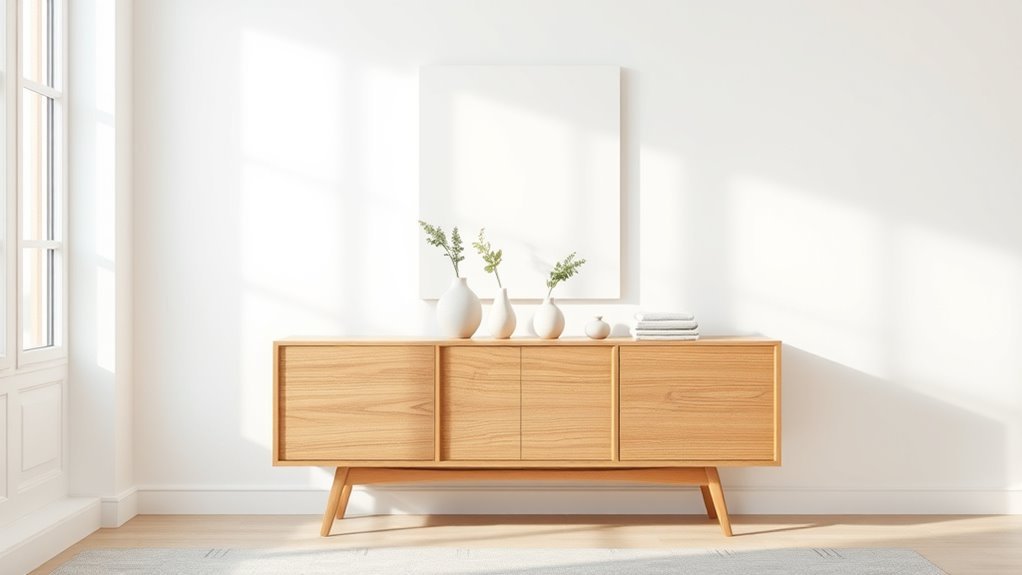
Start with three universally flattering whites—soft warm, true neutral, and crisp cool—so you can immediately narrow choices for any room.
You’ll use universal shades as anchors: pick one warm for cozy spaces, one neutral for balance, and one cool for crisp rooms.
Quick selection comes from testing each on a large swatch in morning and evening light.
Step 1: note existing finishes and undertones.
Step 1: take stock of your room’s existing finishes and undertones before testing whites.
Step 2: compare swatches against trim and flooring.
Step 3: live with samples for three days before committing.
This simple 3-step pick checklist keeps decisions fast, confident, and foolproof.
What People Mean When They Search “What White Paint for Walls”?
When you ask “what white paint for walls,” you’re usually trying to pick the right undertone and warmth so the color feels intentional, not blue, yellow, or pink by accident.
You’re also thinking about how natural and artificial light, plus the room’s size, will shift that white throughout the day.
Let’s look at how undertones and light interact so you can choose a white that truly fits your space.
Choosing Undertone and Warmth
Choosing the right white paint means thinking about undertone and warmth—those subtle hints of color that decide whether a room feels crisp, cozy, or sterile.
You’ll consider undertone significance and warmth perception to pick a white that flatters furnishings and mood. Test samples on walls and live with them at different times; small shifts reveal blue, pink, or yellow hints. Trust your instincts and compare swatches against trim and textiles.
- Pale white with cool blue undertones for a clean, modern feel
- Creamy white that reads soft and inviting
- Warm white leaning toward beige for comfort
- Bright white for high-contrast accents
Matching Light And Space
Light and room size change how white paint looks, so pick a shade that responds to your space’s natural and artificial light.
You’ll notice cool whites feel crisp in bright north light but can read blue or sterile in small rooms; warm whites soften south-facing glare and boost coziness.
Consider light perception: observe paint swatches at different times and under fixtures to see shifts.
For space enhancement, use brighter, cleaner whites to open tight areas, and slightly warmer, muted whites to make large rooms feel intimate.
Test full walls when possible before committing to a final choice.
How Do I Choose Warm vs Cool White for My Room?
Because warm and cool whites shift how colors and surfaces read, you’ll want to match the undertone to your room’s function, existing finishes, and the mood you want to create.
You’ll pick warm white to cozy bedrooms, pair wood tones, and soften vintage pieces. Choose cool white to crispify modern kitchens, highlight chrome, and make artwork pop.
Test swatches on several walls. Stand back and live with samples for a day.
- Morning light bathing a soft beige rug
- Gleam of stainless steel against a pale white wall
- Oak floor warmed by creamy paint
- Bright abstract art on a clean, cool backdrop
How Natural Light Changes White Paint Appearance
How does natural light alter a white paint’s true color? You’ll notice natural light changing paint appearance throughout the day: morning cool, midday neutral, evening warm. These light variation patterns create subtle color shifts in white hues, affecting wall perception and mood. Test samples on all walls, observe at different times, and pick the white that reads best across conditions. Use the table below to track observations.
| Time of Day | Effect on White |
|---|---|
| Morning | Cooler, bluish |
| Midday | Neutral, true |
| Evening | Warmer, creamy |
How Artificial Light (LED, Incandescent, Fluorescent) Affects Whites
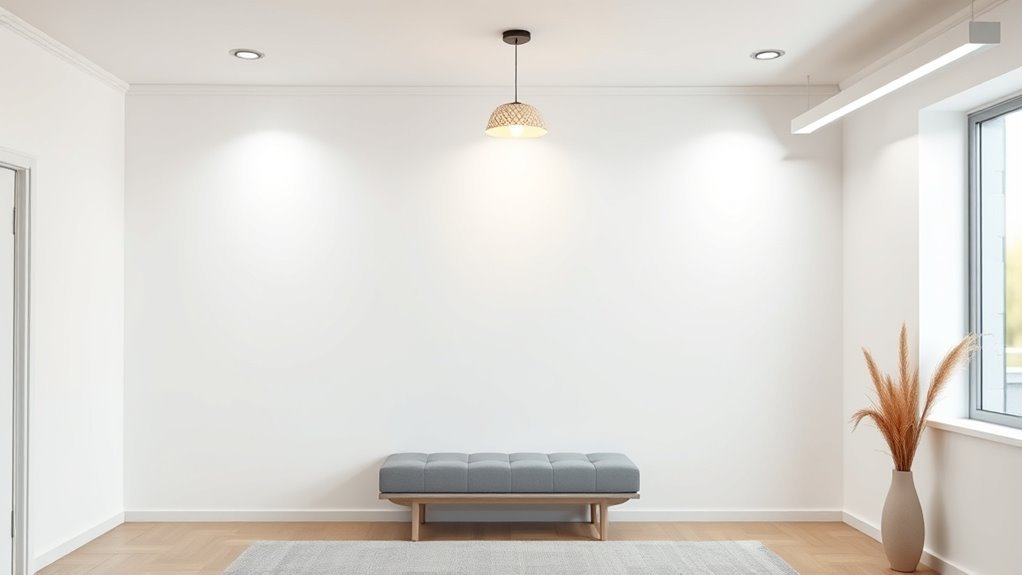
When you switch on artificial lighting, the white paint you chose will change character depending on the source: LED tends to read crisp and cool, incandescent warms whites toward cream, and fluorescent can lend a clinical or slightly green cast.
You’ll notice differences in paint reflection and mood as bulbs change color temperature and CRI. Test samples under each lamp at night. Position swatches on different walls to watch shifts.
Consider dimmers and layered lighting to control appearance.
- A crisp LED making whites feel modern and bright
- A soft incandescent bathing walls in warm glow
- A buzzing fluorescent flattening brightness
- A dimmed lamp creating cozy, muted white
How Undertones (Yellow, Pink, Green, Blue) Shift White Paint
Notice how subtle undertones—yellow, pink, green, or blue—can make a white read warm, cool, or slightly off-white depending on viewing angle and light.
You’ll see undertones more clearly on large walls and when you compare swatches next to existing finishes.
Match undertones to your room’s fixed elements (wood, tile, fabrics) so the white feels unified rather than clashing.
How Undertones Show
Undertones are the hidden colors that change how a white paint reads in your room; yellow, pink, green, and blue each push white toward warmth or coolness and can shift noticeably with light.
You’ll notice undertone importance when morning sun warms yellow-leaning whites or cool north light reveals blue hints.
Color psychology matters: warm undertones feel cozy, cool ones feel calm.
Test swatches on three walls and observe at different times. Look for how furniture and flooring pull the white warmer or cooler before committing.
- pale yellow glow at sunrise
- soft pink blush at dusk
- greenish cool near plants
- blue crisp in shade
Matching Undertones Room
After you’ve seen how light and furnishings reveal hidden hues, you’ll want to match those undertones to the rest of the room so the white feels intentional, not accidental.
You’ll consider architectural features and furniture styles to decide whether a warm yellow or cool blue tint suits the room ambiance.
Use decorative accents and wall art to echo undertones for color harmony, and rely on texture contrast to keep surfaces lively.
Account for seasonal changes that shift perceived warmth.
Balance mood enhancement with personal preference, testing samples near key focal points before committing to the final white.
Why Paint Finish Matters for White Walls
Although the color itself grabs attention, the finish you choose has a bigger impact on how white walls look and feel in your space. You’ll see differences in sheen, reflection, and perceived warmth; satin softens flaws while gloss highlights them.
The paint finish—more than hue—shapes how white walls read, from softened satin to reflective gloss.
Consider paint durability for high-traffic areas and invest time in surface preparation to guarantee even sheen. Matte hides imperfections but can be harder to clean; eggshell balances subtlety and washability; semi-gloss boosts light and trims; gloss is dramatic on doors.
- Soft matte like chalked plaster
- Slight sheen catching afternoon light
- Polished trim reflecting brightness
- Worn hallway scuffs visible up close
How to Test White Paint in Your Room (Lighting & Sample Tips)
Lighting makes or breaks how a white will read in your room, so test paints where they’ll live at different times of day.
Place three to four test patches on different walls — near windows, opposite artificial lights, and in corners — to observe shifts in hue and reflectivity.
Note how morning, midday, and evening light change room ambiance and whether undertones feel warm or cool.
Keep sample sizes large enough to see effect: at least 12×12 inches each.
Live with the patches for several days, viewing them under lamps and natural light, before committing to a final white.
How to Use Paint Samples and Peel-and-Stick Swatches

Grab paint samples and stick peel-and-stick swatches on different walls and near windows so you can see how the white changes in morning, afternoon, and artificial light.
Live with the samples for at least a few days to notice undertones that only show up at certain times.
If a swatch doesn’t work, peel it off and try another until the room feels right.
Test In Different Light
Want to know if a white will actually read warm or cool in your room? Test samples at different times to judge lighting impact and color perception accurately.
Tape small painted cards on three walls, then observe morning, midday, and evening. Move a lamp near each swatch to mimic your fixtures. Note undertones that shift with sunlight and artificial light.
- A north-facing wall at dawn, soft blue cast
- Midday southern sun, true-to-tint brightness
- Evening with warm bulbs, yellowing effect
- Shadowed corner, cooler, muted white
Record impressions before choosing the final shade.
Try Peel-And-Stick
Try three peel-and-stick swatches on different walls to see how a white really behaves in your space: these adhesive samples let you place true-to-tint chips at eye level, move them between sunlit and shadowed areas, and peel them off without damaging paint or trim.
You’ll notice undertones shift with light and nearby furnishings. Use the peel and stick benefits to compare samples over several days, checking morning and evening light. Their easy application saves time and reduces guesswork.
Once you’ve settled on a shade, photograph placements and note finishes so you can confidently order paint.
Best White Paints for North-Facing Rooms
Because north-facing rooms get cooler, indirect light, you’ll want whites that add warmth or subtle brightness without feeling sterile; choose whites with soft warm or slight green undertones to counteract the bluish cast and keep the space inviting.
You’ll balance north facing brightness and comfortable room ambiance by picking creams, warm off-whites, or soft greiges with low blue bias.
Test samples on different walls and observe at morning and dusk. Consider matte or eggshell sheens to diffuse light gently.
Visualize these scenes:
- A cozy reading nook with creamy white walls and oak floors
- A sunless kitchen brightened by warm off-white cabinets
- Pale green-tinged trim catching soft daylight
- Soft greige walls reflecting muted, welcoming light
Best White Paints for South-Facing Rooms
South-facing rooms bathe in warm, direct sunlight for much of the day, so you’ll want whites that stay crisp without looking washed out or yellowed.
Pick cooler or neutral whites with slight gray or blue undertones to balance the golden light and keep colors true. Choose paints labeled cool white, crisp neutral, or soft gray-white to counter intense south facing brightness.
Don’t use strong creamy whites that amplify warmth; instead, test samples at different times to see undertone shifts.
For trim, pick a pure white with minimal tint to frame walls. Your warm undertone selection should be subtle and controlled.
Best White Paints for East-Facing Rooms
If your room greets the morning sun, lean toward warmer or neutral whites that look fresh in early light without appearing yellow as the day progresses.
You’ll want whites that balance east facing light’s cool early glow with subtle warm tones so spaces feel bright and inviting. Choose paints with low blue undertones, soft creams, or ivory-near neutrals to prevent starkness.
Opt for whites with low blue undertones—soft creams or ivory-near neutrals—to balance cool morning light and keep rooms inviting.
Test samples on walls and observe them at sunrise and mid-morning.
- Pale cream reflecting a soft, warm sunrise
- Neutral off-white that reads consistent all morning
- Ivory with a whisper of beige warmth
- Soft eggshell that mutes harsh contrasts
Best White Paints for West-Facing Rooms
For west-facing rooms, you’ll want whites with cool undertones to counter the warm afternoon light.
Pick soft, slightly reflective finishes to bounce light evenly without glare.
Also look for durable, fade-resistant formulas so the color stays true as sunlight shifts.
Cool Undertones Work Best
Because west-facing rooms get warm, late-day sunlight, cool white paints help balance that glow and keep your space feeling crisp and calm.
You’ll choose cool whites over warm whites to restore light balance and achieve color harmony; pay attention to undertone nuances so reflective qualities don’t skew your palette.
Consider texture contrast and ceiling height to influence perception, and match room dimensions to your aesthetic preferences.
Imagine these scenarios:
- Pale blue-leaning white brightening a compact study at sunset
- Soft gray-white elongating a low-ceiling hallway
- Crisp alabaster opening a wide living room
- Icy cream framing large windows
Soft Reflective Finishes
When west light warms your room in the late afternoon, choose a soft reflective finish to bounce light evenly without creating glare; it’ll soften shadows and keep whites from looking yellowed. You’ll want a soft sheen that shows paint’s reflective qualities without high gloss. Pick warm-leaning whites with gentle reflectivity to preserve tone as light shifts. Use satin or low-luster sheens in living areas and bedrooms to maintain balance. Test samples on different walls. Table below helps visualize options and effects.
| Finish | Effect | Best Use |
|---|---|---|
| Satin | Subtle glow | Living room |
| Eggshell | Soft depth | Bedroom |
| Low-luster | Even light | Hallway |
| Matte | No shine | Ceiling |
Durable Fade-Resistant Formulas
1 key factor for west-facing rooms is choosing durable, fade-resistant white paints that keep their cool under strong afternoon sun. You want finishes proven by durability testing and formulated for long-term fade resistance, so walls stay crisp without frequent touch-ups.
Pick paints with UV inhibitors, strong binders, and washable surfaces; contractors and manufacturers often share lab results. Consider semi-gloss or satin where wear is likely, but balance glare.
Visualize the outcome:
- Sunlit wall holding a clean, even white
- Afternoon glow without yellowing or chalking
- Easy wipe-down after accidental marks
- Subtle sheen that resists fading over years
Best White Paints for Small Rooms to Feel Bigger
If you want a small room to feel larger, choosing the right white paint can make a dramatic difference by maximizing light and minimizing visual clutter. You’ll use light colors and paint illusions to expand spatial perception: warm off-whites soften corners, crisp cool whites sharpen lines.
Consider color psychology—soft whites calm, boosting perceived depth—pair with reflective surfaces and minimal furnishings for an airy atmosphere. Reduce busy wall textures; smooth finishes bounce light better.
Match paint sheen to room dimensions and natural light, and follow minimalist design principles so sightlines stay open. These choices help your small room read as spacious.
Best White Paints for High-Ceiling Grand Spaces
With high ceilings, you’ll want whites that respect the room’s scale and make the most of available light so the space feels balanced, not cavernous.
Choose finishes that handle wear and cleaning—satin or eggshell on lower walls and trim, matte higher up where imperfections are less noticeable.
Prioritize durable formulations and test samples in the room’s natural and artificial light before committing.
Scale And Light
Because grand rooms pull light differently than modest interiors, you’ll want whites that read crisp without feeling cold or flat. You’ll weigh scale considerations: tall walls amplify undertones, while multiple light sources shift warmth throughout the day.
Choose whites with subtle depth so surfaces don’t wash out or look sterile.
- Sunlit atrium walls glowing warm in morning light
- Chandeliers casting soft pools on ivory ceilings
- Shadowed pilasters revealing gentle creamy undertones
- Expansive windows bouncing cool north light across moldings
Match paint to architectural drama, test samples at different times, and trust what reads best in your room.
Finish And Durability
When you’re choosing a finish for a high-ceiling grand space, prioritize durability and light reflection so the paint holds up to scale and cleaning while enhancing architectural detail. You’ll weigh finish options—eggshell for subtle sheen, satin for washability, and semi-gloss for trim. Consider durability factors like traffic, cleaning frequency, and surface imperfections; higher sheen resists scuffs but highlights flaws. Test samples under real light, cleanability procedures, and long-term fading. Match sheen to room function: low sheen on broad walls, higher on moldings. Use the table to compare common choices quickly.
| Finish | Sheen | Best Use |
|---|---|---|
| Eggshell | Low | Walls |
| Satin | Medium | High-touch areas |
| Semi-gloss | High | Trim and accents |
Best White Paints for Open-Plan Living Areas
If you’re planning an open-plan living area, choose white paints that balance light reflection with warmth so your space feels bright without looking sterile.
You’ll want whites that adapt across zones, support open plan aesthetics, and flatter varied wall texture. Pick tones with subtle warmth or cool undertones depending on natural light, and test large swatches.
Layering trim, accent walls, and textiles keeps the space cohesive without monotony. Consider durable, washable finishes for high-traffic connection points.
Layer trim, accents, and textiles to unify the open plan—use durable, washable finishes where traffic is heaviest.
- Soft warm white to cozy seating nooks
- Crisp cool white for sunlit corridors
- Creamy off-white for textured feature walls
- Muted white with gray undertone for balance
Best White Paints for Kitchens and Cabinets
Choose whites that balance durability and warmth so your kitchen and cabinets look crisp in photos but stay forgiving in daily use.
You’ll pick whites that handle grease and scuffs; durable coatings and the right paint sheen matter for kitchen cabinetry and cabinet finishes.
Consider color contrast with countertops and backsplashes, and test samples under varied kitchen lighting before committing.
Think through color combinations for islands or trim to add depth.
Use high-quality, washable formulas and follow maintenance tips like gentle cleaners and periodic touch-ups to keep surfaces fresh without compromising finish or sheen.
Best White Paints for Bathrooms and Bright, Clean Looks
Because bathrooms need to feel fresh and reflect light, pick whites that read clean without looking sterile — they should resist moisture, mask minor stains, and pair well with your fixtures.
You’ll want paints that boost bathroom brightness and deliver clean aesthetics while hiding scuffs. Choose semi-gloss or satin for easy wiping; select warm-edged whites if you have warm metals, or crisp cool whites for chrome and tile.
Pick semi-gloss or satin whites that brighten, resist scuffs, and complement warm metals or cool chrome finishes.
Think about undertones and natural light to avoid blue or yellow casts.
- Sunlit subway tile, glossy and reflective
- Matte towel hooks against soft white walls
- Chrome faucet gleaming on a cool white backdrop
- Warm brass peeking from a creamy white surface
Best White Paints for Bedrooms to Feel Cozy and Restful
Want a bedroom that feels like a soft embrace at the end of each day? Choose white paints with warm undertones to create a cozy ambiance and restful atmosphere.
Pair calming hues with soft textures—plush rugs, linen bedding—to enhance comfort. Use light layering of curtains and throws to soften edges and control light.
Select bedroom accessories in muted tones, add personal touches like photos or a favorite lamp, and keep furniture simple to let serene decor breathe.
These whites act as a neutral backdrop that invites calm, supports sleep, and lets your curated accents define the room’s mood.
Best White Paints for Modern Minimalist Interiors
For a modern minimalist interior, you’ll want to weigh warm versus cool whites so your space feels crisp without looking sterile.
Consider undertones and pairings—gray-leaning whites work with concrete and steel, while warmer creams soften wood and textiles.
Finally, pick a finish that balances durability and matte simplicity to keep lines clean and surfaces lasting.
Warm Versus Cool
When you’re choosing whites for a modern minimalist space, the core decision is whether you want warmth that invites or coolness that clarifies; each shifts how light, texture, and furnishings read in the room.
You’ll weigh warm white versus cool white through color psychology and lighting effects, balancing texture balance and spatial perception. Trust your personal preference and the design style you aim for: warmth softens, coolness sharpens.
Consider accent colors and how they pop. Visualize the room atmosphere before committing, and test swatches at different times of day to see true behavior.
- Soft linen sofa under warm glow
- Crisp concrete floor with cool daylight
- Pale wooden shelf warming corners
- White ceramic and black metal contrast
Undertones And Pairings
Although undertones can feel subtle, they’re the single detail that determines how a white paint will sit beside your furnishings and light.
You’ll notice blue-leaning whites feel crisp with chrome and cool woods, while creamy whites warm natural fibers and brass.
Understand undertone significance: it guides mood, depth, and how shadows read across a room.
Test swatches at different times of day and beside your textiles to see true effects.
For clean modern minimalism, favor whites with slight gray or beige undertones for balance; for airy spaces, pick cooler whites and use deliberate color pairing to anchor furnishings.
Finish And Durability
Because finish affects both look and lifespan, pick sheens that suit use: matte and eggshell hide imperfections and feel modern in low-traffic living areas, while satin and semi-gloss stand up to scrubbing in kitchens, bathrooms, and high-touch trim.
You’ll weigh finish options against durability factors and lifestyle — kids, pets, and humidity demand tougher sheens. Choose high-quality paints with durable binders and good film formation. Test small patches to see light reflection and cleanability.
Imagine the space:
- Soft eggshell in a calm, low-traffic bedroom
- Satin on a lively family room wall
- Semi-gloss for trim and doors
- Matte for textured accent walls
Best White Paints for Traditional and Classic Homes
If you love the timeless symmetry and ornament of traditional or classic homes, choosing the right white paint will underscore those architectural details rather than wash them out. You’ll favor whites that respect traditional aesthetics and classic elegance, offering timeless shades that honor period styles and vintage charm. Pick tones that preserve historical accuracy and promote design continuity, creating architectural harmony between moldings, wainscoting, and facades. Consider warmth level, undertone, and finish for longevity and authenticity.
| Area | Recommended Tone | Why |
|---|---|---|
| Trim | Warm off-white | Highlights details |
| Walls | Soft cream | Gentle contrast |
| Ceilings | Pure white | Brightens rooms |
| Trim (alt) | Ivory | Subtle period feel |
| Accents | Chalk white | Clean backdrop |
Best White Paints for Scandinavian and Airy Designs
For Scandinavian and airy designs, you’ll want whites that feel crisp and clean or softly warm and inviting.
Choose crisp cool whites to emphasize light, contrast, and minimalist lines.
Opt for soft warm whites when you want a cozy, sunlit backdrop without losing that open, breezy feel.
Crisp Cool Whites
Looking for a white that feels clean, bright, and quietly modern? You’ll love crisp whites with subtle cool tones that sharpen spaces without feeling sterile.
Choose them for pared-back living rooms, minimalist kitchens, or light-filled bedrooms. They reflect daylight, enhance natural textures, and make you notice simple forms and Scandinavian details.
Test samples in morning and evening light to pick the right blue-leaning balance for your room.
- Pale white walls glowing in northern light
- Sleek cabinetry against concrete counters
- Linen curtains casting soft, cool shadows
- A simple wooden chair standing out against the backdrop
Soft Warm Whites
You’ll pick tones that read warm without yellowing, letting soft white textures—linen, matte plaster, woven rugs—register clearly.
Choose paint with subtle undertones so daylight shifts warmly through the day.
For contrast, use warm white pairings like pale beiges, muted greys, or soft wood stains to maintain openness while adding depth.
You’ll balance trim and ceilings slightly cooler to keep edges crisp.
These whites make spaces feel lived-in, calm, and inviting without sacrificing light.
Best White Paints for Cottage and Farmhouse Styles
When you want a cozy, timeless look for a cottage or farmhouse, choosing the right white sets the whole tone—warm, creamy whites emphasize vintage charm, while crisp, cool whites highlight clean lines and airy spaces.
You’ll pick cottage whites or farmhouse whites based on light variations and desired color pairings. Warm whites pair with natural textures and rustic accents; cool whites suit modern touches and bright, open rooms.
Choose cottage or farmhouse whites by light and accents: warm creams with rustic textures, cool whites for bright, modern spaces.
Imagine these scenes:
- Sunlit kitchen with butter-toned cabinets and worn wood beams
- Bright mudroom, white shiplap, woven baskets
- Soft bedroom, linen curtains, weathered floorboards
- Open living room, pale walls, stone hearth
Best White Paint for Trim, Baseboards, and Moldings
Trim frames your rooms, so pick a white that enhances molding details without competing with wall color. You’ll choose the best white based on paint types—semi-gloss for durability or satin for subtle sheen—matching trim options to moldings styles from simple to ornate.
Consider baseboard finishes that resist scuffs and coordinate color pairings that balance contrast or harmony. Follow current design trends but prioritize lighting effects, since warm or cool light shifts perception.
Note texture variations on trim can read differently than walls. For room applications, test samples in situ to confirm the white reads right under real conditions.
How to Pair White Walls With Wood Tones and Flooring
Although white walls create a clean backdrop, you’ll need to contemplate undertones and finish to make wood tones and flooring sing together. Warm woods like oak or walnut pair best with whites that have subtle warm or creamy undertones, while cool-grain woods and gray-stained floors benefit from crisper, cooler whites.
Choose satin or eggshell for livable rooms, matte for calm spaces, and higher sheen for durable zones. Test swatches against your actual white wood or white flooring at different times of day to confirm harmony.
- Sunlit oak with creamy white and natural rugs
- Walnut with warm white and leather accents
- Gray plank floors with cool white and chrome fixtures
- Bleached pine with soft white and linen textiles
How to Pair White Walls With Tile and Countertops
Because tile and countertops often define a room’s personality, you’ll want your white walls to act as a unifying backdrop that either highlights or softens those surfaces. Choose whites that support white tile pairings or provide subtle contrast for stone. Consider countertop compatibility: warm whites for wood-toned or cream counters, cool whites for marble or concrete. Use texture balancing—matte walls with glossy tile, satin with honed stone—to avoid visual clash. Add restrained color accents via hardware or backsplashes. Refer to the quick guide below for combinations.
| Surface | Recommended White | Effect |
|---|---|---|
| Marble | Cool white | Elegant contrast |
| Concrete | Soft gray-white | Industrial calm |
| Ceramic | Pure white | Crisp unity |
| Granite | Warm white | Grounded warmth |
How to Pair White Walls With Textiles and Rugs
When you choose rugs and textiles for white walls, match their undertones so everything feels cohesive rather than clashing.
Balance texture and scale—layer a chunky weave over a flat kilim or pair large-patterned pillows with subtle weaves—to keep the room grounded.
Then add a few color pops through cushions or a runner to give the space personality without overwhelming the white.
Consider Undertone Matches
If you want your rugs and textiles to feel intentional rather than afterthoughts, match their undertones to your white walls. You’ll create undertone harmony that reads cohesive and calm; color psychology shows warm whites pair with ochres and softened reds, while cool whites suit slate blues and muted greens.
Test swatches in daylight and artificial light, then choose textiles that echo or quietly contrast the wall’s bias. Think of layering tones rather than matching exactly to avoid flatness.
- Sunlit linen rug against a creamy white
- Slate-blue throw on a crisp cool white
- Terracotta pillows with warm ivory walls
- Sage runner with soft white walls
Balance Texture And Scale
Texture and scale determine whether a room with white walls feels layered or flat, so pick rugs and textiles that create contrast without overwhelming the space.
You’ll aim for texture balance: mix nubby throws, smooth linen curtains, and a low-pile rug to add depth without clutter.
Use scale considerations to match rug size to seating—large rugs unify furniture, small rugs highlight zones.
Vary pattern scale too: pair a bold, large-scale rug with subtle, fine-knit pillows, or vice versa.
Keep a consistent palette so textures stand out, and rotate pieces seasonally to maintain freshness and comfort.
Accent With Color Pops
Because white walls act like a neutral canvas, you can let textiles and rugs deliver quick, high-impact color without overwhelming the room.
You’ll choose colorful accessories and bold artwork sparingly, then echo those hues in cushions, throws, and a statement rug to create cohesion.
Mix textures so colors read richer against white: velvet cushions, woven throws, and a low-pile rug keep balance.
Place patterns where they’ll catch the eye—a runner down a hallway, a layered rug under a coffee table—to guide movement and mood.
- Jewel-toned velvet cushions on a white sofa
- Geometric runner anchoring a narrow hall
- Layered rugs mixing color and weave
- Bright throw framing a reading nook
How to Choose White That Complements Artwork and Décor
Curious which white will make your artwork pop without clashing with your décor? You’ll want a white that supports artwork harmony and preserves décor balance.
First, test whites beside key pieces at different times of day to see undertones shift. Choose a warmer white if wood tones or warm textiles dominate, or a cooler white to sharpen contemporary metal and glass.
Test whites beside key pieces at different times; warm whites flatter wood and textiles, cool whites sharpen metal and glass.
Use slightly muted or creamy whites to avoid glare behind vivid pieces; pick a bright, crisp white for minimalist frames and high-contrast work.
Keep one white throughout connected spaces to maintain cohesion, then tweak accents for impact.
Reliable White Paint Brands Worth Trying
If you want a dependable starting point, several well-known paint brands consistently deliver true, versatile whites that perform across lighting conditions and finishes.
You’ll find reliable white brands offering clean, warm, and cool whites with durable coverage and easy touch-ups. Choose brands known for consistent tinting, low-VOC formulas, and multiple sheens so your walls read right from hallway to sunroom.
Look for swatches in your own light and request samples. Popular white options often include crisp standards, soft off-whites, and creamy neutrals that pair well with trim and textiles.
- sunlit crisp white
- soft warm cream
- cool blue-white
- neutral off-white
Benjamin Moore “Chantilly Lace”: Characteristics and Uses
Chantilly Lace by Benjamin Moore is a clean, crisp white with very subtle cool undertones that reads bright in most lighting, so you can rely on it when you want a true, modern white without blue or yellow dominance.
You’ll appreciate Chantilly Lace characteristics for neutral balance and strong light reflection, making it ideal for modern applications. Use it in kitchens, galleries, and minimal interiors; Chantilly Lace uses include trim and full-room paint.
For design inspiration, pair it with warm undertones in woods or cool undertones in steel. Explore color pairings, interior styles, and texture contrast to refine your space.
Sherwin-Williams “Alabaster”: Characteristics and Uses
While Alabaster by Sherwin-Williams reads soft and warm rather than stark, it still reflects plenty of light, so you can use it to create a cozy, open feel without a clinical edge.
You’ll notice Alabaster Characteristics include a creamy undertone, subtle warmth, and excellent versatility that pairs with cool or warm palettes.
For Alabaster Uses, try it on walls, trim, kitchens, or bedrooms to soften contrasts and boost light. It layers well with richer colors and natural textures, giving spaces calm balance.
- Sunlit breakfast nook with pale wood
- Soft linen curtains drifting
- Matte plastered hallway
- Contrasting deep blue door
Farrow & Ball “All White”: Characteristics and Uses
Farrow & Ball’s All White is a true neutral white with minimal undertone, so you’ll see a crisp, clean backdrop rather than warmth or coolness.
Its relatively high light reflectance keeps small or dim rooms feeling brighter without appearing stark.
Use it in living rooms, galleries, and trim where you want a versatile, unobtrusive white that pairs well with color accents.
True Neutral White
Think of All White as a clean, no-frills neutral that’s designed to disappear into the background—its subtle balanced tone has no obvious warm or cool cast, so it reads as pure white in most lights.
You’ll pick All White when you want a true neutral that provides tonal harmony across rooms. Its warm balance avoids yellowing, while cool contrast pairs well with stainless and stone.
Consider shade selection for adjoining finishes; light reflection boosts perceived space and crisp brightness keeps details sharp. Use it to set a calm wall ambiance that supports furniture and art without competing.
- Soft linen drapery glowing subtly
- Pale oak trims framed cleanly
- Matte plaster surfaces whispering calm
- Monochrome artwork popping against purity
Light Reflectance Value
You’ll notice All White’s high light reflectance keeps spaces airy while retaining subtle depth; it’s not a stark clinical white.
Because Farrow & Ball controls pigment and base formulas tightly, you get reliable color consistency across batches, which matters when touching up or ordering more.
Expect soft warmth rather than blue bias; the paint reads clean in varied lighting and pairs easily with trims and materials.
Best Room Applications
Having a high LRV means All White will brighten most spaces without feeling harsh, so you can confidently use it where you want airy, clean surfaces.
You’ll find All White works as one of the best white shades for modern and classic rooms. It lifts small bathrooms, opens kitchens, and gives living rooms a calm backdrop that suits current white paint trends.
Use warmer woods and textured fabrics to prevent sterility. Think of it as a flexible canvas that harmonizes with color accents and natural light.
- Sunlit breakfast nook with pale oak
- Compact bathroom with glossy tiles
- Open-plan kitchen with brass fixtures
- Cozy living room with linen throws
Behr “Ultra Pure White”: Characteristics and Uses
Behr’s “Ultra Pure White” is a crisp, bright white with virtually no undertones, and you’ll find it works especially well where you want a clean, modern backdrop.
You’ll appreciate Behr characteristics like true neutrality and reliable color consistency across batches.
For Best uses, choose galleries, kitchens, trim, or minimalist living rooms.
Note Paint performance: it covers well and hides minor flaws when applied correctly.
Follow recommended Application techniques for even coats.
Pick Finish options based on room function—eggshell for walls, semi-gloss for trim.
Durability factors are solid, and Customer reviews often praise its clean look and longevity.
Valspar and Other Budget-Friendly White Paints
If you’re watching your budget, Valspar offers several popular whites that look crisp without a big price tag.
You’ll want to compare coverage and durability across their lines to make sure a cheaper option still holds up in high-traffic areas.
Then contrast Valspar’s performance and cost with other budget-friendly brands to find the best value for your project.
Valspar Popular Whites
When you’re shopping on a budget but still want dependable, versatile whites, Valspar’s Popular Whites lineup delivers consistent results across rooms and lighting conditions.
You’ll find valspar white options that read warm or crisp depending on light, and valspar paint finishes that suit ceilings, trim, or living walls.
Pick a soft warm white to cozy a bedroom, a cooler white for modern kitchens, or a neutral mid-white for open-plan spaces.
Visualize finishes and how they’ll play with décor:
- Sunlit kitchen with a bright, cool white
- Cozy bedroom bathed in warm cream tones
- Crisp gallery wall with clean flat white
- Trim accent in satin white
Coverage And Durability
Although budget-friendly whites can vary, you should expect Valspar and similar economy brands to offer decent coverage but sometimes need extra coats on deep colors or textured surfaces.
You’ll get reasonable paint longevity if you apply correctly: prime stained or patched areas, sand glossy spots, and clean dirt or grease. Good surface preparation reduces touch-ups and helps thinner formulas adhere, so don’t skip it.
Expect scuffs sooner than with premium lines, but touch-ups are straightforward. For high-traffic rooms, plan on occasional repainting sooner than luxury options, yet smart prep and proper application will extend results.
Budget Alternatives Comparison
Many budget whites, including Valspar, Behr Premium Plus, and Glidden Essentials, give you solid coverage and decent durability for the price, but they differ in tint accuracy, finish consistency, and how many coats you’ll need.
You’ll want to weigh price comparisons and value assessments: budget paint can save money if you accept minor touch-ups.
Consider these wallet friendly choices and savings strategies when selecting economical alternatives and low cost whites.
- A freshly painted small bedroom with soft, warm white
- Kitchen cabinets reflecting subtle cool undertones
- Bright hallway trimmed in crisp affordable shades
- Living room softened by cost effective whites
When to Choose a Tinted White Instead of Pure White
If you want a white that feels warm, layered, or tailored to your room, choose a tinted white instead of a pure white.
You’ll pick tinted whites when you need subtle depth—softening glare, complementing wood tones, or unifying varied furnishings.
Choose pure whites for crisp trim, reflective ceilings, or minimalist schemes that demand neutrality.
Opt for pure white for sharp trim, luminous ceilings, or minimalist spaces that require clean, neutral clarity
Go with a tinted option if your lighting is harsh, your floors or furniture carry strong undertones, or you want a cozier atmosphere without obvious color.
Test samples on different walls and observe at day and night to guarantee the tint achieves the mood you want.
How to Avoid Whites That Look Gray, Yellow, or Pink on Walls
Because lighting and surrounding colors subtly shift how a white reads, you’ll want to test samples in your room before committing so the paint doesn’t veer gray, yellow, or pink on different walls and at different times of day.
You’ll rely on white paint psychology and an understanding of color perception: cool north light pushes warmth toward gray, warm south light can pull whites yellow, and colored furnishings reflect undertones.
Paint 2×2-foot swatches, observe morning and evening, and view from different distances.
Imagine these scenes:
- Pale white beside a walnut bookshelf at dusk
- Bedroom white under soft amber lamp light
- Kitchen white near glossy blue tile
- Hallway white with green plants and mirror reflections
Troubleshooting: My White Looks Dirty – What Should I Do?
After you’ve tested swatches and seen how light and furnishings shift a white, you’ll sometimes still find a wall that reads dingy or soiled.
First, confirm it’s paint—not shadow or reflection—by viewing the surface at different times and angles. If it’s truly dirty, spot-test gentle cleaners and a soft cloth on an inconspicuous area; stubborn marks may suggest low-quality finish or staining.
Consider repainting with a higher-quality, washable white or one with better opacity to cover underlying discoloration.
These dirty appearance solutions pair with proactive white paint maintenance planning so you prevent repeat issues and keep whites bright.
How to Maintain and Clean White Painted Walls
Keeping white walls bright starts with a simple routine: dust and spot-clean regularly, tackle spills immediately, and use the right cleaners and tools so you don’t abrade or yellow the paint.
You’ll want gentle cleaning techniques—microfiber cloths, mild detergent, and soft sponges—to lift grime without damaging finish. For scuffs try a magic eraser cautiously; always test a small area.
Regular wall maintenance prevents buildup and keeps touch-ups minimal. Protect high-traffic zones with washable semi-gloss or satin finishes and use door stoppers or chair pads to avoid marks.
- sunlight warming a crisp white hallway
- a soft cloth removing a coffee drip
- tiny touch-up paint bottle
- sponge wiping a child’s smudge
When to Repaint: Signs Your White Needs a Refresh
Not sure when a fresh coat is due? You’ll know by spotting common signs: yellowing or uneven color, visible scuffs, peeling or flaking, and stubborn stains that cleaning won’t remove despite regular paint maintenance.
Check high-traffic areas, trim, and corners for wear, and feel walls for chalky residue or rough patches. If light reflects unevenly or your space looks dingy even after cleaning, it’s time.
Repainting also makes sense before selling or after repairs that require wall preparation. Tackling repainting proactively keeps white walls crisp and saves time versus emergency fixes later.
How to Sample Multiple Whites Without Buying Full Gallons
When you’re choosing the perfect white, sampling smart lets you compare options without committing to full gallons: use peel-and-stick swatches, paint sample pots, and large paint chips applied to different walls to see undertones in varied light.
You’ll try several sample sizes and focus on surface preparation before testing. Do color comparison at morning and evening light testing to catch warm or cool shifts.
Use small rollers for true application techniques and label each patch. Live with samples for a few days, note reflections from floors and furniture, then pick the white that reads best across conditions.
Roll on samples with a small roller, label each patch, live with them, and choose the white that works.
- peel-and-stick swatches on trim
- 8-oz sample pots on big panels
- oversized paint chips by windows
- taped squares showing sheen differences
How to Coordinate White Walls With Paint in Adjacent Rooms
Although whites can read similarly at first glance, you’ll want to contemplate undertone, light flow, and finish to make adjacent rooms feel cohesive rather than disjointed.
When coordinating, pick a dominant white for main circulation spaces and use warmer or cooler companion whites in adjoining rooms to support white wall coordination.
Test samples at different times so undertones don’t clash under varied light.
Keep sheen consistent for visual continuity, but you can vary slightly for function.
Use common threads—trim color, flooring, or accessories—to tie rooms together and achieve adjacent room harmony without abrupt shifts.
How to Use Accent Walls and Trims With White Backgrounds
Curious how to make white walls sing without overwhelming the space? You can pair white wall textures with bold accent wall ideas to anchor a room.
Curious how to make white walls sing? Pair textured whites with one bold accent to anchor the room.
Use contrasting accent colors sparingly so they pop against white wall patterns. Choose trim color combinations that frame windows and doors; darker trims add drama, softer hues keep it airy.
Introduce subtle design elements—molding, a textured wallpaper panel, or a painted alcove—to add depth without clutter.
- A matte white room with a deep navy accent wall
- White beadboard with sage green trims
- High-gloss trim against eggshell walls
- Monochrome textured wallpaper panel
Cost: Premium vs Economy White Paints
If you want durable coverage and truer whites with fewer coats, expect to pay more for premium white paints than for economy lines.
You’ll weigh premium brands against economy options in a price comparison that factors paint quality, durability factors, and finish types.
Consider surface preparation and application techniques—better formulas hide flaws and need less sanding or priming.
Think about environmental impact; low-VOC premium lines may cost more but reduce odors.
Also note color psychology: subtle undertones in pricier whites read truer under varied light.
Balance upfront cost with longevity and aesthetic goals to pick wisely.
Step-by-Step Checklist to Choose the Right White for Your Walls
When choosing a white for your walls, follow a clear checklist so you avoid costly mistakes and get the exact look you want; start by testing in natural light.
Then consider room function and color psychology to set mood, and review current design trends so your choice feels fresh but timeless.
Consider how the room’s purpose and color psychology shape mood, while staying informed on trends for a timeless look
Take samples, paint large swatches, observe morning and evening. Live with them for days.
Decide finish based on traffic. Confirm undertones against trim and flooring. Finalize with a test patch.
- Morning light on a living room wall
- Soft cool white in a minimalist bedroom
- Warm off-white in a kitchen nook
- Crisp white trim against hardwood
Frequently Asked Questions
Will White Paint Yellow Over Time in Humid Climates?
Yes, white paint can yellow over time in humid climates; you’ll see humidity effects accelerating paint longevity loss, mold stains, and chemical reactions. You should choose moisture-resistant, low-VOC, mildew-resistant formulas and guarantee good ventilation.
Can I Tint White Paint Slightly for Better Stain Resistance?
Yes — you can tint white paint slightly to boost stain resistance: use subtle tinting techniques, adding colorants that increase opacity and hide marks; test samples, choose higher-quality binders, and cleanable finishes for best results.
Are Low-Voc White Paints Less Durable Than Standard Formulas?
Nary a musketeer’s quill: no, low-VOC paints aren’t inherently less durable; you’ll get low VOC benefits like reduced fumes while maintaining paint durability if you choose quality formulations, proper primer, and correct application for long-lasting results.
How Do I Color-Match White Paint to Existing Furniture Finishes?
You match white paint to furniture by evaluating color undertones in natural light, testing swatches beside finishes, and sampling paint finishes on small panels; compare at different times, adjust undertones, then pick the closest sheen and tone.
Can I Use White Exterior Paint Indoors or Vice Versa?
Straight off, you shouldn’t swap exterior paint indoors or vice versa: they’re formulated differently. You’ll mess with interior aesthetics and durability; choose based on paint finish and location. Play it safe and match purpose, not chance.
Conclusion
You’ve got plenty of great white options, so pick one that matches your light, trim, and mood. Remember: 60–70% of home shoppers say natural light is a top priority, so test swatches in daylight before committing. Stick to your 3-step checklist—consider undertone, sample in different lights, and view from adjacent rooms—and you’ll end up with a white that feels intentional, timeless, and perfectly suited to your space.
