
35 Creative Ways to Style Three Paintings on a Wall
You can style three paintings by centering them horizontally for balanced symmetry or stacking them vertically to add height in tight spaces. Try diagonal or triangular arrangements to create movement and focal points that guide the eye. Play with equal or varied spacing to keep rhythm and balance. Mix frame styles or pair artwork with textured wall hangings and plants for depth and personality. Use them as a headboard alternative to anchor a bedroom. Explore these ideas to transform your wall into a dynamic focal area.
Center Three Paintings Horizontally for Balance
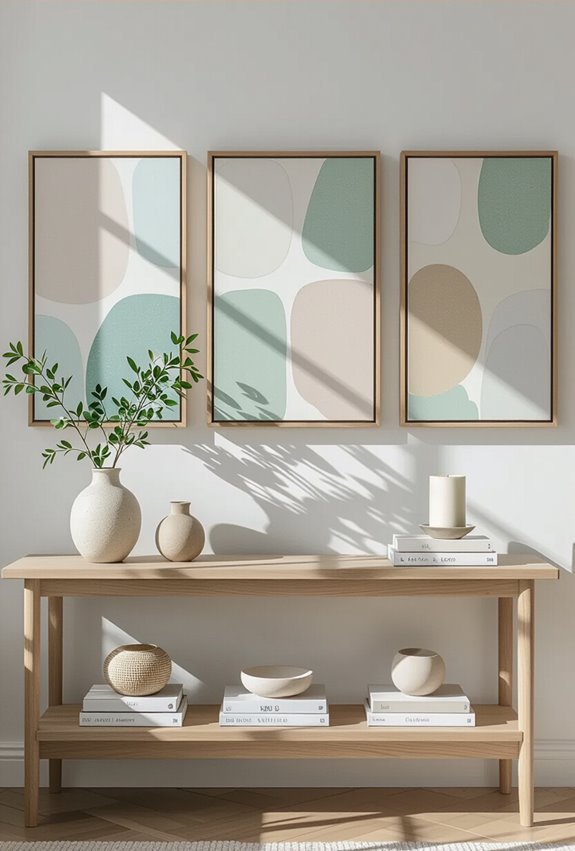
When you center three paintings horizontally on a wall, you create a sense of balance that draws the eye evenly across the space.
Using center alignment guarantees each piece gets equal attention, enhancing visual symmetry.
This arrangement creates a harmonious look that anchors the room, making your wall feel thoughtfully styled without overwhelming the space or appearing cluttered.
Stack Three Paintings Vertically for Height
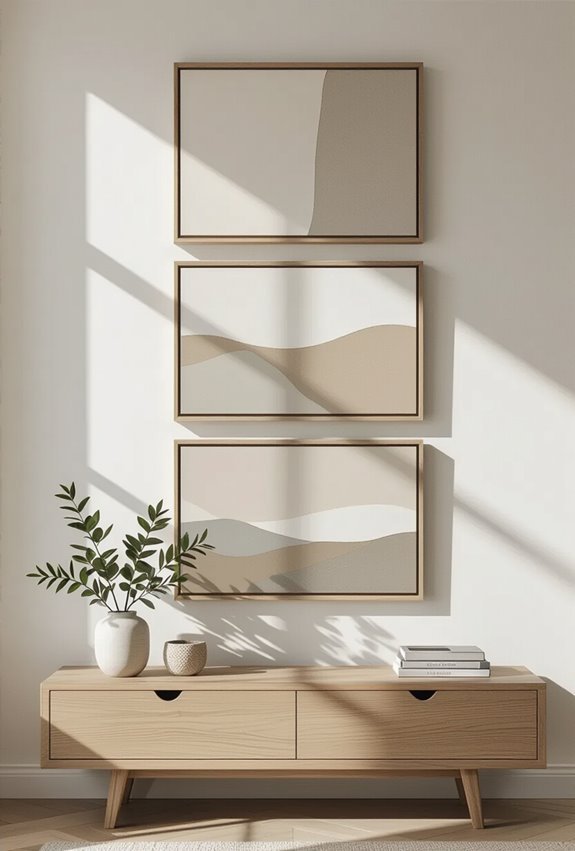
Stacking three paintings vertically instantly adds height to your wall and draws the eye upward, making your space feel taller and more dynamic.
Arrange your vertical trio with even spacing to create a sleek, stacked focal point. This arrangement emphasizes vertical lines, perfect for narrow walls or corners, and effortlessly transforms your room’s visual flow with style and simplicity.
Arrange Three Paintings Diagonally for Movement
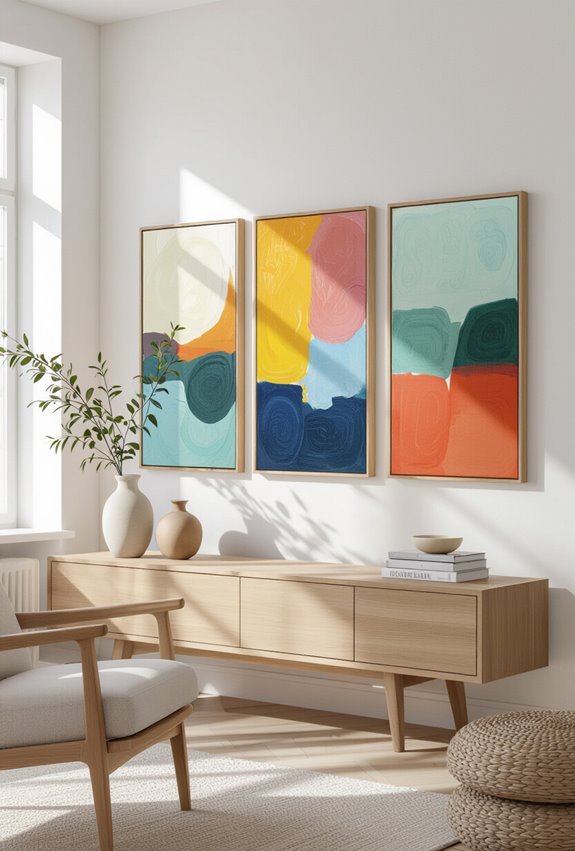
By arranging three paintings diagonally, you create a sense of movement that guides the viewer’s eye across the wall in a dynamic, engaging way.
This diagonal rhythm adds energy and flow, while dynamic symmetry balances the composition effortlessly.
You’ll find this approach invigorates your space, making it visually interesting without overwhelming the room or breaking harmony.
Create a Triangle Shape With Three Paintings
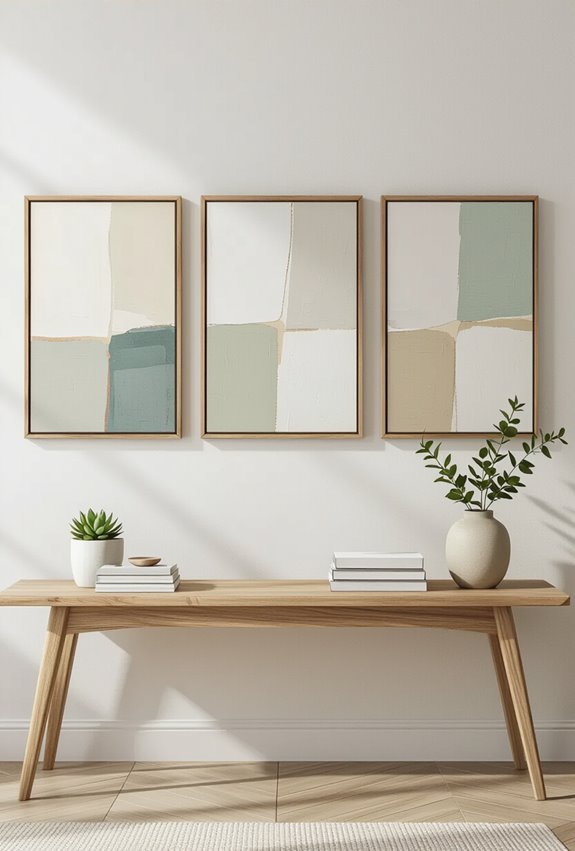
Although arranging three paintings in a triangle shape might seem simple, it offers a powerful way to create balance and focus on your wall.
Position your triangle trio with two paintings forming the base and one at the apex alignment above.
This setup draws the eye upward, creating dynamic interest and a cohesive, intentional display that anchors your space beautifully.
Use Symmetrical Spacing Between Three Paintings
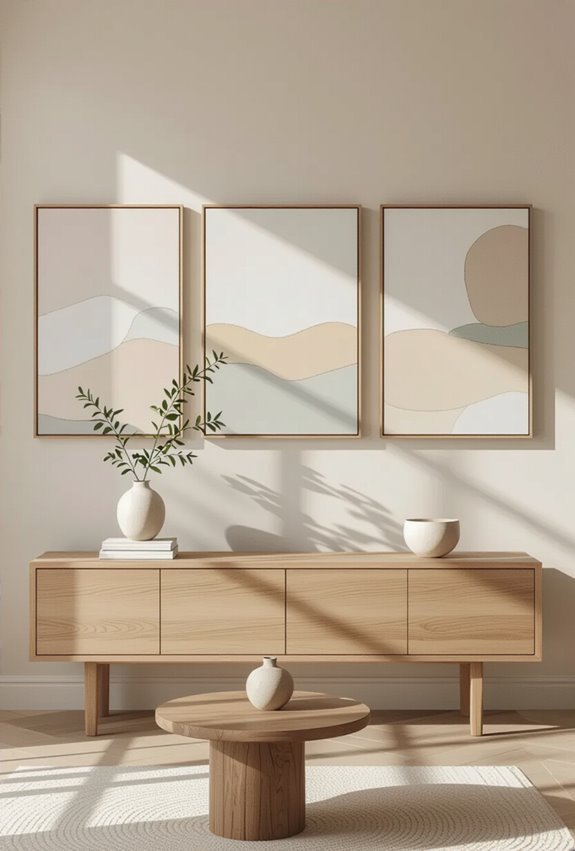
Arranging three paintings in a triangle can create a focal point, but sometimes you want a cleaner, more balanced look.
Use symmetrical spacing by placing the paintings side by side with equal spacing between them.
Achieve a polished effect through mirrored alignment, ensuring the outer paintings reflect each other.
This method brings harmony and simplicity to your wall display.
Overlap Paintings Slightly for a Layered Look
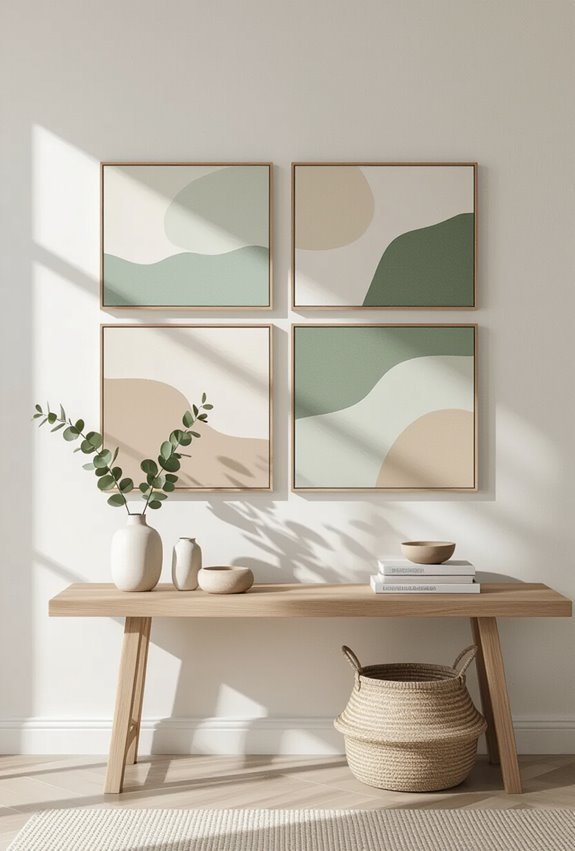
You’ll often find that slightly overlapping paintings adds depth and interest to your wall. By aligning the overlapped edges thoughtfully, you create a dynamic sense of layered depth without clutter.
This technique draws the eye naturally across each piece, making your display feel cohesive and intentional. Just make sure the overlaps don’t obscure key details in any painting for the best effect.
Hang Three Paintings at Different Heights for Interest
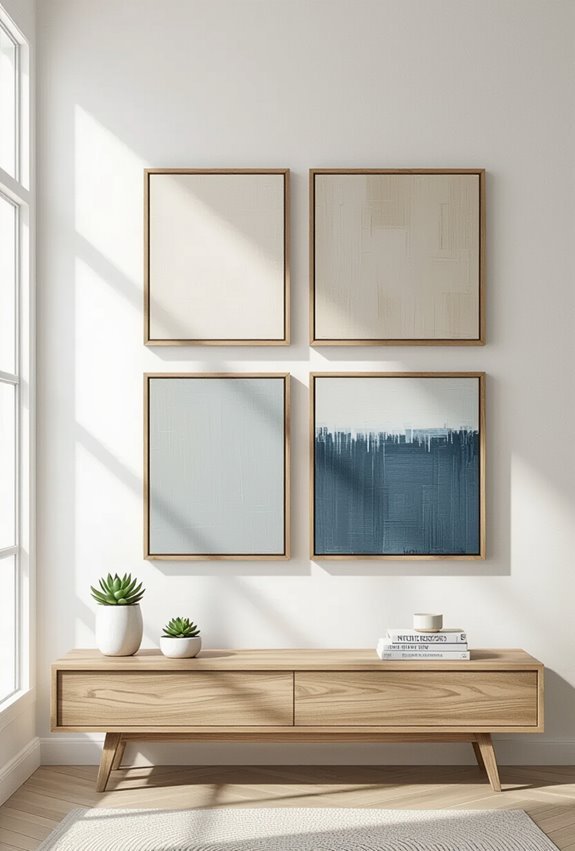
When you hang three paintings at different heights, you create a dynamic and engaging visual rhythm that captures attention.
Use asymmetrical spacing to avoid predictability and keep the arrangement lively.
By varying eye lines, you guide the viewer’s gaze across the wall, adding movement and interest.
This approach breaks monotony and makes your display feel more personal and creative.
Frame Three Paintings With Matching Frames for Unity
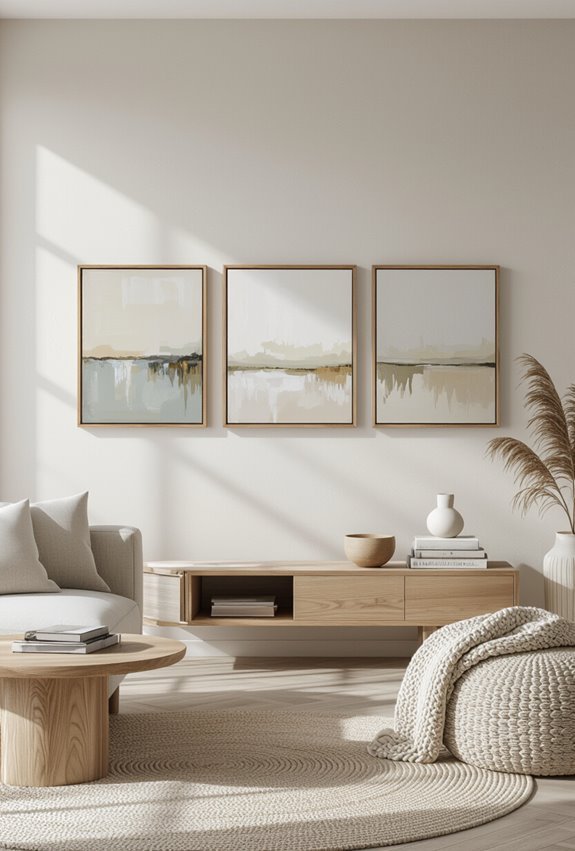
Choose matching frames to instantly tie three paintings together and create a cohesive look. Using matching frames with uniform borders helps unify different artworks, making your display feel intentional and polished.
This approach highlights the paintings without distraction, emphasizing their collective impact. Stick to consistent colors and widths in frames to achieve balance and harmony on your wall.
Mix Frame Styles to Add Texture to Three Paintings
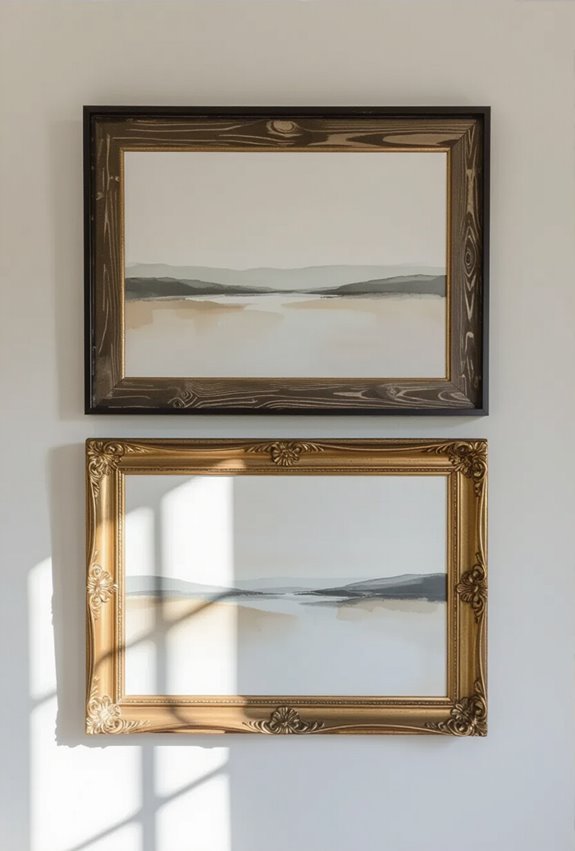
Mixing frame styles creates a dynamic, textured look that brings depth and personality to your trio of paintings.
Use mixed finishes like matte black, natural wood, and metallics to create contrast. Add eclectic mats with varied colors or patterns to enhance visual interest.
This approach lets your three paintings stand out individually while forming a cohesive, artful display.
Choose Three Paintings With a Shared Theme
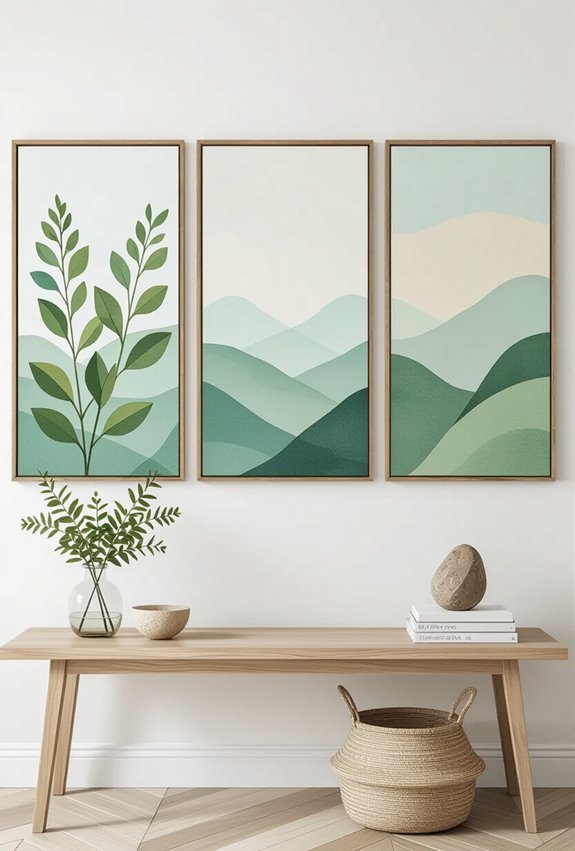
Creating a cohesive atmosphere becomes effortless when you pick three paintings that share a common theme.
Focus on subject matter that complements each other and supports a consistent color story throughout.
This approach ties your display together visually and conceptually, making your wall feel thoughtfully curated rather than random.
It’s a simple way to create harmony and interest with minimal effort.
Place Three Paintings Above a Sofa for a Focal Point
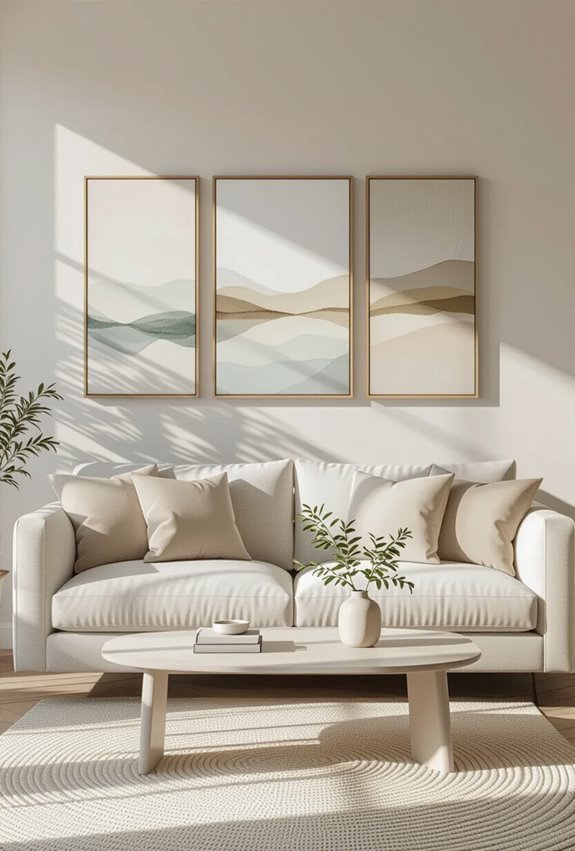
Anchor your living room by hanging three paintings above your sofa to instantly draw the eye and define the space.
Use a spacing guide to keep even gaps between artworks, ensuring balance.
Choose artwork scale that complements your sofa size—large enough to make an impact but not overpowering.
This arrangement creates a striking focal point, enhancing your room’s style effortlessly.
Align Three Paintings Along a Staircase Wall
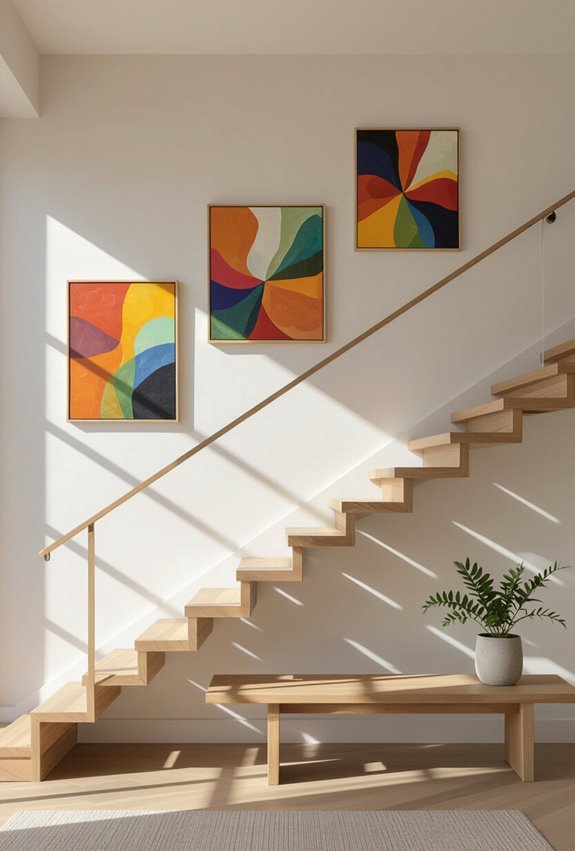
Although staircases often present a challenging space to decorate, aligning three paintings along the wall can add visual interest and guide the eye upward.
To enhance staircase rhythm, position each painting in step alignment with the stair treads. This creates a harmonious flow that complements the stairs’ natural incline, making your artwork feel integrated and dynamic along the wall.
Add Lighting Focus to Highlight Three Paintings
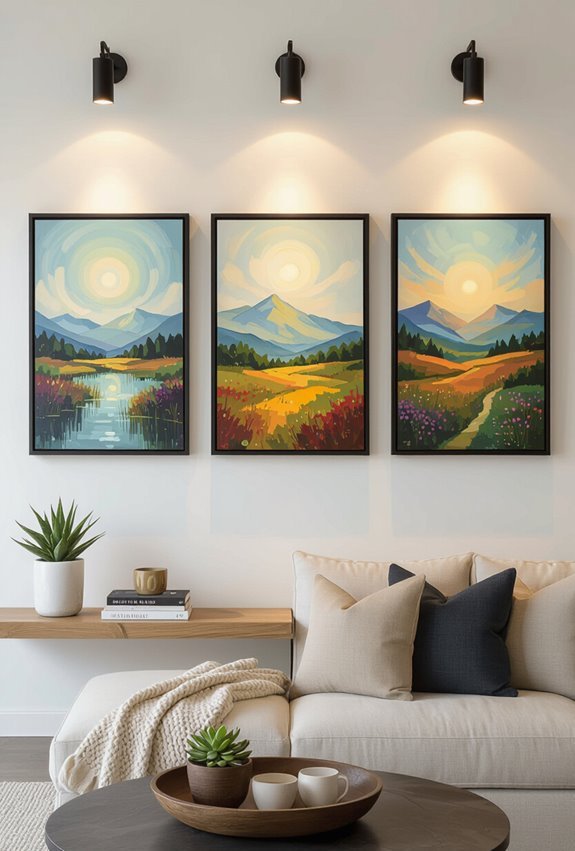
To make your three paintings stand out even more, consider adding focused lighting to your arrangement.
Use accent lighting or gallery sconces to direct attention and create a dramatic effect.
Position lights to highlight each painting’s details without glare.
This focused illumination not only enhances colors and textures but also adds depth, making your wall display truly enthralling and professional.
Use a Large Mat to Group Three Paintings Together
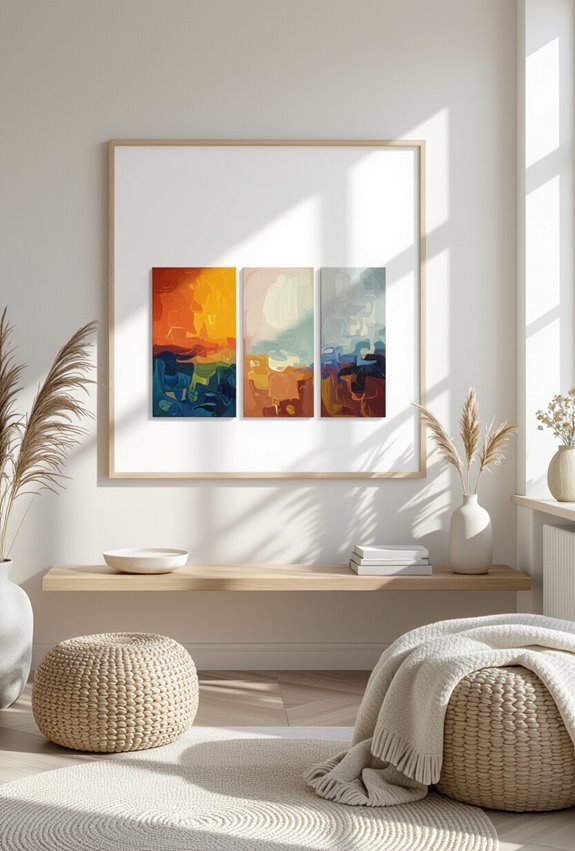
Bring your three paintings together visually by using a large mat that frames them as a cohesive group. This mat grouping creates a unified border, tying your artwork into one striking display. By carefully choosing a mat color and size, you emphasize harmony and balance, making the trio appear intentional and well-curated on your wall.
Incorporate Three Paintings Into a Gallery Wall
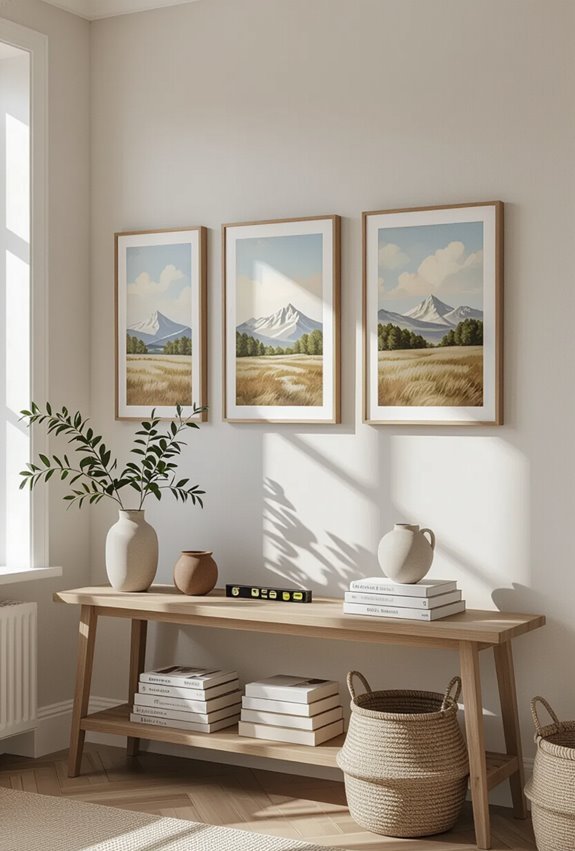
You’ll often find that incorporating three paintings into a gallery wall adds dynamic interest and personality to any room.
To achieve harmony, focus on color balance among the artworks, ensuring they complement each other.
Use spacing psychology to arrange them thoughtfully—varying distances can create rhythm and guide the eye.
This approach transforms your wall into a lively, cohesive display.
Hang Three Paintings in a Linear Row With Equal Gaps
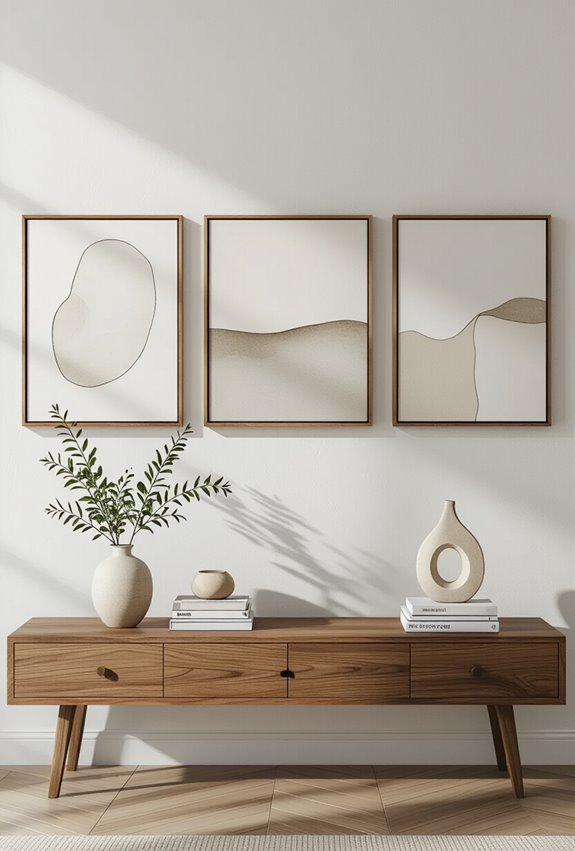
Moving from the dynamic energy of a gallery wall, arranging three paintings in a straight line creates a clean, streamlined look.
To achieve this, use precise measurements to guarantee symmetrical spacing between each piece. Mark your wall carefully before hanging to maintain equal gaps, which enhances balance and harmony, making your display visually appealing and professionally polished.
Display Three Paintings in a Grid Layout
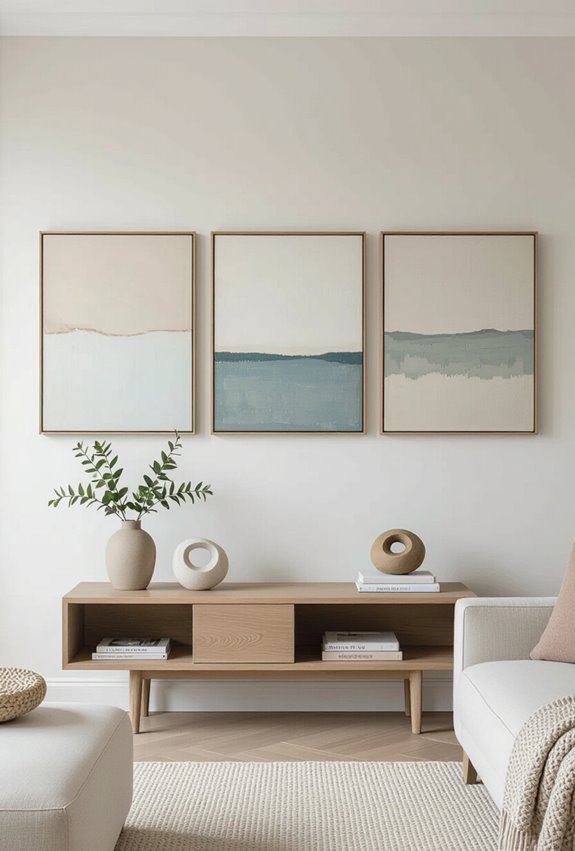
When you arrange three paintings in a grid layout, you create a balanced and cohesive display that highlights each piece equally.
Use a gallery grid to achieve modular symmetry, ensuring consistent spacing and alignment.
This approach makes your wall art look intentional and polished, allowing each painting to stand out while contributing to a unified visual impact.
Style Three Paintings With Complementary Wall Colors
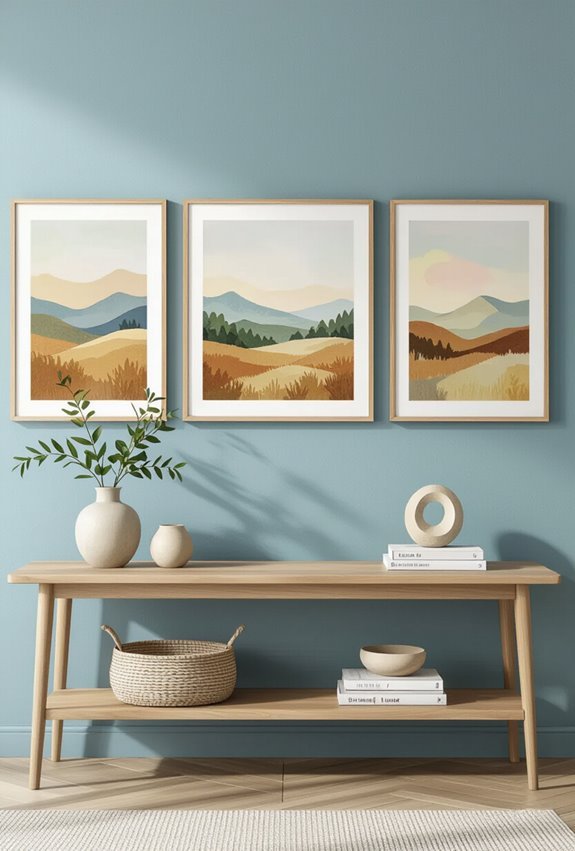
Choosing the right wall colors can transform how three paintings interact and capture attention. Use accent walls to highlight one painting or create a focal point.
Apply color blocking behind each piece to define individual spaces and enhance their tones. This approach lets you play with complementary hues, making your trio stand out while maintaining harmony across the display.
Create Contrast by Using Three Bold Paintings on a Neutral Wall
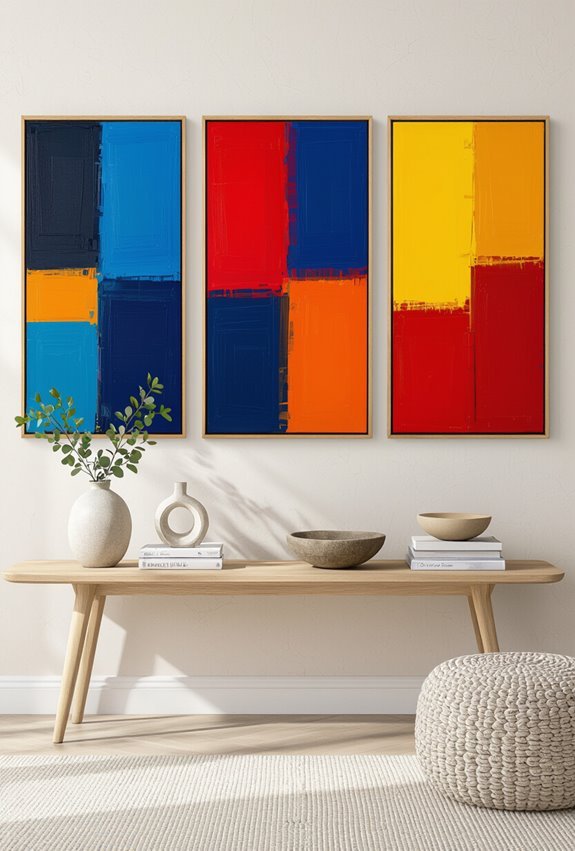
While complementary wall colors can enhance the connection between your paintings, sometimes a neutral backdrop offers a stronger stage.
Use a neutral backdrop to let three bold paintings create striking bold contrasts that instantly draw attention. This approach highlights each artwork’s unique features without overwhelming the space, making your wall a mesmerizing focal point with clean, balanced visual impact.
Use Three Abstract Paintings to Add Modern Flair
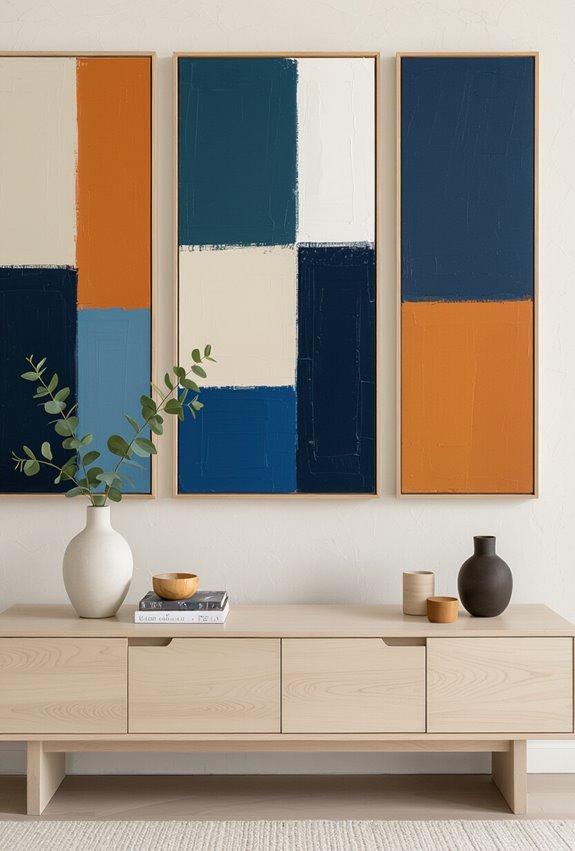
A trio of abstract paintings can instantly inject a modern flair into your space.
Use pieces that showcase abstract symmetry to create visual balance and harmony.
Incorporate color blocking to add bold, vibrant sections that draw the eye and energize the room.
Place Three Landscape Paintings to Tell a Story
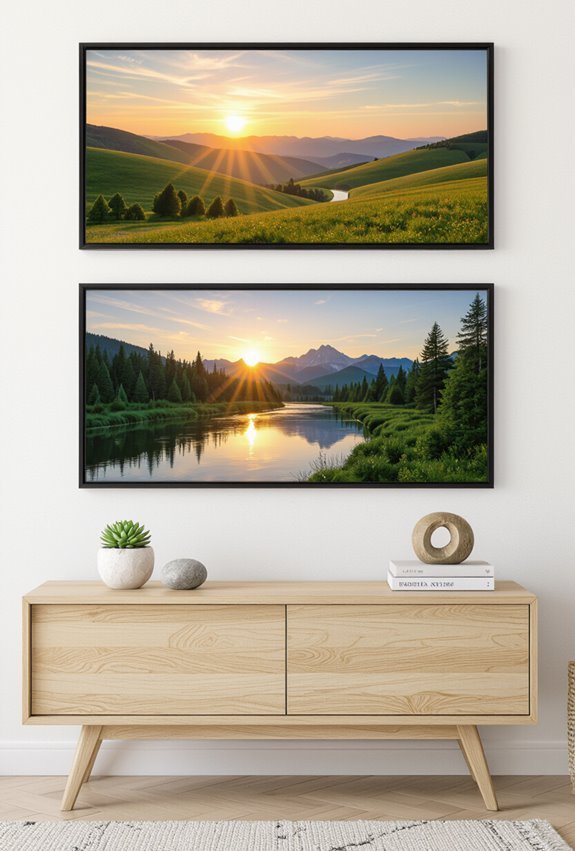
When you place three landscape paintings together, you create a visual narrative that invites viewers to journey through different scenes.
Arrange them to showcase seasonal progression, moving from spring’s bloom to winter’s calm.
This progression not only highlights nature’s cycles but also builds an emotional arc, guiding emotions from renewal and hope to reflection and peace.
Use Three Small Paintings to Fill a Narrow Wall Space
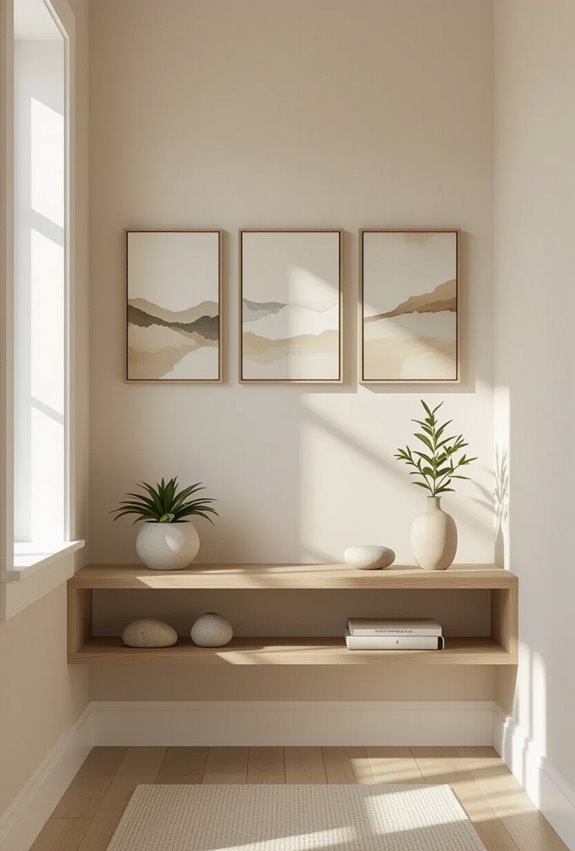
Narrow wall spaces can pose a challenge, but you can easily brighten them up by hanging three small paintings side by side or in a vertical arrangement.
Create a narrow gallery that maximizes your wall’s potential. A vertical trio works especially well, drawing the eye upward and making the area feel taller and more dynamic without overwhelming the space.
Hang Three Paintings With Different Orientations (Portrait/Landscape)
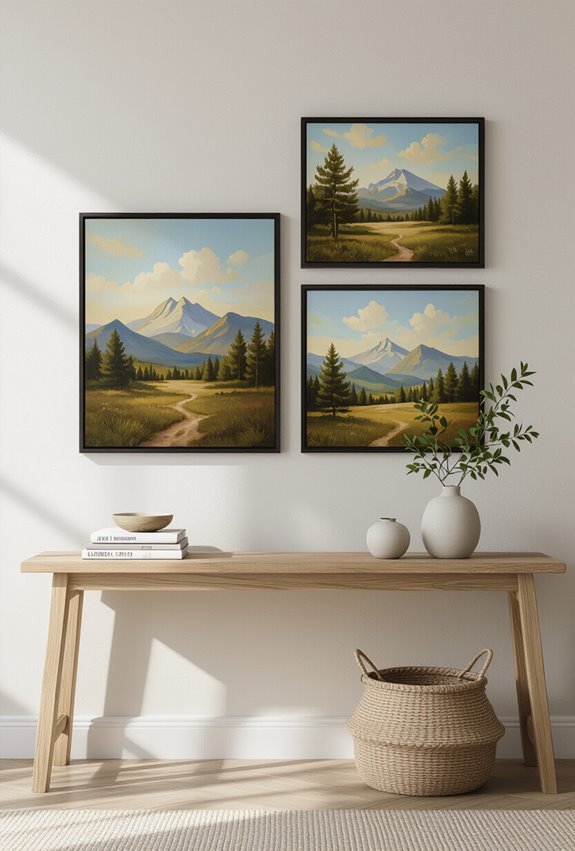
Although arranging paintings with different orientations might seem tricky, combining portrait and landscape pieces can create a striking visual rhythm on your wall.
You’ll use orientation contrast and mixed proportions to add dynamic interest without chaos.
Position the landscape in the center or off to one side, balancing it with two portraits to maintain harmony and a cohesive flow.
Align Three Paintings Around a Mirror for Symmetry
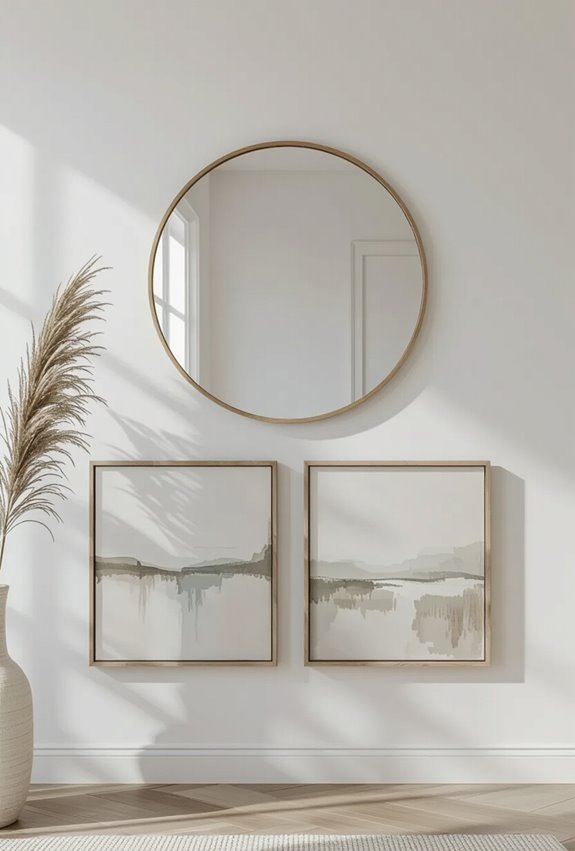
When you align three paintings around a mirror, you create a balanced and harmonious focal point that draws the eye naturally.
Use mirror symmetry by placing one painting on each side and one below or above the mirror. This arrangement enhances reflective balance, making the wall feel cohesive and visually pleasing without overwhelming the space.
Use Three Paintings to Frame a Window or Doorway
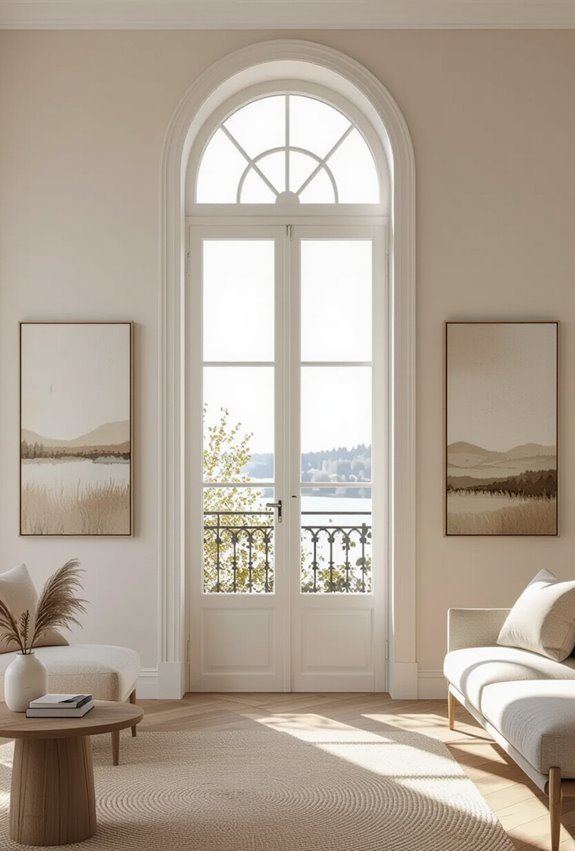
If you want to highlight a window or doorway, placing three paintings around it can create a striking frame that enhances the architectural feature.
Arrange the paintings to complement natural light without overpowering privacy curtains or hinged panels.
Pair them with decorative shutters for added charm, balancing art and function while drawing attention to your space’s unique entry points.
Position Three Paintings on a Floating Shelf for Flexibility
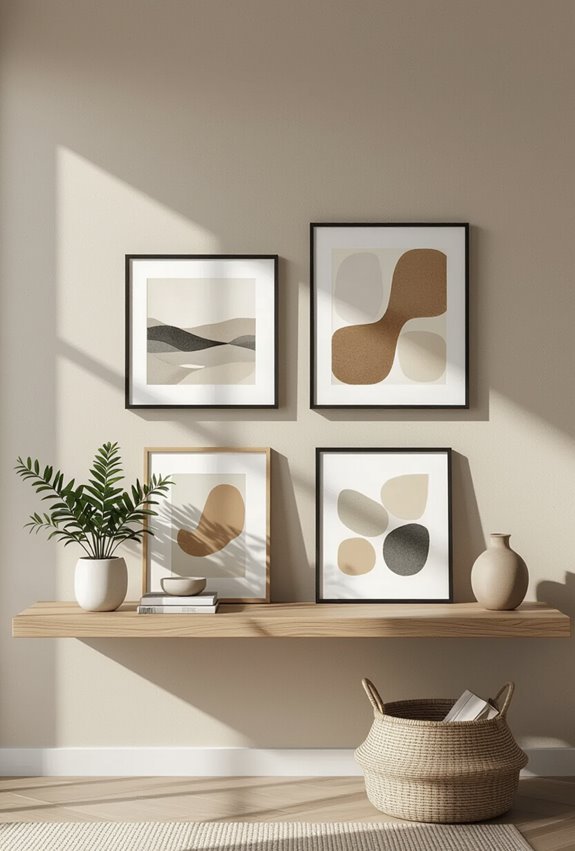
Framing a window or doorway with three paintings creates a fixed focal point, but placing them on a floating shelf gives you more control over their arrangement.
Use an adjustable ledge to easily shift each painting’s position. This setup also allows a rotating display—simply swap out artwork or change orientations whenever you want, keeping your wall fresh and dynamic.
Add Plants Around Three Paintings for a Natural Vibe
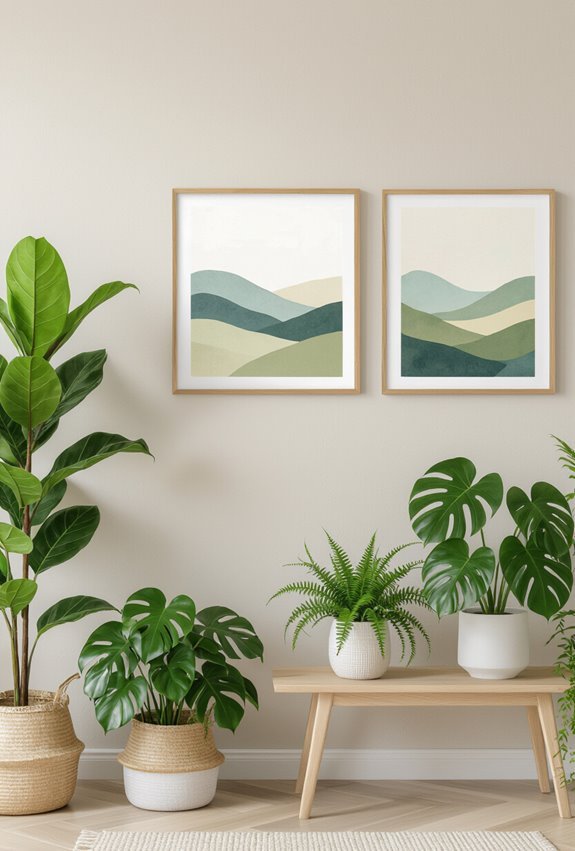
Surrounding three paintings with plants breathes life into your display and adds a soothing, organic touch to the space. Use hanging planters to frame the artwork from above, while trailing vines soften edges.
Place potted palms nearby for height and drama. Consider moss frames on the paintings themselves to deepen the natural vibe and create seamless harmony between art and greenery.
Use Three Paintings to Define Zones in an Open Plan Room
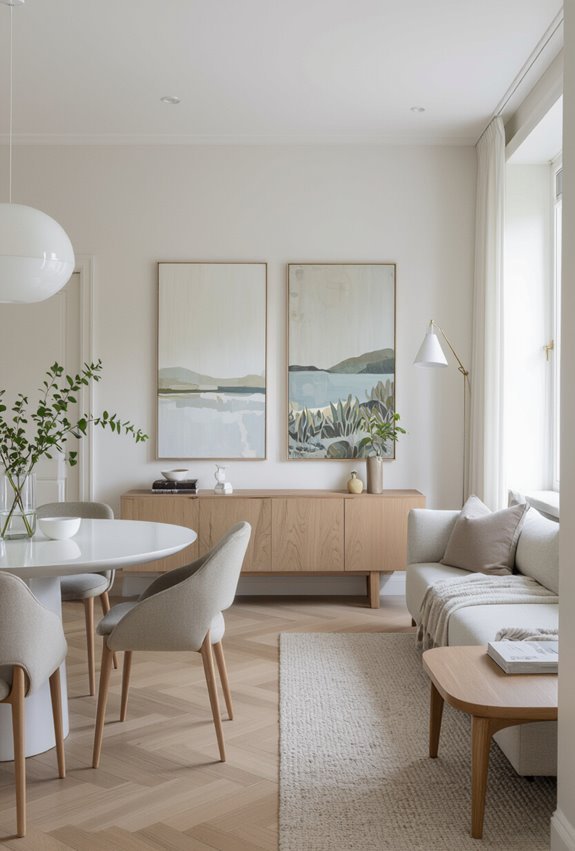
Plants can create a natural flow around your artwork, but paintings themselves can also serve as powerful design tools. Use three paintings strategically to support furniture zoning in an open plan room.
Position them to visually separate areas while guiding traffic flow smoothly. This approach helps define functional spaces without physical barriers, keeping your room open and organized.
Hang Three Paintings With Varied Frame Colors for Playfulness
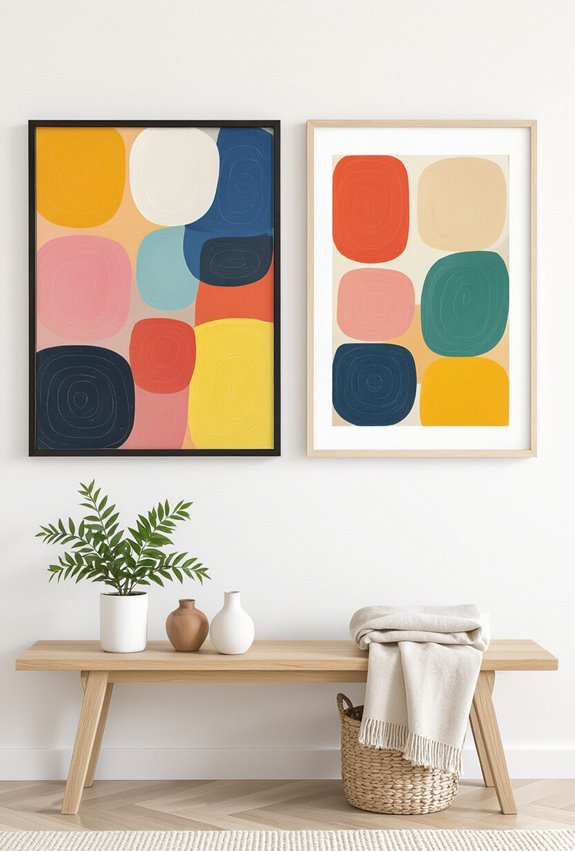
Mixing frame colors can instantly add a playful vibe to your wall display. Choose playful frames in contrasting hues to create dynamic color contrast that draws attention. Don’t be afraid to mix bold and subtle shades; this variety energizes your space and highlights each painting uniquely. Varied frame colors make your trio feel lively and visually engaging.
Lean Three Paintings Against the Wall for a Casual Look
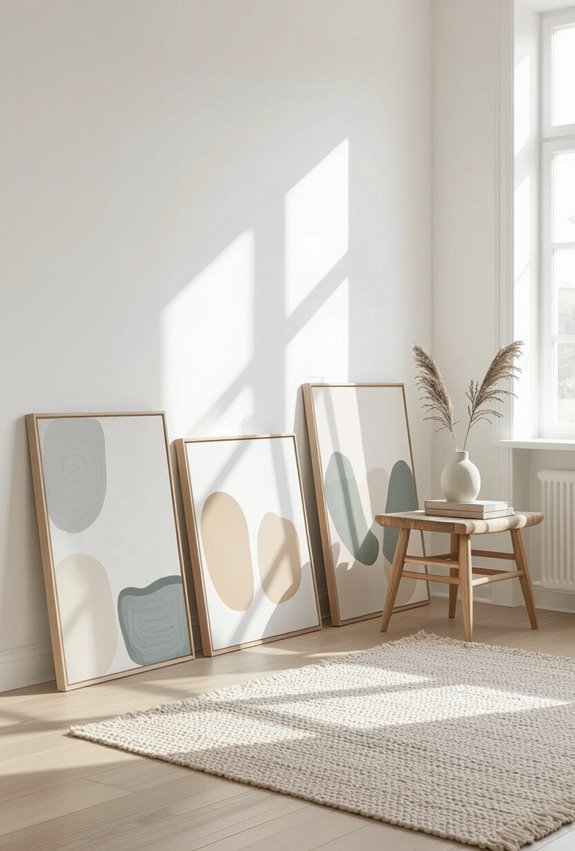
If you want to step away from the structured feel of varied frame colors, try leaning your paintings against the wall instead. This approach creates a relaxed, casual vignette that feels inviting and effortless.
Arrange your three pieces at varying heights to form a dynamic floor gallery, perfect for adding personality without the permanence of nails or hooks.
Pair Three Paintings With Textured Wall Hangings
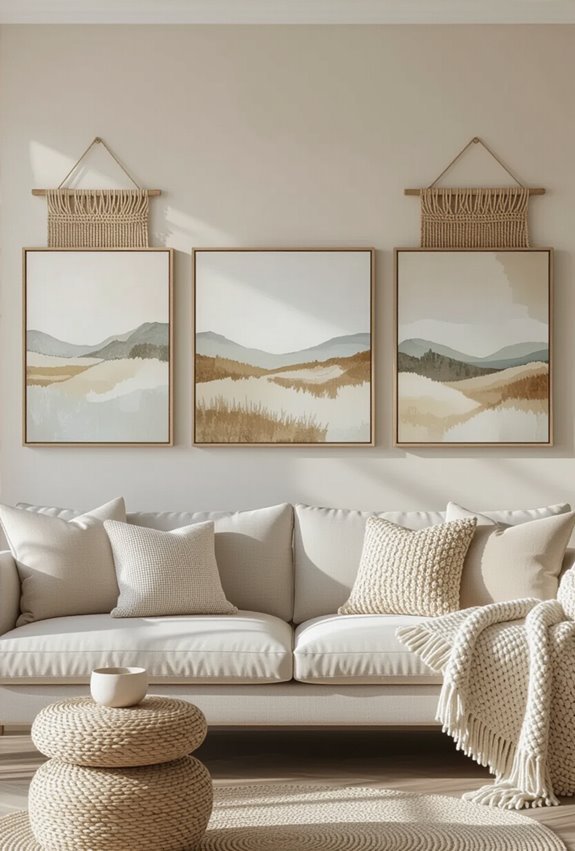
Enhancing your wall with textured hangings adds depth and interest to your three paintings, creating a layered, tactile display.
You can mix woven textiles and tactile macramé pieces around or between your paintings to break flatness and invite touch.
This combination highlights each artwork while giving your wall a cozy, handcrafted vibe that feels both modern and inviting.
Use Three Paintings as a Headboard Alternative in Bedrooms
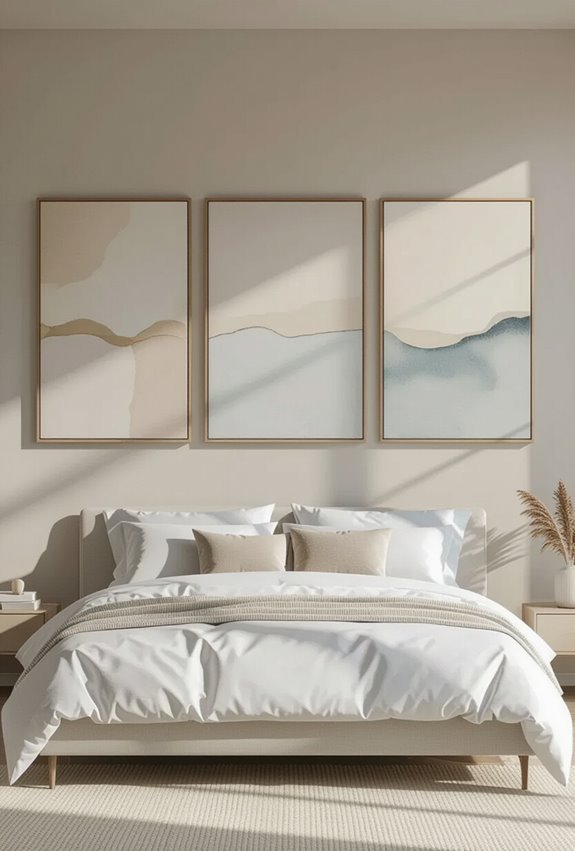
When you want to make a bold statement without a traditional headboard, three paintings can serve as a stylish and personalized alternative in your bedroom.
Arrange them horizontally above your bed to mimic a fabric headboard’s effect.
Complement this setup with accent pillows that pick up colors from the artwork, creating a cohesive and inviting sleeping space without extra bulk.
Choosing the Right Paintings for Your Trio Arrangement
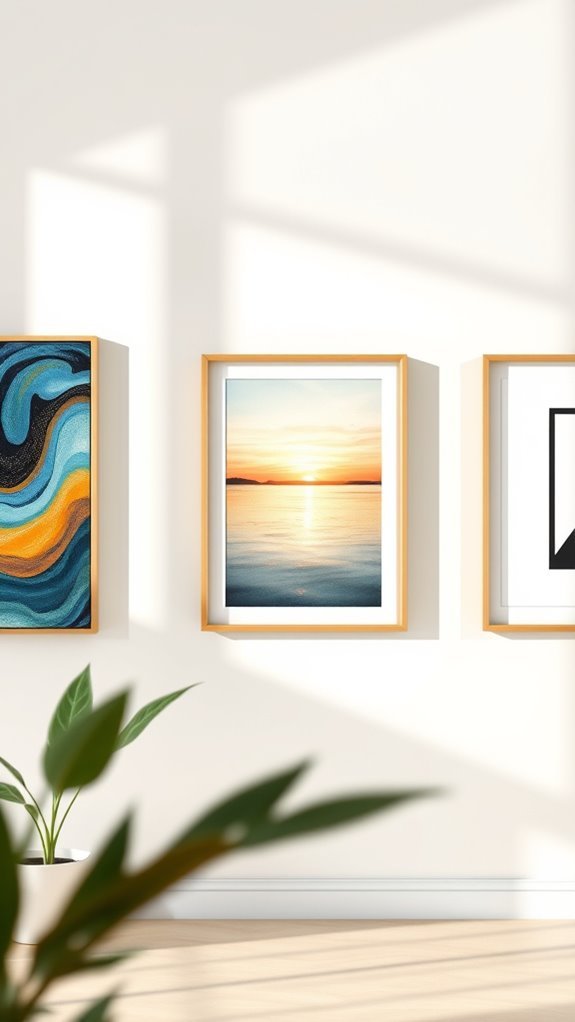
When selecting paintings for your trio arrangement, how do you guarantee they complement each other?
Start with color coordination; choose pieces that share a similar palette to create harmony.
Don’t forget about theme matching—select artworks that convey a cohesive message or emotion. For example, if one painting depicts a serene landscape, consider including another that reflects nature or tranquility.
This approach guarantees a unified look, allowing each piece to enhance the others.
Creative Layout Ideas for Three Paintings
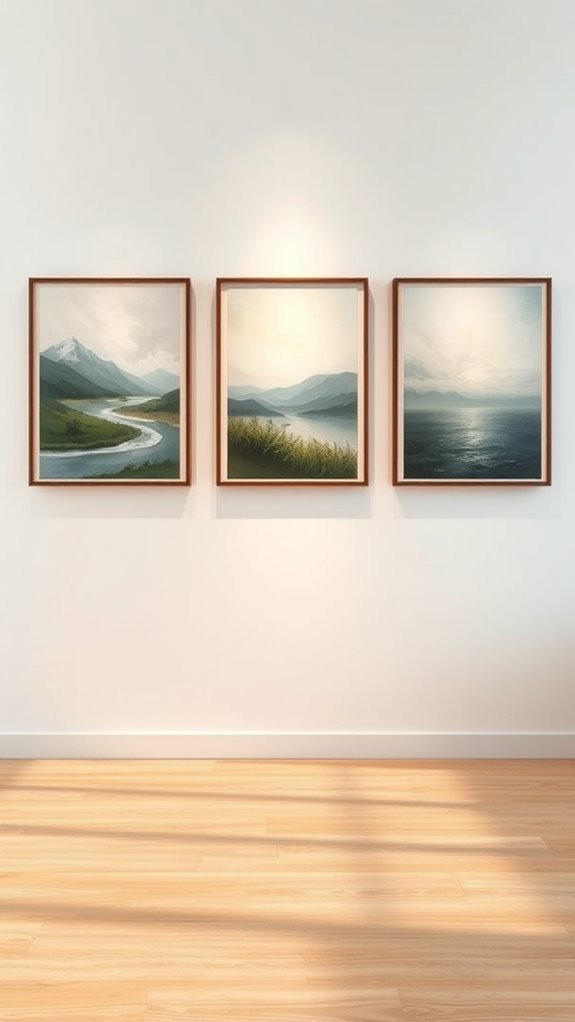
After selecting paintings that complement each other, it’s time to think about how to display them. You can use composition techniques like the grid layout, where each painting is evenly spaced, creating a balanced look.
Alternatively, try a staggered arrangement for a more dynamic feel. Focus on color coordination by grouping paintings with similar hues or themes, unifying the trio.
Consider varying sizes; a larger piece can anchor the arrangement while the smaller ones add interest. Experiment with different orientations, too—landscape, portrait, or even a mix can create an engaging visual story on your wall.
Tips for Enhancing Your Wall Aesthetic With Paintings
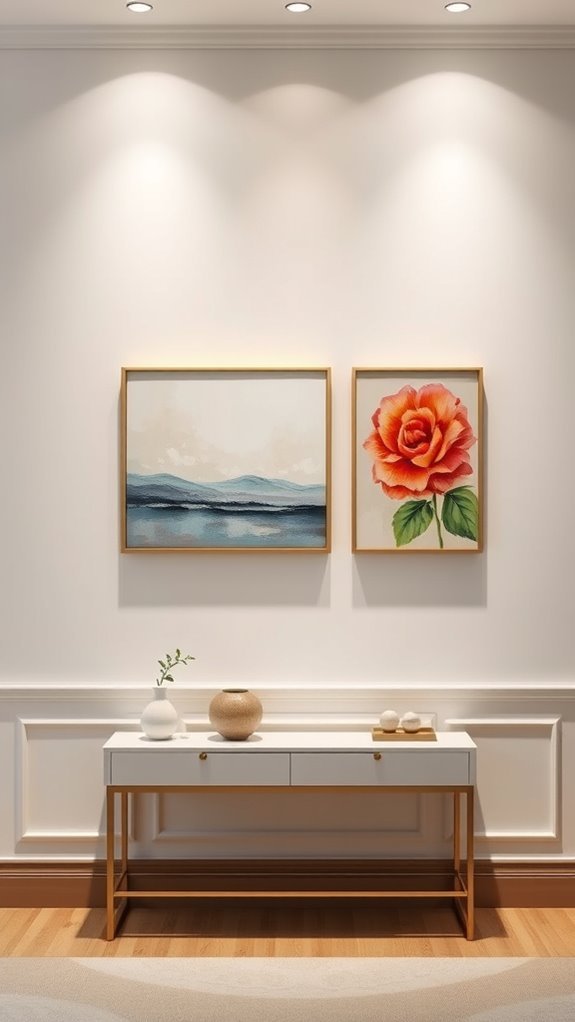
To elevate your wall aesthetic with paintings, start by considering the overall mood you want to create. Choose a color palette that complements your room’s decor and enhances the vibe.
For a cohesive look, opt for matching frame styles; whether sleek modern or vintage ornate, consistency can tie your trio together beautifully. Mix and match sizes for visual interest, but make certain they relate to one another in theme or color.
Don’t forget to arrange your trio at eye level for maximum impact. With thoughtful choices, your paintings will transform your wall into a striking focal point in any space.
Conclusion
Styling with three paintings can seem intimidating, but don’t worry—you don’t need to be an art expert to create a stunning display. By choosing pieces that resonate with you and experimenting with layouts, you’ll find a combination that feels right. Even if you think your wall’s too small or your taste is too eclectic, remember that art is about personal expression. Trust your instincts, and your trio will shine, transforming your space into a reflection of your unique style.
