
Can You Paint Exterior Siding
You can usually paint exterior siding, but success depends on the material, prep, and climate. Inspect for damage, repair rot or cracks, and use a breathable, exterior-grade primer and paint so moisture won’t get trapped. Wood, fiber cement, and engineered wood take paint well; vinyl needs heat-resistant, lighter colors; stone or factory-finished metal are often best left alone. If you want long-lasting results and guidance on when to replace instead, keep going for more details.
Can You Paint Exterior Siding?
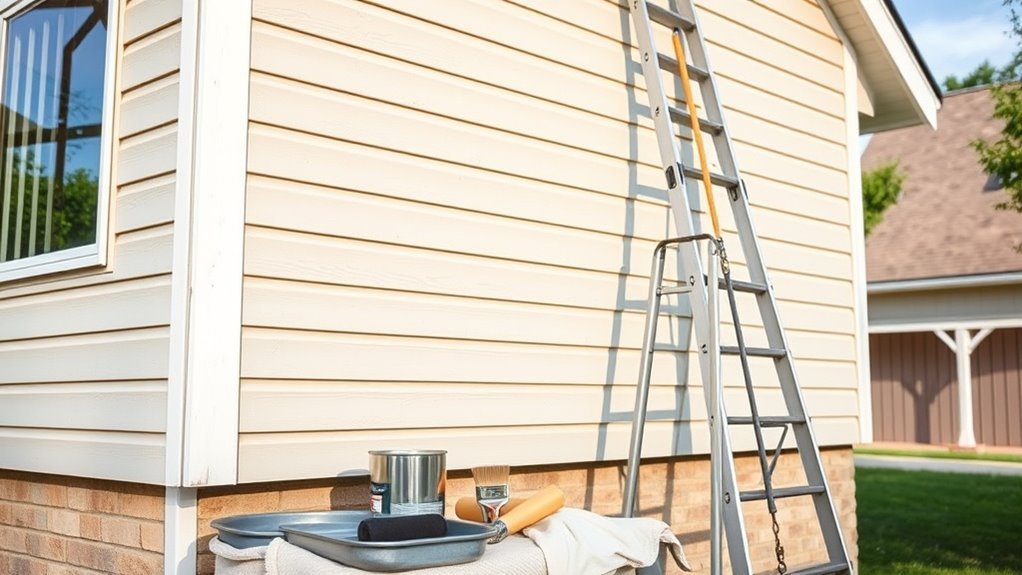
You should inspect surfaces, repair damage, and select breathable, exterior-grade paint to prevent trapping moisture. If your house is in a historic district, consult guidelines—historical preservation rules may restrict colors or methods, so get approvals before starting.
Proper prep and the right primer extend longevity and protect siding. If you’re unsure, test small areas and review local codes to ensure your choices comply.
Which Siding Materials Can Be Painted (And Which Shouldn’t)?
While many siding types take paint well, some need special prep or are better left unpainted—so you should match your approach to the material.
Wood, fiber cement, and engineered wood accept paint and stains; you’ll prep, prime, and pick colors mindful of color psychology to influence curb appeal.
Masonry and stucco can be painted but need breathable coatings and patching.
Vinyl can be painted with heat-resistant formulations but lighter hues work best.
Natural stone, certain metal panels, and some factory-finished claddings are usually best left as-is.
Consider environmentally friendly finishes to reduce VOCs and maintenance impact.
When Is Painting a Temporary Fix vs. Full Replacement?
You’ll first assess the siding’s surface condition to see if issues are cosmetic—like peeling paint—or structural, like rot or warping.
If it’s mostly cosmetic, a fresh paint job can be an affordable short-term fix.
If structural damage is present, replacement will usually save money over time.
Compare initial costs, expected lifespan after treatment, and maintenance needs to choose the smarter long-term option.
Surface Condition Assessment
Before deciding whether a fresh coat of paint will do the job or you need full siding replacement, inspect the surface for rot, warping, extensive cracking, or moisture intrusion—these are signs that paint will only mask deeper problems temporarily. You should gauge adhesion, substrate stability, and hidden moisture with probes and moisture meter. Consider how color theory and paint texture will hide or highlight flaws; smooth, dark finishes reveal ripples, textured paints can disguise minor damage. Use the table to clarify risk vs action.
| Condition | Recommended Action |
|---|---|
| Surface rot | Replace affected siding |
| Minor cracks | Patch and prime |
| Peeling paint | Strip and prep |
| Moisture intrusion | Fix source, then repair |
Long-Term Cost Comparison
After you’ve assessed surface condition and fixed any moisture or rot, compare long-term costs to decide whether paint will hold or only delay a bigger job. You’ll weigh immediate paint expense against replacement: labor, materials, permits, and potential energy savings from new siding.
Factor lifespan—quality paint and eco-friendly pigments can extend life but won’t fix structural damage. Consider resale value, maintenance frequency, and how color psychology affects curb appeal and buyer perception.
If recurring repairs, peeling, or hidden rot persist, replacement is wiser. If substrate’s sound and you want a budget-friendly refresh, painting can be a practical interim solution.
How New Paint Affects Curb Appeal And Resale Value
A fresh coat of paint instantly boosts your home’s curb appeal by making siding look clean and well-maintained. That improved first impression can attract more buyers and justify a higher asking price.
Choosing durable, market-appealing colors gives you the best return on that investment.
Boosts Curb Appeal
How much difference can fresh siding paint make? You instantly sharpen your home’s look, tying exterior color to interior decoration cues and coordinating with roofing materials for a unified aesthetic.
Neat, well-applied paint hides weathering, stains, and mismatched patches that distract visitors or buyers. You make architectural details pop—trim, shutters, and porch elements—so landscaping and lighting read as intentional choices.
Curb appeal isn’t just about color; it’s about perceived care. When your siding looks maintained, neighbors and passersby assume the rest of the property is too, increasing foot traffic and inquiries without changing structure or layout.
Increases Resale Value
Sharp curb appeal not only draws attention—it converts it into value. When you repaint siding, buyers notice freshness, trim contrast, and harmony with landscape. You’ll leverage color psychology to suggest warmth, stability, or modernity, and you can echo interior accents to create a cohesive tour that feels intentional.
Small, strategic choices raise perceived maintenance and desirability, often shortening market time and boosting offers. Consider these quick impacts:
- Fresh exterior signals upkeep and fewer immediate repairs.
- Coordinated trim and door colors suggest thoughtful design.
- Palette choices influence perceived square footage and light.
- Matching interior accents creates emotional continuity for buyers.
Inspect Siding: What To Look For Before Painting
Before you start scraping or priming, walk the perimeter and look closely for problems that will affect adhesion and appearance: loose or rotted boards, peeling or blistered paint, mildew, gaps at seams or trim, and any damaged caulking.
Note flashing, trim integrity, and warped panels; mark areas needing repair.
Test paint adhesion with a scraper in inconspicuous spots.
Consider color psychology when choosing new hues—they influence curb appeal and heat absorption.
Factor environmental impact of paint types and disposal; choose low-VOC options and recycle scrapings where possible.
Document issues, prioritize structural fixes, then plan prep and materials accordingly.
How Moisture And Rot Affect Paint Adhesion
You’ll notice that trapped moisture under old paint causes bubbling, peeling, and loss of adhesion.
If siding is soft or crumbling from rot, new paint won’t bond and failures will recur.
Treating and replacing wet or rotten areas first is essential for a lasting finish.
Moisture-Induced Paint Failure
Ever wondered why paint peels or blisters on certain walls even after a perfect job? You’ll find moisture undermines adhesion long before rot sets in. Indoor moisture drives vapor through siding, swelling fibers and lifting coatings.
To protect paint durability, control humidity, seal leaks, and allow surfaces to dry thoroughly before painting.
- Monitor indoor moisture sources like baths and dryers.
- Fix leaks and improve ventilation promptly.
- Use breathable primers that resist vapor pressure.
- Make sure siding dries fully after rain or cleaning.
Address moisture proactively so coatings bond properly and you avoid premature failure without discussing rot details.
Rot Compromises Adhesion
How does rot change the game for paint adhesion? You’ll notice rot damage softens wood fibers and creates a weak, crumbly surface that paint can’t grip.
Moisture lurking behind siding fuels decay, so even well-prepped paint peels away as adhesion failure. You shouldn’t paint over damp or rotten areas; doing so masks problems and accelerates peeling.
Instead, you must locate and remove compromised material, let the substrate dry, and replace or consolidate with appropriate fillers or new boards.
Only after restoring a sound, dry surface should you prime and paint to guarantee lasting adhesion and protect your siding.
How Age And Previous Coatings Determine Painting Success
Because older siding and multiple previous coatings change how paint adheres and performs, you need to assess age and past treatments before you pick products or prep methods. You’ll inspect layers, flaking, and compatibility; older oil over latex or many layers can force removal.
Older siding and multiple past coatings change adhesion—inspect layers, flaking, and compatibility before choosing products or prep.
Think about color psychology when choosing new hues—lighter tones hide age, darker show flaws. Also consider eco friendly coatings if you’re sanding or stripping to reduce fumes.
- Check adhesion with a tape or scrape test.
- Note number and type of prior coats.
- Plan for more prep on degraded surfaces.
- Choose primers matched to the substrate.
Can You Paint Vinyl Siding?
Yes—you can paint vinyl siding, but you should only do it after a careful assessment and with the right products and prep. You’ll check for brittleness, fading, and manufacturer restrictions. Use heat-resistant, acrylic latex formulated for vinyl, and pick tones that complement Color psychology principles—lighter shades reflect heat. Prep includes cleaning, sanding lightly, and priming where recommended. Consider Eco friendly finishes to reduce VOCs. Apply thin, even coats and allow full curing between layers.
| Step | Quick Tip |
|---|---|
| Prep | Clean, rinse, dry |
| Paint | Use vinyl-safe acrylic |
| Finish | Choose low-VOC options |
Can You Paint Fiber Cement Siding?
Yes — you can paint fiber cement siding, but you’ll need to prep the surface properly by cleaning, repairing chips, and priming any bare areas.
Choose a paint and primer system formulated for cementitious surfaces and compatible with the existing coating to guarantee adhesion and breathability.
After painting, plan for regular inspections and touch-ups to protect against moisture and extend the finish’s lifespan.
Surface Preparation Steps
Before you pick up a brush, make sure the fiber cement siding is clean, dry, and sound so the paint will adhere and last. Inspect for cracks, loose caulk, or rot and repair those areas; your color palettes and paint durability depend on a stable substrate. Wash with a mild detergent or trisodium phosphate substitute, then rinse and let fully dry. Sand rough spots and remove chalking to promote bonding.
- Scrape loose paint and dust off residues.
- Repair joints, replace damaged boards.
- Sand and feather edges for smooth transitions.
- Prime bare or repaired areas before topcoats.
Choosing Compatible Paint
With the surface prepped and primed where needed, you can focus on selecting paint formulated to bond with fiber cement siding. Choose a high-quality 100% acrylic exterior paint for flexibility, adhesion, and moisture resistance.
Consider finish: flat hides imperfections, satin or semi-gloss sheds dirt and stands up to weather. Use color psychology to pick hues that influence curb appeal and perceived size—light colors open a space, dark colors add contrast and drama.
Look for low-VOC, eco-friendly finishes to reduce toxins and comply with local regs. Test samples on panels, inspect after drying, then proceed with confidence.
Long-Term Maintenance Tips
Although fiber cement siding is durable, you can and should repaint it periodically to protect the substrate and keep your home’s appearance fresh. You’ll inspect seams, caulking, and flashing annually, touch up chips promptly, and choose colors with color psychology in mind to influence curb appeal and mood.
Prioritize paint durability and proper prep to extend intervals between repaints. Follow a simple maintenance routine:
- Wash siding gently each spring to remove grime and mildew.
- Re-caulk gaps and trim where sealant fails.
- Sand and prime exposed areas before repainting.
- Schedule a professional inspection every 5–7 years.
Can You Paint Wood Siding And Shingles?
If your home has wood siding or cedar shingles, you can definitely paint them—but you should check the wood’s condition and prep properly first. Inspect for rot, insect damage, and loose boards; replace or repair before painting.
Sand, strip old flaking paint, and apply a quality primer to guarantee paint durability. Choose finishes that shed water and resist mildew.
Think about color psychology—lighter hues reflect heat and feel larger; warm tones add coziness.
Follow manufacturer dry times and apply at recommended temperatures. With proper prep and maintenance, painted wood siding and shingles will protect and refresh your home.
Can You Paint Engineered Wood And Composite Siding?
You can paint engineered wood and many composite sidings, but adhesion depends on surface texture, coatings, and porosity.
Before you start, inspect and repair any damage, clean thoroughly, and sand glossy or sealed areas so the paint will grip.
Then choose a compatible exterior primer and paint formulated for engineered or composite materials to guarantee durability.
Paint Adhesion Factors
When you’re deciding whether to paint engineered wood or composite siding, adhesion is the key factor that determines how long the finish will last. You’ll want paint that bonds to non-porous composites and to factory coatings on engineered boards. Consider surface energy, existing sealers, and manufacturer compatibility.
Also think about Color matching to existing trim and choose eco friendly paints if sustainability matters.
- Surface texture: smoother boards need primers for grip
- Substrate chemistry: some composites resist common binders
- Weather exposure: UV and moisture affect bond strength
- Topcoat flexibility: prevents cracking as siding moves
Preparation And Repair
How should you prep engineered wood and composite siding before painting? You’ll inspect for rot, delamination, and loose joints; replace damaged boards and secure gaps with exterior-grade caulk.
Clean thoroughly with a mild detergent or a low-pressure power wash, then rinse and dry.
Sand glossy spots and feather edges where old finish peels.
Apply a compatible primer to sealed surfaces to guarantee adhesion and uniform color energy—consider color psychology when choosing hues to influence curb appeal.
Dispose of waste responsibly, minimizing environmental impact by recycling scrap and using low-VOC products.
Test a small patch before committing to full coverage.
Paint Type Selection
Which paint should you pick for engineered wood or composite siding? You’ll want a high-quality acrylic or 100% latex exterior paint formulated for composites, paired with a compatible primer. Consider color psychology to choose hues that suit scale and curb appeal, and pick eco-friendly finishes to limit VOCs.
- Use breathable acrylics to prevent moisture trapping.
- Choose tinted primer to improve coverage and adhesion.
- Select satin or low-sheen finishes for durability and concealment of imperfections.
- Prefer paints labeled for composite or engineered wood to ensure warranty and long-term performance.
Can You Paint Stucco And Render?
Curious whether you can paint stucco or render? You can, but prep matters: clean, repair cracks, and remove loose material so the siding texture stays consistent.
Choose breathable masonry primer and paint to avoid trapped moisture. Test a small area to verify adhesion and that your chosen paint color complements existing trim and landscaping.
Use elastomeric coatings on hairline cracks; they bridge movement better than standard masonry paint.
Apply with brush, roller, or low-pressure sprayer, keeping coats even to preserve texture.
If unsure about substrate condition or moisture, consult a pro before committing to a full repaint.
Can You Paint Metal Siding And Aluminum Panels?
Because metal siding and aluminum panels resist moisture and won’t absorb paint like wood or masonry, you can give them a fresh color—but prep and the right products matter.
You’ll improve adhesion and preserve siding durability by cleaning, deglossing, and treating any corrosion. Use primers formulated for metal panels, then apply exterior-grade acrylic or polyurethane coatings. Follow manufacturer instructions and check for warranty issues.
- Remove dirt, mildew, and loose coating with detergent and a brush.
- Sand or etch glossy surfaces for better bonding.
- Apply a metal-specific primer to bare or rusted areas.
- Use two thin topcoats for even coverage and longevity.
Can You Paint Brick And Masonry Cladding?
Want to change the look of your home? You can paint brick and masonry cladding, but you’ll need the right prep and breathable masonry paint so moisture can escape.
Assess mortar condition and address repairs before painting; poor mortar or trapped damp will cause failure.
If your property has historical preservation concerns, check local rules—unpainted historic brick may be protected.
Choose eco-friendly options like low-VOC, water-based masonry paints and permeable primers.
Test a small area to confirm adhesion and appearance.
Properly applied, paint refreshes brick, improves curb appeal, and extends cladding life when done thoughtfully.
Cleaning Dirt, Mildew, And Chalking From Siding
Before you start painting, you’ll need to prepare the siding by washing away dirt and any chalky residue so the new paint will adhere properly.
Use a mildew remover or a bleach solution on affected areas, scrub gently with a brush, and rinse thoroughly.
Let the siding dry completely and inspect for remaining stains before priming or painting.
Preparing Siding Surface
How do you get siding ready so paint will stick and look right? You start by evaluating surface damage, then remove dirt, chalking, and loose paint. Use a mild detergent or eco-friendly ingredients in cleaners so you protect nearby plants. Rinse thoroughly and let the siding dry.
Consider color psychology when choosing primer and paint—lighter shades hide imperfections; darker ones highlight texture.
Sand rough spots and fill gaps with exterior caulk. Final wipe with a tack cloth ensures adhesion.
Follow with a quality primer before painting to ensure longevity and even coverage.
- Evaluate and plan
- Wash and rinse
- Sand and fill
- Prime and dry
Removing Mildew Buildup
When mildew starts darkening your siding, tackle it promptly so stains don’t set and the finish degrades. You’ll start by wetting the area, then apply a cleaner rated for siding—use a bleach solution (1 part bleach to 3 parts water) or a commercial mildew remover.
Scrub gently with a soft-bristled brush to lift dirt, mildew, and chalking without damaging paint. Rinse thoroughly and let dry completely before repainting.
For mildew prevention, trim vegetation, improve ventilation, and fix gutters so moisture doesn’t linger. Regular inspections and timely cleaning techniques keep siding sound and paint adhesion strong.
Removing Loose Or Flaking Paint Safely
Since loose or flaking paint can trap moisture and undermine new coatings, you’ll want to remove it carefully to protect the siding and your health. Wear a respirator, gloves, and eye protection, and work on calm days to limit dust drift.
Use hand scrapers and a wire brush first; avoid aggressive power sanding that creates hazardous dust. Collect debris and dispose of it per local rules, especially with older lead-based layers.
After removal, prime bare wood promptly and choose finishes that match current color trends or eco-friendly paints to refresh the appearance and reduce environmental impact.
- Wear proper PPE and control dust
- Scrape and brush gently
- Bag and dispose of materials correctly
- Prime exposed areas immediately
How To Repair And Fill Cracks And Gouges
Start by closely inspecting the damaged area to determine the depth and length of cracks or gouges.
You’ll then pick a filler suited to your siding material and the size of the damage—caulk for hairline cracks, exterior patching compound for larger gouges.
Prep the surface, apply the chosen filler, and sand smooth before priming and painting.
Assess Damage Area
How badly is the siding damaged? You’ll inspect cracks, gouges, and rot to decide scope and urgency, since color psychology can affect curb appeal and paint longevity depends on proper prep. Note size, depth, and location; photograph areas for reference.
- Small hairline cracks near corners
- Deep gouges or missing material
- Rot or soft spots that flex
- Fastener rust or separated seams
You’ll prioritize repairs that compromise structure or weatherproofing. Triage by severity, plan access, and estimate materials. Accurate assessment keeps repairs efficient and guarantees the paint job lasts as long as meant.
Choose Proper Filler
When you’re matching filler to the type and severity of damage, pick a product formulated for your siding material and exposure so repairs bond well and last. Choose elastic, UV-resistant caulk for hairline cracks; use epoxy or polyester filler for deep gouges on wood, fiber cement, or vinyl.
Test compatibility with primer and paint to avoid adhesion failures. Sand and clean thoroughly before application, then feather edges for a smooth finish.
Consider color psychology when selecting final paint tones over repairs, and factor repair quantities into paint budgeting so you don’t run short mid-project. Follow cure times before painting.
How To Treat And Replace Rotten Wood Sections
If you find soft, crumbling spots in your siding, don’t ignore them—treating and replacing rotten wood preserves the structure and prevents moisture from spreading. You’ll remove damaged boards, cut back to sound wood, and apply wood treatment to arrest decay before installing new material.
Use compatible replacement boards, seal joints, and prime surfaces to ensure paint adhesion and rot prevention. Follow these steps:
- Remove rotten sections with a chisel or saw, exposing solid wood.
- Apply a preservative wood treatment to the cut edges and surrounding area.
- Fit and fasten replacement boards, ensuring tight seams.
- Prime, caulk, and paint for a durable finish.
Fix Moisture And Drainage Issues First
Before you install new boards and paint, fix the moisture and drainage problems that caused the rot, or the same damage will come back. You should inspect rooflines, gutters, grading, and flashing, add proper moisture barriers, and reroute water with effective drainage solutions. Seal gaps, replace failed flashing, and verify vents and overhangs dry siding quickly. Confirm soil slopes away from foundations and extend downspouts. Use breathable barriers to avoid trapped moisture. The table below highlights priority actions.
| Issue | Fix |
|---|---|
| Gutter overflow | Clean/extend downspouts |
| Poor grading | Regrade soil |
| Flashing gaps | Replace/caulk |
| No barrier | Install moisture barriers |
Which Primer To Use For Each Siding Type?
Although different sidings demand different primers, choosing the right one is straightforward once you know the material. You’ll pick primers that seal, block stains, and promote adhesion; consider color matching when covering bold shades and look for eco friendly primers if low VOCs matter.
Match primer to siding:
- Wood: oil-based or alkyd for tannin blocking and strong adhesion.
- Masonry/Stucco: masonry primer or acrylic-alkyd blend to fill pores.
- Vinyl/PVC: bonding primer designed for slick plastics.
- Metal: rust-inhibiting, zinc-rich or epoxy primers.
Test a small area first to confirm adhesion and color pickup.
Selecting Exterior Paint: Acrylic Vs. Oil-Based
When you’re choosing between acrylic and oil-based exterior paints, focus on durability, adhesion, and maintenance needs so your siding performs well over time. You’ll pick acrylic for flexible, fast-drying coatings that resist cracking, fading, and mildew, making touch-ups easier.
Oil-based formulas offer a hard, smooth finish that can level better on rough wood but yellow with age and require stronger solvents. Consider how color psychology affects curb appeal—lighter acrylics reflect heat, darker oils deepen tones.
Also weigh eco-friendly finishes: low-VOC acrylics cut emissions and cleanup is simpler, so they’re often the smarter, safer choice.
Which Paint Sheens Work Best For Siding?
You’ll want a sheen that stands up to weather and scrubbing, so we’ll look at which finishes offer the best durability.
We’ll also weigh how sheen level affects curb appeal versus hiding imperfections.
Finally, you’ll see how different sheens change maintenance needs and cleaning frequency.
Best Sheen For Durability
Picking the right sheen can make your siding last longer and resist weathering, so you’ll want to balance durability with appearance. For longevity, choose satin or semi-gloss on trim and high-impact zones; flat or low-lustre hides imperfections but may need more frequent recoats.
Consider how color psychology affects perceived texture and heat absorption—darker sheens can warm surfaces. Also look for eco-friendly coatings with UV inhibitors and mildew resistance to extend life while minimizing environmental impact.
- Satin for balanced durability and cleanability
- Semi-gloss for high-traffic areas
- Low-lustre for blended surfaces
- Flat for rough, low-contact siding
Balancing Sheen And Appearance
How do you balance durability and curb appeal when choosing a sheen for siding? You pick a sheen that hides flaws yet reflects enough light to show color depth. Aim for sheen consistency across trims and panels to avoid patchy highlights. Prioritize finishes that complement Color matching between samples and whole walls. Use satin or low-luster for most siding; reserve semi-gloss for trim. Test small areas in different light, then step back. Here’s a quick comparison to guide choices:
| Finish | Best Use |
|---|---|
| Satin | Main siding, subtle depth |
| Semi-gloss | Trim, accents |
| Flat | Textured areas, hides flaws |
Sheen Effects On Maintenance
Because maintenance needs shape long-term appearance, you should weigh sheen choices for siding by how they clean, resist wear, and hide imperfections. You’ll pick a sheen that balances look and upkeep: flatter sheens mask flaws but trap dirt, while higher sheens clean easily and boost exterior durability. Consider climate, exposure, and how often you’ll wash or touch up.
- Flat/Matte: hides imperfections, lower exterior durability, harder to clean
- Eggshell/Satin: middle ground, easier to maintain, decent resilience
- Semi-gloss: cleans well, shows texture, strong durability
- Gloss: most durable, highlights flaws, simple to wipe down
How Color Choice Affects Heat Absorption And Fading
When you pick an exterior color, it won’t just change your home’s curb appeal—it will alter how much heat the siding absorbs and how quickly that color fades over time.
You should choose lighter hues in sunny climates to reduce heat absorption, keeping your siding and home cooler and lowering thermal stress. Darker colors can make temperatures climb, accelerating color fading and degrading finishes sooner.
Consider pigments and UV-resistant formulations that resist fading while matching your aesthetic. Test samples in different exposures and monitor them through seasons.
That way you balance appearance, durability, and energy impacts without sacrificing long-term performance.
How Much Paint Do You Need?
You’ll start by measuring the total siding surface area, subtracting windows and doors to get an accurate square footage.
Then check the paint can’s coverage to estimate how many gallons you’ll need.
Don’t forget to multiply for the number of coats you plan to apply.
Calculate Surface Area
Curious how much paint you’ll actually need? Measure each wall’s height and width, subtract door and window areas, then total the square footage.
Consider finish choice—gloss affects color psychology and paint durability, which can change coverage expectations.
- Measure height × width for every siding section.
- Subtract openings: doors, windows, vents.
- Add trim separately; different finish may alter coverage.
- Divide total square feet by the paint’s labeled coverage (sq ft/gal).
Round up for waste and touch-ups. Keep a notes sheet with measurements and product coverage so you buy the right amount without guesswork.
Account For Coats
Now that you’ve totaled the square footage, factor in how many coats you’ll apply—each coat multiplies the paint needed. Decide if you’ll do one primer plus two topcoats or a single high-quality coat; multiply your coverage accordingly.
Consider color psychology when switching to a darker or brighter hue—darker shades often need extra coats to achieve uniform opacity. Also account for substrate porosity and weathered siding, which soak more paint.
Prioritize paint durability over economy; better formulas may cover more reliably, reducing coats. Round up slightly for touch-ups and waste, then purchase based on that adjusted total.
Tools For Painting Siding
Before you start rolling or brushing, gather the right tools so the job goes quicker and the finish lasts longer. You’ll need quality essentials that match your siding type and the latest paint technology; proper color matching tools guarantee consistency after touchups. Pick durable items that reduce fatigue and improve coverage.
- Sturdy ladder or scaffold for safe, steady access
- Painter’s tape, drop cloths, and caulk for clean edges and repairs
- High-quality brushes and rollers chosen for your siding material
- A paint tray, extension poles, and a handheld color-matcher for accurate touchups
Use these to work efficiently and get professional results.
Brush, Roller, Or Sprayer: When To Use Each?
Which application method fits your siding, schedule, and skill level? You’ll pick a brush for tight trim, repairs, and precise edges—great for color psychology choices where crisp lines matter.
Rollers cover broad flat panels quickly, offering control and good paint durability when you use the right nap.
Sprayers deliver speed and smoothness on large surfaces but require masking and skill to avoid runs.
Combine tools: spray main fields, back-roll for adhesion and durability, and brush details.
Match method to siding material, complexity, and time.
Practice on a scrap piece to settle technique before committing to the whole house.
Step-By-Step Painting Sequence For Siding Panels
Once you’ve prepped and chosen your tools, work methodically from top to bottom and from one side of the house to the other so you don’t miss panels or drip on finished areas.
Begin by rinsing and patching, then apply primer where needed.
Follow consistent panel strokes, overlap wet edges, and keep a wet edge to avoid lap marks.
Use color psychology to test swatches in daylight before full coats.
Consider eco friendly finishes for lower VOCs and durability.
Monitor drying times and apply a second coat only when recommended.
- Rinse and repair
- Prime problem spots
- Paint panels consistently
- Inspect and touch up
How To Paint Trim, Soffits, And Fascia Correctly
After finishing the siding, shift your focus to trim, soffits, and fascia so the home’s edges look sharp and are protected from moisture. You’ll clean, sand, and prime wood or metal, use appropriate exterior paint for UV resistance to limit color fading, and pick durable finishes for paint durability. Work top-down, keep drip-free strokes, and allow proper drying. Check seals and caulk gaps before painting to prevent water intrusion.
| Component | Prep | Recommended Finish |
|---|---|---|
| Trim | Sand, prime | Semi-gloss, durable |
| Soffits | Clean, vent check | Flat or low-sheen |
| Fascia | Prime, seal | High-durability gloss |
Best Practices For Painting Around Windows And Doors
Before you start, thoroughly prep and mask windows and doors so paint won’t seep onto glass or hardware.
Use steady, feathered brush strokes and thin coats to avoid runs and visible brush marks.
Work from top to bottom and remove masking before paint fully cures to get crisp edges.
Prep And Masking
When you’re getting ready to paint around windows and doors, proper prep and masking make the difference between a clean, professional finish and a messy one. You’ll remove loose caulk, sand edges, and clean surfaces so paint and eco-friendly coatings adhere well.
Consider color psychology when choosing trim contrast to enhance curb appeal.
Use low-tack tape and paper or plastic sheeting to protect glass, hardware, and siding.
Replace damaged seals and recaulk gaps before painting to prevent moisture problems.
- Clean frames and surrounding siding
- Apply low-tack painter’s tape precisely
- Mask glass and hardware securely
- Recaulk and inspect seals
Paint Technique Tips
While you work around windows and doors, steady brush control and the right tools make neat, durable edges—use an angled sash brush for trim, a small foam roller for flat jambs, and a steady hand to cut in close to glass and hardware. You’ll mask glass, remove hardware, and work top-down to avoid drips. Consider color theory for adjacent trim contrast and pick weatherproof primer and paint. Practice short, smooth strokes and feather edges for seamless blends. Observe DIY safety: ladder placement, goggles, and gloves.
| Tool | Purpose |
|---|---|
| Sash brush | Precision trim |
| Foam roller | Smooth jambs |
Safety Tips For Ladders, Scaffolding, And Heights
Even if you’ve painted a few walls, working on ladders, scaffolding, or at height brings unique risks you need to manage; use proper setup, inspection, and personal protection to stay safe.
You’ll follow clear safety procedures and check ladder stability before each climb. Wear a harness on scaffolding, use non-slip shoes, and keep tools secured. Keep a partner nearby for spotting and communication. Inspect equipment for damage and never improvise platforms.
- Verify ladder angle and footing every use.
- Lock scaffold casters and guardrails installed.
- Tie off harness points as recommended.
- Keep work area tidy to prevent trips.
Weather Conditions To Avoid When Painting Exteriors
You should never paint exterior siding in the rain because water prevents proper adhesion and causes streaks.
Also skip days with very high humidity, since moisture in the air slows drying and can lead to blistering or mildew.
Check the forecast and pick dry, moderate conditions for a durable finish.
Avoid Painting In Rain
If rain is in the forecast, don’t start exterior painting—you’ll waste paint, risk poor adhesion, and invite mildew. You need rain prevention planning because weather impact on drying and finish is immediate. Check reliable forecasts, delay if showers are likely within 24 hours, and cover exposed areas if a sudden shower appears.
Wet surfaces stop paint from bonding, cause streaks, and trap moisture.
- Postpone if rain probability is above 20%
- Secure tarps and plastic sheeting for tools and trim
- Monitor sky and hourly updates before priming
- Wait for fully dry siding before recoating or finishing
Skip High Humidity Days
When humidity is high, paint takes much longer to dry and can fail to form a proper film, so skip painting on muggy days to avoid tacky finishes, sagging, and trapped moisture that lead to peeling and mildew.
You should plan around the forecast, choosing days with moderate humidity and steady temperatures so coatings cure properly.
If you must work in humid conditions, use fast-drying formulas and thin coats, but know results may still suffer.
Always skip high humidity when practical and avoid rainy days altogether; wet surfaces and lingering moisture will ruin adhesion and shorten the life of your exterior paint.
Common Painting Mistakes That Shorten Lifespan
Although a fresh coat can transform your home’s look, common mistakes in surface prep, product choice, and application will shave years off the paint’s life. You’ll regret rushing, picking wrong finishes, or ignoring substrate issues.
Consider color psychology and environmental impact when choosing paints; darker hues absorb heat and cheap formulas release more VOCs. Avoid these pitfalls so your exterior holds up.
- Painting over dirty or damp siding
- Skipping primer or using incompatible products
- Applying too-thin coats or excessive thinning
- Ignoring proper drying times and weather forecasts
Fixing errors costs more than doing it right the first time.
How Long Exterior Paint Should Last On Different Siding Types
Fixing those common mistakes will help your paint last, but lifespan also depends heavily on the siding material you’ve got.
Wood typically needs repainting every 5–10 years if well primed and maintained.
Wood siding generally requires repainting about every 5–10 years when properly primed and maintained.
Fiber cement lasts 10–15 years thanks to durability.
Vinyl holds color 10–20 years but can fade faster in strong sun.
Aluminum usually needs repainting every 7–15 years.
Stone or brick painted surfaces can go 15–25 years with proper prep.
Consider color psychology when choosing shades—darker tones fade sooner—and factor environmental impact of frequent repainting versus durable materials when planning upkeep.
When Paint Can Hide Problems And When It Can’t
If you paint over mold, rot, or loose siding without addressing the root cause, the finish will look good briefly but won’t stop the damage from getting worse. You can mask stains, minor cracks, or fading with color psychology choices and artistic techniques, but paint can’t fix structural decay or trapped moisture. Inspect, repair, and replace compromised boards before coating. Consider paint as the final layer, not the solution.
- Paint conceals surface blemishes and evens tone.
- Paint won’t stop rot or hidden mold.
- Use color psychology to influence curb appeal.
- Apply artistic techniques only after repairs.
Cost Comparison: Painting Vs. Replacing Siding
You’ll want to compare the upfront cost of painting with the higher price of full siding replacement to see which fits your budget.
Consider expected lifespan and maintenance to judge long-term value, not just immediate savings.
That way you can decide whether a fresh coat or new siding gives you the better return.
Paint Vs. Replace Costs
Wondering whether to paint or replace your siding? You’ll weigh upfront costs, longevity, and curb appeal. Painting usually costs less now, lets you test color psychology effects, and reduces immediate waste.
Replacing raises material and labor bills but fixes structural problems.
- Painting: lower cost, quicker, less environmental impact
- Replacing: higher cost, longer disruption, new warranties
Hidden costs include repairs, disposal fees, and color matching.
Timing considerations involve seasonal labor rates and permit or HOA rules.
Decide based on budget, condition, and desired look; prioritize repairs before choosing the cheaper or pricier route.
Long-Term Value Analysis
Having weighed upfront costs and practical trade-offs, now look at long-term value to see which option actually pays off over time. You’ll compare lifecycle costs, maintenance, and resale impact. Painting saves money short-term and preserves siding texture, but needs repeat coats and touch-ups. Replacing costs more initially, delivers uniform siding texture and easier color matching, and can add insulation and curb appeal. Consider local climate, expected paint longevity, and desired resale premium. Use the table to weigh factors.
| Factor | Consideration |
|---|---|
| Upfront cost | Paint lower, replace higher |
| Longevity | Paint shorter, replace longer |
When To Hire A Professional Painter
If the job’s bigger than a weekend project or involves extensive prep—like replacing rotten siding, repairing stucco, or addressing persistent peeling—you should hire a professional painter. You’ll save time and avoid mistakes when projects demand expertise, specialized tools, or climbing ladders.
Pros also advise on color psychology and advanced painting techniques to guarantee lasting results. Consider hiring pros when:
- surfaces need structural repair or extensive remediation
- high, hard-to-reach areas require safety equipment
- you want color guidance tied to curb appeal and mood
- tight timelines or weather constraints make DIY impractical
Choose professionals for durability, safety, and finish quality.
How To Vet And Compare Painting Contractors
Before you sign any contract, take time to vet and compare contractors so you know you’re getting the right mix of skill, reliability, and value.
Check portfolios for finished jobs and nearby references to confirm quality and adherence to timelines.
Review contractors’ portfolios and local references to verify workmanship and that projects finish on schedule.
Verify licensing, insurance, and written guarantees.
Ask how they handle surface prep, priming, and paint selection—ensure they consider color schemes that suit your home and local trends.
Confirm their plan for minimizing weather impact on timing and finish.
Get multiple written estimates detailing materials, labor, and cleanup.
Compare warranties and communication style to choose the best fit for your project.
Questions To Ask Before Hiring A Contractor
Now that you’ve compared portfolios, estimates, and warranties, the next step is to ask targeted questions that reveal how a contractor will handle your specific job. You’ll want clarity on timeline, prep, and cleanup so your exterior paint complements interior decor choices and landscaping ideas outside.
Ask about crew experience, surface preparation methods, paint brands, and warranty specifics. Confirm licensing, insurance, and change-order procedures.
Use these prompts when interviewing candidates:
- How will you protect and prep siding, trim, and nearby landscaping?
- Which paint lines do you recommend and why?
- Who supervises the crew daily?
- How are disputes resolved?
DIY Vs. Pro: Time, Quality, And Warranty Tradeoffs
When weighing DIY against hiring a pro, consider how much time, skill, and risk you’re willing to take on. DIY can save money up front but often demands more hours, specialized prep, and careful technique to match a contractor’s finish.
You’ll need to balance time, quality, and warranty: pros deliver faster, consistent application, and warranties that protect against premature failure. Meanwhile, doing it yourself allows you to control costs and choices.
Think about color psychology when selecting hues—pros can advise on curb appeal and light effects. Also, ask about eco-friendly options from contractors; sometimes their access to products and disposal methods outweighs DIY convenience.
Eco-Friendly Paint Options And VOC Considerations
Although low-VOC and zero-VOC paints have improved a lot, you should still check ingredients and certifications before buying, because “low-VOC” labels don’t guarantee zero emissions or environmental safety. Choose certified low-VOC formulas that balance paint durability with environmental impact. Consider natural binders or water-based acrylics for less off-gassing.
Check ingredients and certifications—choose certified low‑VOC or water‑based acrylics with natural binders to reduce off‑gassing.
Test swatches for color coordination under different light. Prioritize products with third-party seals and clear ingredient lists.
- Look for Green Seal or GREENGUARD certification.
- Prefer water-based acrylics for longevity.
- Avoid ambiguous “eco” marketing terms.
- Match swatches to trim and roofing tones for cohesion.
Maintenance Tips To Extend Painted Siding Life
Because paint weathers over time, you should establish a simple maintenance routine that keeps siding looking good and prevents costly repairs. Inspect yearly for peeling, mildew, cracks; wash gently, trim plants away, touch up chips, and consider how color psychology affects curb appeal when choosing touch-up shades. Use low-VOC products to limit environmental impact. Keep gutters clear to prevent water damage and document repairs.
| Task | Frequency | Tools |
|---|---|---|
| Inspection | Annually | Ladder, flashlight |
| Washing | Biannual | Soft brush, mild detergent |
| Touch-ups | As needed | Paint, brush |
| Gutter care | Seasonal | Gloves, scoop |
| Vegetation control | Ongoing | Pruners, shears |
How Often To Repaint Different Siding Types
If you want your home to stay protected and attractive, different siding materials demand different repaint schedules based on durability and exposure. You should plan repainting by material, climate, and aesthetic goals; consider color theory when choosing shades that hide wear, and factor paint allergies when selecting low-VOC formulas.
- Wood: every 3–7 years for exposed areas; inspect sooner.
- Fiber cement: every 8–15 years; durable but fades.
- Vinyl: every 7–10 years; typically needs cleaning, not frequent paint.
- Metal: every 5–10 years; watch for rust and primer failure.
Follow local conditions to adjust timing.
How To Touch Up And Spot-Repair Painted Siding
Knowing when to repaint helps prevent bigger jobs, but small chips, scuffs, and peeling spots still happen—and you can fix most of them yourself without repainting entire walls. Inspect the area, clean dirt or mildew, and sand rough edges.
Match paint by bringing a chip to the store or using leftover cans; test a small patch to check color fading under sunlight. Prime bare wood or exposed substrate, then apply thin coats, feathering into surrounding paint for a seamless look.
Finish with a compatible topcoat to restore protection and paint durability. Tidy tools and monitor repairs for a few weeks.
Dealing With Paint Failure: Peeling, Blistering, And Chalking
When paint starts peeling, blistering, or chalking, you’ll want to diagnose the cause before you replace large sections—surface failure often signals moisture, poor adhesion, or UV degradation that you can fix without ripping off all the siding. You inspect, test adhesion, and address root causes—repair flashing, improve ventilation, and choose coatings suited to substrate and climate.
Consider color psychology when selecting new hues; lighter tones hide chalking, darker show textures. Match paint texture to siding for proper coverage and longevity.
- Remove loose paint and clean chalked surfaces
- Patch and sand blisters, feather edges
- Prime exposed areas
- Recoat with compatible exterior paint
How To Remove Paint For Siding Replacement
How do you strip old paint efficiently before replacing siding? You’ll assess substrate, test for lead, and choose tools: heat gun, chemical stripper, or pressure washer. Work top-down, protect plants, and dispose of waste properly. Plan new siding with color coordination and consider texture contrast to guide removal depth. Use slow, steady passes and scrape loosened paint; sand edges for clean fits. Hire pros for large jobs or hazardous materials. Keep records of materials removed for disposal. Below is a quick comparison table to help choose methods.
| Method | Best for | Notes |
|---|---|---|
| Heat gun | Small areas | No chemicals |
| Chemical stripper | Detailed profiles | Use PPE |
| Pressure washer | Durable boards | Avoid high psi |
Historic Homes: Rules For Painting Traditional Siding
Because historic siding carries both aesthetic and regulatory weight, you’ll need to follow specific painting rules to preserve character and meet local preservation standards. You should consult local historical preservation boards, document existing finishes, and choose materials that match original textures and profiles.
Respect original trim, avoid aggressive stripping that damages wood, and use breathable paints compatible with older substrates. Balance authenticity with durability while referencing period paint color trends to maintain integrity.
- Consult local preservation guidelines before choosing colors or methods.
- Match original materials and profiles where possible.
- Use gentle preparation techniques to protect fabric.
- Keep records of approvals and finishes.
How Climate Zones Change Paint Selection And Prep
If you live in a hot, humid, cold, or coastal climate, pick paints and prep methods that suit those specific stresses rather than relying on a one-size-fits-all approach. You’ll assess local moisture, UV, freeze-thaw cycles, and salt exposure to guide climate adaptation choices. Choose breathable primers for humidity, flexible acrylics for cold, and high-UV latex for heat to maximize paint durability. Prep includes cleaning, mildew treatment, and proper caulking for joint movement. Use this quick matrix to match conditions to priorities:
| Climate | Key Stress | Prep Priority |
|---|---|---|
| Humid | Mold | Cleaning |
| Coastal | Salt | Sealants |
| Cold | Freeze-thaw | Flexible caulk |
Real-Life Siding Paint Case Studies
You’ll see how real homeowners tackled common siding challenges in these case studies—each showing the problem, the climate-driven choices they made, and the results—so you can apply the same decision-making to your project.
You’ll read concise examples that highlight color psychology choices, prep adaptations for humidity or sun, and small steps owners took to reduce environmental impact while boosting curb appeal.
Apply these lessons pragmatically: match sheen to exposure, pick pigments that withstand UV, and consider low-VOC options.
Learn from successes and mistakes so you can choose confidently.
- Coastal salt spray and durable finish selection
- Hot-dry UV-resistant pigment choice
- Humid-climate mildew prevention
- Low-VOC color refresh
Checklist To Decide Whether To Paint Your Siding
When deciding whether to paint your siding, start with a quick practical inspection that checks surface integrity, adhesion, and exposure so you can prioritize repairs or a full repaint.
When deciding to paint siding, begin with a quick inspection of surface integrity, adhesion, and exposure.
Walk the perimeter, note peeling, rot, or mold, and press for soft spots. Check previous coating type and test adhesion with tape.
Consider climate exposure and how sun or moisture affects Paint durability.
Evaluate trim, gutters, and caulking needs.
Sample potential Color palette against roof and landscaping.
Estimate labor, materials, and whether power washing or priming is required.
Decide if repair, spot-painting, or full repaint gives the best long-term value.
Frequently Asked Questions
Can Paint Improve Insulation or Energy Efficiency of Siding?
Yes — you can slightly improve energy efficiency: you’ll gain marginal thermal resistance from specialized paint formulations, especially reflective or insulating coatings, but upgrades like added insulation or better siding outperform paint for substantial efficiency gains.
Will Painting Void My Siding or Home Warranty?
It might, depending on your siding material and manufacturer terms; you should check the warranty before painting. If approved, use coatings that match paint durability specs to avoid voiding coverage and maintain warranty compliance.
Can I Paint Over Asbestos-Containing Siding Safely?
Yes — you can paint over asbestos siding sometimes, but don’t assume it’s safe. Investigate asbestos hazards first; if damaged, don’t DIY. Hire licensed abatement pros for safe removal or encapsulation to protect you and your family.
How Long Should I Wait After New Siding Installation Before Painting?
You should wait 30–90 days after new siding installation before painting to allow settling and moisture equalization; consider color selection carefully and choose high-quality products for paint durability so your finish lasts longer.
Can Exterior Paint Colors Impact Neighborhood HOA Approvals?
Yes — your HOA can reject colors. Remember my neighbor’s bright teal that stuck out like a neon stop sign; HOAs value color coordination and neighborhood aesthetics, so pick shades that blend with guidelines and win approval.
Conclusion
You can often paint exterior siding to refresh appearance and delay replacement, but you should inspect for rot, moisture, or incompatible materials first. If you’re fixing chips or updating color, paint’s great; if siding’s failing, replace it. Consider climate, historic rules, and material compatibility, and follow prep and priming steps. Think like a Renaissance painter with a power washer—blend timeless care with modern tools to protect value and curb appeal.
