
What’s the Difference Between Eggshell and Flat Paint?
You’ll pick eggshell when you want a subtle sheen that deepens color and stands up to gentle cleaning; it’s tougher, hides minor flaws, and works well in living areas, hallways, and kids’ zones. Choose flat when you need maximum flaw‑masking and a soft, nonreflective look for adult bedrooms, ceilings, or textured walls, though it soils and cleans poorly. Keep going and you’ll find exact room recommendations, prep tips, and application tricks to help decide.
How to Choose: Eggshell vs Flat – Quick Framework
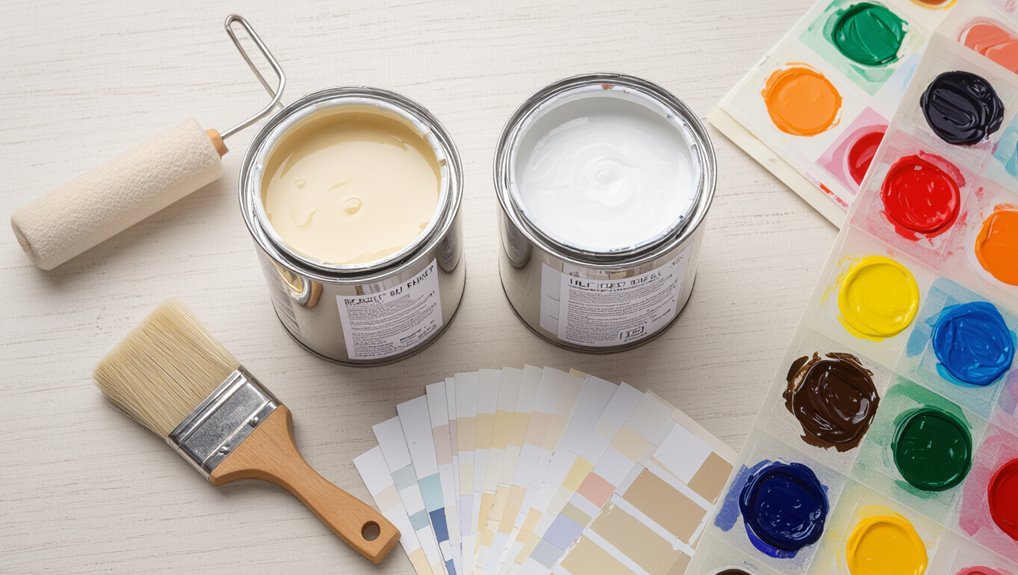
When deciding between eggshell and flat paint, start by matching the finish to the room’s function and wear level: choose eggshell for moderate-traffic areas that need occasional cleaning, and flat for low-traffic spaces where you want to hide surface flaws and reduce glare.
You’ll weigh eggshell characteristics like slight sheen and washability against flat paint benefits such as superior flaw masking and low reflectivity.
Quick Answer: When to Pick Eggshell or Flat?
You’ve already matched finishes to rooms and wear levels; now pick eggshell if you need a bit of durability and easy cleaning without a glossy look, or choose flat when you want to hide imperfections and minimize reflections in low-traffic spaces.
Use eggshell benefits for hallways, living rooms, and kids’ zones; opt for flat paint on adult bedrooms, ceilings, and textured walls where touchups should disappear.
Sheen Levels: What Low Sheen vs Flat Means
When you compare low sheen (like eggshell) to flat finishes, you’ll notice differences in durability and how easy they’re to wipe clean.
Low sheen reflects more light, so it can brighten a room but also makes bumps and imperfections more visible than flat paint.
Think about the room’s traffic and how much you want to hide flaws when choosing between the two.
Durability And Washability
Although both low-sheen and flat paints hide surface imperfections, low-sheen finishes are more durable and easier to clean.
So they’re a better choice for high-traffic areas like hallways, kitchens, and kids’ rooms. You’ll notice improved scuff resistance and better performance in washability tests; flat paint cleans poorly and shows marks.
Light Reflection Differences
Because sheen controls how much light a surface bounces back, low-sheen and flat paints look noticeably different under the same lighting. You’ll see subtle light reflection with low-sheen, while flat absorbs more. For a quick sheen comparison, review the table below to compare appearance, use, and typical rooms.
| Sheen | Light Reflection | Typical Use |
|---|---|---|
| Low-sheen | Moderate | Living rooms |
| Flat | Low | Ceilings |
| Eggshell | Low-moderate | Bedrooms |
| Satin | Higher | Kitchens |
Surface Imperfections Visibility
Noting how different sheens reflect light helps explain why they reveal flaws differently. You’ll notice eggshell’s low sheen highlights surface texture more than flat because it reflects and redirects light, while flat paint’s light absorption masks minor bumps.
Consider these practical points:
- Eggshell shows subtle ridges
- Flat hides tiny imperfections
- Prep matters more with eggshell
- Flat forgives light unevenness
Eggshell Finish: How It Looks in Real Rooms
You’ll notice eggshell’s soft, low-luster appearance gently reflects light without creating glare, making walls look warmer and slightly more dimensional than flat paint.
In living rooms, bedrooms, and hallways, eggshell aesthetics improve room ambiance by offering subtle sheen that hides minor marks yet feels refined.
You’ll see colors deepen and textures become more noticeable, creating cozy, lived-in spaces without shouting for attention.
Flat Finish: Appearance and When It Helps
Flat finish has a low sheen that gives walls a muted, non-reflective look.
It’s great at hiding minor imperfections, so your walls appear smoother from a distance.
Because it’s less durable, you’ll want it in low-traffic areas like bedrooms or formal dining rooms.
Low Sheen, Muted Look
Because it stops light from bouncing off walls, a flat finish gives rooms a muted, velvety look that hides surface flaws and reduces glare.
You’ll appreciate low sheen benefits and muted aesthetics when creating calm spaces.
Consider where to use flat paint:
- Bedrooms for restful mood
- Galleries to focus art
- Media rooms to cut reflections
- Hallways for subtle continuity
Hides Wall Imperfections
If you want walls that look smoother and less distracting, a flat finish will help by masking bumps, hairline cracks, and uneven patching.
You’ll rely on flaw concealment techniques like choosing matte pigments and one-coat coverage to minimize shine.
Consider texture considerations before painting: flatter surfaces benefit most, while heavy textures still show depth, so prep accordingly for ideal results.
Best For Low-Traffic Areas
When you want a soft, non-reflective look in rooms that don’t get much wear, a flat finish is ideal because it hides imperfections and creates a calm, uniform appearance; think bedrooms, formal dining rooms, and adult living spaces where furniture and foot traffic are minimal.
You’ll prefer flat in low traffic rooms for subtle texture and refined aesthetic preferences.
- Hides dents and patchwork
- Reduces glare
- Enhances color depth
- Suits formal spaces
Durability: Eggshell vs Flat (Scuffs & Wear)
Although both finishes hide flaws differently, eggshell is generally tougher against everyday scuffs and light wear than flat paint. You’ll notice better scuff resistance and more forgiving wear patterns with eggshell in hallways and living rooms. Choose flat for low-traffic, decorative walls.
| Finish | Scuff Resistance | Typical Use |
|---|---|---|
| Eggshell | Medium-High | Living areas |
| Flat | Low | Bedrooms |
| Satin | High | Trim |
Cleanability & Stains: Which Wipes Best
When you choose between eggshell and flat, think about how easily you’ll be able to wipe marks away and how well the finish holds up.
Eggshell usually offers higher stain resistance and stands up to gentle scrubbing better, while flat paints show stains more and can be damaged by aggressive cleaning.
Use a soft cloth and mild detergent on eggshell, and spot-clean flats very cautiously to avoid removing pigment.
Wipeability And Durability
If you expect walls to handle fingerprints, scuffs, or kitchen splatters, wipeability becomes a key factor—eggshell finishes are generally more resilient than flat ones.
You’ll weigh wipeability comparison and durability factors when choosing. Consider practical differences:
- Easier to wipe clean
- Better resistance to scrubbing
- Shows minor sheen and wear
- Touch-ups blend more smoothly
Stain Resistance Levels
Think of stain resistance as a continuum: flat paints soak up spills and pigments more readily, while eggshell’s slight sheen helps liquids bead and lets you lift stains with a damp cloth.
You’ll notice eggshell resists marks better and tolerates gentler cleaning methods; flat needs quicker attention and gentler care to avoid spreading stains or damaging texture, affecting long-term appearance.
Cleaning Method Recommendations
Because eggshell has a slight sheen, you can usually wipe away spills with a damp microfiber cloth or gentle all-purpose wipe without dulling the finish.
In contrast, flat paint requires a much softer touch—use a barely-damp cloth or specialty dry-cleaning sponges to lift marks without spreading pigment or flattening the texture.
Use these cleaning techniques and maintenance tips:
- Microfiber for eggshell
- Mild wipes only
- Dry sponges for flat
- Test a hidden spot first
Hiding Flaws: Which Finish Masks Imperfections
Want a paint that hides bumps and brush marks? You’ll prefer flat finishes because their low sheen diffuses light, masking surface irregularities.
Use flaw concealment techniques like thorough surface prep and light sanding, plus paint application tips such as thin, even coats with a quality roller.
Eggshell shows more texture, so pick flat where imperfections matter most.
Touch-Ups & Recoating: Ease of Future Maintenance
When you need to touch up scuffs or recoat a wall, eggshell is generally easier to clean but can show overlap and roller marks more than flat.
So you’ll balance cleanliness against seamless blending; flat hides touch-up edges better but stains more and often needs more aggressive cleaning.
Use these touch up techniques and maintenance tips:
Use these touch-up techniques and maintenance tips: clean first, feather edges, match sheen and roller nap.
- Clean before recoating
- Feather edges with thin coats
- Match sheen, mix cans
- Use same roller nap
Best Rooms for Eggshell: Living Rooms & Trim
In living rooms, you’ll appreciate eggshell’s subtle sheen that keeps walls from looking flat while still feeling soft.
Use it on trim for added durability and easier cleaning without an obvious gloss.
It also helps hide minor imperfections so rooms look polished with minimal effort.
Subtle Sheen For Walls
If you like a soft, sophisticated look that still handles everyday wear, eggshell is a great choice for living rooms and trim.
You’ll enjoy the subtle sheen that lifts color without glare and gently hides minor wall texture.
Use it to create warm, inviting spaces while keeping maintenance easy.
- Comfortable ambiance
- Soft light reflection
- Conceals light flaws
- Easy upkeep
Durable Trim Protection
Pairing eggshell on walls with a slightly tougher finish on trim gives you a cohesive look that holds up where wear happens most. You’ll get durable finishes that resist scuffs, and trim longevity keeps edges crisp. Use eggshell in living rooms and a semi-gloss or satin on trim for easy cleaning and lasting protection.
| Area | Finish |
|---|---|
| Walls | Eggshell |
| Trim | Semi-gloss |
Hides Minor Imperfections
Because eggshell has a low-reflective sheen, it softens wall flaws without calling attention to them, so you’ll get smoother-looking surfaces in living rooms and other low-traffic spaces.
You’ll notice better imperfection concealment than shiny finishes in a quick finish comparison. Use eggshell when you want subtle polish.
- Camouflages small dents
- Minimizes patch work
- Gentle luster for trim
- Ideal for cozy spaces
Best Rooms for Flat: Ceilings & Textured Walls
When you want to hide imperfections or create a soft, understated look, flat paint is ideal for ceilings and heavily textured walls; it soaks into nooks and hides flaws better than shinier finishes. You’ll choose flat for textured ceilings and muted accent walls in bedrooms, living rooms, and low-traffic spaces.
| Room | Why |
|---|---|
| Bedroom | Soft, cozy feel |
| Hallway | Hides flaws |
Primer & Adhesion: Eggshell vs Flat
When prepping surfaces, you’ll find flat paint hides imperfections but often needs a good primer to get proper adhesion.
Eggshell’s slight sheen usually bonds better to painted or primed walls, so you may need less aggressive surface prep.
Consider primer type and coverage to guarantee strong bonding and even finish for either sheen.
Surface Preparation Needs
Although eggshell and flat paints look similar from a distance, they demand different surface prep to stick and finish properly.
You’ll want consistent surface cleaning and attention to wall textures before you paint.
Consider these steps:
- Remove grease and dust thoroughly
- Repair dents and sanding rough spots
- Use a high-quality deglosser on shiny areas
- Clean textured grooves with a stiff brush
Primer Adhesion Strength
After you’ve prepped the surface, the next concern is how well primer will grip eggshell versus flat finishes.
You’ll choose primer types based on sheen and substrate; some formulas bond better to smoother eggshell, others to porous flat.
Perform adhesion testing on small areas to confirm compatibility and avoid peeling.
Proper primer selection prevents failures and guarantees durable paint performance.
Coverage And Bonding
Because eggshell has a slight sheen and flatter paints sit more matte and porous, you’ll see differences in how primer covers and bonds to each finish; eggshell’s smoother surface can make primer lay thinner but adhere tightly, while flat’s texture soaks up more primer for fuller coverage but may need extra coats to build a uniform film.
- Assess coverage consistency.
- Test bonding strength.
- Adjust coat count.
- Choose primer type.
Application Tips: Rollers, Brushes, Technique
One key to getting professional-looking results with eggshell or flat paint is choosing the right tools and using consistent technique.
For roller technique, use a short-nap roller for smooth walls, load evenly, and roll in a “W” pattern to avoid lap marks.
For brush application, use a high-quality angled brush for cutting in, feather edges, and maintain wet edges for seamless blending.
Lighting Effects: How Light Changes Each Finish
Light hitting a wall can make eggshell and flat finishes look completely different: eggshell subtly reflects light and highlights texture, while flat soaks it up and masks imperfections.
You’ll notice lighting angles and reflective properties change perceived depth. Consider how each finish reacts to glare and shadow:
- Emphasizes bumps with side light
- Hides flaws under diffuse light
- Shows sheen near windows
- Softens under low light
Color Perception: Sheen’s Effect on Hue
After seeing how light and texture interact, you’ll notice sheen also changes how a color reads.
You’ll perceive richer, slightly brighter tones on eggshells versus flatter looks on matte surfaces. That sheen impact can alter mood and color psychology in a room, so you should test samples under real light to verify the finish reinforces the desired atmosphere and hue.
Cost Differences: When a Pricier Finish Pays Off
While eggshell often costs a bit more than flat, that higher price can be worth it depending on the room and your goals.
While eggshell may cost more than flat, the extra expense can be worthwhile depending on room and goals.
You should do a cost analysis balancing durability, maintenance, and resale. Consider value perception for buyers or guests.
- High-traffic areas
- Ease of cleaning
- Long-term touch-up costs
- Aesthetic uplift
Common Mistakes Choosing Eggshell vs Flat
Because you want the finish to match the room’s use and look, some common mistakes when choosing eggshell versus flat come from assuming one is always better.
You’ll fall for common misconceptions like thinking flat hides all flaws or eggshell is never washable.
Consider traffic, cleaning needs, and aesthetic preferences instead, then balance durability with desired texture for each space.
Quick Decision Checklist: Pick the Right Finish
If you want a quick way to choose, use this checklist to match finish to function: consider room traffic, how often you’ll clean the walls, how much surface imperfection you need to hide, and whether you prefer a subtle or slightly reflective look.
- High traffic: choose eggshell for durability and easy cleaning.
- Low traffic: pick flat to hide flaws.
- Match finish compatibility with trim and sheen.
- Guarantee color harmony across connected spaces.
When to Call a Pro: Tricky Surfaces and Restorations
When should you call a pro? If you’re facing tricky surfaces like textured plaster, high-moisture areas, or lead-era trim, hire someone experienced.
Pros handle complex prep, matching sheen, and mitigation for restoration challenges such as water damage or historic finishes.
You’ll save time, avoid costly mistakes, and get durable results that respect the surface’s integrity and any preservation requirements.
Frequently Asked Questions
Are Eggshell and Flat Paint Suitable for Exterior Use?
Yes — you can use both, but you’ll favor eggshell for exterior durability and easier cleaning while choosing flat if you want low sheen preference; eggshell resists marks and weather better, while flat hides imperfections more.
How Long Do Eggshell and Flat Paints Take to Fully Cure?
Think of paint slowly waking: eggshell usually cures in 2–4 weeks, flat in about 2–3 weeks; you’ll see full curing time vary with conditions, and finish durability improves as solvents evaporate and polymers crosslink.
Can I Mix Leftover Eggshell With Flat to Adjust Sheen?
Yes—you can mix leftover eggshell with flat for sheen adjustment, but you’ll need to test first: paint compatibility varies by brand and formula, so try a small sample to guarantee uniform finish and proper adhesion.
Do VOC Levels Differ Between Eggshell and Flat Finishes?
Yes — you’ll see slight VOC variations: VOC regulations govern formulations, and eggshell often contains more binders affecting emissions. For a sheen comparison, eggshell’s higher binder content usually raises VOC potential versus flat, so check labels.
Will Mildew-Resistant Additives Work With Both Finishes?
Yes, you can add mildew-resistant additives to both finishes; they’ll boost mildew resistance and improve paint durability, though eggshell’s slight sheen may show cleaner results and withstand cleaning better than flat in humid areas.
Conclusion
You’ve got the tools to pick between eggshell and flat, so trust your gut and the room’s needs. Eggshell works where you want a little sheen and easier cleaning; flat hides flaws and calms busy walls. Don’t overthink small rooms or trim—test a swatch first. If you’re restoring an older home or facing greasy surfaces, call a pro. Like choosing a vinyl record over a smartphone, let feel and function guide you.
