
How to Match Paint on a Wall: Tips for Perfect Color Matching
You can get a near-perfect match by starting with a clean chip or a well-lit photo and bringing it to a store that uses a spectrophotometer or color-matching app. Clean and prep the wall, test swatches in the room’s light, and match sheen and texture for seamless blending. Touch up small spots; repaint if fading or multiple chips appear. Follow simple feathering and testing steps, and keep notes—keep going to learn full step-by-step tips.
Quick Answer: Matching Paint on a Wall
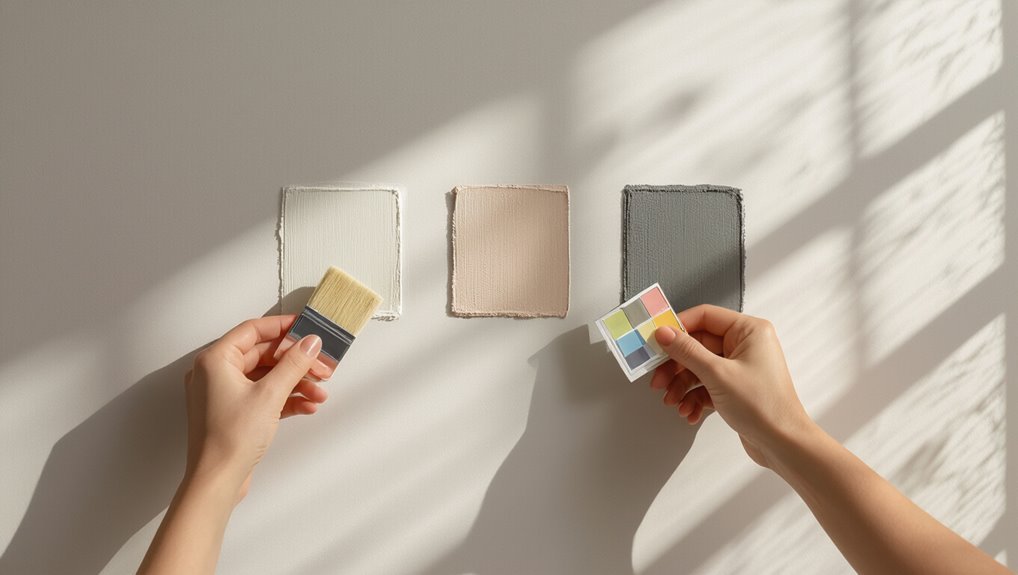
Match the paint by starting with a small sample: peel off a chip from an inconspicuous spot or take a picture in natural light, then use a color-matching app, a paint-store spectrophotometer, or bring the chip to the store for a close match.
You’ll check undertones with color theory, test swatches on the wall, and consider paint layering to replicate sheen and depth before buying.
When to Touch Up vs. Repaint the Whole Wall
Sometimes a small touch-up will do, but when multiple chips, faded areas, or mismatched sheen make the repair obvious, you’ll need to repaint the whole wall.
You’ll weigh touch up techniques against repainting strategies using cost analysis, project timelines, and preparation essentials.
Consider repair methods, finish consistency, and color harmony to restore wall aesthetics and hide surface imperfections effectively.
Simple Step-by-Step Matching Workflow
Start by evaluating the area you need to match: note the paint’s color, sheen, and how much surface you’ll cover.
Then gather a small sample (a paint chip or a removed outlet cover-sized swatch) to use for testing.
Compare samples under different lighting, record notes on color psychology and desired mood, test matching paint finishes, tweak mixes, and confirm dry match before full application.
Surface Prep That Affects Color Match
Once you’ve confirmed a dry match from your samples, prepare the wall so that the new paint sits and looks right.
Remove dust, grease, and loose flakes with proper surface cleaning techniques; rinse and let dry.
Repair holes and sand glossy spots for uniform adhesion.
Consider texture considerations—match or feather edges so the finish reads consistently and the color appears seamless.
How Lighting Changes Affect Perceived Color
Because light alters how pigments reflect, the same paint can look like different colors at different times of day and under different fixtures—so check your match in the room’s actual lighting, including daylight, ambient lamps, and any directional or accent lights. You’ll test color perception across lighting conditions, color temperature, daylight variations, artificial lighting, and shadow effects to judge color context, room ambiance, visual contrast, and color matching.
| Morning | Midday | Evening |
|---|---|---|
| Warm | Neutral | Cool |
| Soft shadows | Bright | Accent lights |
How Paint Sheen Alters Appearance
When you’re matching paint, don’t ignore sheen—gloss level changes how color reads on a wall because it alters light reflection and surface texture.
You’ll notice sheen impact immediately: glossy finishes amplify highlights and deepen tones, while matte effects mute shine and even out color perception.
Consider texture influence when sampling, since light reflection and surface finish together change what you actually see.
How Paint Fades and Ages Over Time
When you’re matching paint, remember that sunlight and UV rays gradually fade colors and can make a patched area stand out.
Pigments break down at different rates, so the original hue may be softer or shifted compared with fresh paint.
Also factor in surface wear and soiling—dirt, abrasion, and grime change how a finish looks even if the color itself hasn’t altered.
Sunlight And UV Exposure
Although it’s often subtle at first, sunlight and UV rays are the main culprits that change a paint’s color and finish over time.
You’ll notice sunlight effects and UV damage cause color fading with prolonged wall exposure.
Watch seasonal changes and light variations—these environmental impacts shorten paint longevity.
To match colors, account for how exposure alters hue and sheen over months and years.
Pigment Breakdown Over Time
Sunlight and UV exposure start the process, but the real change happens at the molecular level as pigments break down.
You’ll notice pigment stability varies by paint formulation, so chemical reactions driven by environmental factors cause color degradation during the aging process.
To preserve color consistency, choose stable formulations and understand how surface interaction and formulation chemistry influence long-term fading and hue shifts.
Surface Wear And Soiling
Everyday contact and grime do more to a painted wall than you might expect: abrasion from hands, furniture, and cleaning, plus airborne dust and oily residues, gradually strip away binder and lift pigments, dulling color and altering sheen.
- You’ll notice surface texture changes reduce color retention.
- Oils deepen localized fading.
- Scuffs expose primer contrast.
- Regular cleaning preserves finish and hue.
Identifying Undertones in Existing Paint
Stand where the wall gets natural light and look at the color at different times of day so you can see any cool or warm hints.
Hold neutral swatches—grays, beiges, and white—next to the wall to spot which undertone shifts the paint leans toward.
Use those observations when you pick matching chips or mix a touch-up.
Examine Paint In Natural Light
When you inspect the painted surface, do it in natural light so you can spot subtle undertones that store swatches and artificial lighting often hide; you’ll notice natural light effects change color perception across the day.
Check these points:
- Observe at morning, noon, evening.
- Look from different angles.
- Shield nearby colored objects.
- Note warm or cool undertones for matching.
Compare Against Neutral Swatches
Want to pinpoint the undertone in your wall paint? Lay a neutral palette of swatches against the wall for visual comparison, using careful swatch placement to control light reflection and color context.
Apply color theory during undertone analysis, noting shade variations across paint finishes. This reveals subtle hues and guarantees color harmony when you match or repaint.
Find the Paint Brand and Color Code on the Can
Curious where to look first?
- Check the can label for brand differences and color code; note paint types and paint finishes.
- Record sheen variations and undertone identification to guarantee color consistency across wall textures.
- Compare sample sizes and consider color fading before buying.
- Keep touch up techniques in mind when matching adjacent areas.
Safely Remove a Small Paint Sample From the Wall
Now that you’ve identified the brand, color code, and finish on the can, it’s time to pull a small paint sample from the wall so you can get an exact match.
Use proper removal tools—a utility knife and thin spatula—cutting neatly to maintain clean edges.
Preserve paint sample pieces for paint preservation, minimize damage to wall integrity, and note repair options before proceeding.
Using Paint Chips and Swatches Effectively
Paint chips and swatches help you judge color under real conditions, so start by collecting several shades that seem close to your target rather than relying on a single sample.
- Use expert advice and DIY techniques to compare complementary colors and color harmony.
- Test chips against seasonal palettes and paint trends for modern aesthetics or vintage finishes.
- Apply design principles to room function.
- Note color psychology effects.
View Swatches Under Different Lighting Conditions
How will the color read in your space? You’ll examine swatch comparison across daylight, warm bulbs, and evening light to track lighting effects and color temperature shifts.
Consider color psychology and hue variations, note shadow effects and reflective surfaces, and judge visual perception under ambient influences.
Stay focused on context awareness so the chosen tone truly suits the room’s mood and function.
Test Small Patches Before Full Application
Before committing to a full coat, apply several small test patches in different areas of the wall so you can see how the color behaves with changing light, texture, and surrounding finishes.
- Use test patching with color samples and paint swatches.
- Do light testing at morning and evening.
- Try paint layering and blending techniques for sheen variations.
- Note surface differences, aging effects, and perform final color evaluation.
Match Paint by Eye: Practical Tips
Now that you’ve tested small patches and seen how light and texture affect the hue, you can start matching paint by eye with more confidence.
Stand back, view under natural and artificial light, and compare adjacent swatches.
Step back, inspect under both natural and artificial light, and compare neighboring swatches for an accurate match
Trust gradual adjustments, tint in small increments, and step away frequently.
Rely on color perception cues and consistent visual matching practices to achieve a seamless blend.
Use a Colorimeter or Spectrophotometer for Precision
If you want pinpoint accuracy, use a colorimeter or spectrophotometer to measure the paint’s color rather than guessing by eye.
Learn how each device works, pick one suited to walls and paint samples, and take multiple readings across the surface to account for lighting and texture.
You’ll then feed those readings to a paint-matching service or mix formula to reproduce the shade precisely.
How These Devices Work
Reach for a colorimeter or spectrophotometer when you want an exact paint match: these devices measure the light reflected from your wall and translate it into precise color data that paint mixers can reproduce.
They use device technology and color science for color matching, spectral data collection, color calibration, and paint analysis with digital tools, assuring measurement accuracy.
- Scan sample
- Capture spectra
- Convert to formulas
- Verify match
Choosing The Right Instrument
Choosing the right instrument matters when you need a precise paint match: a colorimeter gives you quick, reliable color coordinates for straightforward jobs, while a spectrophotometer captures full spectral data for the most accurate matches and complex finishes. You’ll pick based on paint tools, color accuracy, measurement precision, instrument calibration, application techniques, and compatible paint systems.
| Device | Strength | Use |
|---|---|---|
| Colorimeter | Speed | Simple mixes |
| Spectrophotometer | Full data | Complex finishes |
| Portable | Convenience | On-site checks |
| Lab-grade | Ultimate precision | Commercial systems |
Using Readings For Matching
Now that you’ve picked your instrument, use its readings to guide every step of the match: record the device’s color coordinates and spectral data, note the measurement conditions (lighting, angle, substrate), and compare those values to your paint system’s color libraries or formulation software to generate a starting mix.
- Follow sampling methods and testing strategies.
- Use color evaluation and undertone analysis.
- Adjust paint formulas for fading factors and finishes.
- Apply color theory to match perception and matching techniques.
How Paint-Store Color-Matching Machines Work
When you bring a paint chip, swatch, or a small paint sample into a store, the color-matching machine scans it and translates the exact color into measurable data so the dispensers can reproduce it.
You’ll see digital matching guided by color theory and machine calibration; pigment mixing adjusts for paint types, surface texture, environmental factors, color perception, technology advancements, and overall user experience.
When Color-Matching Machines Get It Wrong
Although color-matching machines are precise most of the time, they can still give you a wrong result for a few common reasons.
- Poor sampling techniques skew color analysis and color perception.
- Machine calibration lapses expose machine limitations despite advanced paint technology.
- Different paint formulations and matching techniques affect color consistency.
- Simple color theory gaps — lighting, gloss, substrate — fool automated systems; you’ll double-check visually.
Communicate Clearly With Paint-Store Staff
Want your touch-up to vanish instead of stand out? Tell the paint store what surface, light, and existing finish you have, use precise color terminology, and bring paint samples.
Ask customer service for product recommendations, paint brands, and paint finishes that match. Request expert advice on color accuracy, and get clear shopping tips to guarantee the best match and coverage.
Choosing the Right Tint Base for a Match
When you’re matching paint, choosing the right tint base matters because it determines how pigments blend and how many coats you’ll need.
Check that the base is compatible with any primer you’ve used so the finish and adhesion are consistent.
Ask your paint pro for a base that matches the surface type—water-based for latex, solvent-based for oil—so you don’t get unexpected color or coverage issues.
Tint Base Selection
Picking the right tint base matters because it determines how much pigment the colorant needs and how the final shade will behave on your wall.
You’ll consider tint variations and base choices to match depth and sheen. Pick a base that aligns with your paint type and coverage needs.
- Match opacity
- Match undertone
- Consider sheen
- Check manufacturer limits
Primer Compatibility
Although tint base and primer may seem like separate decisions, they have to work together for a true match: you’ll want a primer whose porosity and tint-holding properties align with the base so the final pigment distributes evenly and the color reads correctly. Choose primer types for adhesion and sealing; consider primer thickness, primer drying and primer finish during primer application for primer benefits.
| Type | Benefit | Drying |
|---|---|---|
| Oil | Sealing | Slow |
| Latex | Adhesion | Fast |
| Shellac | Tint-holding | Quick |
Adjusting for Sheen Differences When Matching
If your new paint matches the color but looks wrong under light, the issue is probably sheen, not hue, and you’ll need to address it before redoing the whole wall.
- Check sheen measurement and perform a quick sheen assessment across samples.
- Note sheen types and sheen variations; observe sheen effects on texture.
- Confirm sheen compatibility with existing finish.
- Factor sheen considerations and sheen importance into your final selection.
Recreate Aged or Sun-Faded Finishes
To recreate an aged or sun-faded finish, you’ll mimic how sunlight and time alter color by selectively lightening or muting areas.
Use layered aging techniques—thin glazes, subtle dry-brushing, and gentle sanding—to build depth and natural wear.
Work gradually and step back often so the effect stays believable.
Simulate Natural Sun-Fading
When you want a wall to look naturally sun-faded, focus on softening the original color, introducing subtle unevenness, and muting contrast so the finish reads as weathered rather than artificially distressed.
- Test sun fading effects on scrap pieces for accurate color simulation.
- Thin topcoat to reduce gloss and soften hues.
- Apply translucent washes sparingly where sun hits most.
- Feather edges to avoid hard lines and keep shifts organic.
Layered Aging Techniques
Although layered aging looks complex, you can recreate believable sun-faded and timeworn finishes by building thin, varied glazes and selectively abrading top layers.
Start with a base, add translucent tinted glazes to suggest depth, then sand or scrape selectively to expose underlayers.
Vary glaze opacity and direction to mimic natural wear; test small patches until layered finishes and aging effects match the surrounding wall.
Blend a Touch-Up So Seams Are Invisible
If you want the repair to disappear, feather the new paint into the old so the edges dissolve instead of standing out.
Use careful color blending techniques and thin coats for seamless touch ups.
Use careful color blending and thin, controlled coats to make touch-ups disappear for a seamless finish.
Work from the center outward, blend wet edges, and match sheen.
- Thin coats
- Work outward
- Blend wet edges
- Match sheen
Feathering and Glazing Techniques for Repairs
When you feather the edges of a repair, you’ll soften the changeover so it disappears into the surrounding paint.
Use glazing to add subtle color depth and bring the tone of the patch in line with the wall.
Keep your brush strokes light and blended so texture and sheen match the original finish.
Feathering To Soften Edges
Since touch-ups often leave a visible ridge or color shift, you’ll want to feather the repair so the new paint blends into the old.
- Use feathering techniques to thin brush strokes for edge blending.
- Apply light paint layering to create subtle color gradation.
- Employ touch up methods that focus on softening shifts, not full coverage.
- Work outward from the patch for seamless repairs and consistent blending edges.
Glazing For Color Depth
Although feathering softens edges, glazing adds subtle depth that makes the repaired area harmonize with the surrounding wall; you’ll apply thin translucent layers, using glazing techniques to adjust tone without hiding texture.
Work in small sections, let each layer dry, and build color slowly.
Color layering lets you fine-tune warmth and saturation so the patch reads like the original paint.
Blending Brush Strokes
After glazing builds the right tone, you’ll focus on blending brush strokes so the repair disappears into the wall’s finish.
Use feathering and thin glazes, matching texture and sheen. Prioritize proper brush selection and light pressure. Practice edges until seamless.
- Feather outward
- Thin glazes
- Soft-bristle brush
- Match texture and sheen
How Much Paint to Buy for Touch-Ups vs. Repaint
Decide whether you need a little or a lot: touch-ups usually require just a few ounces to a pint of paint, while a full repaint often needs a gallon or more per room. Pick based on damage size, aging, and finish. Consider paint quantity and touch up strategies to save cost and match sheen.
| Area | Amount | Tip |
|---|---|---|
| Small chip | Ounces | Blend edges |
| Scuff | Pint | Feather carefully |
| Whole room | Gallon+ | Buy extra |
Best Brushes and Rollers for Seamless Touch-Ups
When you’re matching paint, choosing the right brush—synthetic for latex, natural for oil—is key to getting clean edges and a smooth finish.
Pick a roller cover nap based on your wall texture: short nap for smooth walls, medium for lightly textured surfaces.
With the proper brush and roller combo, your touch-ups will blend in with the surrounding paint.
Brush Types Explained
Choosing the right brush or roller makes matching paint on a wall far easier, since each tool lays down color and texture differently and can hide—or reveal—subtle differences.
- Learn brush bristle types and brush material options for finish control.
- Match brush size selection to patch size.
- Use brush application techniques and brush stroke methods consistently.
- Follow brush care tips and brush cleaning methods; adopt practical brush usage tips.
Roller Cover Selection
A thin-nap roller for smooth walls and a medium-nap (3/8″–1/2″) for lightly textured surfaces will give you the cleanest, most consistent touch-ups, so pick the nap that matches the wall texture and the paint sheen. Choose roller cover materials for oil or latex, match roller nap thickness to texture, and use a small frame for precise blending.
| Material | Nap | Best use |
|---|---|---|
| Foam | 1/8″ | Smooth |
| Synthetic | 3/8″ | Light texture |
| Wool | 1/2″ | Rough surfaces |
Primer Choices and How They Change Color
Primer choice affects both coverage and the final hue, so pick one that matches the surface and your color goals.
- Consider primer types: latex for general use, oil for stain blocking and adhesion properties.
- Match surface compatibility and primer purpose to guarantee primer coverage and moisture resistance.
- Adjust application methods to control color effects and drying times.
- Test small areas to confirm finish and adhesion.
Matching Textured Surfaces (Popcorn, Knockdown)
Matching textured surfaces like popcorn or knockdown takes more than color-matching; you’ll need to replicate the texture’s depth, pattern, and sheen so the patched or repainted area blends seamlessly with the surrounding ceiling or wall.
You’ll match spray patterns, use texture compounds, and feather edges. Test samples, adjust nozzle settings, and practice repair techniques until the textured finishes align visually and tactilely with the original.
Match Trim, Doors, and Cabinets to Wall Paint
Think about how much contrast you want between your trim, doors, and the walls—you can make trim pop with bright white or soften the look with a subtle off-white.
If your cabinets sit against the same wall color, either match them for a seamless feel or choose a coordinating shade to define the cabinetry.
You’ll want to test samples together in the room to see how light changes the relationship between surfaces.
Trim And Wall Contrast
When you’re choosing wall paint, consider how trim, doors, and cabinets will either blend in or stand out—contrasting trim can frame a room and add crisp definition, while a coordinated tone creates a seamless, calm look.
- Use trim styles to enhance architectural styles.
- Balance color contrast with finish types for visual balance.
- Select accent colors mindful of color psychology and texture differences.
- Coordinate with wall patterns for design cohesion.
Matching Cabinets With Walls
Trim choices naturally lead you to contemplate cabinets and doors, since their finishes can either echo the trim for a cohesive look or offer contrast for definition.
You’ll weigh cabinet colors for design harmony or deliberate style contrast, consider finish types and texture differences, apply color psychology, check material considerations, and test samples.
Prioritize brand selection and consistent lighting to confirm the final match.
Dealing With Color Shifts Between Rooms
Because light and surrounding surfaces change how paint reads, you’ll often see the same color look different from room to room; that’s normal and manageable.
- Assess color psychology and mood influences per room.
- Use adjacent hues and complementary colors for visual shifts.
- Consider wall textures and spatial perception when sampling.
- Aim for room cohesion, design flow and color harmonies to tie spaces together.
Match Paint Across Different Brands
Although different brands mix pigments and binders differently, you can still get a near-perfect match by relying on color codes, sample swatches, and a bit of testing.
Use color theory and color psychology to guide brand comparison and color palettes.
Check paint consistency and finish variations, employ expert techniques and precise application methods, do sample testing on-site, and note restoration tips for future touch-ups.
Mix Small Custom Batches at Home
Now that you’ve narrowed a matching shade across brands and tested samples, you can mix small custom batches at home to fine-tune hue and finish.
- Gather base paints, tints, and measuring spoons.
- Record ratios for repeatable custom paint mixtures.
- Stir small jars thoroughly; label with date and formula.
- Compare samples under room lighting for true home color blending.
Safely Lighten or Darken a Matched Color
Once you have a matched color, you can safely lighten it by adding small amounts of pure white or a tint base and testing each step.
To darken, mix in measured drops of the appropriate colorant—usually black, brown, or a complementary hue—and check under the same lighting as the wall.
Keep records of proportions so you can replicate or undo changes without guessing.
Lightening Matched Paint Safely
If your matched paint is slightly too dark or bright for the room, you can safely adjust it by tinting in small, controlled amounts rather than guessing with big pours.
- Use tested lightening techniques: add tiny reducer or white tint.
- Stir thoroughly between drops.
- Test on a poster board and dry.
- Record exact additions for repeatable, safe methods.
Darkening Matched Color Properly
When a matched paint reads too pale or washed out after testing, you can safely darken it by adding colorant in very small, measured increments rather than pouring in large amounts.
Start with tiny drops, mix thoroughly, and test on a sample card.
Use systematic darkening techniques, record additions, and allow drying to judge true color depth before adding more so you don’t overshoot.
Troubleshooting Common Mismatch Problems
Although a close color match often solves the problem, you’ll still run into common mismatches caused by sheen differences, faded original paint, or uneven application—so start by identifying whether the issue is color, sheen, or texture.
- Check color perception under varied light.
- Compare sheen levels and recoat if needed.
- Sand smooth to reduce texture variations.
- Feather edges and blend thin layers until seamless.
When to Call a Professional Color-Matcher
Sometimes the mismatch issues you’ve tried fixing at home — like stubborn sheen differences, noticeable fading, or uneven texture — point to problems a handheld sample or DIY adjustments won’t fully resolve.
Cost Tradeoffs: Matching vs. Full Repaint
You can save money now by matching a small damaged area instead of repainting the whole room.
But think about long-term value—a full repaint can improve durability, uniformity, and resale appeal that patching won’t.
Weigh the immediate savings against future costs and how permanent you want the fix to be.
Short-Term Cost Savings
When you match paint for a small patch, you’ll usually spend less money up front than you’d on a full repaint because you only buy a small quantity and spend less time prepping and painting.
You can save by applying short term budgeting and DIY techniques. Consider:
- Buying sample-size paint
- Using leftover cans
- Spot-priming only damaged areas
- Limiting labor time
Long-Term Value Considerations
Although matching a small area can cut immediate costs, think about how that choice affects your wall’s look and maintenance over years.
You’ll weigh short-term savings against long term durability and color longevity. Spot repairs may save money now but can show uneven aging, requiring touch-ups.
A full repaint guarantees uniform finish, better protection, and fewer interventions over time, often proving more cost-effective.
Documenting Matched Colors for Future Touch-Ups
Before you put away your brushes, record the matched color’s key details so future touch-ups blend seamlessly.
Keep clear color documentation and a simple kit for future reference.
- Paint brand, formula, and batch number.
- Exact color code (RGB/HEX or manufacturer chip).
- Date, room, and wall section photographed.
- Small labeled sample swatch stored with touch-up brush.
Seasonal and Time-of-Day Checks to Verify a Match
Once you’ve logged the color details and set aside a swatch, check the match under the actual lighting conditions the wall will see.
You’ll compare seasonal lighting and time of day variations to gauge color perception shifts. Observe natural light, shadow effects, and daylight adjustments across seasonal changes.
Note environmental influences like nearby foliage or reflective surfaces so the match stays consistent.
Test Match Durability and Cleanability
Start by subjecting your swatch and a small painted test area to the kinds of wear and cleaning they’ll face—rub the surface with a damp cloth, try a gentle scrub with mild detergent, and let it dry to see if the color or sheen shifts.
Test a swatch and small painted area—rub, gently scrub with mild detergent, dry, and check for color or sheen changes.
- Check abrasion resistance for durability testing.
- Note colorfastness after drying.
- Perform a cleanability assessment with common cleaners.
- Record results and repeat if needed.
Eco-Friendly and Low-VOC Touch-Up Options
When you touch up paint, choose low‑VOC formulas to keep indoor air healthier and reduce fumes.
Pair them with eco‑friendly application methods like reusable brushes, washable rollers, and minimal masking to cut waste.
These small choices help you match color without compromising air quality or the planet.
Low‑VOC Paint Choices
Although you want the color to match perfectly, choosing a low‑VOC or eco‑friendly touch‑up paint lets you fix small blemishes without sacrificing indoor air quality.
- Pick eco friendly options from reputable, eco conscious brands.
- Note low voc benefits: reduced odors and improved health impacts.
- Favor sustainable choices and green alternatives with safe materials.
- Factor environmental considerations and label transparency when buying.
Eco‑Friendly Application Methods
Having picked a low‑VOC touch‑up paint, you’ll want to apply it in ways that keep indoor air quality and waste to a minimum.
Use eco friendly tools and sustainable materials like brushes with natural finishes, recyclable trays, and non toxic options for cleaners.
Favor biodegradable paints or those with organic pigments, adopt low impact methods, and follow green practices to reduce waste and indoor emissions.
Use Smartphone Apps for Preliminary Matches
If you want a quick, handy starting point, use smartphone color-matching apps to get preliminary paint codes and close swatches.
You’ll leverage smartphone technology for fast scans, but test samples for true color accuracy.
Try these steps:
- Scan the wall in natural light.
- Save multiple swatches.
- Compare brand palettes.
- Order small test pots before committing.
Tips for Rentals and Historic Homes
When you’re matching paint in a rental or historic home, prioritize reversible, noninvasive methods that protect surfaces and comply with rules or preservation guidelines. You should check rental restrictions, consult preservation officers for historic preservation advice, sample discreetly, document originals, and use removable swatches.
| Step | Action |
|---|---|
| 1 | Check rules |
| 2 | Consult pros |
| 3 | Sample small |
| 4 | Document color |
| 5 | Use removable swatches |
Mistakes to Avoid When Matching Wall Paint
Because lighting, finish, and undertones can trick even experienced DIYers, you should avoid assumptions and rushed fixes when matching wall paint.
Don’t rush paint matching—consider lighting, finish, and undertones before assuming you’ve found the right color.
- Ignore color perception shifts from environmental factors and lighting.
- Overlook paint consistency or mismatched paint formulas.
- Use poor application techniques that highlight surface texture.
- Neglect color psychology and aesthetic harmony; test swatches first.
Quick Checklist to Get a Seamless Paint Match
You’ve learned what can go wrong; now use a compact checklist to avoid those pitfalls and get a near-invisible repair.
Inspect under natural light, save a sample, and test nearby. Match sheen and consider color psychology for room mood.
Stir and thin per label, feather edges, and apply thin coats. Confirm paint durability for high-traffic areas before finishing.
Resources and Next Steps (Tools, Stores, Pros)
Before you head to the store, gather a simple kit: a small sample of the old paint (or a scraped chip), a damp cloth, a notepad for jotting sheen and finish, a tester pot, and a few basic tools like a putty knife, sandpaper (120–220 grit), and a mini roller.
- Use paint matching tools and color matching apps.
- Visit local paint stores for paint sample kits.
- Consider professional services and expert consultations.
- Ask about paint finish options and color analysis techniques.
Frequently Asked Questions
Can Wallpaper Samples Help Match Paint Color Accurately?
Yes — you can, though they’re not foolproof: like a painter trusting sketches, use wallpaper samples alongside color swatches and check under different lighting conditions, because texture and sheen can shift perceived hue considerably.
How Do Humidity and Recent Painting Affect Color Matching?
Humidity effects can alter drying and sheen, so you’ll see color shifts; recent painting and painting techniques—like brushing versus rolling—change texture and gloss, so you’ll compare samples after full cure under similar humidity for accurate matching.
Can Pets or Smoke Residues Alter Perceived Paint Color?
Like a fog, residues from pets or smoke will change color perception and residue impact: you’ll see dulled, yellowed, or grimy tones; you’ll need thorough cleaning or primer since surface contamination actively alters how paint appears.
Is It Possible to Match Paint on Exterior Stucco Reliably?
Yes — you can reliably match exterior stucco, but you’ll need to account for stucco texture and color fading; you’ll sample, use spectrophotometer or tinting, and test patches under varying light to guarantee close, durable matches.
How Long Should Newly Applied Touch-Up Paint Cure Before Re-Evaluating?
Wait 24–72 hours before re-evaluating touch-up paint; some colors and finishes need up to a week for full color drying. You’ll use touch up techniques gently, evaluating under consistent light to confirm match.
Conclusion
You’ve got the tools and know-how to match paint like a pro, so don’t sweat small imperfections. Try a test patch, adjust for lighting, and remember: measure twice, cut once—planning saves headaches. If touch-ups won’t blend, repainting may be the smarter choice. Stay patient, prep surfaces, and keep samples handy. With these tips, you’ll get a seamless finish that looks intentional and lasts.
