
Can You Mix Exterior and Interior Paint
You can mix exterior and interior paint for tiny touch-ups, but you shouldn’t assume it’s safe long-term because their binders, additives, and VOC levels differ. Test a small hidden patch first for adhesion, color, and finish; watch for peeling, cracking, or odd sheen. Use small documented batches if you must, and prefer matched formulas or a universal primer instead. Keep ventilation and proper labeling, and keep going to learn which choices avoid common failures.
Quick Answer: Can You Mix Exterior and Interior Paint?
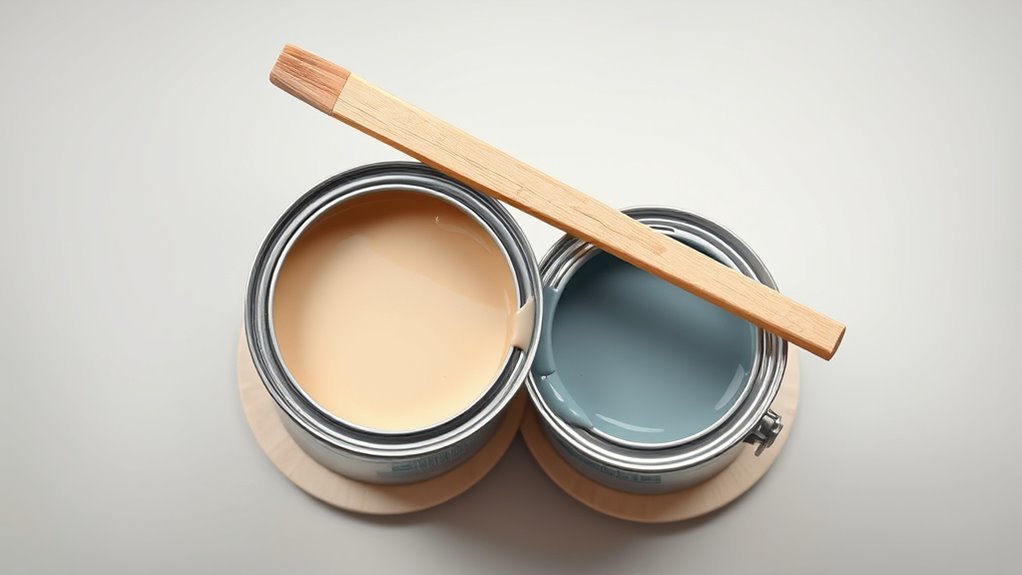
Even though both exterior and interior paints look similar, you shouldn’t mix them without careful consideration; they’re formulated for different environments.
Even if they appear alike, don’t mix interior and exterior paints—test compatibility first and prefer the correct type.
You can technically blend small amounts for temporary touch-ups, but you shouldn’t rely on mixed batches for long-term use. Test a sample first for adhesion and finish, and check for compatibility on the label.
Use proper color matching to maintain appearance, and mark mixed cans clearly. Store leftovers separately and follow paint storage guidelines to prevent contamination.
When in doubt, buy the correct type or consult a pro—mixing can save money now but cost you maintenance later.
Why Interior and Exterior Paints Differ
You’ll notice interior and exterior paints are made for different needs — exterior formulas focus on durability and weatherproofing while interior ones prioritize low odor and VOC control.
The binders, additives, and pigments are adjusted so each performs where you use it. That’s why mixing them can change drying, longevity, and indoor air quality.
Different Formulation Needs
Because exterior and interior environments expose paint to very different stresses, manufacturers formulate them with distinct resins, pigments, and additives to meet those demands. You’ll notice interior paints prioritize low odor, easy cleaning, Color matching precision, and smooth Texture blending, while exterior formulas focus on adhesion and UV-stable pigments. Choose the right chemistry for the job—you’ll avoid finish problems and maintenance headaches.
| Interior Focus | Exterior Focus |
|---|---|
| Low VOCs | UV stability |
| Easy washability | Flexibility |
| Fine pigments | Fade resistance |
Durability And Weatherproofing
When surfaces face sun, rain, freeze-thaw cycles, and abrasive wind, exterior paints are engineered to hold up where interior coatings would fail; they use tougher binders, flexible resins, and milder pigments that resist UV breakdown and cracking so your siding, trim, and decks stay protected.
You’ll choose exterior formulas for elasticity and water-shedding properties, while interior paints prioritize washability and finish.
Mixing reduces durability, so don’t expect exterior-level weatherproofing from an interior blend.
For repairs, match color matching and texture blending carefully, but stick with proper exterior products where exposure demands long-term protection and resilience.
VOCs And Odor Control
Although both kinds of paint release volatile organic compounds, interior formulas are specifically designed to minimize VOCs and smell so you won’t have to evacuate the room or wait days for the odor to dissipate.
You’ll find low‑VOC interior options and variants using eco-friendly pigments that reduce off‑gassing and health risks.
Exterior paints prioritize durability and sometimes use stronger solvents to resist weather, so their fumes persist longer.
If you mix them, you risk higher odor and indoor air pollution.
Also note textured finishes can trap solvents, prolonging smell.
Always choose products labeled for interior use to protect indoor air quality.
How Paint Ingredients Change Performance
How do the ingredients in paint actually change its performance? You’ll notice additives, binders, and pigments directly affect durability, adhesion, and problems like color bleeding or finish inconsistency. Know what each component does so you don’t get surprised.
Know paint ingredients—binders, pigments, additives—shape durability, adhesion, drying, and finish; mismatched formulas cause problems.
- Thick binder: improves adhesion, resists peeling
- Solvent level: controls drying speed and odor
- Pigment density: alters hiding power and hue
- Fillers: change texture and sheen
- Additives: boost mildew resistance or UV stability
Read labels: mismatched formulas can weaken protection, reduce flexibility, and shorten lifespan if you mix without considering chemistry.
When Mixed Paints Can Look Fine at First
You might notice a mixed exterior/interior paint looks fine right away because the finish and sheen match your expectations.
For a while adhesion can seem perfectly adequate, so the job feels solid.
Color uniformity may hold up initially, giving you no immediate warning signs that incompatibility could cause problems later.
Initial Appearance Matches
When you first roll or spray a freshly mixed interior and exterior paint together, the color and sheen can seem to match perfectly, so it’s easy to assume the job is done. You notice Color blending and Finish matching at once, and that quick visual harmony can reassure you.
Still, trust only what you can observe over time. Picture the immediate effect:
- a seamless wall under bright light
- a uniform sheen across trim and body
- a wet surface reflecting lamps
- a blended edge between rooms
- a smooth, even stroke from your brush
That instant match doesn’t guarantee long-term uniformity.
Short-Term Adhesion OK
Although the paint may look and feel solid right after application, mixed interior and exterior formulas can simply be masking compatibility issues that show up later. You’ll notice good short-term adhesion when solvents blend, binders temporarily tack, and surfaces accept pigment, giving initial color coordination and apparent aesthetic harmony. That early success can tempt you to skip testing, but it’s not a guarantee. Track curing, movement, and exposure to moisture or sunlight; failures often appear after stress. Use a small patch trial and monitor for days to weeks to confirm true adhesion before committing to large areas.
| Observation | What to watch for |
|---|---|
| Tackiness | Surface remains sticky |
| Cracking | Fine lines appear |
| Blistering | Raised bubbles form |
| Peeling | Edges lift away |
| Sheen change | Gloss shifts unevenly |
Color Uniformity Maintained
Short-term adhesion issues aside, mixed interior and exterior paints can still produce a visually uniform color at first because their pigments and base solvents often blend smoothly, giving you an even hue and consistent sheen across surfaces.
You’ll notice Color consistency and apparent Finish uniformity immediately, but that initial harmony can be deceptive. Keep an eye on changes over weeks.
Visual cues hint at future problems:
- a seamless wall under daylight
- subtle shift near trim
- identical gloss on test patches
- fading faster in sun-exposed spots
- small cracks revealing underlying layers
Test samples and monitor to confirm long-term performance.
Real Risks: Peeling, Cracking, Mildew, VOCs
If you mix interior and exterior paints, you can create a mismatch in flexibility, adhesion, and moisture resistance that leads to peeling, cracking, mildew growth, and higher VOC exposure. You’ll struggle with color matching and texture blending as surfaces respond differently; coatings that cure outside may trap moisture indoors, inviting mildew and fast failure. VOC levels can spike if exterior formulas use stronger solvents. That harms air quality and your comfort. Consider this emotional table of risks:
| Risk | Feeling | Outcome |
|---|---|---|
| Peeling | Frustration | Visible damage |
| Cracking | Anxiety | Structural worry |
| Mildew | Disgust | Health risk |
| VOCs | Unease | Poor air quality |
Surface Types and Mixing Decisions
When deciding whether to mix interior and exterior paints, consider the surface you’re coating—wood, metal, masonry, drywall, and previously painted finishes each demand different adhesion, flexibility, and moisture control.
You’ll weigh adhesion and flexibility first: exterior formulas add binders for movement, interior paints aim for smooth drywall. Think about color matching and finish consistency—mixed batches can shift sheen or tint.
Picture the surface:
- Weathered wood with grain and old sealant
- Rusty metal with flaking primer
- Porous masonry that soaks pigment
- Smooth drywall needing flat finish
- Glossy lacquered trim resisting new coats
Match type, not just color.
Outdoor Exposure: Weather, UV, and Moisture
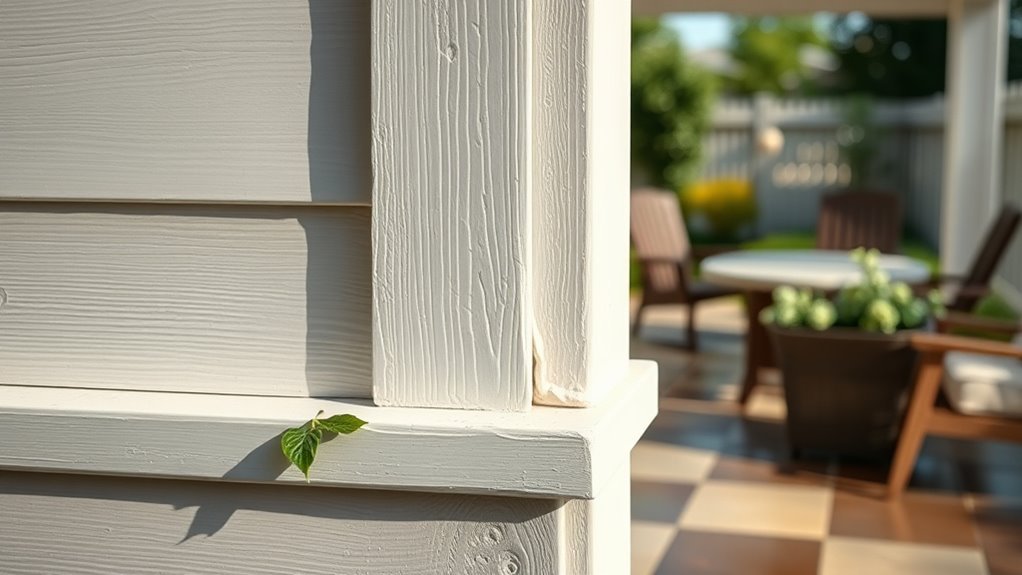
When you paint an exterior surface, UV radiation can break down pigments and binders, fading color and weakening the film over time.
You’ll also face water ingress risks—moisture can swell substrates and cause peeling if the coating isn’t formulated for wet conditions.
And temperature swings make materials expand and contract, so coatings need flexibility to avoid cracking and loss of adhesion.
UV Radiation Effects
Although paint’s chemistry fights dirt and moisture, UV radiation attacks its color and binders relentlessly outdoors. You’ll notice fading, chalking, and loss of gloss sooner if you mix products with different UV resistance; color consistency suffers and paint branding claims won’t hold.
Choose exterior-rated formulas or matched brands to preserve finish and warranties. Inspect coatings regularly and refresh as needed.
Visualize UV effects:
- Sun-bleached siding losing saturation
- Cracked trim where binders weakened
- Powdery surface from chalking
- Dull porch rail lacking gloss
- Patchy sections with mismatched sheen
Preventive choice beats frequent touch-ups.
Water Ingress Risks
Because outdoor exposures combine weather, UV, and moisture, mixed-use paints can let water find weak points and cause premature coating failure. You’ll notice seepage at seams, nail holes, and substrate joints if the formulation lacks proper water repellency.
That moisture provokes blistering, peeling, and mold growth, undermining adhesion and altering color psychology as hues darken or stain. You shouldn’t rely on interior-grade binders outdoors; select exterior-rated products and prep surfaces thoroughly.
Also mind paint storage: contaminated or frozen cans compromise sealants, raising ingress risk. Address drainage, flashing, and ventilation to keep water moving away from painted surfaces.
Temperature And Expansion
If temperatures swing widely, the materials your paint covers expand and contract at different rates, and mixed interior/exterior formulas won’t always accommodate those movements. You risk cracking, peeling, and loss of adhesion when coatings can’t follow thermal cycles.
Prioritize Color consistency and Texture matching to keep surfaces uniform as they flex.
Visualize the strain:
- Sun-warmed siding rippling under heat
- Frost-tight window trim tightening at night
- Paint seams opening near rooflines
- Faded patches where UV and expansion meet
- Bubbling around nail heads with moisture ingress
Choose paints rated for exterior thermal movement to avoid failures.
Indoor Air Quality and VOC Concerns
When you bring exterior paint indoors, you can introduce higher levels of volatile organic compounds (VOCs) that worsen indoor air quality and can trigger headaches, eye irritation, or respiratory issues.
You should check product labels for VOC emissions and choose lower-VOC options when possible. During and after application, boost ventilation and run air filtration to reduce lingering fumes.
Keep occupants, pets, and food away until smells fade and readings drop. Consider portable monitors to track VOC levels if someone is sensitive.
Prioritize interior-grade paints designed for living spaces to minimize health risks and speed recovery of healthy indoor air.
Compatible Families: Latex vs. Oil
Although both latex (water-based) and oil (alkyd) paints can cover walls, they’re different chemical families with distinct primers, drying behaviors, and cleanup methods, so you shouldn’t assume they’re interchangeable. You need to know how each handles adhesion, flexibility, and VOCs before combining them.
Consider visual goals like Color blending and Finish matching, but prioritize compatibility.
Consider color blending and finish matching, but always put material compatibility first for durable, consistent results
- Smooth satin latex drying quickly
- Glossy oil resisting moisture
- Chalky primers sealing porous surfaces
- Flexible latex expanding with temperature
- Hardened oil forming a rigid film
If you mix without proper prep, you’ll risk cracking, poor adhesion, or uneven sheen.
How to Test Paint Compatibility
Before you commit to mixing, spot test a small hidden area to see how the paints react.
Check the paint labels for base type and curing instructions, then observe adhesion and drying over 24–48 hours.
If you see bubbling, peeling, or uneven drying, don’t mix those paints.
Spot Test Small Area
How do you know two paints will play nice? You’ll spot test a small area first. Choose a hidden corner, clean it, and apply tiny swatches of each paint side by side. Note color matching and any sheen differences; record paint branding for reference. Wait full drying time, then inspect for adhesion, cracking, or bleeding.
- small corner behind furniture
- fingertip-sized swatch of exterior paint
- matching interior patch beside it
- label notes: sheen, brand, date
- gentle scuff and water dab test
If layers separate or color shifts, don’t mix them — choose one compatible product.
Check Paint Labels
Want to know if two paints will work together without guessing? Check paint labels first: you’ll confirm base type (water/solvent), sheen, and recommended uses. Look for Color matching notes and matching codes; paint branding often dictates formula compatibility. If labels share brand and base, mixing’s safer. If not, note VOCs and additives listed.
| Label item | What to check |
|---|---|
| Base type | Water vs solvent |
| Color code | Exact match matters |
| Usage | Interior/exterior specified |
Keep labels handy when buying; bring swatches for store advice and avoid surprises.
Adhesion And Drying
Curious whether two paints will stick and dry together? You’ll test adhesion and drying before mixing interior and exterior cans. Use small trials, note drying time, and consider Color matching and Paint storage history. Prepare a clean panel, apply stripes, and wait.
- A taped edge to check lifting
- A scuff-sanded patch to mimic wear
- A humidity-controlled corner for realistic drying
- A timed swipe to observe tackiness
- A daylight check for color shift
If films crack, peel, or dry unevenly, don’t combine them. Record results and label cans; proper Paint storage affects outcomes.
If You Must Blend: Safe Ratios & Methods
If you absolutely must blend exterior and interior paint, stick to small test batches and conservative ratios so you don’t compromise adhesion or durability. Start with 90% interior to 10% exterior, or vice versa, and note color matching and paint branding to keep formulas consistent. Test on scrap and cure fully before committing.
| Ratio | Use case |
|---|---|
| 90/10 | Minor tinting, low exposure |
| 80/20 | Slightly higher protection need |
| 70/30 | Only for short-term fixes |
Record mixing steps and batch numbers so you can replicate or revert if results differ.
How Mixing Affects Adhesion and Durability
When you mix exterior and interior paints, you change more than color—you alter adhesion, flexibility, and weather resistance in ways that can make the finish fail prematurely.
You’ll affect Color blending and Finish consistency, creating a coating that may not bond or flex as meant. That mismatch reduces longevity, especially where temperature and moisture vary.
Consider how different formulations behave:
- A stiffer exterior base on interior trim can crack.
- A softer interior binder outdoors will sag.
- Additives may repel or attract moisture.
- VOC and cure differences change film formation.
- UV resistance gaps accelerate breakdown.
Test small areas before committing.
Signs Mixed Paint Is Failing (and Fixes)
Because mixed interior and exterior paints don’t cure the same way, you’ll usually spot problems early—peeling, cracking, sagging, discoloration, or a sticky finish are the most common signs. Check areas, note texture and odor, and test adhesion with tape. For color blending or paint matching issues, repaint small swatches to confirm compatibility before full fixes. Use primer and the correct topcoat to repair failed spots. If widespread, strip and repaint with appropriate interior or exterior formulations.
| Symptom | Quick Fix |
|---|---|
| Peeling | Scrape, sand, prime |
| Sticky finish | Clean, dry, topcoat |
| Discoloration | Test swatch |
| Cracking | Fill, sand, repaint |
Better Alternatives to Mixing Paints
Although mixing interior and exterior paints can seem like a quick fix, there are safer, more reliable alternatives you should consider. You want true color matching and finish consistency without risky blends.
Try these practical options to keep results predictable and durable:
- Purchase manufacturer-matched interior/exterior samples to compare in light.
- Use a professional color-matching service at the store for exact tones.
- Select a universal primer to unify surface porosity and adhesion.
- Choose separate interior and exterior formulations for their specific durability.
- Test small patches to confirm sheen and color before committing to full coverage.
These steps preserve performance and appearance.
Choosing the Right Paint Instead of Mixing
Want a reliable finish that lasts without guessing at blends? Pick paint formulated for the surface and exposure instead of mixing types. You’ll get proper adhesion, weather resistance, and consistent sheen.
Consider color psychology to choose hues that suit purpose—calming tones for bedrooms, energetic shades for entryways—rather than altering paint chemistry.
Match paint texture to function: flat for hiding imperfections, satin for durability in high-traffic areas, semi-gloss for trim and moisture-prone spots.
Check labels for exterior or interior ratings, VOC levels, and recommended primers. Choosing right-first-time saves time, avoids failures, and delivers predictable, long-lasting results.
When to Call a Pro or Repaint
If you’re facing widespread peeling, persistent mildew, or structural damage to siding or trim, call a pro—these issues often need specialized repairs and tools you likely don’t have.
You should repaint when damage, fading, or mismatched sheen undermines protection or curb appeal. A pro helps with color blending and finish matching across surfaces, and you’ll avoid adhesion or longevity problems.
- Flaky paint exposing bare wood
- Large mildew patches despite cleaning
- Cracked caulk or rotted trim
- Noticeable color drift between panels
- Uneven gloss across the facade
Hire pros for diagnostics, repairs, and lasting results.
Pre-Paint Checklist for Leftover or Mixed Cans
After you decide whether to hire a pro or tackle the job yourself, check any leftover or mixed cans before opening day. Inspect labels for type, sheen, and batch numbers; mismatched batches can ruin color matching and finish consistency.
Shake and stir thoroughly, then strain into a clean container to remove skin or debris. Smell for mildew or solvent off-odors that indicate spoilage.
Test a small swatch on cardboard and let it dry—compare hue and sheen in different light. Note viscosity; thin or separated paint may need a manufacturer’s additive.
Label cans with date, room, and results before storing.
Frequently Asked Questions
Can Mixing Paints Change the Color Temperature Over Time?
Yes — mixing paints can shift color temperature over time. You’ll risk color consistency if pigment stability differs between formulas; unstable pigments, UV exposure, or binder reactions will gradually alter hue, so test and use compatible, stable paints.
Will Mixed Paints Affect Fire Resistance Ratings?
Yes — you shouldn’t assume safety: mixing paints can alter fire safety and coating durability, can weaken tested flame-retardant properties, and can void ratings, so you’ll need certified products or lab testing to be sure.
Can I Mix Paint Brands Safely?
Yes — you can, but you’ll need to check paint compatibility and expect potential color consistency issues; test a small batch, stir thoroughly, and guarantee similar base types (both water- or solvent-based) to avoid adhesion or finish problems.
Does Mixing Paints Impact Warranty Coverage From Manufacturers?
Yes — mixing paints can void warranties because manufacturers require approved Paint compatibility and application. You’ll lose coverage if formulations differ or color consistency issues arise, so check specs and keep batch records before blending.
How Does Mixing Affect Paint’s Cleanability and Stain Resistance?
You’ll almost explode with disappointment: mixing paints changes paint consistency and often weakens surface adhesion, so stains soak in more and cleaning scrubs off faster; you’ll lose durable stain resistance and easy cleanability over time.
Conclusion
You shouldn’t mix exterior and interior paints — it’s like trusting a raincoat for a shower and a wool sweater for sun: they’re built for different conditions. Mixing can seem fine initially, but it risks peeling, blistering, mildew, and odd VOC levels. Instead, pick the right formulation for the job or use leftover cans only with careful prep. When in doubt, call a pro or repaint; your surfaces and health will thank you.
