
How Long Does Pour Paint Take to Dry
You’ll usually get a tack-free pour-paint surface in about 6–48 hours, but full cure can take 1–6 weeks depending on resin type, layer thickness, temperature, and humidity. Thin acrylic pours and warm, ventilated spaces dry faster; thick epoxy or heavily pigmented layers take much longer and may stay tacky for days. Always test adhesion before recoating and keep conditions steady to avoid defects — keep going for details on timing, tests, and fixes.
Quick Answer: Tack-Free, Recoat, and Full-Cure Timelines for Pour Paint
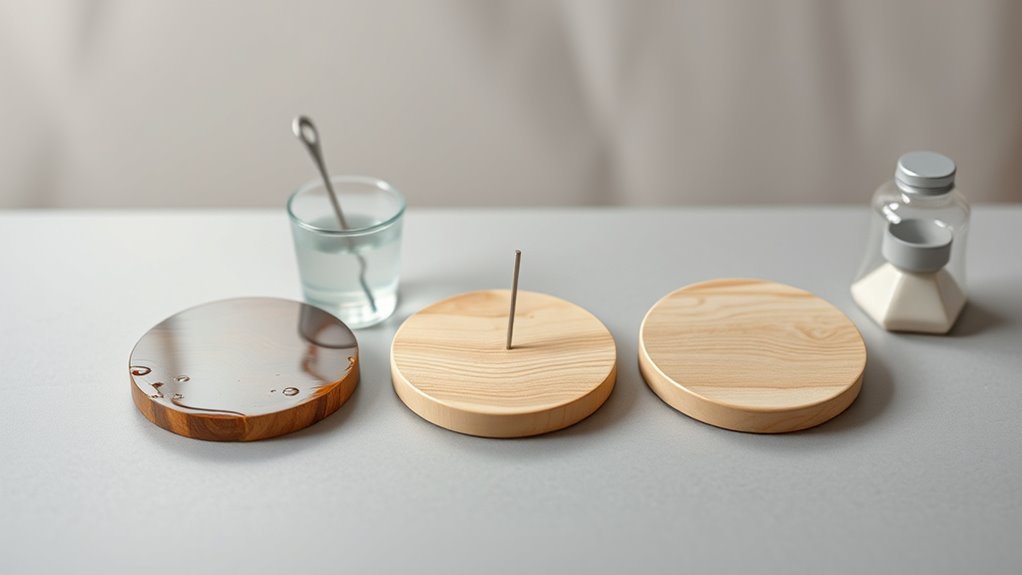
most pour paints become tack-free in 6–12 hours, are ready for a light recoat or add-on in 24–48 hours, and reach full cure between 7 and 30 days depending on the resin and conditions.
You’ll see tack-free surfaces sooner in warm, ventilated spaces; humidity and temperature slow drying.
When you plan reworks, wait the recommended window to avoid fingerprints or adhesion issues.
Full cure affects durability and sanding readiness.
Remember that historical techniques and cultural influences shaped expectations about drying and finish, so check specific product guidance and test scraps before committing to larger pieces.
How Pour Paint Formulation (Acrylic, Oil, Epoxy) Affects Drying?
Because the base resin controls how solvents evaporate, cure chemistry proceeds, and the surface cross-links, your choice of acrylic, oil, or epoxy will directly determine drying speed, tack window, and full-cure time.
You’ll notice acrylics dry fastest, letting you manipulate color mixing quickly but offering shorter working time. Oils dry by oxidation, giving long open time for blending and texture enhancement but much slower full cure. Epoxies cure chemically, often feel tacky longer while reaching rock-hard strength later; ambient temperature and mix ratio matter.
Consider designed finish, additives, and environmental conditions when choosing a formula.
- Acrylic: fast surface dry
- Oil: slow cure, long blend time
- Epoxy: chemical cure, durable
- Additives: speed or retard
- Environment: temp and humidity
Typical Recoat Times for Common Pour-Paint Formulas
When you’re planning layers, recoat times vary widely by formula and can change with temperature and humidity. Knowing the typical windows for acrylic, oil, and epoxy helps you schedule pours and avoid tacky lifts.
For acrylic pours, you’ll usually wait 12–24 hours between thin pours. Thicker layers need 24–48 hours.
Oil-based pours often require 48–72 hours before recoating to prevent smudging.
Epoxy typically needs 24–72 hours for a tack-free state, though full cure is longer.
Good surface preparation and mindful color blending reduce the need for touch-ups and help you layer confidently without disturbing underlying work.
How to Determine Safe Recoat Timing?
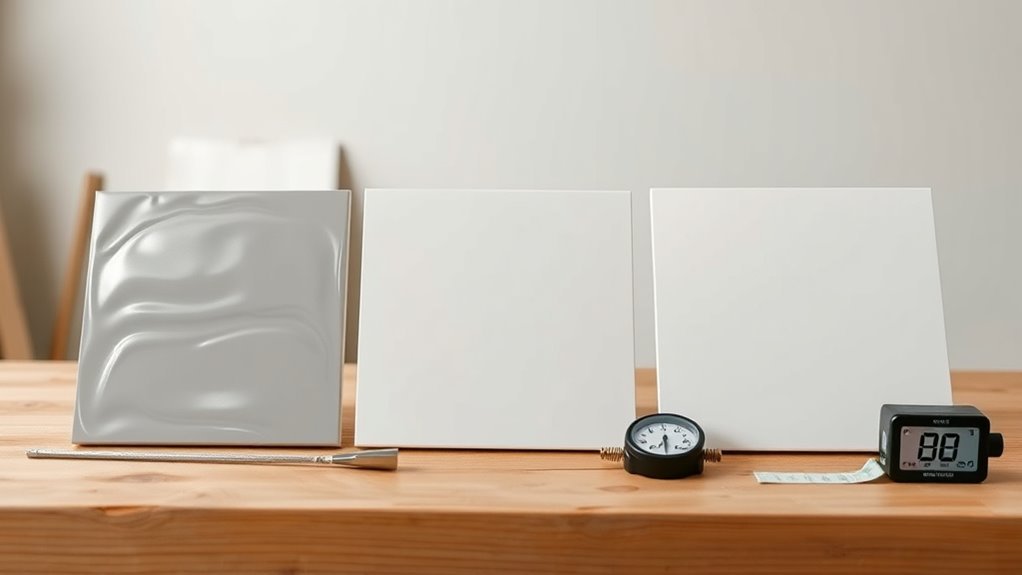
If you want to recoat without risking tacky lifts or trapped solvents, check three things before adding another layer.
Feel the surface: it should be dry to the touch, not sticky. Smell for solvents; if you detect them, wait.
Test a small edge for adhesion before committing.
Consider how new layers affect Color blending and Texture variation so you don’t overwork wet paint.
Keep conditions steady: temperature and humidity change drying.
- touch-dry test
- solvent sniff check
- edge adhesion trial
- assess color blending impact
- evaluate texture variation effects
Recoat only when all five signs are favorable.
Full Cure Timelines: When Pour Paint Reaches Maximum Hardness
After the paint feels dry to the touch, full cure can still take weeks to months depending on the formula and conditions.
You’ll reach maximum hardness when solvents have fully evaporated and the resin network has completed cross-linking, which is sped up by warmth and airflow and slowed by humidity and thicker pours.
Keep environmental factors and layer thickness in mind to estimate a realistic cure timeline for your piece.
Full Cure Timeline
Because pouring creates a thick, layered finish, the full cure for pour paint often takes much longer than the surface seems dry—you’ll usually reach maximum hardness in 2 to 6 weeks depending on resin type, layer thickness, temperature, and humidity.
You’ll notice initial tack gone in days, but internal crosslinking continues. Watch for changes in color blending and pigment settling during cure.
To manage expectations, consider these checkpoints:
- 24–72 hours: surface dry, handle gently
- 1 week: adhesion improves, deeper tack reduces
- 2–3 weeks: significant hardness gains
- 4–6 weeks: near full cure
- 6+ weeks: absolute maximum hardness
Factors Affecting Hardness
When you want pour paint to reach its maximum hardness, several key factors determine how quickly the internal chemistry completes—resin type and formulation, layer thickness, ambient temperature and humidity, and the presence of additives or pigments all play major roles.
You’ll find resin chemistry (epoxy, acrylic, polyurethane) sets baseline cure time, while thicker pours slow solvent release and extend cure.
Warm, dry conditions speed crosslinking; high humidity or cold slows it.
Additives, pigments, and color blending can inhibit or accelerate cure depending on chemistry.
Surface texture affects contact area and adhesion, altering perceived hardness and full cure performance.
How Layer Thickness Changes Drying and Curing Times?
Although a thicker pour looks impressive, it slows both surface drying and full curing because solvents and water take longer to evaporate and cross-link through a deep layer. You’ll notice extended tackiness, risk of sagging, and potential changes in color fading and pigment stability if layers trap solvents. Control thickness to manage cure schedules and final hardness.
Thick pours look dramatic but slow drying and curing, trapping solvents and causing tackiness, sagging, and color issues.
- Thicker layers mean longer evaporation paths.
- Deep pours prolong polymer cross-linking.
- Trapped solvents can soften the film.
Multiple thin layers cure more reliably.
Monitor tack and solvent smell before stacking.
Adjust layer depth to balance appearance and proper curing.
Why Temperature Speeds or Slows Pour Paint Drying?
If you raise the temperature, you speed up solvent evaporation and molecular mobility, so the paint dries faster. Lower temperatures slow those processes and extend tack and curing times.
You’ll notice faster skin formation at higher temps, which locks in color blending sooner and can freeze marbling effects. Warmer conditions also let underlying layers coalesce more quickly, reducing flow and potentially increasing texture variation as peaks set prematurely.
Cooler environments keep the paint workable longer, giving you more time to manipulate cells and gradients but increasing dust pickup and sag risk.
Adjust temperature to balance working time against desired finish.
How Humidity Affects Tack-Free Time and Cure?
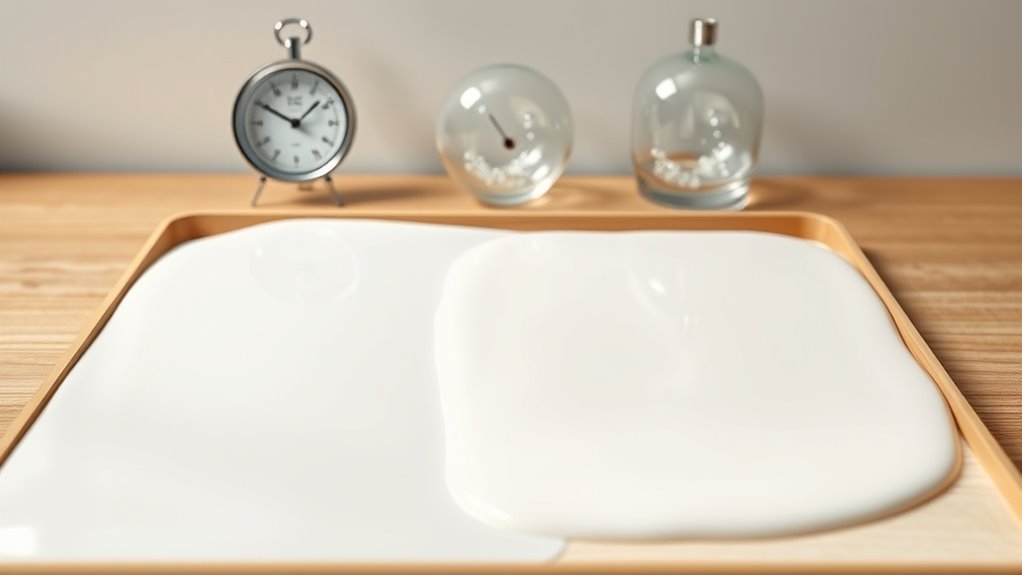
You’ll notice high humidity slows the tack-free stage because moisture keeps the surface from drying.
In contrast, low humidity helps the paint cure faster by allowing solvents and water to evaporate more quickly.
Be careful though—if humidity spikes or condensation forms on your piece, it can leave a wet, damaged finish.
High Humidity Slows Tack-Free
When humidity climbs, paint takes longer to reach a tack-free state because excess moisture slows solvent evaporation and interferes with the chemical reactions that set the film. You’ll notice slower skin formation, potential bloom, and weaker adhesion if you don’t adjust technique.
Pay attention to color blending and surface preparation to minimize problems.
- Keep pieces spaced for airflow to reduce trapped moisture.
- Use dehumidifiers or work in a climate-controlled area when possible.
- Thin pours cautiously; too much solvent compounds slow drying.
- Extend curing times before handling to avoid fingerprints.
- Monitor tack with a light touch; avoid forcing cure.
Low Humidity Speeds Cure
Low humidity has the opposite effect: it lets solvents evaporate faster and accelerates the chemical reactions that firm the paint film, so your pours will reach tack-free and fully cure sooner. You’ll notice shorter tack-free times and firmer surfaces within hours rather than days, so you can handle pieces sooner.
However, overly rapid drying can stress the film; if layers skin over before solvents escape, you risk microcracking that leads to color fading and even paint peeling later. Balance is key: aim for moderate ventilation and avoid hot, bone-dry environments so curing completes without compromising adhesion or long-term appearance.
Condensation Risks Wet Finish
If humidity climbs high enough, moisture can condense on your pour’s cooler surface and turn a tack-free finish back into a wet, sticky one. You’ll notice slowed tack-free time and possible reactivation of soft layers; condensation disrupts curing chemistry and traps solvents.
Protect pieces by controlling room humidity, using gentle heat, and avoiding temperature swings that encourage dew. Color blending can blur where droplets settle, and Texture variation may be exaggerated by bead collapse.
- Monitor hygrometer readings regularly
- Move pours to a warmer, stable room
- Use a dehumidifier when needed
- Avoid fans that cool surfaces
- Wait longer before sealing
How Ventilation and Airflow Shorten Pour Paint Drying?
Because air movement speeds evaporation, boosting ventilation is one of the fastest ways to shorten pour paint drying times. You can open windows, add fans, or use exhaust to move humid air away so solvents evaporate faster. Increased airflow preserves color blending by preventing pooling and guides texture variation without overworking the surface. Monitor humidity; dry air helps, but too strong a breeze can form skinning. Place fans to create gentle crossflow rather than direct blasts.
| Method | Effect | Tip |
|---|---|---|
| Window crossflow | Speeds drying | Open opposite sides |
| Fan | Consistent airflow | Low setting |
| Exhaust | Removes moisture | Use near wet area |
How Surface Type Changes Pour-Paint Drying (Wood, Metal, Canvas)
Airflow and humidity affect drying, but the surface you pour onto plays an equally important role in how fast and how the paint cures. You’ll notice wood soaks and holds paints differently than metal or canvas, altering drying time and color blending behavior.
Surface preparation matters: sealed wood speeds surface cure, raw wood draws in liquids. Metal needs de-greasing and sometimes a primer. Canvas absorbs more, slowing skin formation but promoting even cure.
Adjust technique for each substrate to control flow and finish.
- Wood: porous, may need sealing
- Metal: nonporous, prep required
- Canvas: absorbent, flexible
- Primers: speed or control cure
- Texture: affects pooling and edges
How Color and Pigment Concentration Influence Drying?
When you choose darker, more heavily pigmented colors they’ll often take longer to dry on the surface than lighter, more translucent mixes because dense pigment load slows solvent evaporation and hinders polymer crosslinking.
Darker, heavily pigmented colors often dry more slowly on the surface, as dense pigment slows solvent evaporation and curing.
You’ll notice high color saturation retains more binder and can create thicker tacky layers, so drying is slower. Conversely, pale or diluted hues let solvents escape faster and cure sooner.
Pigment stability matters too: unstable pigments can alter dispersion, creating uneven drying or surface skinning.
To manage time, work with balanced pigment concentrations and stable pigments, test small pours, and adjust layer thickness for predictable drying.
How Additives and Extenders Change Dry Time?
Although additives and extenders may seem like minor tweaks, they can noticeably speed up or slow down pour paint drying by altering solvent evaporation, binder film formation, and pigment suspension.
You’ll find that different agents change viscosity, surface tension, and how pigments stay dispersed, affecting color mixing and pigment stability. Choose wisely for the effect and cure profile you want.
- Retarders slow evaporation, improving flow but extending dry time.
- Accelerators promote faster skin formation and handling time.
- Thickeners alter pour behavior without much cure change.
- Extenders dilute binder concentration, lengthening cure.
- Surfactants impact leveling and pigment stability.
Simple Tests to Check Tack, Handling, and Cure?
Start by doing a tack test a few hours after pouring to see when the surface stops feeling sticky.
Try bending or gently flexing a small area to check handling flexibility once the paint feels dry to the touch.
Finally, verify full cure after the recommended days by checking hardness and resistance to fingerprints or solvents.
Tack Test Timing
How can you quickly tell if pour paint is ready to handle? You’ll use simple tack tests to judge surface cure, watching color blending and texture enhancement settle without disturbing the piece.
Light touch and timing matter: test spots, note resistance, and record minutes between checks.
- Gently press a fingertip; no residue means initial skin formed.
- Try a light dab with a cotton swab to see if color blending shifts.
- Use a toothpick to check slight tack in crevices.
- Wait consistent intervals (15–30 minutes) and compare results.
- Note when texture enhancement stays intact under light pressure.
Handling Flexibility Check
When you’re ready to lift or move a pour-painted piece, run quick flexibility checks to confirm the coating won’t crack or smear.
Gently press a fingertip into an inconspicuous edge to test tack; it should resist but not indent deeply.
Lift by supporting the center and tilt slightly to see if color blending shifts or beads—no sudden runs.
Flex the substrate just enough to simulate handling; watch for micro-cracks or delamination that signal poor surface adhesion.
If problems appear, wait longer before moving.
Record times and conditions so you refine future handling windows for consistent results.
Full Cure Verification
Those quick flexibility checks tell you if a piece is safe to move, but confirming full cure requires a few more deliberate tests. You’ll check tackiness, adhesion, and look for color fading or texture alteration that signal incomplete cure. Use gentle, targeted methods so you don’t harm the finish.
- Light thumb press: no tack, no indentation.
- Fingernail edge test: no lifting or stickiness.
- Adhesive tape pull: no paint comes away.
- Warmth test: slight warmth speeds cure but shouldn’t soften surface.
- Time log: compare against manufacturer cure times and environmental records.
How to Know When Pour Paint Is Fully Cured and Safe to Use?
Although paint may feel dry to the touch after a day or two, you’ll need to check a few key signs to confirm that a pour-paint piece is fully cured and safe to handle.
Inspect color blending for uniformity and absence of tacky sheen changes; uneven gloss can mean incomplete cure.
Inspect color blending for evenness and avoid tacky sheen shifts—uneven gloss often signals an incomplete cure
Press a hidden edge lightly—no indentations or stickiness should remain.
Smell fades as solvents off-gas; a persistent chemical odor suggests more time.
Test weight-bearing areas gently before using as functional items.
Finally, examine texture effects for stability; raised cells or ridges should be firm, not gummy, before regular use.
Quick Ways to Speed Up Pour Paint Drying Without Ruining Finish
You can speed drying by applying gentle heat, but don’t blast the paint with high temperatures or you’ll risk cracking and color shifts.
Slowly increasing airflow with a fan and occasional room ventilation helps solvents evaporate evenly without disturbing the cells.
Combine low, indirect heat and steady airflow to shorten drying time while protecting the finish.
Use Heat Carefully
If you need to speed up drying, use heat carefully so you don’t ruin the cells, lacing, or gloss of your pour paint. Too much heat or direct flame can cause bubbling, cracking, or color shifts.
You can gently apply warmth to accelerate solvent evaporation while preserving color blending and texture enhancement. Keep heat low, move the source, and watch changes closely. Test on a scrap first.
- Use a hairdryer on low, 12–18 inches away
- Try a heat gun on the lowest setting, constant motion
- Warm the room slightly with a heater
- Avoid open flames or spot heating
- Check frequently for gloss changes
Increase Airflow Slowly
After using gentle heat, speed drying further by introducing steady, gentle airflow—never blasts of wind that can disturb cells or lift paint. You’ll position a small fan at low speed, angled to circulate air across the surface without creating ripples. Move it slowly around the piece every hour to promote even evaporation, preserve color blending, and maintain desired texture variation. Check edges for pooling and adjust direction if cells shift. Patience matters; incremental airflow reduces dust adherence and cracking risk. Use a timer and note changes so you can repeat the gentle routine confidently.
| Action | Tip |
|---|---|
| Fan placement | Low, angled |
| Timing | Short intervals |
| Speed | Low only |
| Check | Edges and cells |
Common Mistakes That Leave Pour Paint Tacky
When pour paint stays tacky, it’s usually because something went wrong during mixing, pouring, or curing—common culprits include incorrect resin-to-paint ratios, insufficient stirring, applying layers too thick or too cold, and humid or dusty conditions that interfere with the cure.
If your pour stays tacky, it usually points to mixing, thickness, temperature, or contamination issues—check ratios, stirring, and cure conditions.
You’ll want to check your color blending and surface preparation first. Mistakes are often simple fixes: wrong hardener, rushed cure, or uneven layer thickness. Watch for these specific issues so you can correct technique next time.
- Wrong resin-to-paint ratio
- Inadequate stirring time
- Pouring too thickly at once
- Curing in cold or humid air
- Contaminated or poorly prepped surface
How to Prevent Dust, Bubbles, and Skinning While Drying?
Keep your workspace clean and dust-free by wiping surfaces, working in a low-traffic area, and covering your piece while it cures.
Mix and pour slowly, use a heat gun or torch gently to pop bubbles, and avoid overworking the resin to prevent new ones from forming.
To stop skinning, seal bottles between pours and store mixed resin in a cool, airtight container if you need to pause.
Control Dust In Environment
Because dust, airborne particles, and contaminants will settle into wet pour paint, you should prepare a clean, draft-free workspace and limit traffic while it cures. You’ll use simple dust control and environmental management steps to cut contamination risk. Work after cleaning, seal vents, and keep humidity stable. Wear lint-free clothing and avoid fans that stir dust. Cover finished pieces with a dust tent if you must move around.
- Clean floors and surfaces before you start
- Seal doors and vents to stop drafts
- Use a HEPA air purifier on low
- Wear lint-free gloves and clothing
- Create a temporary dust tent for pieces
Prevent Bubbles And Skinning
Although small bubbles and a tacky skin can seem inevitable, you can mitigate both by controlling temperature, humidity, and mixing technique from the start.
Work in a dust-free space, use slow, steady stirring to avoid whipping air into the pour, and pour gently to reduce trapped bubbles.
Keep room temperature consistent and humidity moderate; a dehumidifier or small heater helps.
Use flow additives sparingly and strain mixes through a fine mesh.
If bubbles form, pass a torch or heat gun quickly across the surface.
Proper technique preserves your color blending and guarantees an even finish sheen without imperfections.
How to Fix an Area That Never Fully Dries?
If a spot of pour paint never fully dries, don’t panic—you can usually fix it by removing the uncured layer and promoting proper curing underneath.
First, identify tacky areas; note how color blending or texture effects might hide soft spots. Then act carefully to preserve surrounding work.
Check for tacky spots—blending can hide them—then proceed gently to protect surrounding paint.
- Gently scoop off tacky film with a plastic spatula.
- Wipe residue with isopropyl alcohol and a soft cloth.
- Lightly sand edges to feather into cured paint.
- Apply a thin compatible seal or retouch layer after curing completes.
- Allow extended time in a clean, ventilated area to finish curing.
Best Drying Conditions for Indoor Projects?
When you’re drying pour paint indoors, control of temperature, humidity, and airflow matters most. Keep temps around 70–75°F, humidity 40–50%, and gentle airflow to prevent dust. Good surface preparation ensures adhesion and even drying; avoid drafts that cause skinning. Manage color mixing to reduce additives that trap moisture. Use a fan on low and a dehumidifier if needed. Check edges for pooling after 24–48 hours and adjust positioning to prevent runs. Be patient: cure can take weeks even if dry to touch. Monitor conditions and avoid touching until fully cured.
| Factor | Ideal |
|---|---|
| Temperature | 70–75°F |
| Humidity | 40–50% |
| Airflow | Gentle, filtered |
Best Drying Conditions for Outdoor Projects?
Because outdoor conditions change quickly, you’ll want to pick a calm, mild day to dry pour paint so temperature, humidity, and wind won’t disrupt the finish. You’ll also shield pieces from direct sun to prevent color fading and keep surfaces level to preserve texture consistency.
Pick a calm, mild morning—avoid wind and direct sun, keep humidity low, and support pieces level.
Aim for 60–75°F and relative humidity under 60% if possible. Consider a temporary canopy or windbreak and monitor forecasts for overnight drops.
- Choose a still morning without strong gusts.
- Avoid midday sun that accelerates curing.
- Keep humidity steady to reduce bloom.
- Use flat, stable supports.
- Cover at night if dew’s likely.
How Long Before Sanding or Polishing Pour Paint?
After you’ve protected your pour from wind, sun, and moisture during curing, plan your sanding or polishing schedule around how fully the paint has cured rather than just surface-dry time.
You’ll generally wait 7–14 days for thin pours and up to 30 days for thicker layers before aggressive sanding. Light scuffing can happen earlier, after 3–5 days, if the surface feels firm.
Test a small area to check Color blending integrity and avoid disturbing underlying layers.
For Texture variation, use fine grit and progress slowly; stop if tackiness returns. Don’t rush—impatience risks lifting, streaks, or uneven finish.
How Protective Topcoats Affect Final Cure and Timing?
If you add a protective topcoat, you’ll change both the appearance and the cure timeline of your pour—some clear coats lock in gloss quickly while others slow final hardening by trapping solvents or moisture. You should select a topcoat based on desired sheen and compatibility with resin or acrylics.
Consider how UV resistance preserves color blending and whether the coat alters texture consistency. Thicker varnishes can seal faster but extend full cure; spray coats dry fast yet may require multiple thin layers. Check manufacturer cure times, test on scraps, and allow extra time in humid or cool conditions.
- Choose compatible chemistry
- Mind layer thickness
- Preserve color blending
- Maintain texture consistency
- Allow manufacturer cure time
Plan Project Timelines Around Pour-Paint Dry and Cure Times
Now that you’ve considered topcoats and how they alter drying and final hardness, plan your schedule around both the paint’s tack-free time and its full cure window so you don’t rush steps or disturb the finish. Map key milestones: initial leveling, tack-free inspection, and final handling.
Account for slower curing in cool or humid conditions and longer waits after heavy pours or layered color blending that slow solvent release. Reserve extra time when you want pronounced texture variation or to add embellishments.
Communicate realistic deadlines to clients, avoid stacking jobs, and build buffer days to prevent accidental smudges or adhesion failures.
Tools to Speed Pour Paint Drying Reliably
You can speed up drying with targeted tools that control heat and airflow. Use a heat lamp or low-heat hairdryer on a gentle setting to evaporate solvent without overheating the paint.
Combine that with fans or air movers to keep air circulating and prevent soft spots.
Heat Lamps Or Hairdryers
While heat lamps and hairdryers can speed up drying for pour paint, you’ll want to use them carefully to avoid bubbles, cracking, or uneven curing. You’ll control temperature and distance, protect edges, and watch how color blending and texture variation respond.
Use short bursts, keep heat moving, and stop if the surface looks tacky or shifts.
- Keep lamp or dryer at least 12–18 inches away
- Move continuously to prevent hotspots
- Use low heat settings for delicate pours
- Monitor for bubbling or shrinkage closely
- Let layers rest between gentle heating sessions
Fans And Air Movers
Although fans and air movers won’t chemically cure pour paint, they speed evaporation and reduce tackiness by circulating cool, steady airflow across the surface. You should position fans to move air gently across the piece without creating ripples or disturbing cells.
Use multiple low-speed units for even coverage; a single high-speed fan can cause uneven color blending and unwanted texture variation. Aim for indirect airflow and maintain consistent room humidity and temperature.
Monitor edges and thicker pours for lingering tackiness, adjusting fan angle or spacing as needed. Fans help dry tops faster, but full cure still requires time and stable conditions.
Storing Partially Used Pour Paint
Wondering how to keep leftover pour paint usable for your next project? You’ll want to preserve color blending and texture consistency by sealing and storing properly. Follow simple steps to avoid contamination, thickening, or skin formation.
- Transfer leftovers to airtight, clean containers to prevent air exposure.
- Label jars with date and pigment ratios so color blending stays predictable.
- Add a tiny amount of pouring medium if mix thins, then stir gently to maintain texture consistency.
- Store containers upright in a cool, dark place to slow chemical change.
- Avoid freezing or excessive heat; check and remix before reuse.
How Environmental Changes During Drying Create Defects?
When you change temperature during drying, the paint can expand or contract and cause cracking or rippling.
High humidity may trap moisture and create a cloudy blushing effect on the surface.
Strong or uneven airflow can skin the top while the underneath stays wet, leading to wrinkles or dimples.
Temperature Fluctuations Impact
If temperature swings occur during drying, they can trap solvents, cause uneven curing, and leave visible defects like wrinkling, bloom, or cracking. You’ll notice color blending shifts as pigments react differently to heat, and texture consistency breaks down when layers cure unevenly.
You should control ambient temperature, avoid drafts, and let pieces sit in a stable zone.
- Keep room temperature steady during the critical first 24–72 hours.
- Shield pours from direct sunlight or sudden cooling.
- Use slow-dry mediums to buffer minor swings.
- Monitor surface skin formation closely.
- Rework only after full cure to prevent new faults.
Humidity-Induced Blushing
Temperature swings aren’t the only environmental threat; moisture in the air can cause a problem called blushing that’s easy to miss until it’s too late. You’ll see a cloudy, whitish haze on glossy areas when high humidity traps solvent and prevents proper curing.
Blushing disrupts color blending, dulls saturation, and can obscure fine details you worked to achieve. To prevent it, monitor humidity before and during drying, choose slow-evaporating solvents when needed, and avoid applying thick layers in muggy conditions.
If blushing appears, let the piece fully equalize in a controlled environment, then gently recoat or polish for texture enhancement.
Airflow And Skinning
Because air movement and drying rate often change during curing, you’ll see surface “skinning” form when the top dries faster than the layers below.
You should monitor airflow to prevent trapped solvents, uneven tension, and subsequent cracking. Skinning interrupts color mixing and can reduce pigment stability, causing streaks or buried blooms.
Address drafts, temperature swings, and fan direction promptly.
- Keep ventilation steady but gentle.
- Avoid direct fans that speed surface cure.
- Maintain consistent temperature and humidity.
- Test a small pour to check pigment stability.
- Remove forming skin carefully to re-level before final cure.
Timeline Examples: Cabinets, Tables, and Canvases
When you’re planning projects like cabinets, tables, or canvases, drying times vary widely based on paint type, layer thickness, and surface preparation.
For cabinets, expect thin coats to skin in 12–24 hours and cure over days. Heavy pours or epoxy layers need longer.
Tables often sit between those timelines—thin pours dry faster, but surface use calls for full cure before contact.
Canvases dry quickest; small pours can be touch-dry in 24–48 hours but deep cells take days.
Factor in color blending and texture variations, which can thicken layers and extend drying, so adjust expectations and handling accordingly.
When to Wait Days Versus Weeks: Decision Checkpoints?
If you’re deciding whether to wait days or weeks before handling a poured paint piece, check a few key indicators: surface tack, solvent odor, layer thickness, and planned use.
You’ll weigh practical cues and learned practice from historical techniques and recent artist interviews to decide. Trust feel and smell first; thicker pours and glossy domes need weeks. If you plan sanding, curing fully matters.
Weigh practical cues and artist wisdom—trust feel and smell; thick, glossy pours need weeks before handling.
- Light touch: no tack = days
- Strong solvent odor: wait longer
- Thick layers (>2mm): expect weeks
- Functional items: err on weeks
- Decorative, low-stress pieces: days
What to Check First When Pour Paint Dries Slowly?
You’ve checked tack, smell, layer thickness, and meant use — now look for the common causes behind slow drying. First inspect surface prep: dust, oil, or previous finishes can block adhesion and trap solvents, prolonging cure.
Next review color mixing—certain pigments and heavy additives slow solvent evaporation; darker or metallic mixes often take longer.
Check room conditions: low heat, high humidity, and poor airflow all extend dry time.
Also confirm ratio accuracy if you used additives or pouring medium; too much medium equals longer cure.
Address these basics before blaming the paint, and you’ll usually speed up drying.
Frequently Asked Questions
Can I Layer Different Paint Types (Epoxy Over Acrylic) Without Issues?
Yes—you can layer epoxy over acrylic if you avoid paint mixing issues by ensuring proper surface preparation, cleaning, sanding, and using a compatible primer; otherwise adhesion problems, cracking, or yellowing can occur despite initial adhesion.
How Does Paint Thickness Variability From Tilting Affect Cure Uniformly?
Tilting creates variable paint consistency, so you’ll get uneven curing uniformity: thicker areas cure slower and may stay tacky, while thin edges harden fast, causing texture, color shifts, and potential adhesion or cracking issues later.
Are UV Lamps Safe and Effective for Accelerating Cure?
Yes — you’ll almost instantly speed curing! You’ll love UV lamp safety tips and curing effectiveness: they’re powerful for UV-curable resins, but you’ll wear eye protection, avoid skin exposure, and follow manufacturer times and intensities closely.
How Long Should I Wait Before Shipping a Poured-Paint Item?
You should wait until curing’s complete: typically 7–30 days depending on thickness and conditions. Track drying times precisely, factor in shipping delays, and don’t rush—otherwise items can stick, dent, or finish poorly in transit.
Do Mold-Release or Silicone Additives Interfere With Topcoat Adhesion?
By Jove, yes — mold release or silicone additives can prevent topcoat adhesion. You’ll need thorough cleaning, solvent wiping, or light sanding; otherwise the topcoat won’t bond properly, so always test adhesion before shipping.
Conclusion
You’ve got this — pour paint dries in stages, so don’t freak out if it’s tacky at first like a stubborn sticker. Follow manufacturer recoat times, check tack-free feel, and wait for full cure before heavy use. Control temperature, humidity, and airflow to avoid bubbles, blooms, or sinking. For furniture or cabinets, err on the side of patience; canvases tolerate faster handling. When in doubt, wait the extra days rather than risk ruining your work.
