
Is Glidden Exterior Paint Good? Full Review
Glidden exterior paint is a solid, budget-friendly choice if you want reliable coverage and decent weather resistance without paying premium prices. You’ll get easy application, good color consistency, and reasonable mildew and UV protection when you prep surfaces properly. Expect a typical lifespan of about 5–12 years depending on formula, climate, and maintenance. It’s great for DIYers, rentals, and large projects — keep going to see which lines, costs, and prep tips matter most.
Who Should Consider Glidden Exterior Paint?
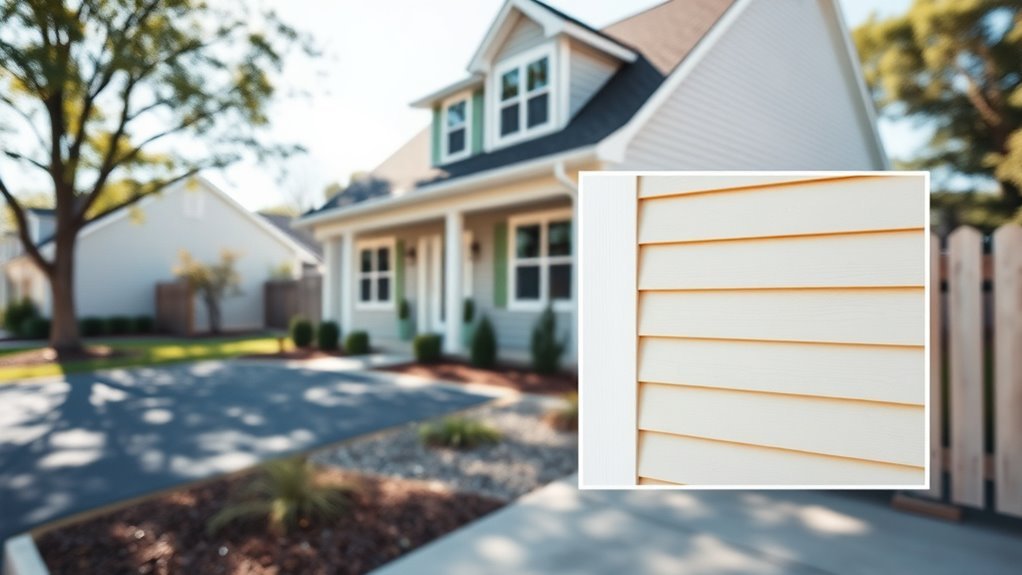
If you’re tackling a budget-conscious home refresh and want a dependable, widely available option, Glidden’s exterior paints are worth considering. You’ll choose it if you need solid color consistency across large walls or matching touch-ups without breaking the bank.
It’s smart for DIYers who prefer easy sourcing and straightforward application, since primer compatibility with many common primers reduces prep headaches. You’ll also favor Glidden for rental properties, trim work, or secondary structures where longevity is acceptable but premium performance isn’t required.
If you demand top-tier durability or specialty finishes, you’ll want to compare higher-end brands first.
Quick Verdict: Is Glidden Exterior Paint Worth Buying?
For budget-focused projects, Glidden delivers reliable color and straightforward application, so deciding whether it’s worth buying comes down to your priorities: cost, longevity, and finish.
You’ll find decent color matching at many retailers, and its lower price makes it attractive for large jobs or rental properties. If you want the absolute best durability or premium sheen, you might opt elsewhere, but Glidden balances value and performance.
Also consider Eco friendliness if that’s a priority—some lines have lower VOCs.
Quick takeaways:
- Great value for cost-conscious buyers
- Good color matching options
- Moderate durability
- Some eco-friendly choices
Key Glidden Exterior Paint Lines to Know
Although Glidden offers several exterior lines tailored to different needs, you’ll most likely choose between a few core options: budget-friendly Everyday, mid-range Premium, and higher-performance Resilience/One-Coat formulas (names vary by retailer).
You’ll find Everyday covers basic protection and easy application at a low price. Premium steps up durability and fade resistance for typical homes. Resilience/One-Coat targets tougher climates and faster jobs.
Pay attention to available Color matching services for custom shades and primer requirements. Also consider Environmental impact: low-VOC options exist, but check labels and certifications so you pick a line that fits performance and sustainability.
Glidden Duration vs Glidden Premium: Quick Comparison
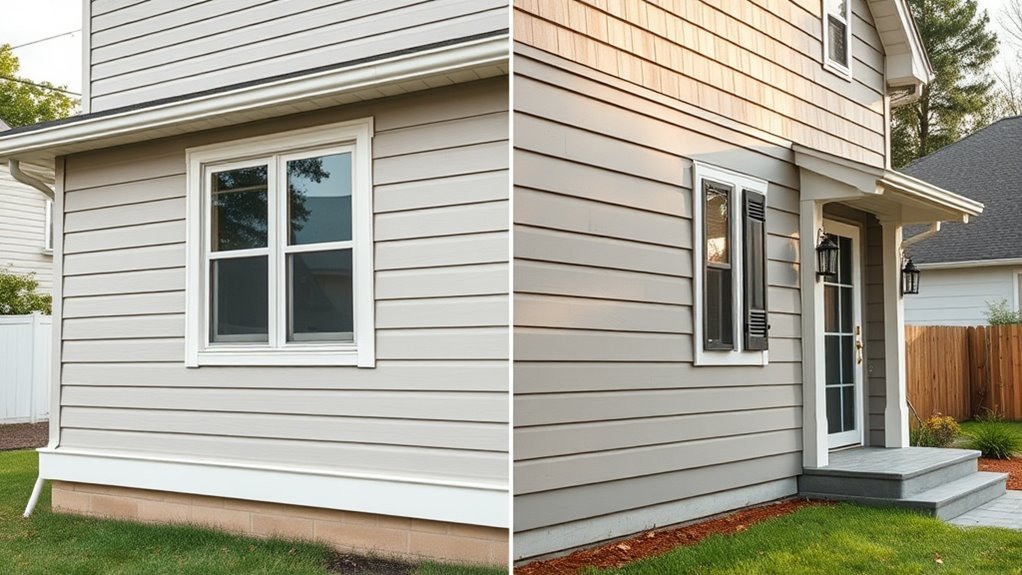
When you’re choosing between Glidden Duration and Glidden Premium, think performance vs. value: Duration emphasizes long-lasting durability, superior weather resistance, and mildew protection for harsher climates.
Premium focuses on solid everyday durability and better-than-basic stain and fade resistance at a lower price point.
You’ll pick Duration if you want tougher exterior protection and longer repaint intervals.
Choose Premium if budget and decent performance matter.
Consider color mixing accuracy and available eco-friendly options when matching trims or ordering samples.
- Duration: superior weather resistance
- Premium: cost-effective everyday wear
- Coverage and finish choices
- Maintenance and lifespan trade-offs
Glidden EXT vs Competitors: Exterior Paint at a Glance
While Glidden EXT aims to balance durability, ease of application, and price, you’ll want to weigh its strengths against rivals like Sherwin-Williams, Behr, and Benjamin Moore to see if it fits your project’s priorities.
While Glidden EXT balances durability, application ease, and price, compare it with Sherwin-Williams, Behr, and Benjamin Moore.
You’ll find Glidden EXT is budget-friendly and user-friendly for DIYers, with decent weather resistance.
Competitors often lead on premium longevity, proprietary binders, and advanced mildew resistance.
Color matching is generally good at big-box counters, though high-end lines offer finer custom tints.
If environmental impact matters, check VOC levels and eco-certifications—some brands prioritize low-VOC formulas more consistently than others, influencing your final choice.
Coverage and Hide on Siding, Trim, and Masonry
You’ll see how Glidden covers common siding materials and whether it hides minor imperfections without excessive coats.
For trim, we’ll note application smoothness and how well edges stay crisp.
Then you’ll get a clear comparison of its hide performance on masonry versus painted wood.
Coverage On Siding
Curious how well Glidden covers siding? You’ll find good coverage on common siding types, and color blending helps conceal minor imperfections. You’ll get consistent results with proper prep and primer. Consider these points:
- One-coat claims work best over similar existing colors.
- Two coats improve durability and uniformity on weathered boards.
- Trim edges need careful brushing to avoid lap marks.
- Look for Eco friendly options in Glidden’s line if low-VOC matters.
You’ll want to prime bare wood and heavily weathered areas; that ensures true color payoff and longer wear without discussing masonry-specific hide.
Hide On Masonry
Because masonry soaks and reflects paint differently than wood, you should expect Glidden’s hide to vary by surface porosity and texture. You’ll find it covers brick and stucco reasonably well with proper prep, but rougher masonry may need extra coats. Plan for touch-ups where landscaping coordination demands crisp edges, and match finishes to architectural styles to avoid mismatched sheen. Primer improves adhesion and reduces coats. Use this quick comparison:
| Surface Type | Typical Coats | Notes |
|---|---|---|
| Smooth brick | 1–2 | Good hide with primer |
| Rough stucco | 2–3 | Texture reduces coverage |
| Trim/stone | 1–2 | Watch sheen match |
How Much Paint You’ll Need (Coverage Rates Explained)
When planning a paint job, start by checking the coverage rate on the Glidden can—most exterior paints list square feet per gallon so you can estimate how much you need. Measure walls, subtract windows/doors, then factor coats and surface porosity.
Color blending and texture options can change required coats; rough surfaces soak more. Use this checklist to calculate gallons:
- Measure total exterior square footage accurately.
- Subtract non-painted openings and add for trim.
- Divide net area by advertised square feet per gallon.
- Round up for touch-ups, absorption, and adventurous color blending.
Buy slightly extra to ensure consistent finish and match.
Dry Time and Recommended Recoat Windows
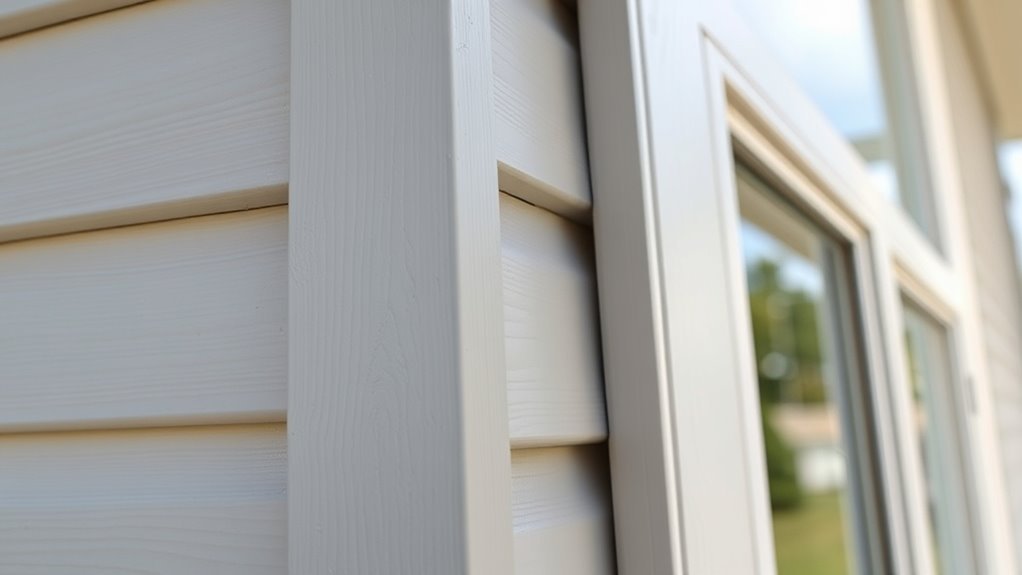
If you’re working with Glidden exterior paint, expect it to become touch-dry within a few hours and ready for a light recoat usually between 2 to 4 hours under ideal conditions.
Full cure can take up to 30 days depending on temperature and humidity. You should wait longer for heavier coats or when applying over a primer.
Plan recoats around manufacturer guidance to avoid tackiness or uneven sheen. Keep color mixing consistent between sessions to prevent visible shifts.
For areas that tie into indoors, consider interior durability expectations when choosing finish and timing to facilitate seamless transitions.
Durability: Weather Resistance and Lifespan
After you’ve got recoats timed right, the next question is how the paint will hold up outside. You’ll want durability against rain, temperature swings, and abrasion; Glidden performs well on properly prepped surfaces.
Pay attention to primer compatibility to guarantee adhesion and reduce peeling over time. Expect multi-year service with routine maintenance; severe climates shorten lifespan.
- Choose primers suited to substrate and Glidden formula.
- Inspect seals, caulking, and trim annually.
- Clean grime to prevent breakdown of the film.
- Recoat before visible wear or chalking appears.
Manage substrate prep and maintenance to maximize longevity and limit color fading.
Fade Resistance: Pigments and UV Protection
When you evaluate Glidden’s fade resistance, focus first on pigment quality and density since richer, well-dispersed pigments hold color longer.
Also check for UV-blocking additives that shield pigments from sunlight and slow breakdown.
Together, pigment formulation and UV stabilizers determine how long the finish stays true.
Pigment Quality And Density
Because pigments do the heavy lifting against sun and weather, you’ll want to know how Glidden’s colorants hold up: they’re well-dispersed, use a mix of inorganic and organic pigments for strong tinting strength, and include UV-stable formulations that slow fade. You’ll notice good pigment durability and color consistency across batches, reducing repaint touch-ups.
Higher pigment density in top-tone formulas improves hiding and longevity. Consider sheen and substrate for best results.
- Dense pigment load boosts coverage
- Balanced inorganic/organic blend aids fade resistance
- Even dispersion prevents streaks and blotching
- Mid-range formulas offer best value vs. performance
UV-Blocking Additives
How well will Glidden’s exterior formulas resist sunlight over time? You’ll find UV-blocking additives in many Glidden blends that shield pigments from breakdown, helping maintain hue and aiding color matching after touch-ups. Those additives slow fading caused by UV exposure, so your siding or trim stays truer longer.
Performance varies by line and pigment concentration, so choose higher-grade options for harsh sun. Also note Glidden balances protection with eco friendliness by using less harmful stabilizers where possible, though top-tier UV resistance may involve conventional chemistries.
Expect decent fade resistance if you select the right product for your climate.
Mildew and Mold Resistance for Humid Exteriors
If your home sits in a humid climate, you’ll want exterior paint that actively resists mildew and mold growth; Glidden’s paint formulation often includes mildewcides and fungicides to help. You’ll still need to prep surfaces and use proper moisture barriers, but the right product reduces staining and biological growth.
Consider these practical points:
Consider these practical points: choose mildew-resistant paint, use vapor-permeable barriers, clean mold, and recoat.
- Choose formulations labeled “mildew-resistant” for siding and trim
- Pair paint with vapor-permeable moisture barriers to avoid trapped damp
- Clean and repair existing mold before painting for best results
- Recoat as recommended, since additives lose effectiveness over many years
Adhesion and Resistance to Peeling by Substrate
To get the best adhesion you’ll need to prep surfaces properly—clean, sand, and prime where recommended.
You’ll see how Glidden performs on common substrates like wood, stucco, metal, and vinyl.
Then we’ll evaluate how well it resists peeling over time on each of those materials.
Surface Preparation Importance
When you skip proper surface preparation, paint can’t form a lasting bond and you’ll see peeling or flaking far sooner than you’d expect.
You need to clean, sand, and prime to guarantee adhesion and preserve Color harmony across panels while maintaining Eco friendliness by avoiding harsh solvents.
Prep prevents moisture trapping and hides doneness issues before they worsen. Follow these focused steps:
- Remove dirt, mildew, and loose paint thoroughly.
- Sand glossy surfaces to dullness for better grip.
- Apply a compatible primer to seal and promote uniform finish.
- Allow full drying time between coats to prevent future lifting.
Adhesion On Common Substrates
Often, paint sticks well to properly prepped wood, metal, vinyl, and masonry, but each substrate demands specific steps to prevent peeling and guarantee long-term adhesion. You’ll want to match primer compatibility and check Color accuracy when repainting to avoid surprises. Follow substrate-specific prep: clean, sand, and use recommended primers for porous or slick surfaces. Test a small area to confirm bond and hue. Use flexible formulations on trim. Maintain manufacturer drying times to strengthen the film.
| Substrate | Prep | Primer |
|---|---|---|
| Wood | Sand/clean | Oil or latex |
| Metal | Degrease/rust treat | Rust-inhibitor |
Resistance To Peeling
If you want paint that stays put, evaluation of peeling resistance starts with how each substrate handles movement, moisture, and UV exposure. You’ll find Glidden performs well when you prep correctly; peeling prevention relies on cleaning, sanding, and priming. Check surface compatibility before you paint — wood, masonry, and metal each demand different primers and application methods.
- Wood: allows flexibility; use a stain-blocking primer.
- Masonry: needs breathability to avoid trapping moisture.
- Metal: requires rust treatment and adhesion primer.
- Previously painted surfaces: scuff and prime for best bond.
Follow those steps for durable results.
Best Glidden Finishes for Siding, Trim, and Decks
Because each exterior surface faces different wear and exposure, you’ll want specific Glidden finishes for siding, trim, and decks that match their needs.
For siding, choose a durable, mildew-resistant exterior latex that emphasizes color blending to hide seams and touch-ups while resisting weather.
For trim, pick a smooth, high-hide formula that levels well and offers crisp lines for clean accents.
For decks, use a tough, low-VOC stain or paint designed for foot traffic and moisture; its eco-friendliness reduces odor and environmental impact.
Match product specs to material and maintenance schedule for lasting results.
Choosing the Right Sheen for Look and Durability
You’ll want to take into account how sheen affects durability, since higher sheens resist dirt and moisture better than flat finishes.
Match the sheen to the surface—use gloss or semi-gloss for trim and doors, and lower sheens for rough siding to hide imperfections.
Balance appearance against maintenance needs so you get the look you want without extra upkeep.
Sheen Impact On Durability
Why does sheen matter beyond just appearance? You’ll find sheen affects durability, maintenance, and how Color mixing or paint texture show up on your walls. Choose thoughtfully to balance looks with long-term performance.
- Higher sheens resist dirt and scrub cleaning better.
- Lower sheens hide imperfections and mask uneven texture.
- Mid sheens offer moderate moisture resistance for trim and siding.
- Sheen influences how UV and weathering show on finishes over time.
When you pick Glidden exterior sheens, consider cleaning frequency and exposure. That practical choice helps your paint last longer and keeps surfaces looking fresh.
Matching Sheen To Surface
When choosing a sheen, think about the surface you’ll coat and how it’s used. You’ll pick sheen matching based on texture and exposure: use higher gloss for trim and metal where scrubbability matters.
Eggshell or satin are suitable for siding that balances durability and subtlety. Flatter sheens are ideal for rough stucco to hide imperfections.
Consider climate and cleaning frequency; more reflective surface sheen resists dirt and sheds water, but shows flaws.
Test samples on different areas to confirm color shift with sheen.
Match finish to function so your Glidden exterior holds up while fitting each material’s needs.
Appearance Vs Maintenance
Curious how sheen affects both curb appeal and upkeep? You’ll balance appearance vs maintenance by choosing sheen selection that suits surfaces and weather. Higher sheens boost color durability and wipeability but highlight flaws; flatter sheens hide imperfections but stain easier. Consider these points:
- Glossy: best for trim, easy cleaning, high color durability.
- Semi-gloss: durable, versatile for siding and trim.
- Satin: subtle sheen, good compromise between look and maintenance.
- Flat/eggshell: great for hiding texture, lower maintenance for low-traffic areas.
You’ll pick based on exposure, desired look, and how often you’ll clean or repaint.
Glidden Color Selection and Palette Overview
Looking for the right shade for your home? You’ll find Glidden offers a broad palette that balances trendy hues and classic neutrals, shaped by color psychology and paint formulation to guarantee consistent tone and coverage.
You can pick from coordinated collections—exteriors, trims, accents—so matching is straightforward. Sample pots help, but the curated palettes guide combos for curb appeal or subtle contrast.
Glidden leans practical: durable pigments that resist fading and easy-to-reference groupings for faster decisions. If you like seasonal updates or long-term stability, their selection gives flexibility without overwhelming your choices.
How Accurate Are Glidden Color Cards and Chips?
You can generally trust Glidden color cards and chips for a close match, but perfect accuracy isn’t guaranteed. Lighting and the surrounding environment can shift how a shade reads on your siding, so test samples in the actual spot.
Also remember chips are tiny — get larger swatches or a painted sample to avoid surprises.
Color Match Reliability
How closely do Glidden color cards and chips match the finished exterior? You’ll find decent color accuracy and reasonable shade consistency, but expect slight variation once paint dries and cures.
To improve your match, try these practical steps:
- Test full-size swatches on primered panels to judge final hue.
- Order sample cans and paint small sections for true comparison.
- Verify batch numbers; repainting from different batches can alter shade.
- Consult store-mixed samples for custom adjustments before committing.
Lighting And Environment
After checking batch consistency and testing swatches, consider how light and surroundings will change what you see on the wall. You’ll notice Glidden color cards and chips look different under varying lighting conditions—morning sun, shade, or artificial light shift hue and saturation.
Place large samples on multiple elevations to compare. Also account for environmental pollution: grime or airborne particulates can dull tones over time, especially in urban or coastal areas.
Rely on cards for initial direction, but validate with full-size, real-world samples photographed and viewed at different times of day before committing to a final exterior color.
Sample Size Limitations
Since small chips and cards compress a complex color into a sliver, they can mislead you about the final look on a full wall. You’ll notice that a tiny sample can’t capture sheen, texture, or how light alters hue across large surfaces. Treat chip comparisons as directional, not definitive.
Consider the Sample size when deciding: larger swatches or painted test panels give more reliable impressions and help achieve statistical significance in your visual assessment.
- Paint a 2×2 foot test panel
- View at different times of day
- Compare adjacent colors together
- Note substrate and finish effects
Tinting Limits and Color Consistency Across Batches
When you mix deep or highly saturated colors, Glidden’s tinting system can hit its limits and produce less predictable results, so plan accordingly. You’ll notice reduced tinting flexibility with bold hues; Glidden performs best with moderate tones.
Color stability between batches is generally acceptable for standard shades, but slight shifts can occur when orders are separated by time or different tinting machines. Always note batch numbers, request custom-matched formulas, and test a small area before committing.
If exact consistency matters, buy extra paint from the same batch or get a single large batch mixed to minimize visible variations.
Pairing Primers With Glidden Exterior Paints
Color matching and batch consistency matter, but primer choice plays a bigger role in how Glidden exterior paints perform over time and under weather. You should pick primers that bond well to substrate, seal stains, and support Color coordination when tinting.
Consider surface type, desired finish, and Eco friendliness of the primer. A wrong primer shortens topcoat life; the right one improves coverage and durability.
Choose high-adhesion primers for metal, stain-blocking for wood, and masonry primers for porous surfaces.
- High-adhesion primer for metal
- Stain-blocking primer for wood
- Masonry primer for brick/concrete
- Low-VOC primer for Eco friendliness
Application Tips for First-Time DIYers Using Glidden
If you’re tackling your first exterior paint job with Glidden, start by preparing the surface thoroughly: clean dirt and mildew, scrape loose paint, sand rough spots, and repair cracks so the primer and topcoat adhere evenly.
Choose primer selection based on substrate—wood, stucco, or metal—and follow Glidden’s recommendations for adhesion and stain blocking.
Test color matching by painting small swatches in sunlight and shade; let them cure before deciding.
Use quality brushes and a roller suited to your finish, maintain a wet edge to avoid lap marks, and work in manageable sections for consistent coverage and neat results.
Pro Painters: Glidden Pros and Cons
If you’re a pro painter, Glidden’s fast-drying formulas and wide color range can speed up turnover and reduce recoat time.
You’ll want to weigh coverage and durability against price, especially on high-traffic exteriors.
Also consider jobsite factors like climate, substrate prep, and cleanup logistics when choosing Glidden for a contract.
Pros For Professionals
Because you need reliable performance on tight schedules, Glidden’s exterior lines deliver quick coverage, fast drying, and easy touch-ups that help you finish jobs sooner.
You’ll appreciate a wide color palette that satisfies client demands and predictable sheen control, and thoughtful brush selection makes application consistent across substrates.
Pros will value cost-performance balance, repair-friendly formulas, and simplified inventory management.
- Fast recoat times reduce labor hours.
- Predictable touch-up blending minimizes callbacks.
- Broad color palette speeds approvals and match work.
- Compatibility with common brush selection and rollers keeps tooling simple.
Jobsite Considerations
You’ll find Glidden’s jobsite advantages extend beyond speed and color — but there are some practical trade-offs to plan for. You’ll like easy cleanup, fast drying, and predictable shades that help clients visualize interior design progressions, yet some formulas need extra coats in harsh weather. Consider color psychology when advising homeowners; bold hues may need more touch-ups. Use this quick reference:
| Task | Benefit | Caveat |
|---|---|---|
| Prep | Quick adhesion | Sanding still needed |
| Application | Fast roll-out | Thin coverage in one coat |
| Cleanup | Soap and water | Stains on rags |
| Touch-ups | Color matchable | Fades faster in sun |
Tools and Methods That Work Best With Glidden
When tackling exterior jobs with Glidden, pick tools that match its medium-bodied consistency and quick leveling—high-density foam rollers (¾”–1″) give smooth coverage on siding and trim.
A 2–3″ angled brush handles cut-ins crisply.
You’ll want sprayers for large areas; thin slightly per label and test for spray pattern.
Maintain wet edges for consistent sheen and color, mindful of interior decoration ties and color psychology when matching trim or accents.
Use breathable tarps to protect landscapes.
Clean tools promptly to prevent drying.
- High-density foam roller (¾”–1″)
- 2–3″ angled brush
- Airless sprayer (lightly thinned)
- Soft bristle brush for detail
Surface Prep Checklist Before Painting
Before loading your roller or sprayer, take time to prepare the surface so your Glidden finish adheres and lasts. Inspect for peeling, chalking, mildew, and loose caulk; scrape and sand until smooth.
Wash siding or trim with a mild detergent or trisodium phosphate substitute, then rinse and let it dry.
Repair gaps and prime bare wood or metal.
Mask trim, fixtures, and plants.
Mix paint per label instructions and stir thoroughly for consistent color; keep a small mixing sample for touch-ups.
Store remaining paint properly—seal cans, label them, and follow recommended paint storage conditions to preserve shelf life.
Drying, Recoating, and Cold-Weather Application Tips
Expect drying times of Glidden exterior paint to vary with temperature and humidity. Usually, it is touch-dry in a couple of hours and ready for recoat within 4–6 hours under ideal conditions.
If you’re painting in cold weather, work during the warmest part of the day. Use slow-drying formulas or additives recommended by the manufacturer, and keep surfaces above the minimum temperature on the label.
Follow recoat windows closely to avoid poor adhesion or blistering.
Drying Time Expectations
Although temperature and humidity largely determine how fast Glidden exterior paint dries, you can usually touch-dry most latex formulas within 30–60 minutes and recoat after 2–4 hours under ideal conditions.
You’ll notice drying varies by paint formulation and color matching additives can slightly affect cure times. Plan coats to avoid trapping moisture and guarantee proper adhesion.
- Wait recommended recoat window; don’t rush.
- Use thin, even coats to speed drying.
- Monitor humidity; fans or airflow help.
- Store opened cans properly to preserve formulation.
Follow label guidance for best results and consistent finish.
Cold-Weather Techniques
When temperatures dip below about 50°F (10°C), you’ll need to adjust your approach so Glidden exterior paint still dries and bonds properly. Work during the warmest part of the day, use weather forecasting to pick a dry stretch, and avoid high humidity.
Keep cans in cold storage only briefly; bring them indoors to warm before opening to prevent thickening. Thin sparingly per label recommendations and extend dry times between coats—often double the normal wait.
Use fast-curing primers if needed, and apply thinner, even coats to promote solvent release. If temps drop overnight, protect fresh work with breathable covers.
Fixing Blistering, Peeling, Lap Marks, and Gloss Issues
If your exterior paint’s blistering, peeling, visible lap marks, or uneven gloss are ruining the look and protection of your siding, you can fix them with a few targeted steps. Assess damage, scrape loose paint, sand to feather edges, and wash surface.
If blistering, peeling, or uneven gloss mar your siding, assess, scrape, sand, and wash before repainting.
Match color and sheen—good color matching prevents obvious repairs. Prime bare wood or metal, then apply finish using proper applicator techniques to avoid lap marks.
For small spots, feather with thin coats; for large areas, repaint whole panel.
Pay attention to temperature and humidity during curing to reduce future blistering or gloss variation.
- Scrape and sand
- Clean thoroughly
- Prime exposed substrate
- Use correct applicator techniques
Longevity Expectations: Real-World Lifespan Estimates
Curious how long Glidden exterior paint will actually protect your siding? You can expect 5–12 years of durable coverage depending on formula, surface prep, climate, and maintenance. High-quality acrylics tend toward the upper range; budget blends sit lower.
Proper priming, addressing moisture, and routine washing extend lifespan. Recoat sooner if color fades noticeably—UV exposure and pollution speed breakdown.
Remember how exterior choices link to interior finishes: mismatched durability can complicate renovations. Also consider color psychology when choosing shades; darker tones may show fading sooner.
Plan inspections every 2–3 years to catch issues before they shorten service life.
Real-World User Reviews: Common Praises and Complaints
You’ll see users praise Glidden for standing up to weather and holding color over time. Many also note good coverage and consistent color, though a few report thin spots that needed extra coats.
Application is often described as easy and forgiving, especially for DIYers.
Durability In Practice
How well does Glidden hold up once it’s on your siding or trim? You’ll see mixed but practical reports: many praise fade resistance and toughness against rain, while some note early chalking in harsh sun. Users tie finish choices to interior aesthetics and color psychology when matching exterior-to-interior flow.
Common real-world notes include:
- Holds up well on well-prepped surfaces; adhesion rates high.
- Scratches and scuffs resist on durable formulas but show on lower-sheen options.
- Mild mildew in humid zones unless you use proper cleaners and primers.
- Touch-ups blend reasonably, though exact color match can vary over time.
Coverage And Consistency
After noting how Glidden fares long-term on siding and trim, reviewers often shift attention to how much paint they actually need and how it spreads. You’ll read praise for decent coverage in one coat on primed surfaces, though darker colors sometimes need a second.
Users note consistent viscosity that supports even color blending across panels, reducing touch-ups. Complaints focus on occasional streaking in extreme temperatures and a few batches with slight thickness variance.
Many appreciate the brand’s eco friendliness claims, citing low odor and lower VOC options, but some still recommend sampling small areas before committing to full runs.
Ease Of Application
When you roll or brush Glidden exterior paint, most users say it glides on smoothly and levels out well, making DIY jobs feel quicker; reviewers praise its predictable flow and easy touch-ups, though some note it can drag in very cold or hot conditions.
You’ll find praise for quick cutting-in and compatibility with common rollers.
Pros and cons from real users include:
- Easy cleanup and decent hide on one coat for some colors
- Helpful for matching trims to interior finishes during whole-home projects
- Occasional thin spots requiring a second coat in bright shades
- Color matching via swatches can be hit-or-miss, say reviewers
Independent Lab Test Results and Performance Data
Independent labs evaluated Glidden Exterior Paint across key performance metrics, so you get objective data rather than marketing claims. You’ll see standardized tests for adhesion, UV resistance, chalking, and moisture durability.
Results show solid adhesion on primed siding, good UV fade resistance over accelerated exposure, and acceptable chalk ratings versus competitors. Color matching accuracy tested well within industry tolerances, so your chosen shade stays consistent across batches.
Labs also measured mildew resistance and washability, with favorable outcomes. They noted formulation tweaks can affect long-term performance, so check batch consistency.
Eco friendliness was assessed separately; see environmental section.
Environmental Info and VOC Ratings for Glidden
Glidden provides clear environmental and VOC information so you can weigh performance against indoor and outdoor air impacts before you buy. You’ll find low-VOC and zero-VOC options listed by product line, plus ingredient notes and compliance with regional rules.
Check labels for decay-resistant additives and lifecycle claims, and consider historical trends in VOC reduction when choosing a formula.
Remember how color psychology affects perceived airiness and comfort when selecting finishes for occupied spaces.
- Low-VOC and zero-VOC options explained
- Compliance with regional emissions standards
- Simple ingredient transparency on packaging
- Lifecycle and durability notes for outdoor use
What Does Glidden’s Warranty Actually Cover?
Although warranties vary by product line and purchase date, you should expect Glidden’s limited warranties to cover peeling, chipping, and significant film failure under normal conditions, provided you’ve prepared and applied the paint according to their instructions.
Glidden’s limited warranties typically cover peeling, chipping, and major film failure when paint is properly prepared and applied.
You’ll need proof of purchase and to show proper surface prep, application, and maintenance.
Warranties don’t cover color fading from sunlight or mismatched interior color choices, nor damage from abuse, moisture intrusion, or substrate failure.
Some lines offer prorated remedies or replacement paint; eco-friendly formulas have similar coverage but check labels.
Read the specific product warranty for exclusions, claim procedures, and time limits.
When to Pick Glidden vs a Premium Brand
When choosing between Glidden and a premium brand, you should weigh budget versus performance to see where cost savings matter most.
Consider project size—smaller DIY jobs can tolerate lower-cost paint, while large or high-visibility projects often justify the upgrade.
Also factor in long-term maintenance: if you want fewer repaints and better durability, a premium product may be worth it.
Budget Versus Performance
Often you’ll weigh cost against long-term performance, and that balance should guide whether you pick Glidden or a premium brand. You’ll choose Glidden when upfront savings matter, quick touch-ups suffice, and moderate durability fits your timeline.
Pick premium if you want longer warranties, superior adhesion, and less color fading over years. Consider eco friendliness too—some premium lines offer low-VOC, higher-quality formulas.
- Choose Glidden for tight budgets and simple exterior needs.
- Choose premium for high-exposure surfaces and fewer recoats.
- Factor warranty length and maintenance frequency.
- Balance immediate cost versus lifecycle expense.
Project Size Considerations
Cost and scale of your job should shape whether you pick Glidden or a premium exterior paint. If you’re covering a small cottage or doing touch-ups, Glidden often delivers acceptable coverage and good color matching without the premium price.
For large homes or whole-house projects, consider long-term resistance to color fading and harsher warranties that premium brands offer.
Also weigh environmental impact: low-VOC options exist in both lines, but premium formulas may include advanced binders that resist wear and reduce repaint frequency.
Match your budget, expected lifespan, and environmental priorities to decide which brand fits your project size.
Long-Term Maintenance Needs
Because long-term upkeep affects how often you’ll repaint and how much you’ll spend over time, weigh maintenance needs against paint performance before you buy. You’ll choose Glidden when budgets and simple upkeep matter; pick a premium brand if you want extended durability and less frequent repainting.
Consider expected exposure, resale plans, and your willingness to do upkeep like brush cleaning or spot repairs.
Key trade-offs:
- Glidden: lower cost, acceptable coverage, may show faster color fading in harsh sun.
- Premium: better fade resistance, longer life.
- DIY: more frequent touch-ups.
- Contractors: save time, higher initial cost.
Best Glidden Products for Extreme Climates
When you’re choosing paint for extreme heat, cold, or heavy moisture, pick Glidden formulas built for durability and weather resistance; they stand up to temperature swings, UV exposure, and repeated wetting without peeling or fading. You’ll want options that offer color consistency and primer compatibility so finishes stay true and adhesion holds. For scorching sun, freeze–thaw cycles, or coastal salt spray, choose elastomeric or high-build exterior coats and weatherproof primers. Compare products below to match substrate and climate.
| Product | Strength |
|---|---|
| Glidden Elastomeric | Flexible, crack-bridging |
| Glidden Ultra | UV resistance |
| Glidden Weatherproof Primer | Seals, bonds |
| Glidden Porch & Floor | Abrasion resistance |
Glidden on Wood, Vinyl, Brick, and Stucco
When you’re painting different exteriors, Glidden behaves distinctly on wood, vinyl, brick, and stucco. You’ll want to prep and prime wood for durability. Use specific adhesion tips for slick vinyl. Expect thicker coats or masonry formulas to get full coverage on brick and stucco.
Below we’ll cover what works best for each surface and how to avoid common problems.
Wood Surface Performance
If you’re planning to paint exterior wood, vinyl, brick, or stucco, Glidden delivers solid adhesion and coverage across those common surfaces when they’re properly prepped.
For wood, you’ll get good durability and grain fill with the right primer and sanding.
Think about how exterior color ties to interior decor and color psychology when choosing tones that flow from outside in.
Prep and moisture control matter most.
- Use exterior primer for bare wood
- Sand and remove mildew before coating
- Apply two coats for even coverage
- Check for peeling old finish and strip if needed
Vinyl Adhesion Tips
Although vinyl is forgiving, you still need to prep the surface to get durable adhesion with Glidden exterior paints. Clean with mild detergent, rinse thoroughly, and remove chalking with a stiff brush or TSP substitute.
Lightly scuff glossy vinyl to promote mechanical grip, and verify temperatures match Glidden’s recommendations before painting.
Use a high-quality primer when switching drastic hues to aid color blending and hide stains.
For adjacent wood, maintain compatible caulks and back-primed cuts.
You’ll also appreciate Glidden’s growing focus on eco friendliness—low-VOC options reduce odors and environmental impact during application and cure.
Brick And Stucco Coverage
Because brick and stucco soak up paint differently, you’ll want to adjust your approach to get even coverage with Glidden exterior formulas. You should prep surfaces, test small areas, and protect surrounding features like outdoor furniture and landscaping plants.
Use a masonry primer on porous brick and a flexible acrylic on stucco to prevent flaking. Apply thin, even coats and let each dry fully before recoat.
- Clean and patch cracks first
- Use roller plus brush for texture
- Thin coats avoid drips and hide spots
- Keep plants and furniture covered while painting
These steps help achieve uniform, durable results.
Coverage and Adhesion: Primer + Topcoat Pairings
When you pair the right primer with Glidden’s exterior topcoats, you’ll get more uniform coverage and stronger adhesion that resists peeling and chalking.
You should choose a bonding primer for glossy surfaces and a stain-blocking primer for patched areas to promote consistent color blending and hide imperfections.
For rough or porous siding, use a high-build primer to aid texture enhancement and reduce topcoat absorption.
Apply recommended dry times and follow spread rates to avoid film flaws.
Matching primer type (oil vs. latex) to Glidden’s topcoat ensures compatible chemistry, better durability, and fewer touch-ups over time.
Tips to Extend a Glidden Paint Job’s Life
If you want your Glidden exterior paint to last, focus on surface prep, proper application, and routine maintenance. You’ll start by cleaning and repairing surfaces, then choose a compatible primer and topcoat; proper drying times matter. Pick colors with UV-resistant formulations and consider Color blending only when matching fades. Opt for Eco friendly options to reduce toxins and improve durability.
Follow these quick practices to protect your investment:
- Clean surfaces yearly and remove mildew promptly.
- Inspect caulking and seals around trim and windows.
- Repaint high-wear areas sooner to prevent substrate damage.
- Use quality brushes or sprayers and follow label directions.
How to Touch Up and Maintain Exterior Paint
Although small chips and worn spots seem minor, addressing them quickly prevents bigger repairs and keeps your Glidden exterior looking fresh. Start by cleaning and drying the area, sanding rough edges, and using matching paint from your original can or a sampled Color selection card to guarantee consistency.
Apply primer where bare wood or metal shows, then feather in touch-up paint with a small brush or foam applicator. Maintain gutters and trim to limit moisture exposure.
Consider low-VOC options to reduce Environmental impact. Inspect seasonal wear, repaint high-exposure areas sooner, and store leftover paint labeled for future touch-ups.
Where to Buy Glidden and Avoid Bad Batches
Keeping up with touch-ups means you’ll eventually need more paint, so it’s smart to know where to buy Glidden and how to spot bad batches before they ruin a job.
Buy from reputable retailers—big box stores and authorized dealers—so you get sealed, recent cans.
Check batch codes and date stamps; inconsistent sheen or separation are red flags for compromised paint durability.
Always test a small sample for color matching under actual light.
Return or request remixes if something looks off.
- Buy sealed cans from authorized dealers
- Inspect batch codes and dates
- Test samples in place
- Keep receipts for returns
Cost Breakdown: Price per Gallon and per Project
A single gallon of Glidden exterior paint typically runs between $25 and $45 depending on the line (Value, Premium, or Performance) and whether it’s on sale. So you can quickly estimate materials by matching coverage to surface area.
A gallon of Glidden exterior paint usually costs $25–$45; match coverage to surface area to estimate materials.
You’ll calculate gallons by dividing total square footage by the paint’s stated coverage, then add 10–15% for waste and primer.
Factor in primer, caulk, brushes, rollers, and color matching fees if you need a custom shade.
Labor adds heavily if you hire pros; your chosen application techniques—spray, roller, or brush—also influence time and cost per project.
DIY Budget Comparison: Glidden vs Store-Brand Paints
When you’re budgeting a DIY exterior paint job, compare Glidden’s tiers against store-brand options by looking past sticker price to coverage, durability, and prep needs. A cheaper per-gallon paint can cost more if it needs extra coats, primer, or touch-ups later.
You’ll weigh upfront cost versus long-term value: fewer coats and better resistance to color fading save time and money, while paint sheen affects hiding power and maintenance.
Consider these checkpoints as you plan:
- Coverage per gallon and recommended coats
- Need for primer or stain-blocking
- Warranty and expected color fading
- Long-term maintenance frequency
Final Decision Checklist: Is Glidden Right for Your Project?
If you’re balancing cost, durability, and the scope of work, this checklist will help you decide whether Glidden fits your project.
Assess surface condition, climate exposure, and desired longevity.
Match sheen and primer needs; test adhesion on a small area.
Evaluate color mixing options and whether the available palette meets your design.
Compare coverage rates and number of coats to your timeline.
Check Eco friendliness claims, VOC levels, and certifications if sustainability matters.
Factor in touch-up ease, warranty, and retailer support.
If Glidden meets most items, it’s a practical, budget-friendly choice for many exterior jobs.
Frequently Asked Questions
Can Glidden Exterior Paint Be Sprayed Through an Airless Sprayer Without Thinning?
Yes — you can spray Glidden exterior paint through an airless sprayer without thinning in many cases; you’ll get good paint durability and color retention, but you should check the specific product’s instructions and adjust tip size for proper atomization.
Are There Specific Substrates Glidden Should Not Be Used On?
Mostly no, but don’t dabble: avoid delicate plastics, PVC, oily metals, and unclean surfaces. You’ll need thorough surface preparation and check primer compatibility; otherwise stick to wood, masonry, and properly primed metal for dependable results.
How Well Does Glidden Perform on Historic Homes Needing Breathable Coatings?
You’ll find Glidden can work on historic homes if you choose breathable formulations; it offers decent color durability and weather resistance, but you’ll want a true vapor-permeable, low-VOC product and careful surface prep to avoid trapping moisture.
Does Glidden Offer Color-Matching Services for Custom Colors?
Absolutely — you’ll get near-magical Color matching: Glidden offers in-store and online tools to match Custom colors, and they’ll tweak formulas so your unique shade comes alive, saving you time and frustrating repaint attempts.
How Should Leftover Glidden Paint Be Stored for Long-Term Use?
You should seal cans tightly, label them, and store Paint storage in a cool, dry place off the floor; for Long term preservation, pour remaining paint into smaller airtight containers, add a layer of plastic wrap, and avoid temperature extremes.
Conclusion
So you want Glidden exterior paint? Great—if you’re after decent coverage, low price, and a paint that won’t sulk in mild weather, Glidden’s a sensible pick. Ironically, its “budget” tag means you’ll spend less worrying and more painting. Just don’t expect miracle-level durability on rough climates—stick to Duration for longevity. In short: save money, get respectable results, and enjoy the surprising peace of mind that comes from buying the “affordable” option.
