
Will Scotch Tape Ruin Wall Paint? Paint Safety Guide
You can usually use Scotch tape on fully cured, stable paint without damage, but you should be cautious. Test a hidden spot first, press firmly, wait a few hours, then peel slowly at a low angle. Older, chalky, low‑VOC, or delicate finishes are more likely to lift or leave residue. Use painter’s tape or removable strips for safer short‑term holds, and follow gentle removal and repair tips—keep going to learn specific tests, alternatives, and fixes for any damage.
Quick Answer: Will Scotch Tape Ruin Wall Paint?
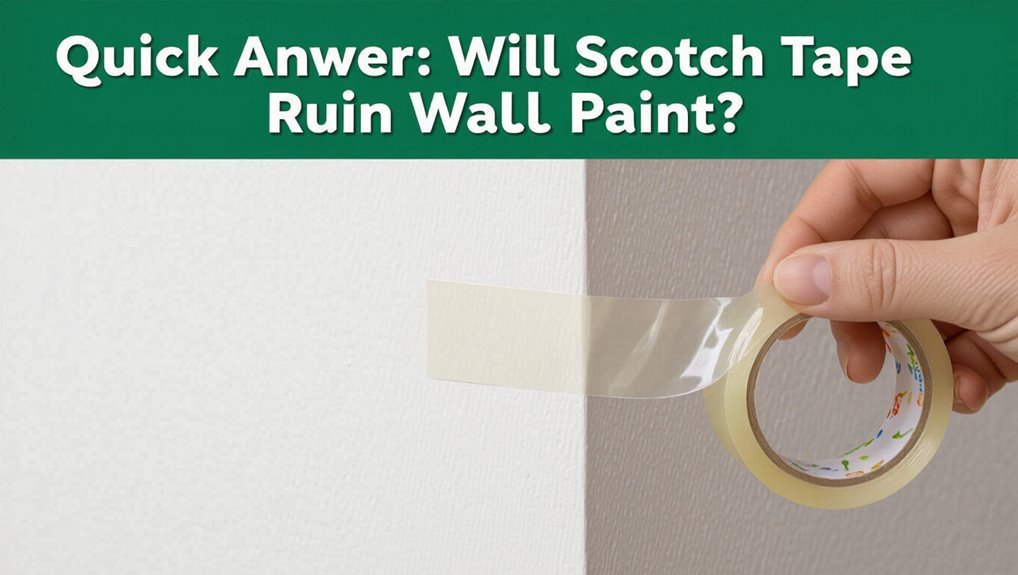
Wondering whether Scotch tape will ruin your wall paint? You’ll usually be fine for short-term use on sealed, cured paint, but older or delicate finishes can lift.
If you’re cautious, consider tape alternatives like painter’s tape or removable adhesive strips for better wall protection.
Test discreetly, avoid prolonged exposure, and remove slowly at a low angle to minimize damage.
How to Test Scotch Tape on Your Wall First
Before taping a visible area, you should try Scotch tape on a small hidden patch to see how it reacts with your paint.
Press it down, let it sit for a few hours, then peel it off to check adhesion and whether any paint comes with it.
If the tape lifts cleanly, it’s likely safe to use elsewhere; if not, choose a gentler option.
Small Hidden Patch
Start with a tiny, out-of-the-way patch—behind a dresser, inside a closet, or near a baseboard—and press a small strip of Scotch tape onto the paint to see if it lifts, peels, or leaves residue; this quick check tells you how the finish will react before you risk visible damage.
If nothing shows after 24 hours, you’ve minimized hidden damage and improved wall protection.
Adhesion And Removal
If you want to know how tape will behave on your paint, press a short strip of Scotch tape onto the chosen spot, smooth it down, and peel it off after 24 hours to check for lifting, peeling, or residue; this simple adhesion test tells you whether the finish can handle tape or if you should avoid it or use a gentler option.
| Result | Action |
|---|---|
| No lift | Safe to use |
| Slight residue | Try removal techniques |
| Paint lifts | Avoid tape; test adhesives |
Note adhesion properties before wider use.
When Scotch Tape Is Usually Safe : And When It’s Risky
You can usually stick Scotch tape on freshly dried, durable paint for short-term tasks like hanging paper or masking small areas.
Be careful with high-risk paint types—delicate finishes, low-VOC or specialty coatings can lift or discolor when tape is removed.
Always test a small hidden spot first and remove the tape slowly to reduce damage.
Short-Term Use
When you need a quick, temporary hold, Scotch tape is usually safe on painted surfaces—especially newer, durable finishes like semi-gloss or satin—because its adhesive comes off cleanly with short-term use.
For temporary applications, test a hidden spot, clean the area first, and mind surface considerations like freshness of paint and dirt.
Remove tape slowly to minimize lifting or residue.
High-Risk Paint Types
Because some paints are softer or less cured than others, Scotch tape can be safe on many finishes yet still pull or mar high-risk types like chalk, flat, metallic, or freshly painted surfaces.
You should assess paint durability and adhesive technology before taping.
Visualize risks:
- Powdery chalk paint flaking under tape.
- Fresh paint skinning and lifting.
- Metallic finishes showing adhesive residue.
How Paint Type Affects Scotch Tape Damage (Latex, Oil, Eggshell, Satin, Flat)
Although scotch tape can seem harmless, the type and finish of paint greatly change how likely it’s to peel or lift when you remove tape.
You’ll find oil paints usually have higher paint durability and resist tape adhesion, while latex holds moderately.
Glossy and satin finishes resist lifting more than eggshell; flat and poorly cured surfaces risk peeling as tape grips loosely bonded layers.
Why Paint Age and Cure Time Matter
If paint hasn’t fully cured, you’ll risk lifting or tearing the finish when you apply or remove tape because the film hasn’t developed full adhesion and hardness yet.
You should consider paint composition and the curing process: different formulas and temperatures change cure time.
Visualize stages:
- Soft, tacky film.
- Partly set, vulnerable edges.
- Fully cured, resilient surface.
How Tape Adhesive and Backing Affect Paint Lift
When you pick masking tape, the adhesive strength directly affects whether paint peels off with the tape.
You’ll also want to evaluate the backing material—paper, plastic, or cloth can change how firmly the tape grips and how gently it releases.
Choosing the right combo of adhesive and backing helps minimize paint lift.
Tape Adhesive Strength
Because the adhesive and backing work together, the tape you choose can make or break a clean paint edge — and it can also pull paint off when removed.
You’ll judge tapes by adhesive properties and tape longevity: stronger glue grips longer but risks lift; low-tack reduces damage.
Picture scenarios:
- Fresh latex with high-tack.
- Aged paint with medium-tack.
- Newly cured primer with low-tack.
Backing Material Type
Although the adhesive grabs the headlines, the tape’s backing material plays an equal role in whether paint lifts.
Backing stiffness, porosity, and stretch determine how much force transfers to the paint layer when you remove the tape. You should match backing materials to surface delicacy: thin, porous backings flex and reduce peel, while stiff, nonporous tape types concentrate stress and increase lift risk.
How Long Scotch Tape Can Stay on Painted Walls
If you press Scotch tape to a painted wall and leave it, the time it can stay without causing damage depends on the paint type, surface texture, and room conditions.
You’ll gauge tape longevity by checking wall adhesion and paint response; remove sooner if residue or lifting appears.
- Smooth eggshell — might hold days.
- Flat matte — risky after hours.
- Semi-gloss — tolerates longer.
How Temperature and Humidity Change Adhesion
You’ll notice temperature affects how well tape sticks — cold makes adhesives firm and lose tack, while heat softens them and can leave residue.
Humidity also changes the bond by swelling paint or tape backing, which can weaken adhesion or cause lifting.
Over seasons, repeated expansion and contraction of paint and substrate will stress the tape edge and shorten safe hanging time.
Temperature Effects On Adhesion
When temperature and humidity shift, paint’s ability to stick, cure, and form a durable film changes too; you’ll notice faster drying in hot, dry conditions and slowed curing in cool, humid ones.
You’ll see how temperature variations affect adhesion strength and tape removal risks:
- Heat: softer film, quicker tack.
- Cold: brittle paint, weak bond.
- Fluctuations: repeated stress.
Humidity Alters Tape Bond
Since humidity affects both the paint film and the adhesive, you’ll notice masking tape behaves very differently on muggy days compared with dry ones.
You should wait for moderate humidity: high moisture softens adhesive, increasing stickiness but risking paint lift; low humidity can make adhesive brittle, reducing tape durability.
Test a small area first to gauge humidity effects before applying tape broadly.
Seasonal Expansion And Contraction
Although temperature and humidity shift slowly through the year, they make a big difference in how paint and tape behave: materials expand in heat and high moisture and contract in cold and dryness, so adhesive bonds can loosen, lift, or tear as surfaces move.
You should anticipate seasonal changes in wall materials and tape performance:
- Summer swell: seams gap, edges lift.
- Winter shrink: film cracks, tape peels.
- Damp cycles: adhesive weakens, residue increases.
How Surface Prep and Wear Increase Risk
If you skip proper surface prep or ignore signs of wear, paint’s protective and decorative roles break down quickly.
You’ll find tape pulls more easily where surface preparation was rushed or paint condition has degraded. Cracked, chalky, or flaking finishes cling poorly; tape can lift loose fragments or leave adhesive in pores.
Inspect and repair substrates first to reduce risk and prolong coatings.
Remove Scotch Tape Without Peeling Paint (Step‑by‑Step)
Before you pull tape, set the surface and tools up properly: clean the area, have a hair dryer or warm water ready, and use a sharp utility knife for any stuck edges.
Peel slowly at a low angle and keep the motion close to the wall to reduce stress on the paint.
If adhesive stays behind, soften it with warmth or a mild solvent and wipe gently to avoid lifting the finish.
Prep Surface And Tools
1 simple trick will help you remove Scotch tape without peeling paint: score the tape edge and pull slowly at a low angle.
For prep, focus on surface preparation and tool selection so you won’t damage finish.
Gather items and clear the area:
- Soft cloth, mild cleaner
- Utility knife with fresh blade
- Plastic scraper, steady hand
Gentle Peel Techniques
Now that your surface and tools are prepped, you’re ready to remove the tape without lifting paint.
Work slowly: hold the wall near the edge, pull tape back on itself at a 45° angle, maintaining low tension for gentle peeling.
If adhesive resists, warm it briefly with your hand or try low-tack tape alternatives next time to reduce risk and speed cleanup.
Remove Residue Safely
Start by gathering a few simple tools—soft cloth, mild solvent (like rubbing alcohol or adhesive remover), a plastic scraper, and a hair dryer—so you can remove tape residue without stressing the paint.
Warm the adhesive, lift edges gently, then use residue removal with adhesive cleaners if needed.
Visualize:
- Heated edge
- Soft lift
- Clean wipe
Soften Adhesive Before Removal: Products & Methods
Loosen stubborn adhesive before scraping to make removal quicker and reduce surface damage; you can choose from heat, solvents, or commercial adhesive removers depending on the adhesive type and substrate. You’ll use adhesive softening methods and targeted removal techniques to protect paint.
| Method | Use |
|---|---|
| Heat (hairdryer) | Soften for gentle scraping |
| Solvent | Break down stubborn adhesive |
| Commercial remover | Fast, formulated option |
Clean Adhesive Residue Safely
After you’ve lifted the bulk of the adhesive, tackle the residue with care to avoid damaging the paint; choose a mild solvent or soapy water first and test it in an inconspicuous spot.
After removing the bulk, gently clean remaining adhesive with a mild solvent or soapy water—test first.
You’ll perform gentle adhesive removal, avoiding harsh scrubbing. Consider tape alternatives next time to prevent residue.
- Soft cloth and soapy water
- Cotton swab with mild solvent
- Gentle circular motions
Repair Paint After Tape Damage (Patching and Repainting)
If tape pulled off paint or left rough edges, you can patch and repaint the area without calling a pro; assess the damage first, then clean, sand, fill, and prime as needed before matching and applying new paint.
Use simple patching techniques: skim small gouges, feather edges, and let filler cure.
Follow repainting tips: test color, use thin coats, and blend into surrounding finish.
Safer Tape Alternatives for Photos, Decorations, and Cables
Photos, lightweight decorations, and cable runs deserve mounting solutions that won’t damage your walls.
So consider replacing standard adhesive tape with gentler options like removable mounting putty, low-tack poster strips, painter’s tape designed for delicate surfaces, or adhesive cable clips that use non-permanent pads.
Use these wall safe options for photo mounting, cable management, decorative tape looks, removable adhesives, and other temporary solutions.
- Small photo corners and putty
- Low-tack poster strips
- Adhesive cable clips
Best Mounting Products for Painted Walls (Temporary to Permanent)
Those gentler options work well for temporary needs, but when you need stronger or longer-lasting solutions for painted walls, you’ll want to match the product to the weight, finish, and permanence you expect.
Choose mounting solutions like removable hooks, Command strips, picture rails, or screw-in anchors.
Consider adhesive types (removable vs permanent, foam vs double-sided) and pick based on load, paint sheen, and tolerance for holes.
Tips to Prevent Scuffs, Residue, and Color Change
When you want your painted walls to look their best, take a proactive approach: use protective pads on furniture, choose removable adhesives recommended for your paint sheen, and lift—not drag—objects across surfaces to avoid scuffs.
- Use felt pads under furniture legs to prevent scratching.
- Pick tape alternatives like low-tack hooks for hanging.
- Clean gently with pH-neutral solutions for paint preservation.
Common Myths About Tape and Paint : Debunked
Although tape seems simple, a lot of myths about how it affects paint keep people from using it correctly.
You shouldn’t assume all tapes damage finishes; tape durability varies and low-tack options often avoid stripping.
Don’t blame every mark on paint incompatibility—surface prep, age, and adhesive chemistry matter.
Not every mark means the paint failed—surface prep, paint age, and adhesive chemistry all play a role.
Test a small area, follow product guidance, and choose tape for the job.
Quick Checklist: Should You Use Scotch Tape on This Wall?
Wondering if Scotch tape is safe for your wall? Check these quick cues before sticking anything — consider paint age, finish, and mission.
- Fresh paint or satin/eggshell? Skip tape; use tape alternatives or temporary hooks for wall protection.
- Flat/matte older paint? Test a small corner for 24 hours.
- Heavy items? Prefer mechanical fasteners or adhesive strips rated for your surface.
Frequently Asked Questions
Will Scotch Tape Remove Wallpaper Adhesive or Damage Wallpaper Seams?
Scotch tape might lift fresh wallpaper adhesive or pull at wallpaper seams, but it won’t reliably remove stubborn adhesive residue; you’ll risk tearing paper and leaving residue, so use proper wallpaper removal methods instead.
Can Tape Cause Fading From Sun Exposure Where It Was Applied?
Yes — you’ll see contrast: tape shields tiny areas, causing uneven sun damage while surrounding paint fades, and when you peel it later tape residue can trap dirt, worsening the patchiness unless you clean or test first.
Is Scotch Tape Safe on Painted Trim or Crown Molding Edges?
Yes — you can use Scotch Tape cautiously on painted trim or crown molding edges; you’ll protect paint durability by testing first, avoiding long-term application, and gently removing to minimize adhesive residue that could damage finish.
Will Tape Pull off Textured or Popcorn Ceiling Paint?
Will it yank textured or popcorn ceiling paint off? You shouldn’t use strong tape on ceiling texture because poor paint adhesion can let tape pull chunks away; instead, test a small spot and choose low-tack options.
Can Repeated Taping Create Permanent Gloss Differences on a Wall?
Yes—repeated taping can create permanent gloss differences if you don’t use proper tape application techniques and skip wall surface preparation; you’ll trap dirt, lift microscopic paint, or alter sheen, especially on low-quality or semi-gloss finishes.
Conclusion
In short: scotch tape can sometimes scuff, stain, or strip sensitive surfaces, so smart, simple steps save your surfaces. Spot-test first, pick painter’s or low-tack tape, press gently, and peel slowly at an angle after paint’s fully cured. For delicate finishes, switch to sticky-putty, removable hooks, or command strips. Be calm, confident, and cautious — careful choices create clean, cheerful walls without costly cosmetic chaos.
