
Will Tacky Paint Eventually Dry on Wood? Fix Sticky Paint
You can often get tacky paint on wood to dry by improving ventilation, lowering humidity, and gently raising room temperature so solvents escape faster; thin coats and patience help. If stickiness persists after a few days it usually signals incompatible products, overly thick application, or expired paint, and you’ll need to sand and refinish or strip and repaint with compatible primer and topcoat. Keep going for step-by-step fixes, tools, and when to call a pro.
Quick Triage: Wait, Fix, or Strip?
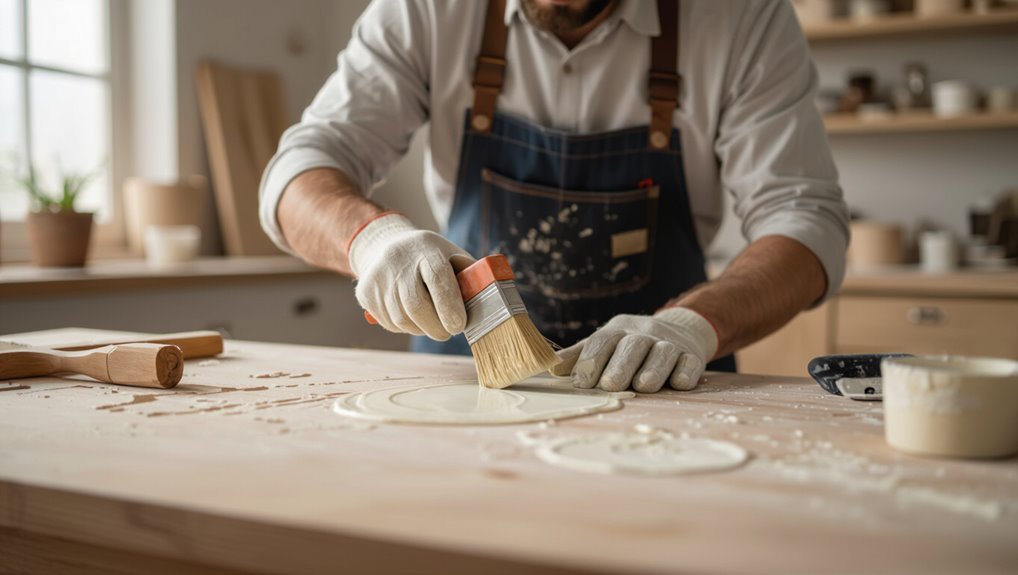
Not sure whether to wait, touch up, or strip it all off? You assess tackiness, humidity, and curing time, then pick quick solutions: gentle solvent wipes, fan and dehumidifier, or spot-sanding plus primer.
If risks are high, strip and refinish; if minor, try paint alternatives like fast-drying acrylics or waterborne enamel for repairs. Act decisively to avoid longer fixes.
Will Tacky Paint on Wood Dry on Its Own?
Will that tacky paint eventually dry on its own? You might wait, but outcomes vary: tacky paint causes range from inadequate curing to contaminants, and you’ll see differing drying time depending on factors.
You can speed curing by ensuring thin coats and gentle airflow, or remove and recoat if tackiness persists beyond expected drying time to avoid finish problems.
Why Paint Stays Tacky: Humidity, Temperature, and Ventilation
When paint stays tacky, it’s usually because the air around the wood is too humid or the temperature isn’t in the proper range for curing.
You should increase ventilation and lower humidity or raise temperature within the paint’s recommended limits to speed drying.
Small changes to airflow and room temp often fix tackiness without stripping or redoing the finish.
Humidity Effects On Drying
Although you might think paint drying is purely about time, humidity, temperature, and airflow actually control how solvents leave the film and whether the surface feels tacky.
You’ll notice high humidity slows evaporation, trapping solvents and causing stickiness. Use humidity control or dehumidifiers and consider compatible drying agents in the formulation to speed cure.
Monitor levels to prevent blistering or uneven finish.
Temperature And Ventilation
Because temperature and fresh-air flow dictate how solvents escape and resins crosslink, you’ll find paint stays tacky in rooms that are too cold or poorly ventilated.
You should raise temperature modestly and boost air circulation with fans or open windows to speed paint drying.
Avoid direct heat that blisters finish; steady, gentle airflow and consistent warmth let solvents evaporate and films cure properly.
How Paint Type and Coat Thickness Affect Drying
If you pick the right paint and apply the right thickness, you’ll cut drying time and reduce the risk of tackiness.
Choose fast-drying formulas and thin, even coats; thick layers trap solvents and stay sticky.
Use recommended paint additives or drying agents sparingly to speed cure without harming finish.
Test a small area, wait full cure time, and add another thin coat if needed.
Primer and Compatibility Issues That Cause Tackiness
If you picked the wrong primer or rushed the job, the paint can stay tacky because the layers won’t bond properly.
Incompatible primer and paint chemistries — like oil-based primer under water-based paint — often prevent a proper cure.
Also make sure the primer fully dries before topcoating, or the trapped solvents will keep the surface sticky.
Improper Primer Selection
When you choose the wrong primer, the paint can stay tacky because the layers won’t bond properly; primers formulated for oil-based paints won’t always accept water‑based topcoats, and vice versa.
You should match primer types to your topcoat and follow proper primer application—drying times, coverage, and sanding—to guarantee adhesion.
If unsure, test a small area before full application.
Incompatible Paint Chemistry
Although you matched primer and topcoat by label, incompatible chemistries can still leave paint tacky because some formulations simply won’t chemically bond.
You’ll notice adhesion problems when oil-based primers meet waterborne topcoats or when specialty primers repel modern paints.
Check manufacturer compatibility charts, test a small area, or sand and recoat with a recommended system to resolve paint chemistry conflicts and eliminate tackiness.
Insufficient Primer Drying
Since primers lock out moisture and solvents as they cure, you’ll get tacky paint if that curing hasn’t finished before you topcoat.
Check primer types and label drying times; oil-based primers cure differently than water-based.
If it’s still tacky, remove topcoat, let primer fully dry, or apply compatible drying agents per manufacturer.
Always test compatibility before recoating to avoid stickiness.
Diagnose: Is the Tackiness Temporary or Permanent?
How can you tell if the tacky feel on your painted wood is a temporary hiccup or a permanent flaw?
Check if tackiness lessens over days — that suggests temporary conditions like slow solvent evaporation.
If stickiness persists, attracts dirt, or softens under touch, you’re likely facing permanent issues such as improper curing, incompatible coatings, or contamination needing repair or refinishing.
Quick Checks You Can Do Now (Humidity, Temperature, Smell)
Before you touch the finish, check the room humidity, temperature, and any strange odors.
High humidity or low temperature can keep paint tacky, and a solvent or sour smell can signal incomplete curing.
Fixing those conditions often solves the problem without more work.
Check Room Humidity
When paint feels tacky days after you applied it, check the room’s humidity first — high moisture can slow drying and cause the surface to remain sticky.
- Measure humidity levels with a hygrometer.
- Increase ventilation to lower moisture.
- Avoid sealing wood until paint absorption improves.
- Use a dehumidifier if readings stay above 60% to speed curing.
Smell And Temperature
Sniff the room and check the temperature — both give quick clues about why paint stays tacky.
Do a smell assessment: solvent or sour odors mean incomplete curing. Measure ambient and surface temps; low heat slows drying.
Use temperature regulation—raise room temp slightly or use a fan to improve airflow but avoid direct heat that blisters paint.
Reassess smell and tack after an hour.
Fast Fixes for Lightly Tacky Paint (30–60 Minutes)
If your paint feels slightly tacky after half an hour to an hour, don’t panic — you can often fix it quickly without stripping or repainting.
Understand tacky paint causes and use quick drying techniques to speed cure.
Try these simple steps:
- Increase air circulation with a fan.
- Raise room temperature slightly.
- Use a dehumidifier.
- Gently blot with a lint-free cloth.
When to Thin, Recoat, or Remove the Tacky Layer
Curious whether you should thin the paint, apply another coat, or strip off the tacky layer?
You’ll thin if gloppy paint hindered proper paint application; use manufacturer-recommended reducer sparingly.
Recoat only when the tacky layer has set enough to accept more without trapping solvents.
Remove and sand if tackiness persists across full cure times or shows contamination.
Consider drying techniques before drastic removal.
How to Cure Tacky Paint on Wood Faster: Safely
Because most tacky finishes are just slow to lose solvents or retain surface moisture, you can speed curing by controlling temperature, airflow, and humidity without harming the wood.
Most tacky finishes simply need faster solvent loss—boost warmth, airflow, and lower humidity to speed curing safely.
Use proper paint curing techniques and basic wood surface preparation before proceeding.
- Raise room temperature moderately.
- Increase cross-ventilation with fans.
- Use a dehumidifier if needed.
- Avoid direct heat or solvents.
Safely Sand and Refinish Stubborn Sticky Paint
When those speeding-up steps don’t fully fix the tacky finish, you’ll need to sand and refinish the surface to remove the sticky layer and restore a smooth, durable coating.
Start with fine-grit sanding techniques to level and dull the tacky film, clean thoroughly, then choose refinishing options—thin primer plus compatible topcoat or a full-stripping and repaint—working in thin layers and allowing proper cure times between coats.
Tools and Products for Curing or Removing Tacky Paint on Wood
If your paint stays tacky despite waiting and speeding-up tricks, you’ll need the right tools and products to either finish the cure or remove the sticky layer safely.
Use proper PPE, test small areas, and follow labels.
Consider:
- Quality paint removers for delicate wood.
- Gentle solvents and mineral spirits.
- Mechanical tools: fine sandpaper, scraping tools.
- Drying agents to accelerate cure.
When to Call a Pro: Signs You Need Expert Help
Wondering whether to call a pro? If tacky paint persists after proper drying attempts, smells strongly of solvents, or shows bubbling, peeling, or solvent-sensitive finishes, get a professional assessment.
You should also call if large or valuable woodwork is affected, or DIY fixes make things worse.
Follow expert recommendations to avoid damage and guarantee safe, correct restoration.
Frequently Asked Questions
Can Tacky Paint on Wood Attract Insects or Pests?
Yes — tacky paint can increase insect attraction and invite pests if it emits odors or traps food residues; you should clean surfaces, fix tackiness, seal gaps, and follow pest prevention steps to deter infestations.
Will Tacky Paint Release Harmful Fumes Over Time?
Yes — tacky paint can emit fumes, but fume duration depends on paint composition, ventilation, and curing; you’ll reduce odors by improving airflow, using low-VOC products, and allowing full cure to minimize lingering harmful emissions.
Can Pets or Children Be Harmed by Touching Tacky Paint?
Yes — they can be harmed if they touch tacky paint; you should act promptly. For paint drying and paint safety, clean spills, block access, and ventilate; seek medical advice or poison control if ingestion or irritation occurs.
Does Tacky Paint Affect Indoor Air Quality Long-Term?
Like a slow-burning candle, tacky paint can keep emitting VOCs; you’ll notice indoor air quality staying poorer until it fully cures or the source’s removed, so ventilate, use low-VOC formulations, and dry or strip the paint.
Can Tacky Paint Ruin Nearby Fabrics or Upholstery?
Yes — tacky paint can stain nearby fabrics and upholstery, so you should use fabric protection and act fast; blot gently and avoid rubbing, then follow upholstery cleaning guidelines or call a pro to prevent permanent damage.
Conclusion
You can usually wait a bit, but don’t ignore tacky paint—humidity, wrong primer, or thick coats often stall curing. Try ventilation, gentle heat, or a drying agent; sand and refinish only if needed. If it stays sticky or peels, strip and start fresh or call a pro. Trust your judgment: a little patience and the right fix will save the wood—and yes, like an old pocket watch, timely care keeps things ticking.
