
Can Latex Paint Freeze and Still Be Good? Storage Guide
You can often save latex paint that briefly froze, but you’ll need to thaw it slowly, stir well, and test before using. Check the can for bulges or rust, sniff for off odors, and look for clumps, milky separation, or color streaks. Small lumps may re-emulsify, but severe freeze damage weakens adhesion and coverage. If tests fail, replace the can and dispose of it properly. Keep reading for storage tips, thawing steps, and when to toss.
Quick Answer: Is Frozen Latex Paint Ruined?
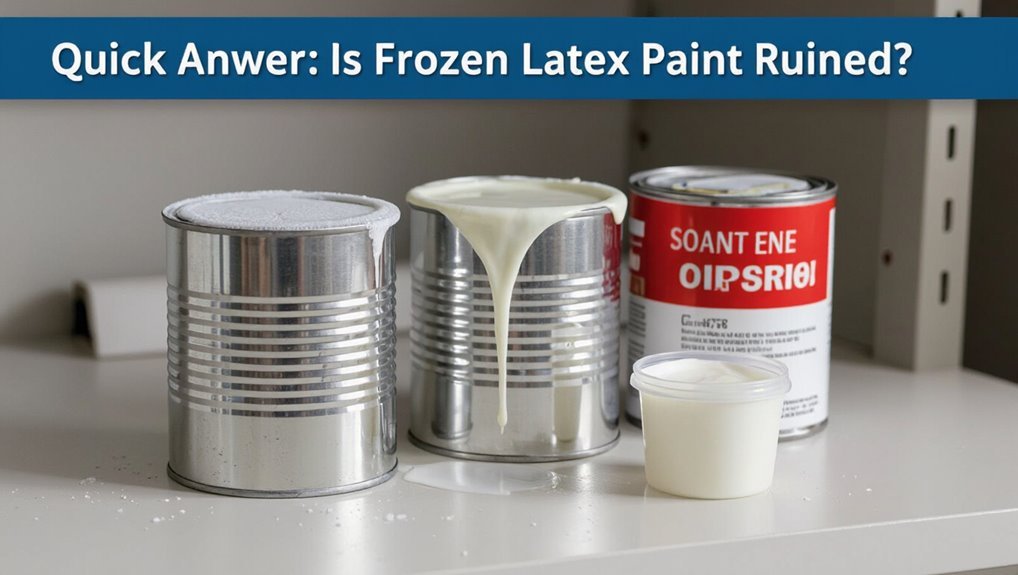
Worried a winter chill ruined your paint? You might salvage frozen paint if it thawed slowly and mixed smoothly; check consistency, odor, and color.
Small lumps or separation often re-emulsify with thorough stirring or a paint shaker.
Small lumps or separation often re-emulsify with vigorous stirring or a good paint shaker — try restoring before discarding.
However, severe freezing can permanently degrade paint quality and adhesion.
When in doubt, test a small patch before committing to a full project.
How Latex Paint Freezes and Why It Matters
If latex paint freezes, the water in its water-based emulsion forms ice crystals that disrupt the uniform dispersion of binders and pigments.
That disruption can permanently change the paint’s texture, color consistency, and ability to adhere.
You should understand freezing mechanisms and basic paint chemistry because they determine whether thawing restores usability, influence storage choices, and guide whether you should keep, test, or discard affected cans.
How Freezing Affects Binders, Pigments, and Additives
When paint freezes, you’ll see the binder’s structure change and the film-forming ability weaken, which can mess with adhesion and durability.
Pigments can clump or settle differently, altering color and coverage. Some additives lose effectiveness after freezing, so you may need to test and possibly replace affected cans.
Binder Integrity Changes
Although latex paint’s water base seems forgiving, freezing can seriously disrupt the binder that holds pigments and additives together.
You’ll notice separation, weakened film formation, and reduced binder stability that compromises adhesion. When binders break, cured film becomes brittle and prone to flaking, shortening paint longevity.
To preserve performance, avoid freeze-thaw cycles and store cans in consistent, above-freezing conditions.
Pigment And Additive Stability
Freezing damages more than just the binder—you’ll also see pigments settle, fade, or clump and additives lose effectiveness after a freeze-thaw event. You should check pigment stability and additive performance before reuse; separated or weakened components reduce color strength and protection.
| Component | Freeze Effect | Action |
|---|---|---|
| Pigments | Clumping/fading | Stir/strain |
| Additives | Reduced efficacy | Replace |
| Binder | Phase separation | Test/apply |
Which Paint Components Fail First in the Cold
If your paint chills down, the binder and water phase usually give out first, leaving pigments and additives behind to clump or separate. The binder thickens and loses its ability to form a continuous film, while ice crystals or concentrated solutes force pigments and thickeners apart.
You’ll notice paint composition effects and cold temperature impact on performance:
- Frustration: ruined finish
- Loss: adhesive power
- Disappointment: mottled color
- Waste: unusable cans
Signs Frozen Latex Paint Might Still Be Usable

Wondering whether that can of latex paint that froze can still be saved? You’ll look for smooth, uniform texture, no foul odor, and consistent color—signs suggesting frozen paint usability.
Mild separation after thawing effects can be normal; simple stirring may restore consistency.
Avoid paints with chunky clumps, persistent sour smell, or dramatic color shifts, which usually mean it’s unusable.
How to Inspect a Frozen Latex Paint Can Safely
Before you open the can, check the exterior for bulging, rust, or a cracked seal and note any frozen lumps or separation you can see through the lid.
Wear gloves and eye protection, and thaw the can slowly at room temperature—don’t use direct heat.
Once thawed, open carefully to avoid splatter and inspect the paint’s odor, consistency, and color.
Visual Can And Paint Check
Inspection is simple but careful: you’ll want to check the can exterior for bulging, rust, or obvious cracks.
Then open the lid slowly to assess the paint’s surface and smell for mustiness or solvents.
Perform a visual inspection for separation, clumps, or off-color.
Test paint consistency with a stir; watch for gritty texture.
- Disappointed
- Relieved
- Cautious
- Hopeful
Safety Precautions Before Opening
If a can looks swollen, frozen, or has been sitting in below-freezing temps, take safety steps before you open it: wear safety gear, work in ventilated area, clear and organize workspace organization, and check lid pressure.
| Step | Action | Note |
|---|---|---|
| 1 | Inspect can exterior | Look for bulging |
| 2 | PPE on | Gloves, goggles |
| 3 | Ventilate | Open slowly |
Step-by-Step: Thaw Frozen Latex Paint the Right Way
When frozen latex paint thaws too quickly or unevenly, its texture and performance can suffer.
So you’ll want to warm it slowly and check it carefully; this step-by-step guide shows how to thaw paint safely, rebuild its consistency when needed, and determine whether it’s still usable.
Use gentle thawing techniques and watch paint consistency.
- Stay patient — don’t rush.
- Warm gradually.
- Inspect for separation.
- Discard if grainy.
Stir and Remix Thawed Paint for Consistent Results
Once your thawed paint is liquid again, you’ll need to stir it thoroughly to reincorporate any separated solids.
Use a slow, steady motion from the bottom up and scrape the sides to guarantee an even consistency.
Keep stirring until the color and texture are completely uniform before you start painting.
Stirring Techniques
Although thawed latex paint may look uniform, pigments and binders often separate during storage, so you should always stir thoroughly before use.
Use proper stirring methods and mixing techniques to restore texture and performance. You’ll feel confident when you:
- grab a sturdy stick and dig deep
- use a drill mixer for large cans
- scrape sides and bottom
- test consistency before painting
Achieving Uniform Color
Because pigments can settle unevenly during thawing, you’ll need to stir and remix latex paint until the color is uniform from rim to bottom.
Use a flat stirrer, scraping sides and bottom, then mix slowly to avoid air bubbles.
Check color blending by sampling on white paper.
Adjust paint consistency with small amounts of water or commercial conditioner for smooth, consistent coverage.
How to Test Thawed Latex Paint Before Painting
Before you start painting, check thawed latex paint to make sure it’s still usable and won’t ruin your project.
Use gentle thawing techniques, then inspect smell and paint consistency. Stir thoroughly and test on cardboard.
If it spreads evenly and dries normally, it’s okay.
- Relief: hope it works
- Frustration: fear of waste
- Confidence: smooth finish ahead
- Caution: trust your test
When Frozen Paint Separation Is Irreversible
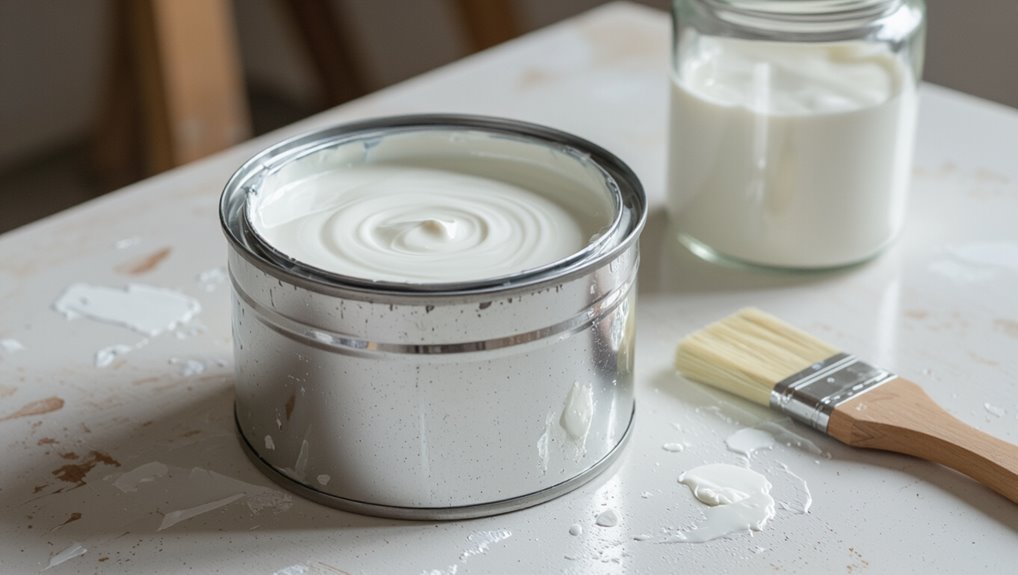
If the binder has broken down severely, you’ll see a milky, watery layer that won’t re-emulsify no matter how much you stir.
Likewise, pigment that’s clumped into hard particles or a grainy sludge means the color won’t redistribute evenly.
In either case, you should discard the paint rather than risk a poor finish.
Severe Binder Breakdown
When freezing shatters a latex paint’s binder, you can’t simply stir the can back to life—the polymer that holds pigment and film together has broken into irreparable pieces.
You’ll face binder degradation tied to compromised paint formulation; the film won’t form, adhesion fails, and the finish is ruined.
- Frustration
- Waste
- Regret
- Acceptance
Irreversible Pigment Clumping
Because ice forces pigment particles together and ruptures the stabilizing dispersant film, frozen latex paint can suffer irreversible pigment clumping that you can’t fix by stirring. You’ll notice permanent color streaks, reduced hiding, and texture defects as pigment stability collapses. Replace affected cans; don’t risk failed finishes.
| Sign | Impact |
|---|---|
| Streaks | Visible |
| Weak hide | Coverage loss |
| Grit | Texture/clumping issues |
Does Freezing Permanently Shorten Latex Paint Shelf Life?
Wondering whether a cold snap will ruin your latex paint for good? You’ll worry less if you understand that freezing can harm paint longevity but doesn’t always end usability.
Damage depends on freeze severity and container seal.
Consider emotional reactions:
- Frustration seeing separation
- Relief if recoverable
- Anxiety over wasted money
- Hope when small batches revive
Store smart in cold storage.
How Long Unopened Latex Paint Lasts in Cold Storage
If your latex paint stayed unopened through a cold spell, it can often remain usable for quite a while—typically 2 to 5 years—provided it never actually froze and the can stayed sealed and dry.
You should store cans in stable cold storage above freezing, off concrete, and inspect seals. Proper temperature control preserves shelf life; label date and rotate stock to avoid surprises.
How Long Opened Cans Tolerate Freezing Temperatures
While opened latex paint can survive short exposures to near‑freezing temps, it’s much more vulnerable once the can’s been unsealed. Ice crystals and repeated freeze‑thaw cycles break down the binder and cause separation that won’t reliably remix.
You’ll face diminished performance and unusable frozen paint sooner. Use careful storage techniques and heed these risks:
- Frustration when texture changes
- Loss of color consistency
- Wasted money and time
- Regret over ruined projects
Temperature Thresholds That Permanently Damage Latex Paint
You need to know that latex paint freezes around 32°F (0°C), which causes water to expand and can separate the binder and pigments.
If paint drops well below freezing or thaws and refreezes, you’ll often see irreversible clumping, graininess, or poor film formation.
Those are the temperature thresholds that turn usable paint into a loss, so store cans above the danger zone.
Freezing Point Of Latex
Latex paint can’t tolerate freezing temperatures: when it drops to around 32°F (0°C) the water in the paint will freeze, but damage usually becomes permanent at or below about 20°F (−7°C) depending on the formulation.
You’ll notice freezing effects and other temperature impacts quickly. Don’t ignore signs:
- Heartbreak over ruined cans
- Frustration with clumping
- Money wasted
- Projects delayed
Irreversible Damage Temperatures
Freezing tells you when paint starts to fail, but permanent harm sets in at specific, lower temperatures you should know.
If latex drops below about 20°F (-6°C) repeatedly or stays under freezing for extended periods, you risk irreversible damage: binder separation, flocculation, and loss of film-forming ability.
Store above recommended temperature thresholds to preserve performance and avoid ruined cans.
Do Finishes Freeze Differently (Eggshell, Semi‑Gloss, Flat)?
Although paint finishes share similar ingredients, they don’t all react the same way to freezing temperatures. You should expect variations based on latex paint characteristics and finish durability.
Freezing can dull sheen or separate binders.
- You’re frustrated by ruined eggshell
- You’re relieved when semi‑gloss survives
- You’re wary of flat finishes
- You’re determined to protect cans
Are Primers and Additives Affected Differently by Cold?
If finish types reacted differently to cold, primers and additives won’t all behave the same either.
You’ll find primer durability varies: oil‑based primers tolerate brief chills better than water‑based ones, which can separate or gel.
Additive performance is hit‑or‑miss; some freeze‑thaw without loss, others lose effectiveness.
Always check labels, stir thoroughly after warming, and test a small area before full use.
How Small Sample Pots Fare in Winter Storage
Small sample pots are more vulnerable to freezing because their shallow volume and thin walls let temperature swing quickly, so you’ll want to check where they’re stored.
If a pot freezes and thaws, stir thoroughly to re-emulsify the paint and watch for graininess or separation that won’t remix.
For longer storage, keep samples in a cool, stable space, seal lids tightly, and consider transferring into slightly larger containers with headspace to reduce freeze risk.
Freezing Risk Factors
When you store sample pots through winter, their small volume and thin walls make them much more likely to freeze than full cans, so keep a close eye on temperature swings and storage location.
You should evaluate freezing conditions and choose storage methods that reduce risk.
Consider emotions tied to loss:
- Frustration at ruined color
- Regret over wasted money
- Anxiety about project delays
- Relief when protected
Thawing And Mixing
Start by moving frozen sample pots indoors so they thaw slowly at room temperature—rapid heating can cause separation or bubbling.
Once soft, inspect lids, then use gentle thawing techniques like placing pots in a warm water bath (not hot).
Stir thoroughly to restore paint consistency; scrape sides and test a small patch.
Discard if texture or odor remains off after thorough mixing.
Long-Term Storage Tips
After you’ve thawed and mixed sample pots properly, consider how they’ll hold up through the rest of winter storage.
You’ll want to prioritize long term storage practices and humidity control to protect color and consistency. Store pots off cold floors, seal lids tightly, and check periodically.
- Worry less
- Feel reassured
- Save money
- Keep memories intact
Best Garage Practices to Keep Latex Paint From Freezing
Because garages can dip below freezing overnight, you’ll want to choose storage spots and insulation tactics that keep latex paint above 35–40°F to prevent separation and binder damage. Use raised shelves, sealed bins, and small thermostatic heaters. Prioritize garage insulation and labeled paint storage; rotate cans and check seals.
| Spot | Tip | Temp goal |
|---|---|---|
| Shelf | Raised | 35–40°F |
| Bin | Sealed | 40°F |
Transport Latex Paint Safely in Winter Conditions
When you move latex paint in winter, protect cans from freezing, sloshing, and road shocks by insulating them, keeping them upright, and minimizing transit time; use foam-lined boxes or blankets and a level, secure spot in your vehicle away from direct cold exposure.
You’ll guarantee transport safety and follow winter precautions.
- Worry less
- Feel confident
- Avoid spills
- Save paint
Insulation and Heater Options for Winter Paint Storage
When storing latex paint through winter, you’ll want to contemplate both insulation methods and safe heater options to prevent freezing.
Use insulating materials like foam, blankets, or insulated cabinets to keep temperatures stable.
If you need active heat, choose a thermostatically controlled, paint-safe heater and keep it at a low, consistent setting.
Insulation Methods
If you plan to store latex paint through the winter, insulating the storage area and adding controlled heat can keep the paint from freezing and separating.
Use simple insulation techniques for reliable paint storage:
- Wrap cans in foam or bubble wrap to protect them.
- Seal gaps to keep cold drafts out.
- Store off concrete to avoid cold transfer.
- Cluster cans to retain warmth.
Heater Options
Because latex paint can be ruined by freezing, you’ll want a reliable, low-risk heating solution for winter storage.
Consider insulated storage with thermal wraps and paint warmers, plus electric blankets or heating blankets around cans.
Use portable heaters, garage heaters, heat lamps or radiant heaters cautiously, and monitor conditions with temperature monitors.
Rotate stock and keep vents clear to maintain steady, safe warmth.
Low‑Cost DIY Ways to Keep Cans Above Freezing
Although paint cans can survive brief cold snaps, you’ll want simple, cheap measures to keep them above freezing through the winter.
Use insulation techniques to stabilize paint temperature and avoid freezing.
Try easy DIY fixes that feel reassuring and practical:
- Wrap cans in old blankets for warmth and comfort
- Use cardboard boxes as windbreaks
- Place cans on wooden pallets to lift from cold concrete
- Store near a warm water heater for gentle heat
How to Store Opened Latex Paint Cans to Reduce Freeze Risk
Keep the lid sealed tightly after each use so air and moisture can’t reach the paint.
Set the can on a raised platform or shelf to avoid cold floors and improve air circulation.
Wrap the can in insulation—like a foam sleeve or old blanket—to add a thermal barrier against freezing.
Seal Can Tightly
When you’re done painting, seal the can tightly to limit air exposure and slow water evaporation that leads to freezing. You’ll protect color, consistency, and future use with firm can sealing for paint preservation.
Press lid, wipe rim, and invert briefly to create a seal.
Don’t forget these emotional reminders:
- Relief: saved paint, saved money
- Pride: neat workspace
- Calm: winter-ready
- Confidence: next project ready
Elevate And Insulate
After you’ve sealed the can, take steps to keep it from sitting directly on a cold garage floor—elevating and insulating opened latex paint cans reduces the chance of freezing and preserves their consistency.
Place cans on a pallet, shelf, or wooden block and wrap them with bubble wrap, foam, or a thermal blanket.
These insulation techniques improve paint storage by limiting cold transfer and condensation.
Labeling and Rotation Strategies for Seasonal Paint Stock
Because seasonal paint gets shuffled between projects, clear labeling and a strict rotation system will save you time and reduce waste.
Use simple labeling techniques and disciplined stock rotation so you won’t guess later. Track date, color, location, and condition. You’ll feel relief knowing cans are usable.
- Bold date on lid
- Color swatch sticker
- First-in, first-out rule
- Store oldest forward
Salvage Badly Frozen Paint Cans: Stepwise Recovery
Even with good labeling and rotation, paint cans can still freeze during harsh winters — and frozen cans need careful handling to avoid wasting paint.
Thaw cans slowly at room temperature, avoid heat sources, then stir thoroughly.
Perform a paint consistency evaluation and strain if needed.
Test a small sample for adhesion and color.
Document results for frozen paint recovery and future storage improvements.
When and How to Dispose of Frozen or Separated Paint
If a can’s contents remain frozen, have a foul odor, or show severe separation you can’t fix by stirring and straining, it’s time to dispose of it safely; don’t pour paint down drains or into the ground.
You should choose proper paint disposal and eco friendly methods to protect health and soil.
Consider:
- Relief at safe removal
- Guilt-free recycling
- Pride in protecting wildlife
- Calm knowing it’s handled
How to Check Local Latex Paint Disposal Rules
Check your city or county website to see what local regulations apply to latex paint disposal and whether curbside pickup, drop-off events, or hazardous waste facilities are used.
You’ll also find which disposal methods are accepted—solidified paint, empty cans, or specific recycling programs.
If the rules aren’t clear, call your local waste authority to confirm before you throw anything out.
Local Regulations Overview
Because local rules vary widely, you’ll want to confirm disposal requirements for latex paint with your city or county before getting rid of any cans.
Check local laws and disposal guidelines online or call your municipal waste office so you don’t risk fines.
Consider these emotional prompts:
- Relief: clarity brings peace.
- Frustration: red tape is real.
- Pride: doing it right.
- Confidence: you’ve checked.
Accepted Disposal Methods
1 clear step you should take is to find your municipality’s specific rules for latex paint disposal before you act.
Check municipal websites or call waste services to learn accepted disposal methods—drop-off events, household hazardous waste centers, or curbside rules.
Follow labeling, drying, or containment requirements to minimize environmental impact.
Don’t assume all facilities accept paint; verify limits, fees, and appointment needs.
Products to Improve Thawed Latex Paint Performance
If your latex paint has thawed and you want to restore its usability, several commercial additives can help stabilize and revive the finish: latex paint conditioners, re-emulsifiers, and mildewcide/antifreeze blends target common problems like separation, poor flow, and odor.
You can use paint additives and performance enhancers to salvage texture and gloss:
- Relief when results improve
- Confidence in sealed cans
- Satisfaction from smooth brushing
- Pride in rescued projects
When It’s Smarter to Buy New Paint Instead of Salvaging
When the paint shows persistent issues—severe clumping, a rancid smell that doesn’t go away, or obvious mold growth—you should buy new rather than try to salvage it.
Do a quick cost analysis and quality assessment, weigh paint replacement against environmental considerations, check brand comparisons and color matching, factor project timeline, review application techniques, adopt safe storage solutions later, and follow safety measures during disposal.
Manufacturer Storage Recommendations for Winter
Although cold weather can wreck latex paint, manufacturers give clear winter storage guidelines you can follow to keep cans usable: follow manufacturer guidelines, store above freezing, seal lids tightly, and avoid moisture.
You should:
- Keep cans in insulated areas to protect warmth.
- Elevate cans off cold floors to prevent chill.
- Use mild heat or a heater blanket when needed.
- Label and check regularly for separation.
Metal vs Plastic Cans: Which Fares Better in Cold?
How do metal and plastic paint cans actually hold up in freezing conditions?
You’ll find metal can durability helps resist punctures and crushing from expanding ice, keeping seals intact longer if rust-free.
Plastic can flexibility tolerates slight expansion without splitting, but becomes brittle in extreme cold.
Store cans off concrete, upright, and insulated to minimize temperature swings and protect both container types.
How Colorants and Pigments Behave After Freezing
You’ve seen how container type affects a paint can’s physical integrity in cold, but the real test for color comes down to what’s inside: pigments and colorants respond differently to freezing.
You’ll worry about color stability and pigment behavior because freeze–thaw can separate, settle, or alter tints.
Consider feelings as you assess:
- Panic at mottling
- Relief if uniform
- Frustration with streaks
- Hope for recovery
Troubleshooting Painting Problems From Thawed Paint
Start by inspecting the thawed paint for separation, clumps, or odd odors before you stir—these signs tell you whether the paint’s still usable or beyond saving.
Before stirring, inspect thawed paint for separation, clumps, or unusual odors—these signs reveal if it’s salvageable.
If consistency looks normal after thorough mixing, test a small patch.
Adjust application techniques: thin slightly for brush flow or use a roller for even coverage.
Discard if texture or smell remains off.
How to Avoid Early Finish Failure After Using Thawed Paint
If the paint thawed but looks and smells normal after mixing, take steps now to prevent early finish failure by ensuring proper surface prep, application, and drying conditions.
Check thawing techniques and paint consistency; strip loose film, sand lightly, and apply thin even coats. Dry between coats. Protect from dust and temperature swings.
- Frustration avoided
- Pride retained
- Money saved
- Finish preserved
Preventive Checklist for Winter Paint Care
When temperatures drop, take a few simple preventive steps to keep your latex paint usable all winter: you’ll seal cans, store off concrete, label dates, and follow winter paint preparation and cold storage tips to avoid surprises.
| Seal tight | Elevate cans | Label clearly |
|---|---|---|
| Insulate | Keep dry | Check temps |
| Rotate stock | Avoid drafts | Note color/date |
Freeze‑Damage Severity Guide and Recommended Actions
Even with cans sealed and stored off the floor, freezing temperatures can still harm latex paint in specific, predictable ways; knowing the signs of mild, moderate, and severe freeze damage helps you decide whether to salvage a can or discard it.
You should check texture, smell, and performance after thawing.
Markdown list of emotional cues:
- Shock at separated, watery paint
- Frustration with clumpy, unusable texture
- Relief when paint mixes back smooth
- Sorrow if paint is ruined beyond recovery
Where to Get Professional Testing or Expert Advice on Latex Paint
Because identifying whether latex paint is safe to use can be tricky, you’ll want a pro’s opinion when visual checks and simple tests aren’t enough.
Contact local paint stores, manufacturer hotlines, or independent labs for paint testing and professional recommendations. A certified chemist or coatings lab can analyze odor, separation, and freeze damage.
Keep batch info and photos to speed assessment and get clear reuse guidance.
Frequently Asked Questions
Can Latex Craft Paints Freeze Differently Than Wall Paints?
Yes — you’ll find craft paint properties differ from wall paints, and temperature effects hit them differently: smaller batches, higher pigment/binder ratios, and additives make craft paints more sensitive to freezing, so they can degrade faster.
Can Frozen Exterior Paints Still Protect Against Mildew or UV?
No — if exterior paints freeze, their paint performance will suffer; freezing effects can break binders and mildewcide, so you won’t reliably get mildew or UV protection. You’ll need to test or replace the paint.
Will Freezing Affect Paint Toxicity or VOC Levels?
Freezing won’t greatly change paint toxicity or VOC levels, but it can ruin paint consistency and hurt paint performance; you’ll notice separation, clumping, and weaker film formation that can affect application and durability.
Do Eco‑ or Low‑Voc Paints Require Special Cold Storage?
No — you won’t need a tundra vault; eco‑ and low‑VOC paints don’t demand special cold storage beyond avoiding freezing. Keep them above freezing, follow manufacturer guidance, and mind paint formulation sensitivity to cold.
Can Frozen Paint Be Used in Airless Sprayers Without Clogging?
No — you shouldn’t. Frozen paint alters paint consistency and can harm sprayer performance; you’ll risk clogs and uneven atomization. Thaw, strain, and test before using in an airless sprayer to avoid problems.
Conclusion
You can usually salvage thawed latex paint if it wasn’t repeatedly frozen and still stirs smooth — but don’t risk a ruined finish. Check for clumps, sour smell, or odd separation; if it looks and smells okay, strain and test on scrap wood. Store cans off concrete, in insulated spots, and keep lids tight to avoid future frost. Treat paint like a trusty gramophone: handle gently, test before committing to a full coat.
