
Can You Mix Chalk Paint With Latex Paint? What Happens
You can mix chalk paint with latex paint for small color tweaks or a matte, textured look, but you’ll need to test first because the blend can change adhesion, flexibility, and sheen. Use it on porous, primed, or well-sanded surfaces and apply thin coats; avoid slick or high-moisture areas. Expect potential peeling, cracking, or altered durability over time, and plan to seal with wax, poly, or lacquer as needed — keep going to learn how to prepare and protect finishes.
Quick Answer: Can You Mix Chalk Paint With Latex Paint?
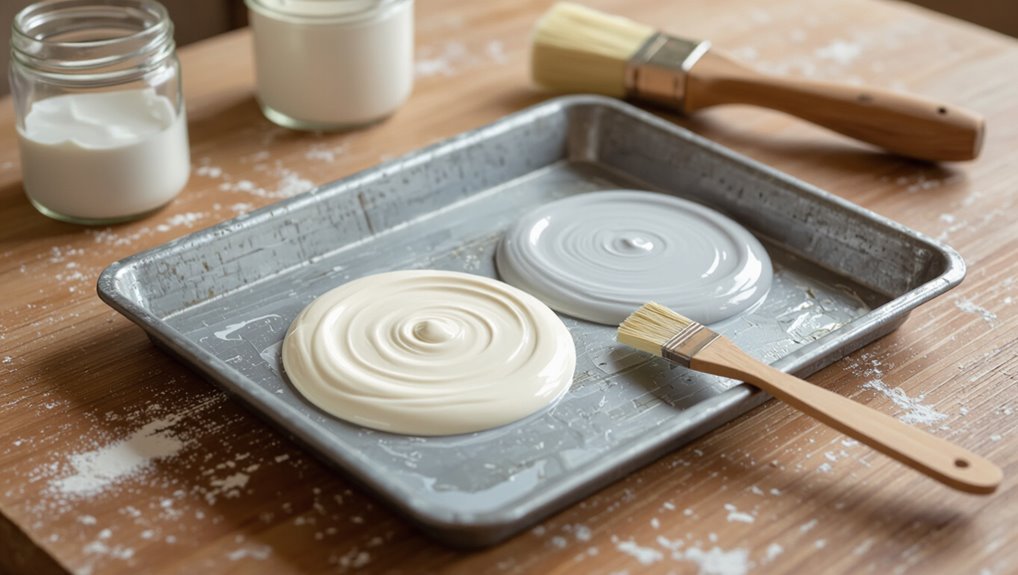
Yes — you can mix chalk paint with latex paint, but you should do it carefully.
You’ll get basic color blending and can tweak hue and opacity, yet you must test small batches first.
You can blend hues and adjust opacity, but always trial small batches first to confirm results.
Assess finish compatibility—chalk’s matte texture may alter latex sheen.
Mix slowly, stir thoroughly, and try a sample on scrap to confirm adhesion, drying time, and final look before committing.
When Mixing Is Safe: Recommended Surfaces and Use Cases
When you mix chalk paint with latex, it’s safest to use it on porous, previously primed, or sealed surfaces—think raw wood, plaster, MDF, and well-prepped furniture—because these substrates accept adhesion and the matte chalk finish without flaking.
For recommended surfaces and use cases, you’ll prefer cabinets, shelving, and decor.
Employ light sanding, thin coats, varied application techniques, and test finish variations beforehand.
When Mixing Is Risky: Peeling, Cracking, and Failures
Although mixing chalk paint with latex can be tempting, you’ll risk peeling, cracking, and adhesion failures on slick, nonporous, or poorly prepped surfaces.
You’ll encounter peeling issues where layers won’t bond, cracking risks from incompatible flex, and adhesion challenges that lead to flaking or bubbling.
Those finish failures often appear over time, especially with moisture, wear, or insufficient surface sanding and priming.
Chalk vs. Latex: Binders, Adhesion, and Appearance
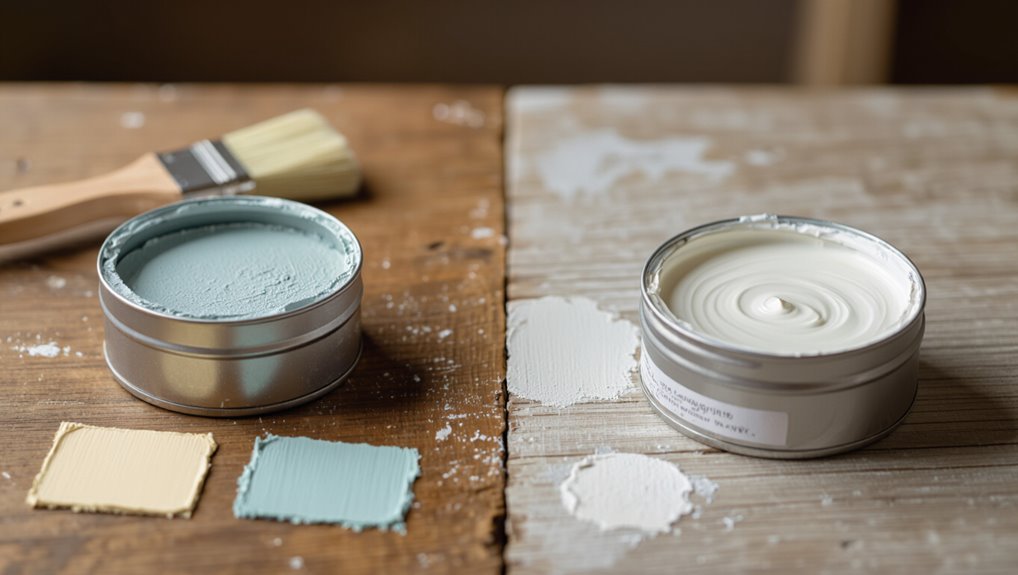
Because chalk and latex paints use different binders, they behave and look quite differently on your surfaces.
Chalk’s weak binder gives a matte, powdery finish and easy distressing, while latex’s stronger acrylic binder yields a durable, smoother film with better adhesion.
When mixed, expect limited color blending and noticeable texture contrast; compatibility varies, so test small areas to judge finish and bond before committing.
Preparing Surfaces for Mixed Chalk + Latex Paint
Before you mix chalk and latex, clean the surface thoroughly to remove dirt, grease, and loose paint.
Then sand any glossy or uneven areas to promote adhesion.
Spot-prime repairs, raw wood, or stained spots so the blended paint goes on evenly.
Clean Thoroughly First
1 clean surface will make the difference between paint that sticks and paint that flakes—so start by removing dust, grease, and loose finish with a degreaser or trisodium phosphate solution and a stiff brush or sponge.
Use targeted cleaning techniques—wipe, rinse, and dry thoroughly.
Proper surface preparation guarantees your mixed chalk and latex paint adheres evenly and prevents peeling, staining, or uneven coverage.
Sand For Adhesion
Start with a light sanding to give your mixed chalk-and-latex paint something to grab onto: use 120–220 grit sandpaper depending on how glossy or rough the surface is, sanding until the sheen dulls and any loose finish is removed. You’ll use proper sanding techniques to boost adhesion importance and create a uniform texture before painting.
| Tool | Grit | Action |
|---|---|---|
| Sandpaper | 120 | Remove gloss |
| Sandpaper | 220 | Smooth |
| Block | N/A | Even pressure |
| Sponge | 220 | Light finish |
| Brush | N/A | Clean dust |
Prime Problem Areas
Once you’ve sanded and cleaned the surface, spot-prime any areas that show stains, bare wood, tannin bleed, or patched repairs so your mixed chalk-and-latex paint adheres evenly and won’t show through.
Choose primer selection based on stain-blocking needs and substrate. You’ll feather edges, let primer cure fully, and confirm surface preparation before blending chalk and latex to avoid bleed-through or adhesion failures.
Tools, Time, and Cost for Mixing Chalk and Latex
When you mix chalk paint with latex, choose a few basic tools—stir sticks, a clean mixing container, measuring spoons or cups, and a small whisk or paint mixer—to keep measurements consistent and avoid lumps. You’ll track time, compare supplies, and weigh application techniques and cost comparison to decide ratios, cure time, and whether additives help.
| Tool | Purpose |
|---|---|
| Stir stick | Blend |
| Whisk | Smooth |
| Cups | Measure |
| Container | Mix |
| Masking tape | Prep |
Try These Small Tests to Check Adhesion and Finish
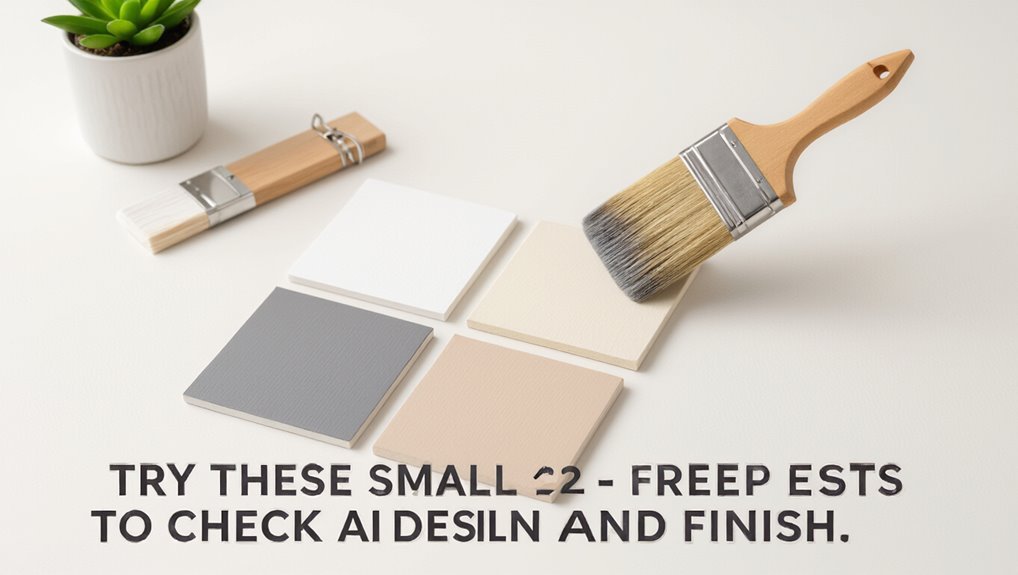
Before you commit to a full project, try small test patches so you can check adhesion, color, and finish without wasting time or materials.
Use scrap wood or an inconspicuous area, apply your chalk-latex mix, and let it cure.
Run adhesion tests (tape or fingernail) and inspect for peeling.
Do a finish evaluation for sheen, texture, and touch durability before proceeding.
Mixing Methods and Workable Ratios
If you’re aiming for a reliable blend, start by understanding the basic methods and sensible ratios: mix small test batches, note viscosity, adjust slowly.
Use these mixing techniques and ratio guidelines to guide you:
- 1:1 for strong chalk effect, thicker body
- 1:2 (chalk:latex) for smoother application
- 1:3 for subtle chalkiness
- Add water or binder sparingly to tweak consistency
Effect on Sheen, Matte Finish, and Distressing
When you mix chalk paint with latex, the combined sheen can shift and sometimes clash with existing finishes, so test a small area first.
Expect chalk’s ultra-matte character to dominate at higher ratios, but added latex can raise sheen and change how distressing reveals underlying layers.
Keep your sanding and sealing approach in mind, because distress results and matte behavior will vary with the mixture.
Sheen Compatibility Issues
Because chalk paint and latex often dry to different sheens, you’ll notice changes in finish where they meet—matte chalk paint can look dull next to a low-sheen latex, or chalk can flatten a latex’s slight sheen.
You should test sheen levels and finish variations beforehand. Consider:
- Test small patch for visual mismatch
- Use compatible topcoat
- Blend edges gradually
- Expect touch-up differences
Distress And Matte Behavior
Although chalk paint’s ultra-matte surface hides brush marks and latex often retains slight sheen, you’ll notice distressing reveals and wear patterns differently across the two: chalk scuffs to a soft, velvety matte while latex can show glossier edges where underlying layers get exposed.
When you blend or layer, test distressing techniques first—matte finishes respond differently, and sealing choices will alter final sheen and durability.
Durability, Maintenance, and Lifespan of Mixed Paint
If you mix chalk paint with latex, expect a finish that balances chalk’s matte look with latex’s tougher film, but don’t assume it matches pure latex for long-term wear.
You’ll notice mixed paint performance varies; color blending can shift with age. Maintain by gentle cleaning and touch-ups.
Mixed paint can change over time; watch for color shifts and preserve the finish with gentle cleaning and prompt touch-ups.
- Clean with mild detergent
- Inspect chips regularly
- Touch up fades promptly
- Avoid harsh scrubbing
Sealing Mixed Paint: Wax, Poly, or Lacquer-When and Why
When you finish with mixed chalk and latex paint, choosing the right sealer depends on use: wax works well for low-traffic, matte looks.
Use polyurethane when you need hard-wearing, water-resistant protection for surfaces that get a lot of use.
Choose lacquer if you want a fast-drying, smooth finish and are prepared to spray or work in a ventilated area.
When To Use Wax
Once you’ve blended chalk paint with latex, you’ll want to decide if wax is the right sealer for the piece; wax excels at deepening color, adding a soft luster, and giving a hand-rubbed, tactile finish that poly or lacquer can’t replicate.
Use wax when you want subtle protection, easy repair, and enhanced texture.
- Best for low-traffic pieces
- Promotes easy wax application
- Improves finish longevity
- Adds patina and depth
Polyurethane For Durability
Choose polyurethane when you need hard, long-lasting protection for a piece that sees daily use—it forms a tough, moisture-resistant film over mixed chalk-and-latex paint that resists scratches, stains, and frequent cleaning better than wax. You’ll appreciate polyurethane benefits in a durability comparison when choosing a sealer for high-traffic furniture.
| Type | Finish | Use |
|---|---|---|
| Poly | Gloss | Tables |
| Wax | Satin | Decor |
| Lacquer | Matte | Trim |
| Oil | Sheen | Floors |
Lacquer For Fast Finish
Because lacquer dries and cures far faster than wax or polyurethane, you’ll get a hard, protective finish in hours instead of days—perfect when you need quick turnaround on pieces finished with mixed chalk-and-latex paint.
Use proper lacquer application techniques for even coverage and ventilation. Fast finish benefits include speed and durability.
- Spray thin coats
- Sand between layers
- Work in ventilated area
- Test compatibility first
Troubleshooting Common Problems and Safer Alternatives
If your mixed chalk-and-latex paint behaves oddly—separating, flaking, or drying too slowly—you can usually fix it without starting over.
Check ratios, stir thoroughly, strain lumps, and test adhesion; adjust with a bonding primer or slow-dry additive.
Check ratios, stir well, strain lumps, and test adhesion; use bonding primer or slow-dry additive as needed.
For color blending or texture variation issues, tweak pigment load or add fine filler.
Consider using separate finishes or commercial chalk-latex formulas as safer alternatives.
Frequently Asked Questions
Can Mixed Chalk/Latex Paint Be Used Outdoors Long-Term?
Not really — you shouldn’t rely on mixed chalk/latex paint for long-term outdoor use. You’ll get inferior durability compared to pure exterior paints, and color retention will fade faster unless you apply proper sealers and maintenance.
Will Mixed Paint Affect Lead-Safe Renovation Practices?
Absolutely — you’ll still follow lead testing requirements, and mixed paint can change paint adhesion, so you’ll document, contain, and control dust; don’t assume safety—treat surprises like wildfire and follow lead-safe renovation protocols strictly.
Can You Tint Chalk Paint After Mixing With Latex?
Yes — you can tint chalk paint after mixing with latex; you’ll adjust tinting techniques to match paint consistency, testing small batches, adding dye or universal tint gradually, and stirring thoroughly until color and texture are uniform.
Does Mixing Change VOC Levels and Indoor Air Quality?
Like a breeze stirring dust, yes — mixing can alter VOC levels and indoor air quality; it’ll affect paint adhesion and color consistency, so you’ll risk higher emissions, uneven bonding, and unpredictable hues without proper ventilation and compatible products.
Are There Spray-Application Concerns for Mixed Paints?
Yes — you’ll face spray-application concerns: mixed paint can clog nozzles, alter spray technique, and affect atomization; you should test viscosity, thin cautiously, and verify surface adhesion on a scrap before spraying the final piece.
Conclusion
Yes, you can mix chalk paint with latex, but do it carefully: thin chalk into latex for better adhesion and flexibility, and test first. For best results, prep and sand surfaces, use a primer where needed, and seal with wax or poly depending on wear. Mixed paint can yield a velvety matte look but may be less durable than straight latex. Think of it like blending silk and denim—pretty, but treat seams thoughtfully to avoid tearing.
