
Can You Save a Paint Brush With Dried Paint? Easy Methods
Yes — you can often save a brush with dried paint if you act carefully and the bristles aren’t ruined. First check for rust, loose ferrule, or brittle hair to see if it’s worth rescuing. For water‑based paint soak in warm water and soap, comb and reshape. For oil paint use mineral spirits or odorless thinner in a ventilated area, then wash and reshape. Try longer soaks and gentle scraping for heavy buildup, and continue below to learn easy step‑by‑step methods.
Quick Answer: Can a Dried Paint Brush Be Saved?
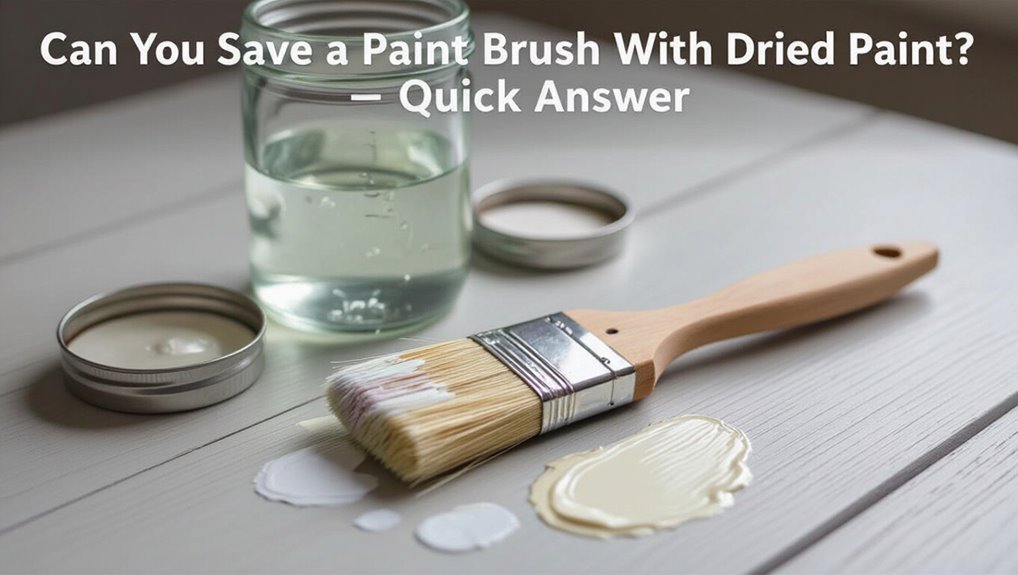
Wondering if that crusty brush on your shelf can be salvaged? You can often revive dried brushes with targeted paint removal and proper brush maintenance.
Soak synthetic bristles for water-based paint or use solvent for oil-based, then comb and reshape while damp. You’ll restore flexibility and performance in many cases, but results depend on how long and how thoroughly paint’s hardened.
Check Whether the Brush Is Worth Rescuing
How do you decide if a dried brush is worth the effort? Inspect bristle condition, ferrule rust, and handle integrity—this is your brush evaluation.
If bristles are severely matted or the ferrule’s loose, restoration cost and time may exceed replacement. Consider sentimental value or specialty brushes; otherwise, skip restoration.
Choose based on function, safety, and whether salvaging actually saves money.
Rescue Steps for Water‑Based Paint (What to Try First)
If the paint is water‑based, start with the gentlest methods—you’ll often save a brush by loosening and rinsing before moving to stronger treatments.
Soak bristles in warm water, gently work with a comb or brush tool, and use mild cleaning solutions like dish soap.
Rinse repeatedly, repeat soaking and combing, and finish with a final rinse; escalate only if paint removal remains incomplete.
Rescue Steps for Oil‑Based Paint (Safe Solvents and Tips)

Oil‑based paint needs stronger solvents than water‑based types, but you can save many brushes if you act carefully and use the right products.
Start by testing solvent types like mineral spirits or odorless thinner, working in a ventilated area.
Use appropriate cleaning techniques: swish bristles, comb out softened paint, repeat with fresh solvent, then wash with mild detergent and reshape before drying.
Deep Soak Methods for Dried Paint on Brushes
Start by evaluating how hardened the paint is so you can choose the right soak method and solvent. You’ll pick soaking techniques based on solvent strength and watch duration effects carefully to avoid bristle damage. Use repeated short soaks for light crusts, longer controlled soaks for thick buildup.
| Solvent | Recommended duration |
|---|---|
| Water | 30–120 min |
| Mineral spirits | 1–6 hrs |
| Acetone | 30–90 min |
| Brush cleaner | 1–4 hrs |
Mechanical Cleaning: Combing, Scraping, and Reshaping Bristles
Work the bristles with a firm combing and gentle scraping to remove softened paint without crushing the hairs.
Use a stainless comb or old fork, improving bristle alignment as you comb from ferrule to tip.
Apply light scraping techniques with a palette knife to lift stubborn flecks.
Finish by reshaping the tip with your fingers and rinsing; dry flat to maintain the shape.
When to Use Commercial Brush Restorers (How to Choose One)
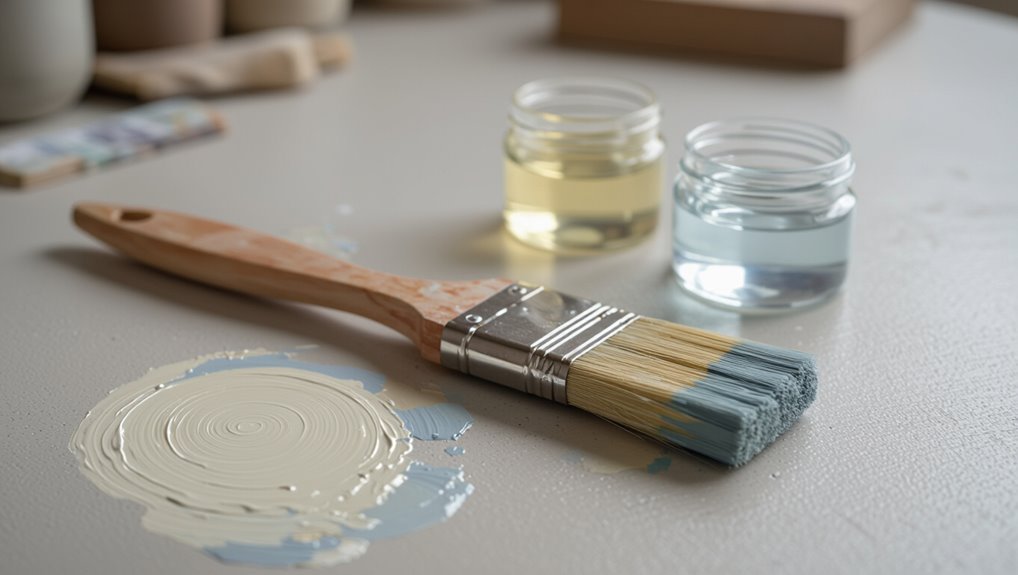
If your brush is badly hardened or has lost its shape after mechanical cleaning, you’ll want to contemplate a commercial restorer.
Check that the restorer is compatible with the paint type and bristle material, and read labels for solvent strength and required contact time.
Also weigh safety and environmental factors—choose low-VOC, biodegradable options and use proper gloves and ventilation.
Brush Condition Assessment
Before you decide whether a commercial brush restorer is worth trying, take a close look at the bristles, ferrule, and handle to judge the damage: are the bristles merely stiff and matted from dried paint, or are they permanently fused, splayed, or missing large clumps? Check brush types and maintenance techniques; prioritize restorers for flexible, intact bristles.
| Condition | Action | Likely Result |
|---|---|---|
| Stiff | Soak/restorer | Recoverable |
| Fused | Replace | Poor |
| Splayed | Trim/restore | Partial |
Solvent Compatibility Check
Start by checking the type of paint you used—water-based, oil-based, or solvent-heavy specialty coatings—because restorers contain solvents that react differently with each.
Match solvent types listed on product labels to your paint compatibility needs. If a restorer cites compatible solvents for your paint, it’ll dissolve dried residues without harming bristles.
Choose one labeled for your specific paint system.
Safety And Environmental Considerations
Wondering whether a commercial brush restorer is worth the risk and cost? You should weigh effectiveness against hazards: check labels, use safety precautions like gloves, ventilation, and eye protection, and follow disposal rules.
Prefer eco friendly options when available. Reserve strong restorers for valuable brushes only, and never mix products.
Store and discard leftovers responsibly to protect yourself and the environment.
Cleaning Synthetic vs Natural‑Hair Brushes
You’ll handle synthetic and natural-hair brushes differently when removing dried paint: synthetics tolerate harsher solvents and vigorous scrubbing, while natural hair needs gentler cleaners and careful reshaping.
Use mild soap and lukewarm water for natural brushes to prevent bristle damage, and reserve stronger restorers or heat-free solvent soaks for synthetics.
With either type, rinse thoroughly and reshape the bristles to prevent splaying and extend the brush’s life.
Synthetic Brush Care
Although synthetic and natural‑hair brushes look similar at a glance, they need different care—synthetic fibers tolerate harsher solvents and quicker agitation, while natural hairs require gentler handling and conditioning.
For synthetic brush care, rinse with warm soapy water or solvent, comb bristles gently, reshape and dry flat.
Learn brush types and follow maintenance tips to prolong flexibility and avoid splaying.
Natural Hair Treatment
Treat natural‑hair brushes with gentler methods than you use for synthetics: their animal fibers are porous, flexible, and prone to damage from harsh solvents and rough scrubbing, so clean them with mild soap or dedicated brush cleaner, lukewarm water, and soft combing rather than aggressive agitation. Use natural remedies and hair conditioning oils sparingly to restore suppleness.
| Step | Tip |
|---|---|
| Rinse | Lukewarm water |
| Clean | Mild soap |
| Comb | Soft strokes |
| Condition | Light oil |
Bristle Damage Prevention
Now that you know gentler care for natural‑hair brushes, shift focus to preventing bristle damage by comparing synthetic and natural fibers.
You’ll treat synthetics with stiffer scrubs and warm soapy rinses; avoid harsh solvents that warp nylon.
For natural hair, use mild cleaners and reshape tips while damp.
Consistent bristle care improves brush longevity, so store brushes flat or upright to protect tips.
Troubleshooting: Smells, Splayed Bristles, and Brittle Hair
If your brush smells off, has splayed bristles, or feels brittle, you can usually bring it back with the right cleaning and conditioning steps—first identify whether the issue is solvent residue, hardened paint, or natural hair damage so you know which treatment to use.
For solvent smells, flush with appropriate cleaner for the paint types used.
Re-shape splayed bristles, soften brittle hair with conditioner, and repeat brush maintenance.
When to Replace a Brush
Even with careful cleaning and conditioning, some brushes won’t recover and you’ll need to replace them.
If bristles stay misshapen, shed excessively, or lose bristle quality despite restorations, replacement is smarter.
Also swap brushes when performance drops—uneven strokes, poor paint pickup, or stubborn dried paint deep in the ferrule.
Prioritize tools that sustain brush longevity; don’t cling to ruined brushes.
Preventive Habits to Avoid Dried‑Paint Brushes
To keep brushes usable longer, clean them immediately after use so paint never has a chance to harden in the bristles.
Rinse thoroughly with the appropriate solvent, reshape the bristles, and remove excess moisture before storing.
Store brushes flat or hanging with the bristles up in a dry, dust‑free spot to maintain their shape and prevent damage.
Clean Immediately After Use
Clean your brush right after you finish painting—don’t let paint sit and harden on the bristles.
Use proper cleaning techniques for quick paint removal to keep bristles flexible and effective. Rinse, comb, and repeat until water runs clear.
- Wipe excess paint first
- Rinse with solvent or water
- Use a brush comb
- Work soap into ferrule
- Shake and reshape bristles
Store Brushes Properly
When you’re done cleaning, store brushes bristle-up or flat so moisture can’t pool at the ferrule and ruin the glue; proper positioning and a dry, dust-free spot will keep bristles flexible and prevent paint from settling back into the hairs.
Use breathable covers or a hanging rack for consistent brush storage, label sets by paint type, and inspect periodically as part of routine brush maintenance to extend tool life.
Frequently Asked Questions
Can Hardened Paint Ruin Brush Ferrules or Handles Over Time?
Yes — hardened paint can damage ferrules and handles over time. You’ll need regular brush maintenance and prompt paint removal to prevent rust, splitting, and loosening; neglecting that lets dried paint warp metal and wood fittings.
Can Dried-Paint Brush Rescue Methods Damage Finished Floors or Surfaces?
Yes — rescue methods can damage finished floors or surfaces if you don’t use proper surface protection; dried paint effects, solvents, scrapers, or heat can etch, stain, or dull finishes, so you should protect and test first.
Are There Eco-Friendly Solvents Safe for Indoor Use?
Yes — you can use eco friendly options like citrus-based, soy, or biodegradable brush cleaners indoors; they’re low-odor and non-toxic, but you’ll still ventilate, wear gloves, and test a small area to guarantee indoor safety.
Can Rescued Brushes Be Used for Food-Contact Items (Cutting Boards)?
No, you shouldn’t use rescued brushes on food-contact items; food safety risks persist from old paint residues and brush materials like synthetic or metal ferrules. You’ll need dedicated, new brushes certified for food use.
Does Freezing a Brush Help Loosen Dried Paint?
Like thawing a stubborn knot, yes — freezing techniques can help paint loosening by making dried paint brittle so you can chip or flex bristles. You’ll still need solvents and gentle scraping to fully restore the brush.
Conclusion
You can often breathe life back into a dried paint brush, but whether it’ll fully recover depends on how badly it’s baked on. If the bristles are salvageable, gentle solvents, long soaks, and careful reshaping can coax them back to work. Sometimes brushes are beyond repair—don’t be afraid to let go. Save the easy rescues, learn from the ones you lose, and build habits that keep your brushes ready for the next creative burst.
