
How to Remove Dried Oil Based Paint From Clothes
You can often remove dried oil‑based paint by softening it with an appropriate solvent (mineral spirits, paint thinner, or a citrus remover for gentler action), testing first on a hidden seam, then scraping and blotting away loosened paint. Work in a ventilated area, wear gloves, and avoid acetone on delicate fabrics. Tough or deep stains may need professional restoration, and careful laundering follows once the paint’s gone—keep going for step‑by‑step methods, fabric tips, and safety details.
Can You Remove Dried Oil‑Based Paint? Quick Answer
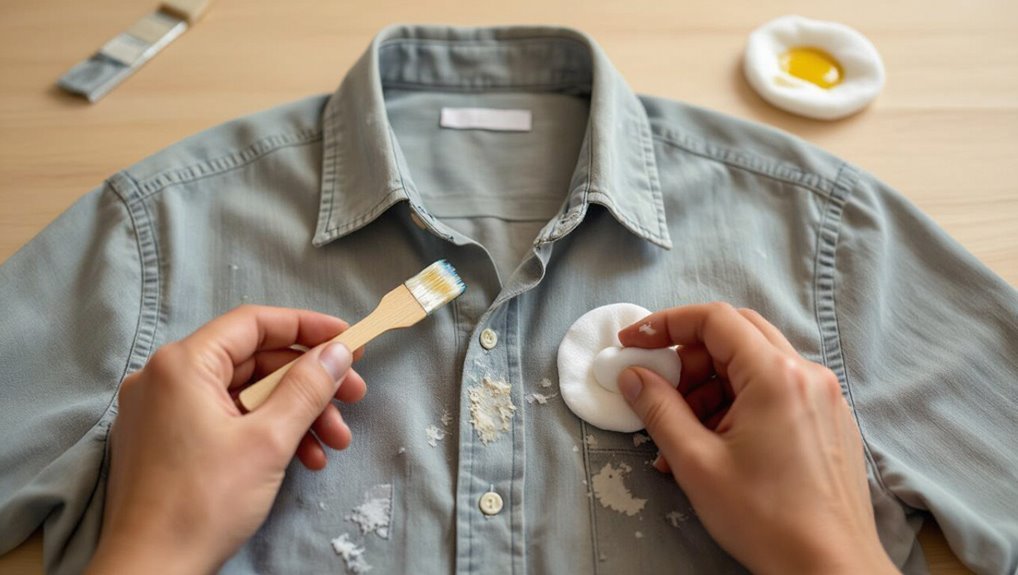
Can you remove dried oil‑based paint from clothes? Yes, but success varies.
You’ll need to match removal methods to paint types and fabric care labels: test solvents on a hidden seam, use mineral spirits or paint thinner for sturdy fabrics, and opt for gentler removers for delicate fibers.
Expect some staining; deep-set paint may not fully lift without professional restoration.
Emergency Fixes While You’re Still Wearing Clothes
If you get oil‑based paint on your clothes, act fast and blot—don’t rub—to lift as much as you can.
You can carefully remove fresh paint with a solvent like mineral spirits, but keep it off your skin and away from your eyes.
If solvent use is needed, ventilate the area and wear gloves and eye protection.
Act Fast, Blot Gently
Act fast—every minute counts when oil-based paint lands on your clothes—so don’t panic; stay calm and act deliberately.
Use the blot technique with absorbent materials to lift wet paint without rubbing. Follow these steps immediately:
- Scrape off excess gently.
- Blot with paper towel or cloth.
- Replace absorbent layer as it fills.
- Air the spot until you can treat properly.
Remove Paint With Solvent
Reach for a solvent like mineral spirits, turpentine, or a commercial paint remover to tackle fresh oil-based paint while you’re still wearing the garment—work quickly, ventilate the area, and protect your skin with gloves.
Choose solvent types appropriate for fabric, test an inconspicuous spot, then dab with a cloth.
Use precise application techniques: blot outward, avoid rubbing, repeat until paint lifts.
Protect Skin And Eyes
1 quick response can keep paint from causing a worse problem: wash exposed skin immediately with plenty of soap and cool water, and flush any paint from your eyes for at least 15 minutes while holding lids open.
- Remove contaminated clothing carefully.
- Rinse skin thoroughly; use gentle soap for skin protection.
- Continue eye flushing; seek medical help for irritation for eye safety.
- Avoid rubbing or using solvents on skin.
What to Expect: Oil‑Based vs. Water‑Based Paint
When you’re dealing with dried paint stains, knowing whether the paint was oil‑based or water‑based makes a big difference: oil paints are tougher, bond more permanently to fibers, and usually need solvents, while water‑based paints tend to soften with warm water and detergent.
Expect oil based benefits for durability but harder removal; water based drawbacks include weaker coverage yet easier cleaning.
Is This Garment Worth Saving?
First check what the garment is worth to you—its material, brand, and sentimental value affect whether it’s worth the effort.
Then inspect how deep and widespread the paint stain is to judge the odds of full removal.
Finally, consider repair or professional-cleaning costs versus replacing the item before you start aggressive treatments.
Assess Fabric Value
Before you try anything, decide whether the garment’s worth the effort and risk of damage. You’ll weigh fabric durability, cost, and sentiment.
Consider paint types and how long it’s set. Ask:
- Is it costly or irreplaceable?
- Is the weave sturdy?
- Is the label dry-clean only?
- Will attempted removal reduce value?
If no, let it go.
Check Stain Severity
Look closely at the paint spot and decide if it’s worth the effort: large, thick smears or areas with multiple layers that have cured for weeks will be much harder to remove than small, thin splatters. Use stain identification and fabric analysis to judge salvageability.
| Severity | Likelihood |
|---|---|
| Light | High |
| Moderate | Possible |
| Heavy | Low |
| Multiple layers | Unlikely |
Consider Repair Costs
While you can often remove dried oil-based paint, weigh the cost and effort against the garment’s value—think about fabric type, brand, sentimental worth, and whether professional cleaning or repair will cost more than replacement.
Do a quick cost analysis and set a repair budget before you start.
- Assess fabric and damage
- Estimate DIY vs pro
- Compare replacement price
- Factor sentimental value
Fabrics That Survive Paint Removal (And Those That Don’t)
Because different fibers react to solvents and agitation in distinct ways, you’ll want to know which fabrics can handle paint-removal treatments and which ones will be ruined by them.
Check fabric care labels for fabrics durability and paint compatibility: sturdy cotton, denim, and canvas usually tolerate solvents and scrubbing, while silk, rayon, acetate, and some synthetics may shrink, discolor, or melt.
Test a hidden spot first.
When to Call a Professional Cleaner
If the paint covers delicate fabrics, large areas, or you’re risking permanent damage by trying more solvents, call a professional.
They’ve got specialized stain treatments and equipment that can often save garments you’d otherwise throw out.
Don’t wait too long—early pro intervention can mean the difference between repair and ruin.
When DIY Risks Escalate
When stains are old, large, or have soaked through multiple layers, don’t gamble—call a professional cleaner who’s equipped to handle deep-set oil-based paint without ruining the fabric.
You’ll avoid DIY disasters and paint mishaps; pros use emergency strategies, risk assessment, fabric protection, and safety precautions when quick fixes and creative solutions won’t work.
- Severity check
- Fabric value
- Health risk
- Time vs cost
Specialized Stain Treatments
Although you can tackle many fresh or small oil-based paint spots yourself, some stains demand the tools and expertise of a professional cleaner; call them when the paint is deeply set, on delicate or valuable fabric, or when DIY methods risk further damage.
You should seek specialized treatments for persistent or large stains—pros offer advanced solvents, controlled processes, and reliable stain removal that protect fabric integrity.
Safety Essentials: Ventilation, Gloves, Respirators
Because oil-based paint and its solvents release strong fumes and can irritate skin, you should prioritize ventilation, gloves, and a proper respirator before you start working on stained clothes.
Use ventilation tips, choose glove types, compare respirator options, and plan workspace setup to limit chemical hazards. Safety gear matters.
Follow this checklist:
- Open windows and use fans
- Nitrile or neoprene gloves
- P95/P100 respirator
- Clear, uncluttered workspace
Solvents That Will Ruin Fabric (Avoid These)
Some common solvents will permanently damage fabrics, so don’t use them on stained clothes. You’ll avoid harsher solvent types like acetone, toluene, and methylene chloride that cause fabric damage, color loss, or holes. Test unknown cleaners on seams first.
| Solvent | Risk | Effect |
|---|---|---|
| Acetone | High | Fiber melt |
| Toluene | High | Discolor |
| Methylene chloride | Severe | Weakens fibers |
Solvents That Work on Oil‑Based Paint
You won’t use the harsh solvents listed above on clothing, but there are effective, safer options for removing dried oil‑based paint.
Use tested solvent effectiveness and practical paint removal techniques to protect fabric and finish.
- Rubbing alcohol
- Acetone sparingly
- Citrus‑based remover
- Commercial laundry pre‑treaters
Test hidden seams, work outward, launder promptly.
Mineral Spirits vs. Turpentine vs. Paint Thinner
Three common solvents—mineral spirits, turpentine, and generic paint thinner—each dissolve oil‑based paint but behave differently on fabric and safety.
You’ll find a mineral spirits comparison favors milder odor and gentler fabric impact, while turpentine advantages include faster cutting power.
Paint thinner sits between them.
Always test a hidden seam, work in ventilation, wear gloves, and blot—don’t rub—to protect fibers.
Rubbing Alcohol, Acetone, and Citrus Removers: When to Use
You’ll reach for rubbing alcohol when you need a mild solvent for small, fresh spots or to loosen paint around seams.
Use acetone only with gloves and good ventilation—it’s powerful but can damage fabrics and strip finishes.
Try citrus-based removers for gentler, more eco-friendly lifting on sturdy fabrics, though they may take longer to work.
Rubbing Alcohol Uses
Although oil-based paint often resists water and soap, rubbing alcohol, acetone, and citrus removers can break down the stubborn film so you can lift it from fabric.
Use rubbing alcohol applications to spot-treat fresh or softened paint; test first. Try rubbing alcohol alternatives if fibers react.
Steps:
- Blot loosened paint
- Apply solvent
- Agitate gently
- Rinse promptly
Acetone Safety Tips
When you’re using acetone to remove oil‑based paint from clothes, take precautions: acetone is highly flammable, can irritate skin and lungs, and may damage some fabrics or trims, so work in a well‑ventilated area, keep it away from open flames, test a hidden seam first, and wear gloves and eye protection.
Store sealed containers upright; follow acetone storage rules, label clearly, and consider acetone alternatives for delicate garments.
Citrus Remover Effectiveness
Since different solvents target different binders and stains, pick the remover that matches the paint and the fabric before you start treating the garment.
You’ll choose based on fabric tolerance and paint age. Citrus removers give a citrus scent and act as a natural alternative to harsh solvents.
Consider:
- Test hidden seam.
- Use minimal amount.
- Rinse thoroughly.
- Repeat if needed.
Fabric‑Safe Degreasers and Commercial Options
If you’re dealing with stubborn dried oil‑based paint, fabric‑safe degreasers and commercial stain removers offer a faster, more predictable route than home remedies.
You should test degreaser options on a hidden seam, follow label directions, and let products sit briefly before blotting.
Look for commercial products labeled safe for fabrics and oil‑based paint; wear gloves and ventilate the area while treating stains.
Tools and Supplies to Gather Before You Start
Gather a small kit before you start so you won’t have to stop mid‑treatment: rubber gloves, safety goggles, a well‑ventilated work area or fan, disposable rags or paper towels, a blunt scraper or plastic spatula, a soft‑bristled brush, cotton balls or clean white cloths, and the solvent or commercial remover you’ve chosen (do a patch test first).
- Scraper
- Solvent
- Brushes
- Rags
Choose tools matched to cleaning methods and fabric types, and keep replacements handy for stubborn spots.
Setting Up a Safe, Well‑Lit Workspace
Set up near an open window or use a fan to keep solvent fumes moving away from you, since good ventilation is essential when working with oil‑based paint removers.
Position bright, adjustable task lighting over your work area so you can spot stains and monitor progress without straining.
Keep lights and cords out of solvent splash zones to stay safe while you work.
Proper Ventilation Setup
When you’re removing dried oil‑based paint, work in a well‑ventilated, well‑lit area to reduce inhalation of fumes and avoid mistakes; open windows and doors, run a fan to push air out, and position bright, glare‑free lighting so you can spot stains and solvent reactions clearly.
Use ventilation methods and workspace organization to stay safe:
- Place exhaust fan blowing outward.
- Cross‑ventilate via opposite openings.
- Keep solvents sealed until needed.
- Arrange tools for easy reach and cleanup.
Adequate Task Lighting
Because detail matters when you’re removing dried oil‑based paint, position bright, glare‑free task lights so shadows and subtle stains are eliminated and you can see solvent reactions clearly.
Set lights at adjustable angles, keep bulbs cool to avoid heat, and arrange a clutter‑free work surface.
Good task lighting supports accuracy, reduces mistakes, and ties directly into efficient workspace organization for safe, faster stain removal.
Pre‑Treatment Checklist Before Applying Solvents
Before you reach for solvents, take a moment to confirm a few essentials: identify the fabric type and care label, test the solvent on an inconspicuous spot, work in a well-ventilated area, wear gloves and eye protection, and place a protective barrier under the stain to catch runoff.
You’ll use Pre treatment methods and Solvent selection wisely.
Do this checklist:
- Verify fabric care.
- Check ventilation.
- Don PPE.
- Protect surfaces.
How to Patch‑Test for Colorfastness
If a solvent or stain remover will touch your garment, always patch-test a hidden area first to confirm the dye won’t bleed or fade. Use a cotton swab, dab solvent, wait, blot. Note results and proceed only if colorfast. Check fabric compatibility on the label and retest with any new product.
| Area | Solvent | Result |
|---|---|---|
| Hem | Mineral oil | No bleed |
| Seams | Turpentine | Faint fade |
| Acetone | Bleed |
Fresh Paint vs. Dried Paint: What Changes
Now that you’ve confirmed which solvents won’t harm the fabric, you can focus on how paint’s behavior changes over time. Fresh paint is tacky and solvable; dried paint hardens and binds fibers, needing stronger approaches.
Consider differences:
- Penetration depth
- Solvent responsiveness
- Flexibility loss
- Stain permanence
Knowing these contrasts helps you choose timing and care.
Step 1: Loosen Dried Paint With Solvents
Since dried oil-based paint bonds tightly to fibers, you’ll need a strong solvent to soften and lift it before you try to scrub or wash.
Choose solvent types based on paint properties and fabric safety—mineral spirits, turpentine, or commercial removers.
Test an inconspicuous area, work from edges inward, blot gently with a cloth, and ventilate the area to avoid fumes.
Step 2: Mechanically Remove Flaking Paint Safely
Once the solvent has softened the paint, use a soft brush or toothbrush to gently work away flaking bits without tearing the fabric.
Lay the garment on a protected surface like cardboard or a disposable drop cloth so loose paint doesn’t stain your workspace.
Work in short motions and tap off flakes into a trash bag as you go.
Use A Soft Brush
A soft-bristled brush lets you lift flaking oil-based paint without digging into the fabric, so start by gently brushing along the grain of the cloth to dislodge loose pieces.
Use soft bristle brushes and proven paint removal techniques, then:
- Work outward from the stain.
- Brush gently, short strokes.
- Tap off debris.
- Repeat as needed, checking fabric.
Protect Work Surface
Before you start scraping or brushing more aggressively, protect the surface beneath the garment to catch flakes and solvent drips.
Lay down a disposable drop cloth or cardboard, secure edges with tape, and position the garment so paint side faces up.
Maintain workspace organization by keeping tools, waste container, and solvents within reach but separate.
Replace protective covering when saturated or torn.
Using Heat to Soften Paint: Pros and Cons
While heat can loosen dried oil-based paint and make scraping easier, it also risks shrinking or scorching fabric and setting stains if you’re not careful.
You can try gentle heat methods on small areas, testing for colorfastness and noting paint types. Weigh pros and cons, then act cautiously.
- Use low heat
- Test first
- Avoid direct contact
- Stop if smoking
Combining Solvent and Mechanical Action Safely
If gentle heat helped loosen the paint but risks the fabric, you can combine a suitable solvent with careful scraping to remove remaining residues.
Test solvent selection on an inconspicuous seam, blot excess, then apply solvent sparingly.
Use gentle mechanical methods—plastic scraper, soft toothbrush—to lift softened paint.
Work outward from the stain, keep fabric flat, ventilate the area, and rinse promptly.
Pretreating Thick Crusts and Concentrated Spots
If a garment has thick crusts or concentrated spots, you’ll need to soften the dried paint first so it can be removed without shredding the fabric.
Apply a solvent carefully to loosen the crust, then use a blunt tool or cloth to lift softened paint away.
Work from the edges toward the center of the spot to avoid spreading it.
Soften Dried Paint
Before you scrape or wash, soften those thick crusts and concentrated spots so you don’t damage the fabric when you remove them.
Use gentle paint softening techniques and safer solvent alternatives to loosen paint before removal.
- Apply cloth-warmed solvent alternative sparingly.
- Cover with plastic wrap briefly.
- Blot loosened paint—don’t rub.
- Repeat until pliable, then proceed to lift.
Lift Concentrated Spots
Start by targeting the thickest, most concentrated areas—these spots need direct pretreatment so the paint lifts without spreading. Gently scrape, apply solvent suited to paint types, blot with a clean cloth, and avoid rubbing. For effective stain removal, repeat pretreatment then launder per garment care.
| Step | Action |
|---|---|
| Scrape | Remove crust |
| Solvent | Apply cautiously |
Working Paint Out of Seams, Collars, and Cuffs
Work paint out of seams, collars, and cuffs by working from the fabric’s underside toward the surface so you don’t push pigment deeper.
Use careful seam cleaning and collar care to loosen dried oil-based paint. Prioritize cuff treatment and fabric protection to avoid spread.
Steps:
- Scrape gently
- Apply solvent sparingly
- Blot upward
- Rinse and repeat for paint removal and stain prevention
Removing Paint From Delicate Fabrics (Silk, Wool)
Moving from seams and cuffs to more sensitive materials, treat silk and wool with extra care since aggressive scraping or harsh solvents can ruin fibers and finish.
Work gently: loosen paint with a soft brush, blot with a solvent-tested cloth, then dab diluted detergent.
For silk care, rinse cold and air-dry.
For wool treatment, use wool-safe cleaner and reshape while damp; avoid heat and rubbing.
Removing Paint From Sturdy Fabrics (Denim, Canvas)
For denim and canvas, first check the fabric weight and how much paint has soaked in so you can choose the right approach.
If the material’s sturdy and the paint’s thick, you can use heavier-duty methods like scraping, solvent treatment, and vigorous brushing.
Always test any solvent on a hidden seam before treating the stain.
Assess Fabric And Paint
Before you start scraping or treating, take a close look at both the fabric and the paint: denim and canvas are thick and tightly woven, so dried oil-based paint often sits on the surface or within the weave rather than soaking through.
Assess fabric types and paint characteristics, then:
- Check weave tightness
- Note paint thickness
- Identify color transfer risk
- Test an inconspicuous spot
Heavy-Duty Removal Steps
Start by working outdoors or in a well-ventilated area and protect surfaces—you’ll need space to lay the garment flat and catch drips from solvents.
For denim or canvas, scrape loose paint, apply solvent (mineral spirits or paint thinner) with a cloth, blot, then rinse.
Repeat cautiously, launder per fabric care tags, and air-dry. These paint removal techniques minimize damage.
How Long to Let Solvents Sit and When to Reapply
How long you let a solvent sit depends on the paint’s thickness, the fabric, and the solvent you’re using—lightly soiled spots may need only a few minutes, while thicker, crusted layers often require 15–30 minutes to soften.
Use solvent application with clear timing considerations and this plan:
- Test spot: 2–5 minutes
- Light stain: 5–10 minutes
- Thick stain: 15–30 minutes
- Reapply if tacky after wait
Blotting vs. Rubbing: Correct Motions
One clear rule will save you time and fabric: blot to lift, rub to loosen—but only gently and in short strokes. You’ll use blotting techniques first to absorb loosened paint, then apply rubbing techniques sparingly to break stubborn edges. Work outward from the stain, test a hidden seam, and stop if fabric distress appears.
| Action | Motion |
|---|---|
| Blot | Pat, lift |
| Rub | Short, gentle strokes |
| Direction | Outward |
| Test | Hidden seam |
Rinsing Solvents Out of Fabric Safely
When you rinse solvents from fabric, pick one that’s strong enough to remove paint but safe for the fiber—test it on an inconspicuous spot first.
Use the gentlest solvent that works and avoid soaking delicate materials to prevent weakening or color loss.
Work quickly and blot with a clean cloth to lift solvent and paint residues without overstressing the fabric.
Choose Appropriate Solvents
Because solvents can damage fibers and affect dyes, you’ll want to choose and rinse them out carefully to protect the fabric.
Consider solvent properties and cleaning techniques before use.
Follow steps:
- Test on hidden seam.
- Use mild solvent first.
- Blot, don’t rub; change pads.
- Rinse thoroughly with cool water, repeating until no residue remains.
Protect Fabric Fibers
Although solvents remove paint, they can leave behind residue or weaken fibers if you don’t flush them out properly.
Rinse treated areas under cool running water until solvent smell is gone, blot gently, and avoid hot water that sets stains.
Use a mild detergent and launder per fabric care labels.
Repeat rinsing for stain prevention and inspect before drying to protect fabric fibers.
Detergents and Stain Removers After Solvent Use
After you’ve blotted and dabbed away the bulk of solvent and paint, turn to a laundry detergent or commercial stain remover formulated for oil-based stains to lift residue that solvents missed.
Choose products based on detergent types and targeted stain removal. Then:
- Pre-treat with concentrated liquid detergent.
- Use enzyme or solvent-based remover.
- Let sit per instructions.
- Rinse and repeat if needed.
Washing Machine Settings and Water Temperature
When you load the garment, select the hottest water temperature the fabric care label allows and choose a heavy-duty or stain-fighting cycle so agitation and time help lift any remaining oil-based residue.
Check machine settings for extra rinse and extended wash options to flush solvents and loosen paint.
Use appropriate detergent, avoid overloading, and run the full cycle for best results.
Drying Treated Garments Without Locking Residue
After treatment, don’t toss the garment into high heat or direct sun, since that can set any remaining residue.
Instead, air-dry in the shade when possible, or use a low-heat tumble cycle to finish drying.
That way you’ll reduce the chance of locking in stains while protecting fabric.
Air-Dry In Shade
Because heat can set any remaining oil-based pigments, air-drying your treated garment in the shade gives you the best chance of removing residual stains without locking them in.
Use shade benefits and gentle drying techniques to protect fibers and avoid reworking stains.
Follow these steps:
- Blot excess solvent.
- Lay flat on a rack.
- Turn garment periodically.
- Inspect before storing.
Use Low-Heat Tumble
If you need to speed drying without risking paint set-in, choose a low-heat tumble and keep an eye on the cycle to prevent residue from baking into the fabric. Check garment labels for fabric types, test a short cycle, and adjust heat settings to low or air-dry. Stop early and hang to finish if you see paint softening or transfer.
| Fabric | Heat | Action |
|---|---|---|
| Cotton | Low | Short cycle |
| Polyester | Low | Air-dry finish |
| Delicate | No | Hang dry |
When to Repeat Treatment : And When to Stop
When you’ve treated a dried oil-based paint stain once, give it time to show whether the solvent or remover is still lifting pigment—wait at least 24 hours before deciding to repeat treatment so you can see true results and avoid overworking the fabric.
Monitor treatment frequency and signs stopping, then follow steps:
- Inspect stain progression.
- Smell for solvent.
- Test a hidden area.
- Stop if fabric weakens.
Removing Paint Odor After Cleaning
After you stop treating the stain and confirm the fabric’s integrity, you’ll likely still notice lingering solvent or paint odors; removing that smell will make the garment wearable again.
Hang the item outdoors to air, then wash per care label using a heavy-duty detergent.
Add odor neutralizers like white vinegar or baking soda to the rinse.
Repeat air-and-wash cycles until paint odor fades.
Tips for Primer, Enamel, and Alkyd Paint Stains
Before you start, put on gloves, work in a ventilated area, and spot-test solvents on a hidden seam to avoid damage.
For primers, enamels, and alkyds you’ll often need stronger solvents like mineral spirits or paint thinner applied sparingly with a cloth or soft brush.
Work from the garment’s reverse side and treat stains promptly, rinsing and laundering according to the fabric’s care label.
Prep & Safety Steps
Because primer, enamel, and alkyd paints contain strong solvents and sticky resins, you should set up a well-ventilated workspace, protect your skin and eyes, and keep flammable materials away before you start treating stains.
Follow these prep & safety steps and focus on stain prevention and proper cleaning techniques:
- Ventilate well.
- Wear gloves and goggles.
- Use flame-safe containers.
- Test solvents on hidden fabric.
Removal Techniques
Start by identifying the paint type and how long it’s been on the fabric—fresh spots respond very differently than fully cured primer, enamel, or alkyd stains.
For fresh stains, blot solvent or mineral spirits, test hidden seam first.
For cured primer or enamel, gently scrape, then soak with solvent and launder per fabric treatments.
Repeat cautiously until stain lifts.
Treating Old Paint Stains Months Later
If it’s been months since the paint dried on your clothes, you can still often salvage the fabric with patience and the right approach. Assess fabric compatibility and choose paint removal techniques carefully.
Then:
- Scrape gently to remove surface crust.
- Test solvent on a hidden seam.
- Apply solvent, blot—don’t rub.
- Launder per garment label, air dry and repeat if needed.
Eco‑Friendly and Non‑Toxic Removal Methods
When you want to avoid harsh chemicals, several eco‑friendly, non‑toxic options can lift dried oil‑based paint without wrecking the fabric: use eco friendly solvents like citrus-based removers, try natural alternatives (vinegar, castile soap), and choose non toxic cleaners and biodegradable options as sustainable methods for green cleaning.
| Method | Example |
|---|---|
| Solvent | Citrus remover |
| Soap | Castile soap |
| Acid | White vinegar |
| Scrub | Baking soda paste |
Preventing Future Paint Stains: Clothes and Habits
Because a few simple habits and the right gear cut your risk of paint accidents, build a quick routine before you pick up the brush:
A few simple habits and the right gear cut paint accidents—build a quick routine before you pick up the brush.
- Wear protective clothing and choose stain resistant fabrics.
- Use preventive measures like drop cloths and apron pockets.
- Practice mindful painting to avoid splatters.
- Keep good storage solutions and tidy clean up habits afterward.
Quick Household Items to Keep for Emergencies
Keep a small emergency kit in your painting area so you can act fast on spills and stains: include rubbing alcohol or acetone for fresh oil-based spots, disposable gloves, paper towels, a clean cloth, a plastic scraper, and a sealable bag for contaminated clothing. You’ll want basic emergency supplies and simple home hacks to save garments quickly.
| Item | Purpose |
|---|---|
| Alcohol/Acetone | Breaks paint |
| Gloves | Protect hands |
| Scraper | Remove dried bits |
| Cloths | Blot and dab |
| Bag | Isolate stain |
Tools and Products Worth Keeping in a Cleanup Kit
Start with a compact kit that lets you tackle fresh and dried oil-based paint quickly: include a small bottle of acetone or nail polish remover (with acetone), rubbing alcohol, a plastic or metal scraper, disposable nitrile gloves, absorbent cloths or paper towels, and resealable plastic bags to isolate stained pieces.
- Acetone
- Scraper
- Gloves
- Absorbents
Keep cleanup essentials handy for efficient stain removal and safe handling.
When to DIY vs. Pay for Professional Cleaning
Having a compact cleanup kit helps you tackle many stains on your own, but some situations are better left to pros.
You’ll weigh DIY Considerations like Skill Level, Fabric Types and Stain Types against Cost Analysis and Time Investment.
Do a Risk Assessment: delicate fibers, large stains, or valuable clothing often justify Professional Services to avoid damage and wasted effort.
Common Mistakes That Make Stains Permanent
If you wait too long, use the wrong solvent, or scrub aggressively, you can turn a removable paint blot into a permanent stain.
You should act smart: consider paint types, fabric care, and stain prevention steps. Don’t panic—follow safe methods.
Act wisely: know your paint, check fabric care, and use gentle, safe stain-removal methods without panicking.
- Rinse immediately
- Test solvents on seam
- Blot, don’t rub
- Avoid heat drying
Troubleshooting: Why the Stain Persists
Because dried oil-based paint bonds deeply to fibers, you may find a stain won’t lift even after treatment.
Check stain persistence causes: age, heat setting, and porous fabric.
Avoid common removal mistakes like scrubbing hard, using wrong solvent, or drying prematurely.
If dye transfer or residue remains, repeat targeted solvent tests on a hidden seam before full treatment to prevent damage.
Checklist: Step‑by‑Step Plan to Remove Dried Oil‑Based Paint
1. Follow this concise checklist to remove dried oil‑based paint using proven paint removal techniques while protecting fabric care.
- Scrape excess gently.
- Test solvent on hidden seam.
- Blot with solvent, then wash with heavy‑duty detergent.
- Air‑dry and reassess; repeat spot treatment if needed.
You’ll save the garment by working methodically and avoiding heat until stain’s gone.
Frequently Asked Questions
Can Painted Leather or Suede Shoes Be Safely Treated at Home?
Yes — you can often treat painted leather or suede at home, but you’ll need gentle paint removal techniques, appropriate leather care products, a test spot, patience, and willingness to consult a pro if stains or damage persist.
Will Paint Removers Damage Printed Logos or Transfer Ink?
Yes — paint removers can damage printed logos or cause ink transfer, especially with aggressive solvents; you’ll need to evaluate paint types and fabric sensitivity, test a hidden spot first, and use gentler options when possible.
Can Pet Hair or Lint Make Solvent Treatments Less Effective?
Absolutely — pet hair can ruin solvent effectiveness like a sandstorm; you’ll need to remove lint first. Use careful paint removal techniques and gentle fabric care so solvents contact paint, not fibers, preserving prints and fabric.
How Do I Dispose of Solvent‑Soaked Rags and Contaminated Water?
You should treat solvent disposal as hazardous: don’t pour it down drains, seal solvent‑soaked rags in metal containers, and follow local hazardous waste rules; use safety precautions like gloves, ventilation, and approved disposal sites or services.
Are There Insurance or Home Warranty Claims for Paint‑Stained Clothing?
Like a torn sail, you’ll likely find no rescue: you won’t get insurance coverage for paint‑stained clothing, and home warranty exclusions usually apply, so you’ll need to absorb replacement costs or seek reimbursement from the painter.
Conclusion
You can often rescue clothes from dried oil‑based paint, but it takes time, the right solvents and realistic expectations. Don’t assume every garment’s salvageable — fabric type, stain age and how you treat it matter. If your first attempts fail, step back, avoid heat and try targeted solvents or a pro cleaner. The real lesson? Patience and proper technique beat panic; careful choices now save your favorite pieces instead of making stains permanent.
