
How Do You Get Rid of Paint Smell: Fast Odor Removal Tips
Open windows and doors for cross‑ventilation and run fans to push fumes outside. Remove wet brushes, cans, and rags, and place bowls of baking soda, white vinegar, or activated charcoal to absorb odors. Use directional exhaust fans and keep interior doors open for cross‑flow. Choose low‑VOC paints next time and monitor for headaches or dizziness; leave if you feel unwell. If the smell lingers, keep these steps going and you’ll find deeper tips and room‑specific tricks ahead.
Quick Steps to Remove Paint Smell Now
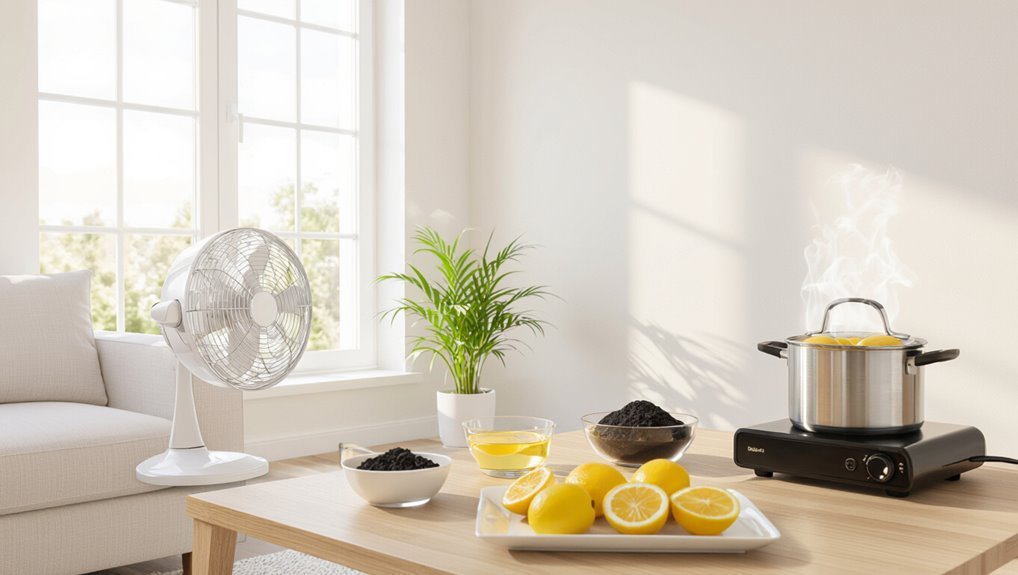
When paint fumes hit you, act fast: open windows and doors to create cross-ventilation, turn on fans to push the air out, and remove any leftover brushes, cans, or rags that keep emitting odors.
Then place bowls of baking soda or activated charcoal, use scent neutralizers rather than heavy fragrances, and choose low-VOC options next time based on paint types to minimize recurrence.
Why Paint Smells Linger and When It’s Risky
Paint smell sticks around because solvents and volatile organic compounds evaporate at different rates depending on the paint’s chemical makeup.
If you don’t provide good ventilation and airflow, those fumes build up and raise the risk of headaches, dizziness, or longer-term irritation.
Be especially cautious if you or anyone in the space is chemically sensitive, elderly, pregnant, or has asthma, since even low levels can cause stronger reactions.
Chemical Composition Of Paint
Solvents and binders in many coatings release volatile organic compounds (VOCs) that make the smell persist, and knowing which chemicals are present helps you judge how long the odor will linger and whether it’s a health concern. Identify paint components and solvent types to assess risk and cleanup needs.
| Component | Typical Concern |
|---|---|
| Solvents | VOCs, irritation |
| Binders | Off-gassing duration |
| Additives | Sensitizers |
Ventilation And Airflow Risks
Although you might open windows and turn on a fan, inadequate ventilation and poor airflow patterns can trap volatile compounds and make odors stick around longer than you’d expect.
You should arrange cross-ventilation, use exhaust fans, and run air purifiers to improve air quality.
Monitor lingering odors because prolonged exposure raises health risks; ventilate until smells and VOC readings drop to safe levels.
Sensitive Individuals’ Exposure
When you or someone in your household is chemically sensitive, even low levels of paint fumes can trigger headaches, dizziness, respiratory irritation, or worsening asthma.
These symptoms can persist because VOCs linger on surfaces and in fabrics, slowly off-gassing over days or weeks.
You should limit exposure, use low-VOC paints, remove scented products that act as odor triggers, and increase ventilation until air tests clear for paint sensitivity.
Ventilation and Fan Setups That Clear Fumes Fast
To clear paint fumes fast, open windows on opposite sides of the room to create crossflow and pull fresh air through.
Position a directional exhaust fan in one window to blow contaminated air out while the crossflow brings cleaner air in.
You’ll get the best results by angling fans toward the exit window and keeping interior doors open.
Open-Windows Crossflow
Crossflow ventilation—creating a steady breeze by opening windows on opposite sides of a room and adding a fan—clears paint fumes far faster than leaving a single window ajar.
You should position a fan to pull fresh air through the space, using simple airflow techniques to push contaminated air out.
Keep doors open to maintain the cross-breeze until odors drop noticeably.
Directional Exhaust Fans
If you want fumes out fast, set up a directional exhaust fan to pull contaminated air straight from the room to the outdoors.
Position it opposite the fresh-air intake for effective crossflow, minding exhaust fan placement to avoid recirculation.
Use adjustable fan speed settings: start high to evacuate heavy fumes, then lower for steady ventilation.
Seal gaps and monitor odor until neutral.
How Long to Ventilate and When Smell Is Gone
How long you’ll need to ventilate depends on the paint type, room size, and ventilation quality; most water‑based paints lose their strong odor within 24–48 hours with good airflow, while oil‑based or high‑VOC paints can take several days to a week or more before the smell is noticeably gone.
Track ventilation duration, perform a smell assessment, and keep airflow until odors are consistently faint.
Household Items That Absorb Paint Smell (Baking Soda, Vinegar, Charcoal)
Once the air’s moving and odors have faded some, you can speed things up with common household absorbers. Place bowls of baking soda to neutralize, white vinegar to trap fumes, and activated charcoal to pull lingering smells. Rotate and replace every 48–72 hours until scent fades.
| Item | Effect |
|---|---|
| Baking soda | Neutralizes |
| Vinegar charcoal | Absorbs deeply |
How to Use Air Purifiers Safely (HEPA + Carbon)
Although air purifiers won’t remove every VOC, pairing a HEPA unit with a carbon filter can cut paint fumes and particles fast; use HEPA filters for particles and Carbon filters for odors.
Follow Safety tips: run continuously, keep children/pets away, and guarantee proper Room placement near the source.
Adhere to Maintenance guidelines: replace filters per manufacturer to maintain Air quality and effectiveness.
Choose Low‑Odor and Zero‑VOC Paints to Prevent Smell
When you pick low‑odor or zero‑VOC paints, you cut fumes at the source and make drying time more comfortable for everyone in the home.
You’ll reduce health risks and speed return-to-room times by choosing brands with documented low odor benefits and eco friendly options.
Consider:
- Certified zero‑VOC formulas
- Low‑odor primers and topcoats
- Reputable labels and third‑party testing
Natural Absorbers That Actually Work (Plants, Coffee, Citrus)
You can speed up odor removal with a few natural absorbers that actually work.
Place houseplants like spider plants or pothos to help filter air while you ventilate, and set out bowls of fresh coffee grounds or citrus peels to trap and neutralize lingering fumes.
These simple options won’t replace proper ventilation but they’ll reduce smell without chemicals.
Houseplants That Filter Air
Plants are an easy, low-cost way to cut lingering paint fumes—many common houseplants absorb VOCs like formaldehyde and benzene while improving humidity and air quality.
You can use air purifying plants in an indoor garden to help. Try these:
- Spider plant — great for formaldehyde.
- Peace lily — removes VOCs, boosts humidity.
- Snake plant — filters benzene, low maintenance.
Coffee And Citrus Absorbers
Alongside houseplants, everyday kitchen items like coffee grounds and citrus peels offer simple, natural ways to absorb and mask paint odors.
You can place bowls of coffee grounds around the room to trap smells, or scatter fresh citrus peels for a bright scent and mild absorption.
Replace them daily until the odor fades, then discard or compost used citrus peels and grounds.
Room‑Specific Tips: Bedrooms, Kitchens, Bathrooms
Because each room has different airflow, surfaces, and safety concerns, you’ll need slightly different approaches for bedrooms, kitchens, and bathrooms to reduce paint odor effectively.
- Bedroom tips: ventilate, keep HVAC off, use fans and odor absorbers near sleeping areas.
- Kitchen tips: open windows, run range hood, remove food and cover surfaces.
- Bathroom tips: use exhaust fan, crack door, place moisture absorbers to speed dissipation.
When to Leave: Symptoms and Safety Thresholds
When should you leave a painted space? If you feel headaches, dizziness, nausea, throat or eye irritation, or shortness of breath, exit immediately and get fresh air.
These signs can indicate paint toxicity; prioritize ventilation safety and seek medical advice if symptoms persist.
Vulnerable people—children, pregnant people, and those with asthma—should avoid painted areas until odors are gone and air quality improves.
Troubleshooting Stubborn Smells and When to Call a Pro
If stubborn paint odors linger despite ventilation and DIY fixes, don’t ignore them—persistent smells can signal trapped fumes or mildew that need more than fan power.
- Try odor persistence strategies: deep cleaning, activated charcoal, ozone generators cautiously.
- Monitor symptoms and document duration/intensity.
- Follow professional assessment guidelines: call a certified industrial hygienist or licensed contractor when smells persist over days or cause health effects.
Frequently Asked Questions
Can Paint Smell Cause Long-Term Respiratory Problems or Cancer?
Short-term paint fumes usually won’t cause cancer, but prolonged exposure can worsen health symptoms and may increase long-term risks; you should use ventilation methods, wear respirators, and seek medical advice if symptoms persist or worsen.
Are Scented Candles or Essential Oils Effective Against Paint Fumes?
No, scented candles and essential oils won’t neutralize toxic paint fumes; they only mask odors. You’re better off using scented alternatives sparingly and proven natural remedies like ventilation, activated charcoal, and baking soda to reduce VOC exposure effectively.
Can I Sleep in a Freshly Painted Room After 24 Hours?
You shouldn’t—unless you’ve guaranteed strong paint ventilation and low odor levels; many paints still emit VOCs after 24 hours. Check ventilation, smell, and product safety labels to confirm sleeping safety before staying overnight.
Do Primers or Paint Additives Reduce Odor Duration?
Yes — primers and paint additives can shorten odor duration: you’ll choose low odor paints and primers, and use odor absorbing materials or additives that neutralize VOCs, so the smell dissipates faster and stays less intense.
Will Paint Smell Transfer to Clothing and Soft Furnishings?
Yes — paint smell can transfer to clothing and soft furnishings; ironically, you’re more likely to notice it on a favorite shirt. Fabrics absorb paint absorption-caused odors, so limit exposure and use odor prevention like ventilation and sealed storage.
Conclusion
You’ve got the tools to clear paint smell fast: ventilate, use fans, and set out absorbers like baking soda, charcoal or coffee. Open windows, keep airflow moving and don’t be shy about leaving for a few hours if you feel off. If symptoms persist or fumes smell strong, get fresh air and call a pro—better safe than sorry. With a little patience and the right steps, you’ll be breathing easy again.
