
What Are the 5 Types of Paint Finishes – Complete Guide With Uses and Differences
You’ll pick from five common sheens—flat, eggshell, satin, semi-gloss, and high-gloss—based on wear, light, and cleaning needs. Flat hides flaws and calms glare but isn’t for heavy scrubbing. Eggshell gives low luster and good flaw-hiding for living spaces. Satin adds durability for hallways and kitchens. Semi-gloss and high-gloss shine on trim, doors, and cabinets and wipe clean easily. Keep room use, reflection, and maintenance in mind, and you’ll find which finish fits best as you explore options.
Quick Sheen Guide: Which Paint Finish to Use Where
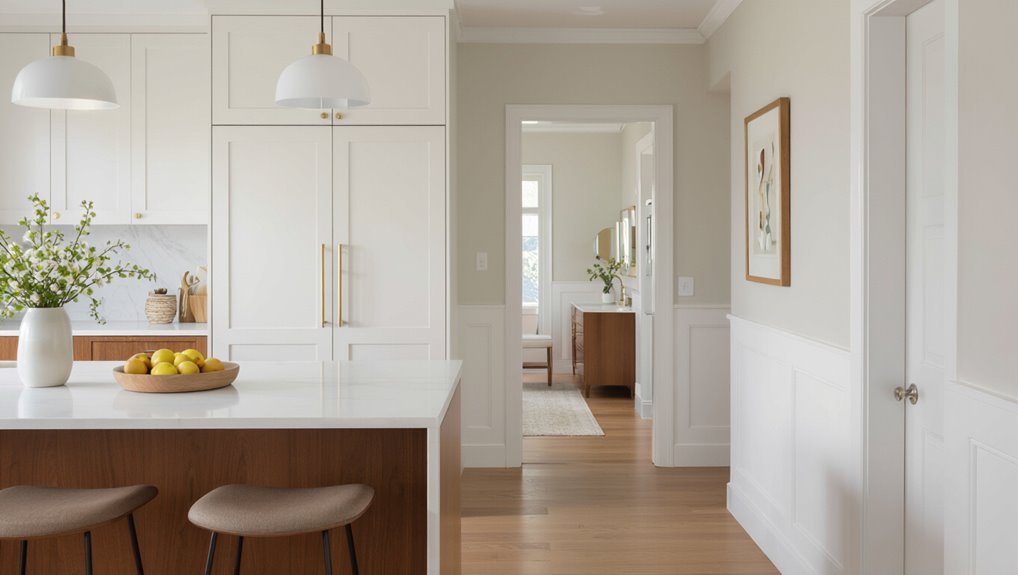
When choosing a paint sheen, think about how you use each room and how much wear the walls will get.
You’ll pick higher sheen levels for trim, kitchens, and bathrooms where cleaning matters, and lower matte vs. gloss choices for living areas or ceilings to minimize reflections.
Use eggshell or satin in moderate-traffic spaces for balance between durability and subtlety.
Flat Paint: Look, Hiding Flaws, and Cleaning Limits
If you’ve chosen lower sheens for living areas or ceilings, flat paint is often the go-to for a truly matte look.
You’ll appreciate how it hides surface imperfections and evens out color selection, but don’t expect heavy-duty scrubbability.
Use careful application techniques—consistent brush or roller strokes and proper priming—to minimize touch-up visibility, since repeated cleaning can dull the finish and reveal flaws.
Eggshell vs Satin Paint Finishes: Appearance, Durability, and Uses
Although both sit between flat and semi-gloss, eggshell and satin deliver noticeably different looks and performance you’ll want to match to the room’s needs:
eggshell offers a low luster with good flaw-hiding and moderate washability, while satin gives a smoother, silkier sheen that’s tougher to clean and more resistant to scuffs.
You’ll choose eggshell characteristics for living rooms and bedrooms; satin applications suit hallways, kitchens, and laundry areas.
Semi- & High-Gloss Paint: Trim, Doors, Cabinets, and Cleaning Tips
Semi- and high-gloss finishes pack the most shine and durability, so you’ll find them ideal for trim, doors, and cabinets that get frequent handling and need regular cleaning.
You’ll enjoy semi gloss advantages like easy wiping and stain resistance; high gloss disadvantages include showing imperfections and scuffs more.
Use mild detergent, soft cloths, and gentle scrubbing to maintain luster without damaging finish.
Choosing a Paint Sheen: Durability, Light, and Maintenance Checklist
Three key factors—durability, light, and maintenance—should guide your choice of paint sheen so the finish suits the room’s use and appearance.
Consider a quick sheen comparison and follow maintenance tips to keep surfaces fresh.
- High-gloss reflects light, resists stains, wipes clean.
- Eggshell softens light, hides flaws, easy upkeep.
- Matte hides imperfections, needs gentle care.
Frequently Asked Questions
How Do Paint Sheens Affect VOC Emissions and Indoor Air Quality?
Sheens influence VOC emissions and indoor air quality: you’ll get lower VOCs from low-VOC or water-based paints, while higher sheen durability often raises solvents; sheen also alters texture contrast, affecting cleaning and perceived air freshness.
Can I Mix Different Sheens in One Room Without Visible Lines?
Yes — you can mix sheens if you choose compatible finishes and prep properly; sheen compatibility guarantees adhesion while careful rolling/blending maintains visual continuity, so you won’t create obvious lines if you work wet-to-wet and feather edges.
Do Exterior Paint Sheens Differ From Interior Finish Formulations?
Want longer-lasting siding or trim? Yes — exterior paint sheens use tougher resins and additives for exterior durability, while interior finishes prioritize interior aesthetics, so you’ll get different formulations tailored to performance and appearance.
Which Sheens Are Best for Radiant-Heated Walls or Floors?
For radiant-heated walls or floors, you’ll want low-sheen, durable paints like satin or eggshell that withstand thermal cycling; they balance paint durability and heat transfer while minimizing sheen reflection and hiding minor surface imperfections effectively.
How Do Paint Sheens Impact Color Perception Under LED Lighting?
You’ll notice contrast: matte muffles glare while glossy pops highlights. Under LED lighting, sheen reflection changes perceived color vibrancy—gloss intensifies brightness and saturation, matte softens tones, and semi-gloss balances sheen and true color.
Conclusion
You’ve learned the five main paint sheens and where each shines best—but before you grab a brush, pause. Picture the room’s light, traffic, and how often you’ll scrub those walls. Pick wrong and you’ll battle scuffs or endless touch-ups; pick right and cleaning becomes nearly effortless and finish lasts. Trust your choices, but test a small area first—because that one quick swatch will reveal everything. Choose wisely.
