
Can You Use Ceiling Paint for Walls – When It Works and When It Doesn’t
You can use leftover ceiling paint on walls in low-traffic, low-visibility areas like guest rooms or closets, but expect thinner coverage, lower washability, and more frequent touch-ups than wall paint. Ceiling formulas are thicker to resist spatter and flatter to hide flaws, yet they use different binders and pigments that don’t hold up to scrubbing or heavy wear. Test a small patch and prime bare spots, and keep going for tips on when it truly makes sense.
Quick Decision: Use Leftover Ceiling Paint or Buy Wall Paint?
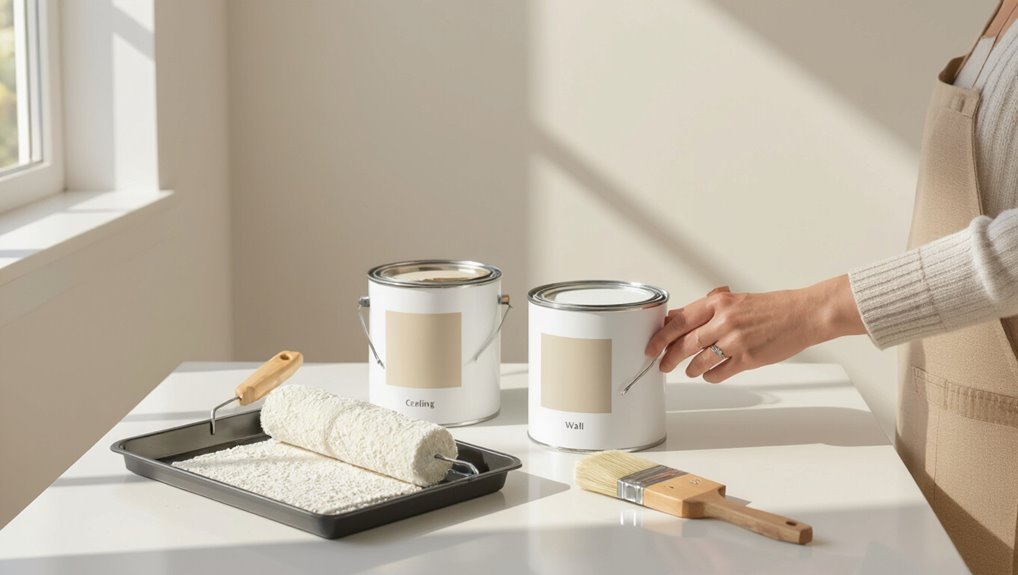
Wondering whether to grab that leftover ceiling paint or buy wall-specific paint? You’ll weigh decision making strategies: assess room use, desired durability, and sheen needs.
Do a quick cost benefit analysis—consider touch-up frequency, prep time, and potential repainting.
If durability and finish matter, buy wall paint; for temporary or low-traffic areas, leftover ceiling paint can be acceptable.
How Ceiling Paint Differs From Wall Paint (Formulation & Finish)
Because ceilings rarely get the same wear as walls, manufacturers formulate ceiling paint differently: it’s thicker, has higher flatness to hide imperfections, and often contains different binders and fillers that prioritize spatter resistance and coverage over abrasion durability.
You’ll notice formulation differences in viscosity and pigment load, while finish characteristics lean ultra-flat for concealment, not scratch resistance—so expect lower washability than wall paint.
Which Ceiling Paints Are Unsuitable for Walls
Watch out for ceiling paints that won’t give you good coverage or durability on walls.
Low-hiding ceiling formulas will need multiple coats to hide color or stains, so you’ll waste time and paint.
Also avoid vinyl-based ceiling paints, since their matte, flat finish and weaker binders don’t stand up well to washing or scuffs on walls.
Low-Hiding Ceiling Paints
Ceiling paints labeled as “low-hiding” or formulated for textured ceilings are usually a poor choice for walls because they don’t cover previous colors or stains well. You’ll face low hiding issues and application challenges; you’ll need extra coats and patience.
| Situation | Expectation |
|---|---|
| Old color | Bleed-through |
| Stains | Visible |
| Textured surface | Thin coverage |
| Primer needed | Usually yes |
| Multiple coats | Likely required |
Vinyl-Based Ceiling Formulas
When you grab a vinyl-based ceiling paint expecting wall performance, you’ll quickly see why it’s a bad match: these formulas prioritize low splatter, quick touch-ups, and a flat finish over durability and adhesion, so they tend to peel, scuff, or show roller marks on vertical surfaces.
You’ll miss proper wall adhesion; ceiling paint characteristics trade longevity for vinyl paint benefits like easy application.
When Ceiling Paint Can Work on Walls
You can use ceiling paint on walls if the room gets very little wear, like a guest bedroom or a formal dining room.
Make sure the paint’s texture and flat finish match the look you want, since ceiling formulas often stay matte and can highlight imperfections.
If those conditions are met, ceiling paint can be a simple, temporary solution.
Low-Traffic Rooms Only
Although ceiling paint isn’t formulated for heavy wear, it can work fine on walls that don’t get much traffic.
If you’re painting low traffic rooms like guest bedrooms or formal dining areas, this option can save money and time.
Just accept limited paint durability compared to wall-specific formulations, avoid scrubbing, and plan for touch-ups sooner if marks or stains appear.
Texture And Finish Match
Match the texture and sheen of your existing walls before using ceiling paint so the room looks cohesive rather than patchy. You’ll check texture compatibility and do a finish comparison to verify sheen and surface feel match. Test a small patch, view in different light, and proceed only if uniform.
| Step | What to check | Result |
|---|---|---|
| 1 | Texture compatibility | Match |
| 2 | Finish comparison | No sheen difference |
| 3 | Light test | Uniform viewing |
Best Rooms to Use Ceiling Paint (Low-Traffic & Textured)
When a room sees little foot traffic or has textured ceilings, ceiling paint can be your best choice because it resists scuffs, hides imperfections, and keeps maintenance low; think guest bedrooms, formal dining rooms, and attic spaces where walls don’t need heavy-duty protection.
You’ll favor textured finishes in low traffic areas like spare rooms, small studies, or hall closets, saving time and money while maintaining a clean look.
Color and Sheen Limits When Tinting Ceiling Paint
When you tint ceiling paint, know there are limits to how much pigment you can add without compromising coverage or texture.
You’ll also want to match sheen carefully, since ceiling formulas often have flatter sheens than wall paints and can look different under light.
Before you roll, test a small patch to confirm the color and sheen match your walls.
Tinting Limitations Explained
Although you can tint many ceiling paints, manufacturers limit how much color and sheen you can add because ceiling formulas prioritize opacity, flatness, and drip resistance. You’ll face tinting challenges and clear color limitations—deep hues may need wall paint. Check labels and sample first so you don’t ruin finish or coverage.
| Situation | Result |
|---|---|
| Heavy tint | Poor coverage |
| High sheen | Formula won’t allow |
Sheen And Color Match
If you want a ceiling and walls to read as one surface, be aware that tinting ceiling paint can change only the color, not the sheen—and sometimes not even the color fully—because ceiling bases limit pigment load and gloss modifiers.
You’ll need a sheen comparison to match gloss levels, and test swatches to confirm color compatibility; otherwise choose wall-grade paint for reliable match.
How Ceiling Paint Thickness and Coverage Affect Walls
Paint thickness and coverage matter more than you might think when using ceiling paint on walls: a heavy application can drip, obscure trim lines, and create a textured finish that contrasts with adjacent wall paint, while a thin coat may leave streaks and require extra passes to hide the previous color.
You’ll notice thickness impact and coverage differences affect drying time, touch-up ease, and final uniformity.
Prep Checklist Before Using Ceiling Paint on Walls
Before you start, make sure the wall is clean and free of dust, grease, and loose paint so the ceiling formula can stick properly.
Patch holes and prime any bare or repaired areas to create an even base.
Then do a small test patch and check drying time and finish before committing to the whole wall.
Surface Cleaning Checklist
1 simple sweep and wipe will save you headaches later: start by removing dust, cobwebs, and loose debris with a broom or vacuum, then degrease any stains with a mild cleaner, rinse, and let the wall dry completely so ceiling paint will adhere evenly.
Tailor cleaning methods to surface types—smooth drywall, textured plaster, or painted wood—using appropriate tools and gentle solutions for each.
Primer And Patchwork
Gather your tools and inspect the wall for holes, cracks, or stains so you can patch them and apply the right primer for a uniform finish.
Choose primer types (latex, oil-based, stain-blocking) based on surface and ceiling-paint sheen.
Use efficient patchwork techniques: fill, sand, and feather edges.
Prime patched areas thoroughly, ensuring adhesion and consistent porosity before painting.
Test Patch And Drying
Start by applying a small test patch of the ceiling paint to a discreet section of your primed wall to check color, sheen, and adhesion; let it dry fully so you can evaluate coverage, texture, and any unexpected staining or flashing.
Monitor drying time and adhesion before proceeding.
- Wait recommended drying time
- Check for color shift
- Inspect texture and sheen
- Test adhesion with tape
How to Thin or Modify Ceiling Paint for Wall Use
If your ceiling paint is too thick for walls, you can thin and adjust it carefully to improve flow and adhesion without compromising coverage.
Start small: add water (for latex) or manufacturer-recommended solvent for others, stirring thoroughly.
Test for proper paint consistency on a scrap board.
Add primer or bonding additive if adhesion’s poor.
Recheck drying time and coverage before committing to full walls.
Tools and Application Techniques to Avoid Drips and Lap Marks
Pick a medium-nap roller that matches your wall texture so you’ll get even coverage without overloading.
Keep the paint consistency thin enough to flow but not run, testing on a scrap board before you start.
Use a wet edge and consistent overlap technique so you won’t get lap marks as you work across the wall.
Choose The Right Roller
Choosing the right roller makes a big difference in preventing drips and lap marks when you use ceiling paint on walls.
You’ll pick roller types and application techniques that suit surface texture and paint sheen to control coverage.
Use these tips:
- Choose nap length for texture
- Prefer a high-density foam for smooth walls
- Use a quality frame for even pressure
- Replace worn rollers promptly
Control Paint Consistency
Match your paint’s consistency to the job so it rolls on smoothly without dripping or leaving lap marks; thin ceiling paint slightly if it’s too thick, but don’t over-thin—aim for a creamy, flowing texture that stays put on vertical surfaces.
Use a quality roller tray, extension pole, and spinner to maintain paint application consistency control, reload evenly, and work in manageable sections to prevent runs.
Master Overlap Technique
Start each pass with a light, confident stroke and follow through so your roller slightly overlaps the wet edge from the previous section—this “feathered” overlap blends paint evenly and prevents hard lap lines.
Use the master overlap approach and these technique tips to avoid drips and marks:
- Work top-to-bottom for consistent drying
- Keep a loaded-but-not-saturated roller
- Maintain a wet edge at all times
- Back-roll to smooth seams
Drying Time, Adhesion, and Durability Expectations
Although ceiling paint can dry quickly to the touch, you should expect longer cure times and different adhesion behavior when using it on walls.
Ceiling formulas often have higher reflectivity and thicker binders that affect how they set, how well they stick to vertical surfaces, and how durable the finish will be under regular wear.
You’ll assess drying characteristics, adhesion factors, durability concerns, drying variations, application performance, surface compatibility, finish differences, and environmental impact.
Cleaning and Maintenance After Using Ceiling Paint
Now that you know how ceiling paint’s drying, adhesion, and durability differ on walls, you’ll need a maintenance approach tailored to those traits.
Use gentle cleaning techniques and follow maintenance tips to avoid damage; prioritize proper surface preparation next time and check product recommendations for touch-ups.
- Test cleaners on a small area first
- Use soft cloths and mild soap
- Reapply primer before repainting
- Keep ventilation steady
How Ceiling Paint Can Create Visible Flaws on Walls
When you apply ceiling paint to walls, its different sheen, thickness, and drying behavior can show up as streaks, roller marks, uneven sheen, or visible brush lines that stand out under normal lighting.
You’ll notice visible imperfections where coverage is thin, texture differs, or touch-ups contrast. A subtle color mismatch with wall paint can make flaws obvious, undermining a polished finish.
Cost and Waste Trade-Offs: Leftover vs. Buying Wall Paint
Money and waste matter: you can save by using leftover ceiling paint on small wall patches, but doing so often risks visible flaws and mismatches that may force repairs later.
Do a cost analysis and weigh waste management benefits before deciding.
Consider practical trade-offs:
- Save money now, risk repaint later
- Small touch-ups only
- Match and test first
- Account for repair costs
VOCs, Safety, and Ventilation for Interior Use
Beyond cost and waste, think about indoor air quality: ceiling paint can contain volatile organic compounds (VOCs) that off-gas during application and curing, and using it on walls—where occupants are closer—raises exposure risk. You should prioritize VOC emissions, paint safety, ventilation practices, health effects, and odor management when deciding and ventilate well.
| Room | Risk |
|---|---|
| Bedroom | High |
| Living Room | Medium |
| Kitchen | Medium |
| Bathroom | Low |
| Nursery | High |
Quick Decision Checklist: Use Ceiling Paint or Buy Wall Paint?
Wondering whether you can get away with ceiling paint on your walls? Decide fast: ceiling paint applications suit low-traffic, matte ceilings; walls need durability.
Use this checklist to choose wall paint alternatives or stick with ceiling paint.
- Room traffic and scuffs
- Desired finish and washability
- Color depth and coverage
- Budget versus longevity
Troubleshooting Common Problems After Using Ceiling Paint
If you grabbed ceiling paint to save time or money, you’ll want to check for a few common issues that show up once it dries: poor coverage, uneven sheen, scuffing, or difficulty cleaning.
Inspect adhesion and paint durability; gently rub suspect areas.
For obvious sheen or texture mismatches with the ceiling finish, touch up with wall paint or thin glossier topcoat to improve resilience and cleanability.
Alternatives to Using Leftover Ceiling Paint
When ceiling paint isn’t right for your walls, you don’t have to toss the leftover can—consider several practical alternatives that put it to use without compromising finish or durability.
Use it for touch-ups on ceilings, prime small wall patches, donate unopened cans to community centers, or try creative projects like furniture refreshes. These options support paint recycling and reduce waste.
- Ceiling touch-ups
- Small patch primer
- Donate to community groups
- Furniture refreshes
Frequently Asked Questions
Can Ceiling Paint Be Used on Exterior Walls Temporarily?
Yes — you can use ceiling paint for exterior walls for temporary applications, but don’t expect exterior durability; it’ll cover briefly and look fine indoors-adjacent, yet it’ll chalk, peel, and fail faster in weather-exposed conditions.
Will Ceiling Paint Affect HVAC Air Quality Long-Term?
About 70% of indoor VOCs come from paints, so you’ll notice short-term HVAC air quality impacts; however, with low-VOC ceiling paint, long-term effects are minimal, and paint longevity matters more for maintenance cycles.
Can I Mix Ceiling and Wall Paints From Different Brands?
You can, but you shouldn’t unless you test first: brand compatibility varies and mixed formulations can reduce paint performance. You’ll want a small trial area, proper thinning, and matching sheens to avoid adhesion or finish issues.
Does Ceiling Paint Change Color With Sunlight Exposure?
Yes — ceiling paint can shift under sunlight, but don’t panic: its color stability is often lower than wall paint. You’ll notice subtle fading or yellowing over time due to light reflection and UV exposure on less durable pigments.
Are There Warranty Issues Using Ceiling Paint on Walls?
Yes—you might void warranty coverage if ceiling paint’s label restricts surface use; manufacturers expect specific applications. You’ll risk reduced paint durability and potential claims denial, so check terms and use recommended wall formulas to stay covered.
Conclusion
If you’re short on paint, ceiling paint can work like a quick bandage—handy for low-traffic, textured, or out-of-sight walls—but it’s not a cure-all. You’ll want to avoid glossy or stain-blocking ceiling formulas, and be ready for lower durability, poorer color depth, and more drips. For kitchens, hallways, or living rooms, buy proper wall paint. When in doubt, primer plus a wall finish beats a shortcut and saves you repainting later.
