
Can Pregnant Paint Walls: Safety Guidelines You Should Know
You can usually paint while pregnant if you choose low‑ or zero‑VOC paints, ventilate well, wear an N95 and gloves, avoid sanding old leaded paint, and skip strong solvent products; try to do lighter tasks in the second trimester, avoid ladders and heavy lifting, and take frequent breaks. Hire pros for large jobs or lead abatement and check labels closely. Keep your provider informed, and continue below for practical tips, safe products, and a simple checklist.
Can Pregnant People Paint Walls Safely? (Quick Answer)
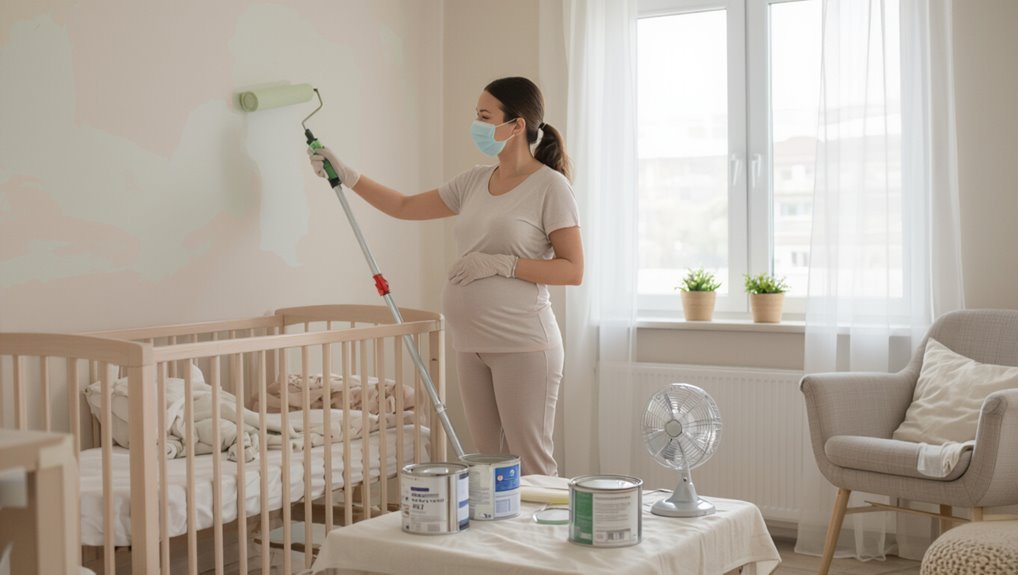
Can you paint while pregnant? You can, but prioritize painting safety: minimize fume exposure by choosing low-VOC paints, ventilating the home environment, and using protective measures like masks and gloves.
Consider health considerations and discuss trimester timing with your provider before starting. Take frequent breaks, avoid ladders if dizzy, and have someone assist with heavy tasks to reduce risks.
Which Trimester Is Lowest Risk for Painting?
While no trimester is completely risk-free, the second trimester is generally considered the lowest-risk time for painting because morning sickness has often eased and the physical stamina and balance issues of late pregnancy are usually less pronounced.
You should still minimize exposure to fumes, avoid heavy lifting or high ladders, and discuss painting risks with your healthcare provider, especially if you approach the third trimester.
Which Paints Are Safest When You’re Pregnant?
When choosing paint while pregnant, look for low-VOC or zero-VOC options to minimize fumes you’ll breathe.
You can also consider natural milk paint, which is made from simple, non-synthetic ingredients and has very low emissions.
Always check labels and ventilate well if you have to be near fresh paint.
Low-VOC And Zero-VOC
Because VOCs are the main chemical concern in paint, choosing low‑VOC or zero‑VOC formulas can greatly reduce the fumes you’ll breathe during a nursery or home refresh; these paints limit or eliminate the solvents that off‑gas harmful compounds, making them a safer option for pregnant people than traditional solvent‑based paints.
You’ll want to weigh low VOC benefits and zero VOC options:
- Improved indoor air quality
- Reduced nausea and irritation
- Easier ventilation and quicker reentry
Natural Milk Paint
Natural milk paint is a plant- and mineral-based option made from milk protein (casein), lime, and natural pigments. It’s often one of the safest choices for pregnant people because it’s virtually VOC-free and lacks synthetic solvents.
You can use it with good ventilation, wear gloves, and choose eco-friendly options labeled non-toxic. Cleanup uses water, minimizing fumes and chemical exposure.
Paints, Solvents, and Additives to Avoid (Lead, Isocyanates, Strong Solvents)
You should avoid any paint that might contain lead, especially in homes built before 1978, because dust or chips can be harmful even at low levels.
Don’t use products with isocyanates (found in some spray polyurethane and specialty coatings), since they can irritate lungs and pose risks with repeated exposure.
Also skip strong solvent–based products whenever possible and choose water-based alternatives or get professional help.
Avoid Lead-Based Paint
When you’re painting while pregnant, steer clear of lead-based paints—old layers can still contain lead dust or chips that are hazardous to both you and your developing baby.
Test, remove, or hire pros to handle lead safely. Consider safer paint alternatives and minimize lead exposure by avoiding sanding or dry scraping.
- Test old paint first
- Use certified abatement
- Choose low-VOC alternatives
Steer Clear Of Isocyanates
Isocyanates are chemical components found in many spray polyurethane paints, some primers, and certain clear coats. You should avoid them during pregnancy because inhaling or skin-contact exposure can harm your lungs and may affect fetal development.
Limit isocyanate exposure by choosing low- or zero-VOC alternatives, avoiding spray application, using proper ventilation, and wearing NIOSH-approved respiratory protection to reduce health effects.
How to Read VOC and “Non‑Toxic” Claims
Curious how to make sense of labels like “low‑VOC” or “non‑toxic”? You should check VOC definitions and product labeling, plus look for non toxic certifications tied to recognized safety standards.
Don’t trust vague claims.
- Check VOC numbers and units.
- Verify certification logos and issuer.
- Read ingredient lists and warnings.
Shopping Tips: What to Buy and What to Skip
Now that you know how to read VOC and “non‑toxic” claims, you can shop more confidently by focusing on concrete product features rather than marketing buzz.
Now that you can read VOC and “non‑toxic” claims, shop by product features—not marketing buzz—for safer indoor choices.
Choose low‑VOC, water‑based paint selection labeled for indoor use and easy cleanup. Skip oil‑based enamels and spray cans.
Buy gloves, N95 or better mask, goggles, and disposable coveralls as safety equipment.
Check sealed samples for scent before buying.
Pregnancy‑Safe Solvents, Primers, and Sealers (Low‑Fume Options)
When you’re choosing solvents, primers, and sealers for a pregnancy‑safe painting project, pick products that limit fumes and skin contact: water‑based or high‑water‑content primers, low‑VOC or zero‑VOC sealers, and solvents labeled as low‑odor or “low‑VOC” (use only small amounts, outdoors or with strong ventilation).
- Choose eco friendly options with clear VOC ratings.
- Use gloves and brushes to reduce contact.
- Prefer rolling and brushing painting techniques to minimize spray.
Ventilation Steps During Pregnancy to Reduce Paint Fumes
Because fumes can build up quickly even with low‑VOC products, make ventilation your first priority when you’re painting during pregnancy: open windows and doors on opposite sides to create cross‑ventilation, run exhaust fans, and use box fans to push air outside.
Monitor air quality with a simple detector, take frequent breaks outdoors, and limit time in the room to reduce fume exposure.
PPE and Clothing: What to Use and Why
One key step is choosing the right personal protective equipment and clothing to minimize skin contact and inhalation of paint particles and solvents.
One key step: pick proper PPE and clothing to prevent skin contact and inhalation of paint particles and solvents.
You’ll want quality protective gear and suitable clothing materials that resist splashes and let you move comfortably.
- Nitrile gloves for solvent resistance
- Disposable coveralls or washable cotton with a barrier
- Closed-toe shoes and eye protection
Safe Painting Techniques to Limit Inhalation and Skin Contact
When you’re painting while pregnant, pick low-VOC or zero-VOC paints to cut chemical exposure.
Keep windows and doors open and run fans to maintain good ventilation.
Also wear gloves, long sleeves, and a mask to minimize skin contact and inhalation.
Choose Low-VOC Paints
If you’re pregnant and planning to paint, pick low-VOC or zero-VOC formulations to cut airborne chemicals that can irritate your eyes, throat, and lungs.
You’ll reduce exposure and still get good coverage. Consider eco friendly options and paint alternatives if sensitivity persists:
- Choose certified low/zero-VOC brands
- Test a small patch first
- Wear gloves and avoid skin contact
Use Proper Ventilation
Because fresh paint can release fumes for days, keep the room well ventilated to dilute airborne chemicals and speed drying. Open windows, run fans, and use HEPA filters to boost ventilation methods and improve air quality. Limit time painted areas are occupied and leave fans running after finishing.
| Method | Benefit |
|---|---|
| Open windows | Dilutes fumes |
| Fans | Speeds drying |
| HEPA filter | Removes particles |
| Door open | Encourages airflow |
Wear Protective Gear
Ventilation helps, but you’ll also want personal protection to cut inhalation and skin exposure further.
Wear proper protective masks and prioritize gloves usage to prevent contact. Also cover arms and choose low-VOC paint.
- Use N95 or better masks for fumes.
- Put on nitrile gloves; change if torn.
- Wear long sleeves and goggles to protect skin and eyes.
Hiring Pros vs. Postponing: When to Get Help
When the project feels bigger than a weekend job or you’re worried about fumes, hiring a pro can save time, reduce physical strain, and limit exposure to paint chemicals.
If you’re unsure about paint color choices or complex wall preparation, bring in a licensed painter. They’ll handle ventilation needs, heavy lifting, and finish quality, letting you postpone or avoid risky DIY during pregnancy.
Quick Checklist Before, During, and After Painting; When to Call Your Provider
If you decide to tackle painting yourself or hire help, keep a short checklist handy to protect you and your baby before, during, and after the job.
Watch for painting risks and prioritize pregnancy safety. Follow steps below and call your provider if you feel dizzy, have breathing trouble, or notice unusual contractions.
- Ventilate well, use low-VOC paint
- Take frequent breaks, wear a mask
- Avoid heavy lifting, get help
Frequently Asked Questions
Can Secondhand Paint Fumes Affect Breastmilk After Pregnancy?
Yes — you can be affected: paint exposure can transfer volatile compounds into your body, potentially altering breastmilk safety. You should avoid fumes, ventilate, use low-VOC paints, and limit newborn contact until odors dissipate.
Can Indoor Paint Trigger Allergy Flare-Ups in Pregnant People?
Yes — about 1 in 5 people have chemical sensitivities, and you can get paint allergies that worsen pregnancy risks; you should avoid strong fumes, choose low‑VOC paints, ventilate well, and wear a respirator if needed.
Are Oil-Based Paints Worse Than Water-Based for Pregnancy?
Yes — oil-based paints usually release more oil based toxins, so you should avoid them during pregnancy; pick water-based low-VOC options, guarantee good paint ventilation, open windows, use fans, and take frequent breaks.
How Long Should Baby Furniture Off-Gas Before Use?
Think of new furniture breathing out paint-scented fog; you should let baby furniture off-gas for at least 48–72 hours, ideally up to two weeks in a well-ventilated space to guarantee furniture safety and minimize off gassing duration.
Do Paint Odors Increase Risk of Nausea or Migraines During Pregnancy?
Yes — paint odors can increase your nausea or trigger migraines; paint ingredients like solvents and VOCs matter, and ventilation importance is high — open windows, use fans, pick low‑VOC paints, and avoid prolonged exposure.
Conclusion
You can paint walls while pregnant if you choose safer products, use proper ventilation, and protect your skin and lungs. Pick low‑ or zero‑VOC paints, avoid lead and strong solvents, and skip spray applications. Wear a respirator, gloves, and coveralls, open windows, and take frequent breaks. Hire pros for heavy jobs or during high‑risk trimesters. Talk to your provider if you feel unwell, if the room smells strong, or if you’re unsure about a product.
