
When Was Oil Paint Invented? History Explained
Oil paint wasn’t invented at a single moment; it evolved over centuries, and you should think of it as a long refinement rather than a sudden discovery. Ancient cultures used oil-based coatings and varnishes, Byzantine and Coptic workshops mixed oils and waxes, and Northern Renaissance painters—especially Jan van Eyck in the early 1400s—standardized the layered, glazing techniques that made oil painting so powerful. Keep going and you’ll uncover the materials, methods, and debates that shaped its rise.
What This Guide Covers and Who It’s For
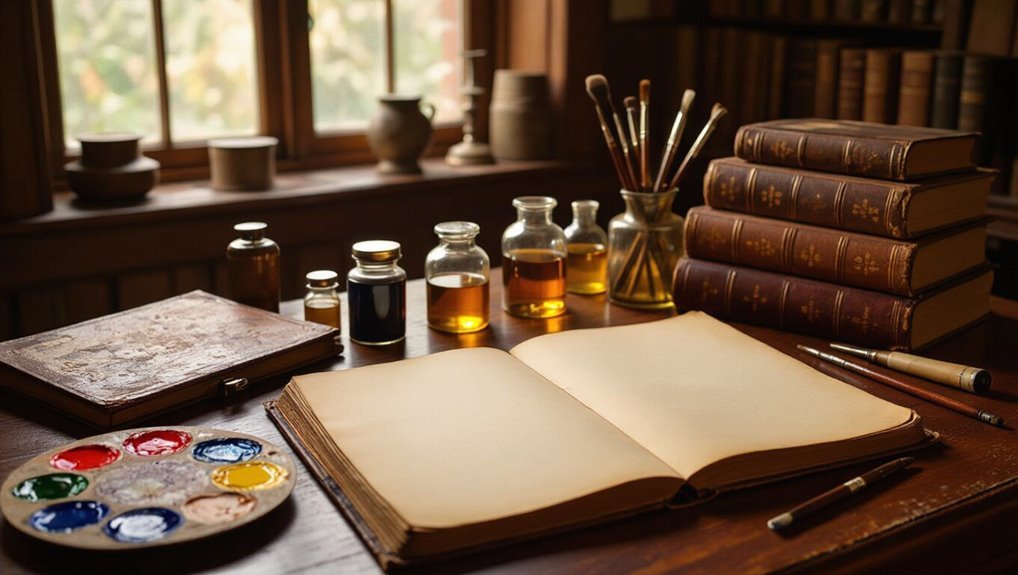
Whether you’re a curious beginner, a student of art history, or a practicing painter, this guide explains when oil paint was invented, why its development mattered, and how its evolution shaped techniques and materials you still see today.
You’ll get a clear roadmap: oil paint evolution, key historical techniques, practical impacts on color, drying, and varnishing, and who benefits from each section.
Quick Answer: When Was Oil Paint Invented?
Now that you know who will benefit from this guide and what it covers, here’s the quick answer: oil paint as we recognize it today emerged in Northern Europe in the early 15th century, with Flemish painters like Jan van Eyck often credited for refining and popularizing the medium, though oil-based coatings and experiments with oil binders existed earlier in various cultures.
| Awe | Warmth | Wonder |
|---|---|---|
| Oil paint origins | Rich color | Texture |
| Historical techniques | Patience | Light |
| Legacy | Intimacy | Timeless |
Short Timeline of Oil Paint’s Origins
1,000 years of experimentation led to the oil paints we recognize today: artisans in ancient Afghanistan, China, and Greece used oil-based varnishes and pigments long before Northern European painters refined the technique.
Meanwhile, 15th-century Flemish artists like Jan van Eyck standardized oil as a reliable, slow-drying medium that let you build luminous layers and fine detail.
You trace a compact timeline: medieval experiments, Renaissance adoption, pigment discoveries, and workshops codifying ancient techniques.
Early Evidence: Oil-Based Pigments in Ancient Civilizations
You’ll notice traces of oil-based binders in Ancient Egyptian paints, where plant and animal oils helped stabilize pigments on tomb walls.
Roman authors and material evidence show oils were used for varnishes and cosmetic mixtures, pointing to practical knowledge of oil-pigment interactions.
In Buddhist cave murals across Asia, conserved layers reveal oil-containing media that predate European oil painting traditions.
Ancient Egyptian Paints
Scholars have long debated whether Egyptians used oil as a binder, since surviving tomb paintings and artifacts show a variety of complex mediums that sometimes behave like oil-based paints.
You’ll explore ancient techniques and pigment sources, noticing varnish-like layers and plant oils mixing with resins.
Evidence is mixed, so you weigh chemical analyses, context, and practical uses.
- analysis of binders
- plant oils
- resins
- mineral pigments
- contextual use
Roman Oil Uses
While surviving Roman wall paintings and texts don’t give a single clear invention moment, they do show that oil—often mixed with waxes or resins—was already being used in various practical and decorative ways.
You can see roman oil applications in varnishing, lamp oils, and pigment binders; ancient oil techniques helped preserve color and sheen, influencing later medieval and Renaissance practices.
Buddhist Cave Murals
Buddhist cave murals offer some of the clearest early evidence that oil-based binders were used beyond the Mediterranean world, especially across Central and South Asia from the first millennium CE onward.
You’ll see how Buddhist symbolism, ancient techniques, and color usage reveal artistic intent and spiritual expression, while cave preservation and mural significance reflect broader cultural influences.
- Iconography clarifies devotional purpose
- Pigment layers show binder use
- Lacquered finishes suggest oil media
- Context links technique to rituals
- Weathering informs conservation efforts
Byzantine and Coptic Use of Oil and Wax Mediums
In Byzantine and Coptic workshops, artists experimented with oil and wax binders long before oil painting became dominant in Western Europe.
You can trace a continuous but varied use of these media across liturgical icons, funerary portraits, and decorative panels.
You’ll notice Byzantine techniques merged with Coptic traditions: wax applications and oil mixtures used with local pigment sources, showing artistic influences, historical significance, and cultural exchanges.
Technological Limits Before the Middle Ages
Before the Middle Ages, you faced real limits in pigment processing that kept colors duller and less stable than later palettes.
You also lacked reliable binder technology, so oils weren’t yet developed or controlled for consistent drying and adhesion.
These constraints help explain why widespread oil painting didn’t emerge until materials science caught up.
Limited Pigment Processing
Amidst the craft traditions of antiquity, pigment production stayed largely artisanal and limited. You’d find colors made from locally available minerals, plant extracts, and animal sources rather than engineered compounds.
You rely on ancient techniques; pigment sources and color intensity vary, affecting drying properties and interaction with binder materials, which impacts long-term art preservation.
- mineral earths
- plant dyes
- animal-based pigments
- color variability
- fading risks
Binder Technology Gaps
Pigment limits narrowed what artists could achieve, but binders posed their own hurdles that shaped paint behavior and longevity.
You’d note binder evolution was slow, so historical applications relied on weak binder variations that affected pigment stability and limited oil properties.
Without material advancements, your artistic techniques stayed restrained, complicating conservation methods later as you tried to stabilize flaking, discoloration, and uneven drying.
The Northern Renaissance Breakthrough: Flanders and the Van Eycks
When you stand before a Van Eyck painting, you’ll notice a clarity and luminosity that feel unprecedented: you trace Van Eyck techniques born in Flanders influence, merging medieval art traditions with pigment advancements and oil paint evolution.
This renaissance innovation reflects artistic collaboration, refined color theory, and historical context around the oil medium.
- Technical glazing
- Layered translucency
- Naturalistic detail
- Studio exchange
- Material experimentation
Did Jan Van Eyck Invent Oil Paint?
You might credit Jan van Eyck with perfecting oil painting techniques, since his work shows remarkable control of glazes and detail.
But scholars note oil media and varnishing methods existed earlier in the Mediterranean and the Islamic world, so he didn’t invent oils outright.
Let’s compare what van Eyck contributed to the technical and artistic development with those prior practices.
Van Eyck’s Role
Although Jan van Eyck is often credited with inventing oil paint, historians now agree he refined and popularized oil-based techniques rather than creating the medium itself.
You’ll see how van Eyck’s innovations changed artistic practice and how his oil paint techniques influenced glazing, realism, and workshop methods.
- Layered glazing for depth
- Faster drying control
- Enhanced color saturation
- Precision brushwork
- Workshop dissemination
Earlier Oil Techniques
History shows that oil as a painting medium existed long before Jan van Eyck, with artists from the ancient Mediterranean, Byzantine, and early medieval North European traditions using oil or oil-resin mixes for coatings and decorative work.
You’ll explore early oil techniques, ancient methods using natural binders and varied pigment sources, historical recipes revealing regional variations, material advancements, and artistic experimentation shaping later oil painting.
Workshop Innovations: Ground Pigments, Oils, and Varnish Techniques
When painters wanted richer, more reliable colors they rethought how pigment, oil, and varnish were prepared. Workshop techniques quickly evolved into a blend of chemistry and craft.
You learned pigment innovations, oil extraction and binder development from historical recipes. You explored pigment sources, experimented with color mixing, and tested drying properties and varnish applications through systematic artist experimentation.
- Grinding methods
- Oil clarification
- Varnish recipes
- Palette control
- Layer testing
How Ground Pigments and Drying Oils Changed Painting Practice
When you mix finely ground pigments with drying oils, you change how color binds and how light reflects from the surface.
That pigment-and-oil interaction lets you build thinner glazes or richer impastos with predictable adhesion.
You’ll also see how adding siccatives and choosing faster-drying oils shortened drying times and sped up studio workflow.
Pigment-and-Oil Interaction
Because artists began mixing finely ground pigments with drying oils, painting stopped being limited to tempera’s fast-drying, opaque surfaces and opened up new visual possibilities.
You learn how pigment stability and oil viscosity affect color, gloss, and handling, so you control texture and longevity.
- richer glazing
- slower blending
- deeper saturation
- altered translucency
- conservation challenges
Faster-Drying Techniques
Having seen how pigments and oils reshaped color, you can now look at how artists sped up their workflow by manipulating drying properties.
You experimented with ground pigments and oil mediums, adding faster drying agents like siccatives or using lighter-bodied oils to thin paints.
These choices let you layer sooner, refine details faster, and adapt studio routines, transforming pacing and technique across periods.
Why Linseed Oil Became the Dominant Binder
Although many oils were tried, linseed oil rose to prominence because it offered artists the best balance of drying time, durability, and workable consistency.
You’ll appreciate linseed oil benefits and its historical significance: it cured faster, strengthened films, and mixed well with pigments, so painters favored it for lasting works and versatile techniques.
- Faster drying
- Improved gloss
- Stronger paint film
- Easy mixing
- Proven longevity
Alternatives Then and Now: Walnut, Poppy, and Safflower Oils
While linseed oil dominated many studios, artists have long used walnut, poppy, and safflower oils when they needed different drying rates or color effects.
You’ll find walnut oil benefits include warmer tones and slower yellowing; poppy oil characteristics favor paler, slower-drying glazes; safflower oil uses suit whites and delicate tints.
Historical oil comparisons inform your contemporary oil choices for desired handling and longevity.
How Varnishes and Mediums Affected Color and Drying Time
Because varnishes and painting mediums change how oil films interact with light and oxygen, they’d a major impact on artists’ color choices and drying schedules.
You learn that medium effects and drying enhancements altered oil consistency, binder roles, and color richness; historical varnishing and varnish types guided application techniques and final sheen.
- Medium effects on drying
- Varnish types and sheen
- Binder roles clarified
- Application techniques matter
- Historical varnishing practices
Pigment Preparation: From Raw Pigment to Oil Paste
Understanding how varnishes and mediums changed paint behavior helps explain why artists paid careful attention to preparing pigments before they ever reached a brush.
You’ll learn pigment sourcing and ancient methods: selecting minerals, following historical recipes, then using grinding techniques to create fine powders.
You’ll practice oil blending and binder evolution to form pastes that optimize drying properties and color stability for durable, vibrant paint.
How Glazing Techniques Evolved With Oil Paint’s Properties
As oil binders allowed paints to dry slower and form transparent films, artists developed glazing to exploit those qualities.
Layering thin, translucent passages to model light and deepen color without muddying earlier strokes became a hallmark of this technique.
You explore glazing techniques that use oil properties for color depth and light interaction, revealing painter innovations, medium evolution, texture exploration, layering effects, and historical significance.
- glazing techniques
- oil properties
- color depth
- artistic expression
- layering effects
Layering and Fat-Over-Lean: Technical Rules for Oil Painting
When you build an oil painting, following the fat-over-lean rule keeps each layer flexible enough to dry without cracking: lean (low-oil) layers go first, and progressively fattier (more oil-rich) glazes and scumbles go on top.
You’ll plan layer techniques by adjusting oil mediums and pigment load, letting early opaque passages dry before adding richer glazes, varnishes, or impasto to guarantee longevity and controlled drying.
New Effects in Light and Texture Enabled by Oil Paint
Because oil paint holds light and texture so well, you can create effects—luminosity, subtle translucence, and tactile impasto—that weren’t possible with earlier media.
You explore light manipulation and texture variation to model form, suggest atmosphere, and invite touch.
- Glazing for depth
- Scumbling for soft edges
- Impasto for relief
- Wet-on-wet blends
- Controlled reflections
The Spread of Oil Techniques From Northern to Italian Artists
Those new possibilities in light and texture didn’t stay confined to Northern workshops; artists and patrons carried them across Europe, and Italian painters quickly picked up oil methods to achieve the same luminous effects.
You trace northern influences in workshop visits and trade, see Italian adaptations in glazing and color, and note artistic exchange driving technique evolution, cultural integration, and clear stylistic shifts across Italian ateliers.
How Oil Paint Transformed Portrait and Landscape Painting
You’ll notice oil allowed you to blend colors more smoothly, creating subtler skin tones and atmospheric skies.
By using layered glazing techniques you can build depth and luminous effects that weren’t possible before.
Those same oil layers also give paintings more durable, lightfast finishes that preserve detail over centuries.
Richer Color Blending
When painters switched to oil, they gained a medium that lets pigments glide and merge on the canvas, so you can achieve subtler shifts and deeper hues than with tempera or fresco.
You use richer color and refined blending techniques to model skin, atmosphere, and light, making scenes more believable and emotionally resonant.
- Nuanced changes
- Softened edges
- Increased depth
- Tonal unity
- Naturalistic light
Layered Glazing Techniques
Building on oil’s ability to blend colors smoothly, painters began exploiting its slow drying time to build luminous surfaces through layered glazing techniques.
You apply thin, transparent layers to modify hue and depth, using layered techniques to create subtle shifts and richer tones.
These glazing effects let you achieve realistic skin, atmospheric distance, and glowing highlights without heavy impasto or overt correction.
Durable Lightfast Finishes
Because oil binders form a tough, stable film, portraits and landscapes kept their tones and details far better than works in earlier media, and you can still see the original colors centuries later.
You’ll notice durable finishes and improved lightfast qualities that protect glazes and impasto, letting artists render subtle skin tones, atmospheric depth, and long-lasting color relationships.
- Preserved tonal range
- Sustained pigment saturation
- Reduced fading
- Stable varnish layers
- Conservation-friendly surfaces
Notable Early Works That Showcase Oil Innovations
Although we often credit oil’s rise to later masters, early works from the 14th and 15th centuries already pushed the medium’s boundaries and show how artists explored glazing, texture, and color depth in new ways.
You’ll spot early innovations in panel portraits and altarpieces where layered glazes, refined brushwork, and richer pigments deliver artistic breakthroughs that changed realism, luminosity, and expressive detail for generations.
Workshops, Guilds, and the Transmission of Oil Techniques
You’ll see how medieval and Renaissance guilds shaped who learned oil painting and how quickly techniques spread.
Apprentices in workshops picked up guarded recipes and step-by-step methods while masters controlled quality and training.
Exploring those workshop practices reveals why some innovations stayed local while others became widespread.
Guilds and Apprenticeships
When painters wanted to learn oil techniques, they turned to workshops and guilds where masters taught apprentices through hands-on practice and close observation.
You’d enter a system defined by guild structure and guild regulations that enforced professional standards.
Apprenticeship benefits included clear training methods and reliable skill transmission within artistic communities and enduring master apprentice relationships.
- Structured curriculum
- Regulated entry
- Practical mentorship
- Community networking
- Certified competence
Workshop Practices and Secrets
Beyond formal training and certification, much of an apprentice’s learning came from the workshop’s everyday practices and guarded techniques. You absorb workshop techniques, pigment secrets, oil mediums, blending methods, drying innovation, color theory, varnish applications, historical materials, and studio practices through hands-on artist collaboration.
| Topic | Skill | Outcome |
|---|---|---|
| Pigments | Mixing | Consistency |
| Mediums | Layering | Depth |
| Varnish | Finishing | Protection |
| Drying | Timing | Stability |
Artistic Demand Driving Oil Material Experimentation in the Renaissance
Because painters demanded richer color, smoother blending, and greater durability, artists and craftsmen in the Renaissance pushed oil media into new territory.
You explored Renaissance experimentation and artistic innovation, tweaking binders, pigments, and layering to meet patrons’ exacting tastes.
You refined techniques to control drying, sheen, and translucency, making paintings more lifelike and enduring.
- Layering glazes
- Pigment grinding
- Binder adjustments
- Controlled drying
- Surface preparation
How Scientists Date and Identify Old Oil Paint
You’ll start by examining paint layers under the microscope to see how pigments and varnishes were applied over time.
Then you’ll use chemical tests and spectroscopy to identify the binder—linseed, walnut, or later oil formulations.
Finally, when organic material’s present you can date samples with radiocarbon to narrow the painting’s age.
Paint Layer Analysis
When conservators examine a painting’s layers, they peel back time itself—using microscopes, cross-sections, and chemical tests to read the sequence of ground, paint, and varnish that reveals how and when an artwork was made.
You analyze paint composition and oil viscosity to spot period techniques, restorations, and authenticity.
- Layer order
- Pigment particles
- Medium residues
- Crack patterns
- Varnish stratigraphy
Binder Identification Techniques
Although the paint film looks solid at a glance, its binder holds the clearest chronological and material clues. Scientists use targeted chemical and physical tests to identify whether an oil is linseed, walnut, poppyseed, or a later synthetic.
You rely on analysis techniques—GC-MS, FTIR, microscopy—to distinguish binder types, drying properties, oil mixtures and formulations, link to historical sources, assess pigment interactions, and guide conservation methods.
Dating With Radiocarbon
Because carbon-14 decays at a known rate, scientists can date organic components in oil paint to narrow when a work was made, but the method comes with caveats you’ll need to understand.
You’ll use radiocarbon dating on binders or linseed traces, compare results with stylistic evidence, and beware contamination or recycled materials that mimic older dates.
- sample contamination risks
- limited sample size
- mixed media problems
- calibration ranges
- ancient pigments vs binders
What Chemical Analysis Reveals About Early Oil Binders
If you look closely at micro-samples from medieval and early Renaissance panels, chemical analysis can tell you which oils artists actually used and how they treated them.
You’ll see variations in chemical composition—linseed, walnut, poppy—and additives like resins or siccatives.
These data map binder evolution, revealing shifts from simple oil layers to complex, deliberately modified mixtures that affected drying, gloss, and longevity.
How Conservation Science Traces Oil Paint Recipes Over Time
You’ll see how conservation scientists use materials identification techniques like XRF and FTIR to pinpoint pigments and extenders.
They’ll characterize binder oils through GC-MS and fatty‑acid profiling to tell linseed from walnut or poppy oil.
Cross‑section microscopy then reveals layered recipes and application sequences that link materials to specific workshops and periods.
Materials Identification Techniques
In tracing how oil paint recipes have changed, conservation scientists rely on a suite of materials-identification techniques that reveal binders, pigments, and additives at microscopic and molecular levels.
You’ll learn how pigment sourcing and oil extraction histories show trade, technology, and workshop practice.
- XRF for elemental fingerprinting
- FTIR for organic compounds
- Raman for pigment ID
- SEM-EDS for microstructure
- GC-MS for trace organics
Binder Oil Characterization
Binder oils are the chemical signature that lets conservation scientists read a paint recipe across centuries.
You analyze binder oil properties—fatty acid profiles, oxidation products, and resin additives—using GC-MS and FTIR to match oils to periods and regions.
Layered Cross‑Section Analysis
When conservators peel back a paint film at microscopic scale, they uncover a stratigraphy that records how artists built color and treated surfaces over time.
You examine layered techniques and pigments, linking layers to historical recipes and workshop practices.
Cross‑section analysis maps binders, varnishes, and restorations so you can date, attribute, and guide conservation decisions.
- Pigment sequencing
- Binder identification
- Varnish stratigraphy
- Restoration clues
- Recipe correlations
Trade in Drying Oils and Pigments Affecting Oil Paint Access
The availability of drying oils and pigments hinged on long-distance trade routes that you could only access through merchant networks and seasonal markets.
You relied on the oil trade for drying oils and pigments, so pigment availability shaped historical access to artist materials.
Economic impact and regional variations in trade routes determined which colors and oils you could obtain, influencing techniques and local art styles.
Industrialization and Manufactured Oil Paints
As factories grew in the 19th century, you started buying ready-made oil paints instead of grinding pigments and mixing oils yourself.
As factories rose in the 19th century, artists began buying ready-made oil paints instead of grinding and mixing by hand.
Industrial advancements increased production, lowered costs, and led to paint standardization so artists could rely on consistent colors and drying times.
- easier access
- consistent quality
- wider color range
- lowered cost
- faster project starts
When Ready-Made Oil Tubes Appeared and Why They Mattered
When ready-made oil tubes appeared in the mid-19th century, they made paint truly portable so you could work outdoors or travel without grinding pigments each time.
That portability changed how you approached composition and light studies, letting you experiment faster and more impulsively.
It also raised professional standards, since factory-mixed, consistent colors meant artists could reproduce palettes reliably and meet market expectations.
Portable Paint Tubes
Once artists could buy oil paints already mixed and sealed in metal tubes, they gained a freedom that changed painting: you could step outside easily, mix fewer pigments yourself, and carry consistent colors without them drying out or getting contaminated.
You embrace portable paint and artistic mobility, working en plein air, saving time, protecting pigments, standardizing palettes, and experimenting unexpectedly.
- Easier transport
- Faster setup
- Color consistency
- Reduced waste
- Encouraged plein air
Impact On Professionalism
Portable paint tubes didn’t just free artists to work outdoors; they reshaped what it meant to be a professional painter.
You gained consistent color, faster setup, and reliable preservation, accelerating professional evolution. Studios standardized palettes, galleries expected higher output, and artists tightened artistic standards.
Ready-made tubes turned painting into a reproducible practice, boosting careers and transforming expectations about quality, speed, and marketability.
Eighteenth- and Nineteenth-Century Refinements in Drying Agents and Pigments
Although oil painters had long relied on natural oils and rudimentary dryers, the eighteenth and nineteenth centuries brought deliberate chemical and industrial advances that transformed how paint dried and what colors could do; you benefited from faster curing and brighter, more stable tones through drying agents and pigment advancements.
- Faster work cycles
- More archival colors
- Safer pigments gradually introduced
- Industrial consistency
- Expanded palettes for studios
How Impressionists Exploited Portable Oil Paint in Tubes
When tube paint became widely available in the 1860s, it let painters step out of the studio and work directly from life with unprecedented ease.
You’d pack palettes, easels, and embrace portable paint innovation to chase fleeting light.
Impressionist techniques—quick strokes, broken color, plein air mixing—let you capture atmosphere rapidly, trusting spontaneity over finish and altering painting’s pace and public reception.
Twentieth-Century Innovations: Alkyds, Synthetics, and Faster-Drying Binders
In the twentieth century you’ll see oil paint reformulated with alkyd resins that sped drying and boosted durability.
You’ll also encounter synthetic polymer binders that changed handling, gloss, and compatibility with other media.
These innovations reshaped studio practice and commercial paint production.
Alkyd Resin Revolution
As you move into the twentieth century, alkyd resins reshaped oil painting by offering faster drying, greater durability, and easier handling than traditional oils.
You’ll notice alkyd advantages in workflow and modern applications across conservation and commercial art. They speed layering, resist yellowing, and simplify varnishing.
- faster drying
- improved toughness
- consistent gloss
- compatibility with solvents
- studio efficiency
Synthetic Polymer Binders
Although rooted in 19th-century chemical advances, twentieth-century synthetic polymer binders transformed painting by giving you faster-drying, more durable, and more predictable films than natural oils.
You’ll find synthetic polymers like alkyds and acrylics offered cleaner handling, reduced yellowing, and tailored gloss.
These binder advancements let you control drying time, flexibility, and longevity, shifting studio practice and commercial coatings alike.
Health and Safety: Traditional Solvents Versus Modern Alternatives
When you work with oil paint, solvent choice matters for both your health and your studio’s air quality; you should follow safety guidelines, weigh health risks, and prefer solvent alternatives aligned with modern practices.
Consider these points:
- Use low-VOC or odorless solvents
- Wear gloves and ventilate
- Limit brush-cleaning solvent use
- Store solvents in sealed containers
- Dispose responsibly and follow labels
How Modern Manufacturers Standardize Oil Paint Quality
Beyond choosing safer solvents, you’ll also want paints that behave predictably and meet clear standards—this is where manufacturers step in.
You check labels and expect consistency: manufacturing standards define pigment load, binder ratios, and drying times.
Producers use rigorous quality control, testing batches for colorfastness, viscosity, and lightfastness.
That guarantees tubes perform reliably so your work stays true to intent.
Comparing Historical Hand-Made Oil Paint With Modern Tubes
You’ll notice that hand-made historical paints often used coarser pigments and different extenders than the finely milled, standardized pigments in modern tubes.
You’ll also see that traditional binders and drying times can affect film formation and aging differently than contemporary oil formulas.
These differences matter for longevity and conservation, so you’ll want to weigh original techniques against modern stability when evaluating a work.
Materials And Pigment Quality
Though older painters mixed pigments and oils in their own studios, their materials often differed markedly from the ready-made tubes you buy today.
You’ll notice differences in material sourcing and pigment sourcing, oil extraction methods, ancient recipes, binder composition and mixing techniques affecting pigment durability, color stability and texture variations tied to historical availability.
- limited pigment availability
- variable purity
- regional oils
- manual grinding
- inconsistent batches
Binding And Drying Differences
When you compare hand-mixed oils from historical studios with today’s factory-made tubes, the most obvious differences show up in binders and drying behavior: older recipes used regional oils and natural additives that yielded slower, uneven curing and greater sensitivity to environment, while modern tubes contain refined oils, siccatives, and standardized formulations that promote more predictable drying, faster skin formation, and longer working times.
| Attribute | Effect |
|---|---|
| binding properties | variability vs consistency |
| drying rates | slow/uneven vs predictable/faster |
Longevity And Conservation
Because the materials and methods differ, conservation outcomes for historical hand-mixed oils and modern tube paints can look very different over decades and centuries.
You’ll notice that longevity techniques vary with additives, pigments, and varnishes, and you’ll face distinct conservation challenges when stabilizing crazing, fading, or embrittlement.
Consider practical differences:
- Pigment stability
- Binder aging
- Varnish removal risks
- Environmental sensitivity
- Restoration reversibility
Choosing Oil Paint Today: What Artists Should Consider
How do you choose the right oil paint for your work? Consider pigment quality, lightfastness, and drying time to match oil paint benefits with your process.
Think about consistency and handling for brushwork or glazing. Prioritize reputable brands, check pigment labels, and balance cost versus permanence.
Let technical choices support your artistic expression without compromising workflow or planned finish.
Testing Historic Paint: Basic Methods for Conservators
If you’re preparing to examine historic paint, start with non‑destructive screening to preserve the sample’s integrity while gathering key clues about composition, layer structure, and condition.
You’ll then apply targeted tests for accurate historic paint analysis and choose appropriate conservation techniques.
- Visual inspection under raking light
- UV fluorescence imaging
- Microscopy of cross‑sections
- FTIR or Raman spectroscopy
- Solubility/swab tests
Common Misconceptions About the Invention of Oil Paint
Though many texts credit a single inventor or culture, the story of oil paint’s origin is more complex than a simple invention narrative, and you should be wary of claims that ignore gradual, overlapping developments across regions and centuries. You’ll learn misconceptions clarified and encounter common oil paint myths in sources; question simple attributions and prefer nuanced, evidence-based accounts.
| Myth | Reality |
|---|---|
| Single inventor | Multiple contributors |
| Medieval origin only | Earlier traces exist |
| Instant technique | Gradual refinement |
| Regional monopoly | Cross-cultural exchange |
| Identical recipes | Varied formulations |
Timeline: Key Dates and Milestones in Oil Paint History
You’ll trace oil paint from its early medieval origins through the breakthroughs of the Renaissance to see how techniques and materials evolved.
Start with the incremental uses of oil binders in northern Europe and then move to the technical and artistic advances that made oil the dominant medium.
As you follow the timeline, note the key dates and figures who transformed practice and spread the medium across Europe.
Early Medieval Origins
While exact dates remain debated, the early medieval period marks the first clear steps toward the oil painting techniques that would later flourish:
You’ll see artisans experimenting with medieval techniques and expanding pigment sources for durability and sheen.
- Local linseed binding trials
- Mixed media on panel
- Improved pigment grinding
- Layering to protect color
- Practical varnishing tests
Renaissance Breakthroughs
When Renaissance artists pushed oil paint beyond medieval experiments, they solved technical hurdles and sparked rapid stylistic change across Europe.
You’ll notice oil paint influence reshaped color symbolism and painting techniques; canvas preparation improved durability and medium versatility.
Artistic collaboration and cultural exchange spread methods quickly, while innovation impact attracted art patronage.
You can trace milestones through workshops, treaties, and iconic masterpieces that codified new practices.
Regional Differences in Oil Paint Development and Use
Although oil paint spread across continents over centuries, different regions adopted and adapted it in distinct ways that shaped artistic techniques and materials.
Although oil paint traveled widely, each region reshaped it—techniques, materials, and tastes evolving with place and time
You’ll notice regional techniques arose from cultural influences, material availability, artistic preferences, and historical context, producing varied regional adaptations.
Consider these contrasts:
- Local pigments and binders
- Workshop traditions
- Climate effects on drying
- Patron tastes
- Trade-driven innovations
Famous Artists Who Shaped Oil Painting Techniques
Regional differences shaped how oil paint was used, but you can trace many hallmark techniques back to a handful of innovators whose experiments set lasting standards.
You’ll see artist innovations driving technique evolution across regional styles, blending cultural influences with material experimentation.
You’ll learn color theory and texture exploration from teachers and rivals, study famous masterpieces as benchmarks, and adopt methods that transformed your practice.
Major Artworks That Changed Perceptions of Oil Paint’s Possibilities
Because a handful of breakthrough paintings pushed artists to rethink what’s possible, oil’s reputation shifted from a technical medium to a vehicle for new vision.
You’ll see how specific works drove innovative techniques and artistic experimentation, inspiring fresh color, texture, and depth.
- Van Eyck’s layered glazing and realism
- Titian’s rich impasto and color fusion
- Rembrandt’s tonal drama and scumbling
- Vermeer’s luminous glazing and stillness
- Turner’s expressive handling and atmospheric blur
Conservation Challenges Unique to Oil Paintings
Those landmark paintings didn’t just expand artistic techniques — they created new preservation headaches that conservators still face today.
You must monitor oil degradation, color fading, and material stability while applying conservation techniques and archival methods.
You’ll manage temperature effects, humidity control, and environmental impacts, balancing surface cleaning with minimal intervention.
These restoration challenges demand careful documentation, preventive care, and informed decision-making.
How Restorers Reverse Aging and Identify Original Varnish Layers
When you’re restoring an oil painting, conservators first work to undo the visible effects of aging while carefully distinguishing original varnish from later additions; this lets them stabilize the surface without erasing the artist’s intent.
You’ll learn to use tests, solvents, and microscopy to identify original varnish and apply reversible aging techniques.
- Solvent tests
- Microscopy
- Chemical analysis
- Layered cleaning
- Reversible varnishes
Why Oil Paint Remains a Dominant Medium Today
Although oil paint arrived centuries ago, it still dominates because it gives you unmatched control over color, texture, and drying time. You use traditional techniques alongside modern applications, balancing material preferences and medium versatility. This fosters artistic evolution, color richness, texture manipulation, and cultural significance, matching painter preferences within historical context.
| Strengths | Impact |
|---|---|
| Versatility | Enduring |
| Rich color | Expressive |
| Slow drying | Layering |
| Durable | Collectible |
Further Reading: Primary Sources and Modern Studies on Oil Paint
To explore oil paint more deeply, consult both historical documents and recent scientific studies that show how techniques and materials changed over time.
You’ll find primary sources and modern studies reveal evolving recipes, trade records, conservation reports, and analytical data to guide interpretation.
- Medieval treatises and artist letters
- Early commercial recipes
- Technical conservation reports
- Spectroscopic analysis papers
- Comparative historical reviews
How to Explore Oil Paint History Hands-On (Museums and Labs)
How can you get hands-on with the history of oil paint? Visit museum exhibitions offering guided tours, interactive displays, artist interviews, and historical demonstrations. Join hands on workshops and educational programs in art labs for pigment exploration and restoration techniques. Try guided pigment testing, conservation demos, and studio sessions to connect practice with history.
| Activity | Venue | Benefit |
|---|---|---|
| Workshop | Art lab | Skill |
| Tour | Museum | Context |
| Demo | Conservation lab | Techniques |
| Interview | Exhibition | Insight |
Open Debates: Where Historians Still Disagree About Oil Paint’s Origins
Why do scholars still argue about where and when oil paint began? You’ll encounter competing evidence, gaps in documentation, and varied cultural influences shaping techniques.
These historical controversies force you to weigh sources and context.
These debates compel careful evaluation of evidence, source reliability, and the broader historical setting.
- Sparse primary records
- Cross-cultural transmission
- Technical replication limits
- Attribution disputes
- Regional materials and recipes
Frequently Asked Questions
Can Oil Paint Be Used on Frescoes or True Mural Plaster?
You can use oil paint over fresco techniques only after plaster fully cures and is sealed; otherwise it harms fresco chemistry. You’ll sacrifice authentic mural durability and must prep surfaces carefully to prevent flaking, moisture issues, and adhesion failure.
How Does Climate Affect Oil Paint Drying and Long-Term Stability?
Yes — climate strongly influences oil paint; drying conditions and humidity effects change curing speed and risk of mold, cracking, or yellowing, so you’ll control temperature and ventilation, avoiding extremes to preserve long-term stability and finish.
Are There Vegan Substitutes for Traditional Oil Paint Binders?
Yes — you can use vegan binders like plant oils (linseed, walnut), alkyd resins made from vegetable-derived oils, and synthetic polymers; they’re sustainable alternatives that let you avoid animal products while maintaining workable drying and film qualities.
What’s the Environmental Impact of Mass-Produced Oil Paint Manufacturing?
Mass-produced oil paint manufacturing harms air, water, and soil through VOCs, heavy metals, and solvent waste; you can push for sustainable practices and eco friendly alternatives like low-VOC, solvent-free formulations, recycled packaging, and greener supply chains.
Can Oil Paint Allergies Be Prevented Without Quitting Painting?
About 20% of artists report sensitivities, so you can prevent oil paint allergies without quitting by using gloves, ventilation, low-VOC pigments, patch-testing, treating allergy symptoms early, and adjusting painting techniques to minimize solvent exposure.
Conclusion
You’ve seen fragments of the story — ancient oils smeared on pottery, Byzantine icons glazed with glints of linseed, and a Renaissance revolution that remade painting — but the full truth still hides in layers. Keep asking, look at pigment cross-sections under a microscope, and visit collections where varnish crackles with age. The more you investigate, the closer you get — and the more surprising the answer will feel when it finally appears.
