
How Much Are Lowes Paint Samples: Pricing and Options Explained
You’ll typically pay about $3–$7 for Lowe’s small paint tester pots and under $2 for peel-and-stick swatches, so you can try multiple colors without a big investment. Tester pots give full-coverage samples for walls, while swatches let you check hues in different light. Prices vary with darker or specialty tints, and online orders may add shipping unless you pick up in store. Keep going to see sample types, testing tips, and cost-saving ideas.
What Search Intent Does This Guide Serve?
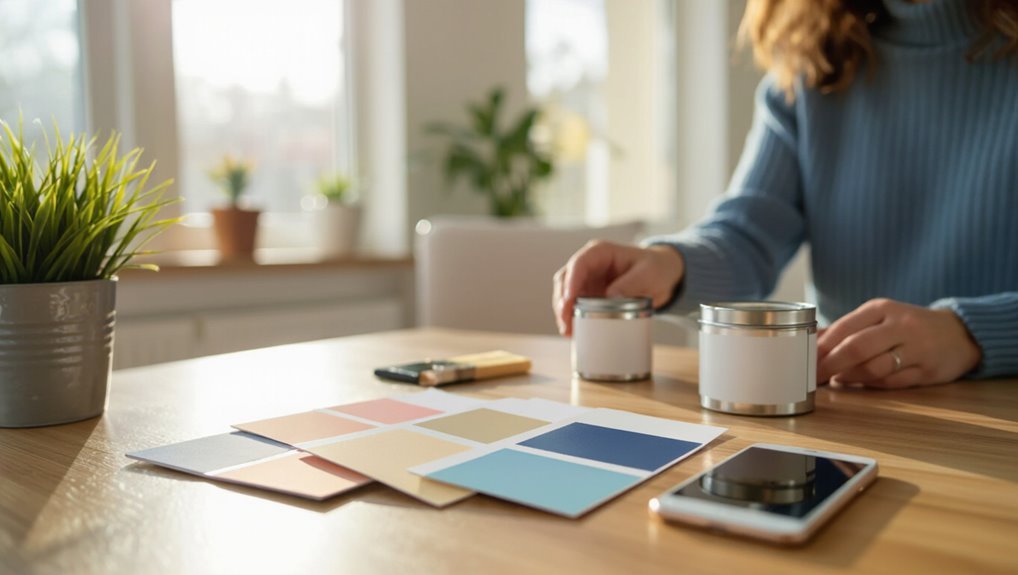
What’re you looking for when you search “Lowes paint samples pricing”?
You’re trying to match product options to budget, and your search behavior reflects comparisons and quick verification.
This guide serves your user motivation: getting clear, actionable pricing and sample options so you can decide whether to buy, test colors, or plan a project without wasting time or money.
Quick Answer: How Much Are Lowe’s Paint Samples?
If you just need a quick test, Lowe’s paint sample jars and peel-and-stick swatches are very affordable: expect small jar prices around $3–$7 and swatches under $2.
You can quickly try colors for sample selection and evaluate color matching on your walls. That low cost lets you test multiple tones before committing to gallons, saving time and preventing costly mistakes.
Lowe’s Paint Samples: Types at a Glance
Now that you know sample costs, you’ll want to compare the main options Lowe’s offers so you can pick the right format for testing color, finish, or coverage.
You’ll find a sample variety including small cans for full-coverage testing, touch-up pots, and spray or tester bottles.
Use them for accurate color matching, evaluating sheen, and checking surface adhesion before committing to gallons.
Lowe’s Peel-and-Stick Swatches: Price and Uses
You’ll find Lowe’s peel-and-stick swatches are affordably priced per pack, making them a low-risk way to test colors without committing to full samples.
They’re great for checking paint tones on different walls or lighting throughout your home.
Use them to compare shades side-by-side, mark favorites, and preview how colors work with furnishings before you buy.
Peel-And-Stick Pricing
When you’re weighing Lowe’s peel-and-stick swatches, expect low per-swatch costs that make sampling multiple colors practical—most individual adhesive swatches run under $5, with multi-pack options and promotional deals lowering the price per sample even further.
You’ll find pricing varies by size and pack quantity, and factors like peel and stick durability and planned peel and stick applications can influence whether you buy singles or value packs.
Practical Uses At Home
If you want to test colors without committing to full cans, Lowe’s peel-and-stick swatches offer an affordable, low-effort way to see how paint will look in different rooms and lighting. You can evaluate color psychology for mood, coordinate accents, and tweak home aesthetics before buying. Use swatches on walls, trim, and furniture to confirm contrast and harmony.
| Use case | Benefit |
|---|---|
| Walls | Mood check |
| Trim | Contrast test |
| Furniture | Accent match |
Lowe’s Small Tester Pots: Price, Volume, and Uses
Lowe’s small tester pots cost a fraction of a full gallon and give you enough paint to sample colors on several walls or a few furniture pieces before committing. You’ll pay modestly for about 2–8 ounces depending on brand, enjoying tester pot advantages like true color viewing and easy touch-ups.
Use color selection tips: test in different light, paint adjacent samples, and note finish and coverage.
Lowe’s Sample Cards and Fan Decks: Free vs Paid
You can grab free sample cards at Lowe’s to compare basic swatches before committing to a color.
If you need more precise matching or a full palette to carry around, Lowe’s sells fan decks that cost more but offer complete color ranges.
Think of cards as quick references and fan decks as a paid upgrade for serious planning.
Free Sample Cards
Many people assume paint sample cards and fan decks are free, and in most Lowe’s stores that’s true—you can grab color swatches and small fan decks at no charge to compare hues at home.
Use sample card benefits to test lighting and undertones; bring swatches to your room.
Follow simple color selection tips: view samples in different light, pair with furnishings, and narrow choices before buying larger samples.
Paid Fan Decks
Although most basic swatches are free, Lowe’s also offers paid fan decks that give you a fuller, more durable sampling of colors and coordinated palettes.
You’ll pay for better print quality, sturdier cards, and organized chip sets that speed decision-making.
Fan deck benefits include accurate color selection under different lights and easy comparison across finishes, helping you finalize choices before buying sample pots.
How Lowe’s Sample Pricing Compares to Other Stores
When you’re comparing paint sample prices, Lowe’s often lands between budget-friendly big-box chains and pricier specialty paint stores.
So you’ll want to weigh cost against convenience and selection. For a clear sample comparison, check sizes, return policies, and brand reputation.
Lowe’s pricing strategies mix value and selection; you’ll usually pay more than discount retailers but less than boutique shops for comparable quality.
Buying Lowe’s Samples: In-Store vs Online
When you’re choosing between buying Lowe’s samples in-store or online, availability can vary by location so you’ll want to check stock before you go.
Ordering online is convenient but pay attention to shipping times and any minimums, while in-store purchases let you see colors in person.
Also read Lowe’s return and exchange policies so you know how easy it’ll be to swap or return a sample that doesn’t work.
In-Store Sample Availability
If you prefer seeing and touching paint before you buy, Lowe’s in-store sample program makes that easy: you can check in store availability for specific colors and grab small trial pots.
Staff can show sample sizes and advise on coverage, drying, and finish so you’ll compare hues under real lighting before committing to a full gallon.
Online Sample Ordering
You can also order Lowe’s paint samples online for greater convenience and selection than an in-store visit.
You’ll browse full color palettes, read reviews, and use filters to narrow choices. Online ordering shows availability and often offers home sample delivery for a small fee.
You’ll compare prices, choose sizes, and schedule delivery or in-store pickup to fit your timeline and project needs.
Return And Exchange Policies
Although Lowe’s generally accepts returns and exchanges on paint samples, policies differ between in-store purchases and online orders, so check specifics before buying.
You’ll follow the sample return process shown on receipts or online—store returns are usually straightforward, online returns may need original packaging and proof.
Know exchange conditions: unopened or lightly used samples qualify, and time limits apply, so act promptly.
Sample Shipping & Pickup Fees at Lowe’s
When ordering Lowe’s paint samples online, expect small shipping charges unless you choose in-store pickup; these fees cover handling and vary by carrier and order size.
You can select shipping options at checkout or opt for pickup availability at your local store to avoid charges.
Delivery speed and combined orders influence cost, so review shipping estimates before completing your purchase.
Lowe’s Sample Return and Exchange Policy
You’ll want to know Lowe’s time frame for returning paint samples and any conditions that affect eligibility.
Check the specific return window and whether used or opened samples qualify for exchange or refund.
Also confirm receipt requirements and whether store credit, exchange, or a full refund applies in different scenarios.
Return Window Details
Return windows for Lowe’s paint samples are straightforward: you can return unopened or lightly used sample pots within the store’s standard return period, provided you have the receipt and the product is in resalable condition.
You should check the return policy before heading in. Remember these points:
- Keep your receipt and original packaging.
- Verify sample condition is resalable.
- Return within the timeframe.
Exchange And Refund Conditions
Although Lowe’s won’t accept heavily used or altered sample pots, you can exchange or get a refund for unopened or lightly used paint samples if you bring your receipt and the product is in resalable condition within the store’s return window. You’ll follow the refund process at customer service, showing sample condition and receipt.
| Action | Requirement |
|---|---|
| Exchange | Receipt, resalable sample |
| Refund | Receipt, within return window |
When to Choose a Peel-and-Stick Swatch
When you need a quick, no-mess way to test color in place, pick a peel-and-stick swatch: it lets you see true undertones on your wall, trim, or cabinetry without committing to a can of paint.
For a no-mess color test, stick a peel-and-stick swatch on walls or trim to reveal true undertones.
You’ll appreciate peel and stick benefits and straightforward swatch application. Use them when you want immediate feedback:
- compare lighting
- test adjacent colors
- preview undertones
When to Buy a Small Tester Pot
If you’re unsure how a shade will look on your wall, grab a small tester pot to try it out under your room’s light.
Use it for tight or awkward spaces like closets, trim, or powder rooms where a full can would be overkill.
Testing in the actual spot saves time and money by preventing costly color mistakes.
When To Test Colors
Wondering whether you should buy a small tester pot? You should test before committing, especially when color psychology matters or lighting effects shift tones.
Try tests when:
- walls get different natural light across the day
- you need to evaluate emotional impact in real rooms
- undertones look different from swatches
A tester pot saves money and guarantees the shade works in your actual space.
Small Space Applications
In tight rooms you’ll want a tester pot sooner rather than later, because small spaces magnify color choices and lighting quirks.
You’ll see how small space styling reacts to daylight, artificial light, and furniture tones.
Try a tester to confirm hue, sheen, and mood—color psychology shifts in compact areas—so you don’t commit to a full gallon that jars the whole room.
Which Lowe’s Samples Work Best by Room Size
Choosing the right Lowe’s paint sample size depends on how much surface you need to cover and how many color variations you want to test.
Choosing the right Lowe’s paint sample size depends on your surface area and how many colors you want to test.
Measure room dimensions to estimate sample coverage, then pick accordingly.
Consider:
- Tiny rooms: tester pots for accent walls.
- Medium rooms: quart samples for full wall trials.
- Large rooms: multiple quarts or a gallon after testing.
Choosing Samples by Finish: Flat, Eggshell, Semi-Gloss
When you pick a finish for your Lowe’s paint samples, think about how much sheen you want, how durable the surface must be, and where the paint will be used.
Flat hides imperfections, eggshell balances subtle sheen and cleanability, and semi-gloss offers high sample durability for trim and kitchens.
Use a finish comparison to match sheen, traffic level, and cleaning needs before buying.
Brand Differences at Lowe’s: Valspar vs Other Lines
Although Valspar often headlines Lowe’s paint racks, you’ll find several other in-house and national lines that differ in formulation, coverage, and price—so pick based on your project needs rather than the label.
You’ll weigh Valspar advantages against alternatives; use Valspar comparisons for real-world performance.
Consider these quick points:
- Coverage vs. coats
- Durability and finish
- Price per sample vs. quart
How Colorants and Tints Affect Lowe’s Sample Costs
When you pick a sample at Lowe’s, the type and amount of colorant used can change the price.
Darker or more saturated tints usually need more pigment, so they cost more than lighter, near-white options.
Keep that in mind when comparing sample prices across shades.
Colorant Impact On Price
Because colorants change the base paint, the number and type of tints you pick directly affect Lowe’s sample price: deeper, more saturated colors usually need more pigment and cost more to mix, while lighter or standard tints use less and stay closer to the base price.
You’ll notice colorant types cause clear price variations based on pigment quantity. Consider:
- Specialty pigments
- Multiple colorants
- Standard tints
Tint Intensity And Cost
Building on how pigment type and quantity change sample pricing, tint intensity plays a direct role in what you’ll pay at Lowe’s: stronger, more saturated tints require more colorant and raise the mix cost, while subtle or pastel tints stay closer to the base price.
You’ll notice tint variations affect per-sample cost based on color saturation levels and required colorant volume.
Pricing Tips: Budgeting Samples vs a Full Gallon
If you’re trying to decide whether to buy a few sample pots or jump straight to a full gallon, compare cost per usable square foot and the risk of needing more paint later.
Samples cost less upfront but can add up if you test many colors or end up repainting.
Balance sample budget and color selection by considering:
- Room size vs sample coverage
- Number of hues to try
- Repainting likelihood
How Many Lowe’s Paint Samples Should You Buy?
Now that you’ve weighed sample costs against buying a full gallon, decide how many Lowe’s paint samples to buy based on where you’ll test them and how many distinct looks you want to evaluate. Balance sample quantity with room size, lighting, and furniture. Prioritize color selection that complements your space and test high-impact walls first.
| Room | Lighting | Samples |
|---|---|---|
| Living | Bright | 2 |
| Bedroom | Soft | 2 |
| Kitchen | Mixed | 3 |
| Hallway | Dim | 1 |
| Accent | Spotlight | 1 |
How to Test a Peel-and-Stick Swatch Correctly
When you’re ready to try a peel-and-stick swatch, pick a few representative spots—near a window, a shadowed corner, and the wall behind your main furniture—and press the swatch flat, smoothing from the center outward to remove air bubbles so you see true color and texture.
Check peel and stick application and use basic color matching techniques:
- View at different times
- Compare adjacent surfaces
- Note finish and sheen
How to Test a Small Tester Pot on Your Wall
Grab a small tester pot and pick three 4- to 6-inch patches—one near a window, one in a shadowed corner, and one behind your main furniture.
Clean and sand each area for proper wall preparation, then apply the tester pot application with a small brush or mini-roller for even coverage.
Label patches and wait 24 hours before evaluating color and finish under normal room conditions.
Simulating Different Lighting With Lowe’s Samples
Because light changes how paint reads, you’ll want to test your Lowe’s samples under several lighting setups to see the true effect, not just the color on the chip.
Because light alters paint, test Lowe’s samples in varied lighting to see the real color, not just the chip.
You’ll notice lighting effects shift hue and value, altering color perception.
Try samples in these conditions:
- Morning natural light
- Midday indirect light
- Artificial evening light
Testing Lowe’s Samples on Textured Walls
If your walls have texture—be it orange peel, knockdown, or heavy stucco—you’ll want to test Lowe’s paint samples directly on those surfaces, since texture changes sheen, shadowing, and perceived color more than a flat swatch does. You’ll assess texture compatibility and try varied application techniques to mimic final results.
| Surface | Tool | Tip |
|---|---|---|
| Orange peel | Roller | Light nap |
| Knockdown | Brush | Cross-strokes |
| Stucco | Sprayer | Thin coats |
Stretching a Small Tester Pot for Multiple Walls
You can stretch a small tester pot across multiple walls by prepping and priming surfaces so the paint adheres evenly and covers better.
Apply thin, consistent coats and focus on edges and high-visibility areas first to make the most of each pass.
If you need extra mileage, mix in a paint extender per the manufacturer’s directions to improve flow and open time.
Prep And Prime Surfaces
Stretch thin: when you’re trying to make a small tester pot cover multiple walls, prep and priming are what’ll save you paint and headaches.
You’ll focus on surface preparation and priming techniques so paint adheres and hides previous color.
Do:
- Clean and sand seams
- Fill holes, wipe dust
- Use a thin, bonding primer for uniform absorption
These steps extend coverage.
Strategic Paint Application
Once you’ve prepped and primed properly, plan your application so a single tester pot does the most work: prioritize high-impact areas, work from top to bottom, and keep coats thin and even.
You’ll use paint layering techniques—thin initial washes, targeted touch-ups, then a final skim—to stretch volume.
Follow color harmony principles to blend edges and balance tones across rooms for cohesive results.
Extend With Additives
After planning your coats and blending zones, additives can help you make a single tester pot cover farther without sacrificing finish or color integrity.
You’ll choose additive types based on surface and drying time, and weigh performance benefits like flow and durability. Use small amounts and test first.
- Extend coverage
- Improve leveling
- Maintain color consistency
Using Sample Cards With Swatches or Pots Effectively
Anyone testing paint should pair a sample card with a swatch or pot so you see the color in real light and on the actual surface you’re painting.
Use sample card techniques like viewing at different times, under varied lighting, and beside trim.
Do a swatch comparison on the wall, evaluate sheen, and note drying shifts.
Trust what you observe before committing.
Common Sample-Related Mistakes and How to Avoid Them
When you rush sample testing or skip key checks, you’ll end up with a paint that looks great in the store but disappoints at home. Common mistakes include not testing on the actual wall, ignoring different lighting conditions, and overlooking sheen and drying shifts.
Rushing sample tests leads to surprise paint colors at home—test on your wall, in varied light, and after drying.
You can avoid sample color confusion by using solid testing techniques:
- Test on multiple wall spots
- Compare under day/night light
- Wait full dry time
Alternatives to Lowe’s Paid Samples to Save Money
If you want to save money on paint sampling, you don’t have to buy Lowe’s paid samples—there are several low-cost or free options that still let you test colors accurately. Try paint sample alternatives like swatches, DIY tester pots, or borrow a small cup from friends. These budget friendly options help you see true color before committing.
| Method | Cost | Best use |
|---|---|---|
| Swatches | Free | Quick comparisons |
| Tester pot | Low | Small wall tests |
| Borrow | Free/very low | Match existing paints |
Timing Sample Purchases: Sales, Coupons, and Promos
You can cut the cost of Lowe’s paint samples considerably by timing purchases around sales, coupons, and promotional events; pay attention to seasonal clearances, holiday promotions, and weekly circulars so you buy samples when they’re discounted or bundled.
Use sales timing and smart coupon strategies to save more:
- Track weekly ads and clearance racks
- Stack manufacturer or store coupons
- Buy during holiday or seasonal promos
Lowe’s Sample Promotions and Loyalty Perks
Timing sales and coupons will shrink sample costs, but Lowe’s promotions and loyalty perks can shave even more off the price.
You can use Lowe’s promotions codes, special event discounts, and clearance sample deals.
Join the rewards program to earn loyalty rewards on purchases, get member-only offers, and stack savings with coupons so your sample spends stay minimal and smart.
Eco Considerations for Lowe’s Paint Samples
You should weigh eco-friendly paint formulas when choosing samples, since low- or zero-VOC options reduce indoor emissions.
Also consider the packaging waste from single-use sample containers and whether Lowe’s offers recyclable or reusable alternatives.
Thinking about both product composition and packaging helps you make greener choices without sacrificing color testing.
Sustainable Paint Options
While choosing paint samples at Lowe’s, consider eco-friendly formulas that cut VOCs and reduce indoor air pollution.
You’ll want eco friendly brands and products aligned with sustainable practices to lower your home’s impact. Look for low-VOC labels, recycled-content packaging, and certifications that prove claims.
- Low-VOC and zero-VOC options
- Certified eco friendly brands
- Durable, long-lasting finishes
Sample Packaging Waste
Because paint samples often come in single-use plastic tubs or foil packets, they can create surprisingly a lot of packaging waste, especially if you test several colors; consider choosing samples with recyclable containers, refillable options, or asking Lowe’s about bulk sample programs to cut that garbage stream.
You should check labels, return empties when possible, and weigh sample packaging against the environmental impact before buying.
Storing or Disposing Leftover Tester Paint Safely
When you’re done testing colors, decide quickly whether to keep or discard each sample so it doesn’t go bad or become a hazard.
For leftover paint storage, seal cans tightly, label with date and color, and store upright in a cool place.
If you discard, follow eco friendly disposal rules:
- Harden small amounts
- Recycle containers
- Take liquid to hazardous waste facility
DIY Color Matching vs Buying a Lowe’s Sample
You can try DIY color matching at home to save money, but it often struggles to match hues as accurately as store-mixed samples.
Buying a Lowe’s sample costs more upfront but gives you a reliable color match and convenient ready-to-use paint.
We’ll compare color accuracy, cost, and convenience so you can pick the best option for your project.
Color Accuracy Comparison
Although DIY color matching can feel empowering, it often falls short of the consistency you get from a Lowe’s sample.
You’ll notice differences in color perception and lighting effects that DIY methods miss. Choose samples to verify hues in your space.
- Accurate factory-mixed formula
- Consistent pigment ratios
- Predictable drying and sheen results
Cost And Convenience
Picking between DIY color matching and buying a Lowe’s sample comes down to a trade-off between time, money, and certainty:
DIY kits or tinting at home are cheaper upfront but demand trial-and-error and can eat hours, while a Lowe’s sample costs a bit more yet gives a ready-made, factory-mixed swatch that saves you redoing mistakes and guessing about final results.
You’ll weigh sample selection against guaranteed color accuracy.
Documenting Sample Tests to Decide Reliably
When you run paint sample tests, record what you applied, where you placed it, the lighting conditions, and the time of day so you can compare results objectively; small details like primer type or the number of coats often explain big differences.
You’ll improve sample testing and color accuracy by tracking:
- test location and surface
- light and time of day
- primer/coats used and drying time
Real Customer Experiences With Lowe’s Samples
Many shoppers report that Lowe’s paint samples make it easy to test colors before committing, but your mileage can vary depending on sample size and finish.
You’ll read mixed customer feedback: some praise true-to-swatch results and quick touch-ups, others note uneven coverage or color shifts under different lights.
Your sample experiences will guide adjustments, helping you pick the right size and finish for final painting.
Decision Checklist: Which Lowe’s Sample to Buy Next
Before you buy another sample, check what you’re trying to learn from it: are you testing true color under your lighting, coverage for a high-traffic wall, or finish sheen for trim?
Use color psychology and practical sample selection—match purpose to test.
Consider:
- Light conditions
- Target surface durability
- Trim versus field finish
Buy the sample that answers your primary question.
Next Steps After You Pick a Lowe’s Sample Color
Now that you’ve chosen a Lowe’s sample color, map out the next steps so you get a true feel for how it will perform: apply samples to multiple wall sections, test during different times, and document results.
Use color selection strategies like comparing adjacent hues and undertones.
Note lighting considerations—natural versus artificial, warm versus cool bulbs—and revisit after 48–72 hours before committing to a full purchase.
Best Apps and Tools for Advanced Color Testing
After you’ve tested Lowe’s samples on several walls and observed them across different lighting and times of day, use apps and digital tools to refine your choice and catch details the eye might miss.
You’ll leverage color theory and digital palettes to predict harmony, contrast, and mood.
Try these tools to sample, match, and simulate in-room lighting:
- Color capture apps
- Virtual paint visualizers
- Palette generators
Frequently Asked Questions
Can I Return an Opened Sample Pot for a Refund or Exchange?
Yes — you can often return an opened sample pot if it’s unused and within the store’s sample pot policies; you’ll follow the regular return process at the register or customer service, so keep your receipt and original packaging.
Do Lowe’s Samples Contain Low-Voc or Eco-Friendly Formulations?
Yes — you’ll find eco friendly options among Lowe’s samples; they often include low‑VOC formulas that comply with VOC regulations. You can check product labels or ask staff for specific low‑emitting, eco‑certified choices.
Can I Get Custom Tints or Color Matches for Sample Sizes?
Yes — you can get custom tints and color matches for sample sizes, but be aware of sample size limitations: not every formula or specialty finish’s custom color options are available in smallest samples, so ask the associate first.
How Long Do Unopened Peel-And-Stick Swatches Remain Adhesive?
A homeowner tested unopened peel-and-stick swatches after two years and found they remained sticky; swatch longevity typically ranges 1–3 years if stored cool/dry, but adhesive quality can decline with heat, humidity, or sun exposure.
Are Sample Prices Different for Pro or Contractor Accounts?
Yes — you’ll often see different sample prices for pro or contractor accounts; you’ll get account benefits like bulk discounts and priority services, and discount eligibility depends on your verified contractor status and purchase volume.
Conclusion
Now that you know your Lowe’s sample options, you can pick the one that fits your project and budget. Fun fact: about 70% of homeowners test paint samples before committing to a full gallon—so grabbing a peel-and-stick swatch or a small tester pot greatly boosts confidence and reduces costly mistakes. Try a swatch for quick lighting checks and a tester pot for real-wall trials, then move confidently to your full paint purchase.
