
How to Varnish an Oil Painting: Step-By-Step Artist Guide
You’ll varnish only when the paint’s fully cured—usually months to over a year—so test a small area first with the tack test. Choose gloss, satin, or matte and prefer a removable synthetic varnish for future cleaning. Work in a clean, ventilated space; use quality brushes or a spray at 12–18 inches and apply thin, even coats, letting each dry completely. Watch humidity to avoid bloom, and follow safety and disposal guidelines; keep going for step‑by‑step techniques.
When to Varnish an Oil Painting
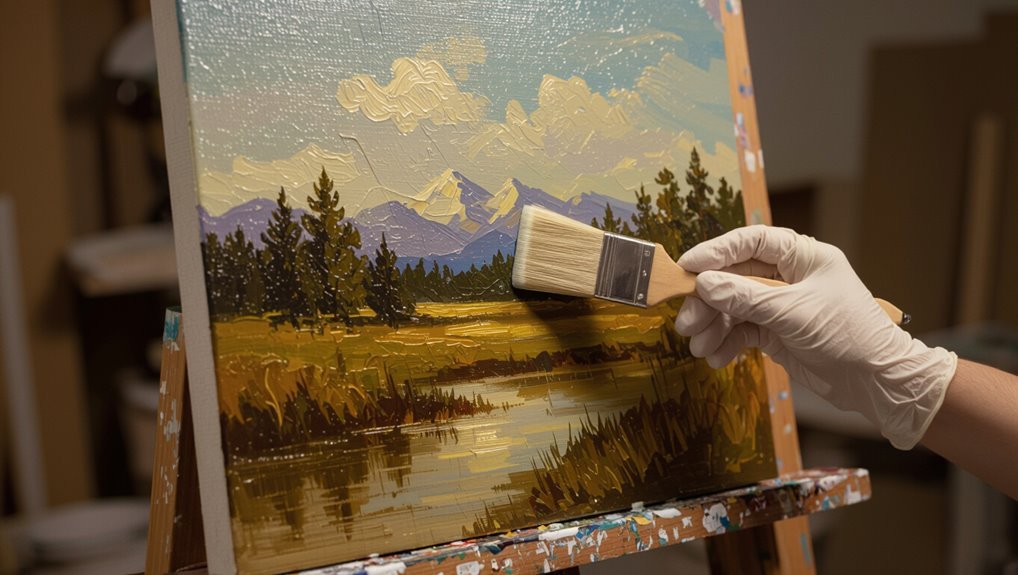
You should only varnish an oil painting once the paint is fully dry to the touch and, ideally, through to the leanest-to-fat layers — usually 6–12 months for thin passages and up to 12–18 months for thicker impasto.
Check dryness, dust off, and choose varnish types suited to gloss desired.
Test application techniques on swatches; apply thin, even coats with a soft brush or spray, avoiding excess.
How Long to Wait Before Varnishing?
How long you wait depends a lot on the medium—linseed, walnut, or alkyd all dry at different rates.
You’ll also need to account for temperature, humidity, and ventilation because they greatly affect drying time.
Before varnishing the whole piece, try a small test area so you can confirm the paint is cured and the varnish behaves as expected.
Drying Time By Medium
Different painting media need very different wait times before you can safely varnish.
For oil paint drying, wait several months for traditional linseed-based layers to cure; alkyd-modified oils dry faster, often weeks.
Fast-drying mediums and thin layers shorten wait time, while thick impasto requires many months.
Always test a hidden area or use the tack test to confirm full dryness before varnishing.
Environmental Factors Matter
Those general drying timelines give you a baseline, but environmental conditions will change how long you should actually wait before varnishing.
You’ll factor temperature considerations—warmer speeds curing, colder slows it—and humidity control, since high moisture prolongs tackiness.
Monitor conditions, aim for steady, moderate climate, and allow extra time if readings fluctuate.
When the surface feels fully dry, proceed.
Test Varnish First
Want to be sure your painting can take a varnish? You’ll wait until paint feels dry to the touch, then use a small, inconspicuous area as a test surface.
Apply a thin varnish application, let it cure per manufacturer directions, and inspect for tackiness, blooming, or color shift.
If all looks stable after the test period, proceed to varnish the whole painting.
Choose the Right Varnish: Gloss, Satin, Matte, Removable
You’ll want to decide whether a gloss, satin, or matte finish best suits your painting’s colors and texture, since gloss boosts color and depth while matte softens glare.
Consider removable varnishes if you want the option to clean or rework the surface later.
Also remember that the mediums you used (linseed, stand oil, etc.) can affect sheen, so test combinations before committing.
Gloss Vs. Matte Finish
Choosing between gloss, satin, and matte varnishes comes down to how you want light to interact with your painting and how much detail or texture you want to emphasize.
You’ll use gloss advantages to boost color depth and highlight brushwork; matte benefits reduce glare and soften contrasts for subtle, even viewing.
Pick gloss to dramatize, matte to calm, or satin for compromise.
Removable Varnish Options
If you liked how gloss and matte change appearance, consider whether you want a removable varnish that protects now but can be lifted later for cleaning or reworking.
You’ll choose among varnish types: synthetic or natural resins offered in removable formulations.
Pick based on reversibility, yellowing resistance, and drying time.
Test first on a sample to verify safe removal and desired sheen.
Mediums Affecting Sheen
Different mediums you mix into oil paint will change how a varnish interacts with the surface, so pick them with your final sheen in mind.
Your medium selection—linseed, walnut, or alkyd—alters drying and absorption, affecting sheen effects.
Test combinations on scrap panels, then choose gloss, satin, or matte removable varnish accordingly so your finished sheen matches intent without surprises.
Tools and Materials for a Clean Varnish Job
A tidy, dust-free finish starts with the right tools and materials, so gather quality brushes or foam applicators, lint-free cotton or microfiber cloths, clean jars for thinning and mixing, a respirator or good ventilation, nitrile gloves, and the varnish you’d planned—either removable (synthetic) or satin/gloss varnish depending on the look you want.
Store varnish sealed; practice cleaning brushes promptly and label jars to avoid contamination.
Test Varnish Compatibility Safely
Because not all varnishes play well with every ground or paint layer, you should always run small compatibility tests before committing to a full varnish.
Always test varnish compatibility on spare canvas or a hidden corner before varnishing the whole painting.
Use simple test methods on spare canvas or hidden corners, record compatibility results, and inspect after drying.
Try these checks:
- Freshness/date of varnish
- Solvent sensitivity
- Adhesion test
- Gloss consistency
- Reversibility check
Prep Painting & Workspace to Prevent Dust and Fingerprints
Start by clearing and cleaning your workspace so dust, lint, and greasy fingerprints can’t land on the painting while you varnish.
Wear clean gloves for fingerprint protection, use tack cloths and an air blower for dust prevention, and set up tools in a compact layout.
Good workspace organization supports painting care and reduces accidental smudges or contaminants during varnishing.
How Many Coats and How Much Varnish to Use
Most artists apply two to three thin varnish coats, letting each one dry fully before the next; this gives even protection and lets you judge sheen and color without trapping solvents or dust.
You should control coating thickness and estimate coverage area to avoid pooling.
Consider:
- Thin, even coats
- Full, consistent coverage
- Drying time between coats
- Minimal varnish per coat
- Test areas first
How to Apply Brush‑On Varnish : Step by Step
With the surface clean and your drying intervals observed, you’re ready to apply brush-on varnish. Choose varnish types, thin if needed, and test. Use long, even brush techniques, working edges first, then broad strokes. Let each coat level and dry. Inspect for dust, recoat lightly or stop when uniform gloss appears.
| Calm | Pride | Finish |
|---|---|---|
| Steady | Relief | Glow |
| Care | Joy | Protection |
How to Spray Varnish for a Smooth Finish
Once your painting is fully dry and dust‑free, spray varnish gives a thin, even protective coat that minimizes brush marks and evens out sheen.
You’ll use a steady spray technique, keep 12–18 inches away, and apply light passes. Protect surroundings, wear a mask, and let each coat dry fully before repeating.
- steady motion
- overlap passes
- thin coats
- ventilated area
- mask on
Troubleshooting Varnish Problems: Bloom, Clouding, Drips
If you spot milky haze, patchy white spots, or runs after varnishing, don’t panic—you can usually fix or prevent these issues by identifying their causes quickly.
Check humidity and cool temperatures for bloom causes, allow longer drying, and use clean tools.
For clouding solutions, thin or recoat in controlled climate.
For drip prevention, brush or spray thinner layers; consider careful varnish reapplication if needed.
Remove or Replace Varnish Safely; Storage & Safety Tips
1 clear rule to follow when removing or replacing varnish is to test first: try a small area to assess Varnish removal or Varnish replacement effects.
Follow Safety precautions and plan Safe storage for solvents and finished work. Use protective gloves, ventilation, and proper waste disposal.
- test patch
- ventilate
- wear gloves
- label solvents
- store flat
Frequently Asked Questions
Can Varnish Alter Color Saturation or Gloss Over Time?
Yes — varnish can cause color shift and gloss change over time; you’ll notice increased saturation or yellowing as resins age, and varying sheen as varnish settles or degrades, so monitor and choose stable varnishes.
Can Varnishing Affect Subsequent Conservation Treatments?
Like peeling tape, yes — you’ll find varnish removal can reveal underlying issues and complicate treatments, so you’ll need to weigh conservation ethics, document choices, and consult conservators to avoid irreversible damage during future interventions.
Is It Safe to Varnish Paintings With Mixed Media Elements?
Yes — you can varnish mixed media works, but you’ll need mixed media considerations: test varnish compatibility with each material, use reversible, non-yellowing varnishes, isolate sensitive elements with appropriate barriers, and document materials for future conservation.
Can Varnish Be Applied to Paintings on Unstretched Canvas?
Yes—you can varnish unstretched canvas. For example, a conservator stretched a painted canvas after lining it; you’ll prioritize canvas preparation, choose compatible varnish types (retouching or final synthetic) and apply evenly after drying.
How Does Humidity During Varnishing Affect Final Appearance?
Humidity impacts finish by altering drying time and gloss; you’ll see slower curing, increased tackiness, potential bloom or cloudiness, and uneven sheen if humidity’s high, while low humidity can cause faster drying and stress.
Conclusion
Varnishing seals and protects your oil painting, but timing, technique and the right varnish make all the difference. Wait until the paint’s fully cured, test compatibility on a scrap, and choose gloss, satin or matte to suit your vision. Work in a clean, dust-free space, use thin even coats (brush or spray), and address bloom or drips promptly. With care it’ll last centuries—well, maybe not forever, but your finished piece will shine like a tiny museum treasure.
