
How to Paint Flowers on a Wall for Beautiful Home Decor
You can paint flowers on a wall by planning style and scale to suit your room, measuring and mapping the area, then priming the surface and choosing durable interior paints. Sketch or transfer designs with stencils, a projector, or freehand, block in base shapes, add midtones and highlights, then refine edges and details with small brushes. Seal the mural for protection and touch up as needed, and keep going to uncover tips on color, tools, and finishes.
Who This Tutorial Is For
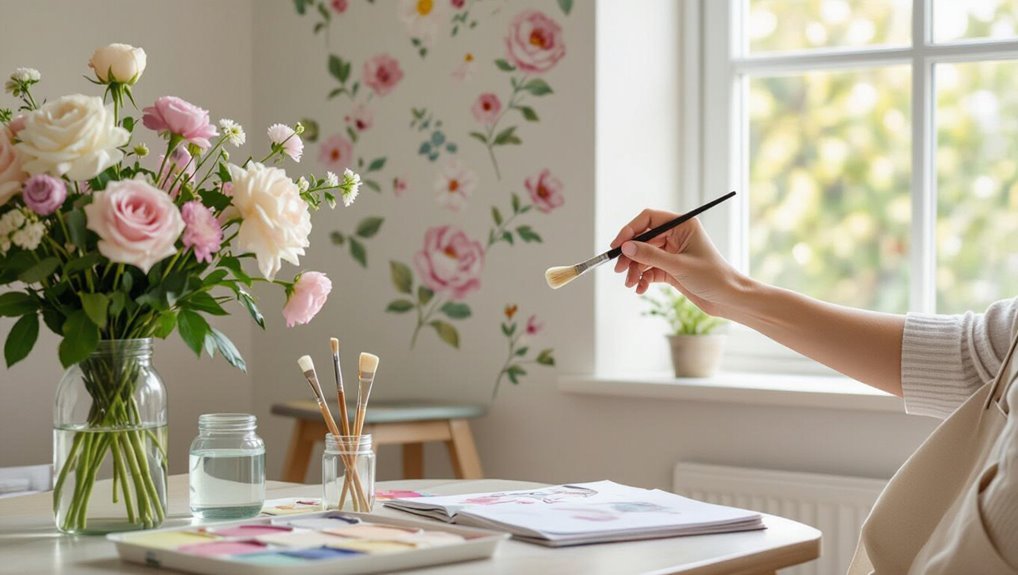
This tutorial is for anyone who wants to add simple, attractive floral designs to a wall—whether you’re a complete beginner looking for an easy weekend project, a DIYer wanting to refresh a room, or an artist seeking quick mural techniques.
You’ll get beginner tips that simplify materials, steps, and mistakes to avoid, plus creative inspiration to adapt motifs, scales, and color without overcomplicating things.
Pick the Best Flower Style for Your Room
Wondering which floral style will suit your room best? You’ll choose based on mood, existing palette, flower color combinations, and wall texture considerations. Pick bold blooms for drama, soft botanicals for calm, or stylized motifs for modern rooms. Use this quick guide:
| Mood | Style | Tip |
|---|---|---|
| Calm | Soft botanicals | Pastels, smooth walls |
| Bold | Large blooms | Contrast colors, textured walls |
| Modern | Stylized | Limited palette, sleek finish |
Match Flower Scale to Your Furniture and Space
When you pick flower sizes that echo your furniture and room proportions, the mural will feel intentional rather than tacked-on.
Choose flower size that complements sofas, tables, and headboards so furniture harmony reads as one design.
Use color balance to tie motifs to upholstery and wall tones.
Maintain spatial awareness: scale blooms to sightlines and traffic flow for a cohesive, comfortable space.
Measure and Map Your Wall Area
Start by measuring the height and width of your wall so you know exactly how much space you’re working with.
Then sketch a simple grid on paper or tape a light grid on the wall to plan where each flower will go.
Use the measurements and grid to balance scale and spacing before you pick up a brush.
Measure Wall Dimensions
Measure the wall’s height and width with a tape measure and note any doors, windows, vents, or outlets so you can map the usable area accurately.
You’ll record dimensions and mark obstructions, applying flower dimensioning techniques to scale motifs appropriately.
Consider wall space considerations like sightlines and furniture placement, so blossoms won’t clash with fixtures.
Convert measurements to a simple scale for planning.
Sketch Placement Grid
A simple grid will keep your flower layout balanced and make scaling motifs easy.
So draw a light, evenly spaced grid over the mapped wall area using your measured dimensions; include marks for doors, windows, vents, and outlets so you can see usable zones at a glance.
Use basic sketch techniques to plot focal points, adjust spacing for traffic flow, and verify grid accuracy before transferring designs.
Choose Paints for Interior Walls and Murals
Picking the right paints makes your mural durable and vibrant for years to come.
You’ll choose interior paint types suited to each room—eggshell for low-sheen walls, satin for easy cleaning, and matte for hiding imperfections.
For the artwork itself, pick quality acrylics or specialty mural paints and consider mural paint finishes to balance durability with the look you want.
Select Brushes and Essential Tools
You’ll want a few key brush types—rounds for petals, flats for backgrounds, and liners for fine stems—so you can tackle every floral detail.
Gather an essential tool kit including a palette, drop cloth, painter’s tape, a small ladder, and a couple of rags.
With the right brushes and tools ready, you’ll make the painting process smoother and more precise.
Brush Types Overview
Think of your brushes as the tools that shape every petal and stem—you’ll want a handful of specific types to get crisp edges, soft blends, and fine details.
Use round brushes for petals, filbert for soft curves, flat for blocking, and liners for veins.
Choose brush materials that suit your paint, and practice brush techniques to control stroke, edge, and texture.
Essential Tool Kit
Usually, you’ll want a compact kit that covers shaping, detail, and cleanup: include a couple of round brushes (sizes 4–8) for petals, a filbert or two for soft edges, a 1/2–1 inch flat for blocking large areas, and a fine liner (size 0–2) for veins and whisker-thin details, plus a natural- or synthetic-hair mop or fan for gentle blending.
| Tool | Purpose |
|---|---|
| Rounds | Petals, detail |
| Filberts | Soft edges |
| Flat | Blocking, base paint colors |
| Liner | Veins, fine marks |
Prepare tools after wall preparation, keep rags, palette, tape, and varnish handy.
Prep and Prime the Wall Properly
Before you sketch or pick colors, prep and prime the wall so your flowers sit on a smooth, lasting surface.
You’ll clean, fill cracks, sand glossy areas, and remove dust — essential wall surface preparation. Choose the right primer for material, apply even coats, and use proper primer application techniques.
Let each coat dry fully before painting to guarantee adhesion and durability.
Transfer Your Design: Stencils, Projector, or Freehand
Choose the transfer method that matches your skill level and the mural’s scale—stencils for repeatable shapes, a projector for accurate large-scale placement, or freehand for an impromptu, organic look.
Match your skill and scale—stencils for repeats, a projector for precision, or freehand for organic flair.
- Use stencil techniques for crisp petals and repeatability.
- Secure stencils to avoid bleed.
- Apply projector tips for alignment and scaling.
- Trace lightly and refine.
- Embrace small freehand variations for life.
Troubleshoot Transfer Methods
If a transferred flower looks off, don’t panic—diagnose which method caused the issue and fix it quickly.
Check transfer techniques: improve stencil accuracy by re-cutting or repositioning, correct projector alignment and focus, or address freehand challenges with light pencil guides.
Use layering strategies to mask small errors and make subtle design adjustments so the overall composition reads clean and intentional.
Paint One Focal Bloom: Step-by-Step
Start with a single focal bloom to anchor the composition and build confidence in your technique. You’ll use focal bloom techniques and color blending tips to shape petals, add depth, and refine edges.
Start with one focal bloom to anchor your piece—shape petals, blend colors, refine edges, then reassess.
Work confidently, stepwise, and step back often to check balance.
- Sketch center and major petals
- Layer midtones for form
- Blend highlights smoothly
- Add crisp edge details
- Step back, adjust contrast
Block In Base Layers and Shapes
Start by blocking in the base colors to establish where light and shadow will fall across your bloom.
Use simple shapes to map the petals and leaves, keeping edges soft so you can refine them later.
This foundation makes it easier to build form and adjust values as you work.
Establish Light And Shadow
Once you’ve sketched your flower forms, block in the light and shadow with broad, confident strokes to define the main volumes and guide later details.
You’ll consider light sources and use simple shadow techniques to anchor petals and leaves, creating depth before refining edges.
- Establish primary light direction
- Choose midtones first
- Paint cast shadows boldly
- Soften shifts selectively
- Reserve highlights for the end
Map Basic Flower Shapes
Begin by laying in the major shapes with broad, confident strokes so you can see how each bloom sits in relation to the others.
You’ll block in simple flower shapes using diluted paint, defining petals, centers, and stems.
Focus on scale and spacing as core design elements.
Keep edges soft where overlaps occur, correcting composition before adding detail and color variations.
Add Midtones and Shading for Depth
Before you add highlights, lay in midtones and basic shading to give each petal and leaf believable form; they act as the link between your base color and the brightest accents.
Use midtones techniques and shading tips to model volume, then refine edges.
Shape form with midtones and smart shading first, then refine edges for believable volume and light
- Block in midtone planes
- Gradually deepen shadow areas
- Soften shifts with a dry brush
- Preserve light sources
- Step back and adjust contrast
Build Highlights and Crisp Petal Edges
Now you’ll build highlights and sharpen petal edges to make the flowers pop.
Pick a fine, firm brush for crisp lines and a soft round brush for subtle highlights.
Work from light to bright, using steady strokes to define each petal edge.
Choose The Right Brush
1 brush can change the look of a petal: choose a small, pointed round or a fine flat brush for crisp edges and a soft filbert or mop brush for smooth highlights, and keep them clean and slightly damp so you can layer paint without losing definition.
- Brush Types matter for shape control.
- Use steady Brush Techniques.
- Match brush to pigment flow.
- Rotate wrist for strokes.
- Rinse and reshape bristles.
Define Sharp Petal Edges
Having the right brush and a steady hand sets you up to define sharp petal edges with confidence: use the point of a small round or the thin edge of a flat to lay down crisp outlines, then pull a slightly damp filbert inward to blend subtle highlights without softening the contour.
Practice petal definition with controlled pressure and try edge techniques like feathering and single-stroke lifts.
Paint Natural-Looking Leaves and Stems
Start by sketching the main stems and leaf shapes lightly with a pencil so you can vary length and angle for a natural look; work from the largest stems outward and keep lines slightly curved rather than straight.
Use varied leaf shapes and simple stem techniques, then paint with confident brushstrokes.
- Vary size
- Angle tips
- Thin-to-thick stems
- Single-stroke leaves
- Soft color shifts
Layer Foliage for Background Depth
Start with broad washes to establish mass and tone so the background reads as a cohesive green field.
Then build midlayer textures with varied brushstrokes and slightly different hues to suggest depth and movement.
Finish by adding crisp leaf details and highlights that bring the foliage forward without overpowering the flowers.
Start With Broad Washes
Once you lay down broad washes, you’ll set the stage for depth by blocking in simple shapes and tonal values for the foliage behind your flowers.
Use broad wash techniques and subtle color blending to suggest distance without detail. Keep edges soft, vary saturation, and plan light direction.
- Block shapes first
- Soften outer edges
- Vary green tones
- Reduce saturation back
- Respect light source
Build Midlayer Textures
After you’ve laid the broad washes, layer midtone foliage to give the background structure and texture without stealing focus from the flowers.
Use varied brushes and subtle color shifts to suggest depth; employ texture techniques like dry-brushing and stippling.
Keep edges soft and shapes simplified, applying controlled layering methods so the midlayer recedes visually, supporting blossoms without adding busy detail or competing highlights.
Add Final Leaf Details
Although you’ve already established midlayer texture, now you’ll refine individual leaves so the background gains believable depth without drawing attention from the flowers.
- Vary leaf color subtly for distance cues.
- Add thin veins to suggest leaf texture.
- Soften edges on distant foliage.
- Use darker undershades for depth.
- Keep highlights minimal so flowers remain focal.
Create a Repeating Floral Accent Pattern
When you want a cohesive look across a wall, create a simple repeatable motif and use a grid or stencil to keep spacing consistent; this lets you paint confidently and maintain rhythm without measuring every bloom. Use floral inspiration and a single accent color for unity. Repeat small clusters, vary scale slightly, and step back often.
| Motif | Purpose |
|---|---|
| Cluster | Focus |
| Scale | Interest |
| Spacing | Rhythm |
Layout and Pace a Climbing Corner Garden
Start by mapping the corner with a loose vertical spine—real or penciled—so you can pace vines and blooms upward without crowding; you’ll imagine climbing plants following that line and shape the garden layout to breathe.
- Establish scale and spacing
- Vary leaf and bloom sizes
- Anchor at base, taper upward
- Repeat motifs for rhythm
- Leave negative space to rest
Stenciling Tricks for Crisp Repeats
Pick a stencil that holds its shape and matches the scale of your climbing corner garden, and tape it down firmly with low-tack masking tape so it won’t shift.
Apply paint in thin, even layers—stipple or use a dry brush—to prevent bleed and build up opacity with multiple coats.
Move the stencil only after each layer dries slightly to keep repeats crisp.
Choose The Right Stencil
1 smart stencil choice can make repeating floral patterns fast and flawless. You’ll pick based on stencil materials and preferred stencil techniques, balancing durability with detail.
Consider scale, flexibility, edge crispness, cleaning ease, and pattern repeat when choosing.
- Mylar for durability
- Vinyl for single-use detail
- Flexible latex for curves
- Thick cardstock for quick trials
- Reusable film for fine repeats
Use Secure Masking Tape
When you’re ready to lock a stencil in place for repeat patterns, secure masking tape is your best ally; press it firmly along all edges to prevent paint bleed and keep each motif perfectly aligned.
Use precise tape application techniques—smooth from center outward, overlap seams minimally, and check level.
After paint sets slightly, follow gentle tape removal tips: peel back slowly at a 45° angle.
Apply Paint In Layers
Start thin and build up: apply multiple light layers of paint through your stencil rather than one heavy coat, and you’ll avoid drips, bleeding, and blocked details.
Use layer techniques and subtle layering effects to control opacity and crisp edges. Work quickly between thin coats.
- Light dabs, not floods
- Offload excess paint
- Dry slightly between layers
- Rotate stencil gently
- Inspect edges and refine
Blend Colors on the Wall (Wet-On-Wet, Dry-Brush)
Although blending can seem tricky, you’ll get smooth shifts by working deliberately with timing and brush choice.
Use wet-on-wet for seamless gradients, keeping edges soft while paints stay workable. For crisp veins or highlights, switch to dry-brush and lift pigment lightly.
Practice color harmony and blending techniques on a scrap board first so your petals read natural and layered on the wall.
Add Texture With Sponging, Stippling, and Palette Knife
Add texture with simple tools like a sponge, stiff brush, or palette knife to give your floral mural depth and tactile interest.
You’ll use texture techniques to suggest petals, leaves, and highlights. Try creative sponging, explore stippling methods, and apply palette knife tips for crisp edges.
Practice control, vary pressure, layer colors, lift excess, and finish with subtle glazes.
- Vary pressure
- Layer colors
- Lift excess
- Control edges
- Subtle glazes
Realistic vs. Stylized Flowers: How to Choose
Want flowers that read like a photograph or ones that read like a signature?
You’ll weigh realistic techniques against stylized inspiration, matching artistic styles to design themes and wall texture.
Consider flower symbolism and color psychology to set mood, and pick seasonal blooms for authenticity.
Trust your space: choose realism for detail and presence, stylized work for bold, graphic impact.
Color Palettes That Match Your Decor
Now that you’ve decided between realistic or stylized blooms, the next step is choosing a color palette that ties the mural to your room.
Use color theory and seasonal palettes to guide choices so your flowers enhance mood and furniture. Pick tones that echo fabrics, trim, and art.
Let color theory and seasonal palettes guide you—choose blooms that echo fabrics, trim, and existing art.
- Match dominant room hues
- Accent with complementary shades
- Use muted neutrals
- Add one pop color
- Test samples on wall
Use Metallics, Outlines, and Mixed-Media Accents
A few well-placed metallics, bold outlines, and small mixed-media touches can lift a flower mural from pretty to striking, so plan where each element will draw the eye and support the overall palette. You’ll add metallic finishes sparingly, use outlines to define petals, and try mixed media techniques for texture.
| Element | Purpose | Placement |
|---|---|---|
| Metallic | Highlight | Centers |
| Outline | Define | Edges |
| Mixed media | Texture | Accents |
Seal and Protect Painted Flowers
Before you call the mural finished, protect your painted flowers with a clear sealer so colors stay vibrant and the surface resists scuffs, moisture, and UV fading.
Before declaring the mural complete, seal your painted flowers with a clear finish to preserve color and resist wear.
You’ll choose color sealants and protective finishes suited to location and paint type. Apply thin coats, dry fully, and inspect for coverage.
- test on a scrap
- thin, even sprays
- wait between coats
- avoid high humidity
- cure before use
Quick Fixes and Touch-Up Techniques
When a pet or furniture nick mars your mural, you’ll want fast fixes that blend seamlessly with the surrounding paint.
Start by matching texture and paint sheen, feathering new color into old so the patch disappears.
Use small brushes and a stippling motion to recreate any raised or matte finishes for an invisible repair.
Seamless Paint Blending
Although small imperfections can stand out, you can hide most mistakes with a few quick blending and touch-up moves. Use color theory to pick nearby hues, then apply subtle blending techniques with damp brushes or sponges.
Work outward from the flaw, feather edges, and let layers dry between passes.
- Feather with a soft brush
- Use thin glazes
- Dab with a sponge
- Match hue, not saturation
- Step back and assess
Patch And Texture Matching
One simple trick you’ll use again and again is matching the wall’s texture before you worry about color: get the surface feel right and your touch-ups disappear into the wall.
For patch and texture matching, feather edges, use skim coats, and mimic stipple or knockdown patterns.
Consider color theory when matching repaired areas so tone and sheen blend seamlessly with existing paint.
Safety, Cleanup, and Disposal Tips
Before you start cleaning brushes or tossing rags, set up a safe workspace by ventilating the room, wearing gloves and a mask if using strong solvents, and keeping a fireproof container for oily rags nearby.
Follow safety precautions and choose eco friendly disposal where possible.
- Wipe brushes, then rinse in a closed container.
- Dispose solvents at a hazardous-waste site.
- Air out the room fully.
- Seal paint cans tightly.
- Label and store leftovers safely.
Time and Cost Estimates by Project Type
For a small accent wall, you’ll usually pay less for paint and finish in just a few hours of work.
A medium mural will take a day or two depending on detail and may require more paint, tape, and possibly a helper.
For a large mural, plan a bigger budget for materials and multiple days (or a team) to finish it on schedule.
Small Accent Wall Costs
A small accent wall is one of the quickest, most affordable ways to add personality to a room, and knowing typical time and cost ranges helps you plan confidently.
You’ll factor in budget considerations and wall preparation; expect 2–8 hours and $30–$200 depending on paint, tools, and complexity.
- Prep: cleaning, sanding, primer
- Paint: quality affects cost
- Tools: brushes, rollers, stencils
- Time: quick single-session projects
- Extras: sealing, touch-ups
Medium Mural Timeframes
If a small accent wall can refresh a room in a few hours and a modest budget, medium murals ask for a bit more planning and investment. You’ll schedule 1–3 days, factor supplies, and refine mural techniques and color mixing. Estimate labor and drying times, then adjust for detail level.
| Project | Time | Cost |
|---|---|---|
| Simple | 1 day | $100 |
| Detailed | 2 days | $300 |
| Complex | 3 days | $600 |
| Finishing | 0.5 day | $50 |
Large Mural Budgeting
Tackle large murals by breaking costs and time into clear categories so you can plan realistically and avoid surprises.
- Estimate materials: paint, primer, sealant — note mural expenses.
- Factor labor or hourly rates and prep time.
- Add scaffolding/rentals and delivery fees.
- Include design revisions and unexpected touch-ups.
- Use budgeting tips: contingency (10–20%) and a clear payment schedule.
Budget-Friendly Material Swaps
You don’t need expensive supplies to get great results—swap pricey specialty paints for quality acrylics, use sample-size tester pots for color trials, and replace costly brushes with a small set of synthetic bristles that handle detail work and washes.
Choose budget friendly materials like economy rollers, cardboard palettes, and household sponges as paint alternatives.
Apply simple DIY techniques and cost effective tools to save money without sacrificing finish.
Photograph Your Mural and Document Layers
Once your mural’s layers are in place, photograph each stage so you’ll have a clear record of colors, techniques, and corrections.
Use mural photography tips to capture lighting, scale, and texture while documenting layers for future reference. Keep shots straight, labeled, and backed up.
- shoot wide and detail
- use consistent light
- include a scale object
- note tools and paints
- store files with dates
Maintain and Refresh Painted Flowers Over Time
If you want your painted flowers to stay vibrant, plan routine touch-ups and preventive care now so small issues don’t become costly repairs.
Inspect surfaces quarterly, dust gently, and address chips or peeling promptly. Use compatible paints for flower maintenance and match hues to preserve color vibrancy.
Re-seal with a clear protective coat every few years and keep humidity controlled.
Frequently Asked Questions
Can Painted Wall Flowers Be Removed Without Damaging Wallpaper Underneath?
Yes — you can remove painted wall flowers without damaging wallpaper if you use gentle removal techniques, like testing solvents on a hidden spot, soft scraping, and low-moisture cleaners; that preserves wallpaper and minimizes paint transfer.
How Do Painted Flowers Affect Indoor Humidity or Mold Growth Risks?
Painted flowers won’t directly change indoor air quality, but they can trap moisture if surfaces stay damp; you should control humidity, guarantee proper moisture control, and ventilate regularly to reduce mold growth risks.
Are There Paint Types Safe for Children’s Bedrooms and Cribs Specifically?
About 90% of parents prioritize low-VOC products, so yes—you can choose non toxic paints and child safe finishes for cribs and bedrooms; pick certified low‑VOC or zero‑VOC paints, water‑based formulas, and follow curing instructions carefully.
Can You Legally Sell Prints or Products Featuring Your Mural Designs?
Yes — you can usually sell prints or products of your mural designs, but you’ll need to respect mural copyright and use design licensing to grant or restrict rights, especially if clients or public spaces claim ownership or commission limits.
How to Match Painted Flowers to Seasonal Decor Changes Efficiently?
Jump right in: you’ll swap accents and textiles to match painted flowers to seasonal themes efficiently. Pick versatile flower color schemes, rotate cushions, throws, and small decor, and store extras for quick, budget-friendly updates.
Conclusion
You’ve got everything to paint flowers that fit your space, style, and budget—so go for it. Did you know 72% of people say adding art makes a room feel cozier? Use that as motivation: start small, map your area, pick durable paints, and photograph each layer. With simple upkeep, your mural can brighten your home for years. Trust your eye, enjoy the process, and don’t be afraid to experiment.
