
Do You Sand After Priming? When It’s Necessary and Why
Yes—you’ll usually sand after priming to knock down nibs, brush marks, and texture so your topcoat goes on smooth and bonds well. Light, fine-grit sanding evens the primer film and controls sheen without cutting through to the substrate. Skip aggressive sanding if the primer’s even and adheres; spot-sand or re-prime low areas instead. Check by touch and a small test area, then clean all dust. Keep going and you’ll get tips on techniques, grits, and when to re-prime.
Do You Need to Sand After Priming? (Quick Decision)
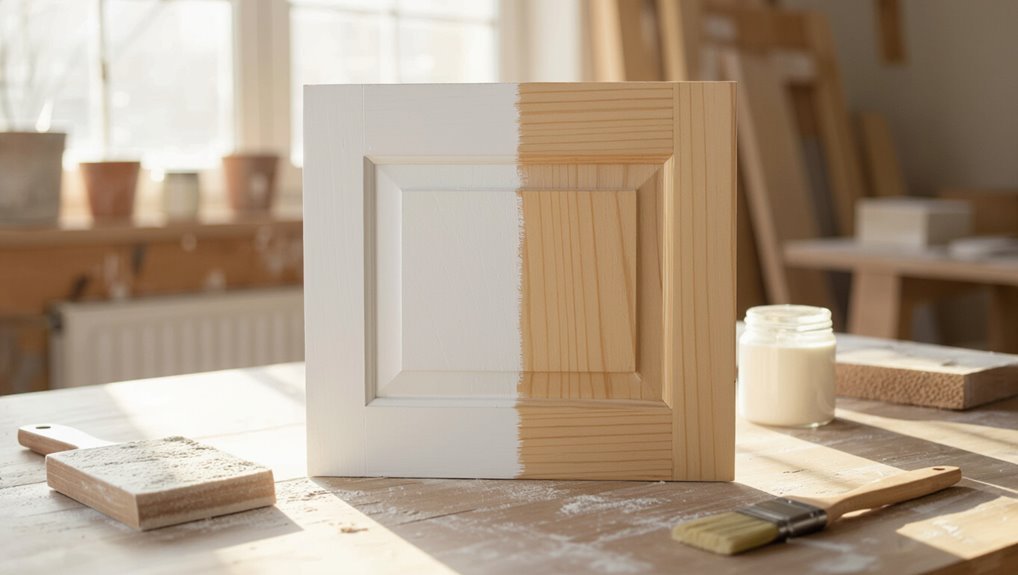
Wondering whether you need to sand after priming? You usually do light sanding for a smooth finish, but it depends on primer types and surface condition.
Use fine-grit sanding techniques to knock down brush marks, dust nibs, or raised texture. Don’t over-sand; remove loose particles and wipe clean.
If primer’s even and adheres well, you can skip aggressive sanding.
How to Tell If Sanding Is Needed
How can you tell if your primer needs sanding? Run your hand and look for drips, orange peel, or rough spots; glossy or textured primer types can hide imperfections.
Tap surface—uneven sound means flaws.
Lightly sand a small test area using recommended sanding techniques to see adhesion and smoothness. If it buffs smooth without damage, sand the whole panel; if not, reassess prep.
Why Sanding After Priming Helps
Because primer locks in imperfections and creates a slightly textured surface, sanding afterward evens out the film so your topcoat lays down smoothly and looks its best.
You’ll remove nibs, dust, and brush marks, control sheen, and improve adhesion.
Match sanding techniques to primer types and grit, working lightly to avoid cutting through primer while creating a uniform, receptive surface for the finish.
When to Sand: Wood, Metal, Drywall, Plastic
When preparing different surfaces, timing your sanding after priming depends on the material and the primer you used.
For wood surfaces, sand lightly between coats to smooth grain.
On metal surfaces, remove flash and imperfections once primer cures.
For drywall surfaces, sand joint compound-smooth primer lightly.
With plastic surfaces, test adhesion; sand only if primer feels tacky or shows texture irregularities before topcoating.
Which Primers Usually Need Sanding
After you’ve handled timing for different materials, you’ll want to know which primers typically need sanding before topcoats.
You’ll usually sand high-build primers, latex-based primers with texture, and bonding primers that raise nap.
Shellac and oil primers often need light scuffing.
Match primer types to proper sanding techniques to remove imperfections and guarantee adhesion without overworking the surface.
What Grit to Use After Priming
Choosing the right grit after priming depends on the primer type and the defect level: use 220–320 grit for smoothing latex or high-build primers, 320–400 grit for fine scuffing of shellac or oil primers, and 180–220 grit when you need to knock down pronounced texture or runs before a topcoat.
Use grit selection and sanding techniques like:
- Start coarse then finish fine
- Test hidden area
- Use light pressure
- Clean dust between passes
- Match grit to primer type
How Long to Wait Before Sanding?
Before you sand, give the primer time to cure so it won’t gum up your sandpaper or raise the nap; most primers need at least 24 hours to dry to the touch and 48–72 hours to fully cure under typical room conditions. Wait for full cure for primer durability. Use gentle sanding techniques once cured to avoid rework.
| Stage | Wait time |
|---|---|
| Touch dry | 24h |
| Light sand | 48h |
| Full cure | 72h |
| Recoat | As directed |
How to Sand Without Ruining Primer
Let the primer fully cure, then sand carefully to preserve its adhesion and finish—use the lightest touch, the right grit, and clean, dry surfaces so you don’t sand through or raise the nap.
You’ll match sanding techniques to primer types and goals. Follow these basics:
- Start with fine grit
- Sand lightly, cross-check
- Keep surface clean
- Test in an inconspicuous spot
- Avoid over-sanding
Hand Sanding vs. Blocks vs. Power Sanders
You’ll find hand sanding gives you tactile control for edges and small flaws, and sanding blocks help keep pressure even.
Power sanders speed the job on large, flat areas but can remove primer too fast if you’re not careful.
We’ll compare when each method makes sense so you can pick the right tool for your project.
Hand Sanding Advantages
Control matters when you’re aiming for a flawless finish, and hand sanding gives you the most precise control compared with sanding blocks or power sanders.
You’ll enjoy hand sanding benefits through careful manual sanding techniques that let you feel imperfections, control pressure, and avoid over-sanding.
Advantages include:
- tactile feedback
- precision in corners
- low risk of gouging
- quiet operation
- minimal cleanup
Power Sanders Comparison
Hand sanding gives you fine-tuned feedback and precision, but when projects grow in size or need faster stock removal, power sanders or sanding blocks can be more efficient.
You’ll weigh power sanders comparison factors: speed, dust control, and finish consistency.
Blocks give control and low cost; electric vs manual is about time versus tactile feel.
Choose based on surface, budget, and desired finish.
Prep Your Space: Dust Control & Setup
Before you sand, seal off the work area with plastic sheeting and tape to keep primer dust from spreading.
Shut doors, cover vents, and turn on a shop vac or air scrubber to control dust sources while you work.
Keep your sandpaper, blocks, and respirator organized within arm’s reach to avoid tracking dust around.
Seal Off Work Area
Once you’ve cleared the room, seal off the work area to keep dust, fumes, and overspray contained; hang plastic sheeting over doorways, tape seams tightly, and cover vents and floors with drop cloths so cleanup’s easier and nearby spaces stay safe.
You’ll create dust barriers and improve workspace organization. Follow these quick steps:
- Tape all seams
- Hang sheeting
- Cover vents
- Lay drop cloths
- Mark entry points
Control Dust Sources
Sealing the room helps, but you also need to stop dust at its sources so sanding and priming go smoother and cleaner.
Close vents, cover HVAC returns, and dampen dust-prone surfaces before work. Use tack cloths and a shop-vac with HEPA filter to capture particles.
Plan dust containment strategies and effective cleanup methods so debris doesn’t settle back on freshly primed surfaces.
Organize Tools Nearby
Gather the tools and supplies you’ll need and place them within arm’s reach so you won’t have to track dust back into the work area.
Keep items organized to switch sanding techniques or primer types quickly, reducing contamination. Set a clean tray for used sandpaper and a sealed bin for waste.
- Sanding blocks
- Sandpaper grit assortment
- Tack cloths
- Masking tape
- Vacuum nozzle
Fix Common Primer Problems (Marks, Drips, Orange Peel)
If you notice runs, brush marks, or an orange-peel texture after priming, don’t panic — most issues can be fixed without stripping the whole job.
Lightly sand problem areas with fine grit, clean the dust, and spot-prime or feather a thin coat.
Follow primer application tips to avoid common primer mistakes: control thickness, maintain even strokes, and watch drying times to prevent repeats.
When to Spot-Prime or Re-Prime
Once you’ve sanded and fixed runs or orange peel, decide whether to spot-prime or re-prime based on how much bare substrate or damage remains:
After sanding out runs or orange peel, assess damage and choose spot-priming or full re-priming accordingly.
You’ll choose spot priming techniques for small areas, re priming intervals matter when large sections are exposed.
Consider:
- Size of damaged area
- Depth of bare substrate
- Adhesion quality
- Primer type
- Time since priming
Avoid Over-Sanding and Visible Seams
When you sand seams, feather them smoothly into the surrounding surface so they blend without creating ridges.
Watch for over-sanded spots where primer or substrate starts to thin, and stop sanding as soon as the shift looks even.
If you do see low areas, re-prime and sand lightly to rebuild the surface rather than sanding harder.
Feathering Seams Smoothly
Although you want the joint to disappear, don’t sand aggressively across the seam; instead, feather the compound outward with light, controlled strokes so the shift blends into the surrounding surface.
You’ll use feathering techniques and focus on smoothing edges.
Tips:
- Light pressure
- Long strokes
- Gradual overlap
- Check from angle
- Finish with fine grit
Preventing Over-Sanded Spots
Because sanding too hard can thin the compound and reveal seams, watch your pressure and progress so you don’t create low spots that show through paint.
Use gentle, consistent sanding techniques and check frequently under raking light.
Match sanding grit to primer types and compound hardness, stop as soon as seams blend, and spot-fill shallow areas rather than over-sanding to avoid visible depressions.
Ready-to-Topcoat Checklist After Sanding
If you’ve finished sanding the primer, run through a quick checklist to confirm the surface is truly ready for topcoat:
- Inspect for uniformness using proper sanding techniques
- Check primer types compatibility with your topcoat
- Remove all dust with tack cloth or vacuum
- Verify no glossy spots remain
- Test a small area for adhesion before full application
Tools & Supplies for Sanding After Priming
Now that you’ve confirmed the primer is properly sanded and clean, gather the right tools and supplies to finish the job efficiently and safely.
You’ll need assorted sandpapers (320–600 grit), sanding blocks, a random-orbit sander for larger surfaces, tack cloths, respirator, and drop cloths.
Match abrasives to primer types and sanding techniques, and keep replacement pads and masking tape handy for consistent results.
Frequently Asked Questions
Can I Sand Primer Outdoors in Windy Conditions?
Yes—you can, but you shouldn’t in strong wind. Outdoor sanding in light breezes is okay if you control dust and overspray; wind effects can blow particles onto wet primer and ruin the finish, so choose calmer conditions.
Does Sanding Primer Affect VOC Emissions or Odors?
Like lifting a veil, yes — sanding primer can stir VOC reduction debates because you’ll release trapped solvents and odors; you’ll boost primer adhesion by scuffing, but wear a respirator and ventilate to minimize VOC exposure and smells.
Are There Primer Brands That Self-Level Without Sanding?
Yes — some self-leveling primers exist that minimize sanding. You’ll find water- and oil-based formulations designed for smooth primer application; they’ll reduce imperfections but may still need light touch-ups for perfect results.
Can Sanding Primer Damage Nearby Caulk or Sealant?
Yes — aggressive sanding can damage nearby caulk or sealant, so you’ll use gentle sanding techniques and choose compatible primer types; keep light pressure, fine grit, and masking to protect joints while preserving adhesion and seal integrity.
How Does Humidity During Sanding Affect Primer Cure?
Like a muggy breath slowing a runner, humidity effects slow primer cure and can gum up sanding; you’ll adjust sanding techniques — lighter pressure, wait longer, or use dehumidifiers — to avoid clogging and uneven finishes.
Conclusion
So yes, sand after priming—unless you like lumpy masterpieces. You’ll only need light sanding when the primer shows brush marks, drips, or raised grain; otherwise skip to topcoat and pretend grit never existed. For wood, drywall, metal, or plastic, gently smooth, don’t sand to oblivion. Use fine grit, spot-prime where needed, and avoid visible seams. Do the checklist, gather tools, and paint like you meant to be precise all along.
